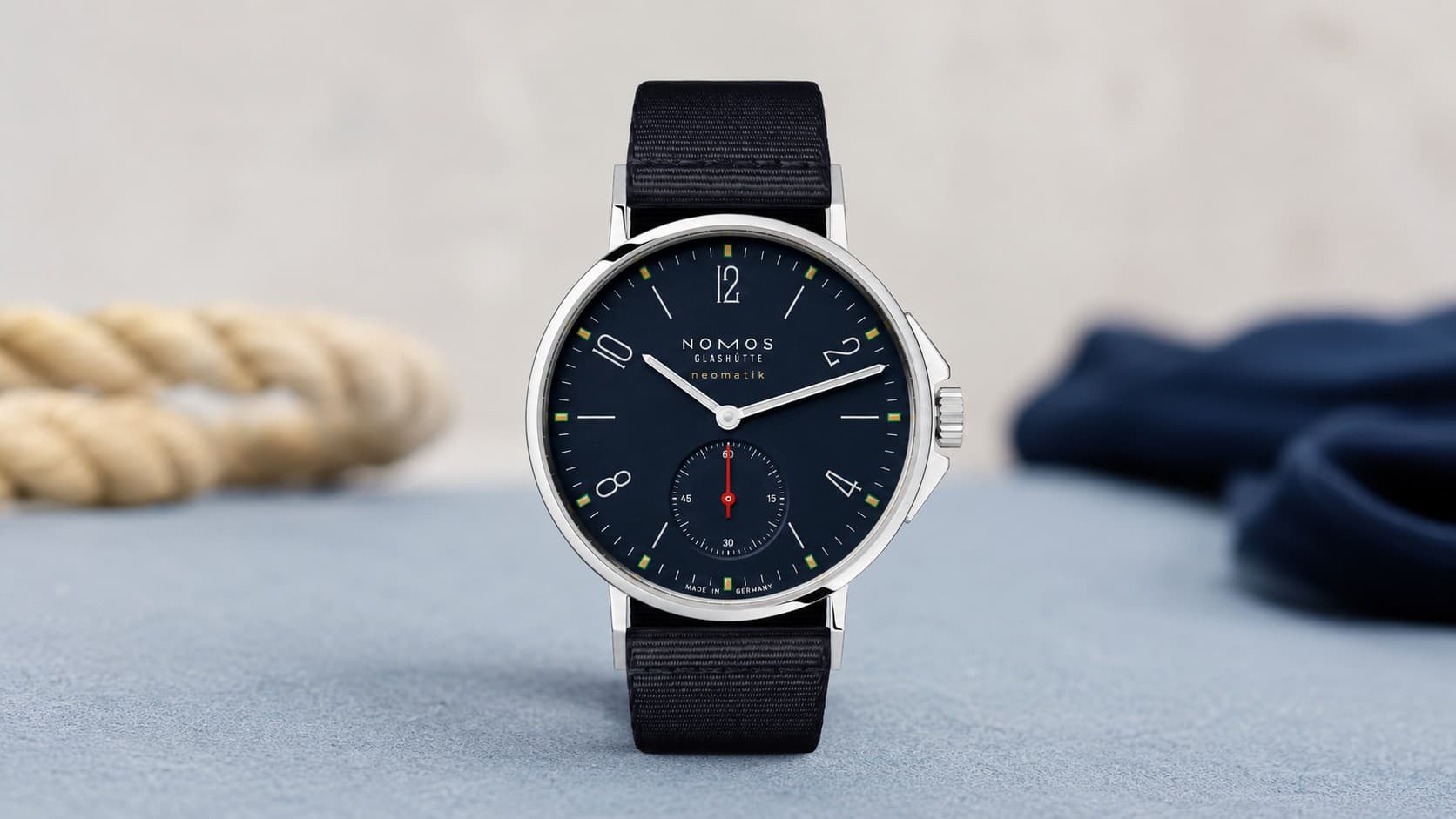
Nomos Glashütte is one of the most quietly influential watch brands in the world, known for stripping designs down to their simplest, cleanest form while still building most of its own mechanical parts by hand in a small town in eastern Germany. The brand has managed something rare in the watch industry: it built a reputation for serious, in-house engineering without chasing the flash and huge price tags that define most of its neighbors in the luxury watch world. Watch collectors talk about Nomos with a particular kind of respect, earned less through marketing and more through the brand’s history, its distinct watch families, and the engineering that actually separates a Nomos from the rest of the pack.
What Is Nomos Glashütte?
Nomos Glashütte is a German watch company founded in 1990 in the town of Glashütte, Saxony, a region with a watchmaking history stretching back to the 1840s. The company was founded shortly after the fall of the Berlin Wall, with founder Roland Schwertner borrowing the company’s name from a former Glashütte pocket watch distributor that had sold Swiss pocket watches out of the same town decades earlier.
The brand is best known for combining two things that don’t always go together: strict, minimalist design and genuine mechanical craftsmanship. NOMOS is owner-operated and is among the German brands that revitalized watchmaking in the historic Glashütte region, best known for its Bauhaus-inspired design and in-house calibers. Along with the revival of brands like A. Lange & Söhne, Nomos helped spearhead the rebirth of Glashütte’s watchmaking heritage in the newly reunited Germany. In the decades since, the brand’s designs have picked up more than 150 international awards for design, quality, and value, and it has grown into one of the largest watch manufacturers in Germany, despite still being run independently rather than as part of a larger corporate group.
Nomos isn’t chasing trends. Every watch the brand makes traces back to the same design language: clean dials, thin hands, and almost no unnecessary detail.
What Makes Nomos Design Unique?
Nomos watches look plain and simple on purpose, because the brand follows Bauhaus design rules that say a good design should only include what actually serves a function. As a member of Germany’s Deutscher Werkbund, an association of artists, architects, designers, and industrialists established in 1907, Nomos has built its entire visual identity around that same minimalist, function-first thinking.
That philosophy shows up everywhere on a Nomos watch. There’s rarely a logo bigger than it needs to be, hardly ever a busy dial, and almost never a case shape that exists just to look expensive. Instead, thin hands, wide open dials, and numerals or markers sit with generous white space around them. This is the same design tradition behind Bauhaus furniture, architecture, and graphic design from 1920s Germany, and it was later carried forward by the Ulm School of Design, a German design school that continued the Bauhaus emphasis on function over decoration through the mid-20th century. Nomos has spent over three decades applying that same thinking specifically to wristwatches.
What’s Special About Nomos Calibers?
Nomos builds almost all of the mechanical parts inside its watches itself, inside its own factory in Glashütte, rather than buying movements from an outside supplier. Design, assembly, adjustment, and finishing all happen under one roof at that same facility, and because so much of the work stays in-house, Nomos qualifies for the legally protected “Glashütte” designation, a label reserved for watches that meet a minimum threshold of work actually performed in the town. Nomos has produced almost all of its calibers in-house since 2005.
The biggest engineering achievement came almost a decade later, when Nomos built its own escapement, the tiny mechanism that actually regulates how a watch keeps time. Introduced in 2014, it took NOMOS and its external partners almost seven years and 12 million euros, or roughly $14 million, to develop this escapement, called the Swing System. Only a handful of watch manufacturers in the world are able to produce the balance wheel, hairspring, anchor, and escape wheel all in-house, which makes the achievement especially significant.
That escapement now powers the brand’s thinnest and most modern movements, known as the Neomatik family, which are prized by collectors for being remarkably slim compared to typical automatic movements.
The Best Nomos Watch Collections
Nomos organizes its watches into a handful of distinct families, each with its own personality even though they all share the same design DNA.
Tangente: Nomos’ Most Iconic Watch
The Tangente is Nomos’ most iconic model and the closest thing the brand has to a flagship design. It was one of the brand’s first four basic models released in 1992, alongside the Orion, Ludwig, and Tetra, and over the decades since it has picked up a long list of design prizes and become the watch most people associate with the brand.
The Tangente has a round case, a railway-track minute scale, and slim baton hands, all sitting on a dial with almost nothing else going on. It’s available in both hand-wound versions and the automatic Tangente Neomatik, and comes in a range of sizes from the compact 33mm Tangente 33 up to the larger 38mm and 41mm versions.
Club: The Entry Point Into Nomos
Club is the most affordable and most casual Nomos family, designed to work equally well with a t-shirt or a blazer. Chrono24 describes Club as “NOMOS Club: Entry Into the NOMOS World,” positioning it as the collection’s accessible starting point. Retail prices for the entry-level Club Campus start around $1,000, making it the most budget-friendly way into the brand.
Club watches trade some of the extreme formality of the Tangente for larger numerals, a sportier case, and slightly more casual proportions, while still using the same in-house movements found across the rest of the lineup. The automatic Club Sport Neomatik sits a step up from the entry-level Club Campus, with a larger case and a screw-down crown for extra water resistance.
Nomos Orion: Minimalism Perfected
Orion takes the brand’s minimalism a step past the Tangente, with an even simpler dial layout and thinner numerals. It was also one of the original four models the brand launched in 1992, and it’s often described as the most pared-back, essentials-only design in the entire Nomos catalog.
It’s a favorite among collectors who want the classic Nomos dress-watch look but prefer something slightly less ornate than the Tangente’s railway track detailing.
Ahoi: The Sporty, Water-Ready Option
Ahoi is Nomos’ answer to a sports watch, built to survive water and knocks while still looking at home under a dress shirt. With 200 meters of water resistance, it’s suited for diving, and luminous hands and indices keep it easy to read even underwater. The design starts from the same slim case and minimalist dial as the Tangente, with the main change being a protective guard built into the case around the crown, so the watch gains durability without gaining much bulk.
Ahoi comes on both textile straps and metal bracelets, including the Ahoi Atlantik, a version with a woven textile strap designed to dry quickly after water exposure, and it’s a common recommendation for anyone who wants one watch that can handle a swim, a hike, and a dinner reservation without missing a beat.
Metro, Minimatik, Tetra, and Ludwig
Beyond the four main families, Nomos also produces several smaller collections worth knowing:
- Metro – A slightly more playful, modern take on the classic Nomos dial, often featuring a red-tipped seconds hand for a pop of color.
- Minimatik – A no-date automatic watch built around extreme simplicity, stripping the dial down even further than the Tangente.
- Tetra – The brand’s iconic square-cased model, the only non-round watch among the original four launches, with a two-part stainless steel case and a thin bezel framing the square dial. Since 2016, it has also been offered as a Neomatik automatic, alongside its original hand-wound versions.
- Ludwig – A more traditional, Roman-numeral dress watch that leans slightly more classic than the rest of the Nomos catalog.
Zürich: Nomos’ Most Advanced Watch
Zürich is Nomos’ flagship complication, built around a world-time function that shows all 24 time zones on the dial at once. A push-button on the case lets the wearer advance a rotating city ring to check the time back home or at a destination, without having to touch or reset the main hands.
The Zürich Weltzeit is generally considered Nomos’ most mechanically sophisticated regular-production watch, and it’s noticeably larger and heavier than most other Nomos models, closer to 40 millimeters across, since fitting a world-time complication takes more room than the brand’s usual slim dress watches. Nomos also builds a second, thinner take on the same complication in the Club Sport Neomatik Worldtimer, which houses the same 24-time-zone function in a slimmer, more casual case.
Autobahn: Nomos’ Most Dramatic Design
Autobahn is Nomos’ boldest departure from its usual minimalism, built around a deep, curved dial inspired by vintage car speedometers and racetrack curves. It was designed in collaboration with German industrial designer Werner Aisslinger and launched in 2018, and it remains the most sculptural, three-dimensional dial the brand makes.
Despite the dramatic look, the Autobahn neomatik 41 still runs on the same in-house Neomatik movement family as the rest of the lineup, and it keeps Nomos’ typical clean typography and lack of dial clutter, just wrapped around a much bolder shape.
Lambda and Lux: Nomos’ Gold Watches
At the top of the Nomos catalog sit the Lambda and Lux collections, made only in solid gold and built around the brand’s finest hand-wound movement, which stores an unusually long 84 hours of power reserve thanks to a twin-barrel design. Both are strictly dress watches with no date window, aimed at collectors who already know and appreciate the brand’s design language.
The two collections are easy to tell apart once the key details are known. Lambda has a round case and displays its 84-hour power reserve on the dial with a large arc-shaped indicator, while Lux is tonneau-shaped (a rounded rectangle), skips the power reserve display, and instead leans into brighter dial colors. Prices for these top-tier pieces run well into five figures, reaching around $21,000 for a Lux in white gold.
What’s the Price Range for Nomos Watches?
Nomos sits in the middle of the watch market, more expensive than mass-produced quartz watches but noticeably cheaper than most Swiss luxury brands with comparable in-house engineering. Retail prices range from around $1,000 for the entry-level Club Campus up to roughly $21,000 for the Lux in white gold, with the brand’s watches costing around $2,000 on average.
| Collection | Typical Style | Approximate Starting Price |
|---|---|---|
| Club | Sporty, entry-level | ~$1,000–$2,000 |
| Tangente / Orion | Classic dress watch | ~$1,700–$3,000 |
| Ahoi | Water-resistant sports watch | ~$2,300–$4,000 |
| Metro / Minimatik | Modern, minimalist | ~$2,000–$3,000 |
| Lambda / Lux | High-end, hand-finished | ~$8,000–$21,000 |
Prices vary by case material, size, and whether the watch uses a hand-wound or automatic Neomatik movement, so it’s worth comparing specific references rather than assuming every watch in a collection costs the same.
Do Nomos Watches Run Small?
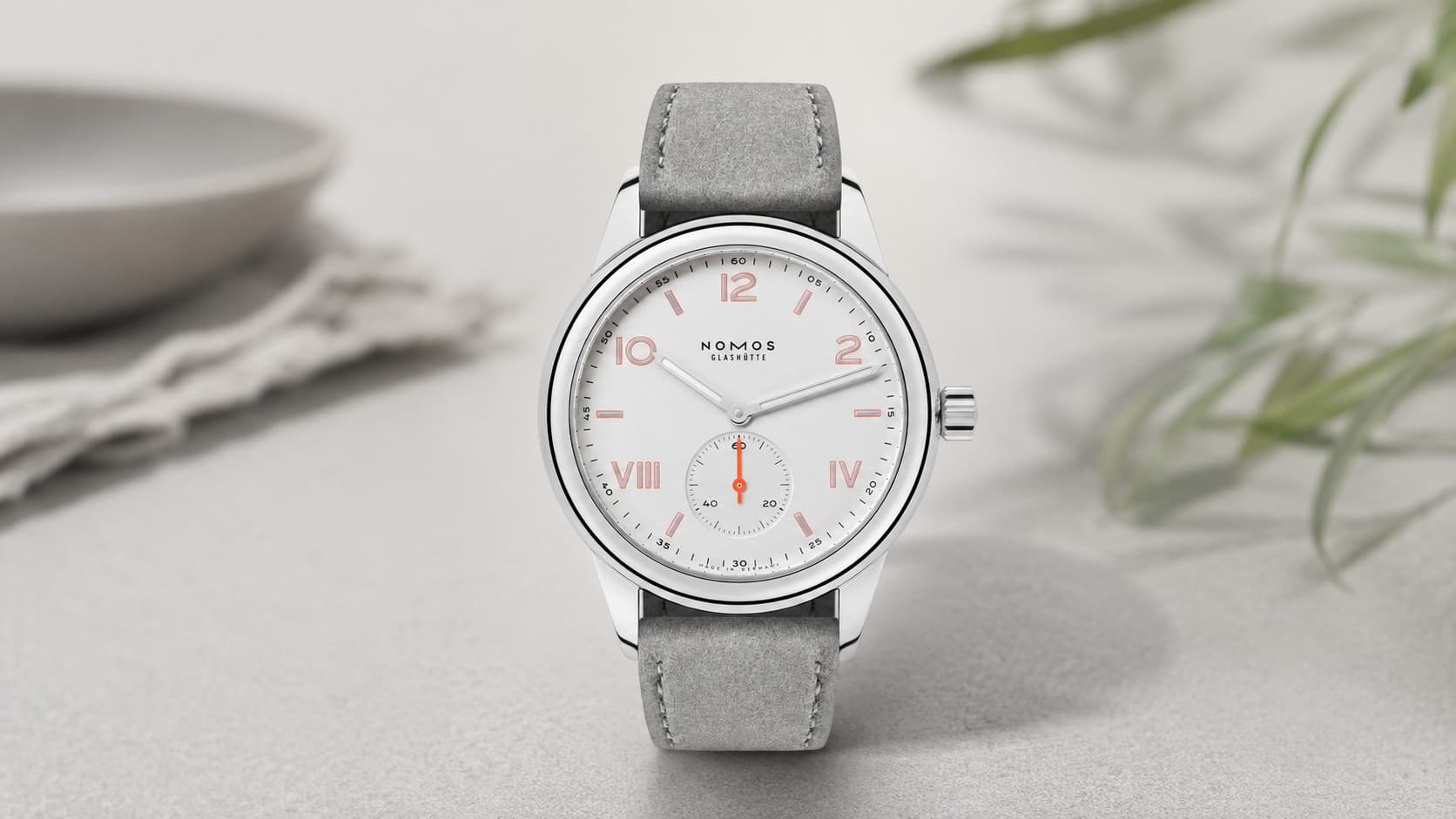
Yes, compared to most modern watch brands, Nomos cases skew noticeably smaller, with many popular models available in 33mm and 35mm alongside larger 38mm and 41mm options. Nomos built its reputation before the 2010s trend toward oversized watches, and its most classic sizes still reflect that smaller, dressier era.
Sizing on a Nomos is a little more complex than the diameter number alone suggests. The watches typically have very thin bezels and generous dial-to-case ratios, so they tend to wear a little larger than the stated size implies. Many models, especially the Tangente, also have noticeably long lugs, which can make the watch stretch further across the wrist than the diameter alone would indicate. For that reason, the lug-to-lug measurement is generally a more reliable sizing guide than case diameter on its own.
What Does “Neomatik” Mean on a Nomos Watch?
Neomatik is the name Nomos gives to its family of ultra-thin automatic movements, which were introduced to make automatic Nomos watches feel almost as slim as the brand’s hand-wound models. The core Neomatik caliber stands just over 3 millimeters tall, which is unusually flat for a movement that winds itself, since automatic movements normally need extra height to fit their self-winding rotor.
The word “neomatik” on a dial or model name simply means the watch winds itself automatically from the motion of the wearer’s wrist, rather than needing to be wound by hand every day, while still keeping the case slim.
Frequently Asked Questions
Is Nomos considered a luxury watch brand?
Nomos sits in the accessible-luxury tier, well below brands like Patek Philippe or A. Lange & Söhne in price, but still above mass-market fashion watches. It builds its own movements and even its own escapement components in-house, which is a level of engineering usually only found in far more expensive watches.
Are Nomos watches automatic or hand-wound?
Nomos makes both. Its original calibers, including the ones used in classic Tangente and Orion models, are hand-wound, while the newer Neomatik family offers slim automatic movements that wind themselves through the natural motion of the wrist during wear.
Is It Safe to Swim or Dive With a Nomos Watch?
Most Nomos collections, like the Tangente and Club, are only splash-resistant and shouldn’t be worn swimming. The Ahoi collection is the exception, since it’s built specifically for water and rated to handle diving depths.
Where are Nomos watches made?
Every Nomos watch is made in Glashütte, Germany, a small town in Saxony with a watchmaking history dating back to the 1840s. Nearly the entire watch, from movement parts to final assembly, is produced in that same location.
Is Nomos owned by a bigger watch company?
No. Nomos has remained an independently owned, owner-operated company since it was founded in 1990, which is unusual in an industry where most well-known watch brands belong to large conglomerates.
Conclusion
Nomos earns its reputation the hard way, by building nearly every part of its watches itself in a single German town rather than relying on outside suppliers or a famous parent company. The Tangente and Orion show off the brand’s Bauhaus roots at their purest, the Club offers the easiest entry point, and the Ahoi proves the same design language can survive a swim just as well as a boardroom. Across the entire Nomos catalog, from the smallest Club Campus to the gold Lambda and Lux, the constant is a design philosophy that trusts simplicity over decoration, backed by movements the brand engineers almost entirely on its own.