Panerai makes some of the biggest, boldest watches in the luxury world, with a design distinct enough that it is rarely mistaken for another brand. The brand started out building instruments for Italian Navy divers, and that military past still shapes every watch it makes today. Its main collections split into a few distinct design lines, each with its own history and price range, spanning from a $4,000 entry point to pieces that cost more than a house.
Panerai’s Signature Design Features
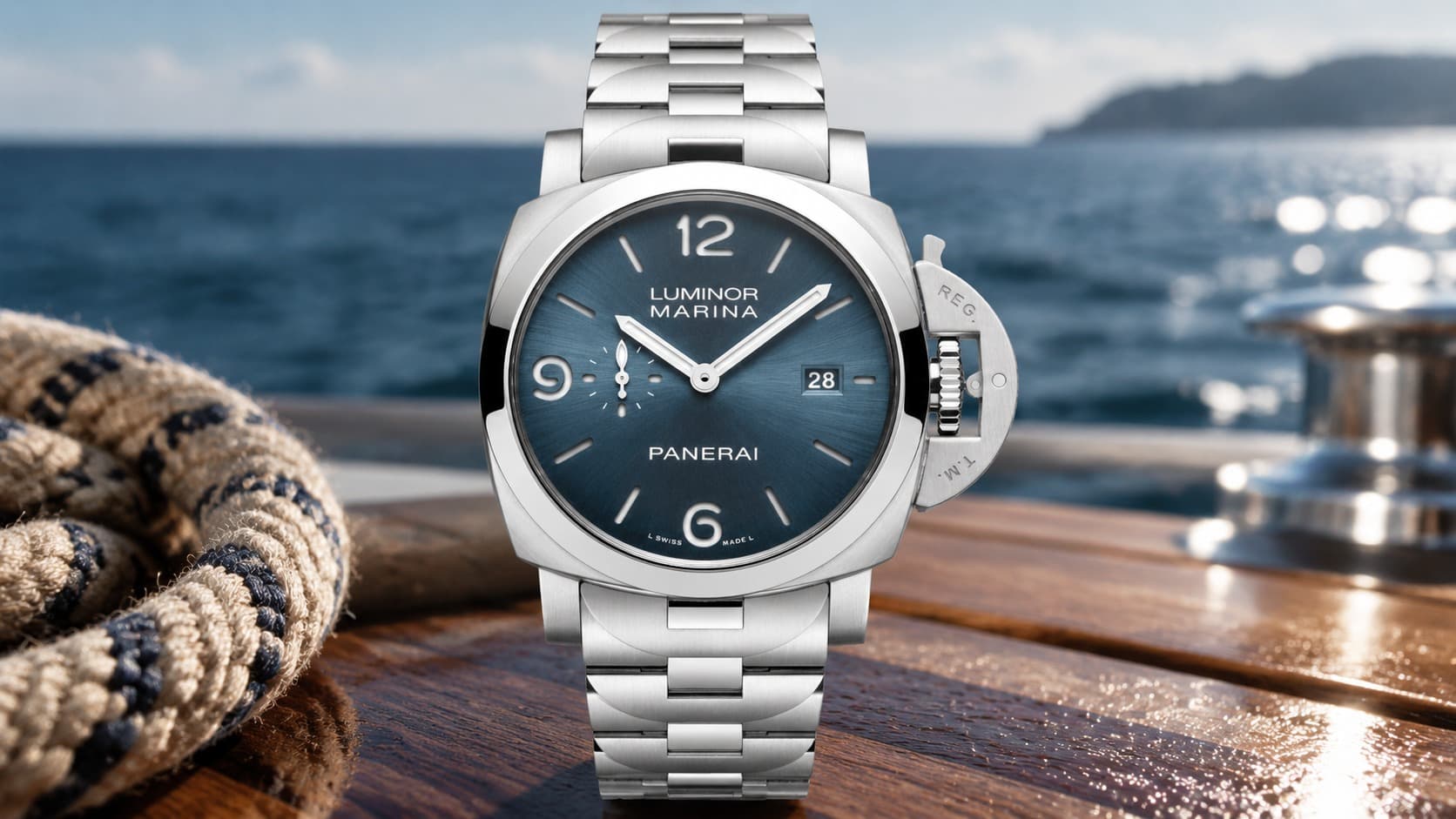
A Panerai stands out because of its huge cushion-shaped case, its oversized numbers, and a metal bridge that locks the crown in place on the side of the watch. That crown-protecting bridge, called a “crown guard,” was built to keep water out during long dives, and it has become the brand’s most recognizable feature. Most Panerai cases measure between 38mm and 47mm, which is noticeably larger than the 40mm average for most men’s watches.
The dials also use a “sandwich” design, where two dial plates are stacked on top of each other with cut-out numbers. Light passes through the top layer into a lume-filled bottom layer, which makes the numbers glow brightly in the dark. This setup traces back to a real military need: divers had to read the time underwater with almost no light.
The crown guard itself was patented back in 1956, and it isn’t just for looks. A folding metal lever presses the winding crown firmly against the case, sealing it more tightly than a crown alone ever could, which was critical when a single leak could end a diver’s mission. Because the case, crown guard, and dial are all built larger and heavier than on most watches, a Panerai tends to sit high and feel substantial on the wrist, which is exactly the point for a brand built on tool-watch toughness rather than subtlety.
Panerai is also one of the few luxury brands built around swapping straps as easily as clothes. Since its public launch in 1993, most models have shipped with a spare strap and the tools needed to change it, and the brand has steadily simplified that process ever since. Modern references use a tool-free click system, so a diving-ready rubber strap can become a dressy leather one in seconds, without a jeweler or a spring-bar tool anywhere in sight.
How Panerai Got Its Start
Giovanni Panerai opened a small watch and instrument shop in Florence, Italy, in 1860. By the early 1900s, the company had become an official supplier to the Italian Royal Navy, building depth gauges, compasses, and other precision tools for underwater missions.
In 1916, Panerai patented a radium-based glow paste called Radiomir. The Italian Navy used it to make instrument dials readable in the dark, and the name later became the brand’s first true watch collection. Panerai didn’t build its own watch cases or movements at first, either — the earliest Radiomir models from the 1930s used waterproof cases supplied by Rolex, paired with Swiss-made movements from other manufacturers, since Panerai’s real expertise was in instruments and lume, not watchmaking machinery.
By 1949, the company had developed a safer, brighter glow material called Luminor, and within a year it had replaced Radiomir across the lineup. Panerai kept building watches almost exclusively for the military until 1993, when it released its first watches for regular customers.
Panerai’s watches spent more than 70 years as military-only tools before a single one was ever sold to the public.
The Richemont Group, known as Vendôme at the time, bought Panerai in 1997, reportedly after actor Sylvester Stallone showed his own Panerai to Richemont’s chairman and sparked his interest in the brand. Stallone had discovered a vintage Panerai while filming in Rome in the mid-1990s, wore it in the movie Daylight, and later commissioned a limited run of custom pieces for himself and friends like Arnold Schwarzenegger — exposure that pulled a nearly-forgotten military supplier back into the public eye. A decade after the Richemont sale, in 2002, the brand opened its own manufacturing facility in Neuchâtel, Switzerland, and released its first fully in-house movement in 2005. Today, the Panerai fan community calls itself the “Paneristi,” with tens of thousands of members organized into local groups around the world.
Panerai also spent five years building watches for a very different Italian icon: Ferrari. Between 2005 and 2010, the two companies produced twenty limited-edition references badged “Ferrari Engineered by Officine Panerai,” each carrying the prancing horse logo instead of Panerai’s own name on the dial. Panerai ended the arrangement itself once its five-year licensing contract ran out, choosing to focus fully on its own collections as it grew into a Swiss manufacture — which is why those Ferrari-branded pieces remain a genuine, if lesser-known, chapter of Panerai’s history rather than a footnote invented by resellers.
Panerai Luminor Watches
The Luminor is Panerai’s core lineup and the watch most people picture when they think of the brand. It’s built around the crown-guard bridge, the cushion case, and either a manual-wind or automatic movement depending on the specific model.
Luminor Marina
The Luminor Marina is the most classic version, with a small seconds sub-dial sitting at the 9 o’clock position. Current models run on Panerai’s in-house P.9010 automatic movement, which offers a three-day power reserve, and the case comes in 42mm or 44mm sizes. Retail prices for steel versions generally start around $8,000 to $9,000.
Luminor Due
The Luminor Due was built for people who love the Panerai look but don’t want a thick, heavy watch on their wrist. It’s roughly 40% slimmer than a standard Luminor and uses the smaller P.900 movement, still with a three-day power reserve. The trade-off is water resistance: most Due models are only rated to 30 or 50 meters, so they aren’t built for real diving. Steel versions typically start near $5,900 to $7,500 depending on the exact size and reference.
Luminor 1950
The Luminor 1950 is a slightly different case shape within the same family, with softer, more rounded lugs and a longer, taller profile than the standard Luminor. Many Luminor 1950 references run on eight-day movements rather than the usual three-day calibres, meaning the watch can sit unworn for a week and still be running when picked back up. This sub-line is where Panerai puts most of its higher-complication pieces, including GMT models for tracking a second time zone and tourbillon versions for serious collectors.
The Radiomir Collection
The Radiomir is Panerai’s original watch design and the direct descendant of the 1930s Italian Navy pieces. A Radiomir is easy to distinguish from a Luminor at a glance: it has no crown guard, and the crown sits exposed on the case, held on by simple wire lugs instead of a welded bar.
This design is closer to the brand’s roots and tends to appeal to collectors who want the historical version rather than the more famous Luminor shape. Radiomir prices generally start around $3,500 to $4,000 for steel models and climb sharply for gold, platinum, or limited editions.
Vintage Radiomir references still shape how the modern line looks and is talked about. Collectors often refer to the reference 3646 from the late 1930s as the watch that started it all, since it was the first Panerai design built specifically for the Italian Navy’s underwater commando unit. Some Radiomir dials from that era mixed Arabic and Roman numerals on the same face, a quirk collectors nicknamed the “California dial,” and Panerai still reissues that mixed-numeral look on certain modern Radiomir models as a nod to the original.
The Submersible Collection
The Submersible is Panerai’s true dive watch, built to handle real depth rather than just look tough. These models add a rotating bezel for tracking dive time, thicker case construction, and water resistance ratings that go well beyond the Luminor Due’s limits — many Submersible models are rated to 300 meters or more.
Panerai also uses the Submersible line to test newer case materials, including titanium, bronze, and its own Carbotech composite. Bronze versions develop a natural patina over time, so no two watches age exactly the same way. Prices for steel Submersible models generally start around $7,000 to $9,000 and rise significantly for larger sizes or unusual materials.
The Submersible’s design roots trace back to a single, oversized watch: the 60mm “Egiziano,” built for the Egyptian Navy in 1956 and, at the time, the largest wristwatch in the world. That model introduced the rotating bezel used to time a dive, which is the same basic tool every Submersible still carries on its wrist today. Depth ratings across the current lineup vary quite a bit by reference, with most models rated around 300 meters and a few specialized versions rated for much deeper professional use.
Panerai Terms and Model Codes Explained
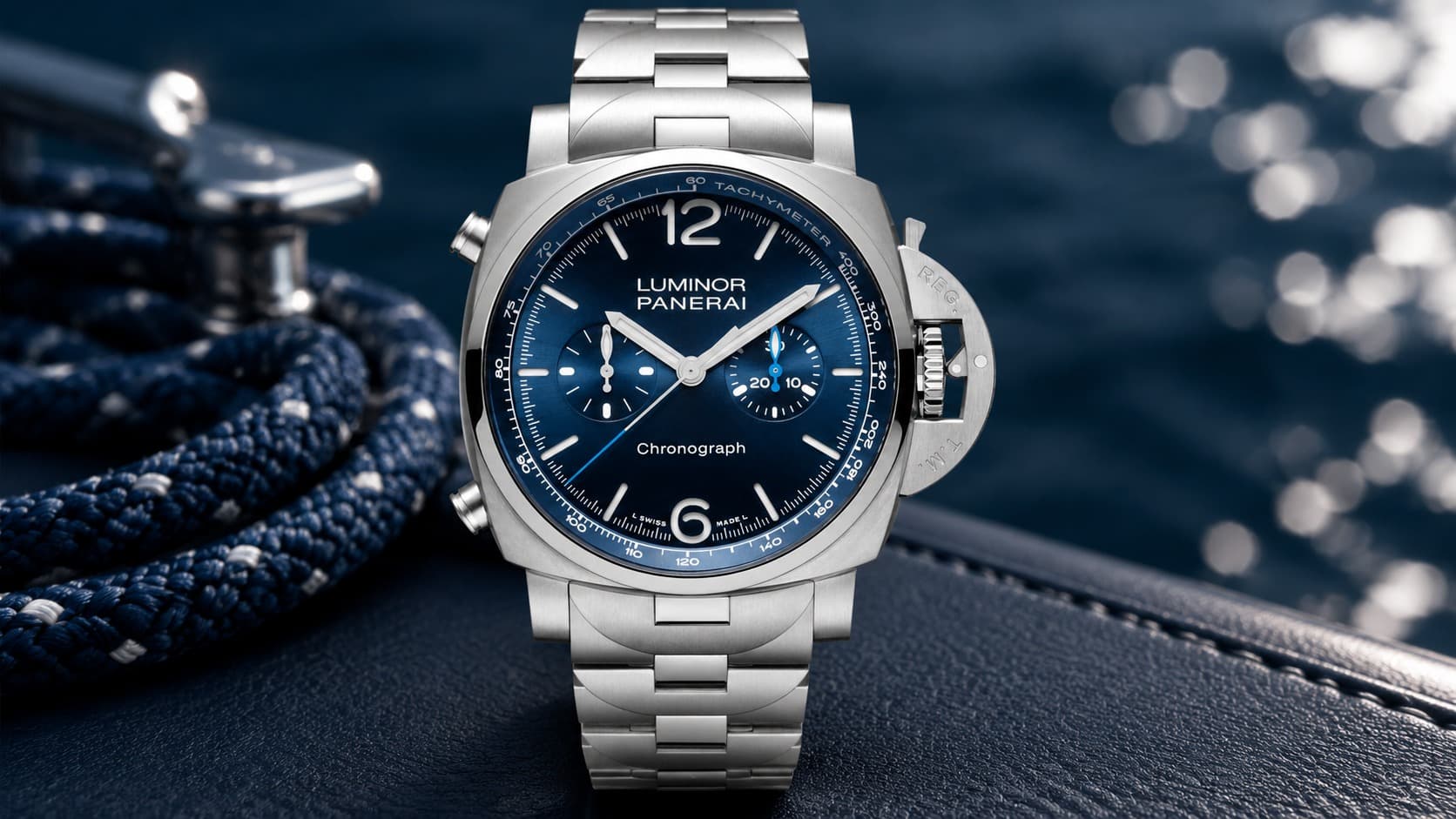
Every current Panerai watch carries a reference number that starts with “PAM,” short for Panerai. That number doesn’t follow a simple, memorable pattern — it’s just a unique ID assigned to that specific model and case combination, similar to a product code.
| Term | What It Means |
|---|---|
| PAM number | A unique reference code stamped on that exact watch model |
| Crown guard | The bridge that locks the crown against the case to seal out water |
| Sandwich dial | Two stacked dial plates that let light glow through cut-out numbers |
| Carbotech | Panerai’s own carbon-fiber composite case material |
| Bronzo | Bronze case material that develops a natural patina over time |
| Goldtech | Panerai’s proprietary 18k rose gold alloy, formulated to resist fading |
| Destro | A “left-handed” case layout with the crown on the left side, for wearing on the right wrist |
How Much Do Panerai Watches Cost Today
Panerai spans a wide price range depending on the collection, case material, and complications involved. Retail starting prices vary noticeably by collection:
- Radiomir: Starts around $3,500 to $4,000 in steel
- Luminor Due: Starts around $5,900 to $7,500 in steel
- Luminor Marina: Starts around $8,000 to $9,000 in steel
- Submersible: Starts around $7,000 to $9,000 in steel, rising quickly with size and material
Limited editions, gold cases, and high-complication pieces like tourbillons or minute repeaters can push well past $50,000, with some rare references reaching six figures.
Which Panerai Watch Should You Choose
The right model comes down to how it will actually be worn, not which one looks the most striking online. A daily, do-everything watch calls for different priorities than a dress piece meant for occasional wear.
- Classic, most recognizable look: the Luminor Marina fits the brief.
- Slim enough for a dress shirt cuff: the Luminor Due works well, though it isn’t suited for swimming.
- The brand’s original, historical design: the Radiomir is the closest link to Panerai’s 1930s military watches.
- Built for actual diving: the Submersible is the only line designed for serious depth.
Wrist size matters just as much as style. Because Panerai cases run large, trying one on in person is worthwhile before buying, since a 47mm case can look dramatically different on a small wrist than it does in a product photo. Left-handed wearers should also look for “Destro” versions, which flip the case so the crown sits on the left side and stays out of the way on the right wrist.
Frequently Asked Questions
Is Panerai considered a luxury watch brand?
Yes, Panerai is a genuine luxury brand owned by the Richemont Group, the same company behind Cartier and Vacheron Constantin. Its watches are built and assembled in Switzerland at the brand’s own manufacturing facility in Neuchâtel.
Why are Panerai watches so big?
Panerai’s oversized cases come directly from its military history, when large, highly legible dials mattered more than a slim, elegant profile for underwater navy divers. The brand kept that design language even after it started selling to civilians in 1993.
What’s the difference between Luminor and Radiomir?
The Luminor has a crown-guard bridge that locks the crown in place, while the Radiomir has an exposed crown held by wire lugs with no bridge. The Radiomir came first, in the 1930s, and the Luminor replaced it as Panerai’s main design starting in 1950.
Are Panerai watches good for swimming and diving?
It depends entirely on the model. The Submersible line is built for real diving with high water resistance ratings, but the Luminor Due is only rated for light splashes and should not be worn swimming or diving.
Do Panerai watches hold their value?
Panerai holds value reasonably well compared to many luxury brands, though it doesn’t command the waitlists or premiums seen with brands like Rolex or Patek Philippe. Certain vintage references and limited editions have appreciated significantly, while more common current models tend to track closer to retail price on the resale market.
The Bottom Line
Panerai’s appeal comes down to a simple trade: owning one means wearing a piece of naval history in a case nobody will mistake for another brand. The Luminor Marina remains the safest starting point for the most classic, recognizable version, the Radiomir suits collectors chasing the brand’s original design, and the Submersible is the only real choice for anyone planning to dive. Whichever line is chosen, the crown guard, the sandwich dial, and the oversized case will always mark it as unmistakably Panerai.