Canada isn’t the first country people think of when the conversation turns to watches. Switzerland, Japan, and Germany usually take that spotlight. But over the past few decades, a small and determined group of Canadian companies has built a reputation for tough, honest, and often surprisingly creative timepieces. Some of these brands go back to World War II, while others started as a weekend idea between friends who wanted to build something better for the planet. Together, they tell a story about what watchmaking looks like when it grows outside the traditional Swiss and Japanese hubs.
Canadian Watchmaking Through the Years
Canada never developed large-scale watch factories the way Switzerland or the United States did, so its watchmaking story is really a story of finishing, branding, and adapting rather than manufacturing from the ground up. For most of the 18th and 19th centuries, a watch sold in Canada typically started life somewhere else entirely, as a raw, unfinished mechanism shipped in from a European or American workshop. A local goldsmith or jeweler would then fit that mechanism into a case and add the final touches, often putting their own name on the dial in the process. That’s the main reason so many surviving antique Canadian timepieces are stamped with a hometown retailer’s name instead of an actual watch manufacturer.
The expansion of the Canadian Pacific Railway in the late 1800s changed the stakes considerably. Running trains safely across such enormous distances meant conductors and station staff needed watches accurate enough to prevent two trains from occupying the same stretch of track at the same time, and Canada didn’t yet have a domestic industry capable of supplying them. The country leaned heavily on imported railroad-grade pocket watches from the United States and Switzerland instead. Around the same era, Canadian department stores found their own way into the watch business: chains such as Eaton’s and Simpson’s sold house-branded watches, occasionally removing the original maker’s name from the dial so the store’s own branding could take its place.
Canada had almost no domestic watch manufacturing industry going into the 20th century, and the outbreak of the Second World War exposed that gap. Military demand for reliable timepieces had to be met mostly through imports and soldiers’ personal watches, which is part of what makes Marathon’s founding in Montreal in 1939 so significant. It was one of the few Canadian companies positioned to supply the Allied forces directly, and that early military relationship shaped the direction of Canadian watchmaking for decades afterward.
The modern chapter of Canadian watchmaking looks very different from its early history. Instead of large factories, the country’s watch scene today is built on small, independent brands, many of them founded in Vancouver, Montreal, and Toronto over the last 15 years. These companies design their watches at home and lean on established manufacturing hubs in Switzerland and Asia to build them, which mirrors how Canadian watchmaking has always worked: strong design and branding paired with production expertise sourced from elsewhere.
What Counts as a Canadian Watch Brand?
A watch brand counts as Canadian when it’s founded, headquartered, or designed in Canada, even if the parts come from somewhere else. Almost no country makes every single component of a watch inside its own borders anymore, and Canada is no exception. Movements, cases, and crystals are often sourced from Switzerland or Japan, because those two countries dominate global parts manufacturing.
What makes these brands genuinely Canadian is where the ideas start and where the final decisions get made. Design studios in Vancouver, Montreal, and Toronto shape the watch from the first sketch to the finished product, even when assembly happens overseas. This is similar to how many well-known American and British brands operate, blending home-grown design with Swiss precision manufacturing.
Marathon Watch Company
Marathon is the oldest and most decorated name in Canadian watchmaking, known for supplying military-grade tool watches to armed forces around the world. Founded in Montreal in 1939 by Morris Wein, the company grew out of an even older family watch business, Weinstrum Watch, which dated back to 1904.
Just two years after Marathon was founded, it landed its first military contract with the Royal Canadian Air Force in 1941. That relationship with government and military buyers became the backbone of the entire company. Today, Marathon watches are still supplied to the U.S. government, NATO-aligned forces, and Canadian search and rescue teams, and the company remains family-run under the fourth generation of the Wein family.
Marathon’s watches carry the “Swiss Made” designation because final assembly happens at the brand’s own facility in La Chaux-de-Fonds, Switzerland, while design and business operations stay based in Vaughan, Ontario.
One detail that sets Marathon apart from most modern watch brands is its use of tritium gas tube illumination instead of standard glow-in-the-dark lume. Tritium tubes glow on their own, continuously, without needing to be charged by light first. That makes them especially valuable for people working in total darkness, like search and rescue divers or soldiers on night missions.
Marathon’s cases are made from parkerized 316L surgical-grade stainless steel, a treatment that coats the steel in a zinc or manganese phosphate layer to protect it from rust and glare. This matte, non-reflective finish is a small detail, but it matters a lot in military use, where a shiny watch case could catch light and give away a soldier’s position. The brand organizes its current lineup into three main categories: land, sea, and air, matching the different branches of service it has supplied over the decades.
Popular Marathon Models
- GSAR (Government Search and Rescue) – an automatic dive watch built for military divers and rescue teams
- TSAR (Tritium Search and Rescue) – the quartz version of the GSAR platform
- GPQ (General Purpose Quartz) – a rugged field watch built to strict military specifications
Halios Watches
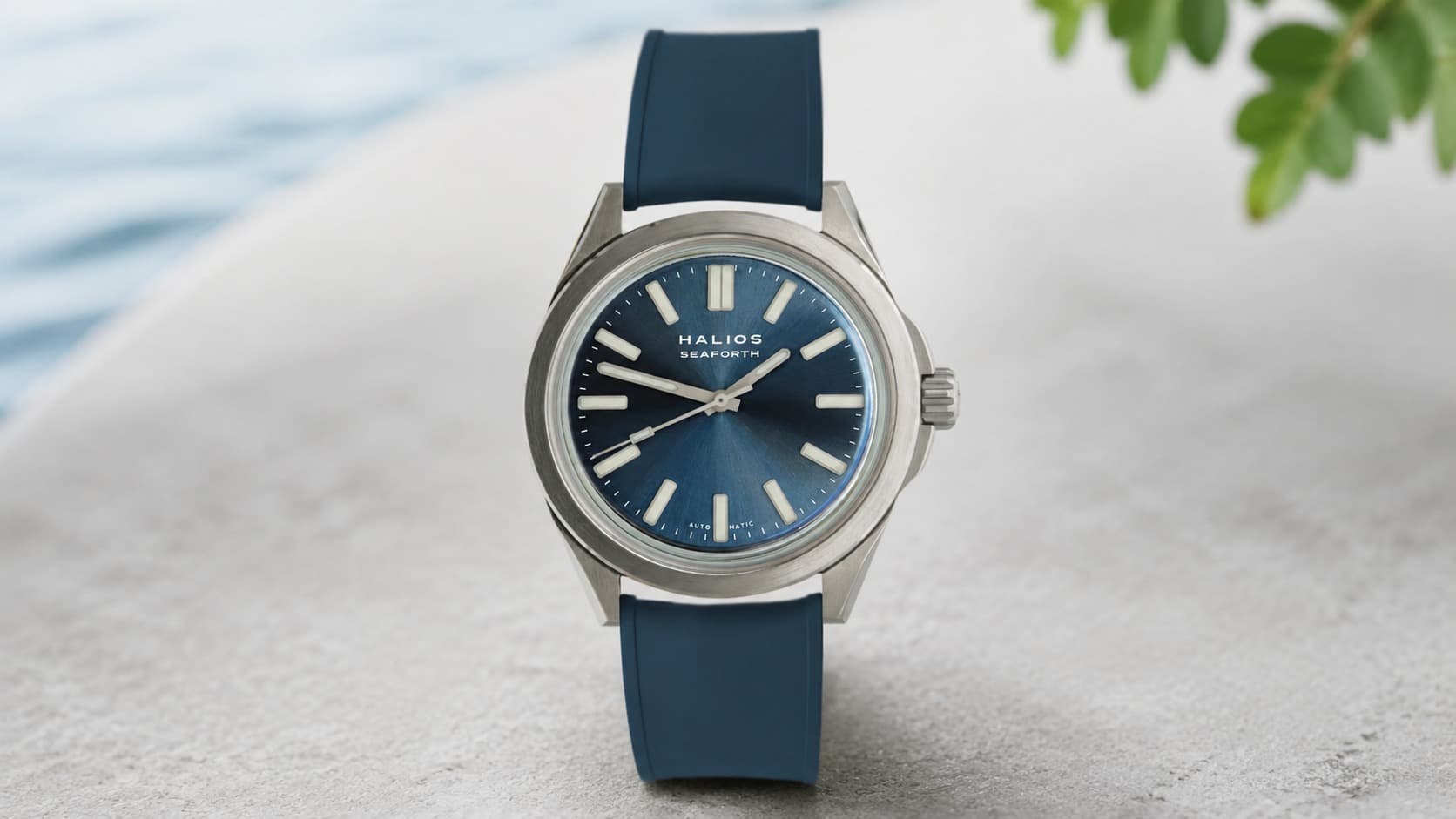
Halios is a one-person Vancouver watch company known for stylish, well-built dive watches that regularly sell out within minutes. Jason Lim founded the brand in 2009 after years of following watch enthusiast communities online, where he kept noticing a gap between what mass-market brands were selling and what serious collectors actually wanted to wear.
Lim still runs nearly every part of the business himself, from design through customer support, which is part of why Halios releases watches in small, limited batches rather than mass quantities. Manufacturing partners for cases and components are based mostly in Asia and Switzerland, but final quality checks and testing happen at Halios’ Vancouver headquarters before any watch ships out.
The brand’s most famous release, the Seaforth, became such a sought-after model that it has gone through three separate production runs and multiple special editions, including a bronze-cased version and a GMT model for tracking a second time zone. Earlier models like the Puck, Tropik, and Laguna helped build the brand’s identity before the Seaforth took over as its signature watch, and more recent releases like the Fairwind and Universa show a shift toward sharper, more angular case designs.
Most Halios watches use movements from either Sellita in Switzerland or Miyota in Japan, depending on the model, and prices generally stay under $1,000 brand new, which is considered strong value for a watch with this level of finishing. Because Halios doesn’t rely on traditional advertising, its reputation has spread almost entirely through word of mouth among watch collectors, and new releases often sell out within minutes.
Momentum Watches (St. Moritz Watch Corp.)
Momentum is a Vancouver-based sports watch brand built on the idea that a rugged, waterproof watch shouldn’t need a luxury price tag. It was founded in 1980 by Simon Pennell under the parent company St. Moritz Watch Corp., after Pennell had already spent years running Chronosport Watches and working as a distributor for Swiss brands like Breitling.
Every Momentum watch is still hand-assembled, primarily at the company’s Vancouver headquarters, with some assembly also taking place in the United States. The brand focuses heavily on dive, field, and outdoor watches designed to survive rough treatment, which has earned it a loyal following among firefighters, military personnel, and outdoor adventurers.
Momentum’s collections include names like the Atlas, Sea Quartz, and Smokejumper, and the brand mixes automatic mechanical movements with solar-powered options depending on the model. Some models even use eco-conscious details like sailcloth straps with quick-release spring bars, letting owners swap bands without needing any tools.
The brand’s rugged reputation has attracted an unusual range of wearers over the years, from professional firefighters to, reportedly, Mexico’s former president. Rather than chasing trends, Momentum has stuck to the same formula for over 40 years: functional design, strong water resistance, and prices that don’t require a second mortgage.
Solios Watches
Solios is a Montreal-based watch brand built entirely around sustainability, and it holds the title of the world’s first B Corp certified watch company. Two university friends, Samuel Leroux and Alexandre Desabrais, launched the brand in 2019 after watching a climate change documentary and deciding their next business had to genuinely help the planet, not just sell a product.
When they launched a crowdfunding campaign to fund the brand, they hit their $25,000 goal in just 30 minutes and went on to sell 350 watches in under a month to buyers in more than 25 countries.
Every Solios watch runs on solar power instead of a disposable battery, using light-charging technology developed in Japan. A single rechargeable cell inside the watch is designed to hold most of its charging capacity for 20 to 30 years, which the brand estimates keeps roughly two billion disposable watch batteries a year out of landfills industry-wide.
The cases are made from recycled stainless steel, the straps use vegan leather alternatives instead of animal hide, and the packaging is produced from FSC-certified recycled paper in Montreal using renewable energy. Watches are designed in Montreal and assembled in Hong Kong, then shipped worldwide with final touches like engraving completed back at the Montreal headquarters.
Solios doesn’t market itself as a luxury brand competing with Swiss houses. Instead, it competes on the idea that a watch can look sharp, function reliably for decades, and leave almost no environmental footprint behind.
Ferro & Company
Ferro & Company is a Vancouver watch brand known for vintage-inspired designs pulled from motorsports, aviation, and classic Art Deco styling. It was founded in 2014 by brothers Ary and Bob, who couldn’t find watches on the market that matched the vintage look they wanted, so they decided to design their own instead. The company designs its watches in Vancouver and manufactures them in Switzerland, leaning on Swiss expertise in movement production while keeping the creative direction firmly Canadian.
Their first release, the Distinct collection, was inspired by the single-hand look of a Porsche tachometer and sold over 1,000 pieces in its debut year, which set the tone for how the brand would grow. Instead of relying on retail stores, Ferro & Company has funded most of its collections through Kickstarter campaigns, letting customers help decide which designs get made before they go into full production.
The brand’s collections often tell a specific story, whether that’s a tribute to classic Le Mans racing cars, golden-age aviation, or a particular era of design history. Recent lines like the Distinct, Le Mans, and Airborne collections mix Swiss and Japanese automatic movements with details like sapphire crystal and Italian leather straps, and this storytelling approach has helped Ferro build a following among collectors who care as much about a watch’s backstory as its mechanical specs.
Vieren
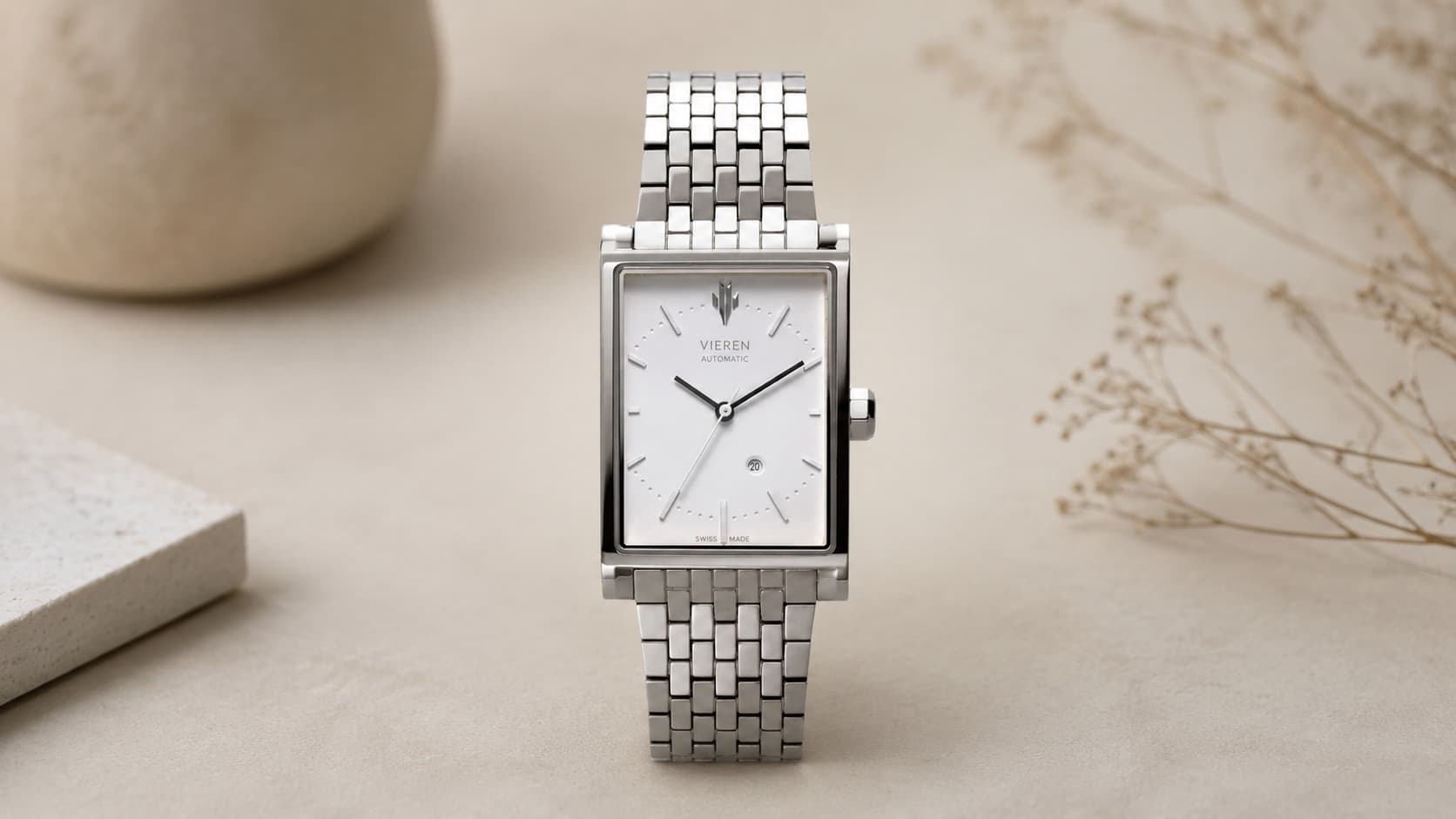
Vieren represents the higher end of Canadian watchmaking, and it holds a notable distinction: it was founded by Jess Chow, Canada’s first female founder of a luxury Swiss watch brand. Chow launched Vieren in Toronto in 2020 to honor more than 50 years of watchmaking history in her own family, having grown up traveling the world with her parents to visit watch manufacturers.
Every Vieren watch is handcrafted at the brand’s atelier in La Chaux-de-Fonds, Switzerland, a process that takes around six months per collection and runs on the ETA 2671 automatic movement. The brand’s creative direction comes from Sunny Fong, a fashion designer and Project Runway Canada winner, who designed the case to work equally well on any wrist rather than splitting the collection into separate men’s and women’s styles.
Vieren sits closer to fine jewelry than to tool watches in both price and presentation, with details like an 18K gold rehaut ring etched with minute markers and packaging that doubles as a vegan leather watch stand. The brand shows that Canada’s watch scene isn’t limited to rugged sports watches and micro-brand dive watches.
Other Notable Canadian Watch Brands
Beyond the handful of brands above, Canada is home to a smaller wave of independent watchmakers who serve very specific niches, from wearable art to true haute horlogerie. These names may not have the same name recognition yet, but each one adds something distinct to the country’s watch scene.
Wilk Watchworks is a one-person operation in Toronto, run by Scott Wilk, a former jewelry maker who was later trained in watchmaking after landing a job at a watch repair shop and talking the resident watchmaker into teaching him the trade. Every Wilk watch is designed and hand-finished in his own workshop, using Swiss and Chinese movements paired with dials and cases he treats more like small sculptures than standard watch parts. Customers can also commission fully custom pieces, which is unusual even among Canadian microbrands.
Whitby Watch Co. builds its entire identity around Canadian history, releasing limited-edition watches themed around specific figures and events, such as Sir William Stephenson, the Canadian spy said to have inspired Ian Fleming’s James Bond. The brand traces its name back to the town of Whitby, Ontario, once home to the Canada Clock Company in the 1870s, and deliberately avoids crowdfunding in favor of a slower, story-first approach to launching new watches.
Bradley Taylor sits at the far high end of Canadian watchmaking, producing only a handful of watches a year out of a workshop in North Vancouver. Taylor trained as a watchmaker in Le Locle, Switzerland, and holds watchmaking certifications from both Patek Philippe and Hublot, credentials he earned before striking out on his own with the Paragon, a hand-finished watch featuring a guilloché dial made by Comblémine, the dial-making house owned by renowned independent watchmaker Kari Voutilainen. With only a dozen or so pieces made per release and price tags reaching into five figures, Bradley Taylor represents Canadian watchmaking at its most artisanal.
Canadian Watch Brands Compared
| Brand | Founded | Headquarters | Known For | Price Positioning |
|---|---|---|---|---|
| Marathon Watch Company | 1939 | Vaughan, Ontario | Military-grade tool watches, tritium lume | Mid-range |
| Halios Watches | 2009 | Vancouver, BC | Small-batch dive watches, direct-to-collector sales | Under $1,000 |
| Momentum Watches | 1980 | Vancouver, BC | Affordable, rugged outdoor and dive watches | Budget to mid-range |
| Solios Watches | 2019 | Montreal, Quebec | Solar power, B Corp sustainability | Budget to mid-range |
| Ferro & Company | 2014 | Vancouver, BC | Vintage motorsport and Art Deco-inspired design | Budget to mid-range |
| Vieren | 2020 | Toronto, Ontario | Luxury handcrafted Swiss timepieces | High-end luxury |
| Wilk Watchworks | 2010 | Toronto, Ontario | One-of-a-kind and custom-designed watches | Mid-range to custom pricing |
| Whitby Watch Co. | Founding year not publicly confirmed | Whitby, Ontario | Watches themed around Canadian history | Budget to mid-range |
| Bradley Taylor | 2020 | North Vancouver, BC | Hand-finished, ultra-limited haute horlogerie | High-end luxury |
A rough rule of thumb helps narrow this list down quickly: anyone who wants a tough, mission-ready tool watch should look at Marathon or Momentum, anyone drawn to sustainability and modern minimalism fits best with Solios, collectors chasing vintage character and storytelling should look at Ferro & Company or Whitby Watch Co., and anyone shopping at the luxury end has Vieren and Bradley Taylor at opposite corners of that space, one focused on refined everyday luxury and the other on rare, handmade pieces built for serious collectors.
Why Canadian Watch Brands Are Gaining Attention
Canadian watch brands are gaining attention because they combine practical design with values that matter to today’s buyers, like durability, sustainability, and honest pricing. Unlike some legacy brands that lean heavily on heritage marketing, most Canadian watchmakers are relatively young companies built by small teams who talk directly with their customers.
This closeness to the customer base shows up in how these brands operate. Halios grew out of forum discussions with actual watch enthusiasts. Solios built its entire identity around environmental values that resonated with a specific type of buyer. Momentum has kept its pricing accessible for over four decades because that was the founder’s original goal. These aren’t corporate strategies handed down from a boardroom; they’re personal choices made by small teams who care about a specific niche.
Canada’s geography also plays a role. Being close to major mountain ranges, coastlines, and harsh winter conditions has pushed several of these brands toward rugged, functional designs rather than pure dress watches. It’s not a coincidence that so many Canadian watch companies specialize in dive, field, and outdoor watches.
Frequently Asked Questions
Are Canadian watches made entirely in Canada?
Usually not completely, since most Canadian watch brands design their watches at home but source movements and components from Switzerland or Asia. This is standard practice across the watch industry worldwide, including for many well-known Swiss and American brands. What stays Canadian is the design work, brand direction, and often the final quality control before a watch ships to customers.
Is Marathon a good watch brand?
Yes, Marathon has a strong reputation built on decades of supplying reliable, military-specification watches to government and armed forces. Its watches are known for rugged construction, tritium illumination that glows without needing to be charged, and Swiss-made movements assembled at the brand’s own Switzerland facility.
What is the oldest Canadian watch brand?
Marathon Watch Company is the oldest recognized Canadian watch brand still in operation, founded in 1939 in Montreal by Morris Wein. Its roots actually stretch back even further to 1904, when the Wein family started an earlier watch business called Weinstrum Watch.
Are Canadian watch brands expensive?
It depends heavily on the brand, since Canadian watchmakers range from budget-friendly outdoor watches to high-end luxury pieces. Momentum, for example, focuses on affordable pricing for rugged sports watches, while a brand like Vieren produces handcrafted Swiss luxury timepieces that sit at a much higher price point.
Do any Canadian watch brands focus on sustainability?
Yes, Solios is the most notable example, having become the world’s first B Corp certified watch brand by building its entire business around solar power and recycled materials. Its watches avoid disposable batteries entirely and use recycled steel cases along with vegan leather straps.
Conclusion
Canada’s watch industry may be small compared to Switzerland or Japan, but it has carved out a clear identity built on rugged reliability, direct relationships with customers, and, in the case of brands like Solios and Vieren, genuine commitments to sustainability and craftsmanship. Whether someone wants a military-grade dive watch built to survive decades of hard use, a limited-run collector’s piece from a one-person Vancouver shop, or a handcrafted luxury timepiece from a Toronto atelier, Canadian brands now offer a real alternative to the traditional Swiss and Japanese names. The common thread running through all of them is a focus on function and honesty over flash, which is exactly the reputation this small but growing watchmaking scene has earned.