Fake perfume is a bigger problem than most shoppers realize. Counterfeiters copy the box, the bottle, even the exact shade of the liquid inside, and they sell it for a price that looks like a lucky deal. The trouble is that a bottle of fake perfume isn’t just a weaker version of the real thing — it can be made with ingredients that were never tested for safety, and it almost never smells or lasts the way the original does. Knowing how to check a bottle before you buy, or right after it arrives, can save you money, protect your skin, and make sure the fragrance you paid for actually smells the way it’s supposed to.
What Counts as a Fake Perfume?
A fake perfume is one that copies a real brand’s name, bottle, and box without permission, and it’s almost never made in the same factory or with the same ingredients as the original. Counterfeiters aren’t trying to make a similar-smelling alternative — they’re trying to trick you into thinking you bought the genuine product.
This is different from a “dupe” or an inspired fragrance, which is an independent perfume that’s openly sold under its own name and honestly says it smells similar to a famous scent. A counterfeit, by contrast, is dishonest by design. It’s stamped with a real brand’s logo, sold as if it came from that brand, and priced to make you believe you found a bargain.
Because counterfeit operations skip the expensive safety testing and quality control that legitimate perfume houses go through, what’s actually inside the bottle can vary wildly from batch to batch. Sometimes it’s diluted alcohol mixed with cheap fragrance oil, and sometimes it contains substances that were never meant to touch skin at all. A fake perfume bought last month might not even match the one sold under the same fake label today, which is exactly why a single obvious flaw is rarely the whole story.
It’s also worth separating counterfeits from decants, since the two get confused often. A decant is a small, unbranded bottle that a seller has filled from a large, genuine bottle of perfume, usually to let buyers try a scent without committing to full price. A decant arriving without the original box or brand markings isn’t automatically fake — it’s simply repackaged. The difference comes down to the seller: a legitimate decanter will tell you exactly which authentic bottle it came from and won’t try to pass the small bottle off as an original retail product, while a counterfeiter is doing the opposite — dressing up a fake as if it were the real, boxed original.
Watch Out for Suspiciously Low Prices
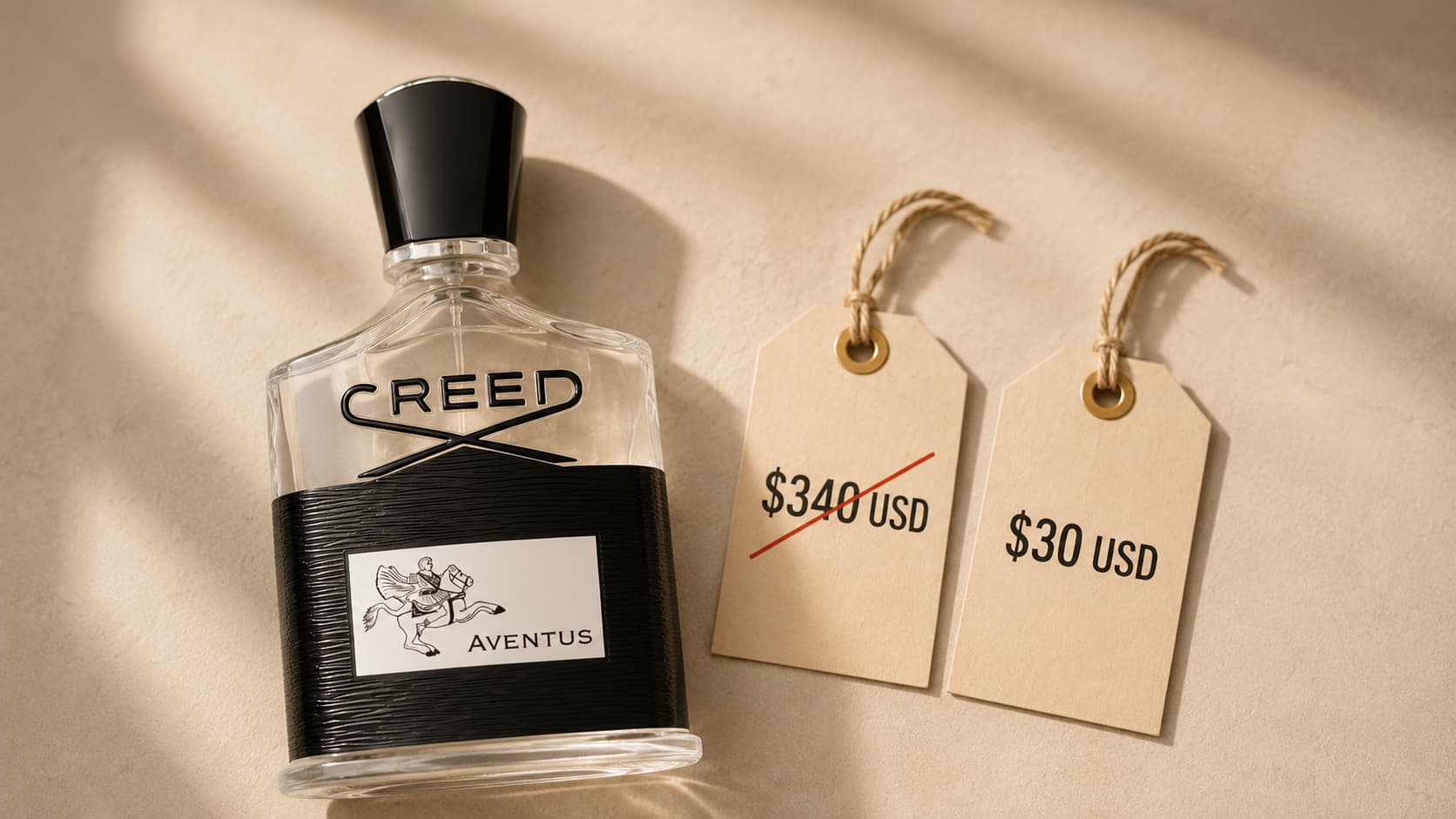
If a well-known perfume is priced far below what it normally costs, that’s the single quickest sign something is wrong. Genuine fragrance houses control their pricing closely, so a legitimate retailer rarely discounts a popular bottle by more than 20 to 30 percent, even during a sale.
There are real exceptions — clearance on last season’s packaging, a store closing down, or a brand quietly retiring a scent can all lead to genuine deep discounts. But if a listing offers a famous, currently popular perfume at half its usual price with no explanation, treat that as a warning rather than a win. Counterfeit sellers rely on the excitement of a “steal” to stop people from looking any closer at the bottle itself.
A price that feels too good to be true is doing exactly what it’s designed to do: distracting you from everything else you should be checking.
What Genuine Perfume Packaging Looks Like
A genuine perfume box arrives with its wrapping pulled taut and its edges perfectly square, and the text printed on it is crisp enough to read at a glance with no smudging or spelling slips. Counterfeiters often get the big picture right but fumble the small details, because reproducing exact fonts, precise color printing, and premium cardboard is expensive.
The shrink-wrap is worth checking first. It should sit smooth and tight against the box, since loose, wrinkled, or unevenly sealed cellophane is a common sign of repackaging. The cardboard itself should feel thick and sturdy, with crisp foil stamping or embossing on the logo rather than a flimsy, bendable finish. The printed text should be perfectly sharp, and a single typo, a blurry logo, or an oddly translated ingredient list is one of the most reliable giveaways there is, since major fragrance houses proofread their packaging obsessively. The color and finish of the box should also match official product photos on the brand’s own website, since slightly “off” shades of a brand’s signature color are easy to miss unless they’re compared side by side.
Any one of these on its own might just be a manufacturing quirk, but two or more together is a strong signal the box isn’t genuine.
Batch Codes, QR Codes, and Authenticity Checks
Every genuine perfume has a batch code — a short string of letters and numbers, usually printed on the bottom of the box and on the bottle itself — and both codes should match each other exactly. This code isn’t decorative. Brands use it to track manufacturing dates, ingredients, and recalls, so a missing, mismatched, or clearly fake-looking code is a strong sign of trouble.
You can usually find the batch code stamped, etched, or printed near the barcode on the base of the box, and again somewhere on the bottle, often on the bottom or the back of the label. If the box has no barcode at all, or the barcode looks pixelated or hand-printed rather than machine-printed, treat that as a bad sign.
Some independent batch-code lookup tools exist online and can decode the approximate manufacturing date for certain well-known brands, which is a useful double-check when you’re unsure. That said, the safest approach is always comparing what you find against what the brand itself publishes, since sophisticated counterfeiters have been known to copy real batch codes onto fake bottles — so a matching code helps your case, but it isn’t the only proof you need.
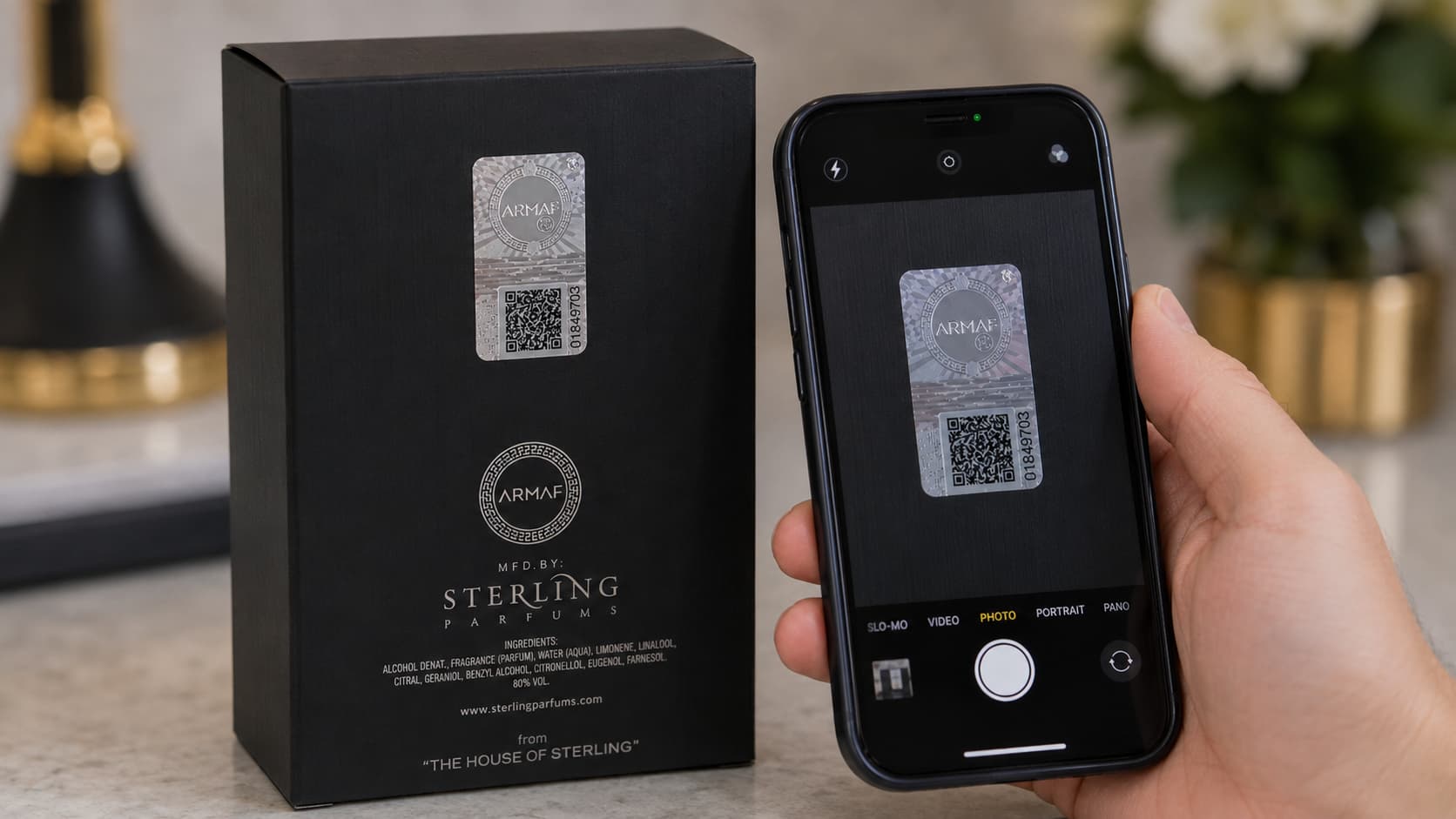
A growing number of brands now go a step further with a scannable QR code or a holographic security label, separate from the ordinary batch code, and this isn’t limited to expensive Western designer houses. Several major Middle Eastern fragrance houses — including some of the biggest names in Arabian perfumery — now print a QR-linked holographic label directly on the box, which opens a verification page when scanned. Some of these systems even track how many times that specific code has been scanned, so if the page shows the code has already been checked hundreds or thousands of times, that’s a sign the label itself has been cloned and printed onto multiple counterfeit boxes. If a brand offers this kind of check, it’s worth doing in addition to the batch code, since it catches a different kind of forgery — copying a real code onto a fake bottle is much harder to pull off than copying a real batch number.
How to Check the Bottle and the Liquid
A genuine perfume bottle is heavy, smooth, and free of visible flaws, while a counterfeit bottle often feels noticeably lighter and can have small bubbles, rough seams, or glue marks around the sprayer. Glass quality is expensive to fake well, so this is one of the harder details for counterfeiters to get exactly right.
| What to check | Genuine perfume | Common fake signs |
|---|---|---|
| Glass weight | Feels solid and heavy for its size | Feels light or hollow |
| Glass surface | Even and clear throughout | A seam that catches your fingernail, trapped air pockets, or a grainy finish |
| Spray nozzle | Fits tightly, sprays a fine, even mist | Wobbly fit, uneven or “wet” spray |
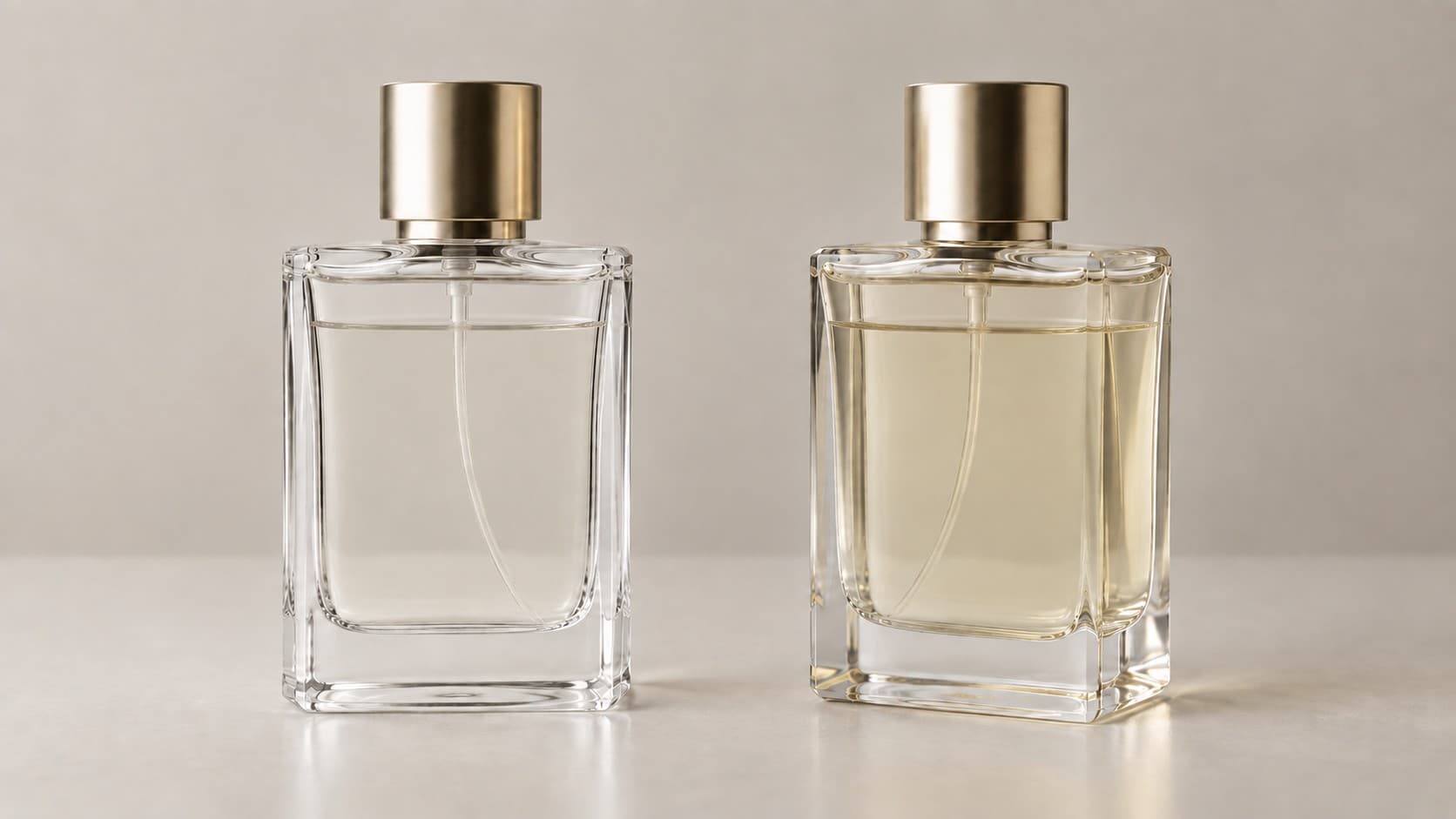
| Liquid color | Little to no dye, close to clear or lightly tinted | Unusually dark, syrupy, or harshly colored |
If you’re able to compare a bottle side by side with a tester at a department store counter, that comparison is one of the most reliable checks available to an everyday shopper, since it removes the guesswork of relying on memory alone.
Use Your Nose to Spot a Fake
A genuine fragrance unfolds in stages on your skin, moving from brighter top notes when you first spray it, through a fuller heart of the scent after 10 to 30 minutes, down to a warmer base that can still be noticeable hours later. A fake perfume usually skips this journey. It tends to smell fairly flat and one-dimensional from the first spray to the last, because the cheaper ingredients used in counterfeits don’t evaporate and blend the way real perfume oils do.
Longevity is one of the clearest tells, and what counts as normal depends on the concentration printed on the box itself.
| Type | Typical fragrance oil | Expected longevity on skin |
|---|---|---|
| Eau de Cologne (EDC) | 2–4% | 1–2 hours |
| Eau de Toilette (EDT) | 5–15% | 3–5 hours |
| Eau de Parfum (EDP) | 15–20% | 6–8 hours |
| Parfum / Extrait de Parfum | 20–30% | 8–12+ hours |
If a bottle is labeled Eau de Parfum but fades within an hour, or smells like rubbing alcohol as it wears off instead of settling into a smoother base note, that mismatch between the label and the real-world performance is a meaningful clue that something isn’t right. Genuine perfume houses also test extensively to keep a scent consistent bottle to bottle, so if a fragrance you know well suddenly smells sharper, simpler, or “off” compared to how you remember it, it’s worth trusting that instinct.
Buying Perfume Online Without Getting Fooled
The safest way to avoid a counterfeit entirely is buying from the brand’s own website, an official brand boutique, or a retailer that’s listed as an authorized seller on the brand’s site. Authorized retailers buy their stock directly from the fragrance house, which means the supply chain is traceable from the factory to the shelf, and it also means you get access to a real return policy if something does go wrong.
When you’re buying somewhere outside of an authorized retailer — a marketplace listing, a resale site, or a discount shop — a little homework goes a long way. Check whether the seller has a clear, working return policy before you pay, and read recent reviews that specifically mention the fragrance’s authenticity rather than just general shipping speed. Be cautious of listings that only accept irreversible payment methods, since that’s a common pattern among sellers who don’t want a paper trail if a buyer later disputes a charge. None of these checks are foolproof on their own, but combined with a close look at the packaging, batch code, and scent, they build a genuinely reliable picture of whether a bottle is likely to be real.
The Health Risks of Counterfeit Perfume
Buying a counterfeit perfume isn’t just a disappointing purchase — it can be a genuine safety issue. Legitimate perfume makers formulate within limits set by the International Fragrance Association, an industry body that restricts how much of certain ingredients a fragrance can safely contain, and reputable brands also run skin-irritation and allergy testing before a scent goes to market. In the European Union specifically, cosmetic products including perfume must additionally be safety-assessed and registered in a central database that poison control centers can access if a reaction is ever reported. Counterfeit perfumes skip this process entirely, wherever they’re sold.
Because fake perfumes are made without safety oversight, they occasionally contain unregulated or industrial-grade ingredients that were never approved for skin contact. This is why people sometimes report irritation, rashes, or a burning sensation after wearing a counterfeit fragrance that they wouldn’t expect from the real version, especially on sensitive skin or after repeated use. This risk, more than anything else, is the strongest reason to slow down and check a bottle carefully rather than chase a bargain price.
Frequently Asked Questions
Can a fake perfume smell exactly like the real one?
A well-made counterfeit can smell surprisingly close, especially in the first few minutes after spraying, which is why scent alone isn’t always a reliable test. The bigger difference usually shows up over time, since fakes tend to fade faster and smell flatter or more chemical as the hours pass.
Is it safe to buy perfume from a marketplace or resale site?
It can be, but only if you check the seller carefully first, since these sites don’t screen every listing for authenticity the way an official retailer does. Look for sellers with verified reviews specifically about fragrance authenticity, and always inspect the batch code and packaging closely as soon as the item arrives.
Does a low price always mean a perfume is fake?
Not always, since real discounts do happen during clearance sales or when a brand is phasing out a bottle design. But a well-known, currently popular perfume priced dramatically below its normal cost, with no clear explanation, should always be treated as a warning sign worth investigating further.
What should I do if I think I bought a fake?
Stop using it on your skin, since counterfeit ingredients aren’t guaranteed to be safe, and contact the seller or platform about a return or refund. If the seller refuses to cooperate, most payment providers and marketplaces have a dispute process for counterfeit goods.
Are batch codes always accurate for checking authenticity?
Batch codes are a genuinely useful clue, but they’re not perfect on their own, since sophisticated counterfeiters sometimes copy real codes onto fake bottles. They work best as one part of a bigger check that also includes the packaging, the bottle quality, and the scent itself.
Conclusion
Spotting a fake perfume comes down to slowing down before buying and paying attention to a handful of specific details afterward: a price that’s realistically close to normal, packaging with sharp printing and a proper seal, a batch code that matches on the box and bottle, a heavy and flawless bottle, and a scent that actually changes and lasts as long as its concentration promises. No single detail is completely foolproof by itself, but together they form a genuinely reliable way to tell a real bottle from a counterfeit before it ever touches the skin.