Perfume is one of the few accessories other people notice before they even see the person wearing it. A well-chosen scent, worn at the right strength, can leave an impression that lingers in the best way. But the same bottle that earns a compliment at a dinner party can send a coworker out of a meeting with a headache, or fill an elevator so completely that strangers hold their breath until the doors open. Because scent travels beyond anyone’s control once it’s applied, it comes with its own set of unwritten rules—rules that shift depending on the setting and the people sharing it. Those rules aren’t about wearing less personality or being overly cautious. They’re about letting a fragrance do its job without doing too much.
Why Perfume Etiquette Is Important
Perfume etiquette matters because scent affects other people’s bodies, not just their opinions. Unlike a loud shirt or an unusual haircut, fragrance can trigger real physical reactions in people nearby—headaches, sneezing, nausea, or breathing trouble in those with allergies or sensitivities. That is why so many offices, hospitals, and even schools have started asking staff and visitors to wear little or no scent at all.
There’s also a simple social reason behind it. Fragrance is meant to draw people in, not push them away. When a scent is too strong, it stops being a personal detail and becomes a shared experience for everyone in the room, whether they want it or not.
Smell is also tied more closely to memory than any other human sense, because scent signals travel to the brain through the olfactory bulb, which sits right next to the areas that store memory and emotion. That is part of why a perfume worn at the wrong moment can stick in someone’s mind for the wrong reason, and why a perfume worn thoughtfully can become something people genuinely associate with a person in a good way. Good perfume etiquette follows the same logic as good manners generally: it accounts for the space being shared before deciding how much scent to bring into it.
The One Rule Every Perfume Wearer Should Know
The golden rule of wearing fragrance is that it should be noticed only by people standing close, not by everyone in the room. Perfumers call the trail a scent leaves behind “sillage” (pronounced see-yazh), and it is the single most useful concept for getting fragrance etiquette right in any setting.
A polite sillage means someone would need to lean in or embrace the wearer to catch the scent at all. A loud sillage means people two desks away, or two seats down on a train, know exactly what perfume is being worn. Neither is wrong in every situation—a big night out can handle a bigger trail—but most day-to-day settings call for the quieter version.
Sillage isn’t only about how much is sprayed. It also depends on individual skin chemistry, the weather, and the fragrance’s own concentration. Warm, humid air speeds up how fast scent molecules evaporate and spread, which is why the same perfume can feel noticeably stronger on a hot, humid day than a cold, dry one. Framing the question in terms of sillage instead of spray count makes the rest of these rules far easier to apply across settings.
How Many Sprays of Perfume Is Too Much?
There’s no single number that works for every bottle, but a reasonable starting point is two to four sprays on pulse points for daytime wear, with slightly more reserved for evening events. Pulse points—wrists, the base of the throat, behind the ears—generate a little heat, which helps fragrance open up gradually throughout the day instead of blasting out all at once.
A scent still easy to smell on the wearer an hour after application has likely been noticeable to other people since the moment they walked in.
Concentration matters just as much as spray count, since it changes how far the same number of sprays will carry. The four main categories differ mainly in fragrance-oil percentage and how long they last on skin:
| Concentration | Approx. fragrance oil | Typical wear time | Best for |
|---|---|---|---|
| Parfum / Extrait | 20–40% | 8+ hours | Evening events, special occasions |
| Eau de Parfum (EDP) | 15–20% | 6–8 hours | Most daily wear, work with light application |
| Eau de Toilette (EDT) | 5–15% | 3–5 hours | Office, daytime, warm climates |
| Eau de Cologne (EDC) | 2–5% | 2–3 hours | Quick refresh, very light presence |
Bottles labeled “parfum” or “extrait” sit at the top of that range because they carry the highest concentration of fragrance oil relative to alcohol, while colognes sit at the bottom because they’re mostly alcohol and water with a small amount of oil mixed in. That difference in concentration, more than anything else, explains why two sprays of one bottle can smell subtle while two sprays of another fill a room. It’s worth noting these terms aren’t legally standardized—each fragrance house sets its own formula, so the percentages above are the industry’s general convention rather than a fixed rule.
Perfume Etiquette at Office and Work
At work, the safer approach is wearing fragrance lightly or skipping it altogether, especially in shared or enclosed spaces. Offices are among the most common places where scent complaints happen, simply because people sit near each other for eight hours a day with no way to step outside the smell.
Many companies now have written scent-free or fragrance-reduced policies, particularly in healthcare, education, and government workplaces, sometimes framed as a reasonable accommodation for employees with documented fragrance sensitivities or respiratory conditions. Even where no official rule exists, applying perfume to clothing rather than skin is a reliable way to keep it barely there, since fabric holds scent closer and releases it more slowly than warm skin does. When a colleague mentions that a scent is bothering them, the physical reaction behind that comment deserves to be taken seriously rather than treated as a matter of personal taste.
Job Interviews and Important Meetings
For interviews, presentations, or first meetings with clients, less is genuinely more. The goal is for the other person to focus on what’s being said, not on a cloud that arrived thirty seconds before its wearer did. One or two light sprays, applied at least an hour beforehand so the initial sharp burst has faded, is the safer choice.
Perfume Etiquette for Weddings
Wedding guests do best in a moderate, well-blended scent, avoiding anything unusually strong or unfamiliar. Weddings mix hundreds of people in one space—often indoors, often for hours—so a heavy or polarizing fragrance has plenty of opportunity to clash with someone else’s, or to overwhelm a room already warm from dancing and candles.
For the couple getting married, fragrance carries a little more sentimental weight. Many choose a new signature scent for the day so that smelling it afterward instantly brings the memory back, since scent is closely tied to memory recall. Because a wedding day often runs ten hours or longer, from getting ready through the last dance, a longer-lasting concentration like an Eau de Parfum, paired with one light reapplication, tends to outlast a single morning spray.
Testing a new fragrance for a full day beforehand remains the safest step, since dry-down on individual skin can turn sharp or unpleasant hours after the first application.
Perfume Etiquette for Funerals and Memorial Services
Funerals call for the lightest touch of any occasion on this list, and unscented is always an acceptable choice. Grief already heightens sensitivity, both physically and emotionally, so a strong perfume can feel intrusive at a moment meant for quiet reflection. A soft, familiar scent applied sparingly works best when fragrance is worn at all; anything sweet, loud, or celebratory in character tends to feel out of place.
Perfume Etiquette at Religious Services
Many religious spaces are enclosed, often crowded, and meant to encourage stillness, which makes heavy fragrance especially noticeable and disruptive there. Some traditions already fill the air with their own scent through incense, such as during a Catholic Mass or in many Hindu and Buddhist temples, and a strong personal perfume layered on top can create an overwhelming mix rather than a pleasant one. Islamic tradition actually runs the other way for men, where wearing a pleasant fragrance before Friday prayers is considered a good practice; the more specific guidance around modesty applies mainly to women, who are traditionally advised against wearing perfume that could be noticed by men outside their own household while leaving home, including on the way to the mosque.
The general standard for most shared worship spaces still mirrors that of a hushed library: quiet in sound, and quiet in scent, especially for anyone visiting an unfamiliar service. Customs vary widely even within the same religion, so checking with a host ahead of time is generally worthwhile.
Perfume Etiquette at Restaurants and Fine Dining
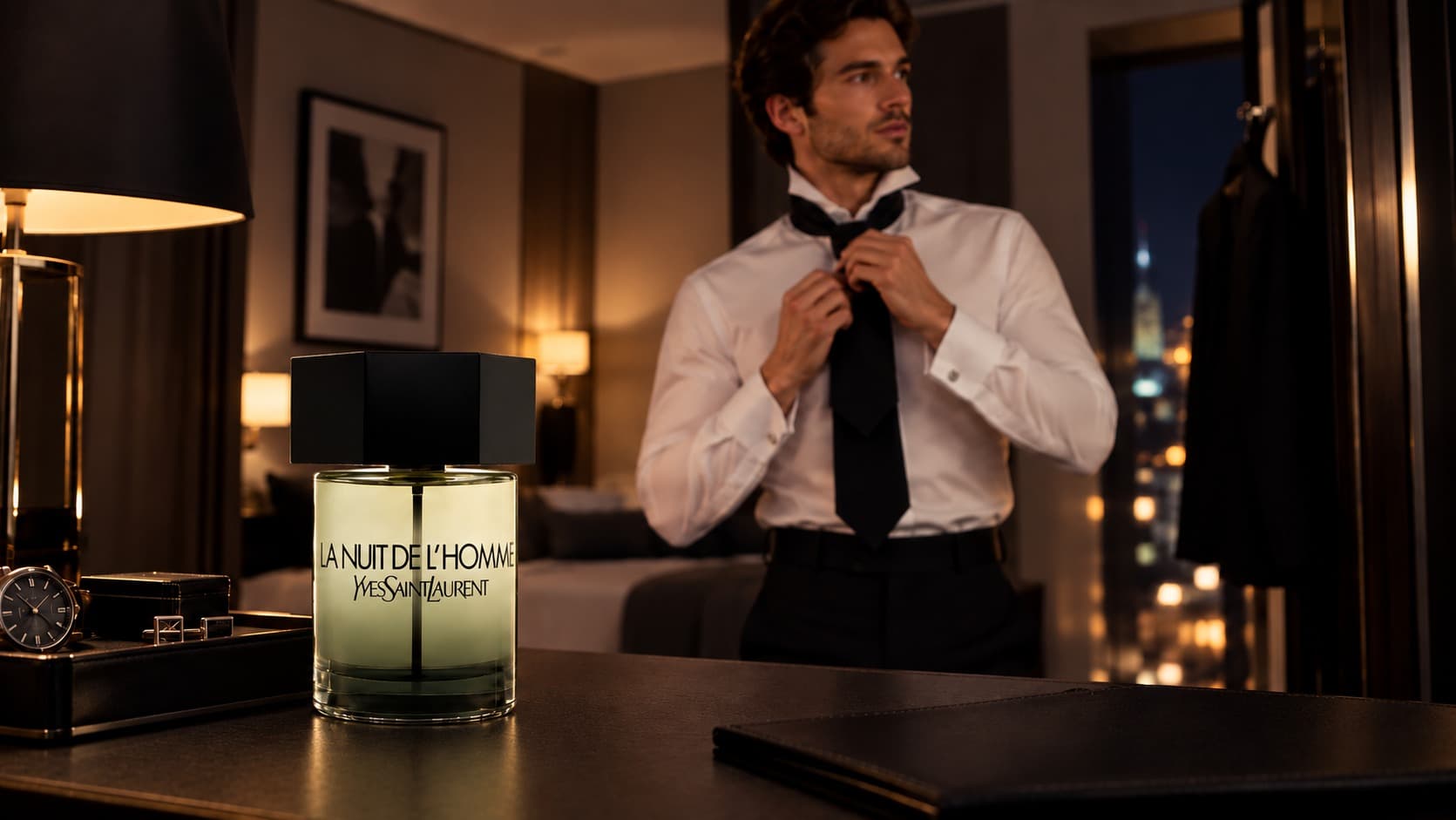
At the dinner table, perfume should never compete with the food. Strong fragrance dulls the sense of smell that diners rely on to actually taste what’s in front of them, which is a large part of why fine dining rooms are often described as having an unwritten low-scent code. A light application before leaving the house is usually plenty, with no need to reapply once seated, even during a long meal.
The standard tightens further at wine tastings and sommelier-led dinners, where staff often ask guests directly to skip fragrance altogether. Wine tasting relies heavily on smell to detect subtle notes in the glass, and even a light perfume can throw off both a taster’s own perception of the wine and that of the people tasting nearby.
Perfume Etiquette on Airplanes
On a plane, train, or bus, fragrance should stay minimal, since passengers sit inches from strangers in recycled air for extended periods. Cabin air already circulates in a closed loop, and a scent that seemed subtle before boarding can feel much stronger in a pressurized cabin with lower humidity. Reapplication is best saved for after landing or disembarking, once open air and distance from other passengers return.
Most aviation security rules also cap liquids, including perfume, at 100 ml (3.4 oz) per container, all fitting inside a single clear quart-sized bag in carry-on luggage. Checked luggage typically allows larger bottles, so packing a full-size perfume there avoids any question at the security line.
Perfume Etiquette at the Gym
Perfume is best skipped before a workout, since heat, sweat, and heavy breathing all intensify how strong a scent reads to nearby people. Fragrance mixed with sweat can also smell quite different, and less pleasant, than it does on clean, cool skin. Saving perfume for the shower and change of clothes afterward keeps the scent working the way it’s meant to.
Perfume Etiquette for Dates
This is one of the few settings that allows a bit more room for something noticeable, since dates and parties are often about making an impression up close. Even so, “noticeable when close” differs from “detectable across the restaurant.” A scent lingering pleasantly on a jacket after a hug tends to be more memorable than one that arrives at the table first.
Perfume Etiquette at Hospitals
Fragrance is best avoided entirely at hospitals, medical appointments, and visits to elderly relatives in care facilities. People in these settings are often already dealing with health issues that heighten sensitivity to smell, including nausea from medication or treatment. Staff in many such facilities are asked to remain scent-free for exactly this reason, and visitors following the same standard show simple consideration for people who have little choice about their surroundings.
How to Apply Perfume Without Overdoing It
Spraying perfume onto pulse points—wrists, the base of the throat, behind the ears—from four to six inches away and letting it dry naturally works better than rubbing the wrists together afterward. Rubbing generates friction heat that breaks down a fragrance’s top notes faster, which can make a scent smell different, and fade quicker, than if left to dry undisturbed.
Several small habits reliably keep fragrance in the pleasant range rather than the overpowering one:
- Applying right after a shower, when skin is slightly damp and pores are open, helps the scent absorb rather than sit on the surface.
- Moisturizing with an unscented lotion first extends how long fragrance lasts, meaning fewer sprays are needed overall.
- Spraying into the air and walking through the resulting mist creates an ultra-light, even layer, rather than concentrating scent in a few spots.
- Reapplying only once a scent is no longer noticeable to its wearer, rather than on a fixed schedule, keeps strength consistent through the day.
Layering scented products, such as a matching body wash or lotion, works best within a single fragrance family rather than mixing two unrelated perfumes. Products from one line build a fuller, longer-lasting version of a single scent, while combining unrelated fragrances often creates a muddled smell that ends up stronger and less pleasant than either one alone.
Signs You’re Wearing Too Much Perfume
A small step back during a greeting, or a nearby sneeze shortly after entering a room, is a fairly reliable sign that a fragrance has been overdone. Detectability hours after the last touch-up, or watering eyes on a coworker walking past, point to the same conclusion.
On the other hand, no one ever commenting on a perfume isn’t automatically a problem, since not every scent is meant to draw daily compliments. But a scent that’s undetectable even up close fifteen minutes after application is likely too faint to be doing its job, and one additional light spray tends to fix that.
How to Handle Perfume Complaints Gracefully
A simple thank-you works better than an apology or a defense, since raising the subject at all takes a socially uncomfortable step, and treating the comment as useful information rather than a personal attack keeps the exchange short and comfortable for everyone involved. Fragrance sensitivity is a physical reaction for many people, not a matter of taste, so no explanation of how much the scent is loved is really necessary.
In settings where the same people will be seen again, a practical fix usually solves the problem: a lighter application going forward, or a spare unscented lotion or change of clothes kept on hand for close-quarters days. In situations with no immediate fix available, such as mid-flight or mid-dinner, a brief acknowledgment is enough on its own—over-apologizing tends to make the moment more awkward than the original comment did.
Frequently Asked Questions
Is it rude to wear perfume to work?
Wearing perfume to work isn’t rude on its own, though wearing it heavily in a shared space often reads that way. Light application, applied to clothing rather than skin in small or enclosed offices, along with respecting a colleague who raises a concern, keeps the practice on the right side of that line.
How can someone tell if a perfume is too strong for others?
A scent easily detected from arm’s length after the initial spray has settled is almost certainly reaching other people even more strongly. Physical reactions from those nearby, such as coughing or stepping back, tend to be clearer evidence than either a compliment or silence.
Is it appropriate to wear perfume to a funeral?
No fragrance at all, or something extremely light and familiar, remains the most respectful choice at a funeral. Grieving spaces already carry heavy emotion, and a strong or unfamiliar scent can feel out of place, or even distressing, to people close to the loss.
Is it okay to wear perfume on an airplane?
Perfume is fine on a plane as long as it stays minimal, since recycled cabin air makes scent linger and intensify in close quarters. A light application before boarding is usually sufficient, with a fresh spray better saved for after landing.
What can be done if too much perfume has already been applied?
Covering the smell with another product tends to make matters worse, since mixing scents rarely improves either one. Rinsing the applied areas with water, or wiping them lightly with a damp cloth, tones things down fastest, and a change of clothing helps further, since fabric holds fragrance longer than skin does.
The Bottom Line
Perfume etiquette ultimately comes down to reading a room and matching sillage to it—heavier for a night out with friends, and close to nothing for a hospital visit, a funeral, or a crowded office. The application habits that keep a scent polite in nearly any setting stay the same throughout: applying to damp, moisturized skin, using only as many sprays as it takes to notice the fragrance up close, and reapplying based on what’s still detectable rather than the clock. Once that becomes routine, fragrance stops requiring a fresh calculation for every new setting and simply becomes part of how a person shows up in it.