It’s not unusual for a perfume to smell a little softer, or look a shade darker, months after it was first bought. Behind that shift are two production steps most people never hear about. Perfumers call them maceration and maturation, and although the internet often mixes the two up, they happen at different points in the process and do different jobs. Understanding them clears up a lot of confusion about why a fragrance smells “off” right after blending, why it mellows out over time, and why an old bottle sitting on a shelf might look different from the one currently on display in a store.
Maceration vs. Maturation: The Basic Difference
Maturation happens first, when raw fragrance oils are blended together and left to rest so they combine properly. Maceration happens later, after that blend is diluted with alcohol, and it’s the resting period that lets the finished liquid settle into a stable, well-rounded scent.
Both words get thrown around loosely online, often lumped together with a third idea: aging. But inside an actual perfume lab, these are two separate, deliberate steps with their own timing and purpose. Neither one is something a customer does at home. They happen before the bottle ever leaves the factory, usually inside large stainless steel tanks rather than the small glass bottles people picture.
There’s also an older meaning of “maceration” that shows up in perfume history and can add to the confusion. Long before modern extraction technology existed, perfumers used maceration to describe soaking delicate flowers, like jasmine, tuberose, or hyacinth, in warm fat to pull out their essential oils, since these particular blooms can’t survive the heat of steam distillation. That extraction technique is a completely different process from the modern manufacturing step, but the shared name is one more reason the word feels murky.
Maturation: The First Step in Perfume Making
Maturation is the stage where the raw concentrate is born. Perfumers combine dozens, sometimes hundreds, of individual fragrance oils into one blend, then let that mixture sit undisturbed for roughly two to three weeks. During this time, the ingredients need space to combine and settle into a single, unified scent instead of smelling like separate parts.
While the blend rests, perfumers keep smelling and adjusting it. They might add a touch more warmth with amber, or brighten things up with a hint of citrus, testing the mix again and again until it smells the way they intended. This back-and-forth is why maturation can take weeks rather than days. Rushing it usually means the final scent smells thin or unbalanced.
Some natural ingredients may keep quietly changing during this stage too, at least in theory. Clove oil, for example, contains a compound that some perfume chemists believe could slowly react with any trace water left in the alcohol, gradually shifting its character. It’s not a settled fact so much as an educated guess among people who work with these oils, but it points to a bigger idea: even before dilution, a fragrance concentrate isn’t a fixed, unchanging thing. It’s still settling into what it will eventually become.
Maceration: What Happens After Dilution
Maceration starts once that matured concentrate gets mixed with alcohol to reach its final strength, whether that’s an eau de parfum, eau de toilette, or another concentration. This diluted mixture then rests again inside sealed tanks, anywhere from a few days for a simple formula to several weeks, or by some accounts up to two months, for a complex one built on natural ingredients.
Many perfumers treat maceration as the true make-or-break stage: the point where a collection of separate ingredients finally settles into something that reads as one finished, coherent perfume.
What’s actually happening during this rest period is chemical, not just cosmetic. Fragrance oils and the alcohol they’re mixed with can slowly react with each other, forming new compounds and letting components bond more completely with fixatives, the ingredients that help a scent last longer on skin. That’s the molecular reason harsh or sharp notes soften and the blend starts smelling rounder and more integrated, rather than the ingredients just “settling” in some vague sense.
Once maceration finishes, the perfume usually goes through a cold filtration step before bottling. Chilling the liquid causes tiny amounts of wax and other natural material to solidify enough to be filtered out, which is what keeps a finished perfume looking clear on a store shelf instead of turning cloudy the first time it hits a cold car or a chilly bathroom.
Is Maceration the Same as Aging Perfume at Home?
The confusion mostly comes from social media, where videos claim that letting a store-bought bottle sit for months or years will make it smell better. That’s a different process entirely, and perfumers simply call it aging, not maceration or maturation.
Maceration and maturation are controlled manufacturing steps carried out with specific ingredients, temperatures, and timeframes, long before a bottle reaches a store shelf. What happens afterward, in a bathroom cabinet or on a shelf exposed to sunlight, isn’t a repeat of that process. It’s just the natural, much slower breakdown of a finished product sitting around for a long time, driven by light, heat, and air rather than any deliberate blending step.
Some enthusiasts online also suggest tricks like squeezing a perfume’s atomizer to pull small amounts of air into the bottle on purpose, believing this recreates maceration through a kind of controlled oxidation. Perfumers who’ve weighed in on this generally disagree, pointing out that oxygen is more likely to degrade a finished fragrance over time than improve it, which is exactly why bottles are sealed tightly in the first place.
Why Perfume Turns Amber or Yellow With Age
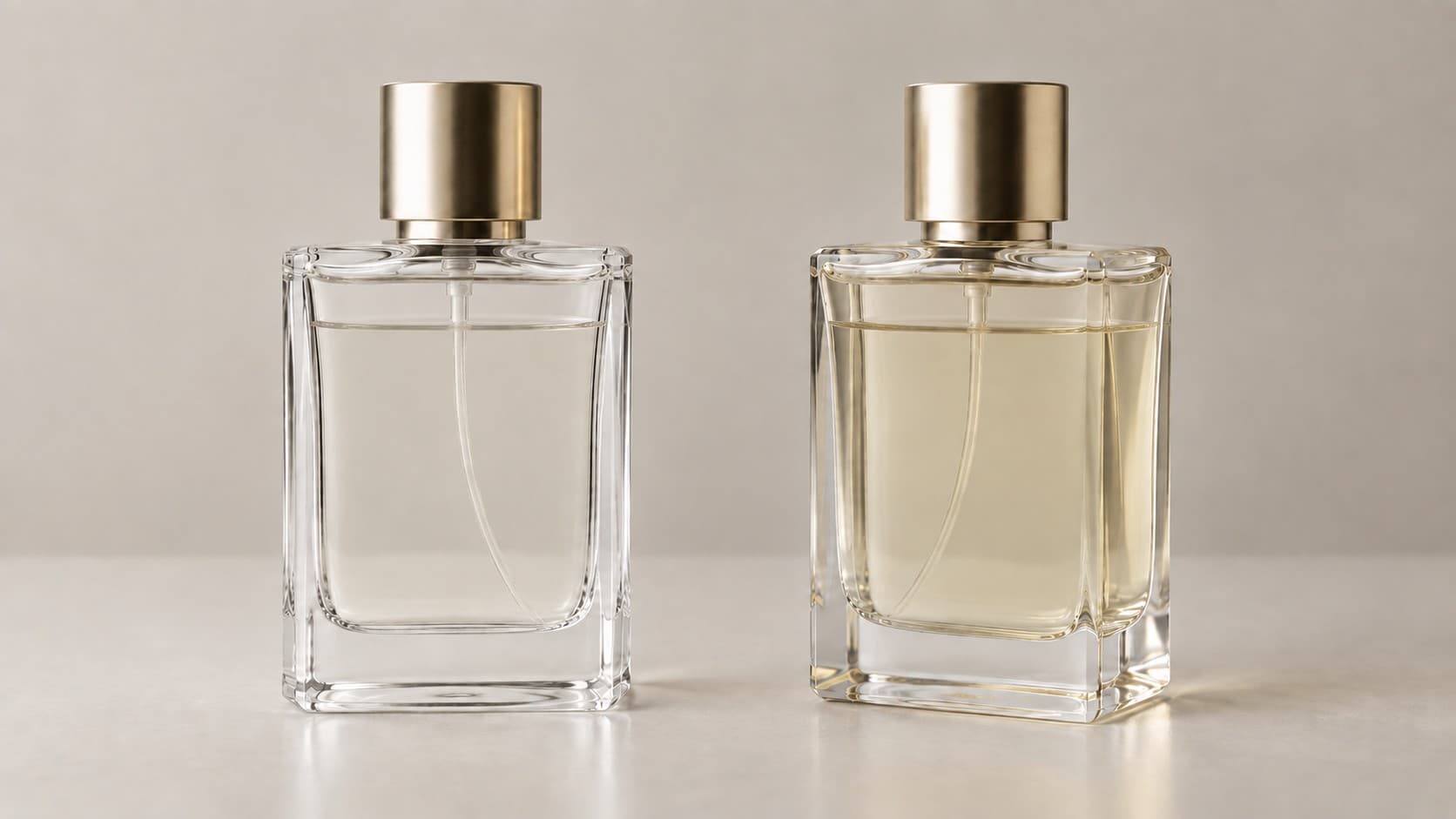
A clear perfume turning slightly amber or honey-colored over months or years is usually a normal sign of aging, not spoilage. Light, heat, and air exposure slowly react with certain fragrance ingredients, especially natural extracts, which can shift the liquid’s color even while the scent still smells recognizable.
This doesn’t necessarily mean the perfume has gone bad. Many fragrances still perform fine after a color change, sometimes even smelling richer or deeper because of how the ingredients have mellowed. That said, if a perfume starts smelling sour, flat, or nothing like it used to, that’s a different story and usually means it’s genuinely past its best.
Storage habits make a real difference here. Bottles kept away from direct sunlight, in a cool, stable spot rather than a steamy bathroom, will generally hold their original color and scent far longer than ones left on a sunny windowsill or in a hot car, since heat and UV exposure are the two biggest accelerators of this kind of change.
Perfume Maceration and Maturation Timelines Explained
There’s no single fixed timeline, because it depends heavily on the formula. A simple scent with few ingredients might be ready in days, while a complex blend loaded with natural extracts can need weeks, and sometimes closer to two months, for each stage.
| Stage | What’s Happening | Typical Length |
|---|---|---|
| Maturation | Raw oils blended and adjusted | About 2–3 weeks |
| Maceration | Diluted formula rests and stabilizes | Several days to around 4–8 weeks |
| Cold filtration | Wax and residue removed for clarity | Hours, right before bottling |
| Aging (post-sale) | Slow changes from light, heat, and air | Months to years |
Perfumers who work with a lot of natural ingredients tend to build in longer rest periods, since naturals react and settle more than synthetic materials do. A formula heavy on synthetics might be stable much sooner, which is one reason two perfumes with similar price tags can have very different production timelines behind them.
There’s also a popular claim in fragrance communities that certain high-volume “dupe” brands, many now coming out of the booming Middle Eastern market, skip a proper maceration period altogether, since their whole business model runs on fast turnaround and low prices rather than months of resting formulas. That claim is a debated idea rather than a confirmed fact. Enthusiast forums on the topic are split roughly down the middle: plenty of people report that a harsh, synthetic-smelling clone genuinely mellows out after weeks of ownership, while just as many say they’ve owned the same bottles for months without noticing any change at all.
It’s also not really a regional pattern. Amouage, a well-established Omani perfume house that isn’t in the clone business, has described its own top-tier Exceptional Extrait line as needing roughly five to ten weeks of maturation followed by a maceration stage that can run anywhere from three to sixteen weeks, timelines on the longer end of the industry. What people are likely picking up on has more to do with a formula’s price point and ingredient mix, heavily synthetic and built for speed versus naturals-heavy and built for depth, than with where a brand happens to be based.
Why Maceration and Maturation Matter
Skipping or rushing maturation and maceration usually results in a scent that smells sharp, disjointed, or unfinished, even if every ingredient in the formula is high quality. That’s because the individual notes haven’t had time to bond and blend into one cohesive smell yet.
This is one reason a freshly mixed formula, even one copied precisely from a finished product, can smell noticeably different straight after blending compared to how it smells weeks later. Home perfumers who try to recreate commercial scents often run into exactly this problem: the ingredient list is right, but the smell is still “off” until enough rest time has passed.
Time isn’t a formality in perfume-making. It’s an active part of how the scent actually forms, which is why reputable fragrance houses build weeks or months of rest into their production schedule rather than treating it as wasted time.
Frequently Asked Questions
Is maceration the same thing as letting perfume sit at home?
No. Maceration is a controlled manufacturing step that happens after dilution but before a perfume is bottled and sold. Letting a finished bottle sit at home for months or years is simply aging, and it works differently since the perfume is already a finished, stable product by that point.
Does a color change mean a perfume has gone bad?
Not necessarily. A shift toward amber or honey tones is often just a natural reaction to light, heat, and air over time, and the scent can still smell fine. If it starts smelling sour, weak, or unrecognizable, that’s a better sign the perfume has actually degraded.
Which step matters more, maceration or maturation?
Many perfumers point to maceration as the more critical stage, since it’s when the final, diluted formula becomes cohesive and stable through genuine chemical bonding, not just settling. But maturation matters just as much earlier on, because a poorly blended concentrate won’t turn into a great perfume no matter how long it macerates afterward.
Can maceration or maturation be sped up at home?
No. These are manufacturing steps done under controlled conditions before a fragrance is bottled, not something a consumer can replicate or speed up. Once a bottle is finished and purchased, the only “process” left is slow aging from light, heat, and air exposure over time, and even tricks like introducing extra air into the bottle are more likely to cause oxidation than any beneficial change.
Why do some perfumes smell different right after they’re made?
A freshly blended fragrance often smells sharp or uneven because its ingredients haven’t had time to combine into one unified scent at a molecular level. That’s exactly what maturation and maceration are meant to fix, which is why perfumers build weeks of rest time into the process before a formula is considered finished.
The Bottom Line
Maceration and maturation aren’t marketing terms or TikTok tricks. They’re two distinct, deliberate stages that happen inside a lab, long before a fragrance ever reaches a store shelf: maturation blends and refines the raw concentrate, and maceration settles that formula into its final, stable form once it’s diluted, through real chemical bonding rather than simple settling. What happens to a bottle after purchase, including any color change or shift in scent, is a separate and much slower process called aging. A slightly darker bottle isn’t a sign that something has gone wrong. It’s usually a sign of just how much quiet, patient work, weeks of it in most cases, went into making it smell the way it does.