TikTok and Instagram are full of videos showing someone holding up two perfume bottles, spraying both, and insisting they smell almost exactly the same — except one costs $200 and the other costs $20. That second bottle is a “dupe,” short for duplicate, and it has turned into one of the biggest trends in the beauty world. Millions of people now buy dupes on purpose, not because they were tricked, but because they know exactly what they’re getting. Still, plenty of shoppers are left wondering whether a cheaper bottle can really capture what makes an expensive perfume special, or whether they’re just spraying on a watered-down copy.
What Is a Fragrance Dupe?
A dupe is a fragrance that’s built to smell like a specific, usually more expensive, perfume, sold under its own separate name and brand. It isn’t pretending to be the original. It’s a new product designed to remind the wearer of an existing scent, at a much lower price.
The word itself is just short for “duplicate,” and it didn’t start with perfume. People have used “dupe” for years to describe cheaper lookalike makeup, skincare, and even furniture. Fragrance just caught up to the trend later, helped along by a wave of budget-friendly brands that openly market their scents as alternatives to famous, expensive ones.
What separates a dupe from other cheap perfumes is that it’s built with a target already in mind. A perfumer or brand picks a specific bestseller, studies it closely, and tries to land as near to its scent profile as they can, often naming the inspiration right on the label or in the marketing (“smells like the perfume everyone’s wearing this summer,” for example) without using the original brand’s actual name or logo.
You’ll also hear the word “clone” used in some fragrance forums, and it means roughly the same thing, though hardcore fragrance fans sometimes use it to describe a dupe that’s trying especially hard to be a near-exact match, rather than just a general vibe-alike. Some dupe brands are very direct about their inspiration in marketing copy, comparison charts, or social media posts, while others simply let word of mouth do that work for them and stick to a vaguer name and description on the packaging itself.
How Do Companies Create Fragrance Dupes?
Dupe makers get close to the original scent using a lab technique called gas chromatography-mass spectrometry, or GCMS for short, which breaks a perfume down into its individual ingredients so a perfumer can see almost exactly what’s inside it. From there, a chemist or perfumer rebuilds the scent piece by piece using their own formula.
GCMS works something like a machine that takes a finished cake and identifies every ingredient that went into it, down to the exact type of vanilla. Once the dupe-makers have that ingredient list, they don’t get access to the original recipe’s precise proportions or its exact grade of each material. Instead, they use the analysis as a map and then rely on a trained nose to taste-test their way toward something that smells extremely close.
This is also where dupes and original perfumes tend to part ways. Big designer and niche houses often use rare, expensive natural ingredients, like specific rose absolutes or aged sandalwood, that cost a fortune to source in large amounts. Dupe brands typically lean on synthetic versions of these smells instead, which are far cheaper to produce and, these days, often shockingly good at mimicking the real thing. Synthetics aren’t automatically “worse” quality, either. Many high-end perfumes use synthetics too, since some of the most beloved perfume smells in the world, like a fresh “clean laundry” note, don’t actually exist in nature at all.
The price gap between a natural ingredient and its synthetic stand-in can be enormous. A gram of high-grade natural rose or jasmine absolute can run anywhere from a few dollars to $50 or more, since it takes hundreds of pounds of hand-picked petals to produce even a small batch. A lab-made version of a similar rose or floral note, by contrast, often costs just a few cents per gram. Multiply that difference across an entire bottle and it’s easy to see why swapping in synthetics lets a dupe brand sell a finished perfume for $20 instead of $200. The final step is a trained perfumer or chemist actually wearing the dupe alongside the original over several hours, adjusting the formula, and repeating the process until the two track closely enough to satisfy the brand.
Are Fragrance Dupes Legal?
Yes, making and selling a dupe is legal in the United States and most other countries, because scent itself almost never gets trademark or copyright protection. Trademark law protects things like a brand’s name, logo, and bottle design, not the smell coming out of the bottle.
This might sound strange, since companies clearly spend years and huge budgets developing a signature scent. But scent trademarks are extremely rare and hard to get, because a smell is considered part of how a product functions rather than a brand identifier, similar to how you can’t trademark the taste of a soda. A small handful of scent trademarks do exist worldwide (a beer-scented dart and a specific embroidery thread scent, for example) but they belong to products where scent isn’t the main selling point. Chanel actually tried to trademark the smell of its iconic No. 5 perfume in the UK and was turned down for exactly this reason.
That said, “legal to make” doesn’t mean “legal no matter what.” Dupe brands can get into real legal trouble if they:
- Use a luxury brand’s actual name or logo on their packaging
- Copy the exact bottle shape, box design, or overall look of the original (this falls under something called “trade dress”)
- Market the product in a way that could trick a shopper into thinking they’re buying the real designer perfume
Several major fragrance and beauty brands have taken dupe companies to court over these exact issues in recent years, and the results have been mixed, since these cases usually come down to specific marketing choices and packaging rather than the scent itself. The scent-matching part of the business, though, has stayed on solid legal ground so far.
A good real-world example is the ongoing lawsuit Sol de Janeiro filed against the Australian dupe brand MCoBeauty. Sol de Janeiro isn’t arguing that MCoBeauty’s mists smell too similar to its own; instead, the case centers on claims that MCoBeauty copied its bottle shape, color-coded labeling, and metallic cap design, and that some marketing and influencer content described the dupe as smelling “exactly” like the original in a way Sol de Janeiro says crosses into false advertising. MCoBeauty has pushed back, arguing its packaging choices are common and functional across the industry rather than something one brand can own. The case remains unresolved in a New York federal court, and however it turns out, it’s a useful snapshot of where the real legal risk in dupe culture tends to live: not in matching a scent, but in matching everything around it.
Is a Dupe the Same as a Counterfeit?
A dupe is an original product inspired by a famous scent, while a counterfeit is a fake copy of the original product itself, sold to look like it. That distinction matters more than people realize.
A counterfeit perfume is made to deceive the buyer. It might use a knockoff Chanel or Dior box, a copied label, and a fake batch code, all designed to pass as the real, brand-name bottle. Counterfeits are illegal everywhere, they’re often made in unregulated facilities, and the liquid inside can genuinely be unsafe, since there’s no quality control checking what actually went into the bottle.
A dupe, on the other hand, is upfront about what it is. It has its own brand name, its own packaging, and its own price tag, and it’s usually marketed honestly as “inspired by” a bestseller rather than pretending to be it. That transparency, buying a known copycat rather than a bottle passed off as the real thing, is exactly what keeps dupes on the right side of the law.
The safety gap between the two matters just as much as the legal one. Legitimate dupe brands selling in the U.S. still have to follow standard cosmetic manufacturing and labeling rules, so buyers can generally expect the same baseline safety oversight they’d get from any other perfume company. Counterfeits skip all of that, since they’re made specifically to avoid detection rather than to pass any kind of review. Health and customs authorities have repeatedly found counterfeit perfumes containing contaminants like bacteria or industrial chemicals that have no business being sprayed near skin, which is one more reason it’s worth buying dupes from a brand’s own website or a legitimate retailer rather than an unmarked bottle from an unfamiliar seller online.
Why Do Designer Perfumes Cost So Much More Than Dupes?
The liquid inside a perfume bottle is usually a small slice of the retail price, the same way a $150 pair of sneakers and a $15 pair aren’t purely priced on the rubber and fabric. The rest of the price covers marketing, packaging, celebrity endorsements, retail markups, and the years of development that go into a signature scent.
Industry estimates suggest the actual fragrance oil (called “juice” in the industry) can make up somewhere around 10% or less of a luxury perfume’s retail price. The bottle design, box, advertising campaigns, celebrity licensing deals, department store shelf space, and profit margins for every company that touches the product along the way eat up the rest. A brand-new fragrance can take a perfume house years and a massive budget to research, test, and launch.
Dupe brands skip almost all of that. They aren’t paying to invent a brand-new scent from scratch, since they already know exactly what they’re aiming for. They often use simpler bottles, spend far less on advertising, and sell mostly online rather than in expensive retail stores. Essentially, they’re choosing to compete on the scent alone and cutting nearly everything else out of the equation, which is exactly why the price difference can look so dramatic for two products that might smell fairly close in the first few minutes of wear.
How Close Do Dupes Smell to the Real Thing?
Some get remarkably close, especially for the opening notes a fragrance releases right after it’s sprayed, but most dupes lose some accuracy over time as the perfume develops on skin. The first few minutes of a scent, called the “top notes,” tend to be the easiest part for dupe-makers to nail.
Perfumes aren’t static. They change over the hours you wear them, moving through top notes, then middle (“heart”) notes, and finally base notes that can linger for the rest of the day. Reproducing that entire journey accurately is much harder than matching a single spray, which is why perfume fans often say a dupe smells “close” in the first ten minutes but drifts away from the original as time passes. High-quality dupes have gotten noticeably better at this over the last several years, thanks to improved synthetic ingredients and more sophisticated lab analysis, but very few claim to be a perfect, indistinguishable match all the way through.
Skin chemistry is also its own variable, separate from the dupe question entirely. The same perfume, real or dupe, can smell different from one person to the next because of things like skin chemistry, oiliness, and body temperature.
How Long Do Dupes Last on Skin Compared to the Original?
Dupes often have shorter wear time and weaker projection (how far the scent travels off the skin) than the luxury perfumes they’re based on, mainly because of concentration and ingredient quality. This is one of the most common trade-offs buyers notice.
Perfume strength depends heavily on how much actual fragrance oil is mixed into the alcohol and water base, and the concentration listed on the bottle is the single biggest predictor of how long a scent lasts:
| Label | Typical fragrance oil concentration | Typical wear time |
|---|---|---|
| Parfum / Extrait de Parfum | 20-30% | 6-8+ hours |
| Eau de Parfum (EDP) | 15-20% | 5-8 hours |
| Eau de Toilette (EDT) | 5-15% | 3-5 hours |
| Eau de Cologne (EDC) | 2-4% | 1-3 hours |
Some budget dupes are formulated at the lower end of these ranges, or use cheaper carrier ingredients, which can mean the scent fades faster and doesn’t fill a room the way a more concentrated original does. This isn’t true across the board, though. A number of well-reviewed dupe brands formulate at Eau de Parfum strength and get respectable wear time, so the concentration printed on the bottle is worth checking rather than assuming all dupes are automatically weak. That single label detail predicts how long a fragrance will realistically last on skin far better than the price does.
Are Fragrance Dupes Actually Worth Buying?
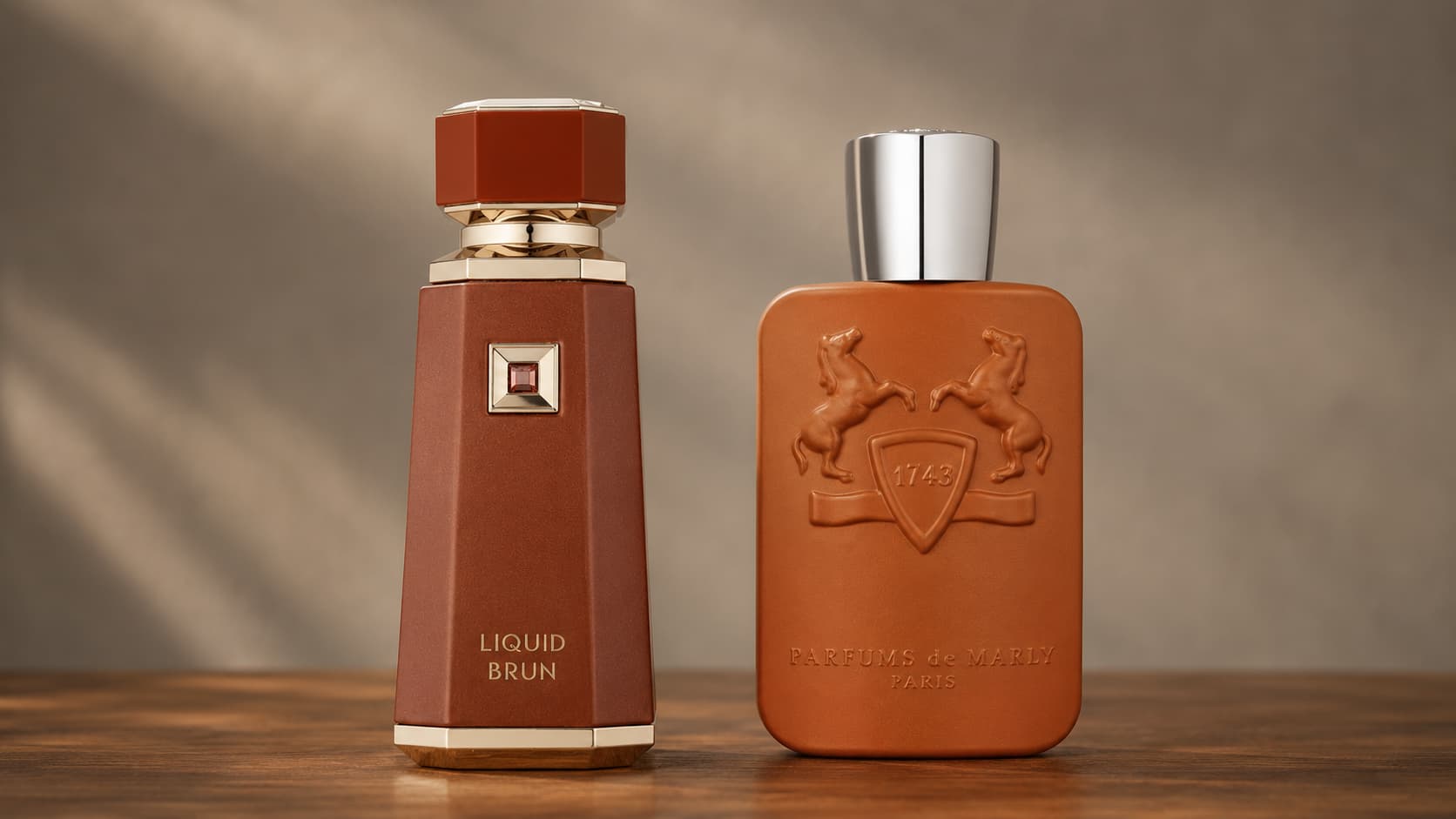
For most people, yes, dupes are worth trying, especially as a way to enjoy a favorite scent family without spending three figures on a single bottle. Whether a specific dupe is “worth it” really comes down to what the buyer is hoping to get out of it.
Dupes tend to satisfy people chasing a general vibe or scent family they love, while dedicated fragrance collectors who care about complexity, longevity, and the exact original formula are usually less impressed.
Price is only the most obvious difference; scent accuracy, longevity, and ingredient quality shift along with it:
| Factor | Designer / Niche Original | Fragrance Dupe |
|---|---|---|
| Price | Often $100-$350+ per bottle | Often $15-$45 per bottle |
| Scent accuracy | The genuine, full formula | Close, especially in opening notes |
| Longevity on skin | Generally longer-lasting | Often shorter, varies by brand |
| Ingredients | Often includes rare naturals | Usually mostly or fully synthetic |
| Packaging/prestige | Designed for display, gifting | Usually simple, minimal |
| Best for | Collectors, special occasions, signature scent | Everyday wear, testing new scent families, budget-conscious buyers |
For shoppers still figuring out which fragrance notes they actually like, whether that’s vanilla-heavy gourmands, woody scents, or bright citrus, a few affordable dupes offer a low-risk way to explore before committing serious money to a full-size original. For someone who already knows they love a specific iconic perfume and wants the full, layered experience it was designed to deliver, the original is still going to offer something a dupe likely can’t fully replicate.
Frequently Asked Questions
Is it illegal to wear or own a fragrance dupe?
No. There’s nothing illegal about buying, owning, or wearing a dupe. The legal risk in the dupe industry falls on the companies that make and sell them if they cross into copying logos, packaging, or misleading advertising, not on the people who simply purchase and wear the finished product.
Do dupes use lower-quality or unsafe ingredients?
Not necessarily. Reputable dupe brands still have to follow the same cosmetic safety regulations as any other perfume company selling in the U.S., including ingredient safety and labeling rules. Quality varies a lot by brand, the same way it does with designer perfumes, so it’s worth checking reviews rather than assuming price alone is a reliable indicator of safety.
Why do some dupes smell almost identical while others miss the mark completely?
It usually comes down to how much time, skill, and quality of synthetic ingredients went into the reverse-engineering process. A rushed, low-budget dupe might only capture the most obvious note or two, while a more carefully developed one can get impressively close across several stages of the scent’s development.
How can someone tell if a dupe is actually good before buying a full bottle?
Look for a sample or travel-size option first, since most dupe brands sell smaller sizes specifically so shoppers can test before committing. It also helps to check reviews that mention how the scent develops over several hours, not just how it smells right out of the bottle, since that first impression is the easiest part for any dupe to get right.
Is a “dupe” the same thing as an “inspired by” fragrance?
Generally, yes, these terms are used interchangeably in the fragrance world. Both describe a new fragrance built to resemble an existing popular scent, sold under a different, unrelated brand name.
Are expensive perfumes ever “worth” the extra money compared to a dupe?
That depends on what a buyer values most. For those who care about a brand’s history, rare natural ingredients, longer wear time, or owning the exact original formula a perfumer spent years developing, many find that worth paying for. For anyone whose priority is smelling good day-to-day without spending a lot, a well-made dupe can deliver much of that experience for a fraction of the cost.
Conclusion
Fragrance dupes exist because of a simple, honest trade-off: buyers give up some of the depth, longevity, and rare ingredients of the original in exchange for a dramatically lower price and a scent that’s still recognizably close, especially in those first spray-on minutes. They’re not illegal, they’re not the same as fake counterfeit perfumes, and they’re not going anywhere as long as designer bottles keep costing hundreds of dollars. The real question isn’t whether dupes are “good” or “bad” — it’s whether someone is chasing a specific vibe on a budget, or wants the complete, original experience a perfumer spent years perfecting. Once that’s clear, the dupe question pretty much answers itself.