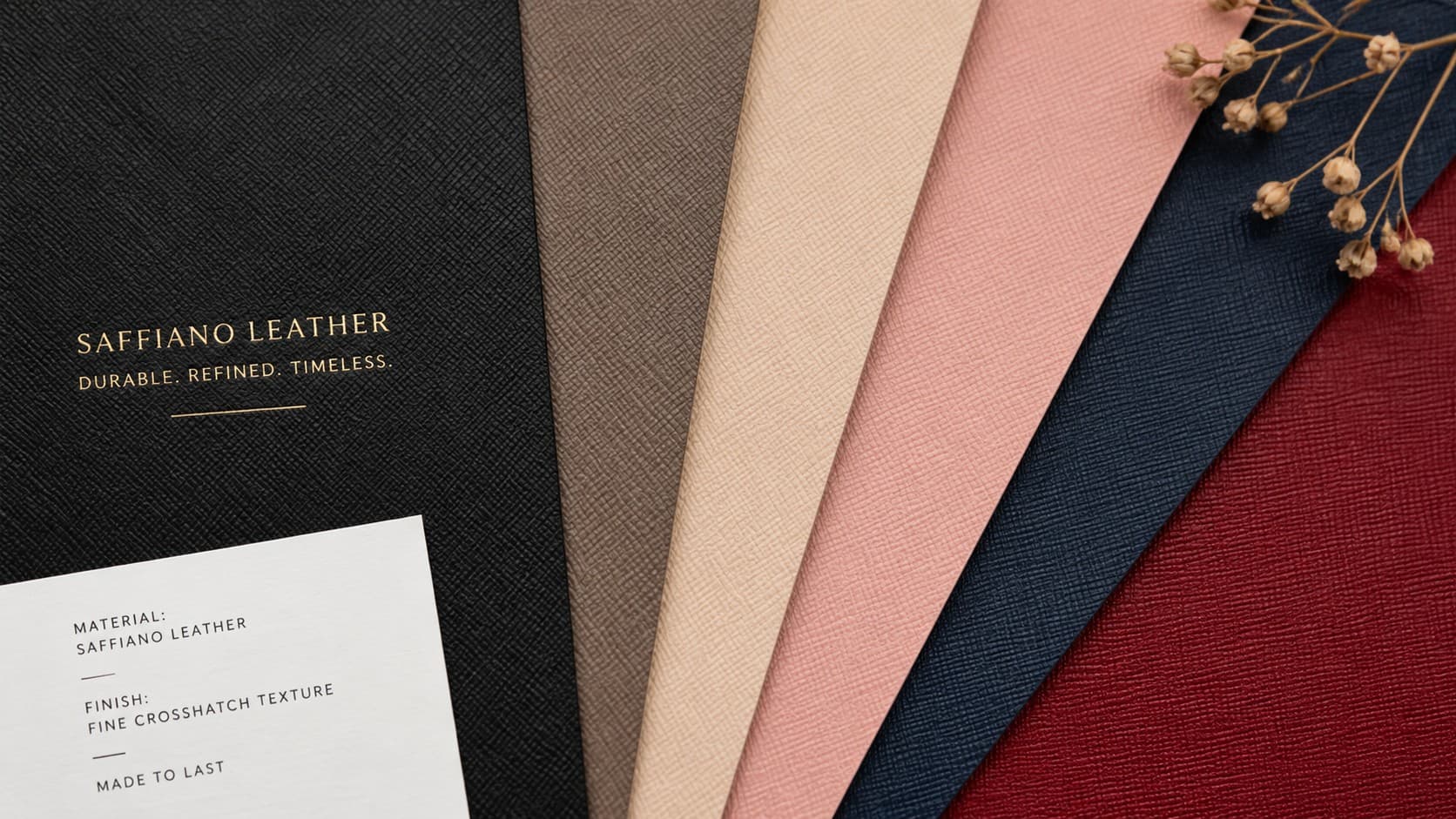
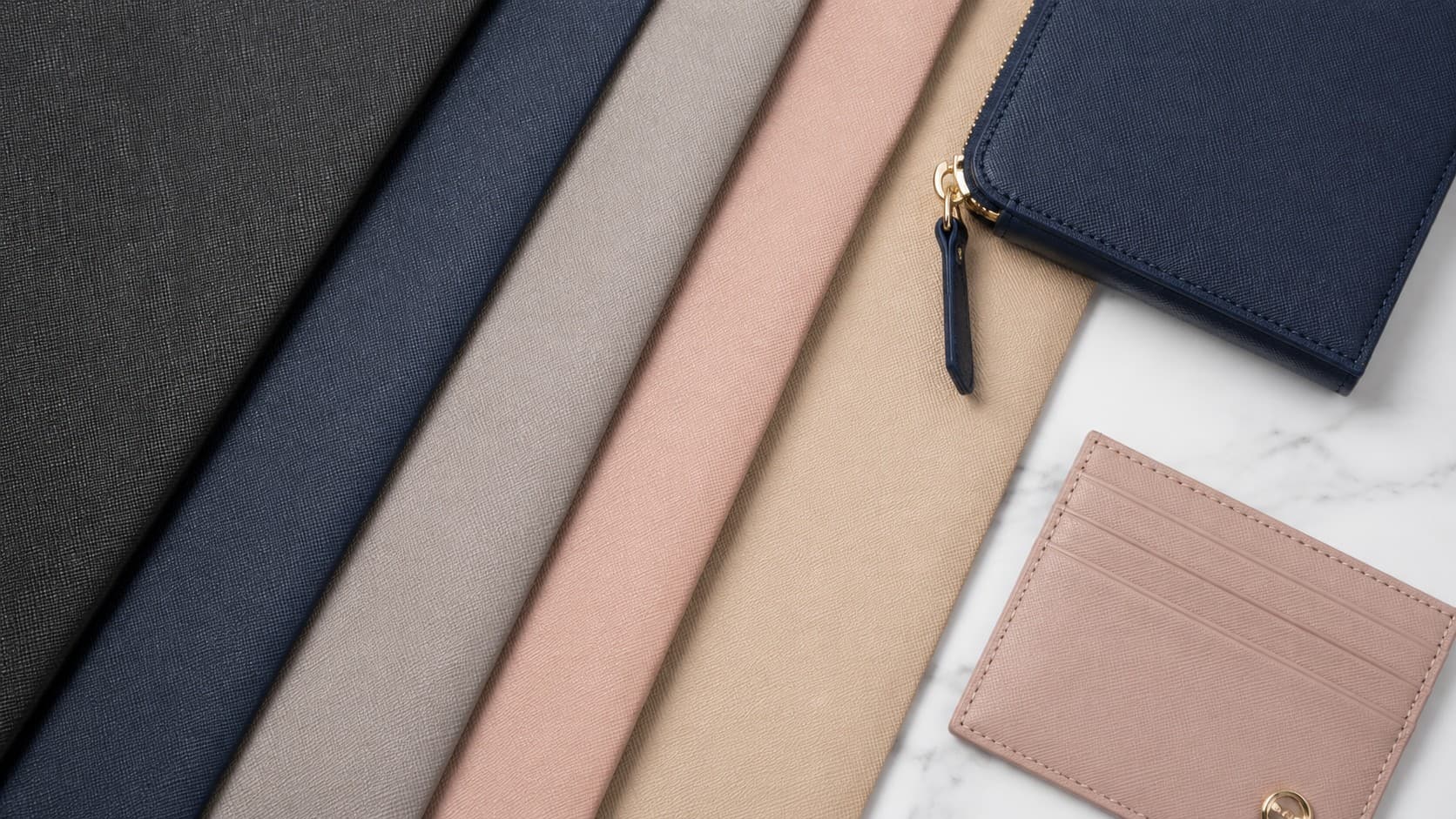
A tight, diagonal crisscross texture on a wallet or handbag almost always means saffiano leather. It shows up on wallets, laptop bags, totes, and structured handbags because it holds up to daily bumps and scrapes better than most other leathers. The production process behind it explains why it behaves so differently from a soft, smooth hide, and what to expect from it over years of use.
What Is Saffiano Leather?
Saffiano leather is leather stamped with a diagonal cross-hatch pattern and then sealed with a wax or resin coating. It was patented by Mario Prada in 1913 and remains one of the most recognizable leather finishes in fashion today. The pattern is not something that grows naturally on the hide. It is pressed in by machine, which is why saffiano items look uniform compared to leathers that show the natural, irregular grain of the animal skin.
The name comes from the Italian word saffianare, referring to the cross-hatch design pressed into the wax coating. The style was made using high-quality calf leather on a vegetable-tanned base, designed to be water resistant from the start. By 1919, the finish had become popular enough that Prada was asked to become a supplier to the Italian Royal Family, a moment that helped turn the young company into a globally recognized name.
Prada’s original patent on the process has since expired, which is why saffiano is no longer exclusive to one brand. Because the finish covers and reshapes the surface, saffiano can be made from different grades of real leather underneath, and sellers commonly label any leather with this stamped cross-hatch pattern as “saffiano,” regardless of the specific hide underneath it.
How Is Saffiano Leather Made?
Leather gets pressed with a hot metal plate carved with fine diagonal lines, then coated in wax. A machine stamps the pattern onto the hide at high temperature for roughly 10 to 15 seconds, which locks the texture in place permanently.
The process moves through a few stages: selecting the hide, pressing the pattern, applying the coating, and finishing.
- Selecting the hide. Quality calf leather is the traditional choice, though other leather grades are used depending on the brand and price point.
- Pressing the pattern. A heated metal die presses rows of crossing diagonal lines into the surface of the leather.
- Applying the coating. A wax layer goes over the pressed pattern, boosting resistance to water, stains, and scratches.
- Finishing. The leather is trimmed, cut, and assembled into the finished product, whether that is a wallet, tote, or briefcase panel.
Not all saffiano leather is made to the same standard, even when it looks similar at a glance. Quality comes down to the grade of the base leather (top-grain versus full-grain), how carefully it was tanned, how deep and consistent the embossed pattern is, and how evenly the final coating was applied. Finer saffiano carries a more pronounced, even pattern and a richer feel, which is generally why it costs more.
Because the wax coating sits on top and fills in the surface, saffiano leather rarely needs to be dyed separately — the coating itself hides the leather underneath and gives the item its final color.
Why Does Saffiano Leather Resist Scratches?
Saffiano resists scratches because the pattern and the wax work together to hide small surface marks instead of showing them. A flat, smooth leather shows every scuff as a visible line because light reflects differently off the damaged spot than the surrounding surface. Saffiano’s raised ridges break up that reflection, so tiny scratches blend into the texture instead of standing out.
The wax coating adds a second layer of defense. The stamping and embossing process, followed by a clear wax finish, makes the leather noticeably more resistant to scratches, stains, and water. Rain and spills behave the same way scratches do: droplets bead up and roll off the surface instead of soaking in, unlike untreated leather.
This is also why saffiano became a popular choice for mass-produced luxury goods, not purely a style preference. Because the surface is mechanically pressed and wax-sealed, colors stay consistent from batch to batch in a way natural, untreated leather cannot match, since every hide otherwise ages and marks differently. That combination of durability and consistency is also behind saffiano’s low upkeep — a simple wipe is usually enough to keep it clean, without the deeper conditioning many other leathers require.
Saffiano vs. Other Textured Leathers
| Feature | Saffiano | Epsom | Smooth/Full-Grain |
|---|---|---|---|
| Pattern | Diagonal cross-hatch | Pebbled, raindrop-like | Natural, no pattern |
| Coating | Wax finish | No wax coating | Varies, often untreated |
| Scratch resistance | Very high | High | Lower |
| Develops patina over time | No | Some | Yes, often significantly |
| Feel | Structured, slightly stiff | Softer | Naturally supple |
Epsom leather, associated with Hermès, has a similar textured look but uses a raindrop-style pattern without any wax layer, letting it soften and develop character over time in a way saffiano does not. Natural or vegetable-tanned leather ages and changes with wear, while saffiano is built to look nearly identical years down the line.
Saffiano Leather’s Weak Points
Saffiano’s durability comes with trade-offs.
- It can feel stiff. The wax coating that protects it also reduces the natural flexibility softer leathers have.
- It will not develop a patina. The coating keeps the surface locked in place, so it never darkens or gains character the way untreated leather does with wear.
- It can look artificial. The uniform, machine-pressed texture and wax finish read as less “natural” than a hide that shows its own organic grain.
- Sharp objects can still cut through it. Everyday scratches are absorbed well, but the protection is about scuffing, not puncture resistance.
- It cannot be reworked by hand. The finish resists traditional leatherworking techniques, so it cannot be tooled, dyed, or burnished the way raw hide can.
Frequently Asked Questions
Is saffiano leather real leather?
It can be. Saffiano describes a finishing technique, not a type of animal hide, so genuine saffiano is made from real leather, traditionally calfskin, while cheaper versions may use coated synthetic materials. The name alone does not guarantee what lies underneath, since the material description determines that.
Why is saffiano leather so stiff?
The stiffness comes from the wax coating applied during finishing. That same coating produces the scratch and water resistance, so the trade-off for durability is a firmer, more structured feel compared to soft, untreated leather.
Can saffiano leather be repaired if it gets damaged?
Minor surface wear rarely shows thanks to the pattern, but deeper cuts or punctures are difficult to fix because the finish cannot be re-stamped or reworked by hand once damaged. Serious damage usually means replacing the panel or the item rather than repairing the surface.
Does saffiano leather get better with age?
No, and that is by design. Unlike natural leathers that darken and soften with use, saffiano is built to look nearly the same years later, since the wax coating protects the surface from the changes that create patina.
Why do so many brands other than Prada sell saffiano leather now?
Prada’s original patent on the process has expired, opening the technique to other manufacturers. That is why the cross-hatch pattern now appears across many luxury and mid-range brands at very different price points, even though Prada is credited as its inventor.
How is saffiano leather cleaned?
A soft, slightly damp cloth is usually enough, since the wax coating repels most dirt, water, and stains before they set in. Harsh solvents or abrasive cleaners can strip the wax finish over time and should be avoided. For general upkeep on leather goods, a regular conditioning routine for other pieces in your collection is worth knowing too, even though saffiano itself needs very little of it.
Conclusion
Saffiano leather earns its reputation through a manufacturing process rather than a marketing story. The pressed cross-hatch pattern hides small scuffs by breaking up how light hits the surface, and the wax coating adds real resistance to water, stains, and everyday scratches on top of that. What is lost is the soft feel and natural aging that other leathers offer, but what remains is a material built to look the same after years of daily use as it did on day one.