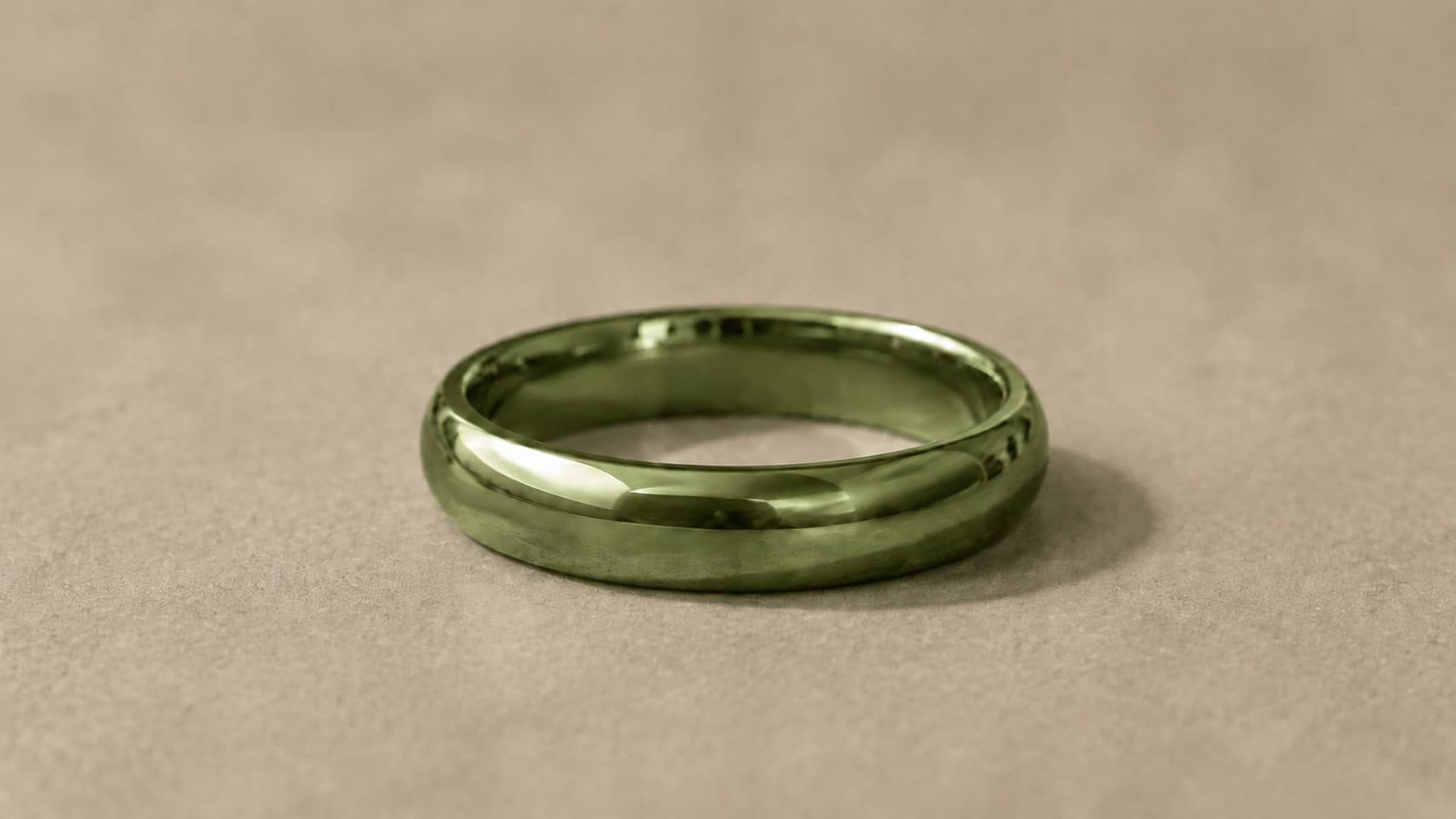
Most people know gold comes in yellow, white, and rose — but there’s a fourth color that quietly shows up in museum pieces, wedding bands, and nature-inspired designs: green gold. It isn’t dyed, painted, or treated to look that way. It’s a genuine gold alloy, mixed with other metals in specific ratios to shift its natural color toward a soft, olive-like green. Because so few jewelers work with it, most shoppers have never seen it in person, which only adds to the curiosity around what it actually is and whether it holds up as real, wearable gold.
What Is Green Gold Made Of?
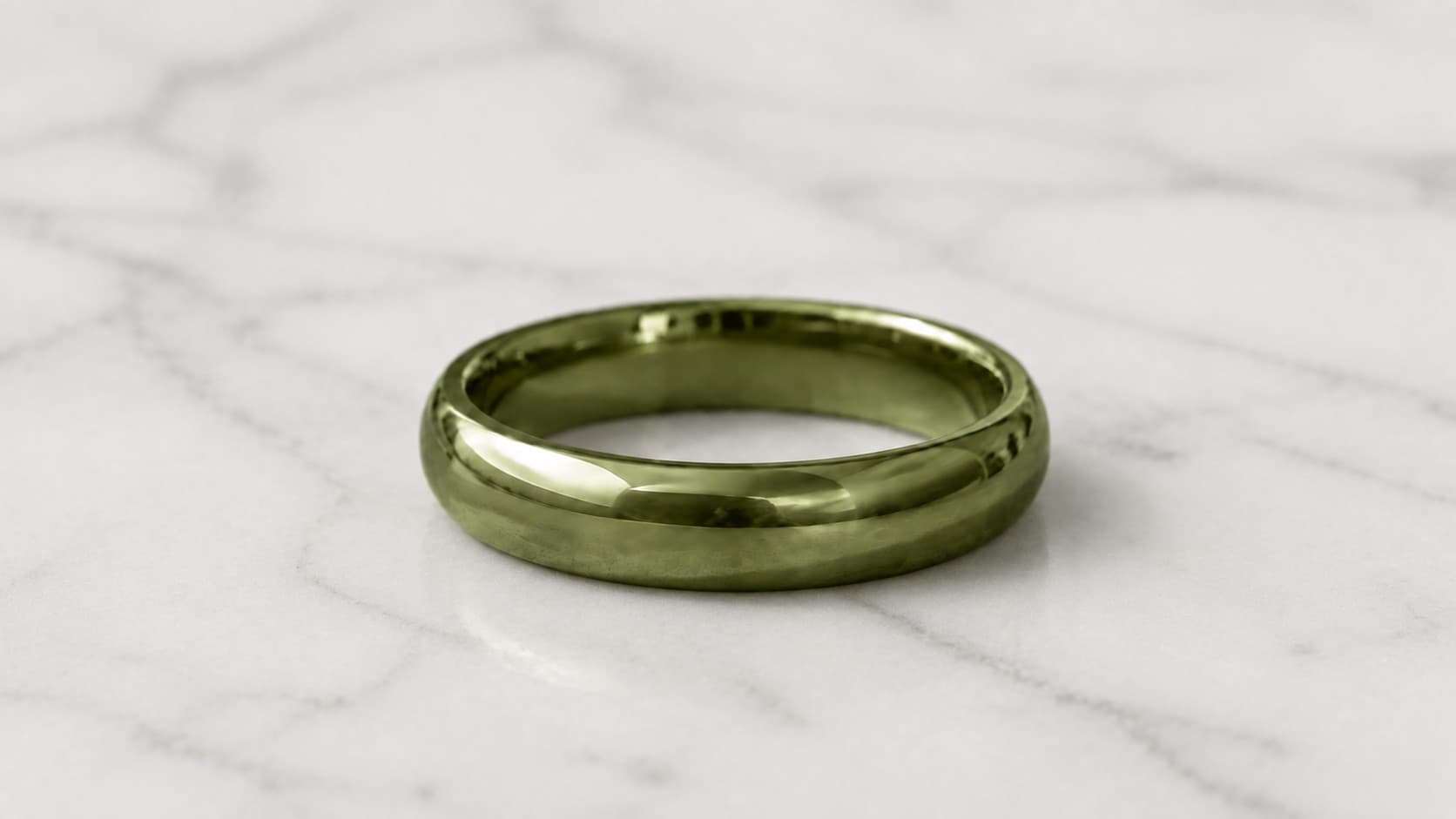
Green gold is pure gold melted together with silver, and sometimes a touch of copper or zinc, to create an alloy with a pale green or olive tint. It carries the same karat system as any other gold — 18K, 14K, and so on — because it’s still measured by how much pure gold is inside it.
Pure 24-karat gold is always yellow. Every other gold color — white, rose, and green — comes from mixing that pure gold with other metals. For green gold specifically, silver is the star ingredient, and the green shows up most clearly when the two metals are present in roughly equal measure at the atomic level. On its own, the green tends to be subtle — more of a warm, muted olive than a bright, obvious green — which is why it’s usually placed next to yellow, white, or rose gold in a design to make the contrast pop.
Is Green Gold Real Gold?
Yes — green gold meets the exact same purity standards as yellow, white, or rose gold at the same karat level. An 18K green gold piece contains 75% pure gold, just like an 18K yellow gold piece does; only the metals making up the other 25% are different.
In an 18-karat green gold alloy, the gold content stays at 75% to meet the fineness standard, with the remaining portion made up mostly of silver instead of the higher copper amounts used in yellow gold. That single substitution is what shifts the color: less copper, more silver, and the metal’s tone drifts from warm yellow toward a cooler, greener hue. Jewelers can also verify the composition with lab tools like XRF (X-ray fluorescence) scanners, which read the exact metal makeup of a piece without damaging it, so buyers aren’t just taking a seller’s word for it.
Because the standards are identical across colors, a piece isn’t “less” gold just because it looks different. The only real trade-off is durability, not authenticity, and the two shouldn’t be confused — a softer alloy is still a fully legitimate one.
How Do Jewelers Make Green Gold?
Green gold is created by melting pure gold together with silver, and often small amounts of copper or zinc, inside a high-heat furnace until the metals form one uniform alloy. The exact mix of metals determines exactly how green the final color looks.
The process starts by weighing out the metals in the right proportions for the target karat and shade — pure gold, fine silver, and whatever copper or zinc the recipe calls for. Those measured portions go into a crucible and get heated in a furnace hot enough to melt everything into one uniform mixture, with a flux coating added first so the metals don’t oxidize as they heat up. Gold melts at a higher temperature than silver or copper, so it’s typically the first metal added to the mix.
Recipes vary by jeweler and desired shade:
| Green Gold Type | Karat | Approximate Mix |
|---|---|---|
| Light green gold | 18K | 75% gold, 23% copper, 2% cadmium |
| Standard green gold | 18K | 75% gold, 20% silver, 5% copper |
| Soft/deep green gold | 18K | 75% gold, 25% silver |
| Green gold | 14K | 58.5% gold, 35% silver, 6.5% copper |
These formulas show how a higher proportion of silver produces a deeper green, while copper pulls the color back toward yellow. Cadmium shows up in a few older recipes as a way to deepen the green further, but it has fallen out of favor in fine jewelry because of its toxicity, and most jewelers today reach for silver, copper, or zinc instead. Zinc in particular earns its place in a green gold recipe for a practical reason rather than a color one: a high-silver alloy on its own tends to be too soft to hold its form well, so a small amount of zinc firms it up enough to be shaped, set, and worn without losing its structure.
Once a piece is cast and finished, it’s stamped with the same purity marks used on any other gold jewelry — an 18K piece will carry a 750 stamp, and a 14K piece a 585 stamp, regardless of its color. That stamp reflects the gold percentage only, so it looks identical whether the piece is yellow, white, rose, or green.
The History of Green Gold
Green gold isn’t a modern invention — it’s actually one of the oldest gold colors humans ever used, dating back to a naturally occurring metal called electrum. Ancient civilizations were working with it thousands of years before anyone thought to melt metals together on purpose.
Electrum forms naturally when gold deposits contain a mix of silver, and ancient Lydian, Egyptian, and Greek metalworkers made use of it long before anyone was deliberately alloying metals together. Its silver content could run anywhere from around 20% up toward 45%, and the more silver a given piece contained, the more visibly its color leaned green rather than yellow. Coinage from Lydia, struck near the close of the 7th century BC, ranks among the earliest metal currency ever produced, and it was made from electrum rather than pure gold. The word itself traces back to an ancient Greek term for amber, which is also where the modern word “electron” ultimately comes from.
Egypt’s own gold supply rarely came pure — silver was a common, sometimes heavy, presence in it. When a piece’s gold and silver content landed close to equal, the Roman scholar Pliny the Elder classified that specific blend as electrum in his writings, giving the ancient world a name for what modern jewelers would eventually recreate on purpose.
Centuries later, jewelry designers returned to the color deliberately. Green gold found a second life during the Art Nouveau movement of the late 1800s and early 1900s, when designers leaned into nature as their central theme — leaves, vines, insects — and an earthy, olive-toned gold suited those motifs in a way that standard yellow gold couldn’t. That same instinct carries into modern jewelry, where green gold still shows up most often in botanical and nature-themed pieces.
The Pros and Cons of Green Gold
Green gold wears reasonably well day to day, but its higher silver content makes it softer than white or rose gold, so it isn’t the best pick for pieces that take a lot of daily impact, like everyday rings.
Pros
- Genuinely rare and distinctive. Few jewelers work with it, so a green gold piece won’t blend in with everyone else’s jewelry box.
- Holds gold’s core properties. It resists corrosion and tarnishing the same way other gold alloys do, since it’s still mostly pure gold.
- Pairs beautifully with other gold tones. Green gold shows up best visually when placed next to yellow, white, or rose gold in the same piece, making it a favorite for mixed-metal and nature-themed designs.
Cons
- Softer than other gold colors. The high silver content that creates the green tint also makes the alloy softer and more malleable than white or rose gold, so it’s generally not used for structural parts like thin ring shanks or clasps.
- Subtle color. The green tint can be faint in normal light, so buyers expecting a bold, obvious green may be surprised by how muted it actually looks.
- Limited availability. Because it’s less common, it can be harder to find green gold in mainstream jewelry collections compared to yellow, white, or rose gold.
Green Gold vs. Yellow, White, and Rose Gold
The main difference between gold colors comes down to which metals are mixed with the pure gold. Copper leans a gold alloy toward yellow or rose, nickel or palladium leans it toward white, and silver leans it toward green.
| Gold Color | Main Alloy Metal(s) | General Look |
|---|---|---|
| Yellow gold | Copper and silver (balanced) | Warm, classic gold tone |
| White gold | Nickel or palladium | Cool, silvery-white |
| Rose gold | Higher copper | Warm pink-red |
| Green gold | Higher silver | Soft olive or pale green |
Because green gold shares the same karat system, an 18K piece in any of these colors contains the same 75% pure gold — the color is purely about the supporting metals, not the amount of gold itself.
How to Clean and Store Green Gold Jewelry
Green gold jewelry should be cleaned gently and stored separately from harder gemstones or metals that could scratch it, since its higher silver content makes it a bit softer than other gold alloys.
A simple warm water and mild soap solution, followed by a soft cloth to dry, is usually enough for regular cleaning. Ultrasonic cleaners and harsh chemical dips are best left to a jeweler’s judgment, since the alloy’s softness makes it more prone to fine scratches than harder gold blends. Storing green gold jewelry in a lined box or a soft pouch, away from other pieces that could rub against it, helps keep its surface smooth over time.
Chlorine deserves special attention with any gold alloy, and green gold is no exception. Pure gold itself holds up fine against it, but chlorine attacks whatever other metals are mixed in, gradually weakening the piece from the inside even if the surface still looks fine at first. That can eventually show up as prongs or clasps that feel less secure than they used to. Since green gold leans on a higher proportion of silver than yellow gold, removing it before swimming in a pool or soaking in a hot tub is a sensible precaution, and rinsing it promptly after any contact with bleach or chlorinated water helps limit the damage. Periodic checks of prongs and settings are worthwhile too, simply because the softer alloy tends to show wear a little sooner than harder gold blends.
Frequently Asked Questions
Does green gold turn skin green?
No. Green gold’s color comes from its metal alloy, not a coating, so it behaves like any other gold jewelry on skin. Like any gold alloy, reactions are more likely in people with metal sensitivities, but the green color itself isn’t a sign of a lower-quality or reactive metal.
Is green gold more expensive than yellow gold?
Not typically. Since gold is the most valuable metal in both alloys and the karat (percentage of pure gold) stays the same, price differences come down more to the piece’s design, craftsmanship, and rarity than the metal color itself.
Can green gold be resized like other gold jewelry?
Yes, though jewelers should be told in advance that a piece is green gold, since its higher silver content means it behaves slightly differently under heat during resizing than standard yellow or white gold.
Why is green gold so rare in jewelry stores?
Green gold is trickier to produce with a strong, attractive color while keeping the metal durable enough for jewelry, which limits how many jewelers choose to work with it. Its niche, nature-inspired aesthetic also means demand has historically been smaller than for yellow, white, or rose gold.
Is green gold the same as electrum?
They’re related but not identical. Electrum is the naturally occurring gold-silver alloy used since ancient times, while modern green gold is a deliberately formulated alloy that often includes small, precise amounts of copper or zinc alongside gold and silver to control both color and durability.
Conclusion
Green gold earns its rarity honestly — it’s a real, karat-certified gold alloy that simply swaps out much of the copper found in yellow gold for silver, shifting the color toward a soft olive-green instead. That change traces back thousands of years to electrum, the natural gold-silver blend prized by ancient Egyptian and Greek metalworkers, and it resurfaced deliberately during the Art Nouveau era for nature-inspired designs. It wears a little softer than white or rose gold because of that silver content, which is why it tends to show up in accent details rather than heavy-use pieces, but with basic care it holds up just like any other gold alloy. For jewelry with a genuine story and a color rarely seen on anyone else, green gold delivers both.