Fossil is one of those brands almost everyone recognizes, even if they couldn’t say exactly why. Maybe it’s the tin box packaging, or the retro dials that look pulled from a 1950s magazine ad, or simply the fact that a Fossil watch shows up in nearly every department store and shopping mall in America. Behind that familiarity is a real story: a small Texas company that grew from importing a couple million dollars worth of watches a year into a global group that has, at different points, made timepieces for Michael Kors, Armani, DKNY, and several other big names. Understanding what Fossil actually does well, and where its watches fit in the wider market, makes it much easier to know which collection is worth a closer look.
Who Owns Fossil Watches?
Fossil is owned by Fossil Group, a publicly traded American company, not a foreign conglomerate or a licensing shell. The company was founded in 1984 by Tom Kartsotis and is headquartered in Richardson, Texas. It trades on the Nasdaq stock exchange under the ticker FOSL, so anyone curious can look up its financial reports directly.
Fossil started under a different name entirely. Kartsotis first called the business “Overseas Products International,” since it began by importing moderately priced fashion watches from Asia. The name Fossil came later, and it stuck because it fit the brand’s whole idea: watches that looked like they had a history, even when they were brand new.
Fossil Group today is bigger than just the Fossil name. Over the years, the company bought several standalone watch brands outright rather than just licensing designs, including the dive-watch label Zodiac, the gem-set luxury brand Michele, and the Danish minimalist brand Skagen. That means a Skagen or Zodiac watch on a store shelf is, behind the scenes, made by the same parent company as a Fossil-branded one, even though the two look nothing alike.
Fossil’s early designs weren’t accidents. The company built its identity by pulling design cues straight from vintage advertising, then manufacturing those looks at a price regular shoppers could actually afford.
How Fossil Became a Big Watch Brand
Fossil grew fast because it combined nostalgic design with genuinely low prices, then backed that up with clever branding. Its earliest watches drew inspiration from magazine advertisements of the 1930s, 40s, and 50s, giving them a warm, familiar look that felt different from the more digital and futuristic watches dominating the market at the time.
The growth numbers back this up clearly. Sales climbed from roughly two million dollars in 1987 to well over thirty million dollars by 1990, a jump quick enough to convince the Kartsotis brothers to open up the company to outside investors and take it public in 1993. Going public gave Fossil the cash it needed to move beyond watches into leather goods, sunglasses, and eventually clothing.
A few specific moves accelerated things even further. Fossil attended the major Swiss watch trade fair in Basel for the first time in 1990, an event that would later become known as Baselworld, putting the brand in front of international buyers for the first time. In 1997, Fossil began producing and distributing watches for Emporio Armani, its first big fashion-house licensing deal, and a year later it released the Big Tic, an unusual watch that mixed an analog dial with a small digital display and became a genuine hit.
The tin packaging played a role in this success too, and it deserves its own mention. Fossil rolled out its now-famous tin watch boxes in 1989, styled after mid-century American graphics, and it helped the brand stand out instantly at a crowded retail counter. That little metal box made a modestly priced watch feel like a proper gift, even for someone buying it for themselves.
Fossil’s Best Watch Collections
Fossil organizes its lineup into named collections rather than model numbers alone, and a handful of them stand out for being genuinely well designed at their price point.
Fossil Townsman
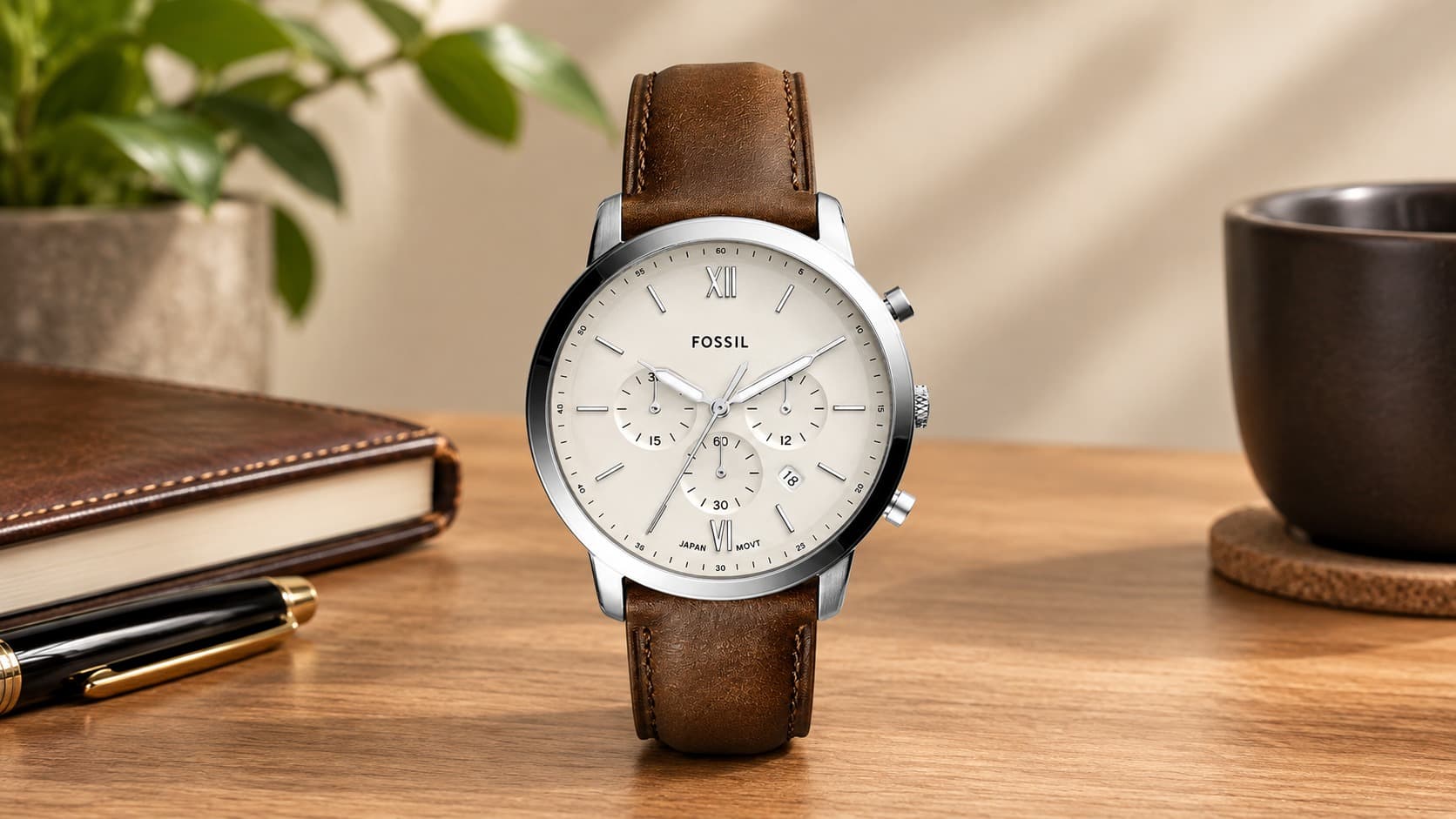
The Townsman line is Fossil’s answer to a classic dress watch, built for people who want something sharp enough for a suit without a steep price tag. The collection leans on a refined, 1960s-inspired look, often with chronograph details that add visual interest without cluttering the dial. Several Townsman models use automatic movements, meaning the watch winds itself from the natural motion of the wearer’s wrist rather than needing a battery at all.
Fossil Grant
The Grant collection targets people who want a watch that moves easily between a business meeting and a weekend errand. It typically pairs leather straps with clean, legible dials and the occasional chronograph, sitting in a similar price range to Townsman.
Fossil Machine
Machine watches lean sportier, usually with bolder cases, chronograph subdials, and a more industrial look overall. This collection appeals to buyers who want a watch with real presence on the wrist without stepping into true luxury pricing.
Fossil Neutra and Fossil Nate
Both of these collections favor a more minimalist, modern look compared to Townsman’s vintage feel. They suit someone who wants a fashion watch that reads as understated rather than retro.
Women’s Collections Worth Knowing
Fossil’s women’s lineup gets less attention online than its men’s watches, but a few names come up often. Stella and Virginia both favor smaller, rounder cases with crystal accents and interchangeable straps, while the Riley collection tends toward a slightly bolder, more everyday look with bracelet-style bands. These sit in a similar price bracket to the men’s collections above, generally between $100 and $200.
What Happened to Fossil Smartwatches?
Fossil no longer makes smartwatches, and this is one of the biggest recent changes to the brand. In January 2024, the company confirmed it was exiting the smartwatch market entirely to put its full attention back on traditional watches, jewelry, and leather goods. A company spokesperson explained the decision plainly: the smartwatch landscape had shifted a lot in a short time, and Fossil wanted to redirect its resources toward the parts of the business actually driving growth.
This wasn’t a sudden or surprising move to people following the industry closely. Fossil had been one of the most active makers of Wear OS smartwatches, working with Google’s software across six generations of devices since the mid-2010s, but it hadn’t released a new model since 2021 and its watches had long been outpaced by rivals like Samsung. That means the Fossil Gen 6, launched back in 2021, ended up being the company’s final smartwatch. Fossil did promise to keep supporting existing smartwatches with software updates for a few more years after making the announcement.
The practical result is that every current model in the brand’s lineup is a traditional analog watch, not a touchscreen device. Owners of a Gen 5 or Gen 6 smartwatch should expect ongoing support to wind down gradually over the coming years.
What Is the Average Price of a Fossil Watch?
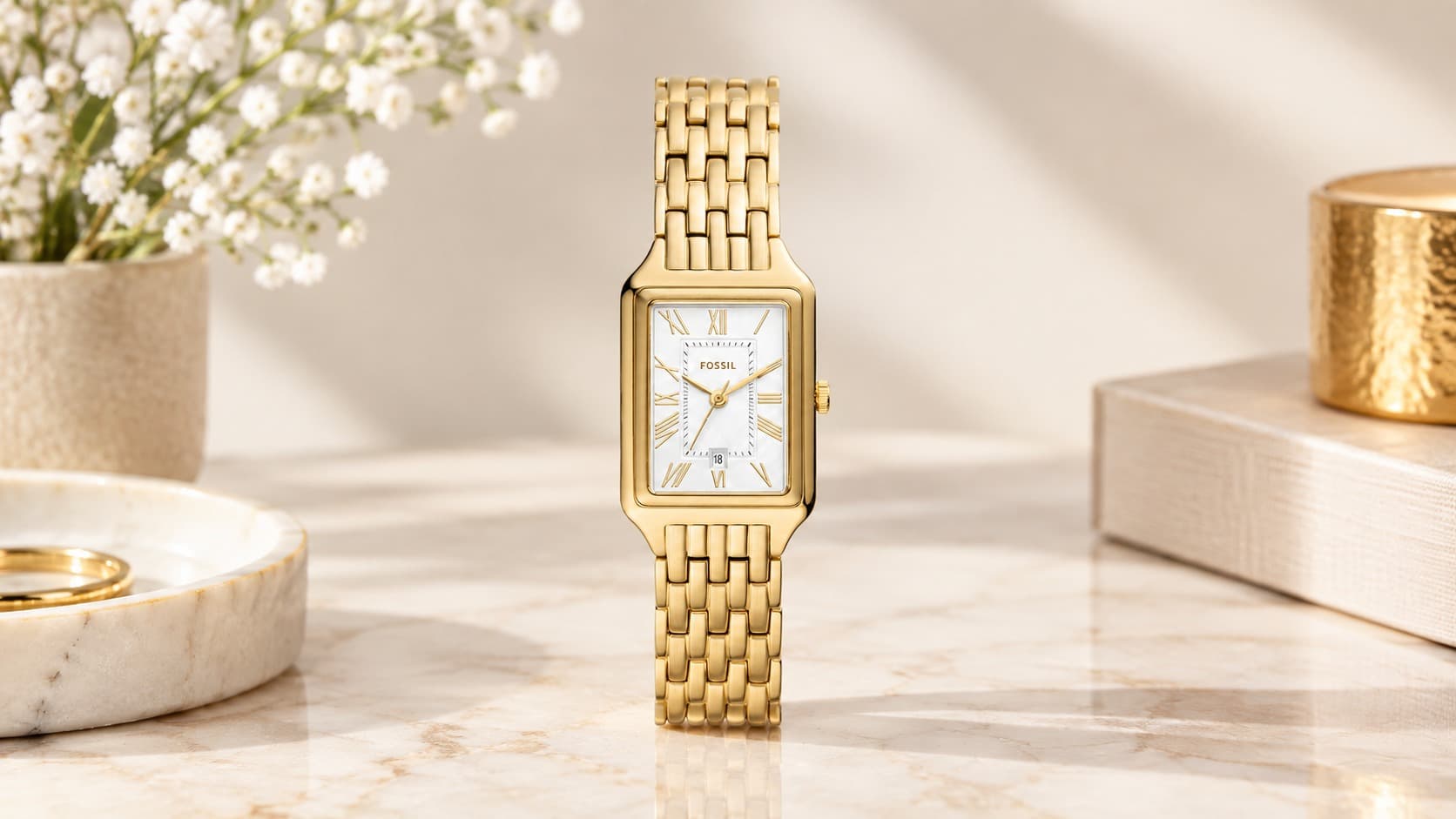
Most Fossil watches fall between roughly $85 and $250, which puts them solidly in the affordable fashion watch category rather than luxury territory. Popular models like the Machine chronograph and Everett quartz line commonly sit between $90 and $170 before any sales, while automatic pieces like the Townsman tend to land closer to $150 to $280 at full retail price.
| Collection | Typical Style | Approximate Price Range |
|---|---|---|
| Fossil Everett | Simple quartz, everyday wear | $90 - $150 |
| Fossil Machine | Sporty chronograph | $90 - $170 |
| Fossil Grant | Business-casual leather strap | $100 - $180 |
| Fossil Townsman | Dress watch, some automatic | $135 - $280 |
Fossil regularly discounts its watches through its own outlet stores and site-wide sales, so the price on a store shelf is rarely the final word. Every traditional Fossil watch also comes with a two-year limited warranty covering the movement, hands, and dial against manufacturing defects, a meaningful safety net at this price point as long as the original proof of purchase is kept on file.
Does Fossil Make Its Own Watches?
Not entirely on its own, and this is true of almost every fashion watch brand, not just Fossil. Fossil designs its watches in-house but relies on manufacturing partners, largely based in Hong Kong and mainland China, to actually produce components and assemble finished pieces. This arrangement dates back to 1992, when the company purchased a Hong Kong-based supplier and folded it into its own operations under the name Fossil East, giving it direct control over the pipeline feeding finished watches back to Texas rather than depending entirely on outside factories. By 2011, that network had grown to include roughly four dozen different watchmaking suppliers across Hong Kong and China.
This manufacturing model is standard across the fashion watch industry, not something unique to Fossil. It’s also a big part of why Fossil can sell a solidly built watch for under $150, something a brand doing every step in-house in Switzerland simply couldn’t match at that price.
Frequently Asked Questions
Is Fossil considered a luxury watch brand?
No, Fossil sits in the fashion and accessible watch category, not luxury. Its watches are well made for the price and use real materials like stainless steel and genuine leather, but they don’t carry the hand-finishing, in-house movements, or exclusivity that define true luxury brands like Rolex or Omega.
Are Fossil watches good quality for the price?
How long is the warranty on a Fossil watch?
Traditional Fossil watches carry a two-year limited warranty from the date of purchase, covering the movement, hands, and dial against manufacturing defects. Fossil jewelry and leather goods are typically covered for one year instead, and a receipt or dealer stamp is required to make a claim.
Can Fossil watch batteries be replaced?
Yes. Quartz Fossil watches use standard replaceable batteries, and most local jewelers or watch repair shops can swap one in a few minutes. Automatic Fossil models, like some Townsman watches, don’t use a battery at all since they wind from wrist movement instead.
Does Fossil still make jewelry and leather goods?
Yes, and this is now a bigger focus for the company than ever. After stepping away from smartwatches in 2024, Fossil Group said directly that it was redirecting resources toward traditional watches, jewelry, and leather goods as its core business going forward.
What is the most popular Fossil watch collection?
Grant, Machine, and Townsman are consistently among Fossil’s most searched and best-selling men’s collections. That’s largely because they cover three distinct styles, business-casual, sporty, and dressier automatic watches, all within a similar affordable price bracket.
Conclusion
Fossil earned its place in the watch world by doing something specific well: taking a nostalgic, well-designed look and making it affordable to almost anyone. That strategy, built back in 1984 in a small Texas office, is still exactly what separates the brand’s best collections today. With the smartwatch chapter closed, Fossil’s focus has narrowed back to what made it successful in the first place, traditional watches like the Townsman and Grant lines, paired with the leather goods and jewelry it has always made alongside them. Anyone shopping the brand now can expect a clear, focused lineup rather than a scattered mix of gadgets and analog pieces.