A chronograph watch combines precise timekeeping with stopwatch functionality in a single sophisticated timepiece. The term “chronograph” comes from Greek words chronos (time) and graphein (to write), literally meaning “time writer” - referencing early models that physically inscribed timing marks on rotating dials. Unlike simple stopwatches that only measure elapsed time, chronographs maintain continuous accurate timekeeping while providing precise interval measurement through dedicated start, stop, and reset functions controlled by pushers on the case side. This dual functionality has made chronographs essential tools across professional fields from aviation and medicine to motorsports, while appealing to enthusiasts who appreciate the mechanical complexity and visual drama of multiple moving hands working in harmony.
What Is a Chronograph Watch?
A chronograph represents the marriage of traditional timekeeping with precision stopwatch capabilities, creating a single instrument that can both tell time and measure specific intervals with remarkable accuracy. Picture a regular watch with an additional timing system built directly into the movement, where both functions operate simultaneously without interfering with each other. The chronograph component can be started, stopped, and reset completely independently while the main watch continues displaying the current time normally.
- The primary function combines continuous time display with interval measurement capabilities that can track everything from split seconds to multiple hours. When activated, the chronograph begins measuring elapsed time while the regular hour, minute, and second hands continue their normal operation, allowing users to time events while never losing track of actual time.
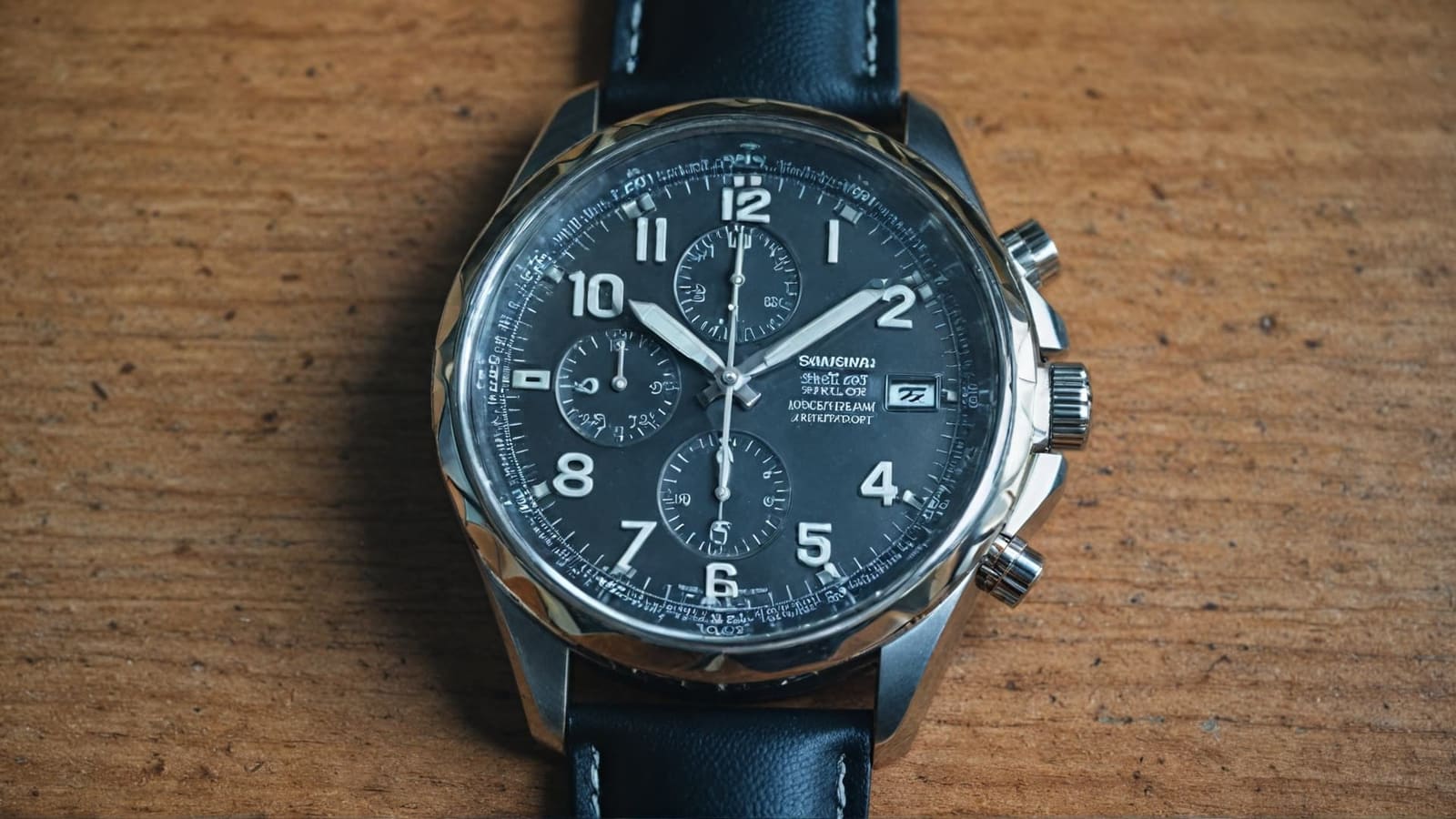
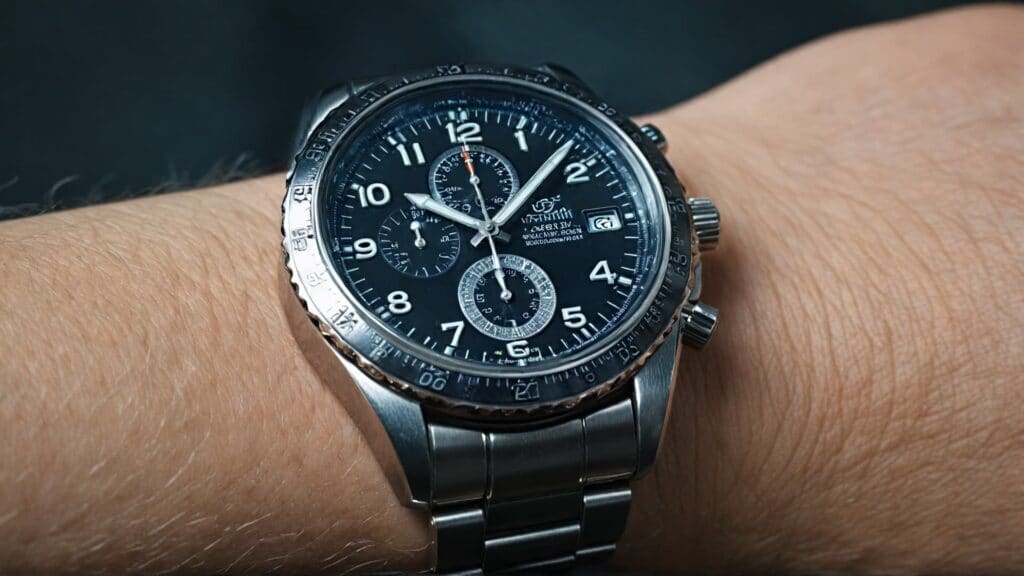
- Visual design centers around subdials positioned at various points on the main dial, typically showing elapsed minutes at 3 o’clock, elapsed hours at 6 o’clock, and running seconds at 9 o’clock in three-register configurations. Two-register versions eliminate the hours subdial for cleaner aesthetics, while these smaller dials create the iconic multi-eyed appearance that makes chronographs instantly identifiable.
- Operation relies on pushers integrated into the case sides, with the upper pusher controlling start and stop functions while the lower pusher handles reset operations. This standardized layout means once you learn one chronograph, you can operate virtually any other model, making the system intuitive across different brands and price points.
- The central chronograph hand provides the most precise timing indication, sweeping around the main dial to show elapsed seconds with remarkable accuracy. Advanced models can measure to 1/10th or 1/100th second intervals, with the large central hand ensuring easy reading even during rapid timing situations where precision matters most.
- Power delivery comes from the main movement’s energy source but operates through dedicated gear trains that engage and disengage through sophisticated clutch mechanisms. This design prevents chronograph operation from affecting regular timekeeping accuracy while allowing the timing function to operate for extended periods without compromising the watch’s primary responsibilities.
- Scale integration on bezels or dial peripheries transforms basic timing into specialized measurements like speed calculation through tachymeter scales, distance measurement via telemeter markings, or pulse rate determination using pulsometer graduations. These scales expand functionality beyond simple elapsed time into professional applications requiring specific calculations.
The chronograph’s enduring appeal stems from its practical versatility combined with mechanical fascination - it serves as a sophisticated everyday timepiece that transforms into a precision instrument whenever timing needs arise. This dual nature explains why chronographs have evolved from 19th-century scientific tools into modern essentials for professionals and enthusiasts alike, offering capabilities that remain relevant whether timing a cooking process, measuring workout intervals, or conducting precise professional tasks that demand split-second accuracy.
Chronograph Watch Origins and Development
The chronograph’s journey from astronomical timing device to luxury timepiece spans over two centuries of innovation, driven by scientific necessity, military requirements, and human fascination with precise time measurement. This evolution reflects broader technological advances while showcasing individual genius that transformed crude timing devices into sophisticated mechanical marvels worn by explorers, professionals, and enthusiasts worldwide.
- Louis Moinet created the world’s first chronograph in 1816 for astronomical observations, featuring a remarkable mechanism operating at 216,000 vibrations per hour that could measure 1/60th of a second intervals. His “Compteur de Tierces” included start, stop, and reset functions along with three subdials showing elapsed time measurements, establishing fundamental chronograph principles that remain unchanged today. This pocket watch-sized instrument served purely scientific purposes, tracking celestial movements with unprecedented precision for astronomical calculations.
- Nicolas Rieussec developed his ink-writing chronograph in 1821 for King Louis XVIII’s horse racing events, literally inscribing timing marks on rotating white enamel dials using ink droplets. While Rieussec coined the “chronograph” term meaning “time writer,” his clock-sized wooden device represented evolutionary refinement rather than revolutionary invention. The ink-writing system proved impractical for widespread use, but established chronographs as tools for competitive timing rather than purely scientific applications.
- Swiss manufacturers transformed chronographs from scientific curiosities into commercial products during the mid-1800s, miniaturizing mechanisms for pocket watch integration. Companies like Vacheron Constantin and Patek Philippe began producing chronographs for wealthy clientele who appreciated mechanical complexity, while simpler versions served railroad conductors and other professionals requiring precise timing for safety and efficiency purposes.
- Military applications during World War I drove chronograph development as artillery officers needed precise timing for coordinated bombardments and tactical operations. Wrist-mounted chronographs proved more practical than pocket watches in combat situations, accelerating the transition from pocket to wrist wear while proving chronographs’ utility under extreme conditions that tested both mechanical reliability and user practicality.
- Aviation chronographs emerged during the 1930s as pilots required precise navigation timing for dead reckoning calculations before radio navigation became widespread. The German Luftwaffe pioneered flyback chronographs through companies like Hanhart and Tutima, allowing pilots to instantly reset and restart timing during complex navigation sequences without multiple pusher operations that could prove fatal during combat missions.
- The 1969 automatic chronograph race revolutionized the complication through simultaneous development by three separate groups seeking to create the world’s first self-winding chronograph movement. Zenith’s El Primero achieved unprecedented 36,000 vibrations per hour precision, while the Chrono-Matic consortium (Heuer, Breitling, Hamilton, and Büren) prioritized manufacturing efficiency through modular construction, and Seiko’s 6139 brought automatic chronographs to mass market pricing.
- NASA’s rigorous testing program elevated chronographs to legendary status when the Omega Speedmaster became the only watch “flight qualified for manned space missions” after surviving extreme temperature, pressure, vibration, and acceleration tests. The Speedmaster’s moon landing participation in 1969 and crucial role in Apollo 13’s safe return established the “Moonwatch” designation that continues driving sales decades later.
- Modern innovations have refined chronograph mechanisms while respecting traditional principles, with silicon components reducing friction and magnetic susceptibility, ceramic cases offering superior scratch resistance, and high-frequency movements like TAG Heuer’s 1/1000th second timing pushing mechanical precision boundaries. Independent manufacturers increasingly challenge established brands through innovative complications and distinctive aesthetics that attract collectors seeking unique alternatives to mainstream offerings.
- Digital integration represents the latest chronograph evolution as smartwatches incorporate traditional timing functions alongside GPS tracking, heart rate monitoring, and smartphone connectivity. While these devices offer unprecedented functionality, they’ve also renewed appreciation for mechanical chronographs among enthusiasts who value permanent craftsmanship over temporary technology that becomes obsolete within years rather than generations.
The chronograph’s history demonstrates how practical necessity drives innovation, transforming scientific instruments into luxury objects while maintaining core functionality that remains relevant across changing technological landscapes. Each development phase built upon previous achievements while addressing contemporary needs, creating a rich heritage that modern chronograph owners inherit along with their timepieces’ mechanical complexity and cultural significance.
How Do Chronograph Watches Work?
The mechanical operation of chronographs represents one of watchmaking’s most impressive achievements, where intricate systems coordinate to provide precise timing without disrupting regular timekeeping functions. The complexity lies in creating two separate but interconnected timing mechanisms within a single movement, requiring sophisticated engineering to ensure both systems operate harmoniously while maintaining long-term reliability and accuracy.
- The power source draws energy from the main movement’s mainspring through the primary gear train, with chronograph components receiving power through a secondary pathway that can engage or disengage as needed. When the chronograph activates, additional gears begin moving while the regular timekeeping train continues unaffected, though total power consumption increases slightly, reducing overall power reserve by approximately 10-15% during active timing.
- Column wheel mechanisms in high-end chronographs feature castle-like components with precisely machined teeth that rotate incrementally with each pusher activation. These wheels control the chronograph’s start, stop, and reset functions through a series of levers and springs, providing smooth operation with distinct tactile feedback that makes each pusher press feel crisp and positive.
- Cam-actuated systems offer a more economical alternative using heart-shaped components that control chronograph functions through direct mechanical contact. While these systems require slightly more force to operate and may feel less refined than column wheels, they provide reliable performance at lower manufacturing costs, making quality chronographs accessible across broader price ranges.
- Clutch systems connect and disconnect the chronograph mechanism from the main movement, with horizontal clutches using gear engagement while vertical clutches employ friction-based connection through cone-shaped components. Vertical clutches eliminate the slight hand jump that can occur with horizontal systems and allow for smoother engagement, though they require more complex manufacturing and increase production costs significantly.
- The reset mechanism relies on heart-shaped cams attached to each chronograph wheel, which return hands to zero position when the reset pusher activates hammer components. These hammers strike the heart cams simultaneously, snapping all chronograph hands back to their starting positions instantly, regardless of where they were positioned when reset was activated.
- Flyback complications add another layer of sophistication by combining reset and restart functions into a single pusher activation. When engaged during timing, the flyback function instantly resets all hands to zero and immediately begins timing again, eliminating the need for separate stop, reset, and restart operations that would otherwise require multiple pusher presses.
- Split-seconds or rattrapante chronographs feature two superimposed central seconds hands that can separate to time simultaneous events of different durations. One hand can be stopped to record an intermediate time while the other continues running, with both hands reuniting when the stopped hand is released, allowing for complex timing scenarios like measuring lap times during ongoing races.
The engineering marvel of chronograph movements becomes apparent when considering that hundreds of additional components must fit within cases only slightly larger than regular watches, all while maintaining precision timing and long-term durability. Modern manufacturing techniques have refined these mechanisms to achieve remarkable reliability, though the fundamental principles established in 19th-century pocket watches remain largely unchanged, testament to the enduring brilliance of the original chronograph concept.
Different Chronograph Watch Styles
Chronograph watches encompass several distinct categories based on their power sources and operational methods, each offering unique advantages suited to different user preferences and requirements. The choice between mechanical and electronic systems fundamentally shapes the ownership experience, from daily interaction patterns to long-term maintenance considerations and overall philosophical approach to timekeeping.
- Manual-wind mechanical chronographs require daily winding through the crown to maintain power, typically offering 40-50 hours of operation between windings. These movements appeal to traditionalists who appreciate the tactile connection of winding their watch each morning, while achieving thinner case profiles since they lack the rotor systems found in automatic versions. The ritual of daily winding creates a personal bond between owner and timepiece that many enthusiasts find deeply satisfying.
- Automatic mechanical chronographs self-wind through wrist motion via weighted rotors that spin with arm movement, providing convenience for daily wear without manual intervention. Modern automatic chronographs typically achieve 60-80 hour power reserves, though case thickness increases by 2-3mm to accommodate rotor systems. Premium examples like the Zenith El Primero operate at high frequencies of 36,000 vibrations per hour for enhanced precision and smoother chronograph hand movement.
- Quartz chronographs utilize battery power and crystal oscillators operating at 32,768 Hz to achieve exceptional accuracy of ±15-20 seconds per month compared to mechanical movements’ ±20-40 seconds daily variation. Battery life typically ranges 2-3 years depending on chronograph usage frequency, with some solar-powered versions like Citizen Eco-Drive models eliminating battery replacement entirely through light energy conversion.
- Meca-quartz movements combine quartz timekeeping accuracy with mechanical chronograph operation, offering the best of both worlds through hybrid technology. These movements provide instant chronograph reset and traditional mechanical pusher feel while maintaining quartz precision for regular timekeeping, though they sacrifice the full mechanical experience that drives collector interest in traditional chronographs.
- Digital chronographs deliver purely electronic timing with capabilities like multiple memory storage, lap timing, and split-time functions that mechanical movements cannot match. Advanced digital chronographs can measure to 1/1000th second accuracy and store hundreds of timing records, though they lack the mechanical craftsmanship and timeless aesthetic appeal that defines traditional chronograph collecting.
- Smartwatch chronographs integrate timing functions with smartphone connectivity, GPS tracking, and comprehensive fitness monitoring capabilities that extend far beyond traditional chronograph scope. While offering unprecedented functionality and data analysis, they require daily charging and become obsolete within 3-5 years, contrasting sharply with mechanical chronographs that can operate for decades with proper maintenance.
- Integrated chronograph movements build timing components directly into the base movement architecture, resulting in thinner profiles and more cohesive mechanical integration. These movements typically cost more to manufacture but offer superior reliability and smoother operation compared to modular alternatives, with examples like the Rolex Daytona’s Caliber 4130 representing the pinnacle of integrated chronograph design.
- Modular chronograph constructions mount separate timing modules onto standard base movements, allowing manufacturers to create chronographs more economically while simplifying service procedures. While typically thicker than integrated versions, modular designs enable smaller manufacturers to offer chronographs without developing entirely new movements, making diverse chronograph options available across broader price ranges.
The diversity of chronograph types ensures options for every preference and budget, from purist mechanical enthusiasts who prize traditional craftsmanship to tech-savvy users who prioritize cutting-edge functionality. Each type represents different compromises between accuracy, convenience, craftsmanship, and cost, allowing buyers to select chronographs that align with their specific priorities and intended usage patterns while respecting personal philosophies about the role of timekeeping in daily life.
Key Features of Chronograph Watches
The distinctive appearance and functionality of chronographs stem from carefully engineered components that work together to provide both visual appeal and practical timing capabilities. Each element serves specific purposes while contributing to the overall aesthetic that makes chronographs instantly recognizable among watch enthusiasts and casual observers alike.
- Pushers represent the primary interface between user and chronograph mechanism, with most modern chronographs featuring two pushers positioned at 2 o’clock and 4 o’clock on the case side. The upper pusher controls start and stop functions through a single alternating press, while the lower pusher handles reset operations that return all chronograph hands to zero position. Premium chronographs often feature screw-down pushers that must be unscrewed before operation to ensure water resistance integrity.
- The central chronograph seconds hand serves as the most prominent timing indicator, typically extending to the dial’s outer edge for precise reading against minute track markings. This large hand makes one complete revolution per minute during timing operations, with many chronographs capable of displaying fractions of seconds through rapid incremental movement or smooth sweeping motion depending on the movement’s frequency and design philosophy.
- Three-register subdial layouts create the classic chronograph appearance with small dials positioned at 3, 6, and 9 o’clock positions showing elapsed minutes, hours, and running seconds respectively. The 30-minute counter at 3 o’clock tracks elapsed minutes up to half an hour before resetting, while the 12-hour counter at 6 o’clock can measure extended timing sessions, and the small seconds at 9 o’clock shows the watch is running when chronograph functions aren’t active.
- Two-register configurations eliminate the hours subdial for cleaner dial aesthetics and improved legibility, typically positioning the 30-minute counter at 3 o’clock and running seconds at 9 o’clock. This layout appeals to users who rarely time events longer than 30 minutes and prefer the more balanced visual appearance that two subdials provide compared to the busier three-register arrangements.
- Contrasting subdial colors enhance readability during timing operations, with “panda” dials featuring black subdials on white backgrounds and “reverse panda” arrangements using white subdials on black dials. These high-contrast combinations ensure quick glance reading during active timing situations, while monochromatic designs offer more subtle elegance for formal wear applications where discretion matters more than maximum legibility.
- Tachymeter scales integrated into bezels or dial perimeters calculate speed over known distances, essential for motorsport applications where lap times translate directly into average speeds. The scale typically starts at 400 units per hour at the 15-second mark and decreases to 60 units per hour at the 60-second position, allowing users to determine speeds by starting the chronograph when passing a reference point and stopping after traveling one unit of distance.
- Pulsometer graduations help medical professionals measure heart rates by timing predetermined numbers of heartbeats, usually calibrated for 15 or 30 beats to provide quick pulse rate calculations. These scales prove invaluable in clinical settings where rapid patient assessment requires immediate heart rate determination without separate counting and calculation steps that could delay critical care decisions.
- Telemeter scales measure distances to visible events using sound speed calculations, originally developed for military applications to determine artillery range. Users start the chronograph when seeing a muzzle flash or lightning strike and stop it when hearing the corresponding sound, with the scale providing distance readings based on sound’s travel time through air at standard atmospheric conditions.
- Minute track markings around the dial periphery provide precise elapsed time reading for the central chronograph hand, typically featuring individual second markings or 1/5th second divisions for enhanced accuracy. Premium chronographs often include 1/10th or even 1/100th second graduations, though practical timing precision depends more on user reaction time than theoretical measurement capability.
These components combine to create chronographs that serve both aesthetic and functional purposes, transforming basic timing capabilities into sophisticated instruments capable of professional applications while maintaining the visual drama that makes chronographs among the most compelling watches for collectors and enthusiasts who appreciate mechanical complexity made visible through thoughtful design execution.
Who Uses Chronograph Watches and Why?
The versatility of chronograph watches has attracted diverse user groups across professional fields and personal interests, each finding unique value in the combination of timekeeping and precision measurement capabilities. These timepieces serve roles ranging from life-saving medical applications to leisure activities, demonstrating how effective timing tools transcend specific industries or hobbies to become universally useful instruments.
- Medical professionals rely on chronographs for critical patient care tasks including pulse rate measurement, medication timing, and emergency response coordination. Doctors and nurses use pulsometer-equipped chronographs to quickly assess heart rates by timing predetermined heartbeat counts, while emergency responders track crucial intervention windows during cardiac events where seconds can determine patient survival outcomes. The reliability of mechanical chronographs provides backup timing when electronic equipment fails in critical situations.
- Aviation professionals have maintained chronograph relationships since the 1930s, using these instruments for fuel consumption calculations, navigation timing, and flight segment measurement. Commercial pilots appreciate chronographs for their independence from electronic systems that can fail, while private pilots use them for dead reckoning navigation and approach timing where precise intervals ensure safe operations. Military aviators particularly value flyback chronographs for rapid retiming during complex tactical maneuvers.
- Motorsport enthusiasts and professionals utilize chronographs for lap timing, pit stop duration measurement, and performance analysis across various racing disciplines. Professional drivers use chronographs to monitor consistent lap times and identify performance variations, while pit crews time fuel stops and tire changes where milliseconds impact race outcomes. Amateur motorsport participants rely on chronographs for track day timing and autocross events where personal improvement tracking motivates continued participation.
- Athletes across diverse sports employ chronographs for training interval timing, workout duration tracking, and performance goal measurement. Runners use chronographs to time interval training sessions and monitor rest periods between high-intensity efforts, while swimmers track lap times and stroke rate consistency. Team sport athletes utilize chronographs for drill timing and conditioning work where precise intervals maximize training effectiveness and prevent overexertion injuries.
- Military personnel depend on chronographs for tactical timing operations including coordinated assaults, equipment deployment schedules, and communication windows. Special forces units particularly value chronographs for synchronized operations where timing precision determines mission success and personnel safety. Naval personnel use chronographs for navigation timing and diving operations where accurate surface interval measurement prevents decompression injuries.
- Culinary professionals from home cooks to restaurant chefs appreciate chronographs for recipe timing, cooking process monitoring, and service coordination. Professional kitchens rely on chronographs to coordinate multiple dishes with different cooking times, while baking applications require precise timing for optimal results. The water resistance and durability of quality chronographs make them practical kitchen tools that withstand steam, splashes, and rapid temperature changes.
- Scientific researchers and laboratory technicians employ chronographs for experiment timing, reaction monitoring, and data collection intervals where electronic timing might interfere with sensitive equipment. Field researchers particularly value mechanical chronographs for their reliability in extreme environments without battery dependence, while medical researchers use chronographs for clinical trial timing and patient monitoring protocols.
- Business professionals including lawyers, consultants, and project managers use chronographs for billable hour tracking, meeting duration monitoring, and presentation timing. The professional appearance of quality chronographs makes them appropriate for business environments while providing practical timing functions for productivity management and client interaction tracking.
- Watch enthusiasts and collectors appreciate chronographs for their mechanical complexity, historical significance, and aesthetic appeal beyond pure functionality. Many collectors value chronographs as gateway pieces into serious watch collecting, drawn by the visible mechanical drama of multiple moving hands and subdials. The rich history and connection to human achievements like space exploration and motorsport victories add emotional value that transcends practical utility.
- Everyday users find chronographs valuable for routine timing tasks including parking meter monitoring, exercise intervals, cooking processes, and various daily activities requiring precise time measurement. The convenience of wrist-mounted timing eliminates dependence on smartphones while providing instant access to stopwatch functions during activities where phone use proves impractical or inappropriate.
The broad appeal of chronographs stems from their fundamental utility in measuring time intervals, a need that spans virtually every human activity where timing matters. Whether used professionally for life-critical applications or personally for hobby pursuit, chronographs provide reliable, convenient access to precision timing that remains relevant regardless of technological advances in other areas of daily life.
Best Chronograph Watch Brands
The chronograph market spans from accessible entry-level options to ultra-luxury timepieces, with brands positioning themselves across distinct price segments that cater to different budgets, preferences, and usage requirements. Each manufacturer brings unique strengths, heritage, and design philosophies that influence both functionality and long-term ownership experience.
- Seiko dominates the affordable chronograph segment with solar-powered models like the Speedtimer Solar V192 at $675, offering maintenance-free operation through light energy conversion while maintaining Japanese precision manufacturing standards. The brand also produces rare mechanical options including heritage-inspired models using reliable movements at prices below $500, making quality chronographs accessible to budget-conscious buyers. Seiko’s Prospex line includes professional-grade chronographs designed for diving and aviation applications with enhanced water resistance and luminous displays.
- Citizen leads solar chronograph technology through their Eco-Drive platform, with models ranging $200-800 that eliminate battery replacement while providing reliable quartz accuracy. Their Promaster series targets professional users with features like atomic timekeeping synchronization, multiple time zones, and enhanced durability for extreme environments. Citizen’s manufacturing efficiency allows competitive pricing while maintaining quality standards that support long-term reliable operation.
- Timex offers the most accessible chronograph entry points through Q Timex models priced $200-300, featuring vintage-inspired styling with reliable quartz movements that provide basic chronograph functionality without premium costs. Their Waterbury chronographs blend American heritage design with practical features suitable for everyday wear, while limited editions create collectible value within budget price ranges.
- Tissot represents Swiss chronograph value in the $1,000-3,000 range, with models like the PRX Chronograph at $1,950 featuring integrated bracelet design and proven ETA Valjoux movements. The brand’s PRC 200 and Seastar collections offer sports chronographs with enhanced water resistance, while their heritage pieces like the Heritage 1973 celebrate important chronograph design milestones with contemporary reliability.
- Hamilton bridges American heritage with Swiss manufacturing, offering chronographs like the Intra-Matic Autochrono at $2,195 that pay homage to the original 1968 Chrono-Matic with modern reliability. Their aviation-inspired models continue the brand’s pilot watch traditions, while Khaki Field chronographs provide military-style durability for outdoor enthusiasts who need reliable timing in challenging environments.
- TAG Heuer commands premium pricing in the $4,000-8,000 range through models like the Carrera Chronograph featuring in-house movements and luxury finishing that justify higher costs. The brand’s Formula 1 collection offers entry-level Swiss luxury, while Monaco models celebrate the brand’s motorsport heritage with distinctive square cases and racing-inspired aesthetics that appeal to automotive enthusiasts.
- Tudor delivers exceptional value through models like the Black Bay Chrono at $7,200, using movements based on Breitling’s acclaimed B01 caliber while maintaining Tudor’s signature styling and competitive pricing. The brand’s heritage models celebrate important chronograph history, while their robust construction and in-house movements provide luxury features at accessible luxury pricing.
- Omega maintains space-qualified heritage through Speedmaster models ranging $5,350-8,400, representing perhaps the best heritage-to-price ratio in luxury chronographs with actual moon landing provenance. The brand’s Planet Ocean and Seamaster chronographs offer enhanced water resistance for marine applications, while limited editions celebrate important anniversaries and achievements in space exploration history.
- Breitling continues aviation chronograph traditions with Navitimer models around $9,200-9,700 featuring slide rule bezels for flight calculations and in-house B01 movements that provide excellent reliability. Their Super Ocean chronographs target diving applications with enhanced water resistance, while Premier models offer dress chronograph styling suitable for formal business environments.
- Rolex Daytona chronographs at $14,700 retail represent ultimate chronograph prestige, though secondary market prices often exceed $25,000 due to limited availability and extensive waiting lists. The brand’s Oyster Perpetual construction provides exceptional durability, while Cerachrom ceramic bezels offer scratch resistance and color stability that maintain appearance over decades of wear.
- IWC’s Portugieser Chronograph at $8,400 offers classic bicompax design with excellent finishing and railroad track minute markers that enhance legibility during timing operations. Their Pilot’s Watch chronographs continue aviation heritage with enlarged crowns and high-contrast displays, while limited editions often appreciate significantly due to collector demand and restricted production numbers.
- Patek Philippe chronographs start around $75,000 for basic models, reaching $330,000+ for perpetual calendar combinations that represent haute horlogerie at its finest. These timepieces serve as generational heirlooms with hand-finished movements and cases that justify extreme pricing through exceptional craftsmanship and exclusivity that appeals to serious collectors.
- Independent manufacturers like Sinn, Damasko, and Christopher Ward offer unique chronographs with innovative materials, distinctive designs, and competitive pricing that challenge established brands. These smaller companies often provide better value propositions while experimenting with new technologies and aesthetics that eventually influence mainstream chronograph development.
The diversity of chronograph brands ensures options for every budget and preference, from practical daily wear pieces to investment-grade timepieces that serve as both functional instruments and luxury accessories. Brand selection often reflects personal values regarding heritage, craftsmanship, exclusivity, and intended usage patterns that define individual relationships with these sophisticated timekeeping tools.
Chronograph vs Other Watch Types
Choosing between chronographs and alternative watch styles involves evaluating specific needs, preferences, and lifestyle factors that determine which complications and features provide the most value for individual users. Each watch type offers distinct advantages and limitations that appeal to different priorities regarding functionality, aesthetics, maintenance, and long-term ownership satisfaction.
- Regular three-hand watches provide simplified elegance with focus purely on essential timekeeping functions, typically costing 30-50% less than equivalent chronographs while offering thinner case profiles and enhanced water resistance through fewer case openings. These watches appeal to users who prioritize classic aesthetics, maximum reliability, and minimal maintenance requirements over additional functionality. The absence of chronograph complications reduces service complexity and costs while providing longer power reserves and potentially superior accuracy through simplified movements.
- GMT watches serve international travelers and business professionals who need multiple time zone tracking more than interval timing capabilities, displaying second time zones through additional hands or subdials. These complications prove more valuable than chronographs for frequent travelers who must coordinate activities across time zones, though they offer no stopwatch functionality for timing specific events or activities that require precise interval measurement.
- Dive watches prioritize underwater functionality through enhanced water resistance, unidirectional rotating bezels for elapsed time tracking, and robust construction designed for extreme environments. While dive watch bezels can time intervals up to 60 minutes, they lack the precision of chronograph measurements and cannot measure fractions of seconds or extended periods beyond one hour. However, dive watches typically offer superior durability and fewer potential failure points compared to chronographs’ complex pusher systems.
- Smartwatches provide comprehensive timing functions including multiple stopwatches, lap timing, interval training programs, and data logging capabilities that far exceed traditional chronograph functionality. These devices offer GPS tracking, heart rate monitoring, smartphone connectivity, and extensive customization options that appeal to tech-savvy users who prioritize cutting-edge features over traditional craftsmanship. However, smartwatches require daily charging, become obsolete within 3-5 years, and lack the mechanical fascination that drives traditional watch collecting.
- Dress watches emphasize formal elegance through thin profiles, precious metal cases, and refined aesthetics that complement business attire and special occasions better than sporty chronographs. These timepieces typically feature simple complications like date displays or small seconds subdials, avoiding the visual complexity that makes chronographs less suitable for conservative professional environments where understated elegance takes precedence over functionality.
- Field watches combine durability with legibility for outdoor activities and military applications, often featuring enhanced luminosity, shock resistance, and simplified operation under challenging conditions. While chronographs can serve outdoor timing needs, field watches typically offer superior reliability in extreme environments through fewer mechanical complications and enhanced resistance to magnetic fields, temperature variations, and physical impacts.
- Pilot watches evolved alongside aviation chronographs but focus on enhanced legibility, magnetic resistance, and navigation functions rather than precision timing capabilities. Modern pilot watches often incorporate GMT functions for multiple time zone tracking that proves more valuable for commercial aviation than chronograph timing, though both watch types share common heritage and aesthetic elements that appeal to aviation enthusiasts.
- Moon phase watches appeal to users who appreciate astronomical complications and traditional watchmaking artistry over practical timing functions, displaying lunar cycle information through mechanical calculations that demonstrate horological sophistication. These complications offer emotional connection to celestial rhythms rather than practical utility, contrasting with chronographs’ focus on measurable time intervals for specific activities.
- Annual and perpetual calendar watches provide date, month, and leap year tracking that serves daily practical needs more consistently than chronograph timing functions for most users. These complications automatically adjust for varying month lengths and leap years, offering long-term convenience that chronographs cannot match, though they typically cost significantly more and require more complex service procedures.
- Simple timing alternatives like smartphone apps provide more advanced functionality than mechanical chronographs including split timing, lap recording, data export, and integration with fitness tracking platforms. However, phone-based timing requires device access, battery power, and screen interaction that proves less convenient than dedicated chronograph operation during activities where immediate timing access matters most.
The choice between chronographs and alternatives ultimately depends on whether interval timing functionality justifies the additional complexity, cost, and maintenance requirements compared to simpler alternatives that might better serve individual needs. Chronographs excel when precision timing capability matters more than other complications, making them ideal for users whose activities regularly require stopwatch functions that justify the mechanical sophistication and associated ownership responsibilities.
What to Consider When Buying a Chronograph Watch
Selecting the right chronograph requires careful evaluation of multiple factors that significantly impact long-term satisfaction, ownership costs, and practical utility. Making informed decisions about movement type, size, budget, and intended usage prevents costly mistakes while ensuring the chosen chronograph aligns with personal preferences and lifestyle requirements.
- Budget planning must account for both initial purchase price and ongoing ownership costs including regular servicing, potential repairs, and insurance considerations. Entry-level quartz chronographs starting around $200-500 require minimal maintenance beyond battery replacement every 2-3 years, while mechanical chronographs demand professional service every 3-5 years costing $400-1000+ depending on movement complexity. Luxury chronographs may require specialized service centers and genuine parts that increase maintenance expenses significantly over the watch’s lifetime.
- Movement selection between quartz, mechanical manual-wind, and automatic systems fundamentally affects daily interaction patterns and long-term ownership experience. Quartz movements provide superior accuracy at ±15-20 seconds monthly with minimal maintenance requirements, appealing to users who prioritize convenience and precision over mechanical craftsmanship. Mechanical movements offer traditional appeal and collecting value but require daily winding or regular wear to maintain operation, along with periodic service to ensure continued reliability.
- Case size considerations extend beyond diameter measurements to include thickness, lug-to-lug dimensions, and overall proportions that affect wrist comfort and visual balance. Modern preferences favor 38-42mm diameters compared to the oversized 44-48mm cases popular in previous decades, while chronograph thickness typically ranges 12-16mm due to additional movement complications. Lug-to-lug measurements between 46-52mm critically determine fit on different wrist sizes, often mattering more than case diameter for comfortable daily wear.
- Water resistance requirements depend on intended activities and lifestyle exposure to moisture, with minimum 50-100 meter ratings sufficient for daily wear including hand washing and brief water exposure. Sports activities may require 200+ meter ratings for swimming and water sports, though most chronographs prohibit pusher operation while submerged regardless of water resistance ratings. Professional diving applications typically favor dedicated dive watches over chronographs due to superior sealing and fewer potential failure points.
- Brand reputation influences both purchase satisfaction and long-term ownership experience through service network availability, parts accessibility, and resale value considerations. Established Swiss brands like Omega, Breitling, and TAG Heuer offer worldwide service networks and proven reliability, while independent manufacturers may provide unique features and better value but with limited service options. Japanese brands like Seiko and Citizen excel in quartz chronograph technology with competitive pricing and reliable performance.
- Intended usage patterns determine which features and complications provide genuine value versus unnecessary complexity that increases costs without meaningful benefit. Professional timing applications may justify premium movements with column wheels and vertical clutches, while occasional recreational use might find basic cam-actuated chronographs perfectly adequate. Specialized scales like tachymeters or pulsometers add value only for users who regularly perform corresponding calculations.
- Style compatibility with existing wardrobe and lifestyle ensures the chronograph serves as a versatile accessory rather than a single-purpose tool with limited wearing opportunities. Sports chronographs with rubber straps and bold designs suit active lifestyles but may appear inappropriate in formal business settings, while dress chronographs with leather straps provide versatility across different occasions. Consider whether the chronograph will serve as a primary timepiece or complement existing watch collections.
- Bracelet versus strap options affect both comfort and long-term costs, with metal bracelets providing durability and integrated aesthetics at higher initial costs. Quality bracelets from premium manufacturers can cost $500-2000+ for replacement, while leather straps require periodic replacement every 1-3 years depending on wear patterns and care. Rubber and NATO straps offer sporting functionality and easy replacement but may not suit all style preferences or occasions.
- Complications beyond basic chronograph functions add complexity and cost while providing additional utility for specific applications. GMT functions serve frequent travelers, while date displays offer daily practicality at minimal cost increase. More complex complications like moon phases or annual calendars dramatically increase purchase prices and service costs while providing limited practical benefit for most users.
- Availability and delivery timeframes vary dramatically between brands and models, with popular pieces like Rolex Daytonas requiring multi-year waiting lists while others offer immediate delivery. Limited edition models may appreciate in value but typically cost premiums over regular production pieces. Consider whether immediate availability matters more than obtaining specific preferred models that might require extended waiting periods.
- Service network accessibility affects long-term ownership convenience and costs, particularly for travelers or residents of areas with limited authorized service centers. Brands with extensive global networks provide peace of mind for international users, while boutique manufacturers might require shipping to distant service centers for routine maintenance. Research local service options before purchasing to avoid future inconvenience and excessive shipping costs.
Thorough consideration of these factors before purchasing prevents common regrets while ensuring the selected chronograph provides years of satisfying ownership that justifies the investment in both financial and emotional terms. Taking time to evaluate genuine needs versus desires often leads to better choices that serve practical requirements while providing lasting satisfaction.
Common Chronograph Watch Misconceptions
The chronograph market suffers from persistent myths that influence purchasing decisions and ownership expectations, often stemming from outdated information, marketing claims, or fundamental misunderstandings about mechanical timekeeping principles. Dispelling these misconceptions enables informed decision-making while setting realistic expectations for chronograph performance and ownership requirements.
- “Expensive chronographs are significantly more accurate than affordable models” represents a fundamental misunderstanding of mechanical timekeeping principles, as all mechanical movements typically achieve similar daily accuracy regardless of price differences. A $50,000 Patek Philippe chronograph and a $2,000 Tissot using quality Swiss movements both deliver approximately ±20-40 seconds daily accuracy, with regulation and movement condition affecting precision more than manufacturing costs. Price differences primarily reflect finishing quality, brand prestige, and complications rather than superior timekeeping accuracy.
- “Running chronograph functions damages the main movement or affects timekeeping accuracy” stems from concerns about older chronograph designs with inferior clutch systems. Modern chronographs use sophisticated vertical or horizontal clutches that engage smoothly without affecting main movement operation, allowing continuous chronograph use without timekeeping degradation. While chronograph operation reduces power reserve by approximately 10-15%, properly designed movements maintain accuracy whether timing functions are active or dormant.
- “Chronographs are too fragile for daily wear” reflects outdated perceptions based on vintage examples with different metallurgy and manufacturing tolerances. Contemporary chronographs undergo rigorous testing and use advanced materials that provide excellent durability for normal daily activities including sports and outdoor pursuits. Modern shock protection systems and improved case construction make chronographs suitable for active lifestyles, though extreme sports may still favor simpler movements with fewer potential failure points.
- “Water resistance ratings indicate chronograph pushers can operate underwater” represents a dangerous assumption that leads to expensive water damage repairs. Most chronographs prohibit pusher operation while submerged regardless of water resistance ratings, as pusher seals cannot maintain integrity under water pressure during operation. Even 300-meter rated chronographs typically restrict underwater pusher use to pre-started timing sessions, making dive watches more suitable for underwater timing applications.
- “Mechanical chronographs require constant use to maintain accuracy” reflects confusion between running requirements and accuracy maintenance. While automatic chronographs benefit from regular wear to maintain power reserves and lubricant distribution, accuracy depends primarily on movement regulation and condition rather than continuous operation. Properly serviced chronographs maintain accuracy whether worn daily or stored for extended periods, though periodic operation helps prevent lubricant migration and component stiction.
- “Quartz chronographs never need service beyond battery replacement” ignores mechanical components that require periodic maintenance despite electronic timekeeping systems. Quartz chronographs contain mechanical chronograph trains, seals, and cases that require cleaning, lubrication, and gasket replacement every 5-7 years to maintain water resistance and smooth operation. Neglecting quartz chronograph maintenance can lead to expensive repairs when lubricants degrade and components seize from lack of proper care.
- “Column wheel chronographs are always superior to cam-actuated systems” oversimplifies the complexity of chronograph design and manufacturing quality. While column wheels typically provide smoother operation and are more expensive to manufacture, well-executed cam systems can deliver excellent performance and reliability at lower costs. The overall movement quality, finishing standards, and manufacturing precision matter more than specific chronograph control systems for long-term satisfaction and reliability.
- “Swiss chronographs are automatically better than Japanese alternatives” ignores the significant advances in Japanese chronograph technology and manufacturing quality. Brands like Seiko and Citizen produce chronographs that rival Swiss equivalents in accuracy, reliability, and features while often providing better value propositions. The country of origin matters less than specific manufacturer quality standards, design excellence, and individual model execution for determining chronograph performance and satisfaction.
- “Vintage chronographs are better investments than modern pieces” reflects selective historical memory that ignores the many vintage chronographs that have depreciated or require expensive restoration. While certain iconic vintage models have appreciated significantly, most vintage chronographs require costly service, parts replacement, and restoration that diminishes investment returns. Modern chronographs offer superior reliability, water resistance, and materials while maintaining collectible potential without immediate restoration requirements.
- “Chronograph accuracy depends on pusher operation precision rather than movement regulation” misunderstands the source of timing errors in practical use. Human reaction time typically varies 0.1-0.2 seconds for start and stop operations, making user technique the limiting factor rather than chronograph mechanical precision. Even modestly priced chronographs can measure fractions of seconds mechanically, but practical accuracy depends more on consistent user operation than theoretical measurement capabilities.
- “Service intervals can be extended indefinitely if the chronograph appears to function normally” ignores internal wear patterns that aren’t visible through external operation. Degraded lubricants cause increased friction and component wear long before external symptoms become apparent, making preventive service essential for long-term reliability. Waiting until problems become obvious typically results in more extensive damage and higher repair costs than regular preventive maintenance schedules.
- “Digital chronographs are always more accurate than mechanical versions” oversimplifies the relationship between theoretical precision and practical utility in real-world applications. While digital chronographs can measure smaller time increments electronically, practical timing accuracy depends more on user technique and reaction time than theoretical measurement capability. Mechanical chronographs provide sufficient accuracy for most applications while offering traditional craftsmanship and long-term durability that digital alternatives cannot match.
Recognizing these myths enables realistic expectations and informed decision-making that leads to chronograph choices better aligned with actual needs and capabilities rather than marketing claims or outdated assumptions about chronograph performance and ownership requirements.
How to Use a Chronograph Watch
Operating a chronograph properly ensures accurate timing measurements while protecting the delicate mechanical components from damage that could result from incorrect usage or careless handling. Mastering basic operation techniques and avoiding common mistakes extends chronograph lifespan while maximizing the functionality that makes these timepieces valuable tools for timing various activities.
- Starting timing operations requires pressing the top pusher once to activate the chronograph function, causing the central seconds hand to begin moving while subdials start tracking elapsed minutes and hours. The pusher should be pressed firmly but gently, avoiding excessive force that could damage internal mechanisms or create premature wear on pusher seals. Most chronographs provide tactile feedback through a distinct click that confirms successful activation without requiring visual confirmation.
- Stopping chronograph functions involves pressing the same top pusher again, immediately freezing all chronograph hands in their current positions for easy reading of elapsed time. The timing mechanism continues running internally even when hands are stopped, allowing for accurate reading while maintaining precise timing if restarted. This intermediate stop function proves valuable for recording split times or reading elapsed intervals without ending the overall timing session.
- Resetting chronograph hands to zero position requires pressing the bottom pusher after stopping the timing function, with all chronograph hands instantly snapping back to their starting positions. Never attempt to reset while the chronograph is actively running, as this can damage the delicate reset mechanisms and require expensive repair work. The reset function should produce a satisfying snap as heart-shaped cams align with hammer components to ensure precise zero positioning.
- Reading elapsed time involves interpreting multiple displays simultaneously, with the central seconds hand showing current elapsed seconds, the 30-minute subdial indicating elapsed minutes up to half an hour, and the 12-hour subdial tracking longer timing sessions. Practice reading these displays quickly improves timing accuracy during time-critical applications where rapid interpretation matters for safety or performance reasons.
- Accumulated timing techniques allow for measuring total elapsed time across multiple start-stop cycles, useful for tracking work sessions or exercise intervals with breaks between active periods. Start the chronograph normally, stop for breaks or interruptions, then restart using the top pusher to continue accumulating total elapsed time. This method proves valuable for billing hours, workout timing, or any application requiring total active time measurement excluding breaks.
- Flyback operation in equipped models allows instant reset and restart through a single pusher press while timing is active, eliminating the need for separate stop, reset, and restart operations. This advanced function proves invaluable for pilots timing navigation legs or athletes measuring consecutive performance intervals where timing continuity matters more than individual measurements.
- Water resistance considerations require careful attention to manufacturer specifications, as most chronographs cannot safely operate pushers underwater regardless of water resistance ratings. Even models rated for 200 meters typically prohibit pusher operation while submerged, limiting underwater timing to pre-started sessions. Always consult specific model documentation before exposing chronographs to water during timing operations.
- Daily operation tips include avoiding pusher operation when the crown is pulled out for time setting, as this can damage the chronograph mechanism through improper gear engagement. Similarly, avoid operating pushers during date change periods between 9 PM and 3 AM when date change gears are actively engaged, potentially causing expensive damage that requires complete movement service.
- Power reserve awareness becomes important with mechanical chronographs, as active timing functions consume additional energy and reduce total running time between windings. Automatic chronographs may require more wrist movement to maintain adequate power when frequently using timing functions, while manual models need more frequent winding during periods of heavy chronograph usage.
- Accuracy limitations stem from human reaction time rather than mechanical precision, with typical user response delays of 0.1-0.2 seconds affecting start and stop timing regardless of the chronograph’s theoretical measurement capability. Professional timing applications often account for these human factors when interpreting chronograph measurements, particularly in competitive situations where precise timing determines outcomes.
- Maintenance awareness involves recognizing signs that indicate service needs, including sticky pusher operation, chronograph hands failing to return to zero position, or significant changes in timing accuracy. These symptoms often indicate dried lubricants or worn components that require professional attention before causing more extensive damage that increases repair costs significantly.
- Storage considerations for unused chronographs include leaving timing functions in reset position to minimize mainspring tension on chronograph components, while avoiding extended storage with hands in mid-position that could cause component fatigue. Regular operation helps maintain lubrication distribution throughout chronograph mechanisms, preventing oil migration that can affect long-term reliability.
Proper chronograph operation combines mechanical sympathy with practical technique, ensuring these sophisticated instruments provide decades of reliable service while maintaining the precision that makes them valuable tools for timing applications. Developing good operational habits protects the investment while maximizing the functionality that justifies chronograph ownership costs and complexity.
Chronograph Watch Care and Maintenance
Proper chronograph maintenance extends service life while preserving accuracy and appearance through routine care practices that prevent common problems leading to expensive repairs. Developing good maintenance habits protects the substantial investment that quality chronographs represent while ensuring reliable performance during critical timing applications when accuracy and functionality matter most.
- Daily care routines should include gentle cleaning with soft cloths to remove skin oils, perspiration, and environmental contaminants that can damage cases, bracelets, and seals over time. Avoid exposing chronographs to harsh chemicals including perfumes, cleaning products, and chlorinated water that can degrade rubber seals and cause discoloration of metal components. Remove chronographs before applying lotions or cosmetics that may penetrate case openings and contaminate internal mechanisms with substances that interfere with proper lubrication.
- Storage practices significantly impact long-term chronograph condition, with quality watch boxes or individual pouches preventing scratches and impacts that damage cases and crystals during transport or storage. Store chronographs away from magnetic sources including speakers, smartphones, tablets, and magnetic purse closures that can permanently magnetize movement components and affect timekeeping accuracy. Climate-controlled environments prevent extreme temperature fluctuations and humidity levels that cause metal expansion, seal degradation, and condensation formation inside cases.
- Water exposure requires careful attention to manufacturer specifications and seal condition, with fresh water rinsing essential after saltwater contact to prevent corrosion of metal components and degradation of gaskets. Never operate chronograph pushers while submerged regardless of water resistance ratings, as dynamic seal integrity cannot be maintained under water pressure during pusher movement. Dry chronographs thoroughly after water exposure and monitor for condensation under crystals that indicates compromised water resistance requiring immediate professional attention.
- Automatic chronograph winding through watch winders benefits storage periods longer than 48 hours, maintaining power reserves and lubricant distribution while preventing oil migration that can affect accuracy and reliability. Quality winders should rotate slowly with intermittent rest periods rather than continuous motion that can cause premature bearing wear. Manual chronographs require daily winding through gentle clockwise crown rotation, stopping immediately when resistance increases to prevent mainspring damage from overwinding.
- Professional service schedules every 3-5 years for mechanical chronographs prevent major component failures through preventive maintenance that costs significantly less than repair after damage occurs. Quartz chronographs require service every 5-7 years despite electronic timekeeping systems, as mechanical chronograph components need lubrication and cleaning regardless of movement type. Service costs typically range $400-1000+ depending on movement complexity and required parts replacement, representing insurance against catastrophic failures that could require complete movement replacement.
- Movement regulation adjustments should only be performed by qualified technicians, as amateur attempts to improve accuracy through regulation screw adjustment often worsen timekeeping and may damage delicate components. Accuracy changes beyond ±10 seconds daily indicate service needs rather than simple regulation requirements, particularly when accompanied by power reserve reduction or chronograph hand positioning errors that suggest internal wear or damage.
- Crown and pusher operation requires gentle pressure and smooth motion to prevent damage to internal mechanisms and external seals that maintain water resistance integrity. Avoid forcing sticky pushers that may indicate internal contamination or dried lubricants requiring professional cleaning, as excessive force can damage chronograph trains and reset mechanisms. Screw-down crowns and pushers must be properly secured after adjustment to maintain water resistance, but avoid overtightening that can damage threads or compress seals excessively.
- Magnetic field exposure from modern electronic devices can permanently magnetize chronograph movements, causing significant accuracy variations that require professional demagnetization procedures. Keep chronographs away from strong magnetic sources including MRI machines, industrial equipment, and powerful speakers that can instantly magnetize movement components. Simple demagnetization procedures performed by watch technicians can restore normal operation, but repeated exposure may cause permanent damage requiring movement replacement.
- Temperature extremes affect chronograph operation through metal expansion, lubricant viscosity changes, and seal integrity variations that can compromise both accuracy and water resistance. Avoid leaving chronographs in hot vehicles, direct sunlight, or freezing conditions that exceed manufacturer specifications and may cause permanent damage to movements, seals, or cases. Gradual temperature transitions prevent thermal shock that can crack crystals or damage delicate internal components.
- Shock protection in modern chronographs provides excellent resistance to normal daily impacts, but extreme shocks from drops onto hard surfaces or athletic collisions can damage jeweled bearings, staff pivots, or chronograph components. Remove chronographs during high-impact activities including contact sports, heavy manual labor, or activities with significant vibration that may exceed shock protection capabilities and cause internal damage.
- Warning signs requiring immediate professional attention include condensation under crystals, sticky or non-functional pushers, chronograph hands failing to return to zero position, significant accuracy changes, or visible damage to cases or crystals. Addressing these issues promptly prevents more extensive damage and maintains chronograph reliability, while neglecting symptoms often leads to complete movement failure requiring expensive replacement rather than repair.
- Cleaning procedures for metal bracelets involve gentle brushing with soft toothbrushes and mild soap solutions to remove accumulated debris from link connections and clasp mechanisms. Leather straps require periodic replacement every 1-3 years depending on wear patterns, with quality replacement straps from original manufacturers ensuring proper fit and appearance. Rubber straps can be cleaned with mild soap solutions but should be inspected regularly for cracking or degradation that compromises water resistance and wearing comfort.
Consistent maintenance practices preserve chronograph value while ensuring reliable performance throughout decades of ownership, making these sophisticated timepieces worthy investments that provide both practical utility and collecting satisfaction when properly cared for by knowledgeable owners who appreciate their mechanical complexity and heritage significance.
Conclusion
Chronograph watches represent the pinnacle of horological achievement, successfully combining precise timekeeping with sophisticated stopwatch functionality in timepieces that have served professionals and enthusiasts for over two centuries. From Louis Moinet’s 1816 astronomical instrument to modern space-qualified movements, chronographs demonstrate how practical necessity drives innovation while creating objects of lasting beauty and mechanical fascination. Whether timing a cooking process, measuring athletic performance, or simply appreciating the visual drama of multiple coordinated hands, chronographs provide capabilities that remain relevant across changing technological landscapes while connecting wearers to a rich heritage of human achievement measured in precise mechanical increments.
The decision to own a chronograph involves balancing complexity against utility, tradition against convenience, and craftsmanship against cost considerations that reflect personal priorities and lifestyle requirements. Understanding the differences between movement types, brand positioning, maintenance requirements, and realistic performance expectations enables informed choices that lead to decades of satisfying ownership rather than costly regrets. From entry-level quartz models offering reliable functionality to ultra-luxury pieces representing generational heirlooms, the chronograph market provides options for every budget and preference while maintaining the fundamental appeal that has captivated watch enthusiasts across multiple generations.
Modern chronographs continue evolving through material innovations, manufacturing refinements, and design interpretations that respect traditional principles while embracing selective improvements in reliability and performance. As smartwatches proliferate with advanced timing capabilities, mechanical chronographs gain renewed appreciation among users who value permanent craftsmanship over temporary technology, emotional connection over digital convenience, and timeless design over planned obsolescence. The chronograph’s enduring success stems from its unique position as both practical tool and luxury object, providing measurable utility while satisfying deeper human desires for mechanical complexity, heritage connection, and the tangible satisfaction of owning instruments capable of measuring time with remarkable precision through purely mechanical means.