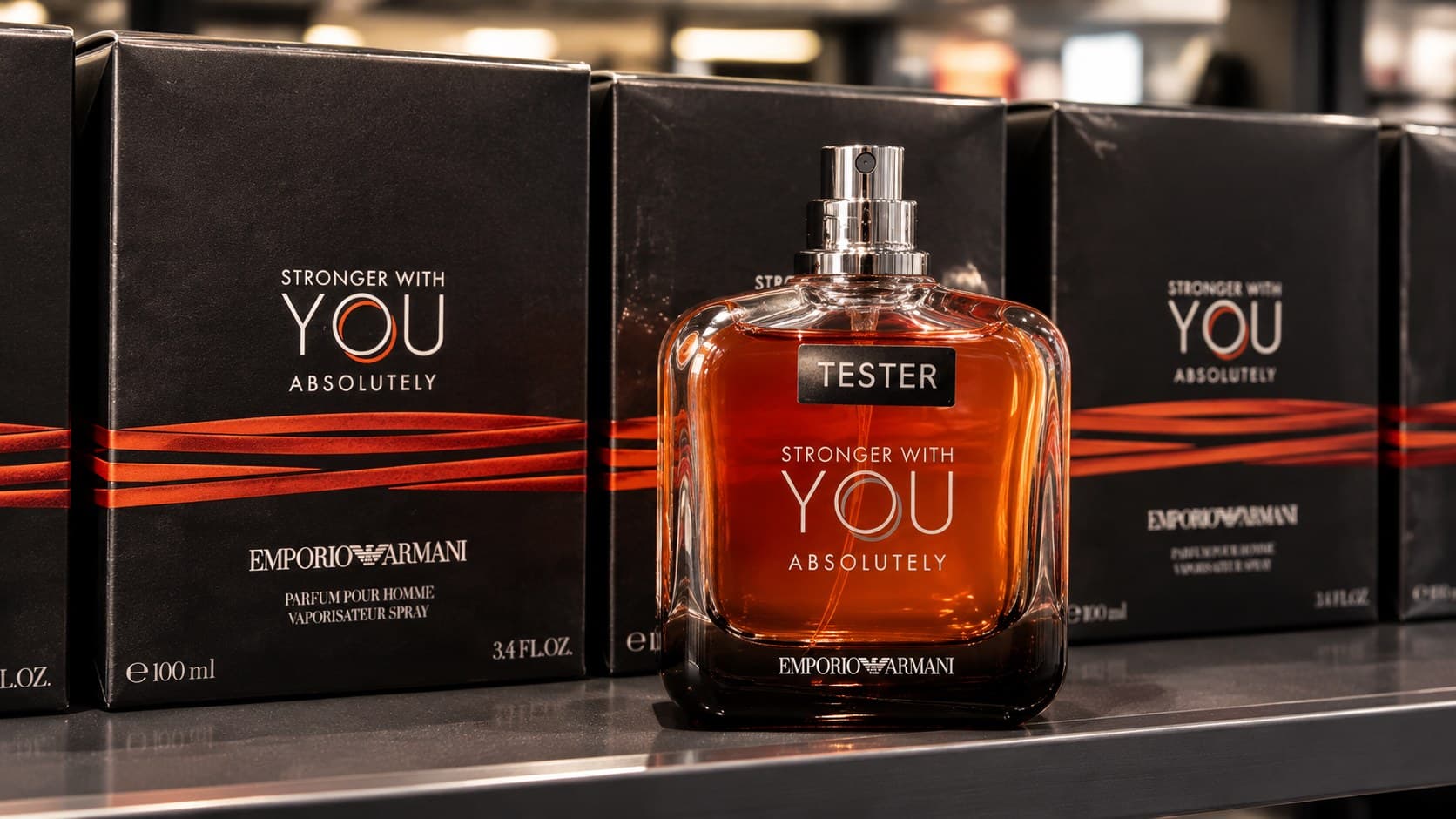
Anyone who has sprayed a perfume tester at a department store counter has probably wondered if that plain, capless bottle holds the same juice as the fancy boxed version on the shelf next to it. The question comes up so often because testers look like a completely different product: no ribbon, no cardboard box, sometimes no cap at all, and a price tag that can be a lot lower when they show up for resale online. That gap between appearance and price makes people suspicious, and it’s a fair thing to wonder about before spending money on a fragrance meant to last for years.
Is Tester Perfume the Same as Retail Perfume?
Yes, in almost every legitimate case the liquid inside a tester is identical to what’s in the retail bottle. Perfume brands fill testers from the exact same batch of juice used for the boxed version being sold on the shelf. There is no separate “cheap” formula made just for testing purposes.
This matters because the scent, the strength, and how long it lasts on skin all come from that formula, not from the packaging around it. A brand that makes an eau de parfum at a certain concentration of fragrance oil uses that same concentration whether the bottle ends up in a gift box or sitting bare on a counter. Manufacturing a second, weaker version just for testers would actually cost a company more money and effort, and it would risk customers loving the tester in-store and then feeling let down by the real bottle at home, which is bad for business. So brands simply don’t do it.
One small caveat worth knowing: fragrance formulas do sometimes change slightly over the years, as brands adjust ingredients due to cost, availability, or new fragrance industry regulations. That means a bottle from 2018 and a bottle from 2026 of the “same” perfume could smell subtly different from each other. This isn’t a tester issue at all, though, since it applies equally to any two retail bottles bought years apart, and it has nothing to do with which one came in a box.
The safest way to think about it: a tester is the same product with less dressing, not a different product with the same name.
What’s Missing From a Perfume Tester’s Packaging?
The real difference between a tester and a retail bottle comes down to what’s wrapped around the glass, not what’s inside it. Testers are built to be practical, not pretty, because their only job is letting a shopper smell the scent before buying.
Several elements are typically stripped away or simplified on a tester bottle:
- No outer box. Retail bottles come in printed cardboard boxes; testers usually arrive loose or in a plain white box.
- No cap, or a plain cap. Retail bottles often have a decorative, weighted cap that matches the brand’s design. Testers may skip this or use a simple cap instead.
- A black or gray marking. Many testers have “Tester,” “Demonstration,” or a small dot painted on the bottom or side so staff can tell it apart from stock meant for sale.
- No cellophane wrap or ribbon. The little plastic seal retail boxes are wrapped in isn’t something testers need.
None of these changes touch the fragrance itself. They exist because testers are handled constantly by staff and customers, sprayed dozens of times a day, and never meant to sit wrapped up looking perfect on a shelf.
Bottle size usually stays the same as the standard retail version of that fragrance, so a tester of a perfume normally sold in 50ml or 100ml will typically hold that same amount. Some brands do produce testers only in their largest available size, since it’s more cost-effective to fill one big display bottle than several small ones for counter use, but this varies by brand rather than being a fixed rule.
Do Perfume Testers Expire Faster Than Retail Bottles?
It can, but only slightly, and mostly over a long period of time. Fragrance breaks down faster when it’s exposed to light, heat, and air, and a missing cap or box removes one layer of protection against those things.
A retail box shields the bottle from sunlight, which is one of the biggest enemies of a fragrance’s chemical structure. A cap keeps air from slowly evaporating the alcohol and lighter top notes every time the bottle sits around. A tester without a cap, especially one left near a sunny window or under bright store lighting for months, could degrade a little faster than a boxed bottle kept in a drawer. This isn’t usually a dramatic difference for a bottle used within a reasonable time, but it’s a real reason to store any tester away from direct light and heat, the same way a regular bottle should be stored.
Most fragrances, tester or not, hold up well for around three to five years unopened if they’re kept somewhere cool and dark, such as a closet or drawer rather than a bathroom shelf that gets warm and humid. Once opened, that window typically shrinks to somewhere around one to three years, since regular air exposure speeds up oxidation even with careful storage. Heat and humidity accelerate the breakdown of fragrance oils just as much as light does, so a bathroom is actually one of the worst places to store any bottle. A tester that has been sitting under bright lights at a store for a long stretch has simply had a bit of a head start on that natural aging process, not a different one.
Why Are Perfume Testers Cheaper Than Retail Bottles?
Testers cost less mainly because the price of packaging, marketing materials, and retail presentation built into a boxed bottle simply isn’t part of the product. A significant chunk of what a shopper pays for a luxury fragrance goes toward the box, the cap design, the cellophane, and the in-store display costs, none of which a tester includes.
Testers are also produced and distributed in a different channel than boxed retail stock, often sold in bulk to sample-focused retailers or given to department stores specifically for demonstration purposes. That different distribution path, combined with skipping the packaging costs, is what allows testers to reach shoppers at a noticeably lower price while the fragrance formula stays exactly the same.
In practice, that usually works out to somewhere between 20% and 50% off what the same fragrance costs in its full retail box, depending on the brand and where it’s sold. Testers also aren’t technically sold as a standalone retail product in the way a boxed bottle is, since their original purpose was in-store demonstration rather than direct sale, and that status is part of why they can be priced so far below the box version even though the fragrance itself hasn’t changed.
How to Tell If a Perfume Tester Is Authentic
Genuine testers still come from the same authorized supply chain as retail bottles, so buying from a trusted seller matters more than the tester label itself. A handful of signs point to authenticity:
- The batch code matches what the brand would use on a legitimate bottle from that period, and it’s printed clearly, not smudged or missing.
- The atomizer sprays a fine, even mist, not a stream or an uneven spray, which is a common giveaway of counterfeit fragrance.
- The seller is a known fragrance retailer, not an anonymous online listing with no return policy.
- The color and thickness of the liquid look consistent with what other buyers report for that specific fragrance.
Counterfeiters sometimes label knockoff perfume as a “tester” because it gives them an easy excuse for missing packaging. That’s the actual risk worth watching for, not the tester format itself.
Frequently Asked Questions
Do testers smell weaker than the retail bottle?
No. Testers use the same fragrance concentration as the retail version, so they shouldn’t smell weaker when both bottles are fresh and properly stored. Any difference in strength usually comes down to how the bottle was stored, not the formula itself.
Is it safe to buy a perfume tester online?
It can be safe when purchased from a reputable fragrance retailer with clear return policies and authentic sourcing. The risk isn’t the tester format itself, it’s an unverified seller passing off a counterfeit as a tester.
Why don’t tester bottles have a cap?
Many testers ship without a cap, or with a simplified one, because they’re meant for repeated sampling by store staff rather than long-term storage. A tester without a cap should be kept somewhere dark and cool to slow down evaporation.
Will a tester eventually go bad faster than a boxed bottle?
It can lose some quality slightly sooner if it’s been left uncapped or in bright light for a long stretch, since both speed up how fast a fragrance breaks down. Stored properly, a tester should last close to as long as a retail bottle.
Is a tester considered a full-size bottle?
Yes, most testers hold the same volume as the standard retail size of that fragrance, unlike a sample vial, which only holds a small amount for trying a scent once or twice.
Are testers legal to resell?
Yes, in most cases. Once a brand has legitimately sold a genuine tester into the market, whether directly to a retailer or through an authorized distributor, that bottle can generally be resold by whoever legally owns it, even if it’s stamped “not for individual sale.” This is covered by a legal principle often called the first-sale doctrine, which lets the owner of a genuine branded product resell it without needing the brand’s permission. What isn’t legal is selling a counterfeit and calling it a tester to explain away the missing box, so the real question to ask before buying isn’t whether reselling testers is allowed, but whether the specific bottle being sold is authentic.
The Bottom Line
A tester and its boxed sibling on the shelf are, for all practical purposes, the same fragrance wearing different clothes. The scent, the concentration, and how it develops on skin come from a formula that doesn’t change based on packaging, so the plain bottle without a cap isn’t cutting corners on what actually matters. What does change is presentation and, along with it, protection from light and air over time, which is worth keeping in mind for storage rather than as a reason to worry about authenticity. As long as a tester comes from a trustworthy seller, it’s simply a way to get the same fragrance for less money by skipping the box.