
The word “complication” shows up constantly in watch magazines and watch forums, and it tends to sound fancier — even a little intimidating — than it actually is, as if it means something has gone wrong with the watch rather than something built into it on purpose. In reality, it’s one of the most useful words in the entire hobby, because it explains why some watches simply tell the time while others tell the time, the date, the phase of the moon, and a dozen other things all at once, all packed into a case smaller than a cookie.
What Does “Complication” Mean on a Watch?
A complication is any function a watch does beyond simply showing the hours and minutes. That’s it. The word doesn’t mean the watch is complicated to use — it’s a technical term borrowed from old French and German watchmaking traditions, and it refers to any extra mechanism added on top of the basic timekeeping engine.
Think of a watch movement like a car engine. The engine’s basic job is to make the wheels turn. Everything else — air conditioning, a sunroof, cruise control — is an addition bolted onto that core job. A watch’s core job is showing hours and minutes. A date window, a second time zone, a stopwatch function, a chime — each of these is a complication, because each one adds gears, springs, or discs that the watchmaker had to design, build, and fit into an already tiny space.
Even something as ordinary as a date display, which barely gets a second glance on most watches, is technically a complication. It just happens to be the simplest and most common one, which is why nobody thinks of it as impressive anymore.
Common Complications Found on Everyday Watches
Most watches in everyday use rely on a small handful of complications that repeat across the industry:
- Date (or day-date): A little window showing the date, sometimes the day of the week too.
- Chronograph: A built-in stopwatch, usually controlled by two extra buttons (called pushers) next to the crown.
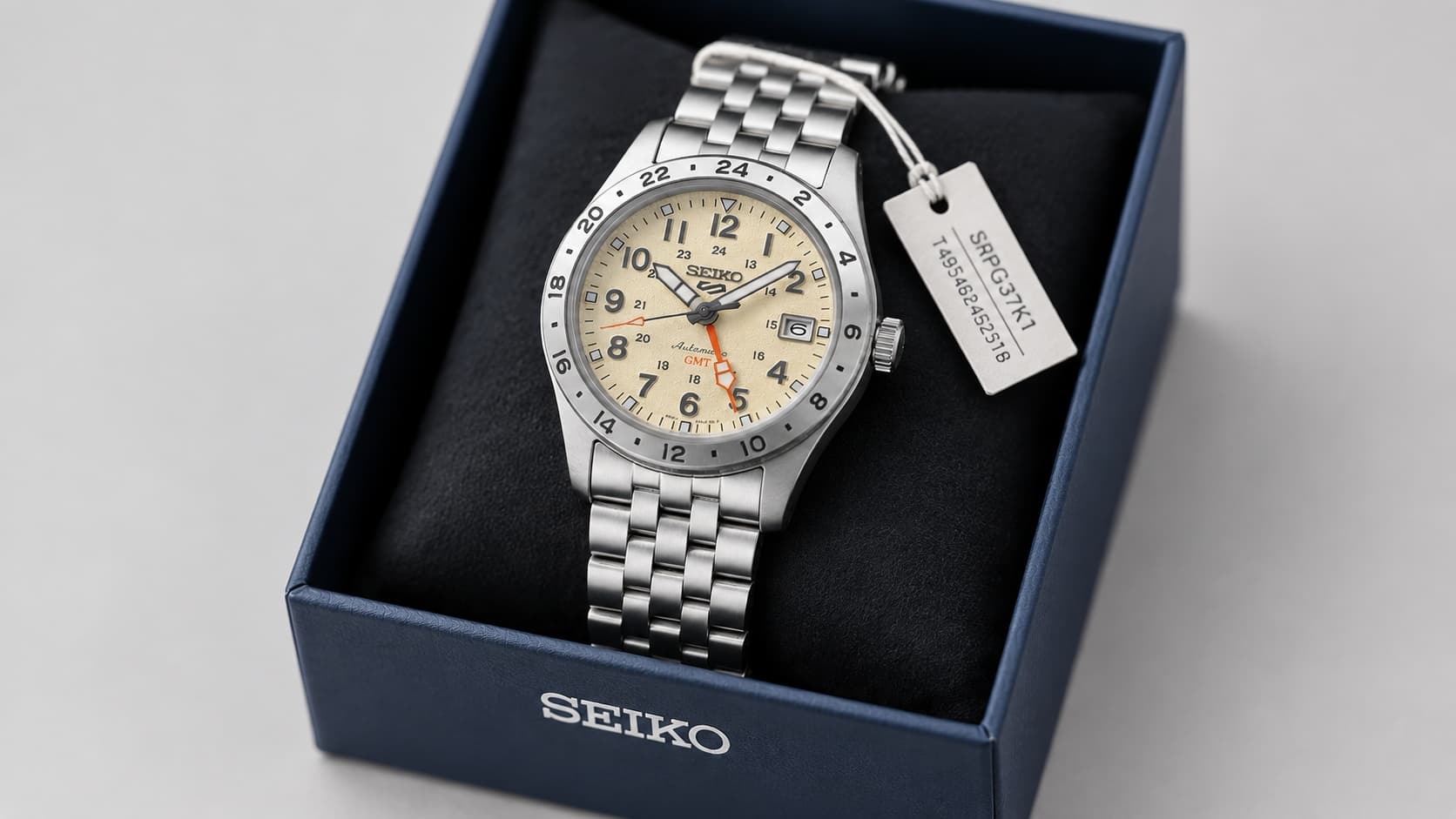
- GMT / dual time: An extra hand, often arrow-shaped, that tracks a second time zone at once.
- Moonphase: A small rotating disc showing where the moon is in its cycle, from new moon to full moon.
- Power reserve indicator: A small gauge that shows how much “energy” is left before the watch needs winding.
- Alarm: A mechanism that lets the watch ring or buzz at a set time.
Each of these solves a different everyday problem. A traveler benefits from a GMT hand. A swimmer or a race fan might actually use a chronograph. A collector who just likes the craft might want a moonphase purely because it’s beautiful to watch change over the month.
A couple of these are worth a closer look because people often misunderstand how they work. A GMT hand isn’t always the same thing — on a “caller” or “office” GMT, the extra 24-hour hand can be set independently, which suits someone who stays in one place but wants to check a second time zone before making a call. On a “true” or “traveler” GMT, it’s the main local hour hand that jumps forward or back in one-hour steps instead, which suits someone actually flying between time zones and wanting to reset local time without disturbing the second-zone hand. And a moonphase disc, despite looking decorative, can actually be built with real precision: a well-made moonphase mechanism can stay accurate to within one day every 122 years, because the gearing is cut to match the moon’s 29.5-day cycle almost exactly.
A good rule of thumb: if a feature requires its own gear train separate from the simple hour-and-minute train, it counts as a complication.
The Hardest Watch Complications to Build
Beyond the everyday features, there’s a tier of complications that watchmakers consider genuinely difficult, sometimes requiring a specialist who does nothing else for their entire career.
Perpetual Calendar
A perpetual calendar knows how many days are in each month, including February, and it knows about leap years too. A normal date window has to be manually corrected every time a month has fewer than 31 days. A perpetual calendar does all of that on its own, mechanically, and in theory won’t need a correction until the year 2100, when the calendar rules change in a way that trips up even this complication.
The reason 2100 matters is a quirk in the calendar itself: a year divisible by 100 is only a leap year if it’s also divisible by 400. The year 2000 passed that test, so it had a normal February 29th. The year 2100 will not, and most perpetual calendars — built to assume every fourth year is automatically a leap year — will need a manual correction that century. It’s a small detail, but it’s a fun example of just how much real-world knowledge a watchmaker has to build into a few tiny gears.
There’s also a simpler, less expensive cousin of this complication called an annual calendar. It knows the difference between 30-day and 31-day months, so it doesn’t need correcting every month like a basic date window does, but it doesn’t understand February’s shorter length. That means it still needs one manual correction a year, at the end of February, which is where the name comes from. It’s a good middle option for someone who wants less monthly fiddling without paying for a full perpetual calendar’s added complexity.
Tourbillon
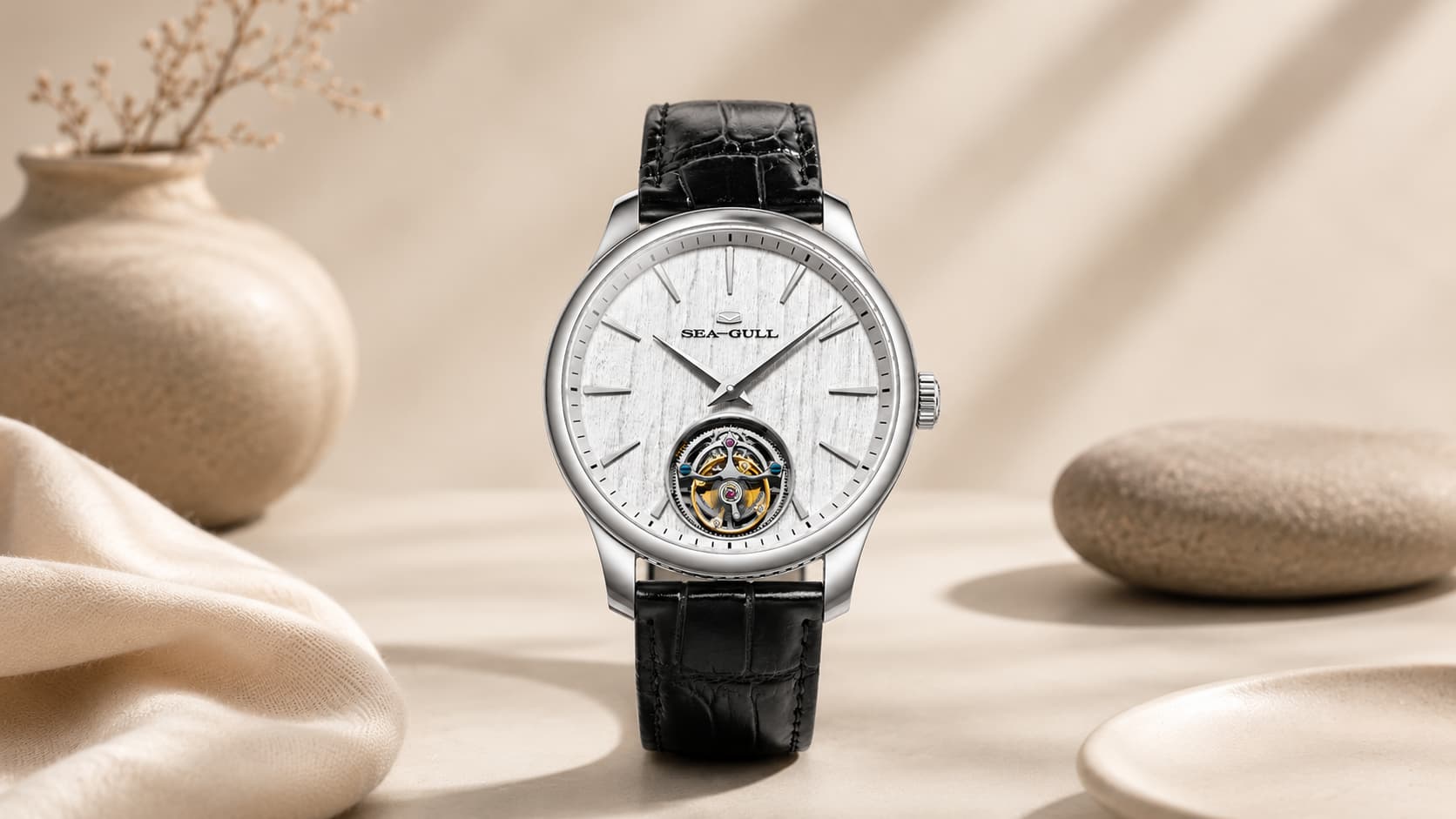
A tourbillon is a rotating cage that holds the watch’s balance wheel and spins it, usually once every 60 seconds. It was invented in 1795 by Abraham-Louis Breguet to fight a real problem: gravity pulling on a pocket watch’s tiny parts and making it run slightly faster or slower depending on which way the watch was sitting. By constantly rotating the parts, the tourbillon averages out those tiny errors. On a modern wristwatch worn on a moving wrist, its practical benefit is smaller than it used to be, but it remains one of the most respected pieces of mechanical engineering in the industry, partly because it’s so difficult and time-consuming to make correctly.
A single tourbillon cage can contain anywhere from 30 to over 70 individual tiny parts, and the whole assembly often weighs less than a paperclip. Watchmakers have since built on the original idea with variations like the “flying” tourbillon, which is supported from below instead of held by a bridge on top, making the spinning cage look like it’s floating inside the case, and multi-axis tourbillons, which rotate on two or three axes at once for an even more dramatic visual effect.
Minute Repeater
A minute repeater is a complication that chimes the time out loud on tiny gongs inside the case, usually triggered by a slider on the side of the watch. It was originally invented so people could tell the time in the dark, before electric lighting existed. Today it survives purely as one of the most prized and expensive complications in fine watchmaking, since tuning the gongs to sound clear and pleasant is an extremely delicate skill.
A full minute repeater chimes hours, quarter hours, and then the remaining minutes, each with its own distinct tone, so a skilled listener can work out the exact time just from the pattern of chimes. Simpler versions exist too, like the quarter repeater, which only chimes the hour and nearest quarter hour, skipping the individual minutes. Some high-end versions use “cathedral gongs,” which wrap further around the inside of the case than standard gongs, giving the chime a longer, richer sound similar to a small bell.
Split-Seconds Chronograph (Rattrapante)
This is a chronograph with a second hidden hand that can be stopped independently to time two events that start together but finish at different times, like two runners in the same race. It requires an extra set of gears layered directly on top of a regular chronograph mechanism. In use, both seconds hands run together, stacked perfectly on top of each other, until you press a separate button that freezes the top hand in place while the other keeps running underneath — press it again and the frozen hand snaps forward to catch back up. That snapping motion is where the complication gets its French name, “rattrapante,” which means “catching up.”
How Many Complications Can a Watch Have?
There’s no hard limit, but the watch industry does use a special term for watches that stack several of the hardest complications together: a grande complication, or “grand complication.” Historically, the term was reserved for watches combining at least a perpetual calendar, a minute repeater, and a chronograph, though usage has loosened over the years to include other combinations of major complications.
Some record-setting watches have packed in twenty or more complications into a single case, though these are one-off showpieces rather than anything most people would wear day to day. The more complications packed in, the more room the watchmaker needs, which is one reason very complicated watches tend to be thicker or larger than simple time-only pieces.
Patek Philippe’s Caliber 89 pocket watch, finished in 1989 to mark the company’s 150th anniversary, packed 33 complications into a single movement and took nine years to develop. Vacheron Constantin later pushed even further with its Reference 57260, unveiled in 2015, which holds 57 complications and remains one of the most mechanically complex watches ever built. Watches at this level are effectively one-of-a-kind engineering projects rather than production models, often taking a small team of specialists several years to complete a single piece.
Do Complications Make a Watch More Valuable?
Generally, yes, but value comes from more than just counting features. A watch with a well-executed, hand-finished tourbillon from an established manufacture will usually be worth more than a mass-produced watch with the same complication, simply because of the skill, time, and material involved in building it correctly. Complexity by itself isn’t the whole story — the brand’s reputation, the finishing quality, and how the parts were actually made (by hand versus by machine) all factor into what a complicated watch is worth.
A complication also adds more places where something can eventually need servicing, which is why a simple time-and-date watch is generally cheaper and easier to maintain over its lifetime than a watch with five or six complications working together.
Finishing is a big part of why two watches with the exact same complication can be priced so differently. On high-end pieces, watchmakers hand-bevel the edges of tiny bridges and plates, polish the inside corners of screw heads, and apply decorative patterns like Geneva stripes purely so the movement looks beautiful under a loupe, even though none of it affects how well the watch keeps time. That extra labor, done by hand rather than machine, is often a bigger driver of price than the complication itself.
Quartz Watches Can Have Complications Too
People often assume complications only exist in old-fashioned mechanical watches, but that’s not quite right. Quartz and digital watches can have complications too — a chronograph function, an alarm, a second time zone, even a moonphase display are all common on quartz watches. The difference is how they’re built. In a mechanical watch, a complication is a physical stack of gears and springs that a watchmaker assembles by hand. In a quartz or digital watch, the same function is usually handled by a small electronic circuit and a stepper motor, which is why quartz complications tend to be far less expensive to produce.
This is also why a quartz chronograph watch can cost a fraction of a mechanical one with the same stopwatch function, even though both look nearly identical from the outside. The quartz version times things using a microchip counting oscillations of a tiny crystal, while the mechanical version needs an entirely separate gear train, clutch, and set of levers just to start, stop, and reset the hands. Neither approach is “better” across the board — quartz complications are usually more accurate and cheaper to maintain, while mechanical complications are valued for the craftsmanship of building the function entirely out of moving metal parts.
The Right Complication for Different Lifestyles
It’s easy to be drawn to a watch because a complication sounds impressive, but the complications that hold up over time tend to be the ones that match how a person actually lives.
| Everyday habit | Useful complication |
|---|---|
| Frequent travel across time zones | GMT / dual time |
| Timing workouts, races, or cooking | Chronograph |
| Interest in lunar cycles | Moonphase |
| Difficulty keeping track of the date | Date, annual calendar, or perpetual calendar |
| A watch that’s rarely taken off | Power reserve indicator |
| Appreciation for mechanical craftsmanship for its own sake | Tourbillon or minute repeater |
There’s nothing wrong with choosing a watch purely because a complication is appealing to look at or think about, even if its original purpose rarely gets used. Plenty of chronographs are worn without their stopwatch function ever being used — the extra sub-dials are simply part of what makes the watch feel interesting to look at.
Frequently Asked Questions
Is a date window really considered a complication?
Yes. Any function beyond showing hours and minutes counts as a complication, and a simple date display is technically the most basic one, even though it’s so common that most people don’t think of it that way.
What’s the hardest watch complication to make?
Watchmakers generally agree that the minute repeater and the tourbillon rank among the most difficult, since both require extremely precise hand-finishing and, in the case of a repeater, careful tuning by ear to get the chime sounding right.
Do more complications mean a better watch?
Not necessarily. More complications mean more engineering and often a higher price, but a simple, well-made time-only watch can be just as reliable, accurate, and enjoyable to wear as a heavily complicated one. It ultimately comes down to what the watch is meant to do for its owner.
Can a smartwatch have complications?
The term is used loosely in the smartwatch world to describe the small widgets on a digital watch face, like weather or a step counter, but this is a different, more casual use of the word than in traditional watchmaking, where a complication refers to a physical or electronic mechanism built into the watch itself.
Why do complicated watches cost more to repair?
Each complication adds extra parts that a watchmaker needs to disassemble, clean, and reassemble correctly during a service. A watch with several complications simply has more moving parts that require careful attention, which takes more time and specialized skill than servicing a basic time-only watch.
Conclusion
Understanding complications really comes down to one idea: every extra function on a watch, from a simple date window to a chiming minute repeater, is something a watchmaker deliberately chose to build on top of basic timekeeping. Some complications solve real everyday problems, like tracking a second time zone, while others exist mainly to show off what mechanical engineering can do in a space smaller than a matchbox. Knowing the difference changes how a watch dial reads — not just as a display of hours and minutes, but as a small record of every problem someone once decided was worth solving.