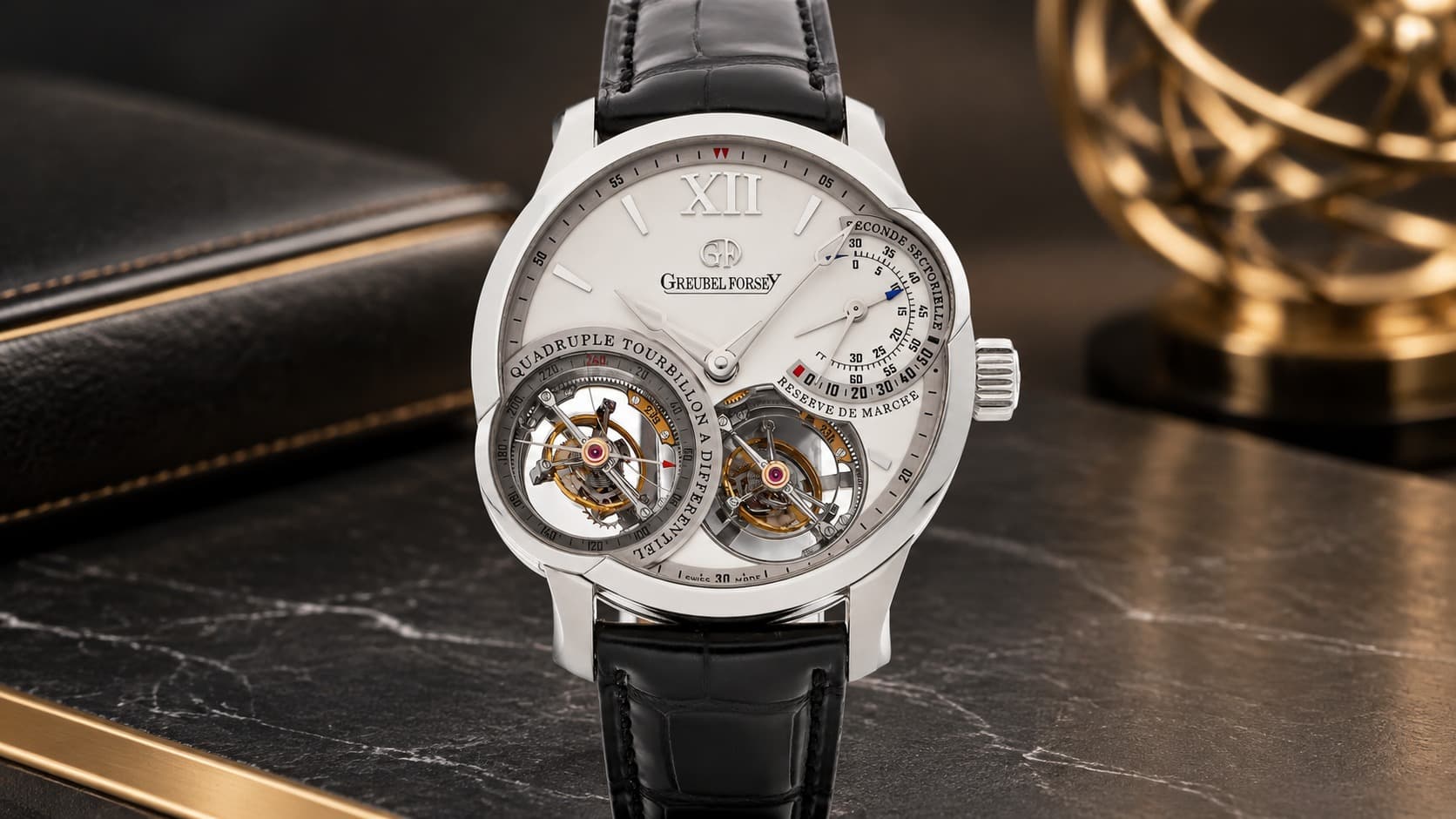
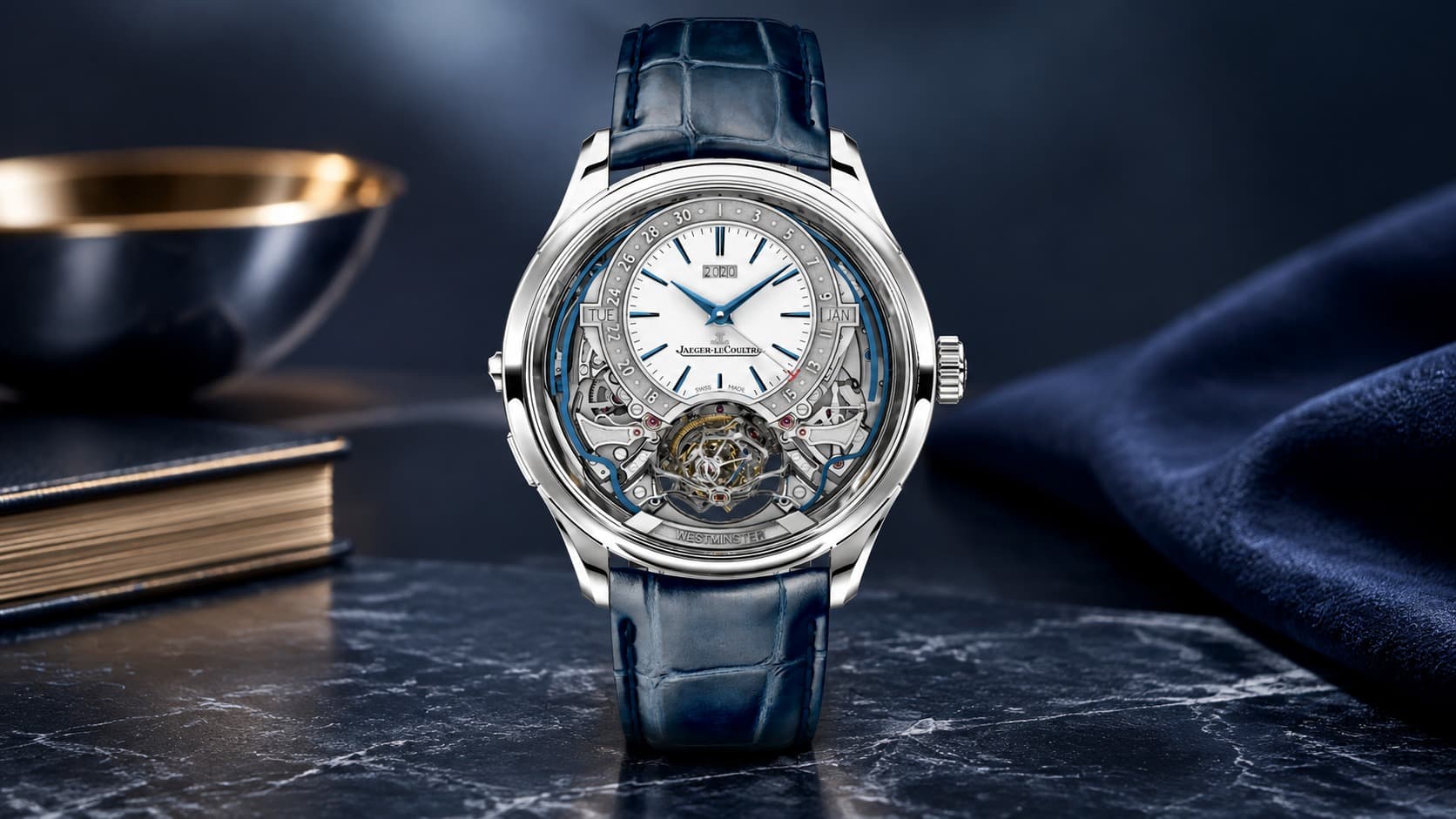
A tourbillon watch features a mesmerizing rotating cage that houses the escapement, balance wheel, and hairspring, completing one revolution per minute in a hypnotic mechanical dance. Invented by Abraham-Louis Breguet in 1795 to counteract gravity’s effects on pocket watch accuracy, this complication has evolved from practical necessity to pure horological artistry. While modern wristwatches have eliminated the original functional need through natural wrist movement and advanced materials, tourbillons remain highly coveted for their visual spectacle and exceptional craftsmanship. These mechanical marvels range from $15,000 Swiss examples to million-dollar masterpieces, representing the ultimate expression of traditional watchmaking skill and luxury status.
What Is a Tourbillon Watch?
A tourbillon represents mechanical watchmaking’s most visually stunning complication, where the heart of the timepiece – its regulating components – spins continuously in a delicate cage. This rotating assembly creates an almost hypnotic display that transforms timekeeping into kinetic art. The complexity behind this seemingly simple spinning motion involves some of the most precise engineering ever achieved in mechanical devices.
- Inside the rotating cage sits the escapement mechanism, balance wheel, and hairspring – these components work together to regulate how energy releases from the mainspring, controlling the watch’s timekeeping accuracy. The entire assembly must weigh less than a paperclip while maintaining perfect balance during 1,440 daily rotations, requiring manufacturing precision measured in thousandths of millimeters.
- The cage receives power through an intricate gear train connected to the mainspring, with energy flowing through multiple reduction wheels before reaching the rotating assembly. This power transmission system must overcome the additional resistance created by the spinning mass, which explains why many tourbillon watches have power reserves around 38-42 hours compared to 70+ hours in simpler movements.
- Each tourbillon contains approximately 40-80 individual components depending on the design complexity, with every piece requiring hand-finishing and precise adjustment during assembly. The cage itself often features decorative elements like blued steel screws, Geneva stripes, or diamond-polished surfaces that showcase the manufacturer’s finishing expertise.
- Most tourbillons complete one full revolution every 60 seconds, though some manufacturers create variations with different rotation speeds – Greubel Forsey produces models with 24-second rotations while others experiment with longer cycles. This timing allows the rotating assembly to function as a seconds display, with the cage position indicating elapsed seconds.
- The visual impact comes from watching the entire regulating system dance before your eyes, creating a three-dimensional display that changes perspective constantly as the cage rotates. Open-dial designs maximize this effect by removing as much dial material as possible around the tourbillon aperture, while some brands create fully skeletonized movements for complete transparency.
- Temperature and positional effects that originally justified the tourbillon’s existence have been largely eliminated by modern materials like silicon hairsprings, which resist magnetic fields and temperature variations that plagued earlier steel components. Titanium balance wheels and advanced alloys further reduce the environmental factors that once affected timekeeping accuracy.
- Hand-assembly by master watchmakers remains essential because the tolerances involved exceed what automated machinery can achieve reliably. Each component requires individual fitting and adjustment, with the final regulation process taking days or weeks to achieve optimal performance across all positions and temperatures.
The tourbillon’s evolution from practical necessity to artistic statement reflects horology’s journey from pure functionality toward emotional connection and visual pleasure. While these mechanisms no longer improve timekeeping accuracy, they preserve traditional manufacturing skills that might otherwise disappear in our increasingly automated world. The fascination with tourbillons speaks to our appreciation for mechanical ingenuity and the human desire to witness complex systems working in perfect harmony, making these watches as much about the experience of ownership as the measurement of time itself.
How Does a Tourbillon Watch Work?
The tourbillon operates through a brilliant mechanical solution that seems to defy the laws of physics – making the heaviest part of a watch movement constantly rotate while maintaining precise timekeeping. The mechanism transforms the traditional stationary escapement into a spinning ballet of gears, springs, and wheels that work together in perfect synchronization. This rotating system requires careful engineering to balance the forces involved while ensuring reliable power delivery.
- The mainspring provides energy that travels through a series of reduction gears, similar to a conventional watch movement, but with a crucial difference – the final gear drives a rotating carriage instead of a fixed escapement. This carriage, called the cage, holds the balance wheel, hairspring, and escapement mechanism while spinning around a central pivot point that remains connected to the gear train.
- A fixed fourth wheel sits at the center of the rotating cage, remaining stationary while the cage spins around it. The escape wheel inside the cage meshes with this fixed wheel, creating the reference point needed for the escapement to function properly while the entire assembly rotates. This arrangement allows the escapement to operate normally despite being in constant motion.
- The balance wheel oscillates back and forth within the rotating cage, typically beating at 21,600 or 28,800 vibrations per hour, just like in conventional movements. However, the entire balance assembly – including the hairspring and its regulating components – experiences constant positional changes as the cage rotates, theoretically averaging out any gravitational effects that might affect timekeeping.
- Power delivery becomes more complex because energy must transfer from the stationary gear train to the rotating cage while maintaining consistent force. This requires additional jeweled bearings and precisely machined contact points that can handle both rotational forces and the oscillating loads from the balance wheel within the cage.
- The cage structure itself requires exceptional engineering, typically made from lightweight materials like aluminum, titanium, or even carbon fiber to minimize the rotating mass. Every component within the cage must be perfectly balanced to prevent wobbling or uneven rotation that would affect both visual appeal and mechanical performance.
- Lubrication presents unique challenges since the rotating motion creates different oil distribution patterns compared to stationary escapements. Special lubricants and application techniques ensure proper lubrication throughout the rotation cycle, with some manufacturers using synthetic oils that maintain consistency across varying centrifugal forces.
- The visual rhythm creates a mesmerizing display as the balance wheel appears to swing back and forth while simultaneously rotating with the cage, creating complex motion patterns that change perspective continuously. This three-dimensional dance of mechanical components provides endless fascination for anyone watching the movement in operation.
- Temperature compensation within the rotating assembly relies on modern materials rather than traditional bimetallic balance wheels, since the constant rotation would interfere with older compensation methods. Silicon hairsprings and monometallic balance wheels with timing screws provide temperature stability without requiring complex mechanical adjustment systems.
The beauty of tourbillon mechanics lies in the seamless integration of multiple complex systems working together without interfering with each other. The rotating cage must maintain perfect balance while the escapement regulates timing, the gear train delivers power, and the entire assembly withstands the stresses of constant motion. This mechanical symphony represents centuries of accumulated knowledge distilled into one of the most elegant solutions ever devised for a problem that modern technology has largely solved through different means.
Tourbillon Watch History and Origins
The tourbillon emerged from the brilliant mind of Abraham-Louis Breguet during one of history’s most turbulent periods, born from practical necessity rather than aesthetic ambition. Working in exile from Revolutionary France, Breguet tackled the persistent problem of gravitational errors in pocket watches that hung vertically in gentlemen’s waistcoats. His revolutionary solution would eventually become one of horology’s most celebrated complications, though its journey from practical tool to luxury statement spans over two centuries.
- Abraham-Louis Breguet received the patent for his “régulateur à tourbillon” on June 26, 1801, though he had been developing the concept since 1795 while living in Switzerland. The original patent described a mechanism designed to eliminate positional errors caused by gravity’s effect on the balance wheel and hairspring when pocket watches remained in vertical positions for extended periods.
- The first completed tourbillon watch took four years to finish, with Breguet delivering it to his client in 1805. This pioneering timepiece required entirely hand-made components using 18th-century tools and techniques, making it an extraordinary achievement considering the precision required for such a complex mechanism to function reliably.
- Production remained extremely limited during Breguet’s lifetime, with fewer than 50 tourbillon watches completed by his workshop between 1805 and 1823. Each piece required months of work by master craftsmen, making these watches accessible only to royalty, nobility, and the wealthiest collectors of the era.
- The decline of pocket watches in favor of wristwatches during the early 20th century nearly killed the tourbillon complication, as the natural movement of the human arm eliminated the positional errors that justified its existence. Most watch manufacturers abandoned tourbillon production by the 1930s, viewing it as an obsolete curiosity.
- Girard-Perregaux’s “La Esmeralda” tourbillon from 1889 marked a crucial evolution by featuring the famous Three Gold Bridges design that emphasized visual appeal alongside mechanical function. This pocket watch won the gold medal at the 1889 Paris Universal Exhibition and established the template for modern open-dial tourbillon designs that prioritize aesthetic display.
- The modern tourbillon renaissance began in 1986 when Audemars Piguet released the first automatic wristwatch tourbillon, proving that the complication could successfully transition to wrist-worn timepieces. This breakthrough opened the floodgates for luxury watch brands to embrace tourbillons as symbols of manufacturing prowess and exclusivity.
- Swiss regulations historically restricted tourbillon production to maintain exclusivity, with only certain qualified manufacturers permitted to produce these complications. These restrictions helped preserve the mystique surrounding tourbillons while ensuring quality standards, though modern production has become more widespread across the industry.
- Independent watchmakers like Daniels, Journe, and Dufour elevated tourbillon craftsmanship during the 1980s and 1990s, creating entirely hand-made examples that showcased traditional techniques and pushed mechanical boundaries. Their work inspired a new generation of collectors who appreciated tourbillons as artistic achievements rather than mere timekeeping tools.
- The arrival of Chinese tourbillon manufacturing in the early 2000s dramatically changed the market landscape, offering functional tourbillons at previously unimaginable price points. While controversial among traditionalists, these developments made the complication accessible to broader audiences and sparked debates about value, authenticity, and manufacturing heritage.
- Contemporary tourbillon development focuses on innovative materials, multiple axes of rotation, and integration with other complications, transforming Breguet’s simple solution into increasingly complex mechanical sculptures. Brands now create double, triple, and even quadruple-axis tourbillons that prioritize visual spectacle over any pretense of functional improvement.
The tourbillon’s historical arc reveals how mechanical innovations can transcend their original purpose to become cultural symbols and artistic expressions. What began as Breguet’s practical solution to 18th-century timekeeping challenges has evolved into a statement of luxury, craftsmanship, and mechanical poetry that continues captivating new generations of enthusiasts despite having no functional relevance in modern timekeeping.
Why Were Tourbillons Originally Created?
The tourbillon solved a very specific problem that plagued 18th-century pocket watches – the consistent gravitational pull that affected timekeeping accuracy when watches remained in fixed vertical positions. During Breguet’s era, gentlemen carried their pocket watches in waistcoat pockets, where the timepieces hung vertically for hours at a time, causing the heavy balance wheel and delicate hairspring to experience constant downward force that created predictable timing errors.
- Pocket watches of the late 1700s suffered from positional errors because the balance wheel’s weight distribution wasn’t perfectly uniform, causing the center of gravity to shift slightly away from the true geometric center. When the watch hung vertically in a pocket, gravity would consistently pull on this off-center mass, creating a subtle but persistent force that affected the balance wheel’s oscillation rate and caused the watch to gain or lose time predictably.
- The hairspring, made from steel in Breguet’s time, would deform slightly under gravitational stress when positioned vertically for extended periods. This deformation changed the spring’s effective length and tension, directly affecting the balance wheel’s oscillation frequency and causing timing variations that accumulated throughout the day into significant errors.
- Traditional pocket watch regulation involved adjusting the watch in multiple positions, but this approach only averaged out errors rather than eliminating them. Watchmakers would regulate timepieces to run fast in some positions and slow in others, hoping the errors would cancel out during typical daily use, but this compromise solution never achieved the accuracy that precision timekeeping demanded.
- Temperature variations compounded the gravitational effects because steel components expanded and contracted with heat changes, altering the balance wheel’s moment of inertia and the hairspring’s elasticity. When combined with positional errors, these thermal effects created complex timing variations that proved extremely difficult to predict and compensate for using 18th-century technology.
- Breguet’s rotating solution aimed to expose the escapement mechanism to all possible positions continuously, theoretically averaging out gravitational effects over each minute of operation rather than over hours or days of typical use. By rotating the entire regulating system through 360 degrees every minute, the tourbillon would experience brief moments of gravitational stress in every direction, preventing any single orientation from dominating the timing behavior.
- The mathematical principle behind the tourbillon assumes that gravitational errors in different positions would cancel each other out when experienced sequentially rather than individually. If a watch gained time when the balance wheel’s heavy spot pointed downward and lost time when it pointed upward, rotating through both positions rapidly would theoretically eliminate the net effect of these positional errors.
- Manufacturing limitations of the 18th century made it nearly impossible to create perfectly balanced balance wheels using available materials and techniques. Hand-forged steel components contained density variations and surface irregularities that created inherent imbalances, making gravitational compensation through mechanical rotation an elegant alternative to achieving perfect component symmetry.
- Breguet’s clients demanded the highest possible accuracy for navigation, scientific observation, and personal prestige, driving the need for innovations that could improve timekeeping beyond what conventional regulation methods could achieve. The tourbillon represented a mechanical solution to physical limitations that couldn’t be overcome through better adjustment techniques alone.
- Competition among 18th-century watchmakers focused heavily on chronometric performance, with prestigious commissions and royal patronage going to craftsmen who could demonstrate superior accuracy. The tourbillon gave Breguet a significant competitive advantage by offering a new approach to an old problem that had frustrated the watchmaking community for decades.
The original rationale for tourbillon development reveals how mechanical innovation often emerges from the intersection of scientific principle, practical necessity, and competitive pressure. Breguet’s solution elegantly addressed real limitations of 18th-century materials and manufacturing while establishing a new standard for horological achievement that continues influencing watchmaking philosophy more than two centuries later.
Do Tourbillons Actually Improve Accuracy?
The uncomfortable truth about tourbillons in modern wristwatches is that they provide no accuracy benefit whatsoever, and in many cases actually perform worse than well-regulated conventional movements. Scientific testing, competition results, and expert analysis consistently demonstrate that tourbillons fail to deliver the theoretical advantages that justified their creation. This reality has led many respected watchmakers to openly question the functional value of tourbillons while acknowledging their continued appeal as mechanical artistry.
- Rigorous chronometry testing reveals that mass-produced movements often outperform expensive tourbillons in accuracy competitions. Swiss chronometer testing data from recent years shows standard ETA movements achieving daily variations of ±2-4 seconds, while many tourbillon watches struggle to meet basic COSC certification standards of -4/+6 seconds per day, despite costing ten to fifty times more than conventional alternatives.
- The fundamental flaw in tourbillon logic becomes apparent in wristwatch applications because natural arm movement provides continuous position changes throughout the day. Unlike pocket watches that hung motionless in vertical positions, wristwatches experience constant orientation shifts during normal wear, effectively creating the same gravitational averaging that tourbillons attempt to achieve mechanically.
- Modern manufacturing has eliminated the root causes that made tourbillons theoretically beneficial in Breguet’s era. Contemporary balance wheels achieve near-perfect poise through precision machining and computer-controlled adjustment, while monometallic construction eliminates thermal expansion issues that plagued bimetallic components. Silicon hairsprings resist magnetic fields and temperature variations while maintaining consistent elastic properties that steel springs could never match.
- Additional mechanical complexity in tourbillon movements introduces more potential failure points and sources of error compared to simpler escapements. The rotating cage requires extra jeweled bearings, gear meshes, and contact surfaces that each contribute microscopic variations in friction and wear patterns. These cumulative effects often outweigh any theoretical gravitational benefits.
- Professional chronometer certification standards achieved by conventional movements demonstrate superior performance to most tourbillons. Omega’s Master Chronometer certification requires accuracy within 0/+5 seconds daily after exposure to magnetic fields exceeding 15,000 gauss, while Rolex Superlative Chronometer standards demand ±2 seconds daily accuracy – performance levels that few tourbillon watches can match consistently.
- Independent testing by horological institutions confirms that well-adjusted conventional escapements maintain superior long-term stability compared to tourbillons. The Swiss Federal Institute of Metrology found that silicon escapements in standard movements achieved timing variations under 1 second per day over extended periods, significantly outperforming comparable tourbillon mechanisms tested under identical conditions.
- Respected independent watchmakers openly acknowledge tourbillon limitations in modern applications. Philippe Dufour, considered among the greatest living craftsmen, states that simple movements with properly adjusted balance wheels will outperform tourbillons over time, while Roger Smith emphasizes that conventional escapements provide superior reliability and accuracy in practical use.
- Competition chronometry results from observatory trials consistently show conventional movements dominating accuracy rankings. Between 2009-2019, Swiss timing competitions saw standard production movements achieving precision scores that exceeded most tourbillon entries, with winning margins often measured in fractions of seconds over multi-day testing periods.
- The energy required to drive the rotating cage reduces power reserve and can affect mainspring consistency compared to conventional movements. Tourbillon watches typically achieve 38-45 hour power reserves while similar movements without the complication often exceed 70 hours, indicating the additional mechanical load imposed by the rotating assembly.
- Servicing data from authorized service centers reveals that tourbillon movements require more frequent maintenance and experience higher failure rates than conventional alternatives. The additional complexity and precise tolerances make these movements more susceptible to timing drift and mechanical issues that compromise long-term accuracy performance.
The scientific evidence overwhelmingly demonstrates that tourbillons represent a triumph of marketing and tradition over functional performance in contemporary watchmaking. While these mechanisms showcase extraordinary craftsmanship and provide mesmerizing visual appeal, buyers should approach them as mechanical art rather than precision instruments. The most accurate watches available today achieve their performance through advanced materials, precision manufacturing, and simplified escapements – exactly the opposite approach from tourbillon philosophy.
Types of Tourbillon Watches
The world of tourbillon watches encompasses a fascinating variety of mechanical configurations, each representing different approaches to Breguet’s original concept. From traditional single-axis designs to mind-bending multi-axis complications, manufacturers have pushed the boundaries of what’s possible with rotating escapements. These variations range from subtle refinements that improve visual access to extreme complications that create three-dimensional mechanical sculptures within watch cases.
- Traditional tourbillons follow Breguet’s original design philosophy with upper and lower bridges supporting the rotating cage, providing maximum structural stability and protection for the delicate mechanism. The cage typically features spoked construction with a seconds hand attached to show the rotation, while the bridge design allows for elaborate decorative finishing including hand-engraved patterns, Geneva stripes, or diamond-polished surfaces that showcase manufacturing artistry.
- Flying tourbillons eliminate the upper bridge to create an unobstructed view of the rotating mechanism, with the cage supported only from below through a single pivot point. Alfred Helwig developed this variation in 1920 to improve visual access and reduce movement thickness, though the cantilevered mounting requires more precise engineering to prevent wobbling or instability during rotation.
- Open-heart tourbillons feature large dial apertures that frame the rotating mechanism, often removing 30-50% of the dial surface to maximize visual impact. These designs prioritize spectacle over traditional dial aesthetics, with some manufacturers creating fully skeletonized movements where the tourbillon becomes the central focal point surrounded by exposed gears and bridges.
- Double tourbillons represent the pinnacle of mechanical complexity, featuring two separate rotating cages that operate independently or in coordination. Greubel Forsey’s Double Tourbillon 30° features one cage inclined at 30 degrees rotating every minute while a second cage completes revolutions every four minutes, creating an intricate ballet of mechanical motion that pushes traditional watchmaking to its absolute limits.
- Triple-axis tourbillons add a third plane of rotation, with some designs featuring cages within cages that rotate at different speeds and orientations. Thomas Prescher pioneered these ultra-complex mechanisms that can include rotations every minute, every six minutes, and every hour, creating mechanical sculptures that prioritize visual drama over any pretense of functional improvement.
- Constant-force tourbillons integrate additional mechanisms that provide consistent power delivery to the escapement regardless of mainspring tension. These complications use intermediary springs or weights to regulate power flow, theoretically improving timing consistency though adding significant complexity and manufacturing cost to an already intricate mechanism.
- Chronograph tourbillons combine the rotating escapement with stopwatch functionality, requiring additional gear trains and operating mechanisms that must work harmoniously without interfering with the tourbillon’s rotation. These represent some of the most complex mechanical watches ever created, with hundreds of components working together in precise coordination.
- Minute repeater tourbillons integrate chiming mechanisms with rotating escapements, creating acoustic and visual spectacles that demonstrate the absolute pinnacle of traditional watchmaking skills. The combination requires managing space constraints, power distribution, and mechanical interference between two of horology’s most complex complications.
- Planetarium tourbillons feature astronomical displays that show celestial movements while the escapement rotates, often including moon phases, solar time equations, and planetary positions. These complications transform watches into mechanical representations of cosmic motion, with the tourbillon symbolically representing Earth’s rotation within the solar system.
- Silicon tourbillons utilize modern materials for cage construction and escapement components, reducing weight and magnetic susceptibility while maintaining visual appeal. These contemporary interpretations combine traditional aesthetics with cutting-edge materials science, though they highlight the contradiction between using advanced technology to improve an obsolete complication.
- Micro-rotor tourbillons integrate automatic winding systems with rotating escapements, requiring careful engineering to prevent the rotor’s motion from interfering with the cage rotation. These designs allow tourbillon owners to enjoy automatic convenience while maintaining the visual spectacle of the rotating mechanism.
- Budget tourbillons from Chinese manufacturers offer the visual appeal of rotating escapements at dramatically reduced prices, typically using simplified construction and mass-production techniques. While controversial among traditional collectors, these watches demonstrate that tourbillon mechanics can be achieved without hand-crafted exclusivity, though often with compromised finishing and longevity.
The evolution of tourbillon types reveals how a single mechanical principle can inspire endless variations and interpretations. Each design represents different priorities – whether maximizing visual impact, pushing technical boundaries, or achieving specific aesthetic goals. This diversity ensures that tourbillon enthusiasts can find expressions that match their personal preferences, from subtle traditional designs to outrageous mechanical spectacles that challenge conventional notions of what belongs inside a watch case.
Why Are Tourbillon Watches Expensive?
The extraordinary pricing of tourbillon watches stems from a combination of genuine manufacturing complexity, extensive hand-labor requirements, and strategic luxury positioning that elevates these timepieces far beyond their functional value. Creating a tourbillon demands skills, time, and precision that few manufacturers can achieve, while market dynamics and brand prestige multiply costs exponentially. The price premium reflects both legitimate production challenges and the luxury industry’s ability to command extraordinary margins for mechanical artistry.
- Hand-assembly by master watchmakers represents the largest cost component, with experienced craftsmen requiring 150-300 hours to complete a single tourbillon movement depending on complexity. These specialists earn premium wages due to their rare skills, and many manufacturers employ only a handful of watchmakers capable of tourbillon assembly, creating natural production bottlenecks that limit supply and drive up labor costs.
- Component manufacturing demands precision machinery and specialized tooling that costs millions of dollars to establish and maintain. Tourbillon cages require tolerances measured in thousandths of millimeters, achieved through multi-axis CNC machines, electron discharge machining, and hand-finishing operations that can take days to complete individual components weighing less than a gram.
- Development costs for new tourbillon calibers often exceed ten million dollars when including research, prototyping, tooling, and testing phases that can span five to ten years. Manufacturers must amortize these enormous upfront investments across limited production runs, adding thousands of dollars to each watch’s cost structure before considering manufacturing expenses.
- Precious metal cases add substantial material costs, with 18k gold, platinum, or exotic alloys required for luxury positioning. A solid gold case can cost $3,000-8,000 in raw materials alone, while platinum versions may exceed $15,000 in metal costs before any manufacturing value is added through machining, polishing, and finishing operations.
- Quality control and testing procedures for tourbillon watches involve extensive timing analysis, positional testing, and durability evaluation that can take weeks per movement. Each piece requires individual regulation and adjustment, with rejection rates often exceeding 20% due to the precision standards demanded for luxury timepieces, further increasing costs for successful units.
- Limited production volumes prevent economies of scale that reduce costs in mass manufacturing, with most Swiss tourbillon models produced in quantities of 50-500 pieces annually. This scarcity maintains exclusivity while ensuring that fixed costs for tooling, development, and skilled labor must be spread across relatively few units.
- Brand positioning and marketing expenses contribute significantly to final pricing, with luxury manufacturers investing heavily in advertising, sponsorships, boutique networks, and brand heritage maintenance. These costs, while not directly related to manufacturing, support the prestige perception that justifies premium pricing in luxury markets.
- Finishing and decoration work adds substantial time and cost through hand-polishing, engraving, guilloché patterns, and gem-setting operations that can double manufacturing time. Haute horlogerie standards demand perfection in every visible surface, with specialized craftsmen spending days on individual components to achieve mirror finishes and decorative patterns.
- Research and innovation investments support ongoing development of new materials, manufacturing techniques, and design concepts that maintain competitive advantages. Silicon hairsprings, titanium components, and advanced lubricants require substantial R&D spending that manufacturers recover through premium pricing on finished products.
- Distribution and retail markups typically double or triple manufacturing costs before reaching consumers, with authorized dealers expecting 40-60% margins while brands maintain similar profit levels. This traditional luxury retail structure means that manufacturing costs may represent only 20-30% of final retail pricing.
- Warranty and service obligations create long-term cost commitments, with luxury manufacturers providing comprehensive coverage and maintaining service capabilities for decades after sale. These ongoing obligations require reserving funds and maintaining specialized expertise that adds to overall cost structures.
- Certification and compliance costs include chronometer testing, quality certifications, and regulatory compliance across international markets. Swiss Made certification, COSC testing, and other quality standards involve fees and testing time that add to production costs while supporting brand credibility.
The extreme pricing of tourbillon watches reflects genuine complexity in manufacturing combined with luxury market dynamics that value exclusivity, craftsmanship, and brand heritage above pure functionality. While the mechanical achievement deserves respect and compensation, the final pricing often includes substantial premiums for prestige, scarcity, and emotional appeal that transform these timepieces from functional objects into luxury statements and collectible art pieces.
Best Tourbillon Watch Brands
The landscape of tourbillon manufacturing spans from heritage Swiss houses that helped define the complication to innovative independents pushing mechanical boundaries. Each brand brings distinct approaches to tourbillon design, with some prioritizing traditional craftsmanship while others embrace cutting-edge materials and radical aesthetics. The hierarchy of tourbillon manufacturers reflects both technical capabilities and market positioning, creating a diverse ecosystem of options across all price ranges.
- Breguet maintains its position as the spiritual home of the tourbillon, with the brand continuing to produce exceptional examples that honor Abraham-Louis Breguet’s original vision while incorporating modern innovations. Their Classique Tourbillon Extra-Plat Automatique represents refined traditional design, featuring an ultra-thin movement with a classic guilloche dial and open caseback revealing the rotating mechanism. Prices typically range from $180,000 to $500,000 for their standard collection pieces.
- Patek Philippe produces some of the world’s most prestigious tourbillons, including the legendary Sky Moon Tourbillon that combines the rotating escapement with minute repeater, perpetual calendar, and celestial display complications. Their approach emphasizes understated elegance with closed-dial designs that reveal the tourbillon only through exhibition casebacks, maintaining the brand’s preference for subtle sophistication over visual spectacle.
- Vacheron Constantin offers tourbillons across multiple collections, from the Patrimony series featuring minimalist designs to the complex Overseas Tourbillon that puts the complication in a sports watch context. Their Malte Tourbillon showcases traditional hand-finishing with extensive decoration, while limited editions often feature unique artistic elements like enamel dials or engraved cases.
- A. Lange & Söhne represents German precision engineering applied to tourbillon construction, with their Lange 1 Tourbillon featuring the distinctive off-center dial layout and exceptional movement finishing that defines the brand. Their tourbillons typically cost $250,000-400,000 and showcase Germanic attention to detail through hand-engraved balance cocks and meticulously finished components.
- Audemars Piguet revolutionized tourbillon history by creating the first automatic wristwatch tourbillon in 1986, and continues producing innovative examples across their Royal Oak and Royal Oak Offshore collections. Their openworked tourbillons feature extensively skeletonized movements that maximize visual access to the rotating mechanism while maintaining the distinctive octagonal case design.
- Greubel Forsey pushes tourbillon complexity to extreme levels with their multi-axis complications featuring inclined cages and multiple rotation speeds. Their Double Tourbillon 30° and Quadruple Tourbillon represent the pinnacle of mechanical complexity, with prices reaching $800,000-2,000,000 for their most elaborate creations that function more as mechanical sculptures than traditional timepieces.
- Jaeger-LeCoultre offers tourbillons across multiple price points, from the Master Ultra Thin Tourbillon featuring elegant simplicity to the complex Reverso Tribute Tourbillon that fits the complication into their iconic reversible case. Their Hybris Mechanica collection includes ultra-complex pieces combining tourbillons with minute repeaters and other haute horlogerie complications.
- Frederique Constant provides entry-level Swiss tourbillons starting around $15,000, making the complication accessible to broader audiences without compromising basic quality standards. Their Manufacture Tourbillon collection offers genuine Swiss production with proper finishing, though without the hand-crafted exclusivity of higher-priced alternatives.
- TAG Heuer brings tourbillons into sports watch territory with their Carrera Heuer-02T featuring a skeletonized design and chronograph functionality. Priced around $25,000, these watches target younger collectors seeking modern aesthetics and brand recognition rather than traditional horological prestige.
- Richard Mille creates avant-garde tourbillons using exotic materials like carbon fiber, titanium, and ceramic in radical case shapes that challenge traditional watch design conventions. Their RM 27-03 Rafael Nadal tourbillon withstands extreme shocks during tennis matches, demonstrating how modern materials can make these delicate complications surprisingly robust.
- Independent manufacturers like F.P. Journe, Philippe Dufour, and Roger Smith create entirely hand-made tourbillons that represent the absolute pinnacle of traditional craftsmanship. These pieces often cost $300,000-800,000 and showcase techniques that larger manufacturers cannot replicate due to scale constraints and commercial pressures.
- Chinese manufacturers including Seagull and Beijing Watch Factory produce functional tourbillons at dramatically reduced prices, typically $500-5,000, though with simplified construction and basic finishing. While controversial among traditional collectors, these watches prove that tourbillon mechanics can be achieved without Swiss exclusivity.
The diversity among tourbillon manufacturers ensures options for every preference and budget, from accessible Chinese examples to million-dollar Swiss masterpieces. Each brand’s approach reflects different philosophies about mechanical complexity, visual design, and target audiences, creating a rich marketplace where collectors can find expressions that match their personal tastes and financial capabilities.
How Much Do Tourbillon Watches Cost?

The tourbillon market spans an enormous price spectrum that reflects manufacturing quality, brand prestige, and production volume rather than functional differences between models. Price variations often exceed 100:1 between entry-level examples and ultra-luxury pieces, creating distinct market segments that serve different collector priorities and financial capabilities. The pricing structure reveals how luxury positioning, manufacturing methods, and brand heritage influence costs far beyond the basic mechanical achievement of creating a functional tourbillon.
- Entry-level Swiss tourbillons begin around $12,000-18,000 from manufacturers like Frederique Constant, Montblanc, and Eterna that offer genuine Swiss production with proper finishing standards but streamlined manufacturing processes. These watches provide authentic tourbillon experiences with solid build quality, though they typically feature simpler case designs, standard materials, and less extensive hand-finishing compared to luxury alternatives.
- Mid-tier Swiss options range $25,000-60,000 from established brands like TAG Heuer, Zenith, and Ulysse Nardin that combine tourbillon complications with stronger brand recognition, better materials, and more sophisticated case construction. These pieces often feature precious metal cases, superior movement finishing, and additional complications that justify higher pricing while maintaining accessibility for serious collectors.
- Luxury Swiss tourbillons occupy the $80,000-250,000 range from prestigious manufacturers like Vacheron Constantin, Jaeger-LeCoultre, and Omega that showcase exceptional finishing quality, innovative materials, and comprehensive manufacturing capabilities. These watches represent the sweet spot between accessible luxury and ultra-exclusive pieces, offering outstanding craftsmanship without reaching stratospheric pricing levels.
- Ultra-luxury examples from Patek Philippe, A. Lange & Söhne, and Breguet typically start around $180,000 and can exceed $500,000 for standard production models, reflecting hand-assembly by master craftsmen, precious metal construction, and finishing standards that approach perfection. These pieces target collectors who prioritize absolute quality and brand prestige over value considerations.
- Independent manufacturer tourbillons from makers like F.P. Journe, Philippe Dufour, and Laurent Ferrier range $250,000-800,000 for entirely hand-made pieces that showcase traditional techniques impossible to replicate in commercial production. These watches appeal to connoisseurs who appreciate artisanal craftsmanship and limited availability that ensures exclusivity.
- Multi-axis complications from Greubel Forsey, Richard Mille, and Jaeger-LeCoultre’s Hybris collection reach $500,000-2,000,000 for extreme mechanical complexity that pushes engineering boundaries while creating spectacular visual displays. These pieces function more as mechanical sculptures than traditional timepieces, appealing to collectors seeking the absolute pinnacle of horological achievement.
- Limited edition pricing often adds 20-50% premiums to standard models through artificial scarcity, special materials, or commemorative significance that appeals to collectors seeking exclusivity. These pieces may appreciate after discontinuation, though premium pricing at launch doesn’t guarantee future value appreciation in secondary markets.
- Vintage tourbillon pricing varies dramatically based on rarity, condition, and historical significance, with early Breguet examples reaching seven figures at auction while 1980s-1990s pieces from major manufacturers often trade below original retail prices. Age alone doesn’t guarantee value appreciation without accompanying rarity or provenance factors.
- Chinese tourbillon alternatives range $300-5,000 from manufacturers like Seagull, Beijing Watch Factory, and numerous smaller producers that offer functional rotating escapements with basic finishing and simplified construction. These watches prove that tourbillon mechanics can be achieved without Swiss exclusivity, though quality and longevity typically reflect the substantial price differences.
- Restoration costs for vintage or damaged tourbillons can reach $15,000-50,000 depending on required work, with complete movement rebuilds approaching new watch prices for complex examples. Factor potential restoration expenses when considering vintage purchases or watches with questionable service histories.
- Annual service costs typically range $1,500-5,000 for routine maintenance every 3-5 years, with major services potentially reaching $8,000-12,000 for complex movements requiring extensive disassembly and component replacement. Calculate lifetime service costs when budgeting for tourbillon ownership over decades.
- Insurance requirements for expensive tourbillons often mandate professional appraisals, secure storage, and specific coverage riders that add ongoing costs to ownership. Annual insurance premiums typically represent 1-2% of appraised value, adding thousands of dollars yearly for high-value pieces.
- Secondary market depreciation affects different price segments differently, with entry-level pieces often losing 30-50% of retail value immediately while ultra-luxury and limited editions may maintain or appreciate in value. Research historical pricing trends for specific models and manufacturers before making purchase decisions.
- Regional pricing variations reflect local taxes, import duties, and market dynamics that can create significant price differences between countries. Gray market dealers often offer substantial discounts on current production pieces, though warranty coverage and service accessibility may be compromised.
The extreme price variations in tourbillon watches reflect luxury market dynamics where manufacturing costs represent only a fraction of final retail pricing. Brand prestige, exclusivity perception, and emotional appeal drive valuations far beyond functional justification, creating opportunities for informed buyers to find exceptional value while avoiding overpaying for marketing rather than mechanical achievement.
How to Tell if a Tourbillon is Real
The proliferation of counterfeit tourbillons has created a minefield for collectors, with sophisticated fakes now mimicking expensive Swiss models at alarmingly convincing levels. Distinguishing authentic tourbillons from clever counterfeits requires careful examination of mechanical function, build quality, and subtle details that forgers struggle to replicate accurately. The stakes are particularly high given the premium prices involved, making authentication knowledge essential for anyone considering a tourbillon purchase.
- The most reliable authentication test involves observing the actual rotation of the tourbillon mechanism while the watch is running. Genuine tourbillons display smooth, continuous rotation at precisely one revolution per minute in most cases, with the balance wheel visibly oscillating within the rotating cage. Many fake tourbillons feature static displays that don’t rotate at all, or mechanisms that spin at incorrect speeds without proper escapement function.
- Weight distribution provides an immediate clue about authenticity, as genuine luxury tourbillons feature substantial heft from solid gold or platinum cases, quality movement components, and proper crystal thickness. Counterfeit watches often feel surprisingly light due to hollow case construction, cheap plated metals, and thin mineral crystals that lack the substance expected in premium timepieces.
- Movement finishing quality reveals manufacturing origins through microscopic examination of component surfaces, edge polishing, and decorative patterns. Authentic Swiss tourbillons showcase hand-polished steel components, perfectly executed Geneva stripes, and flawless screw heads, while fakes typically display machine-finished surfaces with visible tool marks and inconsistent decoration patterns.
- Case construction details expose counterfeit production through examination of crown operation, pusher function, and caseback fitting. Genuine luxury watches feature precisely machined threads, smooth crown action, and perfectly aligned case components, while fakes often display rough threading, wobbly crowns, and visible gaps between case elements.
- Dial printing and marker application demonstrate quality differences through font consistency, color accuracy, and application precision. Authentic luxury tourbillons feature perfect typography with consistent letter spacing and precise marker alignment, while counterfeit versions often show slightly blurred printing, color variations, and misaligned hour markers.
- Crystal quality and anti-reflective coating reveal production standards through optical clarity and surface reflection characteristics. Genuine luxury watches use sapphire crystals with multiple anti-reflective coatings that create virtually invisible surfaces, while fakes typically employ mineral crystals with basic coatings that produce noticeable reflections and distortions.
- Documentation and packaging provide authentication support through examination of warranty cards, instruction manuals, and presentation boxes. Authentic luxury watches include precisely printed materials with correct model numbers, serial number verification, and high-quality packaging materials, while counterfeits often feature obvious printing errors and cheap packaging materials.
- Price reality checks eliminate many potential fakes, as genuine Swiss tourbillons rarely sell below $10,000 even in the secondary market. Offerings significantly below market value should trigger immediate suspicion, particularly when combined with vague seller information or unusual payment requirements.
- Movement photography through the caseback reveals authentic caliber details including proper jewel count, correct component layout, and appropriate manufacturer markings. Counterfeit movements often display incorrect jewel colors, misplaced components, and fake manufacturer engravings that don’t match authentic examples.
- Seller verification becomes crucial for expensive purchases, with reputable dealers providing authentication guarantees, return policies, and service documentation. Authorized dealers, established auction houses, and certified pre-owned specialists offer greater security than private sellers or questionable online platforms.
- Serial number verification through manufacturer databases confirms authenticity for most luxury brands, though this requires contacting authorized service centers or customer service departments. Many Swiss manufacturers maintain detailed production records that can verify genuine pieces and identify known counterfeits.
- Professional authentication services provide expert evaluation for high-value purchases, with specialized firms offering detailed analysis including movement photography, component verification, and written authentication certificates. The cost of professional authentication typically represents a small fraction of a tourbillon’s value while providing essential peace of mind.
- Common counterfeiting tricks include relabeling balance wheel displays as “tourbillons” on conventional movements, creating non-functional decorative elements that appear to rotate, and combining genuine cases with fake movements to create hybrid fakes that fool casual inspection but fail detailed examination.
The sophistication of modern counterfeits demands careful attention to multiple authentication factors rather than relying on single indicators. Successful authentication requires combining mechanical verification, quality assessment, documentation review, and seller evaluation to build confidence in a purchase’s authenticity. When significant money is involved, professional authentication services provide valuable insurance against costly mistakes in an increasingly complex counterfeit landscape.
False Beliefs About Tourbillon Watches
The tourbillon complication has accumulated numerous misconceptions over its 200-year history, many perpetuated by marketing departments and uninformed collectors who mistake mystique for fact. These myths range from wildly inaccurate performance claims to completely false technical explanations that distort understanding of what tourbillons actually achieve. Separating reality from fiction helps collectors make informed decisions based on facts rather than romantic notions about mechanical supremacy.
- Tourbillons are the most accurate mechanical watches – Scientific evidence consistently shows conventional movements outperforming tourbillons in precision testing, with modern chronometer certification data revealing that mass-produced ETA movements often achieve better accuracy than expensive tourbillons. Silicon-equipped movements from Omega, Zenith, and Rolex regularly exceed tourbillon performance by significant margins through superior materials and simplified escapement designs.
- All expensive luxury watches contain tourbillons – Most prestigious timepieces actually use conventional escapements for superior reliability and accuracy, with Patek Philippe’s most expensive pieces featuring minute repeaters, perpetual calendars, or astronomical complications without tourbillons. Rolex has never produced a tourbillon model despite commanding premium prices, while many haute horlogerie manufacturers reserve tourbillons for specific collections rather than universal application.
- Tourbillons require constant manual winding – Many modern tourbillons feature automatic winding systems with power reserves exceeding 60 hours, while manual-winding examples typically provide 38-48 hours of operation comparable to other complex movements. The confusion stems from power reserve differences rather than fundamental mechanical requirements that would demand constant attention.
- Tourbillons are too delicate for daily wear – Contemporary examples often withstand normal daily activities and moderate impacts through modern engineering advances that have made these mechanisms surprisingly robust when properly constructed. While they remain more vulnerable than conventional movements due to complex rotating assemblies, proper construction allows regular wearing without excessive fragility concerns.
- Faster tourbillon rotation improves accuracy – Different rotation periods serve aesthetic rather than functional purposes, with no measurable impact on timekeeping performance in wristwatch applications where natural movement already provides positional averaging. Whether rotating every 60 seconds, 30 seconds, or 4 minutes makes no difference to actual accuracy outcomes.
- Swiss tourbillons are inherently superior to all alternatives – Quality differences exist within Swiss production while other manufacturing regions have achieved significant improvements, with some Chinese tourbillons now approaching Swiss standards and independent manufacturers outside Switzerland creating exceptional pieces that exceed many established Swiss brands in finishing and mechanical refinement.
- Tourbillons improve with age like fine wine – Mechanical reality shows that wear, lubricant degradation, and component fatigue gradually reduce performance over time, with vintage tourbillons gaining collector value while their mechanical performance typically declines without regular professional maintenance and occasional component replacement.
- Expensive tourbillons automatically qualify as investments – Market realities show depreciation affecting most luxury watches regardless of complication complexity, with only specific models from prestigious manufacturers or independent makers showing consistent appreciation while many expensive tourbillons lose significant value after purchase.
- Tourbillon manufacturing requires entirely hand-made production – Most contemporary examples combine machine precision with hand-assembly and finishing, with even prestigious manufacturers using CNC machinery, automated testing equipment, and modern materials alongside traditional hand-finishing techniques rather than purely artisanal methods.
- Tourbillon service requires returning watches to original manufacturers – Growing service capabilities among independent watchmakers and authorized service centers worldwide allow local servicing for many tourbillon movements, though availability varies by region and complexity level while some specialized work may still require factory attention.
- Tourbillons provide superior magnetic resistance – The additional ferromagnetic materials in tourbillon cages often make these movements more susceptible to magnetic interference rather than more resistant, while modern antimagnetic technology actually works better in conventional movements equipped with silicon components.
- Owning a tourbillon demonstrates superior horological knowledge – Many respected watch enthusiasts and industry experts prefer conventional movements for their reliability, accuracy, and lower maintenance requirements, with informed collectors frequently choosing simpler movements based on performance characteristics rather than complexity for its own sake.
- Tourbillon complexity automatically justifies premium pricing – While genuine tourbillons require skilled assembly, extreme price premiums often reflect brand positioning and artificial scarcity rather than proportional increases in production costs, with luxury marketing inflating costs beyond manufacturing realities.
- Tourbillons represent the pinnacle of watchmaking achievement – Other complications like minute repeaters, perpetual calendars, and equation of time mechanisms often require greater technical skill while providing actual functional benefits that tourbillons cannot match, making complexity alone insufficient to determine horological superiority.
These persistent misconceptions demonstrate how marketing narratives can overwhelm technical facts in luxury markets where emotional appeal often matters more than functional performance. Informed collectors benefit from understanding the real capabilities and limitations of tourbillon watches, allowing them to appreciate these mechanisms as mechanical art rather than expecting capabilities they cannot deliver. Separating fact from fiction leads to more realistic expectations and ultimately more satisfying ownership experiences.
Tourbillon Watch Purchase Decision
Deciding whether to purchase a tourbillon watch requires honest assessment of your motivations, expectations, and financial priorities rather than falling for marketing claims about superior timekeeping. These mechanical marvels serve specific collector interests and emotional desires that have nothing to do with practical functionality. The decision ultimately depends on whether you value mechanical artistry, visual spectacle, and horological tradition enough to justify the substantial premium over more accurate conventional timepieces.
- Collectors seeking mechanical fascination will find tourbillons endlessly captivating as kinetic art that transforms timekeeping into visual entertainment. The hypnotic rotation creates a meditative quality that conventional watches cannot match, providing psychological satisfaction and conversation value that extends far beyond mere time display. This emotional connection often justifies the investment for enthusiasts who appreciate mechanical poetry in motion.
- Investment considerations reveal mixed results depending on brand selection, rarity factors, and market timing, with some tourbillons appreciating significantly while others depreciate rapidly after purchase. Limited editions from prestigious manufacturers like Patek Philippe, A. Lange & Söhne, or independent makers often maintain or increase value, while mass-produced examples from lesser brands typically follow standard luxury watch depreciation patterns.
- Accuracy expectations must align with reality, as tourbillons will likely perform worse than quality conventional movements while requiring more frequent and expensive maintenance throughout their lifetime. If precise timekeeping matters more than mechanical spectacle, modern quartz watches achieve accuracy that mechanical movements cannot approach, while high-end conventional automatics provide superior reliability and precision.
- Budget allocation should consider total ownership costs including purchase price, insurance premiums, regular servicing expenses, and potential repair costs that can accumulate to substantial amounts over decades of ownership. A $50,000 tourbillon might require $20,000-30,000 in maintenance costs over twenty years, making the true cost of ownership significantly higher than initial purchase price.
- Lifestyle compatibility affects tourbillon ownership satisfaction, as these delicate mechanisms suit collectors who appreciate mechanical complexity rather than active individuals requiring robust daily-wear timepieces. Tourbillons work best for special occasions, careful handling, and situations where the visual appeal and conversation value enhance the wearing experience.
- Alternative options provide similar emotional satisfaction with potentially better value propositions, including high-end conventional movements with exceptional finishing, complicated watches featuring other interesting mechanisms, or vintage pieces with historical significance that offer unique character without tourbillon premiums.
- Entry-level recommendations favor Swiss manufacturers like Frederique Constant, Montblanc, or TAG Heuer that provide genuine tourbillon experiences with reasonable pricing and accessible service networks. These options allow collectors to experience the complication without extreme financial commitment while maintaining quality standards and brand credibility.
- Luxury considerations for serious collectors should focus on exceptional examples from prestigious manufacturers, independent watchmakers, or limited editions that showcase superior craftsmanship and finishing quality. These pieces often provide better long-term satisfaction and potential appreciation compared to entry-level alternatives.
- Practical alternatives include high-quality conventional movements with interesting complications like GMT functions, annual calendars, or chronographs that provide useful functionality alongside mechanical interest. Brands like Omega, Rolex, or Zenith offer exceptional accuracy and reliability while showcasing impressive manufacturing capabilities.
- Size and wearability factors affect daily satisfaction, as many tourbillon watches feature larger cases and thicker profiles to accommodate the complex movements. Consider wrist size, personal style preferences, and wearing comfort when evaluating specific models rather than focusing solely on the mechanical complication.
- Service accessibility varies dramatically between manufacturers, with some brands offering global service networks while others require shipping to specific facilities for specialized work. Research service availability and typical turnaround times in your region before committing to brands with limited service infrastructure.
- Educational value makes tourbillons excellent choices for collectors interested in learning about mechanical watchmaking, as these movements showcase traditional techniques, hand-finishing methods, and engineering principles that define haute horlogerie. The visual access to complex mechanisms provides ongoing fascination and appreciation for mechanical craftsmanship.
- Status considerations appeal to collectors who value the recognition and prestige associated with owning complex mechanical timepieces, though this motivation should be balanced against personal satisfaction and genuine interest in horological artistry rather than pure status display.
The decision to buy a tourbillon should be based on appreciation for mechanical art rather than practical timekeeping needs or investment expectations. These watches reward collectors who find joy in mechanical complexity, visual beauty, and connection to horological tradition, while disappointing buyers seeking superior functionality or guaranteed financial returns. Honest self-assessment of motivations and expectations leads to more satisfying ownership experiences regardless of the final decision.
Tourbillon Watch Maintenance
Tourbillon watches demand more careful handling and maintenance than conventional timepieces due to their complex rotating mechanisms and precision-engineered components. The delicate nature of the spinning cage and its intricate parts makes these watches more susceptible to damage from impacts, magnetic fields, and environmental factors. Proper care extends beyond basic watch maintenance to include specific precautions that protect the tourbillon mechanism while ensuring optimal long-term performance.
- Impact protection becomes critical because the rotating cage and its pivot points represent the most vulnerable components in the entire movement. Even minor shocks that wouldn’t affect conventional watches can damage tourbillon bearings, bend cage components, or disrupt the precise balance required for smooth rotation. Avoid wearing tourbillon watches during sports activities, manual labor, or any situation where sudden impacts might occur.
- Magnetic field exposure poses particular risks to tourbillon movements because the rotating mechanism contains more ferromagnetic components than conventional escapements. Modern life presents numerous magnetic sources including smartphones, speakers, magnetic clasps, and medical equipment that can affect timing accuracy or damage delicate components. Store tourbillon watches away from magnetic sources and consider demagnetization if timing irregularities develop.
- Temperature extremes affect tourbillon performance more dramatically than conventional movements due to the rotating mass and multiple bearing surfaces that expand and contract with thermal changes. Avoid exposing these watches to rapid temperature changes, direct sunlight for extended periods, or extreme cold that can affect lubricant viscosity and component tolerances.
- Winding procedures require gentleness to prevent overwinding damage, as the additional complexity of tourbillon movements makes them more sensitive to excessive mainspring tension. Wind manually-wound tourbillons slowly and stop immediately when resistance increases, typically after 30-40 crown turns depending on the specific movement design.
- Water resistance limitations apply even to tourbillons rated for aquatic use, as the complex case construction and additional gaskets required for the tourbillon display create potential failure points. While many modern tourbillons achieve 50-100 meter water resistance ratings, avoid swimming or showering while wearing these watches unless specifically designed for aquatic use.
- Storage considerations include using watch winders for automatic tourbillons to maintain power reserves and prevent lubricant migration, though manual-winding pieces should be allowed to stop periodically to reduce wear on the constantly rotating mechanism. Store tourbillon watches in padded cases or individual compartments to prevent scratches and impacts.
- Professional servicing intervals typically occur every 3-5 years depending on usage patterns and environmental exposure, compared to 5-8 years for conventional movements. The additional complexity and precision tolerances in tourbillon movements require more frequent attention from qualified specialists who understand the unique requirements of rotating escapements.
- Cleaning procedures demand extreme caution, as the exposed tourbillon mechanism can trap dust, moisture, and debris that affects performance. Use soft brushes or compressed air to remove surface contamination, but never attempt to clean internal components without proper training and equipment that could damage delicate pivot points or cage assembly.
- Timing monitoring helps identify developing issues before they become serious problems, as tourbillon movements may gradually lose accuracy due to bearing wear, lubricant degradation, or component fatigue. Track daily timing variations and seek professional evaluation if accuracy exceeds ±30 seconds per day or shows irregular patterns.
- Transportation safety requires special consideration when traveling with valuable tourbillon watches, including protective cases, insurance documentation, and awareness of security risks associated with wearing expensive timepieces in unfamiliar locations. Consider using hotel safes or secure storage when not wearing these watches during travel.
- Insurance coverage becomes essential for tourbillon watches due to their high values and specialized repair requirements, with policies specifically covering mechanical watch complications and providing adequate coverage limits for replacement or restoration costs. Document serial numbers, purchase receipts, and professional appraisals for insurance purposes.
- Authorized service networks vary significantly between brands, with some manufacturers maintaining global service capabilities while others require shipping to origin countries for specialized work. Research service availability and typical turnaround times before purchasing tourbillon watches from brands with limited service infrastructure.
- Component replacement costs can be substantial when tourbillon-specific parts require manufacturing, as many components are unique to specific calibers and cannot be substituted with generic alternatives. Budget for potential major service costs that may reach 10-20% of the watch’s original value for comprehensive restoration work.
Proper tourbillon care requires understanding these watches as mechanical art pieces that happen to tell time rather than simple timekeeping tools. The investment in careful handling, appropriate storage, and professional maintenance protects both the substantial financial value and the mechanical integrity of these extraordinary timepieces. Neglecting proper care can result in expensive repairs or irreversible damage to components that represent centuries of horological development.
Conclusion
The tourbillon stands as one of horology’s most fascinating paradoxes – a mechanical solution to a problem that modern wristwatches don’t actually have, yet one that continues captivating collectors worldwide through sheer visual magnificence and technical complexity. While scientific testing consistently proves that these rotating escapements provide no accuracy benefits in contemporary timepieces, their enduring appeal transcends functional considerations to enter the realm of kinetic art and mechanical poetry. The complication’s evolution from Breguet’s practical invention to today’s luxury statement reflects horology’s transformation from pure utility toward emotional connection and aesthetic appreciation.
For potential buyers, the decision to purchase a tourbillon should be made with clear understanding of what these watches actually deliver versus marketing promises. They offer mesmerizing visual entertainment, exceptional craftsmanship demonstrations, and tangible connections to centuries of horological tradition, but they will not outperform quality conventional movements in accuracy or reliability. The most satisfying tourbillon ownership experiences come from appreciating these mechanisms as mechanical sculptures that happen to tell time rather than expecting superior timekeeping performance. Whether choosing an entry-level Swiss example or an ultra-luxury masterpiece, buyers should prioritize visual appeal, build quality, and personal emotional response over any functional justifications.
The tourbillon’s continued relevance in an age of smartphone timekeeping and atomic clocks speaks to humanity’s enduring fascination with mechanical ingenuity and traditional craftsmanship. These complications preserve manufacturing skills and aesthetic principles that might otherwise disappear in our increasingly digital world, making them cultural artifacts as much as timekeeping instruments. While tourbillons may represent the triumph of romance over reason in modern horology, they also embody the human spirit’s desire to create beauty through mechanical complexity, ensuring their place in watch collections for generations to come regardless of their practical obsolescence.