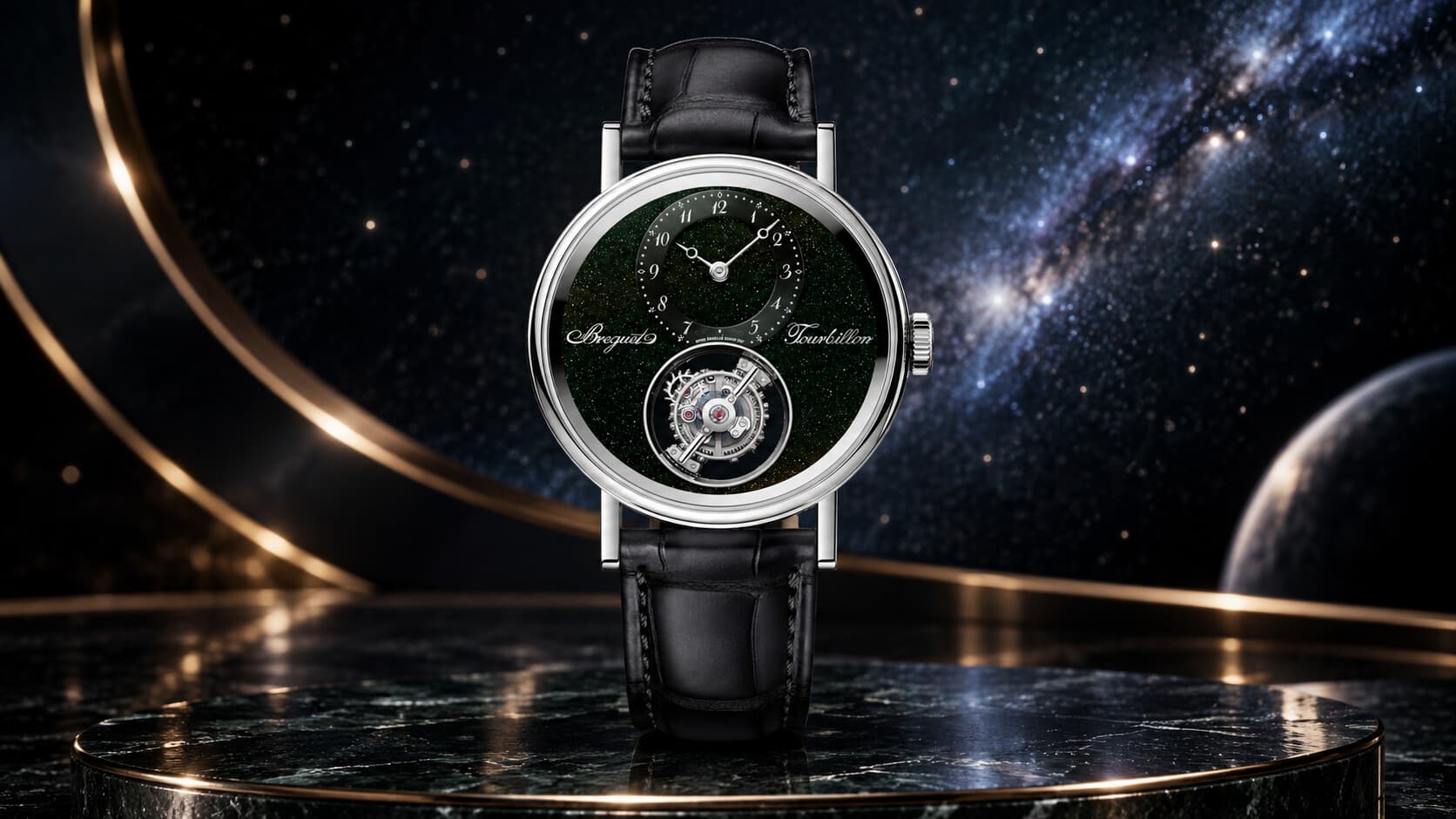
Breguet is one of those rare watch names that people mention with a bit of awe, even if they cannot fully explain why. Part of the reason is simple: the man behind the brand, Abraham-Louis Breguet, did not just make watches, he invented pieces of the watch itself, including the tourbillon, a tiny spinning cage that is still one of the hardest things to build in mechanical watchmaking. Today’s Breguet, owned by the Swatch Group, keeps building on that legacy with collections that range from ultra-traditional dress watches to sporty pilot chronographs, each one carrying forward a piece of the founder’s original workshop in its own way.
Why Breguet Is a Legend in Watchmaking
Breguet earned its reputation because its founder invented several parts that almost every modern mechanical watch still relies on. Abraham-Louis Breguet opened his workshop in Paris in 1775, and over the next several decades he came up with the self-winding “Perpétuelle” mechanism in 1780, the tourbillon in 1795 (patented in 1801), and a shock-protection system called the “pare-chute” that stopped watches from breaking if they were dropped.
He also built the first-ever wristwatch. In 1810, Caroline Murat, Queen of Naples and the younger sister of Napoleon Bonaparte, asked Breguet for something nobody had made before: a small, thin watch she could wear on her wrist instead of around her neck. He delivered it in December 1812. The original piece has been lost since 1855, but the idea it started changed watchmaking forever, and Breguet still makes a collection named after her today.
No single object shows how far Breguet’s reputation reaches better than the watch known simply as “the Marie-Antoinette.” Commissioned around 1783, reportedly by a secret admirer of the queen, it was meant to be the most technically complete pocket watch anyone could build at the time, with no limit placed on cost or on how long it might take. Abraham-Louis Breguet worked on it on and off for the rest of his life, and it was not finished until 1827, four years after he died, when his son completed it. By then the queen had been dead for 34 years and had never seen it. The watch later disappeared for 24 years after it was stolen from a Jerusalem museum in 1983, only to resurface in 2007, and Breguet built a faithful modern recreation of it, numbered 1160, in 2005.
Because of this history, collectors do not think of Breguet as just another old brand. They think of it as the brand that many of the mechanisms found inside their own watches actually came from, and as one whose oldest stories are still verifiable today rather than just company legend.
What Makes a Breguet Watch Recognizable
A real Breguet watch is recognizable because of a handful of design details the brand has used since the 1780s and still protects closely today. The most famous is the “Breguet hands,” thin blued-steel hands with a small hollow circle near the tip, often called “moon tip” hands, which Breguet designed around 1783.
Another giveaway is the guilloché dial, a pattern engraved by hand or by an old-style engine-turning machine directly into the metal of the dial. Breguet began doing this around 1786, and patterns like the “clous de Paris” hobnail design are still used on many current watches. Cases also usually have a fluted edge running around the middle, and most dials carry a “secret signature,” a tiny engraved “Breguet” that can only be seen at certain angles, which was originally added to fight counterfeiters. Even the typeface used for the numbers on the dial, sometimes called Breguet numerals, is a style the brand created and still uses today.
Two other habits from the founder’s workshop are less visible but just as telling. Every Breguet watch, historically and still today, is stamped with its own individual production number, a practice Abraham-Louis Breguet used from the start so each piece could be tracked and authenticated, and which is one reason historians can still date and verify 18th-century Breguet pieces with real confidence. He also invented the gong-spring in 1783, a thin coiled wire that wraps around the inside of a case and rings when struck by a small hammer, which is still the basic sound-making part inside every modern minute repeater, a watch that can chime the time out loud on demand.
These details matter because they are not just decoration. They were originally practical or security-related choices that later became a visual signature, which is part of why Breguet watches tend to look instantly different from other classic dress watches on a shelf.
Best Breguet Classique Watches
The Classique collection is the clearest expression of everything Breguet is known for, and it is the best starting point for understanding the brand. These are slim, round watches with guilloché dials, Breguet hands, and fluted cases, built mostly for a dressy, formal look rather than sport.
Inside this collection, the reference numbers matter more than flashy names. The Classique 5177 is one of the most popular current models, a time-only watch in gold with a guilloché or enamel dial, generally priced from around 23,000 to 30,000 euros depending on the case metal and dial finish. The Classique 7147 sits at a more accessible point in the lineup, often listed around 28,000 US dollars. For buyers who want to see real watchmaking complexity, the Classique also houses some of Breguet’s most advanced pieces, including tourbillon models and the Classique Grande Sonnerie, which can chime the time out loud using tiny gongs, a Breguet specialty that traces back to the brand’s very early minute repeaters.
Minute repeaters get particular attention inside this collection, since chiming watches are where Breguet’s history and current engineering overlap most directly. The Classique 7637 Répétition Minutes, for example, uses solid-gold gongs mounted to the case itself rather than the movement plate, a patented setup meant to make the chime louder and clearer. For its 250th anniversary in 2025, Breguet went a step further with the Classique 7365, a limited run of just 25 pieces that became the brand’s first-ever water-resistant minute repeater, priced at roughly 333,000 euros, and the first to be individually certified for precision under Breguet’s own in-house testing standard.
The Classique is a good fit for someone who wants a watch that will still look elegant in fifty years, since the design has barely changed in its basic form since the 18th century.
Best Breguet Marine Watches
The Marine collection is Breguet’s answer for people who want the brand’s craftsmanship in a more everyday, sportier case. It takes cues from Breguet’s real history of building instruments for the French Navy in the 19th century, when Abraham-Louis Breguet was appointed chronometer maker to the French royal navy in 1815 and went on to develop a double-barrel marine chronometer that improved timekeeping accuracy on long sea voyages, at a time when precise time was the only way ships could calculate their exact position.
The Marine 5517 is the standard three-hand automatic model in the current lineup, priced at roughly 30,000 to 36,000 euros depending on the metal, and it uses a rounder, more robust case than the Classique while keeping details like the fluted bezel. More complex versions exist too, such as the Marine Chronographe 5527, a chronograph version for timing events, the Marine Alarme Musicale, which adds a tiny alarm that chimes rather than buzzes, and the Marine Hora Mundi, a world-time model built for tracking multiple time zones at once, a nod to the collection’s navigation roots. This collection tends to appeal to buyers who like Breguet’s finishing and heritage but want something they could reasonably wear with a casual jacket, not just a suit.
Best Breguet Type XX and Type XXI Watches
The Type XX is Breguet’s military pilot’s chronograph, and it has one of the most documented service histories of any watch collection still in production. In the early 1950s, the French Ministry of Defense asked several watchmakers to build a chronograph that met a strict specification called “Type 20,” meant for pilots. Breguet’s design was approved, and in 1954 the French Air Force ordered 1,100 of them, followed later by 500 more for the French Navy’s Aéronautique Navale and 80 for the elite Centre d’Essais en Vol test-pilot unit.
Original military Type XX watches had no brand name on the dial at all, only the plain word “TYPE 20” on the case back, so pilots would not be distracted by logos while flying.
The key mechanical feature that made the Type XX useful for pilots was the flyback function, which lets the chronograph seconds hand reset to zero and start timing again instantly with a single push, instead of needing to stop, reset, and restart separately. Original military dials had no logo at all, only unsigned dials, since the case back rather than the dial carried the official inscriptions and issue numbers, and surviving examples engraved with French Air Force or Marine Nationale markings are now closely tracked by collectors precisely because of that documented military paperwork.
Today’s Type XX and Type XXI models keep this flyback function and the black dial with two sub-registers, and current pricing for new pieces generally runs from around 40,000 to 45,000 euros. Breguet has also pushed the format further with the Type XXII, which uses a high-frequency movement running at 10 hertz for finer time measurement than a standard chronograph. Genuine vintage military-issued examples from the 1950s, meanwhile, can sell for well into five figures at auction, with value driven heavily by which branch of service it was issued to and how much of its case-back engraving survives.
Best Breguet Tradition Watches
The Tradition collection is Breguet’s most modern-looking line, even though the whole idea behind it is historical. Instead of hiding the movement under a dial, Tradition watches expose the gear train and bridges on the front of the watch, arranged to resemble the layout of Breguet’s own 18th and 19th century pocket watches, which were built from the back forward and often left partly open for inspection. Launched in 2005, the collection specifically borrows its layout from two of Breguet’s earlier inventions: the 1796 “subscription watch,” a simplified single-hand model he sold in advance through a deposit system to fund production, and the “tact watch” of 1799, designed to be read by touch alone through a raised arrow on the case, without opening it.
Models like the Tradition 7057 and Tradition Seconde Rétrograde 7035, priced in the 36,000 to 50,000 euro range, show off finishing techniques like hand-chamfered bridges and visible mainspring barrels that are normally hidden away in other watches. More advanced pieces in this collection carry a small independent chronograph module, or in the case of the Tradition Chronographe 7077, a complete chronograph built into the exposed movement, priced well over 100,000 dollars. Tradition watches are best suited to someone who already understands and appreciates mechanical watchmaking, since the whole point of the collection is showing the machine itself rather than dressing it up.
Best Breguet Reine de Naples Watches
The Reine de Naples is Breguet’s main women’s collection, and it is a direct tribute to the 1810 wristwatch Abraham-Louis Breguet made for Caroline Murat, Queen of Naples. Since it was launched in 2002, the collection has used an oval or “egg-shaped” case, a detail borrowed from historical descriptions of that lost original watch, since no sketch or photograph of it survives. What is known comes only from Breguet’s own workshop registers: the original, numbered piece 2639, was ordered on June 8, 1810, and described as a thin, oblong repeating watch with a silver dial, Arabic numerals, and a wristlet woven from hair and gold thread. It was delivered in December 1812, and all trace of it disappears from records after a repair visit in 1855.
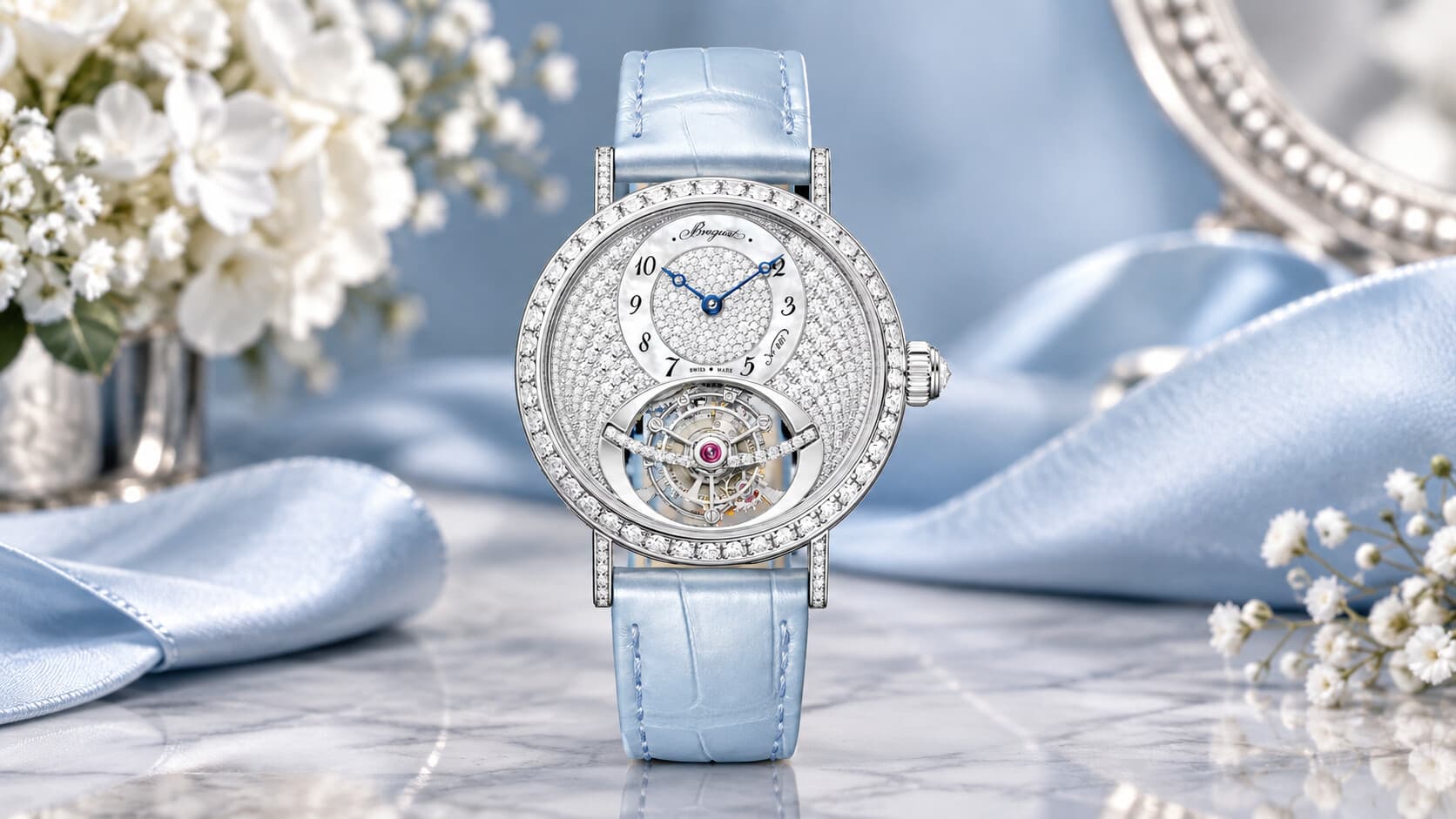
Current pieces like the Reine de Naples 8918 and 8925 come in steel, gold, or gem-set versions, often in soft pastel dial colors like mint green, powder blue, or pink, with pricing ranging from roughly 20,000 euros in steel to well over 80,000 euros for gold and diamond-set versions. Some models in the collection, such as the Reine de Naples 8908, add a moon phase display, echoing the moon phase complication that historians believe the original 1810 watch also had. It remains the collection built specifically around a woman’s wrist, rather than a scaled-down men’s design.
How to Authenticate an Older Breguet Watch
Breguet is one of the few watch brands that runs its own in-house authentication service, a direct response to the fact that fake “Breguet” pieces have circulated since the 18th century and, by the company’s own estimate, outnumber the real thing. Its Heritage Department in Paris compares a watch’s signature, case details, and construction against the firm’s own sales ledgers, some of which go back to 1775, and will tell an owner by email, at no charge, whether a piece checks out.
The numbering system itself doubles as a built-in fraud check. Because every Breguet watch has carried its own individual production number since the house began, a pocket watch stamped with a number above 5500 cannot be genuine, since Breguet’s own historical production never reached that figure. Certain inscriptions are also a giveaway on their own: pieces marked “Spiral Breguet,” “Réglage Breguet,” or “Breguet Watch Case” were never produced under those names by the company, so any watch carrying them is not an authentic Breguet.
If a watch does pass inspection, its owner can then order a paper record from the museum: a modern archive extract for anything made after 1989, or, for older pieces, a handwritten certificate signed personally by the museum’s curator. Neither document puts a dollar figure on the watch, since pricing a piece is left to independent appraisers or auction houses, but both tie a specific timepiece back into Breguet’s own written history in a way few other 18th-century workshops can match.
How Much Do Breguet Watches Cost
Breguet sits firmly in the high end of Swiss watchmaking, and prices vary a lot depending on collection, case metal, and complications, with new models generally landing in the following ranges.
| Collection | Typical Style | Approximate Starting Price |
|---|---|---|
| Type XX / Type XXI | Sport pilot chronograph | $35,000–$45,000 |
| Marine | Everyday sport-luxury | $30,000–$45,000 |
| Classique | Formal dress watch | $23,000–$30,000 |
| Reine de Naples | Women’s dress watch | $20,000–$85,000+ |
| Tradition | Exposed-movement dress watch | $36,000–$100,000+ |
These figures move with gold and platinum prices, exchange rates, and whichever complications and gem-setting are added, so they should be treated as a starting range rather than a fixed price list.
Who Owns Breguet Today
Breguet has been a subsidiary of the Swatch Group since 1999. Before that, the brand changed hands several times after Abraham-Louis Breguet’s death in 1823, at points nearly disappearing before being revived under new ownership. The 1999 purchase was led by Nicolas G. Hayek, the same executive credited with rescuing the wider Swiss watch industry from the “quartz crisis” of the 1970s and 80s, when cheap electronic watches from Japan nearly wiped out mechanical watchmaking altogether.
Under the Swatch Group, Breguet’s manufacturing is based in the Vallée de Joux in Switzerland, where the company has also invested heavily in research, including developing its own silicon balance springs, a modern material that resists magnetism far better than traditional steel springs. Breguet also keeps a working link to its own past through a dedicated museum on Place Vendôme in Paris, where original 18th and 19th century pieces, including watches once owned by Marie-Antoinette and Napoleon, are on public display. In 2025, the company marked its 250th anniversary, using the occasion to release several pieces, including the Souscription 2025 and the Classique 7365 minute repeater, that directly revive designs and techniques from Abraham-Louis Breguet’s own workshop.
Frequently Asked Questions
Is Breguet a good brand?
Yes, Breguet is widely respected among watch collectors and historians because its founder invented mechanisms still used in modern mechanical watches, including the tourbillon. It is considered one of the most historically important names in Swiss watchmaking, sitting alongside brands like Patek Philippe and Vacheron Constantin in terms of prestige.
What is special about a Breguet watch?
A Breguet watch is built with specific design details the brand has used since the 1780s, including thin “moon tip” hands, hand-engraved guilloché dials, fluted case edges, and a tiny hidden “secret signature” on the dial. These features were originally practical, such as fighting counterfeiting, and have since become the brand’s visual trademark.
Who invented the tourbillon?
Abraham-Louis Breguet invented the tourbillon in 1795 and patented it in 1801. A tourbillon is a rotating cage that holds the watch’s balance wheel and escapement, designed to average out small timing errors caused by gravity when a pocket watch sits in one position for long periods.
Where are Breguet watches made?
Breguet watches are manufactured in Switzerland, with the company’s main production based in the Vallée de Joux, a region long associated with fine watchmaking. Breguet has been part of the Swatch Group, a Swiss conglomerate, since 1999.
What is the entry-level price for a Breguet watch?
New Breguet watches generally start around 20,000 to 23,000 euros or dollars for simpler steel or gold time-only models in the Classique or Reine de Naples collections, with prices climbing well past 100,000 for complicated pieces like tourbillons, minute repeaters, or the Grande Sonnerie.
What happened to the Marie-Antoinette Breguet watch?
The Breguet No. 160, nicknamed the “Marie-Antoinette,” was commissioned around 1783 and not finished until 1827, long after the queen it was reportedly intended for had died. It was stolen from a Jerusalem museum in 1983 and recovered in 2007, and it now belongs to the collection of the L.A. Mayer Museum for Islamic Art, while Breguet built its own faithful recreation, numbered 1160, in 2005.
The Bottom Line
Breguet’s reputation does not rest on marketing, it rests on the fact that Abraham-Louis Breguet built parts of the mechanical watch that the entire industry still uses, from the tourbillon to the first wristwatch ever made. Whether the appeal is the historical Type XX chronograph built for French Air Force pilots, the quietly formal Classique, or the Reine de Naples honoring a queen’s 1810 commission, each collection ties back to something the brand actually did first, rather than something it simply claims. For anyone comparing luxury watch brands, Breguet stands out specifically because its history and its current watches are the same story, just told two centuries apart.