Best Angelus Watches: Best Models, History & Collecting

Discover the best Angelus watches from vintage Chronodato chronographs to modern skeleton tourbillons with history, buying tips, investment value & top models.

We include products we think are useful for our readers. If you buy through links on this page, we may earn a small commission.

Read more

Affiliate Disclosure: This post may contain affiliate links, which means we may receive a commission if you click a link and purchase something that we have recommended. While clicking these links won't cost you any extra money, they help us keep this site up and running. We only recommend products or services that we genuinely believe will add value to our readers. Thank you for supporting us!

Transparency: We are a participant in various affiliate programs, including the Amazon Services LLC Associates Program, an affiliate advertising program designed to provide a means for us to earn fees by linking to Amazon.com and affiliated sites. Our editorial content is not influenced by affiliate partnerships, and we strive to provide honest and unbiased reviews and recommendations.

To learn more about our vetting process, please visit our Affiliate Disclosure Statement

Article Content

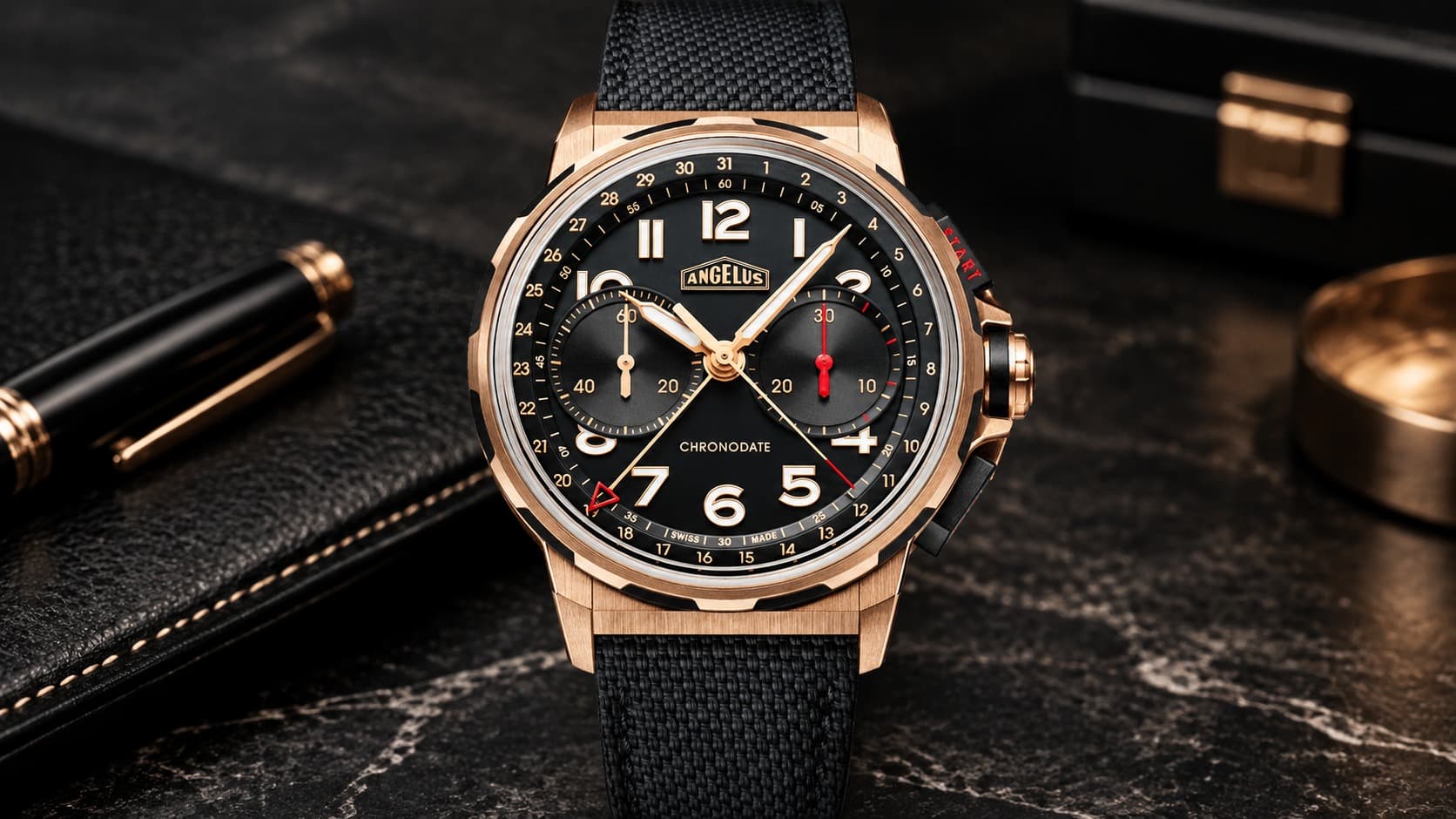
Modern Angelus Chronodate watch with black dial, titanium case, dual subdials with red accents, and textured rubber strap showing contemporary chronograph design

Angelus watches represent one of horology’s most fascinating stories – a brand that created groundbreaking chronographs in the 1940s, vanished during the quartz crisis, and returned in 2015 with revolutionary skeleton tourbillons that look like mechanical art from the future. Whether you’re discovering the historically significant vintage Chronodato or marveling at modern masterpieces like the U20 Ultra-Skeleton Tourbillon with its sapphire crystal main plate, Angelus offers something completely unique in today’s luxury watch market. These exceptional timepieces bridge horological history with cutting-edge mechanical artistry, attracting collectors who appreciate genuine innovation over brand recognition.

Angelus Watch Company History and Evolution

The story of Angelus unfolds like a fascinating tale of Swiss ingenuity, groundbreaking innovation, and remarkable resurrection that spans over 130 years. This brand’s journey takes us from humble beginnings in a small Swiss workshop to becoming one of the most respected chronograph makers of the mid-20th century, followed by a complete disappearance during the quartz revolution, and finally an extraordinary comeback with a totally new identity.

  • Two brothers named Albert and Gustav Stolz started Angelus in 1891 in Le Locle, Switzerland, working from just one small room on Rue du Marais. These weren’t ordinary watchmakers – they had learned their craft from Henri Sandoz, who ran the famous Tavannes Watch Company, giving them solid training in high-quality timepiece creation from the very beginning.
  • The early years saw Angelus focusing on pocket watches and small clocks called pendulettes, which were very popular during the late 1800s. When wristwatches started becoming fashionable in the early 1900s, the Stolz brothers smartly shifted their focus to making wristwatches instead, showing their ability to adapt to changing times.
  • Charles Stolz, the third brother, joined the company after completing his watchmaking training, helping the family business grow stronger. By 1912, Angelus had started specializing in complex watch movements with repeating functions and chronographs, which they sold to customers in Germany, Italy, and Russia.
  • During World War I, despite facing many challenges, Angelus created something truly special – repeater timepieces designed specifically for blind soldiers who had suffered facial injuries. This compassionate gesture earned the Stolz brothers a personal thank-you letter from French General Marshal Joffre, showing how the company cared about helping people beyond just making profits.
  • The 1920s and 1930s marked Angelus as a serious innovator when they released their first in-house chronograph in 1925. They also created the world’s smallest 8-day movement, measuring only 32mm by 21mm, which was incredibly precise with just plus or minus one minute accuracy per week – amazing for that time period.
  • In 1941, Angelus moved to a beautiful new factory on Rue Piaget in Le Locle for their 50th anniversary, employing about 90 people. That same year, André Stolz (Albert’s son) took over running the company, keeping it in the family while introducing the next generation of leadership.
  • The 1940s brought Angelus their greatest fame with the revolutionary Chronodato in 1942, which became the world’s first mass-produced chronograph with a calendar function. This watch showed the date using a special hand that pointed to numbers around the edge of the dial, with day and month displayed in small windows – nobody had ever done this before in a production watch.
  • Following their success, Angelus released the Chrono-Datoluxe in 1948, featuring the world’s first “big date” display in a chronograph, using two separate rotating discs to show large numbers in a window. They also made the Datalarm in 1956, combining an alarm function with a date display for the first time ever.
  • The legendary Tinkler appeared in 1958 as the world’s first automatic repeater wristwatch that was also completely waterproof. However, this ambitious project proved to be their downfall – only about 100 pieces were ever made because the production costs were so incredibly high that the company never recovered financially.
  • Like many traditional Swiss watchmakers, Angelus couldn’t survive the quartz crisis of the 1970s when cheap, accurate electronic watches flooded the market. The company quietly stopped making watches, and the Angelus name disappeared from the watch world for over 30 years.
  • In 2011, something magical happened when Sébastien Chaulmontet, a passionate collector of vintage Angelus chronographs, received an unexpected phone call. Someone wanted to sell him not just a watch, but the entire Angelus brand name itself. Working at La Joux-Perret manufacture, Chaulmontet convinced his boss Frédéric Wenger to buy the brand and bring it back to life.
  • La Joux-Perret spent four years developing completely new timepieces before launching the modern Angelus in 2015 with the U10 Tourbillon Lumière. Interestingly, their new factory in La Chaux-de-Fonds sits very close to where the original Stolz brothers started their workshop over a century earlier.

This incredible journey from innovative chronograph specialist to complete extinction and eventual rebirth makes Angelus unique in watchmaking history. While most revived brands try to recreate their past glory, modern Angelus chose a completely different path, focusing on futuristic skeleton tourbillons and architectural designs that would have been unimaginable to the original Stolz brothers. This bold transformation has created a brand that honors its heritage of innovation while pushing into entirely new territories of watch design and engineering.

Angelus Watch Features

Modern Angelus watches represent something completely unique in today’s luxury watch market – they’re timepieces that look like they’ve arrived from the future while being built using traditional Swiss craftsmanship techniques. What sets Angelus apart isn’t just their bold design philosophy, but their commitment to creating watches that are both mechanical marvels and wearable art pieces.

  • Every single modern Angelus watch features exclusively in-house movements developed by their team at La Joux-Perret manufacture in La Chaux-de-Fonds. This makes them a true manufacture in the strictest sense – they design, produce, finish, assemble, regulate, and test everything themselves rather than buying components from other suppliers like many watch brands do.
  • The signature feature of contemporary Angelus watches is their skeleton tourbillon movements, where nearly everything is visible through transparent sapphire crystal main plates and cases. Unlike many brands that simply cut holes in existing movements to create “skeleton” watches, Angelus designs their movements from the ground up to be fully skeletonized while maintaining structural integrity.
  • Angelus uses cutting-edge materials that you rarely see in traditional watchmaking, including sapphire crystal main plates, blued titanium bridges, carbon fiber cases, and ADLC (diamond-like carbon) coatings. These aren’t just for show – each material is chosen for specific properties like lightness, strength, or visual transparency that enhance the watch’s performance and aesthetics.
  • Their tourbillon mechanisms are engineered as “flying tourbillons,” meaning they’re supported only from one side rather than being held by bridges on both top and bottom. This creates a more dramatic visual effect and allows for better visibility of the rotating escapement mechanism, which spins once every minute like a mesmerizing mechanical ballet.
  • The architectural approach to case design makes Angelus watches instantly recognizable – many models feature multi-layered cases with complex curves, stepped bezels, and integrated lugs that make the watch look more like a piece of sculpture than a traditional timepiece. The cases often serve as frames for the movement rather than simply housing it.
  • Power reserves in Angelus watches are exceptionally long compared to most luxury watches – many models offer 60 to 90 hours of running time after being fully wound, meaning you can take the watch off Friday evening and it will still be running Monday morning without needing to be rewound.
  • The brand produces incredibly limited quantities – most models are made in editions of just 10 to 25 pieces, with some unique pieces being completely one-off creations. This extreme exclusivity means owning an Angelus puts you in a very small group of collectors worldwide.
  • Despite their futuristic appearance, Angelus watches maintain exceptional legibility through clever design elements like contrasting hand tips (often in bright red, blue, or white), clear chapter rings for time reading, and strategic use of Super-LumiNova for low-light visibility.
  • The pricing positions Angelus in the serious luxury segment, with most modern pieces ranging from around $27,000 for tourbillon models up to $75,000 for the most complex limited editions. This places them between established luxury brands and ultra-high-end independents, offering exceptional value for the level of innovation and craftsmanship involved.
  • Angelus appeals specifically to collectors who want something unconventional – these aren’t watches for people who want to blend in or follow traditional luxury watch conventions. They’re designed for enthusiasts who appreciate architectural design, mechanical innovation, and aren’t afraid to wear something that will definitely start conversations.

The combination of extreme mechanical transparency, innovative materials, architectural design philosophy, and limited production creates watches that feel more like wearable mechanical art than traditional timepieces. While other luxury brands focus on heritage, prestige, or sports connections, Angelus has carved out a unique niche by pushing the boundaries of what a watch can look like while maintaining Swiss manufacturing excellence. For collectors seeking something truly different that showcases the beauty of mechanical watchmaking in a completely modern context, Angelus offers an experience that’s virtually impossible to find elsewhere in the luxury watch world.

Top 10 Best Angelus Watches

Choosing the best Angelus watches means looking at both their revolutionary modern timepieces and their historically significant vintage models. These ten watches represent the absolute pinnacle of what Angelus has achieved, spanning from groundbreaking 1940s innovations to today’s architectural marvels that push the boundaries of mechanical watchmaking.

  • Angelus U10 Tourbillon Lumière – The watch that announced Angelus’s dramatic comeback in 2015, featuring a completely unique lozenge-shaped steel case measuring 62.75mm wide. This bold timepiece houses a flying tourbillon that’s positioned outside the main movement and visible through multiple sapphire crystal windows, creating an almost museum-like display of mechanical artistry. With a 90-hour power reserve and dead-beat seconds function, it proved that the revived Angelus was serious about innovation. Limited to just 25 pieces, it established the template for everything that followed.
  • Vintage Angelus Chronodato (1942-1960s) – The holy grail of vintage Angelus collecting, this was the world’s first mass-produced chronograph with a complete calendar function. The date is displayed via a central hand pointing to numbers around the dial’s periphery, with day and month windows creating perfect symmetry. Powered by the legendary caliber 217, these watches came in steel, gold-plated, and solid gold versions. Steel examples are the most desirable and can command $3,000 to $10,000 depending on condition, making them relatively accessible compared to modern pieces.
  • Angelus U20 Ultra-Skeleton Tourbillon – Perhaps the most technically impressive modern Angelus, featuring a revolutionary sapphire crystal main plate that required incredible precision to machine without cracking. The movement appears to float in space, held together by blued titanium bridges and transparent components. The 42mm carbon fiber and titanium case houses the A-250 caliber with 90 hours of power reserve. Available in two versions – one with a completely transparent caseback and another with a “one-way mirror” effect. Priced around $72,000, it represents the peak of skeleton watchmaking.
  • Angelus U50 Diver Tourbillon – The world’s first skeleton dive watch with a tourbillon, combining 300-meter water resistance with full movement visibility. The 45mm titanium case features a unique design that gets wider toward the crystal and narrows at the lugs for better wrist fit. Bright blue and yellow accents make the movement highly legible underwater, while the skeletonized design creates an mesmerizing visual spectacle. The A-300 movement offers 60 hours of power reserve, proving that complexity and reliability can coexist in extreme conditions.
  • Angelus Chronographe Télémètre (2025) – The newest addition to the La Fabrique collection, this 37mm monopusher chronograph perfectly captures vintage Angelus DNA in a modern package. Available in steel with rose-bronze or titanium-grey dials (25 pieces each) or 18k gold with white dial (15 pieces), it features a telemeter scale for calculating distances based on sound speed. The hand-wound A5000 caliber offers traditional chronograph architecture with modern reliability. Priced at around $18,000 for steel and $32,000 for gold, it’s surprisingly accessible for such limited production.
  • Angelus U30 Tourbillon Rattrapante – A masterpiece of mechanical complexity, combining a flying tourbillon with a split-seconds chronograph and flyback function. The automatic movement features dial-side tourbillon placement and striking black-treated finishing with bright colored accents on hands and chronograph registers. The rattrapante (split-second) function allows timing multiple events simultaneously – press once to start both hands, press again to stop one while the other continues, and press a third time to reunite them. This level of complication is rarely seen even in haute horlogerie.
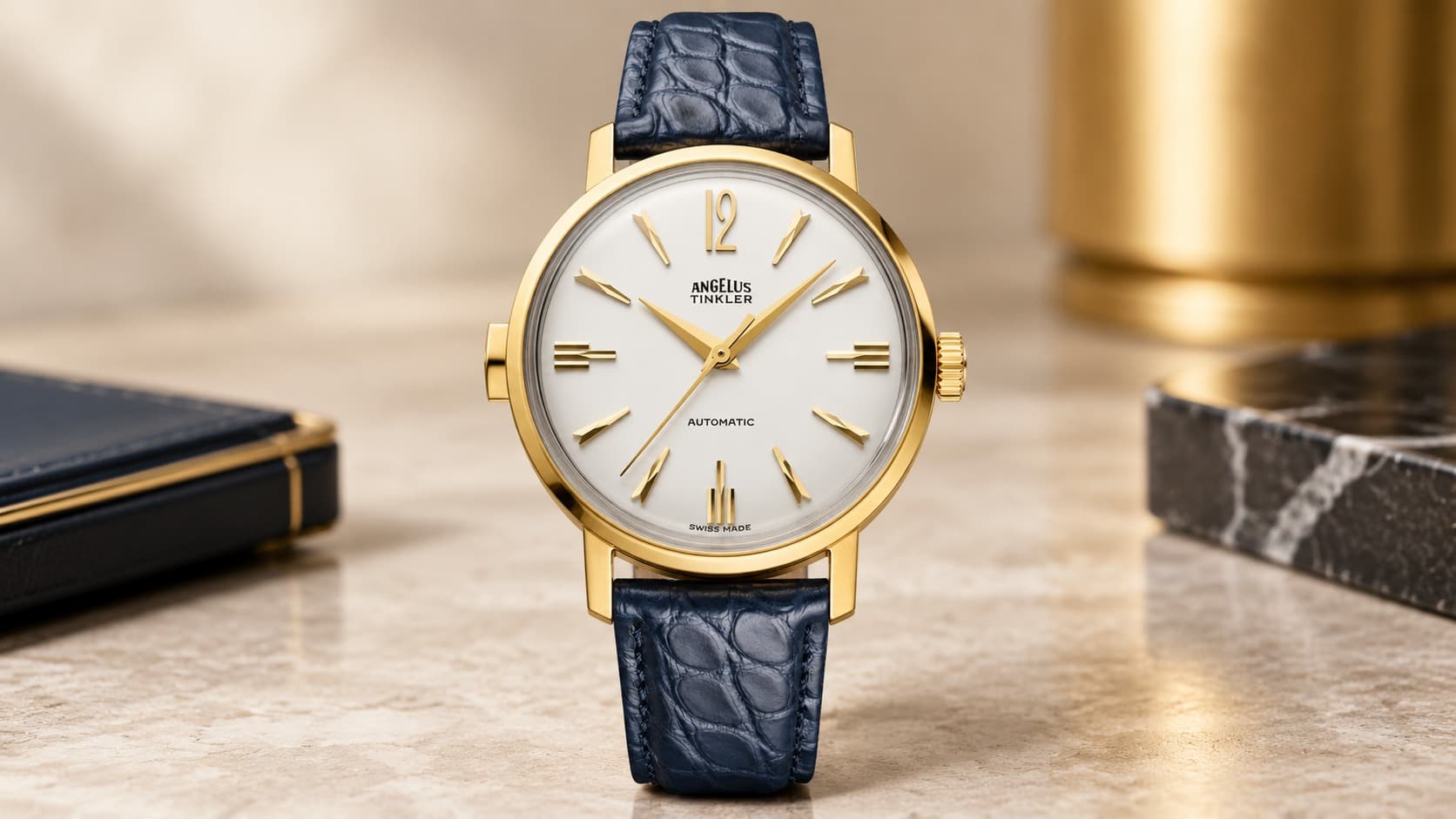
  • Vintage Angelus Tinkler (1958) – The legendary “cult timepiece” that was both the first automatic repeater wristwatch and first fully waterproof repeater. Only about 100 pieces were ever made, making this one of the rarest vintage watches in existence. The Tinkler features a quarter-repeating complication that chimes hours and quarter hours, powered by an automatic movement. The extreme production costs bankrupted the original company, but surviving examples are considered among the most important complications in horological history. When they appear at auction, prices can exceed $100,000.
  • Angelus U40 Racing Tourbillon Skeleton – The most wearable modern Angelus, featuring a comfortable 42mm titanium case that’s only 10mm thick. The innovative A-300 movement abandons traditional main plate construction, instead sandwiching all components between two skeleton plates for maximum rigidity. Available with either red or white-tipped hands, it offers excellent legibility despite full skeletonization. Operating at 28,800 vph with 60 hours of power reserve, it’s also the first non-limited Angelus model, making it relatively easier to acquire at around $30,000.
  • Modern Angelus Chronodate – A contemporary reinterpretation of the legendary 1940s chronograph, featuring a 42.5mm case in titanium or rose gold. The modern version maintains the original’s pointer date function while adding skeleton elements and contemporary materials. Limited production of 25 pieces for most references, with the rose gold models commanding around $49,000 and titanium versions starting near $22,000. This collection successfully bridges Angelus’s historic heritage with their modern architectural approach.
  • Angelus U21/U22 Tourbillon – Twin models that showcase different approaches to carbon fiber construction. The U21 combines carbon fiber with 18k gold elements, while the U22 achieves remarkable lightness at just 54 grams total weight through pure carbon fiber and titanium construction. Both feature racing-inspired aesthetics with red accents and the signature Angelus spoke-wheel design. The skeletonized movements offer three-dimensional visual depth while maintaining structural integrity. These represent the perfect fusion of advanced materials science with traditional Swiss watchmaking.

Each of these watches represents a significant achievement in mechanical watchmaking, whether through historical importance, technical innovation, or artistic expression. The vintage pieces offer entry into Angelus collecting at relatively reasonable prices, while the modern timepieces push the boundaries of what’s possible in luxury watchmaking. Whether you’re drawn to the historical significance of the Chronodato, the technical wizardry of the U20, or the extreme rarity of the Tinkler, owning any Angelus watch puts you in a very exclusive group of collectors who appreciate true horological innovation.

How to Pick Your First Angelus Watch

Choosing an Angelus watch is unlike selecting any other luxury timepiece because this brand offers two completely different experiences – historic vintage chronographs from the golden age of Swiss watchmaking, and ultra-modern architectural marvels that look like they belong in a science fiction movie. The key to making the right choice is understanding what appeals to you most and matching that with your budget, lifestyle, and collecting goals.

  • Start by determining your budget range, which will immediately narrow your options significantly. Vintage Angelus watches offer the most accessible entry point, with simple three-hand models from the 1940s-1970s starting around $430 for basic examples. Vintage chronographs powered by the famous caliber 215 typically range from $1,600 to $4,000, while the holy grail Chronodato models can command $3,000 to $10,800 depending on condition and case material. Modern Angelus watches start at approximately $18,000 for the new Chronographe Télémètre and quickly escalate to $27,000 for basic tourbillon models, reaching $75,000 for the most complex limited editions.
  • Consider your wrist size and wearing preferences carefully, as Angelus watches tend to be larger than typical dress watches. Vintage models are generally more wearable, ranging from 30mm to 38mm diameter, making them suitable for smaller wrists and formal occasions. Modern Angelus watches are substantially larger, with most tourbillon models measuring 42-45mm diameter, while the dramatic U10 reaches an enormous 62.75mm width. If you have a wrist smaller than 7 inches, vintage models or the 37mm Chronographe Télémètre might be better choices.
  • Think about when and where you’ll actually wear the watch, as this dramatically affects which model makes sense. Vintage Angelus pieces work beautifully as dress watches or conversation starters at formal events, blending seamlessly with business attire while offering fascinating horological history. Modern skeleton tourbillons are essentially mechanical art pieces that demand attention – they’re perfect for casual wear, watch enthusiast gatherings, or any situation where you want to showcase cutting-edge watchmaking, but might be overwhelming for conservative business environments.
  • Decide whether you prefer historical significance or technological innovation. Vintage Angelus watches connect you to genuine horological history – the Chronodato was literally the world’s first mass-produced chronograph with calendar, while pieces like the Hungarian Air Force watches carry military heritage. Modern Angelus watches represent the absolute cutting edge of mechanical watchmaking, featuring innovations like sapphire crystal main plates, flying tourbillons, and architectural case designs that didn’t exist when the original company operated.
  • Evaluate your tolerance for maintenance and servicing requirements. Vintage Angelus watches require careful handling and regular servicing by specialists familiar with these historic movements, which can be expensive and time-consuming. Parts availability can also be challenging for very old pieces. Modern Angelus watches benefit from contemporary manufacturing standards and materials, offering better reliability and easier servicing through authorized dealers, though the complex skeleton movements still require expert attention.
  • Consider your collecting philosophy and long-term goals. If you’re interested in building a diverse vintage collection, Angelus offers excellent value compared to more famous brands like Patek Philippe or Rolex – you can own genuinely important horological innovations without paying stratospheric prices. For collectors focused on contemporary haute horlogerie, modern Angelus provides access to cutting-edge complications and designs at prices below Richard Mille or MB&F, while offering similar levels of innovation and exclusivity.
  • Assess the availability and rarity factors that appeal to you. Vintage Angelus watches are becoming increasingly rare as collectors discover their historical importance, but they still appear regularly enough at auctions and specialized dealers. Modern Angelus production is extremely limited, with most models restricted to 10-25 pieces worldwide, making them immediately rare but also difficult to acquire. Some models like the Tinkler are so rare that finding one in good condition might take years of patient searching.
  • Factor in your mechanical watch experience and interest level. Angelus appeals most to serious watch enthusiasts who appreciate technical innovation and aren’t afraid of unusual designs. If you prefer subtle, understated luxury, vintage models offer more traditional aesthetics. If you love explaining mechanical complications and enjoy being asked about your watch, the skeleton tourbillons provide endless conversation opportunities while showcasing the beauty of mechanical movement.
  • Consider new versus vintage condition expectations. Well-preserved vintage Angelus watches can be stunning, but expect some patina, minor dial imperfections, or case wear that adds character rather than detracting from value. Modern pieces offer pristine condition and full manufacturer warranties, but the extreme limited production means finding the exact model you want might require patience or willingness to pay premium prices on the secondary market.

The right Angelus watch ultimately depends on whether you’re drawn to owning a piece of horological history that helped shape modern chronograph development, or you prefer pushing boundaries with contemporary mechanical art that represents the future of luxury watchmaking. Both paths offer exceptional quality and exclusivity, just with very different personalities and price points. The brand’s unique position of offering both vintage significance and modern innovation means there’s likely an Angelus that matches your preferences, budget, and collecting goals perfectly.

Best Places to Buy Angelus Watches

Finding genuine Angelus watches requires careful navigation of both authorized and secondary markets, as the brand’s extreme limited production and growing collector interest create unique challenges. The key to a successful purchase is understanding the different buying channels available and knowing how to avoid the potential pitfalls that come with such exclusive timepieces.

  • Authorized dealers represent the safest route for purchasing new modern Angelus watches, though availability is extremely limited. These established retailers operate with full manufacturer support, offering complete warranties and authentic documentation. The official Angelus website maintains a retailer directory showing approved dealers worldwide, though the brand’s limited production means even authorized dealers may have waiting lists for popular models. Benefits include guaranteed authenticity, full warranty coverage, and access to the latest releases, though expect to pay full retail prices.
  • Specialist vintage watch dealers offer the best selection of historical Angelus pieces, often with professional authentication and servicing. These experts focus specifically on vintage timepieces and typically provide fully serviced and authenticated pieces backed by warranties and return policies. They understand the intricacies of vintage Angelus movements, can spot restored or modified pieces, and often have detailed knowledge about the provenance of significant watches in their inventory.
  • High-end pre-owned watch dealers provide access to both modern and vintage pieces with professional authentication services. These establishments specialize in luxury timepieces and typically offer rigorous multi-point authentication processes plus their own warranties on pre-owned pieces. They often maintain relationships with collectors and can help locate specific models through their networks, making them ideal for finding hard-to-find pieces.
  • Online luxury watch marketplaces serve as global platforms connecting buyers with dealers and collectors worldwide. These platforms allow you to compare prices, conditions, and seller ratings across hundreds of listings, from vintage three-hand models starting around $430 to modern tourbillons exceeding $50,000. Look for platforms with buyer protection programs and professional dealer verification to ensure secure transactions.
  • Auction houses provide opportunities to acquire rare and historically significant Angelus pieces, though they require expert knowledge to navigate successfully. Major international auction houses regularly feature vintage Angelus watches, including ultra-rare models like the Tinkler or Hungarian Air Force pieces. Auction purchases require careful condition assessment and understanding of hammer prices plus buyer’s premiums, but can offer access to museum-quality pieces that rarely appear elsewhere.
  • Estate sales and private collectors occasionally offer unexpected opportunities to acquire vintage Angelus watches at competitive prices. These channels require patience and extensive knowledge to identify authentic pieces and assess fair market value. Many significant vintage Angelus discoveries have come through estate sales where sellers didn’t fully understand the historical importance of their timepieces, though such finds are becoming increasingly rare as awareness grows.
  • Watch forums and collector communities can connect you with knowledgeable sellers and provide valuable authentication advice. Established horological communities host experienced Angelus collectors who occasionally sell pieces from their collections. These platforms also provide invaluable education about specific models, movements, and authentication details that can help you make informed purchasing decisions.
  • What to avoid when buying Angelus watches is equally important as knowing where to shop. General online marketplaces require extreme caution, as loose seller verification allows counterfeiters and fraudulent sellers to operate easily. Any seller offering significant discounts on modern Angelus pieces should be viewed with suspicion, as legitimate dealers rarely discount these highly sought-after watches. Social media marketplaces and unverified online dealers pose significant risks, especially for expensive modern pieces where authentication is crucial.
  • For vintage Angelus purchases, be particularly wary of sellers who cannot provide detailed movement photos or provenance information. Many vintage pieces have been modified over the decades, creating “Franken-watches” with mixed authentic and non-original parts that significantly impact value. Sellers claiming military provenance for vintage Angelus pieces should provide documentation, as many such claims are unsubstantiated marketing stories rather than historical facts.
  • When buying modern Angelus watches, verify that limited edition numbers match official production records and that warranty cards are properly filled out with matching serial numbers. The extreme limited production of modern pieces makes them attractive targets for counterfeiters, who may create fake certificates of authenticity or claim to sell “extra” pieces beyond official production numbers.
  • Payment protection should always be a priority regardless of where you purchase. Use credit cards with fraud protection rather than wire transfers or cryptocurrency, which offer no recourse if problems arise. Digital payment services with buyer protection can work for private sales, though be aware that very expensive purchases may require additional verification steps.
  • Professional authentication services can provide peace of mind for significant purchases, especially vintage pieces or private sales. Many authorized dealers and specialist shops offer authentication services for watches purchased elsewhere, providing detailed reports on authenticity, condition, and originality that can be valuable for insurance purposes or future resale.

The combination of Angelus’s limited production, growing collector interest, and the brand’s unique position bridging vintage significance with modern innovation creates a challenging but rewarding buying environment. Success requires patience, knowledge, and careful attention to seller credentials and authentication details. Whether seeking a vintage Chronodato with historical significance or a modern Ultra-Skeleton Tourbillon representing cutting-edge watchmaking, the key is working with reputable sources who understand and respect the exceptional nature of these remarkable timepieces.

Angelus Watches as Investment

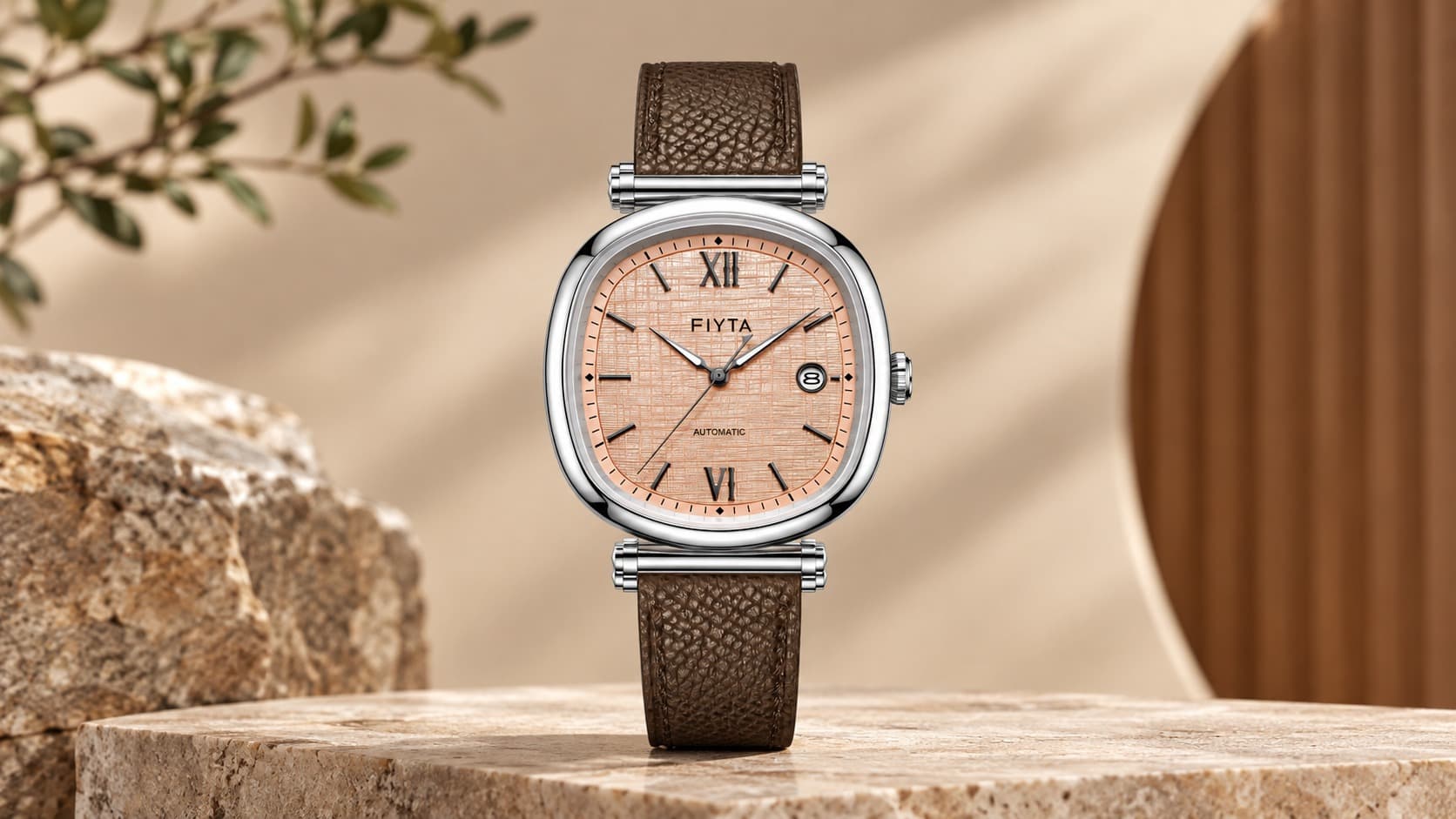
Vintage Angelus Tinkler automatic watch with clean white dial, gold hour markers, stainless steel case and brown perforated leather strap

Understanding Angelus watches as potential investments requires examining both their vintage heritage and modern limited production realities. While watch collecting should primarily be driven by passion rather than pure financial motives, Angelus presents a unique investment proposition that combines historical significance with extreme rarity in today’s market.

  • Vintage Angelus watches have shown strong appreciation potential, particularly models with historical significance and horological innovations. The Chronodato, being the world’s first mass-produced chronograph with calendar function, commands prices ranging from $3,000 to $10,800 depending on condition and case material. Steel examples are most sought-after by collectors, as they represent the original tool watch spirit while remaining more accessible than gold versions. The Hungarian Air Force chronographs and other military-connected pieces have developed dedicated followings, with clean examples appreciating significantly as collectors discover their historical importance.
  • Modern Angelus watches benefit from extremely limited production numbers, creating immediate rarity that supports value retention. Most contemporary pieces are limited to 10-25 examples worldwide, with some unique pieces being one-offs. This level of exclusivity rivals the most sought-after independent watchmakers and ensures that supply will always remain far below demand. The mathematical reality is simple – with only a few dozen pieces of each model ever made, finding one for sale becomes increasingly difficult as collectors hold onto their pieces.
  • The brand’s position between established luxury and cutting-edge innovation creates potential for significant appreciation. Unlike established brands where vintage pieces may sell for multiples of retail price while modern pieces depreciate, Angelus occupies a sweet spot where both vintage and modern pieces show appreciation potential. The vintage pieces benefit from growing recognition of their historical importance, while modern pieces benefit from immediate rarity and the brand’s growing reputation for technical innovation.
  • Market trends favor brands that offer genuine innovation and manufacturing excellence at relatively accessible price points. Angelus modern pieces typically cost $18,000 to $75,000, positioning them below ultra-luxury independents like Richard Mille or MB&F while offering similar levels of technical innovation and exclusivity. This pricing creates room for appreciation as the brand’s reputation grows and collectors seek alternatives to increasingly expensive mainstream luxury brands.
  • The revival story itself adds investment appeal, as brands with successful comebacks often see increased collector interest. The dramatic transformation from 1940s chronograph specialist to modern skeleton tourbillon innovator creates a compelling narrative that appeals to collectors who appreciate both historical significance and contemporary innovation. This dual appeal broadens the potential collector base beyond those interested purely in vintage or modern pieces.
  • Condition and originality remain crucial factors for investment potential, particularly for vintage pieces. Well-preserved vintage Angelus watches with original dials, hands, and cases command premium prices, while modified or restored examples see significantly lower values. Documentation and provenance become increasingly important as prices rise, with pieces having clear ownership history or interesting backstories commanding additional premiums.
  • Modern pieces face different investment considerations, with immediate resale typically showing some depreciation from retail prices. However, the extreme limited production means that finding specific models becomes challenging quickly, potentially supporting prices on the secondary market. The most technically impressive pieces like the U20 Ultra-Skeleton Tourbillon may see stronger value retention due to their innovative sapphire crystal construction and limited 18-piece production run.
  • The collector base for Angelus is growing but remains relatively small compared to mainstream luxury brands. This creates both opportunity and risk – smaller collector bases can lead to dramatic price movements when significant pieces come to market, but they also mean less liquidity than brands with broader appeal. However, the sophisticated collector base that appreciates Angelus tends to be financially strong and committed to the hobby long-term.
  • Geographic factors influence value retention, with European and Asian markets showing stronger appreciation for innovative watchmaking. The brand’s Swiss heritage and technical innovation resonate particularly well with collectors who understand haute horlogerie, potentially supporting stronger values in markets where such expertise is concentrated. American collectors are increasingly discovering the brand, potentially providing future demand growth.
  • Investment risks include the relatively short track record of modern Angelus pieces and the niche appeal of their designs. While vintage pieces have decades of collecting history to establish patterns, modern Angelus has only existed since 2015, making long-term value predictions challenging. The bold, architectural designs may not appeal to all collectors, potentially limiting future demand compared to more classical designs.
  • Portfolio diversification benefits come from Angelus’s unique position bridging vintage collecting and modern innovation. For collectors focused on established brands like Rolex or Patek Philippe, Angelus offers exposure to different market dynamics and collector segments. The brand provides access to genuine horological innovation at price points that remain reasonable compared to comparable technical achievements from better-known manufacturers.

The investment case for Angelus watches ultimately depends on your collecting philosophy and risk tolerance. Vintage pieces offer proven historical significance with growing collector recognition, while modern pieces provide immediate rarity and technical innovation that may prove prescient as the brand’s reputation develops. The key is understanding that Angelus collecting requires patience, knowledge, and genuine appreciation for horological innovation rather than expecting quick financial returns. For collectors who understand and value the brand’s unique position in watchmaking history and its modern technical achievements, Angelus offers compelling investment potential backed by genuine rarity and innovation.

How to Care for Angelus Watch

Proper care and maintenance of Angelus watches requires understanding the unique challenges posed by both vintage chronographs from the 1940s-1970s and modern skeleton tourbillons with their complex movements and innovative materials. Whether you own a historically significant Chronodato or a cutting-edge Ultra-Skeleton Tourbillon, following the right maintenance practices will preserve your watch’s functionality, appearance, and value for decades to come.

  • Daily care begins with proper handling and basic cleanliness practices that protect both vintage and modern pieces. Always wind your manual watches off your wrist to avoid putting stress on the delicate winding stem, and stop winding immediately when you feel resistance rather than forcing the crown. Clean your watch regularly with a soft, dry microfiber cloth to remove dust, fingerprints, and perspiration that can accumulate and potentially damage finishes or seep into the case over time.
  • Water resistance requires special attention, particularly with vintage Angelus pieces that may have compromised seals after decades of aging. Even if your vintage watch was originally water-resistant, assume that seals have deteriorated and avoid all water exposure beyond light moisture. Modern Angelus pieces like the U50 Diver Tourbillon offer substantial water resistance, but still require proper crown positioning and regular gasket testing to maintain their ratings.
  • Professional servicing schedules vary significantly between vintage and modern Angelus watches. Vintage mechanical chronographs should be serviced every 3-5 years by specialists familiar with historic Angelus movements, as modern synthetic oils evaporate rather than harden, leaving delicate vintage components without lubrication. Modern Angelus skeleton tourbillons may require more frequent attention every 2-3 years due to their complex movements and exposed mechanisms that can accumulate dust and debris.
  • Storage considerations become crucial for both protecting your investment and maintaining optimal performance. Store your Angelus watches in a dry, temperature-controlled environment away from direct sunlight, magnetic fields from electronics, and extreme temperature fluctuations. Use proper watch boxes or cases that protect against dust while allowing air circulation, and consider rotating positions periodically to prevent oils from settling in one area.
  • Skeleton movements in modern Angelus watches require special care due to their exposed nature and innovative materials. The sapphire crystal main plates and titanium bridges used in pieces like the U20 Ultra-Skeleton Tourbillon are extremely durable but can still be damaged by impacts or improper handling. Avoid touching the movement components during crown operations, and be particularly gentle when setting the time or winding the watch.
  • Vintage chronograph functions need careful operation to prevent damage to historic mechanisms. Only operate chronograph pushers deliberately and smoothly, never forcing buttons that feel stuck or unresponsive. Avoid operating chronograph functions if the watch hasn’t been recently serviced, as dried lubricants can cause internal damage when chronograph wheels engage under stress.
  • Temperature and shock protection becomes increasingly important with age and complexity. Remove your Angelus watch during high-impact activities, extreme temperature changes, or when using cleaning chemicals or personal care products. Even sports-rated modern pieces benefit from protection during activities that exceed normal daily wear, as cumulative impacts can affect delicate tourbillon mechanisms.
  • Finding qualified service providers requires careful research, especially for vintage pieces and complex modern movements. The official Angelus service center in La Chaux-de-Fonds handles contemporary pieces with access to original parts and expertise, while vintage pieces often require specialists familiar with historic Angelus calibers 215, 216, and 217. Always verify that service providers have specific experience with your watch type before entrusting them with your timepiece.
  • Magnetic field exposure poses risks to both vintage and modern mechanical movements. Keep your Angelus watches away from speakers, computers, smartphones, magnetic closure bags, and other magnetic sources that can affect timing accuracy. If your watch begins running fast or erratically, have it checked for magnetization, which can usually be corrected quickly by a qualified watchmaker.
  • Crown and pusher operation requires technique that varies between vintage and modern designs. Screw-down crowns on modern pieces must be properly secured after adjustments to maintain water resistance, while vintage push-in crowns should never be forced if they feel tight. Never operate chronograph pushers underwater, even on water-resistant models, as this can compromise sealing integrity.
  • Documentation and service records add significant value and practical benefits to ownership. Keep detailed records of all professional services, including dates, work performed, parts replaced, and service provider contact information. This documentation helps future watchmakers understand your watch’s service history and can significantly enhance resale value by proving proper maintenance.
  • Cleaning procedures must account for the different materials and constructions found in Angelus watches. Modern pieces with titanium cases and rubber straps can handle gentle cleaning with mild soap and water, while vintage pieces with gold plating or fragile crystals require only dry cleaning methods. Never attempt to clean exposed movement components yourself, as oils and debris require professional ultrasonic cleaning and proper lubrication.
  • Signs that your Angelus watch needs professional attention include timing irregularities, visible moisture inside the case, unusual sounds during operation, or sticky crown or pusher functions. Don’t wait for complete failure, as early intervention often prevents more extensive and expensive repairs. Modern pieces may show power reserve degradation or tourbillon irregularities, while vintage pieces might display chronograph function problems or mainspring issues.

The combination of historical significance and modern innovation in Angelus watches makes proper care both challenging and rewarding. Vintage pieces connect you to horological history but require gentle handling and specialized knowledge, while modern skeleton tourbillons showcase mechanical artistry but demand protection from environmental hazards. By following appropriate maintenance practices and working with qualified professionals, your Angelus watch will continue providing reliable service and aesthetic pleasure while preserving its value for future generations of collectors who appreciate exceptional mechanical craftsmanship.

Frequently Asked Questions About Angelus Watches

Understanding Angelus watches can be challenging due to the brand’s unique history and dramatic transformation from vintage chronograph specialist to modern skeleton tourbillon innovator. These frequently asked questions address the most common concerns and curiosities that collectors and enthusiasts have about both vintage and contemporary Angelus timepieces.

  • What’s the difference between vintage and modern Angelus watches? Vintage Angelus (1891-1970s) was a traditional Swiss chronograph manufacturer known for innovations like the world’s first mass-produced chronograph with calendar function. Modern Angelus (2015-present) creates architectural skeleton tourbillons with cutting-edge materials. They’re essentially different companies sharing the same name, with completely different design philosophies and target markets.
  • Are Angelus watches worth the investment? Both vintage and modern Angelus offer investment potential but for different reasons. Vintage pieces benefit from growing recognition of their historical significance, with Chronodato models appreciating from $3,000-$10,800. Modern pieces benefit from extreme limited production (10-25 pieces typically) and innovative design, though they’re still establishing their long-term market performance.
  • How can I tell if my vintage Angelus is authentic? Key authentication points include checking the movement caliber (215, 216, or 217 for most collectible pieces), examining dial printing quality and font consistency, verifying case construction materials, and confirming that all components appear period-correct. Many vintage pieces have been modified over decades, so documentation and expert verification are crucial for valuable examples.
  • What does the Chronodato vs Chronodate naming confusion mean? Early marketing materials from 1942 mistakenly used “Chronodate” spelling, but the actual production watches were marked “Chronodato.” Some collectors have found examples with both spellings, though Chronodato became the standard name. This nomenclature history doesn’t typically affect value significantly if the watch is otherwise authentic.
  • How often should I service my Angelus watch? Vintage mechanical Angelus watches need servicing every 3-5 years due to modern synthetic oils that evaporate rather than harden. Modern skeleton tourbillons may require attention every 2-3 years because their exposed movements can accumulate dust. Signs you need service include timing irregularities, moisture inside the case, or sticky crown/pusher operation.
  • Why are modern Angelus watches so expensive? The pricing reflects several factors: extremely limited production numbers (often 10-25 pieces), complex in-house skeleton tourbillon movements, innovative materials like sapphire crystal main plates, and extensive hand-finishing. The development costs for such small production runs, combined with haute horlogerie manufacturing standards, justify the $27,000-$75,000 price range.
  • Can I wear my vintage Angelus daily? While vintage Angelus watches can be worn regularly if properly serviced, consider their age and value carefully. A well-maintained Chronodato from the 1940s is both historically significant and potentially worth $5,000-$10,000, making it better suited for special occasions rather than daily wear that could risk damage or depreciation.
  • What’s the most valuable vintage Angelus model? The legendary Tinkler (1958) commands the highest prices, often exceeding $100,000 when examples appear at auction, due to its status as the first automatic repeater and extremely limited production of about 100 pieces. Chronodato models, especially in steel, are more accessible but still valuable, ranging from $3,000-$10,800 depending on condition.
  • Are there fake Angelus watches in the market? Counterfeiting is less common with Angelus than mainstream luxury brands due to their relatively niche appeal, but modified or “Franken” vintage pieces are more prevalent. These combine authentic and non-original parts, significantly affecting value. Modern pieces’ extreme rarity and complex movements make counterfeiting economically unfeasible for most fraudsters.
  • Where can I get my Angelus serviced? Modern Angelus watches should be serviced through the official service center in La Chaux-de-Fonds or authorized dealers. Vintage pieces require specialists familiar with historic Angelus movements, as general watchmakers may lack experience with calibers 215, 216, and 217. Always verify service provider credentials before entrusting valuable vintage pieces.
  • What makes Angelus special compared to other luxury watch brands? Angelus offers a unique combination of genuine horological innovation and relative accessibility compared to ultra-luxury independents. Modern pieces showcase cutting-edge skeleton tourbillon technology at prices below comparable Richard Mille or MB&F watches, while vintage pieces provide entry to important chronograph history without Rolex or Patek Philippe price tags.
  • Should I buy vintage or modern Angelus? The choice depends on your collecting philosophy and preferences. Vintage Angelus connects you to genuine horological history with proven collector appreciation, typically requiring smaller initial investments. Modern Angelus offers ownership of cutting-edge mechanical art with immediate rarity, but requires substantial financial commitment and faith in the brand’s long-term reputation.
  • How do I know what my Angelus watch is worth? Value depends heavily on model, condition, authenticity, and documentation. Vintage three-hand models start around $430, chronographs range $1,600-$10,800, while modern pieces rarely appear below retail due to limited production. Professional appraisal is recommended for valuable pieces, especially when considering insurance or sale.
  • What’s the significance of the Hungarian Air Force Angelus watches? These represent some of the most historically interesting Angelus pieces, produced for the Hungarian military in the early 1950s. They typically feature caliber 215 movements and “L.E.” (Légi Erő) markings. However, many claimed military pieces lack proper documentation, so verification through specialist knowledge is essential for authentic examples.
  • Can I swim with my Angelus watch? Modern pieces like the U50 Diver Tourbillon offer 300-meter water resistance and can handle swimming activities. However, vintage Angelus watches should be kept away from water regardless of original ratings, as seals deteriorate over decades. Never operate chronograph pushers or crowns underwater, even on water-resistant models.

These questions reflect the most common concerns from both new collectors discovering Angelus and experienced enthusiasts seeking to deepen their knowledge. The brand’s unique position bridging historical significance and modern innovation creates opportunities for both learning and collecting, whether your interests lie in vintage chronograph history or contemporary mechanical artistry.

Conclusion

Angelus represents one of the most fascinating stories in modern horology – a brand that achieved genuine innovation in the golden age of Swiss chronograph manufacturing, disappeared during the quartz crisis, and returned with a completely reimagined identity that pushes the boundaries of contemporary watchmaking. From the groundbreaking Chronodato of 1942 to today’s architectural skeleton tourbillons, Angelus has consistently demonstrated that true innovation often comes from those willing to challenge conventional approaches to mechanical timekeeping.

For collectors and enthusiasts, Angelus offers something unique in today’s luxury watch landscape: the opportunity to own pieces that bridge significant horological history with cutting-edge modern technology. Vintage models provide access to important chronograph innovations at relatively accessible prices compared to equivalent pieces from more famous brands, while modern pieces deliver genuine mechanical artistry and extreme rarity that rivals the most exclusive independent manufacturers. Whether drawn to the historical significance of a Chronodato or the futuristic appeal of an Ultra-Skeleton Tourbillon, Angelus ownership connects you to a tradition of innovation that spans more than a century.

The future of Angelus looks promising as the brand continues developing its modern identity while respecting its innovative heritage. With growing collector recognition for vintage pieces and increasing appreciation for the technical achievements of modern models, Angelus occupies a unique position in the luxury watch market. For those who appreciate genuine horological innovation over brand prestige, understand the value of true rarity, and enjoy being part of a sophisticated but intimate collecting community, Angelus offers timepieces that are both mechanical marvels and smart acquisitions for the discerning collector.

Nobbier logo

Subscribe To Our Weekly Newsletter

Get notified about new articles