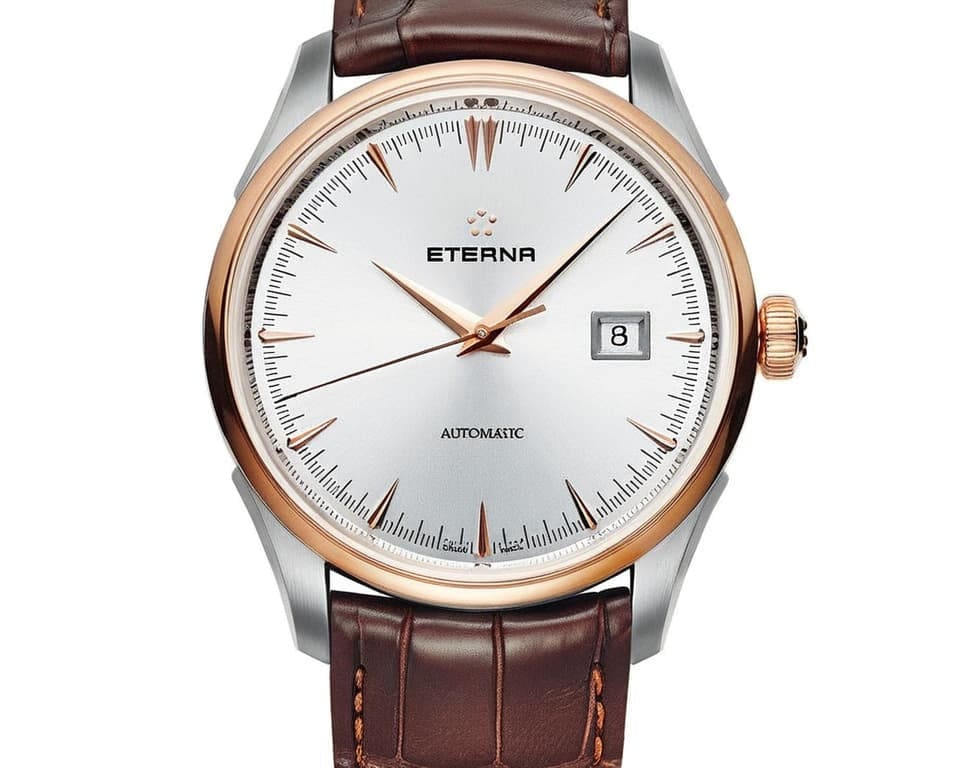
Eterna is not a name most people recognise when they first hear it. Ask someone on the street to name a Swiss watch brand and they will say Rolex, Omega, or TAG Heuer before Eterna ever comes up. That is a strange situation for a brand that has been making watches in Switzerland since 1856 and developed the ball bearing rotor system that almost every automatic watch in the world still uses today. Eterna built the engine behind the Swiss watch industry, then quietly kept making its own watches while the brands using its technology became household names. What follows covers the full picture: where the brand came from, what makes it worth paying attention to, the best models available right now, and everything you need to know before buying one.
Eterna Watch Brand History: Founded 1856, Still Making Watches Today
On November 7, 1856, a physician named Dr. Josef Girard and a 28-year-old schoolteacher named Urs Schild opened a small factory in Grenchen, Switzerland. They called it “Dr. Girard & Schild” and focused on making raw watch movements, known as ebauches, that other watchmakers could buy and build into finished timepieces. It was a smart move. The Swiss watch industry was just getting started, and demand for movements was growing fast.
A few years in, Girard decided to go back to practicing medicine and sold his shares to Schild. With full control of the company, Schild pushed production forward, bringing in water- and steam-powered machines to work faster and more efficiently. By 1870, the factory had grown enough to produce its first fully in-house watch, meaning every single part was made right there in Grenchen. That was a big deal at the time.
When prices for raw movements dropped in the 1870s because too many suppliers flooded the market, Schild shifted focus toward complete, finished watches. The first pocket watch built entirely in-house came out in 1876 and sold well immediately. By 1890, the factory was producing around 180 watches per day with over 300 workers on the floor. The name “Eterna” started appearing on watch dials around 1889, first as the name of a collection, before being officially adopted as the company’s brand name in the early 1900s.
After Urs Schild died in 1888, his family kept running the company. His son Theodor, who had studied mechanical engineering, took over management in 1899 and stayed in charge for over three decades. Under Theodor, Eterna filed a patent in 1904 for a special wristwatch case with moving safety band lugs designed for military use. Four years later, the company patented an alarm function for a wristwatch. That alarm watch went into serial production in 1914, making it the world’s first commercially available alarm wristwatch. Eterna also built the smallest production wristwatch with a baguette movement during this period, the Calibre 610, which measured just 7.25mm by 22.5mm.
Then came 1932, one of the most significant years in the company’s history. As the global economy struggled and the Swiss watch industry consolidated, Eterna joined the ASUAG holding group. To fit the structure of that group, the company was split into two separate entities: Eterna AG for finished watch production, and ETA SA for movement manufacturing. That movement company, ETA, eventually grew into the largest supplier of Swiss watch movements in the world. Today, as a subsidiary of the Swatch Group, ETA movements power watches from Longines, Hamilton, Tissot, and many others. Eterna built the engine that runs a huge portion of the Swiss watch industry.
In 1947, Norwegian explorer Thor Heyerdahl led a crew of six on a 101-day voyage across the Pacific Ocean on a balsa wood raft named Kon-Tiki, sailing from Peru to the Polynesian islands to prove that pre-Columbian South Americans could have settled the Pacific. The expedition became world famous. In 1958, Eterna released the KonTiki watch in tribute to that journey. It became the brand’s flagship model and remains so today.
In 1948, Eterna made a change to automatic watchmaking that the entire industry would eventually copy. Engineers developed a rotor mounted on five tiny ball bearings, each just 0.65mm in diameter. This dramatically reduced friction inside the movement, making self-winding watches more reliable and longer lasting than anything before. Every automatic watch produced by Eterna from that point on carried the Eterna-Matic name, and the five ball bearings were adopted as the official brand logo, still visible on Eterna dials today. In 1962, the brand set another record with the Eterna-Matic Dato 3000, which was at the time the world’s flattest automatic watch with a date display, with a movement height of just 3.6mm.
During the 1950s, Eterna’s Golden Heart ladies watch became genuinely famous. Actresses Gina Lollobrigida and Brigitte Bardot were among its most well-known wearers. Eterna also supplied watches to the British Army in World War Two as one of the twelve Swiss manufacturers chosen to produce the so-called “Dirty Dozen” watches, military timepieces built to strict Ministry of Defence specifications and stamped WWW, for Wrist Watch Waterproof.
The quartz crisis of the 1970s hit Eterna like it hit almost every Swiss mechanical watchmaker. Cheap battery-powered watches from Japan flooded the global market and the demand for mechanical movements collapsed. Eterna survived but lost ground during those years.
In 1995, the Porsche family’s holding company, F.A. Porsche Beteiligungen GmbH, purchased Eterna. During that period, Eterna manufactured watches sold under the Porsche Design name. That arrangement lasted until the early 2010s. On June 29, 2011, Porsche Design sold Eterna to International Volant Ltd, a subsidiary of the Chinese company China Haidian Holdings. China Haidian was later renamed Citychamp Watch & Jewellery Group Limited in 2014. Eterna has continued to operate from Grenchen under that ownership, maintaining its Swiss Made status and its focus on in-house movement development.
What Is Special About Eterna Watches?
Most watch brands buy their movements from outside suppliers and focus mainly on design and assembly. Eterna has spent most of its history doing things differently, building the technical parts of its watches from the ground up in Grenchen. That approach is rarer than most people realize, and it shapes everything about what the brand produces.
The 1948 Rotor That the Whole Industry Copied
Before 1948, automatic watch movements had a fundamental problem. The rotor that winds the mainspring as you move your wrist sat on a plain bearing, and over time friction wore it down. This meant movements became less accurate and needed more frequent servicing. Eterna solved this by mounting the rotor on five tiny ball bearings, each just 0.65mm in diameter. The result was a rotor that turned with almost no resistance, reduced internal wear dramatically, and kept the watch running reliably for longer. That invention became the standard across the entire Swiss watch industry. Almost every automatic watch made anywhere in the world today uses a variation of this same principle. Eterna put those five ball bearings in its logo to mark the achievement, and they are still on every Eterna dial made today.
The Barrel System That Needs No Oil
In 2009, Eterna took that same ball bearing idea and applied it somewhere new. Instead of putting ball bearings on the rotor, they placed them around the mainspring barrel, which is the part of the movement that stores and releases energy. In traditional movements, the barrel sits on an arbor lubricated with oil, which degrades over time and creates inconsistent energy delivery. Eterna’s Spherodrive system uses zirconium oxide ceramic ball bearings that require no lubricant at all. The ceramic material is self-lubricating by nature, meaning the system stays clean, runs more consistently, and extends the time between services. The Spherodrive appears in several Eterna models and represents another genuine technical step forward rather than a cosmetic upgrade.
What Makes the Calibre 39 Different From Other Movements
Eterna spent several years developing a movement platform called the Calibre 39, announced in 2013. What makes it unusual is its modular construction. Starting from a single base movement, watchmakers can configure it into 88 different versions by adding or removing components, from a simple three-hand watch to a flyback chronograph with GMT function. The chronograph versions use a column wheel mechanism and include a flyback function, which resets the timer with a single push rather than requiring stop, reset, and restart. The entire Calibre 39 family is built to chronometer-level precision standards and carries a guaranteed 68-hour power reserve. Eterna also made the movement available to other Swiss brands as an alternative to ETA, which is the same philosophy that created ETA in the first place.
What It Means That Eterna Makes Its Own Movements
The term “manufacture” in the watch world means a brand that designs and makes its own movements, not just assembles parts from elsewhere. Eterna qualifies as a genuine manufacture. Around 70 percent of the components in the Calibre 39 are sourced from Grenchen and its surrounding area, keeping production tightly controlled and locally rooted. That level of vertical integration puts Eterna in a relatively small group of Swiss brands that can honestly claim full control over what is inside their watches.
Why Eterna Costs Less Than Its History Suggests
Eterna sits in a price range that most buyers find far more accessible than its technical credentials would suggest. A brand with this depth of horological history, genuine in-house movements, and a role in literally shaping the modern watch industry would typically command premium pricing. Eterna does not. That gap between what the brand has achieved and what it costs to own one is something collectors and value-focused buyers have noticed for years. For someone who wants a mechanically serious Swiss watch without paying for a famous logo, Eterna is one of the more honest propositions on the market.
Top 10 Best Eterna Watches
Eterna makes fewer models than most Swiss brands, which makes choosing easier. Each collection has a clear purpose and a real identity, and the price range stretches far enough to cover both first-time buyers and experienced collectors looking for something with genuine horological depth.
1. Eterna KonTiki Date
The KonTiki Date is the most straightforward entry point into the KonTiki family and one of the best value Swiss dive watches available. It comes in a 42mm stainless steel case, rated to 200 metres of water resistance with a screw-down crown. The dial uses the signature triangular hour markers that have defined KonTiki models since 1958, with full lume coating on both markers and hands. The caseback carries an engraved medallion of Heyerdahl’s raft, a detail that carries across every KonTiki. Movement is a Sellita SW200 automatic, a reliable Swiss caliber that gets the job done without inflating the price. Available in several dial colours including black and blue.
2. Eterna Super KonTiki Chronograph
This is the KonTiki at its most serious. Powered by Eterna’s own in-house Calibre 3916A, a column wheel flyback chronograph with 65 hours of power reserve, it sits in a 45mm cushion-shaped steel case that draws directly from the 1973 Super KonTiki design. The flyback function lets you reset the timer with a single button press rather than the three-step stop-reset-start process found on conventional chronographs. Water resistance sits at 200 metres. The dial layout places small seconds at 9, with stacked hour and minute counters at 3. Getting a column wheel flyback chronograph with a genuine in-house movement at this price point is genuinely rare in the Swiss watch market.
3. Eterna Heritage Super KonTiki 1973
Originally released as a limited edition of 1,973 pieces, this model is a faithful recreation of the Super KonTiki that Eterna supplied to the Israeli Defence Forces in the 1970s. The 44mm tonneau-shaped case, rotating bezel with alternating numerals and batons, and large triangular lume markers at the cardinal positions are all taken directly from the vintage reference. It wears like a proper vintage tool watch but with modern reliability inside. The caseback carries the KonTiki raft engraving and the overall finishing is high-polish throughout. This is one of the more collectible modern Eterna references.
4. Eterna Royal KonTiki Chronograph
The Royal KonTiki sits above the standard KonTiki line in terms of finishing and specification. The 42.55mm case features a combination of polished and brushed surfaces, PVD-coated black bezel screws, and a black crown guard that give it a more aggressive, tool-watch character. All Royal KonTiki models run on versions of Eterna’s in-house Calibre 39, making this one of the few chronographs in its price range with a genuine manufacture movement. The bracelet and rubber strap options both come finished to a high standard.
5. Eterna Tangaroa Moonphase Chronograph
The Tangaroa line takes its name from a 2006 Pacific Ocean expedition that followed a similar route to the original Kon-Tiki journey. The Moonphase Chronograph is the most complex watch in the collection, running on an ETA Valjoux 7751 automatic movement with 48 hours of power reserve. It displays hours, minutes, seconds, date, day of the week, month, moonphase for both northern and southern hemispheres, and a 24-hour indicator. The 42mm case has a distinctive curved profile with no flat surfaces, designed with input from an architect. The sapphire exhibition caseback lets you see the movement directly.
6. Eterna Tangaroa Three Hands
The simpler sibling of the Tangaroa family strips things back to a clean three-hand automatic with date. Inside is a Sellita SW200 with 38 hours of power reserve. The 42mm curved case still has the same distinctive no-flat-surface design as the more complex versions, and the dial comes in black or white with rhodium-plated hands and baton markers. It is one of the best-looking dress-casual watches in Eterna’s lineup and sits at a price that makes it easy to consider.
7. Eterna 1948
Named directly after the year Eterna introduced the ball-bearing rotor, the 1948 collection is a dress watch line built around Eterna’s own Calibre 39 movement. The design references the clean, symmetrical dials of mid-century Swiss watchmaking without being a literal vintage copy. The in-house movement delivers 68 hours of power reserve and chronometer-level accuracy. For buyers who want something that can go from the office to a formal dinner and comes with genuine horological significance underneath, this is the pick.
8. Eterna Adventic GMT
The Adventic GMT uses Eterna’s in-house Calibre 3914A, a version of the Calibre 39 platform with automatic winding, a date window at 3, small seconds at 9, and a GMT hand displaying a second time zone via a 24-hour subdial at 6. Power reserve is 68 hours and the movement is built to chronometer precision standards. The Spherodrive barrel system is fitted as standard across the Adventic range. Case size is 42mm in stainless steel. For frequent travellers who want a Swiss manufacture GMT without paying Rolex or IWC prices, this is one of the most technically credible options available.
9. Eterna Madison Spherodrive
The Madison is Eterna’s rectangular dress watch and the model that first debuted the Spherodrive technology in 2009. The hand-wound Calibre 3505 uses zirconium oxide ceramic ball bearings in the mainspring barrel, requiring no lubricant and theoretically extending service intervals. The case is compact at 34.5mm by 37.8mm, making it genuinely slim on the wrist. A small aperture in the dial at 6 o’clock lets you see the ball bearing system working directly. It is a niche piece for buyers who appreciate mechanical engineering as much as aesthetics, and it sits in a category where few brands offer anything this technically distinctive.
10. Eterna KonTiki Four Hands
A less commonly discussed member of the KonTiki family, the Four Hands adds a pointer-style date display on an outer flange ring to the standard three-hand layout. The 40mm case makes it the smallest in the current KonTiki lineup, which suits buyers who find the larger sport watch sizes unwearable. The flange calendar uses runic-style characters on the inner ring, a design detail that gives it a distinctly different character from the other KonTiki models. Movement is a Sellita SW200 automatic. Water resistance is 200 metres.
Things to Consider Before Buying an Eterna Watch
Eterna’s lineup covers a wider range of styles, movements, and prices than most people expect when they first start looking at the brand. Before spending your money, a few things are worth thinking through carefully.
Not Every Eterna Has an Eterna Movement Inside
This is the most important technical decision to make when choosing an Eterna. Not every watch in the lineup uses an Eterna-made movement. The more affordable models, including the standard KonTiki Date and the Tangaroa Three Hands, run on sourced Swiss automatic movements. These are well-proven calibres that are accurate, easy to service, and widely supported by watchmakers around the world. They are not a weak choice, just a practical one that keeps the price reasonable.
The in-house Calibre 39 and its various versions appear in the higher-end models, including the Royal KonTiki, the Super KonTiki Chronograph, the 1948, and the Adventic GMT. These movements carry chronometer-level precision standards, longer power reserves of around 68 hours, and the Spherodrive barrel system in certain configurations. They are also more expensive to service and may require sending the watch to an Eterna-authorised service centre rather than any independent watchmaker.
If movement origins matter to you and you want the full Eterna engineering story on your wrist, focus your budget on the Calibre 39-powered models. If you simply want a reliable, attractive Swiss automatic at a sensible price, the models with sourced movements are a perfectly sound choice.
Case Sizes Across the Eterna Lineup
Eterna watches span a fairly wide range of sizes. The KonTiki Four Hands sits at 40mm, the KonTiki Date and Royal KonTiki Chronograph are around 42mm, and the Super KonTiki Chronograph pushes to 45mm with a 16mm case height. The Madison dress watch is much smaller at around 34mm by 38mm. Before buying, it is worth checking the lug-to-lug measurement as well as the diameter, since the cushion-shaped cases used on some KonTiki models can wear larger or smaller than the stated diameter suggests.
Water Resistance Varies a Lot Across the Lineup
KonTiki and Super KonTiki models are rated to 200 metres, which is enough for recreational diving. The Tangaroa collection sits at 50 metres, making it suitable for swimming but not diving. Dress models like the Madison are typically rated lower still. If you plan to wear the watch in water regularly, stick to the sport models and check that the crown gaskets are in good condition, particularly on pre-owned pieces.
New or Second Hand: Which Makes More Sense?
Eterna has a fairly active pre-owned market, and buying used is one of the better ways to get more watch for your money. A new Eterna comes with the manufacturer’s warranty, currently two years, and you have complete clarity on the service history. A pre-owned Eterna, particularly models from before 2011, may need a service if it has not had one in the last five to seven years. Factor that cost into your budget before buying. A service on a watch with a sourced movement will generally cost less than one powered by an in-house calibre, which may require specialist handling.
One specific pre-owned opportunity worth knowing about is the Porsche Design-era Eterna watches produced between 1995 and 2011. These are often available at lower prices on the secondary market and tend to be well made. Just verify that the watch is a genuine Eterna-produced Porsche Design piece, since Porsche Design watches made after the two companies parted ways come from a different source entirely.
Most Eterna Models Come in More Than One Colour
Most current Eterna models come in multiple dial colours. The KonTiki Date, for example, is available in black, blue, and silver dials. Several models also come with a choice of stainless steel bracelet, mesh bracelet, rubber strap, or leather strap at the point of purchase. The mesh bracelet, which has appeared on KonTiki models since the 1970s, is a particularly good match for the sport models and widely considered one of Eterna’s better strap choices.
How Much Should You Spend on an Eterna?
New Eterna watches start at roughly $1,500 for entry-level three-hand models with sourced movements and go up to around $5,000 for in-house chronographs. The sweet spot for most buyers is the $2,000 to $3,500 range, where several of the better sourced-movement and entry-level Calibre 39 models sit. Pre-owned prices can drop significantly below these figures, particularly for older references on the secondary market.
Where to Buy Eterna Watches
Finding an Eterna is not as straightforward as walking into any large watch retailer. The brand has a relatively small global distribution network compared to more mainstream Swiss names, which means knowing where to look and what to look out for matters more than it would with a bigger brand.
Buying Directly From Eterna
Eterna operates its own online shop at shop.eterna.com, where you can browse current models and buy directly. This is the most straightforward way to guarantee you are getting a genuine watch with a full manufacturer’s warranty. Pricing is at full retail and the selection reflects whatever the brand currently has in production. It is also a useful reference point for checking official retail prices before shopping anywhere else.
The Safest Way to Buy a New Eterna Watch
Eterna sells through a network of authorised dealers across Europe, North America, and other regions. Buying from an authorised dealer gives you the same manufacturer warranty as buying directly from Eterna, along with the reassurance that the watch is new, genuine, and properly sourced. Eterna’s website includes a store locator tool at eterna.com that lets you search for authorised retailers by country and city. This is worth using before making any purchase, since it confirms whether a particular shop has an official relationship with the brand.
The main trade-off with authorised dealers is price. You will generally pay full retail or close to it, and discounting tends to be limited. What you get in return is complete peace of mind, access to warranty service, and staff who should know the watches well enough to answer your questions properly.
Saving Money on an Eterna Through Grey Market Channels
Grey market dealers are retailers who sell genuine watches through channels that are not officially authorised by the brand. The watches themselves are real, but they are typically sourced from authorised dealers in other countries, from surplus stock, or from other indirect routes. Prices at grey market sellers can be meaningfully lower than authorised retail, sometimes by 20 to 40 percent on certain models.
The key risks with the grey market are around warranty coverage and accountability. Manufacturer warranties often require proof of purchase from an authorised source, so a grey market purchase may not be eligible for official Eterna warranty service. Some grey market dealers offer their own store warranties as an alternative, but these vary significantly in what they actually cover. If you choose this route, make sure you fully understand what after-sales support you are and are not getting before handing over your money.
Where to Find Second Hand Eterna Watches
The secondary market is where Eterna offers some of its best value, particularly for buyers who are comfortable with a watch that has some history. Pre-owned Eterna watches in good condition can be found at a significant discount to new retail, and discontinued models that are no longer available through official channels, such as certain Heritage and Porsche Design-era references, can only be found here.
When buying pre-owned, there are a few things worth checking carefully. First, look for original box and papers. These do not guarantee authenticity on their own, but their absence removes a layer of verification. Second, check the serial number on the caseback against the paperwork if it is available. Third, examine the dial, hands, and case finishing closely. On genuine Eterna watches, the five ball bearing logo should be crisp and cleanly applied, and the finishing on the case should be consistent across brushed and polished surfaces without signs of amateur polishing or alterations. Fourth, if you have any doubt, have the watch inspected by a qualified independent watchmaker before committing to the purchase.
For Eterna models with in-house Calibre 39 movements, it is also worth asking whether the watch has had a service and, if so, where it was done. In-house movements ideally benefit from being serviced at authorised centres rather than by general watchmakers who may not have access to proprietary parts.
Online watch communities and forums are also a practical resource when buying pre-owned Eterna. Collectors who specialise in the brand can help you verify references, check whether a particular configuration is genuine, and point out any red flags on listings that might otherwise go unnoticed.
Eterna Watches as an Investment
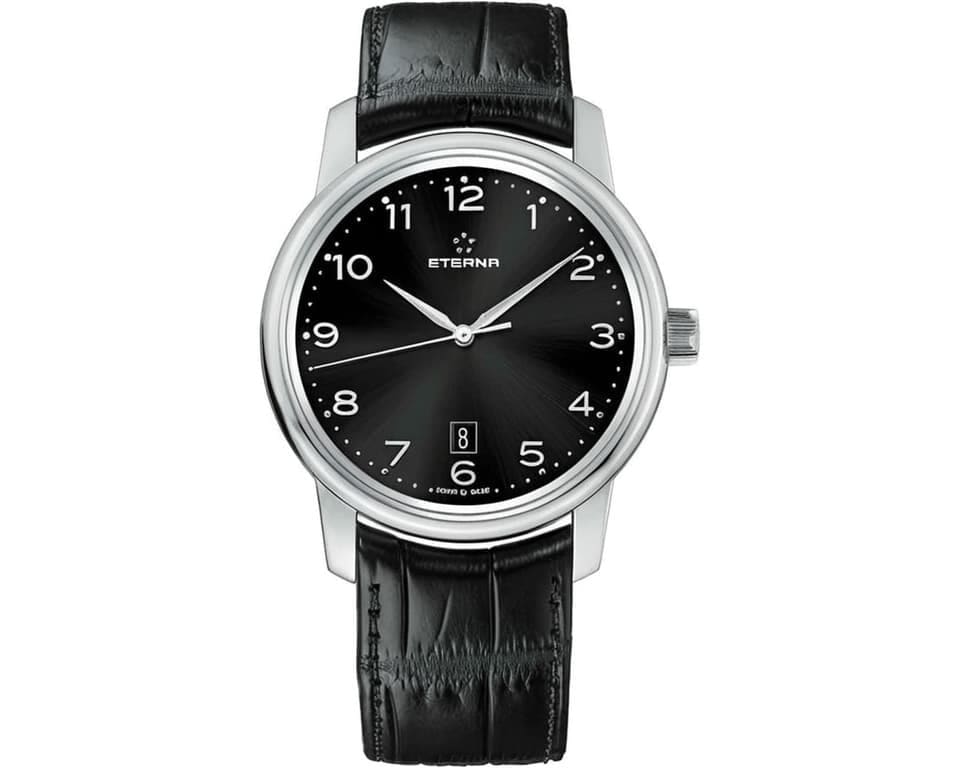
Being honest here matters more than telling you what you might want to hear. Eterna is not an investment watch brand in the way that certain other Swiss names are. If your primary goal is buying a watch that will appreciate in value or hold its price reliably, Eterna is not the right choice for that goal. Modern Eterna watches generally depreciate from retail once purchased, and the brand does not have the global recognition or collector demand needed to support strong resale prices the way that brands like Rolex or Patek Philippe do.
Secondary market data shows that modern Eterna references typically sell for meaningfully less than their original retail price, and trading volume is low. Low trading volume is a practical problem too: when the time comes to sell, finding a buyer can take considerably longer than it would with a more widely recognised brand.
That said, the picture is more nuanced than a simple thumbs down for investment potential, and there are specific corners of the Eterna market that serious collectors actively seek out.
Which Eterna References Have a Genuine Collector Following
Not every corner of the Eterna market is a poor bet. While modern references sit firmly in the depreciation camp, the vintage side of the brand tells a different story. A small but genuinely passionate group of collectors has been quietly buying up older Eterna pieces for years, drawn in by the brand’s real history, military connections, and the fact that prices have not yet caught up with how interesting these watches actually are. The models that attract the most attention share a common thread: they have a documented story behind them, whether that is a military connection, a historically significant dial variant, or a direct link to the KonTiki expeditions that put the brand on the map.
Vintage KonTiki models from the 1960s and 1970s have a dedicated following among dive watch collectors. First-generation KonTiki watches from 1958, references from the early 1960s Super KonTiki, and particularly strong examples with original dials and unpolished cases attract genuine collector attention. The caveat is that prices depend heavily on condition and originality. A tropically aged first-execution 1958 KonTiki in excellent original condition is a very different proposition from a later example that has been polished and had parts replaced.
Israeli Defence Forces Super KonTiki models from the 1970s are among the most sought-after Eterna references in the vintage market. These were officially issued military watches with Hebrew engravings on the caseback identifying the soldier and unit. Confirmed IDF-issued examples in honest condition have been known to reach several thousand dollars, with particularly well-documented examples going higher. They represent the combination of military history, scarcity, and strong provenance that drives collector premiums.
Italian Navy KonTiki references from the 1960s, specifically the 130 PTX examples ordered by the Marina Militare in 1966, are another niche but genuinely rare category with documented military history. Only 16 examples of at least one specific variant are known to exist.
Eterna chronographs from the 1960s and early 1970s also have a collector market, particularly references using the column-wheel Valjoux-based movements of that era, which are considered to be well-made and historically interesting pieces.
Originality, Papers and Condition: The Three Things That Matter Most
Whether you are buying a modern Eterna or hunting for a vintage piece, a handful of factors will determine what it is actually worth when you decide to sell. These are not unique to Eterna, but they matter more here than they would with a brand that has stronger baseline demand carrying prices up regardless of condition.
- Originality is the single biggest factor for vintage pieces. An unpolished case with an original, undamaged dial and correct hands will always be worth more than a comparable watch that has been refinished.
- Box and papers improve resale value for modern pieces, as they do with most watch brands.
- Limited edition status matters at the margins, but Eterna limited editions do not command dramatic premiums the way that better-known brands do.
- Movement type has less impact on resale for Eterna than it does internally as a buying decision. Buyers on the secondary market typically focus on condition, model, and price rather than whether a specific Eterna has an in-house or sourced movement.
Is an Eterna Worth Buying Financially?
Buy Eterna because you want to wear and enjoy a watch with genuine Swiss watchmaking heritage at a price that reflects the brand’s low profile rather than its technical credentials. The pre-owned market actually works in a buyer’s favour here: you can often pick up a well-maintained modern Eterna for significantly less than it cost new, which means someone else has already absorbed the depreciation. Buying pre-owned at the right price removes most of the financial risk. Just do not buy one expecting to profit from it later.
Eterna Watch Maintenance: Servicing, Cleaning and Storage
A well-looked-after Eterna watch can last for decades without major issues. The good news is that caring for one does not require anything complicated. Most of what keeps a mechanical watch running well comes down to a few consistent habits and knowing when to hand it to a professional.
How Often an Eterna Watch Needs a Professional Service
Every mechanical watch needs a professional service periodically because the oils inside the movement gradually dry out and break down over time. As lubrication degrades, friction increases between moving parts, which affects accuracy and eventually causes wear. For Eterna watches worn regularly, a service every five to seven years is a sensible target. For watches worn daily under heavier conditions, closer to every three to five years is safer.
What a full service involves is the movement being completely disassembled, all components cleaned, the oils replaced with fresh lubricants, and the movement reassembled and tested for accuracy and water resistance before being returned to you. It is not something to skip or delay indefinitely.
The movement type in your watch affects who should do the service and what it will cost. Eterna models running on sourced Swiss automatic movements can be serviced by any competent independent watchmaker, since those calibres are widely used and parts are easy to obtain. Service costs for these movements typically fall somewhere between $200 and $400 depending on the watchmaker and your location. Eterna’s in-house Calibre 39 models are more complex and ideally benefit from being sent to an Eterna-authorised service centre or a watchmaker with specific experience on that platform. Real-world service costs on Calibre 39 watches have been reported by owners at around $450 and above, though pricing varies.
How to Keep Your Eterna Properly Sealed Over Time
Eterna’s KonTiki and Super KonTiki models are rated to 200 metres, but that rating is only valid when the watch’s rubber gaskets and seals are in good condition. Gaskets dry out and compress over time, reducing their ability to keep water out even on a watch that was previously well-sealed. If you wear your KonTiki in the water regularly, have the water resistance tested and the gaskets inspected every year or two, not just at service intervals. This is a simple check that any watchmaker with the right pressure testing equipment can perform quickly and cheaply.
Always make sure the crown is screwed down fully before any contact with water on models that have a screw-down crown. Never adjust the time or wind the watch while it is submerged or wet.
Regular Wear Is Good for an Automatic Watch
For automatic models, regular wearing is the best way to keep them running well. The rotor winds the mainspring through normal wrist movement, and the oils in the movement stay better distributed when the watch is running consistently. If you rotate between multiple watches and an Eterna sits unworn for more than a couple of days, it will stop once the power reserve runs out. This is not harmful, but resetting the time and date repeatedly does create small amounts of wear on the crown mechanism over years. A watch winder set to an appropriate rotation rate solves this for automatic models.
For the manual-wind Madison Spherodrive, wind the watch at roughly the same time each day. Wind slowly and stop as soon as you feel resistance. Never force the crown past that point.
The Right Way to Clean a Watch Bracelet
The case and bracelet pick up skin oils, sweat, dust, and grime over time, particularly in the bracelet links and around the crown. A soft microfiber cloth wiped over the case after wearing removes surface oils and keeps the finish looking clean day to day. For a more thorough clean on water-resistant models, the bracelet can be cleaned with a soft brush and lukewarm water with a small amount of mild soap, then rinsed and dried thoroughly. Make sure the crown is secured before doing this. Avoid any chemical cleaners, solvents, or abrasive cloths on the case or crystal.
Leather straps need to be kept dry. Sweat and water break down leather quickly, so avoid wearing a leather-strapped Eterna in situations where it will get wet. Rotate straps if you wear the watch daily to allow the leather to dry out between uses.
Winder, Box or Drawer: The Best Storage Options
When you are not wearing the watch, keep it somewhere away from direct sunlight, strong magnetic fields, and temperature extremes. A watch box or dedicated storage case protects the crystal and case from accidental scratches and keeps dust out. Strong magnets, including those found in some phone cases, speaker systems, and bag clasps, can affect the accuracy of a mechanical movement. If you notice your Eterna running significantly fast or slow after being near a strong magnetic source, a watchmaker can demagnetise it quickly and inexpensively.
For long-term storage of several months or more, let the watch run down and stop naturally rather than leaving it on a winder indefinitely. Have the water resistance and seals checked before putting a stored watch back into regular use.
Eterna Watches: Frequently Asked Questions
Eterna is not a brand most people have a lot of background knowledge on before they start looking at one. The questions below cover the things that come up most often, whether you are trying to decide if the brand is worth your money, figuring out which model makes sense for your situation, or just trying to fill in the gaps on a brand that does not get covered as widely as it deserves. If something is still unclear after going through these, the watch community forums are genuinely active with Eterna owners who are happy to share their experiences.
Is Eterna a good watch brand?
Yes. It is a genuine Swiss manufacture with real horological history, solid build quality, and well-priced watches relative to what you get technically.
Are Eterna watches still made in Switzerland?
Yes. Eterna still produces watches at its original factory in Grenchen and maintains Swiss Made status.
Who owns Eterna?
Citychamp Watch and Jewellery Group Limited, a Hong Kong-listed company, has owned Eterna since 2011.
Did Eterna invent the automatic watch?
No, but in 1948 they invented the five ball bearing rotor system that made automatic movements far more reliable, and that system became the standard across the entire industry.
What is the difference between KonTiki and Super KonTiki?
The KonTiki is the standard three-hand diver. The Super KonTiki is larger, has a cushion-shaped case, and today comes as a flyback chronograph with an in-house movement. The Super KonTiki also has the stronger military history, having been issued to the Israeli Defence Forces and Italian Navy in the 1960s and 1970s.
Can any watchmaker service an Eterna?
Models with sourced Swiss automatic movements can be serviced by any competent independent watchmaker. In-house Calibre 39 models are more specialised and ideally benefit from an Eterna-authorised service centre.
Is Eterna a good investment watch?
No. Modern Eterna watches depreciate from retail and do not hold value like Rolex or Patek Philippe. Certain vintage military references are an exception. Buy Eterna to wear and enjoy, not to profit from later.
What is the best Eterna for a first-time buyer?
The KonTiki Date. It covers all the basics, is easy to service, and gives you the full brand story at an accessible price.
How does Eterna compare to Oris or Longines?
How often does an Eterna need servicing?
Every five to seven years for regular wear. Every three to five years if worn daily in demanding conditions.
Eterna is the kind of brand that tends to surprise people once they actually look into it. Most people walk in not having heard of it and walk out wondering why it is not talked about more. The gap between what the brand has achieved in watchmaking history and how little name recognition it gets today is genuinely unusual. That works in a buyer’s favour when it comes to price, but it does mean you should not expect it to impress anyone who judges watches purely by logo.
Conclusion
Few watch brands carry the kind of history Eterna does while remaining this far below the radar. A brand that invented the technology behind virtually every automatic watch made today, supplied military forces across multiple countries, and spun off the movement company that now powers a significant chunk of the Swiss watch industry should not be a name that most people draw a blank on. But that is exactly the situation Eterna finds itself in, and for a buyer who does their homework, that gap is an opportunity rather than a red flag.
The watches themselves hold up well against what you would pay for at this price point from more recognised names. The KonTiki line offers genuine tool watch credentials, strong case and bracelet construction, and a design with real historical roots rather than one invented for marketing purposes. The in-house Calibre 39 models offer genuine manufacture credentials at prices that brands with bigger advertising budgets simply would not match. Eterna is not perfect, its dealer network is thin, resale values are soft, and the brand has had a quieter decade since changing ownership, but the watches it produces are honest and well made.
If you came to this article trying to decide whether Eterna is worth your attention, the straightforward answer is yes. Not for every buyer, and not as a financial bet, but as a watch to actually wear and enjoy from a brand with a real place in horological history, Eterna makes a strong case for itself. The five ball bearings on the dial are not just a logo. They represent something that genuinely changed how watches work, and wearing one is a small connection to that story.