Every digital watch worn today, from a cheap sports watch to a smartwatch, owes something to a single invention from 1972. That invention was the Pulsar, and it changed watches forever by swapping gears and springs for a tiny electronic chip and glowing red numbers. Pulsar is no longer a working brand, since Seiko officially discontinued it in 2023, but its story explains a lot about how modern watches came to be, and why some old Pulsar watches now sell for thousands of dollars.
What Was Pulsar?
Pulsar was a watch brand that made the world’s first fully electronic digital watch and was owned by Seiko until it was discontinued in 2023. The brand started in the United States in the early 1970s under the Hamilton Watch Company, and it became famous almost overnight for a watch that told time with glowing red lights instead of hands. In its later years, Pulsar made mostly affordable analog and quartz watches, sharing parts and factories with its parent company, Seiko.
That mix of a wild, futuristic origin story and a much quieter present is what makes Pulsar interesting. Few brands have gone from being the most talked-about watch on the planet to a reliable, budget-friendly name in under a decade, and Pulsar’s journey shows how fast watch technology moved during the 1970s.
Who Owned Pulsar Watches?
Pulsar was owned by Seiko, one of the biggest watch companies in the world, until Seiko discontinued the brand in 2023. Seiko bought the Pulsar brand from Hamilton in 1978, after Hamilton decided the digital watch business had become too crowded and too cheap to compete in. From then on, Pulsar operated as a value-focused line, often using movements and components similar to entry-level Seiko watches.
This ownership matters for anyone trying to understand a Pulsar watch today. It means the brand benefited from Seiko’s manufacturing experience and quality control, even though Pulsar watches sat at a much lower price point than most Seiko lines. In practice, a Pulsar was a Seiko-engineered watch sold under a different name, aimed at shoppers who wanted dependable quartz timekeeping without paying for a bigger brand name.
Seiko did not just keep Pulsar alive, it actively grew the brand for years after buying it. During the 1980s, Pulsar became part of Seiko’s push into all-quartz watchmaking, and the line expanded from a single novelty product into full men’s and women’s collections sold across Europe and the United States. In the early 2000s, Seiko repositioned Pulsar more clearly as its budget-friendly alternative, a role the brand played inside the Seiko family for two more decades.
That role has since ended. Seiko had already pulled Pulsar out of the UK market by 2020, and in January 2023 it folded Pulsar into its other budget brand, ALBA, confirming at the time that Pulsar watches were no longer being manufactured. So while Pulsar is not a brand anyone can buy a brand-new watch from anymore, existing Pulsar watches, from 1970s LED originals to 2010s quartz models, remain out in the world and still worth understanding.
How Pulsar Invented the World’s First Digital Watch
Pulsar created the first all-electronic digital watch in 1972, and the idea actually started with a movie. Director Stanley Kubrick asked the Hamilton Watch Company to build a futuristic digital clock prop for his 1968 film “2001: A Space Odyssey,” and the glowing display reportedly inspired Hamilton’s John Bergey to pursue a similar display for the wrist. Hamilton partnered with a Texas company called Electro/Data to build the technology, and by 1970 the project had produced a patent for a watch with no moving parts at all. Sources differ on exactly who deserves the most personal credit for the engineering, with some pointing to Hamilton’s own team and others to Bulgarian-American engineer Peter Petroff, whose earlier company grew into Electro/Data.
The first working prototype, nicknamed the “Wrist Computer,” was shown off on The Tonight Show by Johnny Carson in May 1970. Carson joked about its price tag when he heard it, and he was right to be surprised. When the finished watch, called the Pulsar P1, hit stores in the spring of 1972, it had an 18-karat gold case and sold for around 2,100 dollars. That is roughly 16,000 dollars in today’s money, a serious sum for a wristwatch even though it was still less than the price of an average new car at the time.
The Pulsar P1 was not just a new watch. It was the first timepiece in history with a digital display and zero moving parts, a genuine first for the entire watch industry.
Reading the time on a Pulsar P1 was not as simple as glancing at a wrist, either. Because the LED display used a lot of battery power, wearers had to press a button on the side of the case just to make the red digits light up for a few seconds. It felt space-age and futuristic, which fit perfectly with the era’s fascination with moon landings and science fiction.
Why the First Pulsar Watch Became a Celebrity Favorite
Pulsar’s first digital watch became a status symbol almost immediately because it was expensive, unusual, and genuinely new. Owning one signaled that you cared about cutting-edge technology, similar to how early smartphone adopters were seen decades later. The watch’s high price and gold case only added to its appeal among people who wanted to be seen with the newest thing.
Several famous names wore the watch during the 1970s, including Elvis Presley, Sammy Davis Jr., and the Shah of Iran. Its biggest pop culture moment came in 1973, when Roger Moore’s James Bond wore a Pulsar P2 model in the film “Live and Let Die.” The watch even appeared in a short mention inside Playboy magazine in October 1972, complete with a photo, which shows just how much buzz surrounded the launch.
Because of this attention, vintage Pulsar watches from the early 1970s, especially gold models in good condition, are now collector’s items. Prices for original examples can run into the thousands of dollars depending on condition and rarity.
Pulsar kept building on its early fame rather than resting on the P1’s success. In 1975, the brand released a digital watch with a built-in calculator, cramming a tiny keypad and screen onto the wrist years before anyone imagined a smartwatch. It was an odd, fiddly gadget by modern standards, needing a small stylus to press its calculator buttons, but at the time it reinforced Pulsar’s image as the brand willing to try things nobody else had.
Why Pulsar Almost Disappeared by the End of the 1970s
Pulsar nearly went out of business because cheaper competitors made its expensive technology obsolete within a few years. Once other manufacturers figured out how to build LED and LCD displays, prices for digital watch parts crashed. Texas Instruments played a huge role in this, dropping the price of LED modules from tens of dollars down to under ten dollars by the late 1970s.
This price war hurt Pulsar badly, since its whole identity had been built around being the rare, premium option. On top of that, people started to notice a real downside of the LED design: having to press a button just to check the time was annoying compared to watches with an always-visible display. By 1977, LCD screens that stayed on all the time had mostly replaced LED watches across the industry, and Pulsar’s original LED models stopped being made around 1978.
Facing shrinking sales and a market it could no longer dominate, Hamilton sold the Pulsar brand to the Seiko Watch Corporation in 1978. That sale is the reason Pulsar exists today at all, since Seiko kept the name alive by shifting it toward affordable analog and chronograph watches instead of cutting-edge digital ones.
What Pulsar Watches Looked Like Before They Were Discontinued
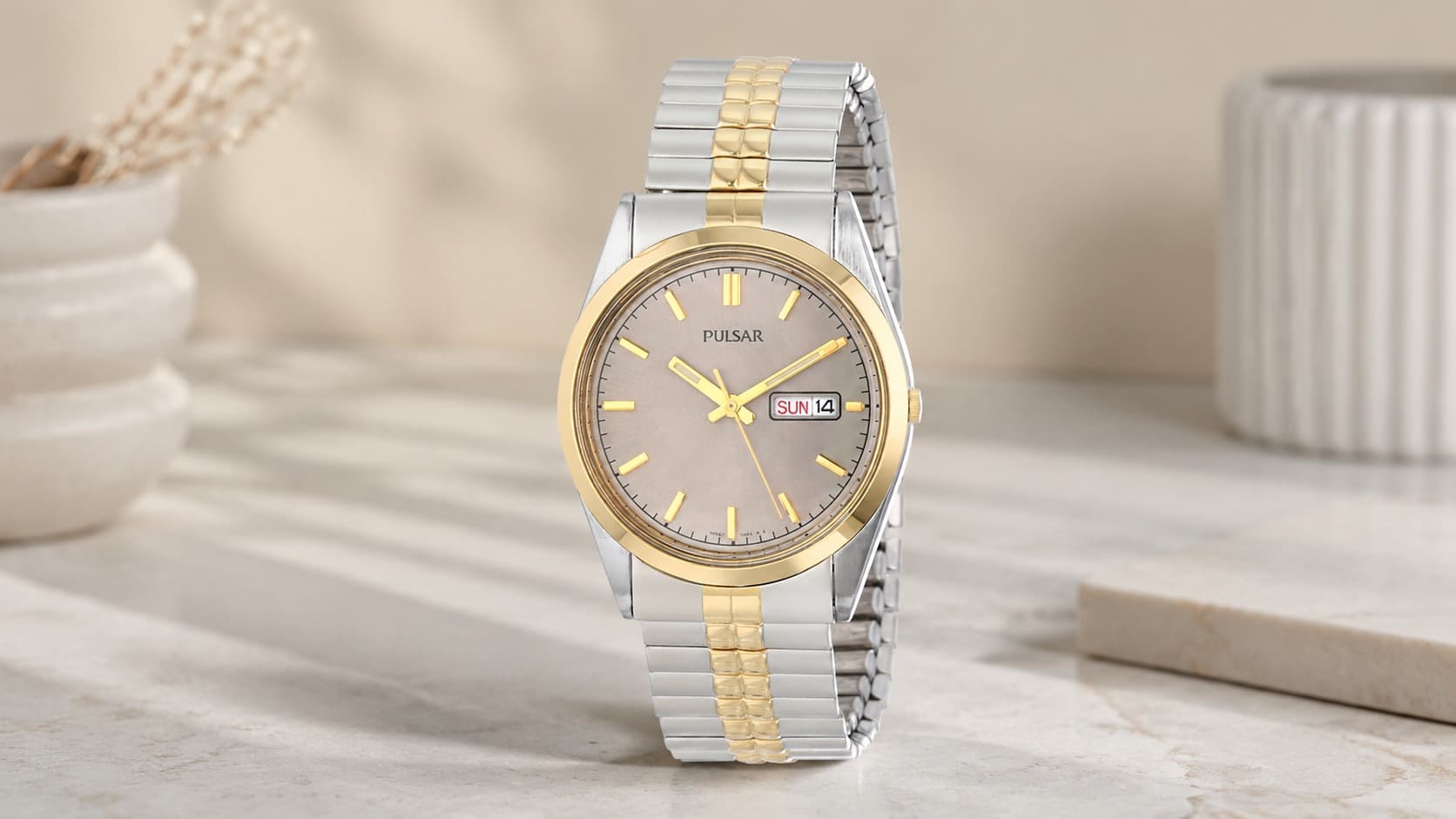
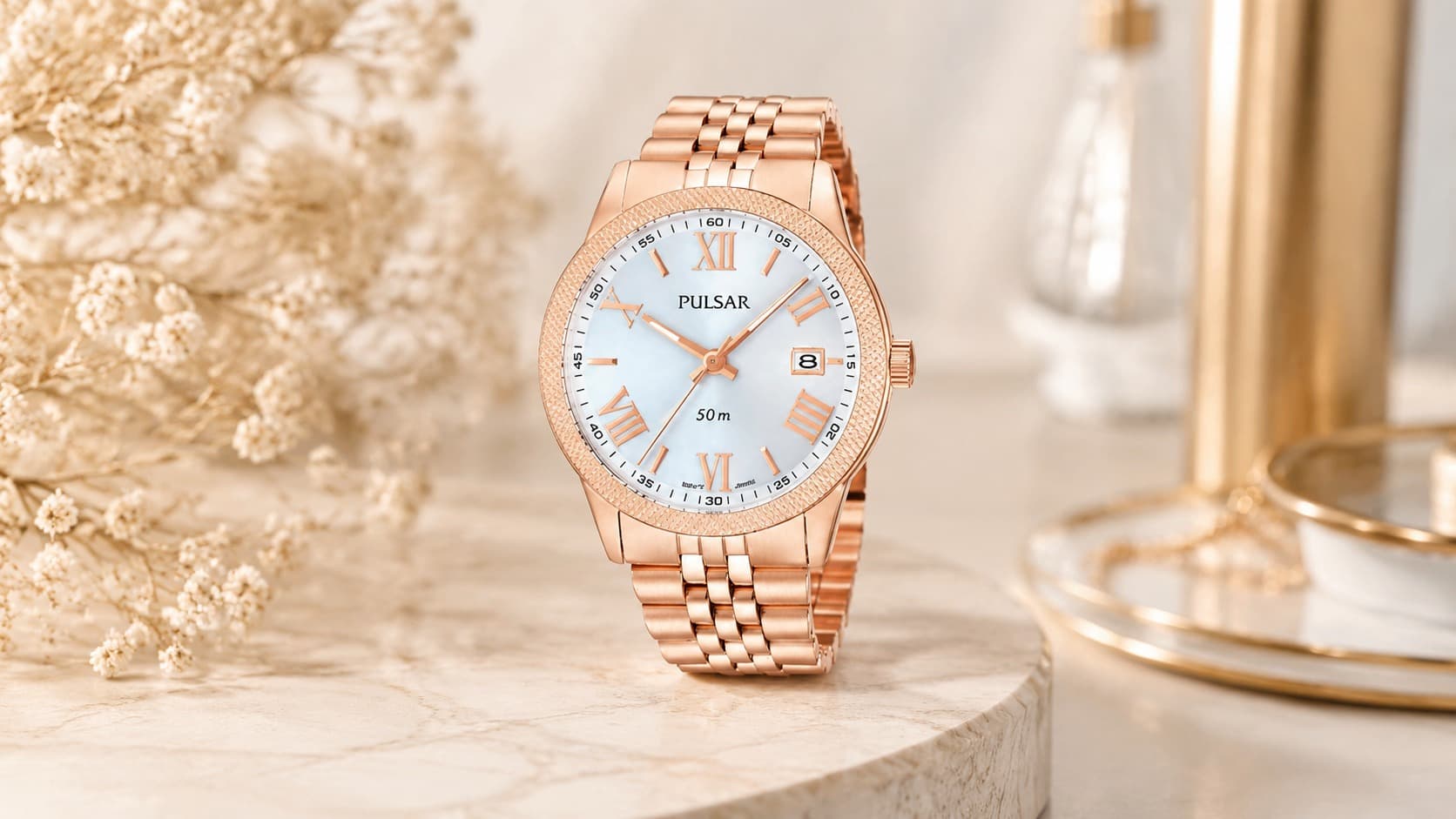
Pulsar’s final years of production were mostly analog quartz timepieces built for everyday, affordable wear rather than digital showpieces. The lineup included dress watches, chronographs, and casual sports-style watches for both men and women, often using stainless steel cases and simple, easy-to-read dials. Some models included chronograph functions, using movements such as the Seiko-based 7T62 quartz caliber found across several Pulsar chronograph designs.
This lineup was a big shift from the brand’s origins, and it made sense given who owned Pulsar. Seiko already had premium digital and smart lines under other names, so Pulsar’s role in the family was to offer solid, no-frills watches at accessible prices. A Pulsar never included cutting-edge display technology the way it did in 1972, but it typically ran on dependable quartz movements backed by a company with over a century of watchmaking experience.
One genuinely interesting holdover from Seiko’s technology labs showed up in Pulsar’s Kinetic watches. A Kinetic movement is a hybrid: it is powered by the natural motion of a wearer’s arm, like an automatic mechanical watch, but that motion charges a tiny internal battery that runs a precise quartz movement instead of a mechanical one. The result is a watch that never needs a battery change under normal use and keeps quartz-level accuracy, and Pulsar was one of the more affordable ways to bring this technology to market.
| Era | What Defined It |
|---|---|
| 1970–1972 | Development of the first LED digital watch under Hamilton |
| 1972–1978 | Peak popularity, celebrity attention, and rapid competitor price cuts |
| 1978–2022 | Ownership under Seiko, shift to affordable analog and quartz watches |
| 2023–present | Brand discontinued and folded into Seiko’s ALBA line |
Is a Secondhand Pulsar Watch Worth Buying?
Pulsar watches were generally reliable for their price, built with the same manufacturing standards and shared parts that Seiko uses across its budget-friendly lines. Buyers should not expect the finishing or in-house movement engineering found in Seiko’s higher-end collections, but Pulsar earned a long track record of holding up well for everyday wear.
Quartz movements are known for being low-maintenance and accurate, and that reliability carries over to secondhand Pulsar watches today. A well-kept example is still a sensible pick for anyone who wants a trustworthy, budget-friendly timekeeper without spending much money.
How to Tell If a Vintage Pulsar Watch Is Valuable
A vintage Pulsar watch is more likely to be valuable if it is an early LED model from the 1970s, especially one with a solid gold case and its original box or papers. Collectors pay the most attention to the earliest P1 and P2 references, since these represent the actual birth of the digital watch category. Condition matters enormously too, since LED displays and old batteries can be delicate compared to a simple mechanical watch.
Anyone trying to identify an old Pulsar should look for the model number stamped on the case back and search for it specifically, since values vary widely between references. A working LED display, an intact gold or gold-filled case, and original documentation can all push the price higher. Watches missing their battery module or with a cracked or foggy display window are usually worth significantly less.
Frequently Asked Questions
Is Pulsar the same company as Seiko?
No, Pulsar was never the same company as Seiko, but Seiko owned the Pulsar brand from 1978 until it discontinued it in 2023. Seiko kept Pulsar as a separate, lower-priced line for over four decades before folding it into its other budget brand, ALBA.
What was the first Pulsar watch called?
The first Pulsar watch was called the Pulsar P1, and it launched in the spring of 1972. It featured an 18-karat gold case, a red LED digital display, and a button that had to be pressed to show the time.
Why did Pulsar stop making LED watches?
Pulsar stopped making LED watches because cheaper LCD displays and falling technology costs made the original LED design outdated by the late 1970s. Competing brands drove prices down so quickly that Pulsar’s expensive, premium approach could no longer compete.
Are old Pulsar watches worth money?
Some old Pulsar watches are worth real money, particularly early 1970s LED models in gold cases with working displays and original packaging. Common later models from the 1980s and 1990s are usually far less valuable, since digital and quartz watches from that era were mass-produced.
Is Pulsar still a working watch brand?
No, Seiko officially discontinued Pulsar in January 2023, folding the brand into its other budget line, ALBA, and confirming that no new Pulsar watches were being made. Existing Pulsar watches are still out there and still wearable, but nothing new carries the Pulsar name today, aside from Hamilton’s own 50th-anniversary tribute watch, the Hamilton PSR, released under Hamilton’s name in 2020 rather than Pulsar’s.
The Bottom Line
The Pulsar P1 proved something no watch had shown before: a wristwatch with a digital display and zero moving parts. That leap made the brand famous within a year and outdated within a decade, since cheaper LED and LCD technology quickly undercut the very novelty that made it valuable. Seiko kept the name running for more than 40 years after buying it in 1978, but folded it into ALBA in 2023, closing the book on Pulsar for good. Anyone researching Pulsar today is really choosing between two different kinds of watch: an early gold LED model worth collecting for its history, or a later Seiko-engineered quartz watch worth owning simply because it still runs well.