Franck Muller is one of the few watch brands that people recognize just from the shape of the case. The curved rectangle, the oversized numbers, and the sometimes-chaotic dial layouts make these watches stand out in a room full of round faces. Because the brand mixes serious watchmaking with bold, almost theatrical design, it tends to confuse first-time buyers who expect a luxury watch to look more like a Rolex or a Patek Philippe. Understanding where Franck Muller came from, and what separates its main model families, explains why the brand still commands such a devoted following despite that unconventional look.
What Is the Franck Muller Watch Brand?
Franck Muller is a Swiss watch brand known for complicated mechanical movements wrapped in unusual, curved cases. The company was founded in Geneva in the early 1990s by watchmaker Franck Muller and businessman Vartan Sirmakes. Muller had trained at watchmaking school in Geneva and spent his early career restoring rare antique pieces, including work tied to Patek Philippe, before designing his own tourbillon movements for private collectors. That reputation for pushing mechanical limits earned him the nickname “Master of Complications,” a title the brand still uses today.
How Franck Muller Got Started
Franck Muller built his reputation before he ever put his own name on a dial. As a teenager, he enrolled in the Geneva watchmaking school and finished coursework meant to take three years in just one. Because of that early talent, established houses trusted him to restore historic pocket watches and to build one-off wristwatches for serious collectors who wanted complications no factory offered at the time.
He launched his own brand in 1991, partnering with Vartan Sirmakes, whose family came from a background in jewelry setting. Their goal was simple: bring pocket-watch-level complications, like tourbillons, perpetual calendars, and minute repeaters, into wristwatches. Franck Muller is credited with helping popularize the tourbillon wristwatch specifically, and the brand has since introduced dozens of “world premiere” mechanical firsts, including the first tri-axis tourbillon in 2004.
In 2002, Muller stepped away from daily involvement in the company he founded, while remaining a shareholder and board member. Vartan Sirmakes has led the business since, and the brand still operates independently from Geneva under the name Franck Muller Geneva.
Even after that change in leadership, the brand kept its founding habit of releasing a “World Premiere” almost every year, a new mechanical first that no other watchmaker has done before. That tradition produced the world’s first tri-axis tourbillon in 2004 and, later, the Aeternitas Mega 4, a watch built with 36 complications and over 1,400 components, which held the title of most complicated wristwatch in the world for roughly fifteen years. That constant push for mechanical firsts is why serious collectors still take Franck Muller seriously, even when the marketing leans hard into flash and color.
What Sets Franck Muller Apart From Other Watches
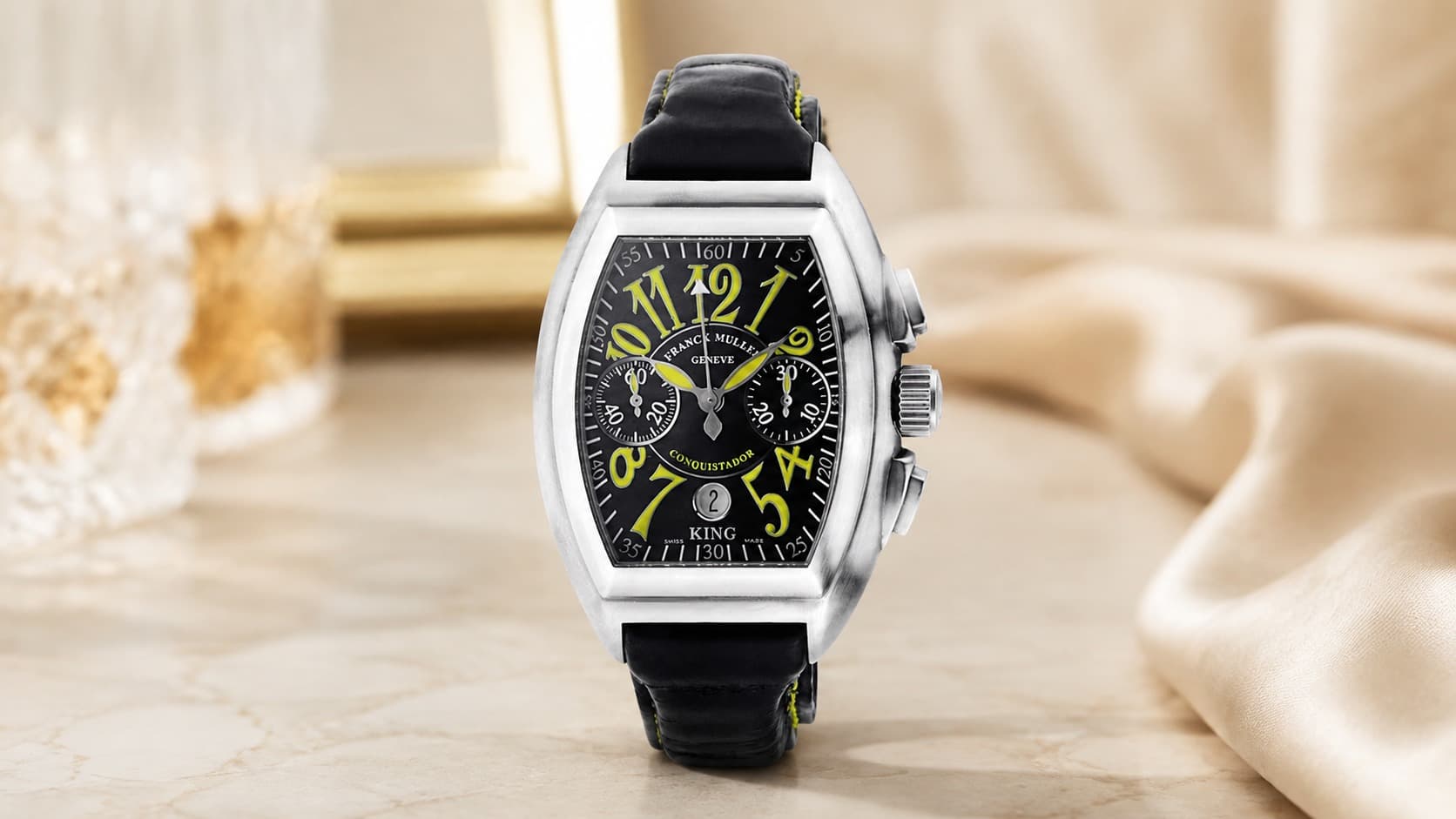
The most obvious difference is the case shape. Franck Muller built its identity around the Cintrée Curvex, a barrel-shaped case that curves to follow the wrist instead of sitting flat like a traditional round watch. That curve isn’t just visual; it changes how the crystal, dial, and movement all have to be engineered to fit the shape.
The Cintrée Curvex shape is often described as the brand’s signature silhouette, and it’s the design most people picture when they hear the name Franck Muller.
A curved case is genuinely harder to build than a round one. The sapphire crystal, the dial, and every gear inside the movement have to be shaped or positioned to work inside a case that bends rather than sits flat, which is part of why Franck Muller built its own manufacturing workshops instead of relying entirely on outside case suppliers, a common approach among independent Swiss brands at that price level.
Beyond the case, the brand leans into bold color and oversized Arabic numerals rather than the understated dials common in traditional Swiss watchmaking. This has made Franck Muller popular with buyers who want a luxury watch that reads as fashion-forward rather than conservative, though it also explains why the brand tends to divide opinion more sharply than quieter, more classic names.
Most Franck Muller watches run on automatic mechanical movements, meaning the natural motion of the wrist keeps them wound. A small number of models, mainly simpler pieces in the Long Island line, use quartz movements instead, which is one reason two watches that look almost identical can carry different prices.
Popular Franck Muller Watch Models
Cintrée Curvex
This is the original Franck Muller shape and the collection most associated with the brand. It comes in dozens of variations, from simple three-hand watches to versions with tourbillons, perpetual calendars, and moon phases. Because the range is so wide, prices for the Cintrée Curvex swing from around 7,000 USD in steel to well over 100,000 USD for gem-set or highly complicated gold versions.
Vanguard
The Vanguard is Franck Muller’s sportier line, launched in 2013 for buyers who want the brand’s design language without the more formal, dressy feel of the Cintrée Curvex. It uses a similar curved case but drops the visible lugs for a smoother, more modern look, and the numerals are polished and applied by hand rather than printed. The strap is built to sit flush against the case rather than attach to lugs, which keeps the curved silhouette running unbroken down the wrist.
The Vanguard family has grown into nine sub-collections, ranging from the simple Classical to Yachting, Skeleton, and Camouflage versions with bolder colorways. Entry-level Vanguard models in stainless steel typically start around 6,000 to 8,000 USD, while gold versions and special editions like the Vanguard Yachting can run past 20,000 USD.
Crazy Hours
This is arguably the brand’s most recognizable complication, first introduced in 2003. Instead of running in order, the hour numerals are scattered around the dial in random positions. The hour hand appears to jump unpredictably, while the minute hand keeps moving normally, so the watch still tells accurate time despite looking broken at first glance.
The trick sits inside the movement, not on the dial. A specially built module resets the hour hand’s position every sixty minutes so it always lands on the correct scrambled numeral, even though the jumps look completely random to anyone watching. Crazy Hours models generally start in the 13,000 to 17,000 USD range in steel and climb from there depending on the case metal and any added complications, with rarer “Totally Crazy” editions commanding a noticeably higher price.
Master Banker
Designed with frequent travelers in mind, the Master Banker displays three time zones at once, using two small subdials alongside the main hour and minute hands. It keeps the Cintrée Curvex shape but adds a genuinely useful travel function. Prices typically range from around 9,000 USD in steel to 18,000 USD or more for gold versions with a moon phase added.
Long Island
The Long Island trades the curved barrel shape for a rectangular case with straighter lines, giving it a more classic, art-deco feel. Introduced in 2000 and conceived by co-founder Vartan Sirmakes, the design borrows from 1920s and 1930s Art Deco architecture, with arched numerals and short lugs that echo the geometric look of that period.
It’s often chosen by buyers who like the brand’s craftsmanship but want a slightly quieter, more formal look than the Cintrée Curvex or Vanguard offer. Prices sit close to the Cintrée Curvex range, generally starting around 7,000 to 9,000 USD in steel and rising with gold cases, diamonds, or added complications.
How Much Do Franck Muller Watches Cost?
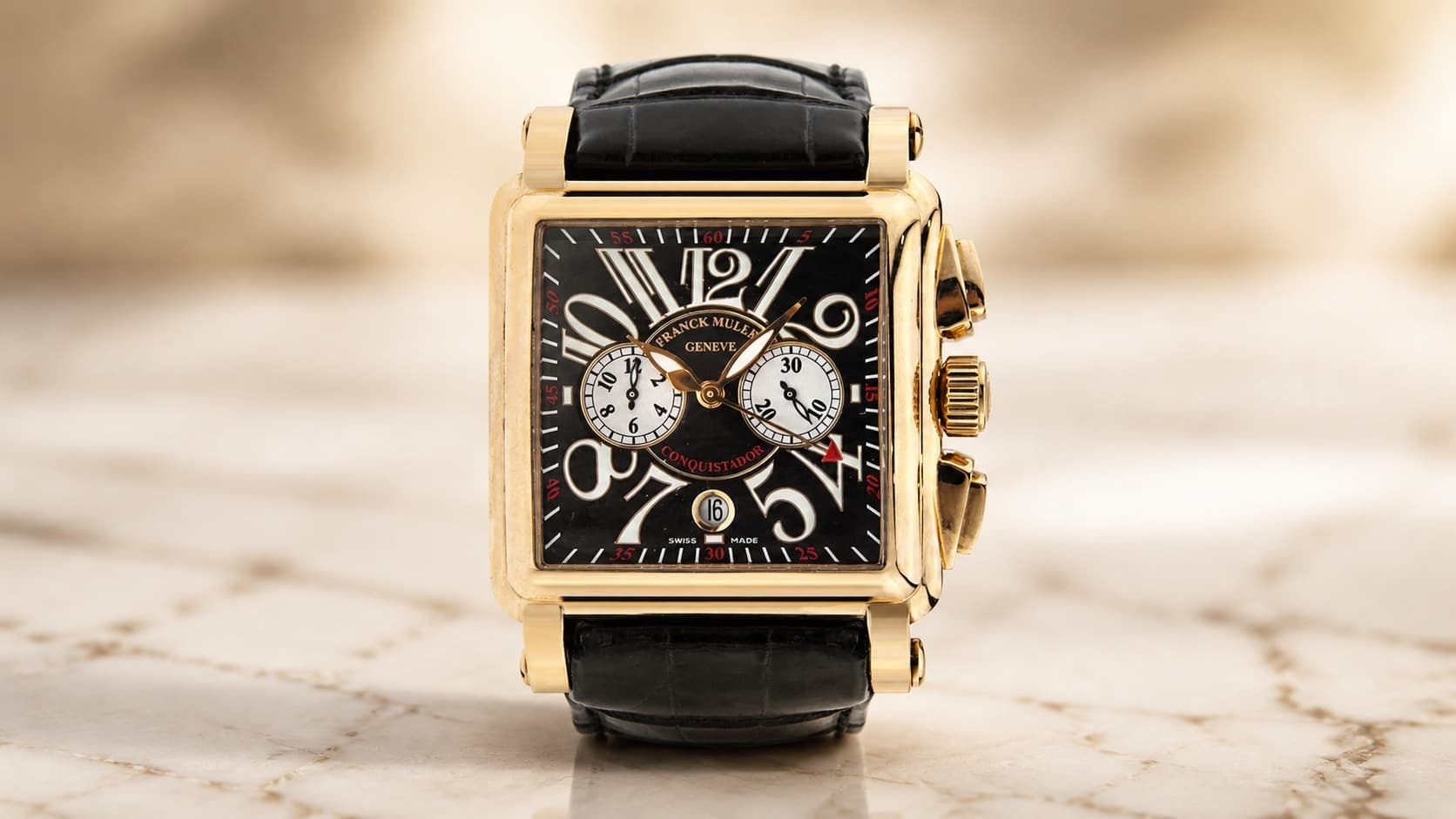
Most Franck Muller watches fall somewhere between 6,000 USD and 50,000 USD, with limited editions, tourbillons, and heavily gem-set pieces going well beyond that. The price mainly depends on three things: the case material, the complications inside the movement, and how limited the specific reference is.
| Price Range (USD) | Typical Models |
|---|---|
| $6,000 – $12,000 | Steel or titanium Vanguard and entry Cintrée Curvex models |
| $12,000 – $25,000 | Crazy Hours, Master Banker, and gold-cased basics |
| $25,000 – $60,000 | Complicated pieces with moon phase, chronograph, or heavy diamond setting |
| $60,000+ | Tourbillons, tri-axis complications, and limited editions |
Because Franck Muller produces watches in relatively small numbers and sells through selective dealers, prices can vary more between retailers than they do for larger brands like Omega or Tissot. The brand also releases many dial colors, strap options, and small-batch variations of the same base model, so two watches that look almost identical from a distance often carry noticeably different price tags once the exact reference number is checked.
Should You Consider a Franck Muller Watch?
A Franck Muller makes sense for someone who wants a genuinely complicated Swiss mechanical watch but doesn’t want it to look like everyone else’s. The brand’s in-house movements and long history of mechanical firsts, including the first visible tourbillon on a wristwatch, mean the watchmaking underneath the bold designs is legitimate, not just decoration.
That said, buyers who prioritize resale value above design should know Franck Muller doesn’t hold value in the secondary market the way Rolex or Patek Philippe do. Because the brand is defined by dramatic, of-the-moment styling rather than restrained classic design, it appeals strongly to some collectors and not at all to others, which affects demand when reselling.
Rare pieces are the exception to that rule. Limited editions, genuine complications like tourbillons and triple time zone movements, and models tied to a specific collaboration tend to hold their value far better than the more common three-hand versions in the catalog. For collectors focused on resale, the rarer end of the lineup is the more reliable route, rather than the entry-level Vanguard or Cintrée Curvex.
Frequently Asked Questions
Is Franck Muller a luxury brand?
Yes. Franck Muller is a Swiss luxury watchmaker known for complicated in-house movements and distinctive curved cases, with most models priced from around 6,000 USD up to well over 100,000 USD for high-complication or gem-set pieces.
Who founded Franck Muller?
The brand was founded in Geneva in the early 1990s by watchmaker Franck Muller and businessman Vartan Sirmakes, who still leads the company today after Muller stepped back from daily operations in 2002.
What does Crazy Hours mean on a Franck Muller watch?
Crazy Hours is a complication where the hour numerals sit in a scrambled, non-sequential order on the dial, so the hour hand appears to jump around unpredictably while the minute hand moves normally and the time stays accurate.
Are Franck Muller watches handmade?
Franck Muller develops and produces its complications, including tourbillons and perpetual calendars, in its own Geneva workshops, combining machine-made components with substantial hand-finishing and hand-assembly, which is standard practice among high-end Swiss watchmakers.
Do Franck Muller watches hold their value?
Generally, no, not as strongly as brands like Rolex or Patek Philippe. Franck Muller’s bold, design-forward pieces depreciate more on the resale market because demand depends heavily on personal taste rather than steady collector consensus.
Conclusion
Franck Muller earned its place in watchmaking by doing something genuinely difficult: fitting pocket-watch-level complications into a wristwatch, then wrapping them in a shape nobody else was using. From the curved Cintrée Curvex to the sportier Vanguard and the deliberately confusing Crazy Hours dial, the common thread across every model is a brand that treats mechanical watchmaking as a form of self-expression rather than a formula to repeat. Case shape and complication remain the two factors that define the brand’s identity, and together they explain both the wide price range across the catalog and the loyalty Franck Muller continues to command among collectors who want their watch to look like nothing else on the market.