Finland has fewer than six million people, no long history as a global luxury capital, and winters so dark that the sun barely rises for weeks at a time. And yet, out of that quiet, forested, sauna-loving country comes one of the most interesting small watch scenes in the world. Finnish watchmakers don’t copy the clean, safe minimalism associated with Sweden or Denmark. Instead, they lean into local myths, wartime history, wood from their own forests, and a stubborn cultural idea called sisu. The result is a group of brands that range from a century-old family name to a one-man workshop making watches so precise that Switzerland itself takes notice.
| Brand | Founded | Known For | Rough Price Tier |
|---|---|---|---|
| Suunto | 1936 | Compasses, dive computers, GPS sports watches | Budget to mid-range |
| Leijona | 1907 | Finland’s oldest and best-selling watch name | Budget, with a premium Heritage line |
| Sarpaneva | 2003 | Handmade, gothic-inspired art watches | High-end, several thousand dollars and up |
| S.U.F Helsinki | 2004 | Sisu-driven watches inspired by Finnish history | Mid to high-end, a few thousand dollars |
| Kari Voutilainen | 2002 | Independent, award-winning haute horlogerie | Ultra high-end, tens of thousands of dollars |
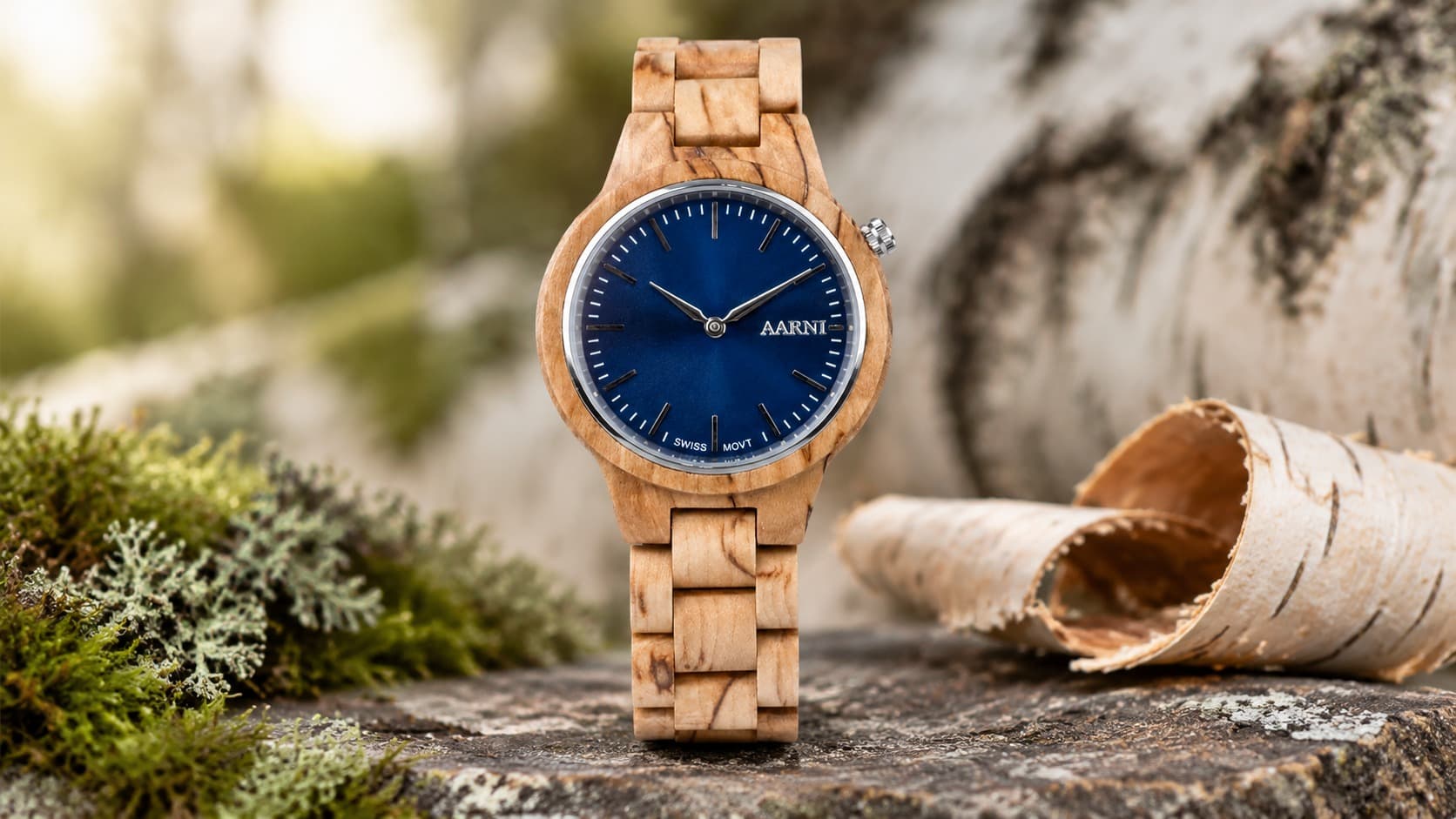
| Aarni | 2015 | Wooden watches made from Finnish curly birch | Budget to mid-range |
| Ilmar, Rohje, Aittokoski | Various | Small-batch, materials-driven independent brands | Mid-range |
Why Finland Has Such a Strong Watch Industry
Finland builds watches around its own culture instead of copying Swiss tradition. Most Nordic watch brands chase a clean, minimal Scandinavian look. Finnish brands often go a different way, pulling ideas from forests, folklore, military history, and the hardy national mindset called sisu.
Sisu roughly means grit, stubbornness, and the will to keep going when conditions turn brutal. Finns often connect the word to their long, dark winters and to moments in their history when the country had to defend itself with limited resources. Several Finnish watch brands mention sisu directly when explaining why their watches look and feel the way they do. It shows up as tough materials, bold shapes, and design references to submarines, fighter planes, and old folk stories instead of yacht clubs or Alpine peaks.
There’s also a more practical reason Finland punches above its weight, and it comes down to a single school. The Finnish School of Watchmaking, known locally as Kelloseppäkoulu, was founded in Lahti in 1944 and later moved to Espoo. It only takes in a small number of students each year, historically as few as 15 to 30, and the training is famous for teaching students to make their own tools before they ever touch a finished movement. That reputation runs deep enough that major Swiss houses, Rolex and Patek Philippe among them, have reportedly scouted talent out of Kelloseppäkoulu ahead of graduation. Both Kari Voutilainen and Stepan Sarpaneva, two of the biggest names in Finnish watchmaking, came out of this same small school.
Suunto: Finland’s Famous Sports Watch Brand
Suunto exists because a Finnish surveyor got tired of compasses that wobbled and gave bad readings. Tuomas Vohlonen came up with a way to enclose a compass needle in a sealed capsule of liquid, which kept the needle steady and easy to read even when the person carrying it was moving fast. He and his family founded the company in 1936, and the design went into production as a wrist-mounted field compass.
That compass turned out to be more than just accurate. Suunto tells the story of a Finnish soldier during the Winter War in 1939 who was hit by enemy fire while carrying one of these compasses on him, and the compass itself absorbed the impact instead of him. That kind of story helped build Suunto’s reputation for toughness, which the brand still leans on today in its marketing. Vohlonen died in 1939, only three years after founding the company, and his widow kept the business running through its early years. From there, Suunto branched out from compasses into dive computers, altimeters, and eventually GPS sports watches worn by hikers, divers, and athletes around the world.
Ownership of Suunto has moved around quite a bit for a brand built on the idea of steady direction. The Finnish sporting goods group Amer Sports bought Suunto in 1999, and Amer itself was later bought by a consortium led by the Chinese company ANTA Sports in 2018. In 2022, Amer sold Suunto specifically to Liesheng, a Chinese consumer electronics company, while keeping its other outdoor brands. Through all of that, Suunto’s design and manufacturing has stayed rooted in Vantaa, Finland, which is still where the company is headquartered today.
Suunto’s whole identity comes from one idea: a tool has to survive the exact conditions it was built for, whether that’s a snowy forest, a deep dive, or a battlefield.
Leijona: Finland’s Oldest Watch Brand
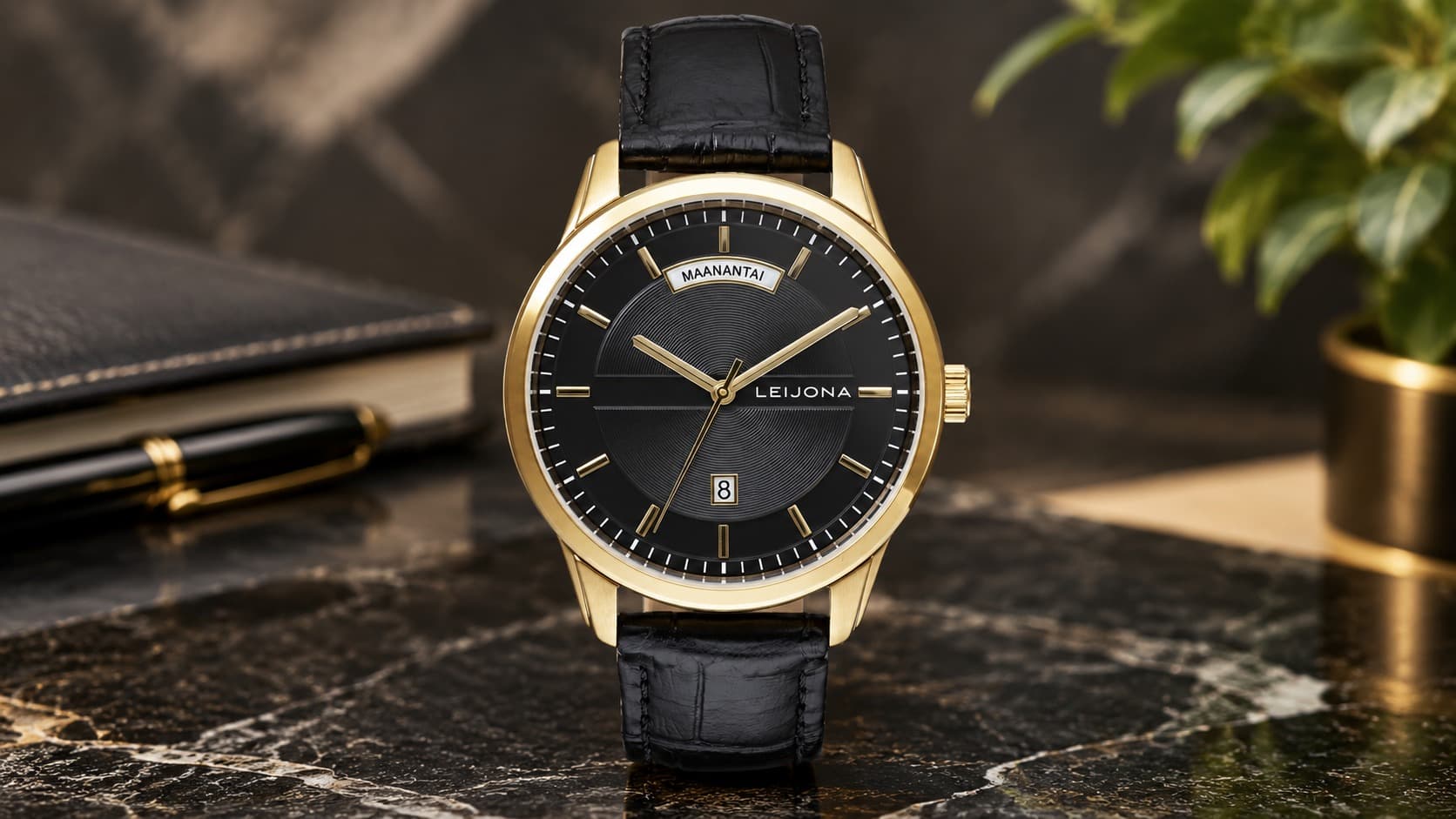
Leijona has been putting watches on Finnish wrists since before the country even had its independence. The brand traces back to 1907, when Johan Werner Lindroos started importing watches into Finland through the city of Tampere. The company has stayed under one family’s control since 1919, run today by the Perkko family, which makes it one of the longest continuously family-run watch brands anywhere in the world.
For most of its history, Leijona watches were made abroad rather than in Finland itself. They were originally manufactured in Switzerland, then later mostly in Japan and China, which kept prices low and helped Leijona become a household name across the country. That accessibility is part of why Leijona built such a huge catalog, with several hundred different watch models covering men, women, and children, including wristwatches, pocket watches, and even necklace watches.
In recent years, the brand has pulled its story back toward its Swiss roots. Leijona reintroduced Swiss-made watches, including a high-end Heritage collection developed together with the celebrated Finnish watchmaker Kari Voutilainen, tying the brand’s earliest history to one of the biggest names in modern watchmaking. Today, Leijona is considered the most popular watch brand in Finland by sales, even as most other Finnish brands stay small and independent.
Sarpaneva and S.U.F Helsinki: Handmade Finnish Watches
Stepan Sarpaneva makes watches that look like nothing else on the market, and that’s on purpose. Born in Turku in 1970 to a family of designers and craftsmen, he trained at the Finnish School of Watchmaking and later studied further in Switzerland. He then spent roughly a decade working for major Swiss watchmaking houses, including Piaget and Parmigiani, refining complicated movements before moving back home.
In 2003, Sarpaneva returned to Finland and founded his own company inside an old cable factory in Helsinki, where every watch is still individually handcrafted. His pieces are known for dramatic, almost gothic details, including a signature moon-phase display carved with an expression that shifts between a grin and a scowl depending on the angle. A year later, in 2004, he launched a second, more affordable sister brand called S.U.F Helsinki. Where the main Sarpaneva line is art-first, S.U.F is built around the idea of sisu, with watches named after and inspired by Finnish history, including a wartime submarine and a famous motorcycle racer from Finland’s past.
S.U.F watches typically sell for a few thousand dollars, which is significantly more attainable than Sarpaneva’s main line, and they use Swiss automatic movements rather than fully in-house ones. The brand has also had some fun with its Finnish identity, including a limited-edition collaboration built around the Moomin characters created by Finnish author Tove Jansson. Both brands remain proudly small-batch, with Sarpaneva himself still hand-finishing much of the work in his Helsinki workshop.
Kari Voutilainen: Finland’s Most Famous Watchmaker
Kari Voutilainen is proof that a small, cold town in the Arctic Circle can still produce world-class watchmaking talent. Born in 1962 in Rovaniemi, Finland, he now lives and works in the small Swiss village of Môtiers, and he’s widely considered one of the greatest living watchmakers.
Voutilainen learned his craft at home first, graduating from the Finnish School of Watchmaking before heading to Switzerland for advanced training. He then spent close to a decade at a major Swiss workshop restoring rare and complicated antique watches, a job that sharpened his eye for detail to an extreme degree. In 2002, he started his own independent workshop, building small numbers of handmade watches rather than chasing mass production, and in 2005 he introduced the world’s first decimal repeater, a chiming mechanism that sounds hours, then ten-minute intervals, then minutes.
His watches have won the Grand Prix d’Horlogerie de Genève, essentially the Oscars of the watch world, more times than almost any other independent watchmaker working today. His connection to home never disappeared either. He worked with Leijona, Finland’s oldest brand, to create their Heritage collection, linking Finland’s most celebrated independent watchmaker to Finland’s oldest watch company.
Aarni Watches: Made from Finnish Wood
Aarni turns Finnish forests into wristwear. The brand started with three childhood friends from the small village of Klaukkala who grew up sneaking into the nearby woods together as kids. Years later, catching up in a Helsinki sauna as adults, they realized they all shared a passion for watches, and that conversation turned into a company.
Founded in 2015, Aarni builds its watches primarily from Finnish curly birch, along with other woods like oak, alder, and walnut, and some sustainably sourced exotic woods from further afield. The brand’s name comes from an old Finnish word for a wild, untouched forest, which fits its focus on natural materials over polished metal. The wood is lightly oiled rather than heavily lacquered, which lets it age and develop character over time instead of just sitting under a layer of shine.
Aarni’s watches have earned the Design from Finland label, a mark that recognizes genuine Finnish design and manufacturing, and the brand has grown quickly by leaning into sustainability rather than traditional luxury branding. It has since expanded beyond watches into wooden sunglasses and elk leather goods, keeping the same nature-first idea across every product it makes.
More Finnish Watch Brands to Know
Finland’s watch scene doesn’t stop at the big names. A handful of tiny, independent labels show just how varied the country’s approach really is.
- Ilmar builds watches around Finnish craftsmanship as much as timekeeping, pairing hand-forged damask steel cases with dials made from Finnish birch and straps cut from Finnish reindeer leather.
- Rohje was started by four friends and takes its name from a Finnish word meaning to be brave enough to seize a moment, with reindeer leather straps as a signature touch.
- Aittokoski was founded by Dr. Timo Aittokoski, an engineer with a background designing motorcycles and snowmobiles, and its collections lean toward bold, futuristic case shapes, including a dedicated dive watch rated to 30 bar of pressure.
Neither of these brands makes large numbers of watches, but all of them follow the same pattern found across Finnish watchmaking: small teams, local materials, and a story that actually means something to the people who started the company.
What All Finnish Watch Brands Have in Common
Even though Suunto, Leijona, Sarpaneva, and Aarni look nothing alike, a few threads connect almost every Finnish watch brand.
- A connection to nature. Wood, reindeer leather, and Arctic themes show up again and again, even in brands that don’t make outdoor gear.
- Small teams instead of factories. Outside of Suunto and Leijona, most Finnish brands are run by a handful of founders rather than large corporations.
- Sisu as a design philosophy. Toughness, stubbornness, and doing things the hard way on purpose come up constantly in how these brands describe themselves.
- History as inspiration. Wars, folklore, and national symbols appear on dials and in model names far more often than in most other countries’ watch industries.
- One shared training ground. Several of Finland’s most respected watchmakers, including Voutilainen and Sarpaneva, studied at the same small school in Espoo.
Frequently Asked Questions
Does Suunto only make sports watches, or does it make regular watches too?
Suunto started with compasses and later expanded into altimeters, thermometers, and general timepieces, eventually building everyday watches alongside its sports and diving models. Today the brand is best known for GPS sports watches and dive computers rather than dress watches, so it fits outdoor and fitness use far better than formal wear.
Are Finnish watches expensive?
It depends heavily on the brand. Leijona and Aarni sit at more accessible price points, S.U.F Helsinki and similar independent brands usually run a few thousand dollars, and Sarpaneva’s main line along with Kari Voutilainen’s work is handmade in small numbers and priced accordingly, often reaching into the tens of thousands of dollars for Voutilainen’s most complex pieces.
What does sisu mean, and why do so many Finnish brands mention it?
Sisu describes a mix of grit, stubbornness, and quiet endurance that Finns often connect to their history of surviving harsh winters and wartime hardship. Watch brands like S.U.F Helsinki use the word to explain why their watches favor rugged, no-nonsense design over decoration.
Is Kari Voutilainen the same company as Leijona?
No, they’re separate companies. Voutilainen runs his own independent workshop in Switzerland, but he collaborated with Leijona, Finland’s oldest watch brand, to create a Heritage collection as a tribute to Finnish watchmaking history.
Are wooden watches like Aarni’s actually durable?
Yes, when the wood is properly treated. Aarni lightly oils its wood rather than heavily coating it, which lets the material age naturally while still protecting it from daily wear. Most wooden watch brands, including Aarni, pair the wood case with a standard water-resistant movement housing, so the wood is decorative and structural rather than something water sits directly against.
Conclusion
Finland’s watch industry proves that a country doesn’t need a massive population or centuries of royal patronage to build something worth paying attention to. What connects Suunto’s life-saving compass, Leijona’s century of family ownership, Sarpaneva’s gothic art pieces, Voutilainen’s globally awarded craftsmanship, and Aarni’s forest-born wooden cases is a refusal to just copy what already exists elsewhere. Each brand took a distinctly Finnish idea, whether that’s sisu, nature, or sheer independence, and built a watch around it, and more than a few of the people behind these brands even trained at the very same small school in Espoo. That’s a rare thing in an industry where so many brands look like slight variations of each other.