Every time someone glances at their wrist to check the time, they’re using an idea that took about 400 years to fully catch on. Watches didn’t start on the wrist at all — they started as awkward little machines carried in a pocket or hung from a chain, and for centuries, strapping one to your wrist was considered strange, even a little embarrassing, for a man to do. The path from those first hand-built pocket watches to the wristwatch on your arm today runs through royal gift-giving, a stubborn Brazilian aviator, the mud of World War I trenches, and a Japanese company that nearly wiped out the entire Swiss watch industry. It’s a story about how a tool for telling time became one of the most personal objects people own.
How the Pocket Watch Was Invented
The earliest portable watches showed up in Germany in the early 1500s, when a locksmith figured out how to shrink a clock down small enough to carry. Before that, if you wanted to know the time, you looked at a church tower or a town clock. Nobody owned a personal one.
That locksmith was Peter Henlein of Nuremberg, and history often credits him as the first person to build a small, spring-powered timepiece a person could actually carry around, sometime around 1500 to 1510. His early watches weren’t round and elegant like the pocket watches people picture today. They were boxy, drum-shaped little devices, and they became known as “Nuremberg eggs.”
They didn’t even go in a pocket at first. Men’s clothing at the time didn’t really have pockets built for something like this, so these early watches were worn as a pendant on a chain around the neck, more like jewelry than a practical tool.
Historians today are a little more careful about handing Henlein all the credit. Modern research suggests that the ability to build a wearable timepiece was worked out independently by several clockmakers’ workshops across Europe around the same period, rather than being the invention of one single genius. Still, Henlein remains the name most associated with the breakthrough, and it’s not hard to see why it mattered so much: for the first time, a person could own their own personal measurement of time instead of relying on a public clock.
Before the 16th century, timekeeping was public property. After it, time became something you could put in your pocket.
By the 1600s, watchmakers had smoothed out those boxy shapes into the rounder pocket watches most people recognize today. Pocket watches went on to remain the standard for both men and women of means for the next 300 years.
How Wristwatches Started as Women’s Jewelry
For most of watchmaking history, strapping a timepiece to your wrist was seen as something only women did, and it wasn’t taken seriously as a tool for men. The earliest wrist-worn watches were fragile, decorative pieces, and that reputation stuck around for centuries.
The very first watch specifically built to be worn on the wrist is generally traced back to 1810, when watchmaker Abraham-Louis Breguet made one on commission for Caroline Bonaparte, Queen of Naples. It was a beautiful, jeweled piece, closer to a bracelet than a tool. Throughout the 1800s, similar wrist-worn pieces, called “wristlets,” were made almost exclusively for women, often as fashion pieces rather than serious instruments for keeping time.
Men, meanwhile, stuck firmly with pocket watches, and part of the reason wasn’t just fashion. It was accuracy. A pocket watch sat still, upright, and protected inside a pocket, which kept its delicate mechanism steady, while a wristlet moved constantly with every gesture of the wearer’s hand. Early movements simply weren’t built to handle that kind of constant motion without losing accuracy, so for a long time the wristwatch had a real, practical strike against it, not just a social one.
How Soldiers Started Wearing Wristwatches
The first hints that a wristwatch could be genuinely useful, not just decorative, came from soldiers on horseback, long before the World Wars. British officers stationed on India’s northwest frontier began strapping cheap pocket watches to their wrists using leather wristlet holders in the early 1880s, simply because it was faster to check the time while riding than to dig a watch out of a pocket.
Around the same time, in 1880, Girard-Perregaux is credited with producing one of the first series of purpose-made wristwatches, supplied to German naval officers. These were small, practical experiments rather than a fashion movement, but they planted an important idea: that a watch worn on the wrist had a real job to do in situations where hands needed to stay free. That idea would explode a few decades later.
Cartier and the First Men’s Wristwatch
Ask a watch historian when the modern men’s wristwatch was born, and most will point to a single friendship: the one between a Paris jeweler and a Brazilian aviator. In 1904, Louis Cartier designed a watch for his friend Alberto Santos-Dumont, a pioneering aviator who needed to check the time without letting go of his plane’s controls.
Pulling a pocket watch out mid-flight simply wasn’t an option, so Cartier’s solution was a flat, square-cased watch with a leather strap that sat comfortably against the wrist. It was a design so functional and elegant that it’s still recognizable today. Santos-Dumont wore the watch for years, including during a famous 1906 flight, before Cartier finally made it available to the public in 1911.
The design details Cartier chose weren’t random. The square case with visible screws around the bezel, the Roman numerals, and the blued steel hands were meant to be legible at a glance and rugged enough for real use, not just pretty. This watch, now known as the Cartier Santos, is widely regarded as the piece that helped establish wristwatches as a serious alternative to pocket watches rather than jewelry for women.
Cartier’s watch mattered because it proved a wristwatch could be masculine, functional, and stylish all at once. Even so, it stayed a rare, expensive novelty for the wealthy for another decade, and most men still reached for a pocket watch out of habit. It took a much larger, much darker event to make the wristwatch the default for everyone else.
How World War I Made Wristwatches Popular
If one event is responsible for turning the wristwatch from a niche item into standard equipment for men everywhere, it’s the First World War. Soldiers discovered the hard way that a pocket watch is a terrible tool in a trench.
A pocket watch meant fumbling through a coat with cold, gloved fingers just to flip open its cover, and once it was out, the dial was nearly unreadable in the dark. When timing an attack could mean the difference between life and death, that delay was more than an annoyance.
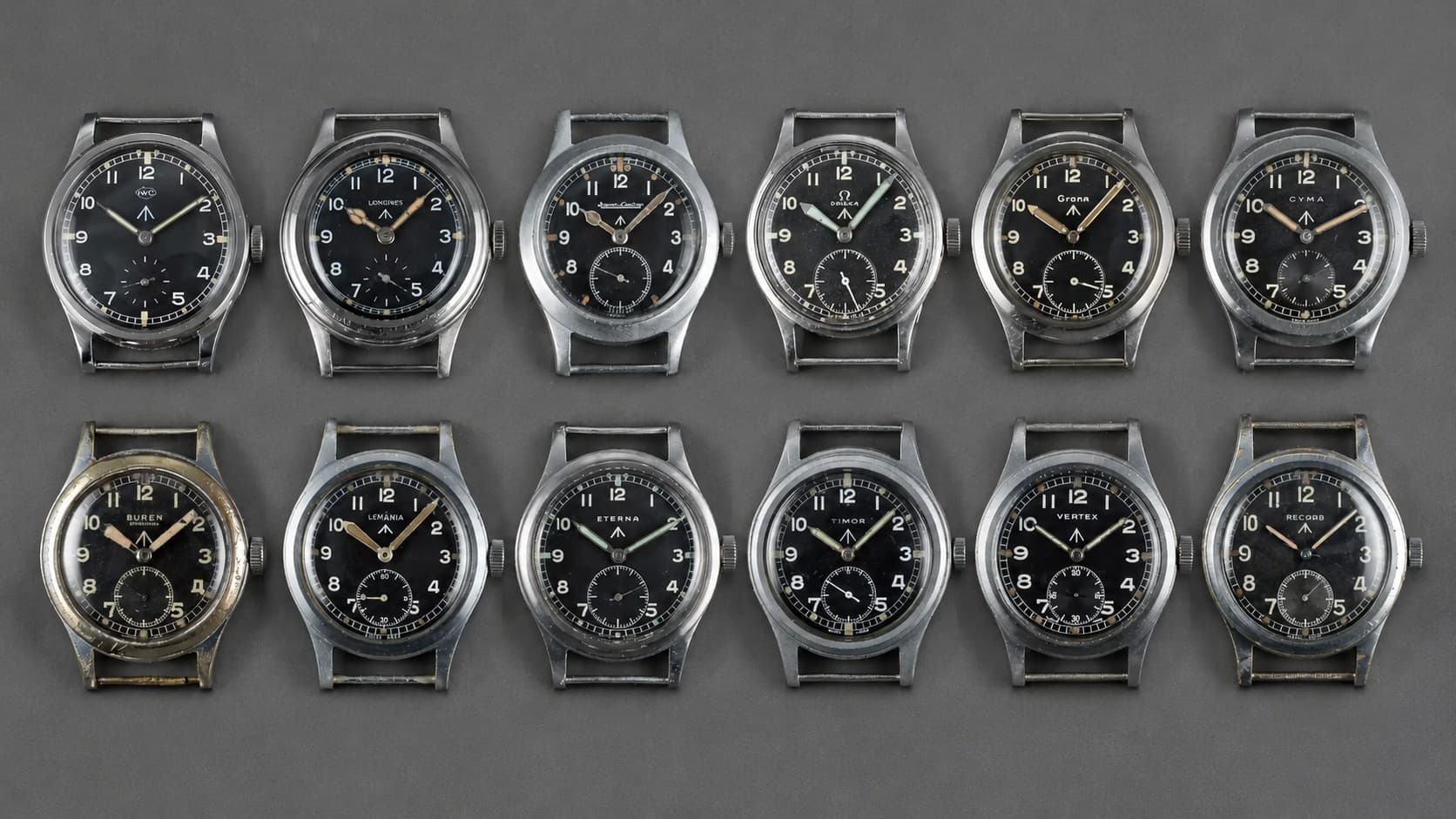
Because artillery barrages and troop movements needed to be precisely synchronized, and aviators also needed both hands free, the old pocket watch had to go. The result was the “trench watch,” sometimes just called a wristlet. Many of these were literally converted pocket watches: watchmakers soldered wire lugs onto existing cases so a strap could be attached, sometimes with long straps designed to fit over the sleeve of a soldier’s greatcoat.
Manufacturers also added practical upgrades that hadn’t mattered as much before:
- Shrapnel guards — metal grilles that protected the fragile glass crystal from damage
- Luminous radium paint on the hands and numerals, so soldiers could read the time in total darkness during night operations
- Relocated winding crowns, moved from the 12 o’clock position typical of pocket watches to the 3 o’clock position that’s now standard on almost every wristwatch made
By 1917, the British War Department was actively procuring and issuing wristlets to its forces, and companies including Omega and Longines were manufacturing wristwatches specifically for military use across multiple countries. When millions of soldiers came home in 1918 still wearing the watches that had helped keep them alive, the old idea that wristwatches were only for women quietly disappeared. By the war’s end, trench watches had become a symbol of courage, and the mainstream market for men’s wristwatches opened up almost overnight.
How Quartz Watches Changed the Industry
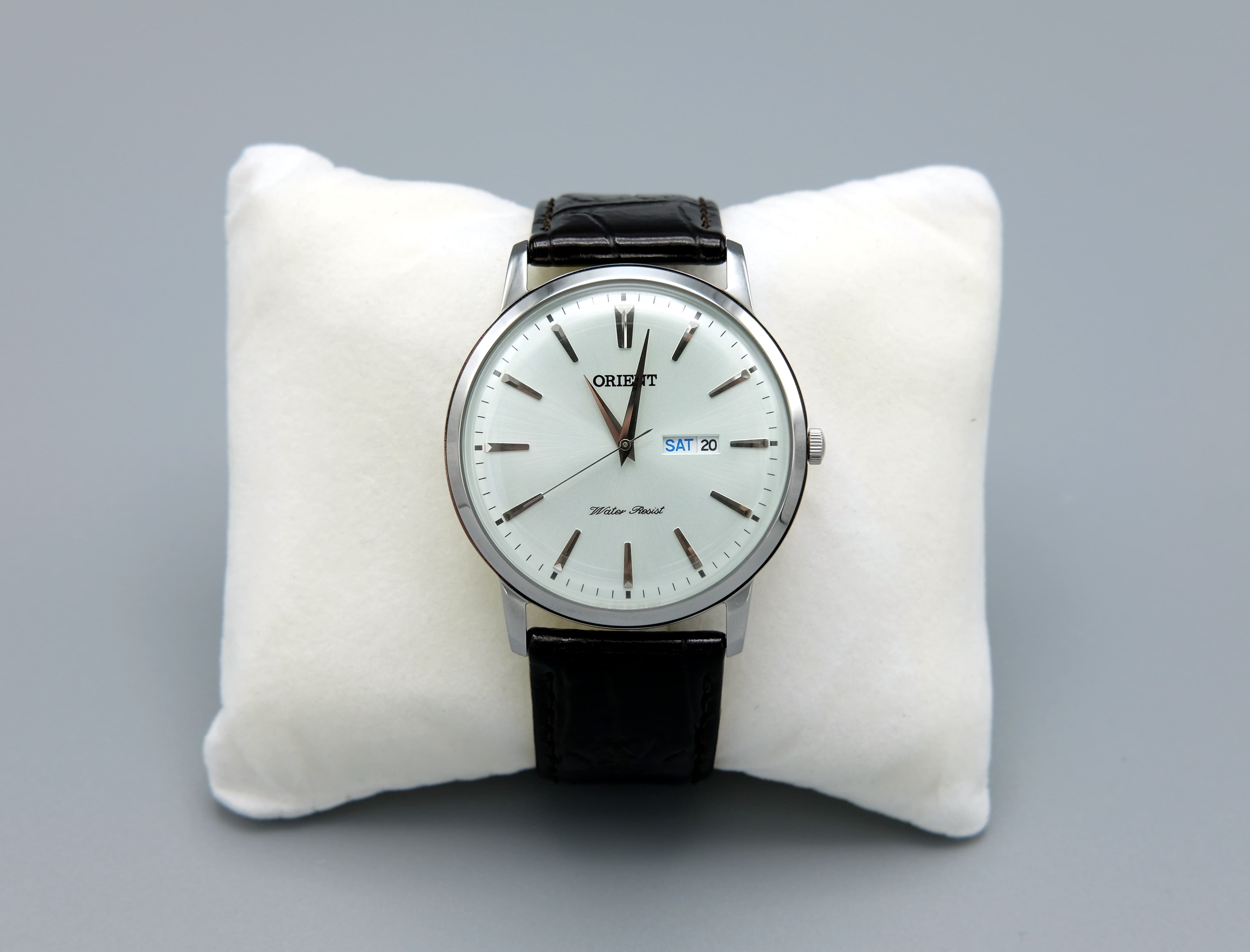
Wristwatches had won the argument over pocket watches by the 1920s, but the story of how watches work wasn’t finished. For the next several decades, watches ran entirely on mechanical movements: tiny systems of springs, gears, and a balance wheel that swings back and forth to regulate time. That changed completely on Christmas Day, 1969.
On December 25, 1969, after roughly a decade of quiet research, Seiko put the Astron 35SQ on sale in Tokyo, the first wristwatch in the world powered by a quartz crystal instead of a mechanical balance wheel. That tiny sliver of vibrating crystal let it hold time with a precision no mechanical watch could match, keeping it accurate to within about a hundredth of the error rate typical of the mechanical watches sold at the time. It wasn’t a cheap gadget, either: the launch price was roughly equivalent to buying a new Toyota Corolla, though the underlying technology would get dramatically cheaper to produce within just a few years.
That combination of superior accuracy and falling cost triggered what’s now called the “quartz crisis,” a stretch of years in which Swiss watchmaking was gutted from the inside. Roughly two out of every three jobs in the Swiss watch industry vanished over the following decade and a half, as cheaper, more accurate quartz watches from Japan and elsewhere pulled customers away from mechanical brands almost overnight. What makes the story sting a little more is that Swiss engineers weren’t caught off guard technically. A Swiss lab had already built its own quartz prototype, the Beta 21, roughly two years before the Astron went on sale, but the industry moved slowly on turning that research into a real product, and Seiko simply got there first.
Mechanical watchmaking didn’t disappear, but it had to reinvent itself as a craft and luxury pursuit rather than the only practical option. That’s largely the role fine mechanical watches still occupy today. It’s also why “quartz” and “mechanical” now get treated as two different categories with different price logic: one is prized for accuracy and affordability, the other for the craftsmanship of hundreds of tiny hand-finished parts working together.
Comparing Pocket Watches and Wristwatches
Laid out side by side, the differences between these two formats aren’t really about looks — they’re about who wore them, why, and what changed the balance of power between the two.
| Pocket Watch | Wristwatch | |
|---|---|---|
| Era of dominance | 1500s–early 1900s | 1920s–present |
| Worn by | Primarily men (status symbol) | Originally women, then everyone |
| Positioning | Vest or trouser pocket, on a chain | Strapped directly to the wrist |
| Key advantage | Protected, stable, more accurate historically | Hands-free, fast to check |
| Turning point | — | WWI trench warfare, 1914–1918 |
Notice that “accuracy” sits on the pocket watch’s side of the table for most of history — that’s the part people usually get backwards. The wristwatch didn’t win because it kept better time. It won because it solved a practical problem pocket watches couldn’t: reading the time quickly, in the dark, with both hands already busy. Once quartz movements arrived in 1969, the accuracy gap disappeared too, and the wristwatch’s advantage became total.
Frequently Asked Questions
Who really invented the wristwatch?
No single inventor gets full credit. Abraham-Louis Breguet built one of the earliest wrist-worn timepieces in 1810 for Caroline Bonaparte, but for most of the 1800s these were seen as decorative jewelry for women. The wristwatch as a serious, functional tool for everyone developed gradually, shaped by military use in the 1880s, Cartier’s 1904 Santos, and finally World War I.
Why did men avoid wristwatches for so long?
Wristwatches were considered feminine and impractical. Early wrist-worn movements struggled with the constant motion of an active wrist, which made them less accurate than a pocket watch sitting still in a pocket. Social attitudes reinforced this even after the technology improved.
What made World War I change everything?
Pocket watches were awkward and slow to use in combat, especially when soldiers needed both hands free or had to read the time in the dark. Wristwatches solved that problem directly, and soldiers returning home in 1918 normalized wearing one for millions of men who had never considered it before.
Are mechanical watches still made today?
Yes. Even though quartz watches are more accurate and far cheaper, mechanical watches survived the quartz crisis by repositioning themselves as craftsmanship and heritage pieces rather than the most practical option. Many watchmakers today still build fully mechanical movements by hand.
What was the first quartz watch?
The Seiko Astron 35SQ, released on December 25, 1969, was the world’s first quartz wristwatch. It used a vibrating quartz crystal instead of a mechanical balance wheel and was roughly 100 times more accurate than mechanical watches of the time.
Conclusion
The wristwatch didn’t replace the pocket watch because it was suddenly more fashionable — it replaced it because soldiers in a war needed both hands free and a way to read the time in the dark, and that necessity permanently rewired how an entire gender thought about wearing a watch at all. From there, the story kept moving: Cartier proved a wristwatch could be elegant, the trenches of World War I proved it could be essential, and Seiko’s quartz crystal proved that accuracy itself could be reinvented. What sits on your wrist today, whether it ticks with gears or hums with a quartz crystal, carries all of that history in its design, right down to the crown sitting at 3 o’clock instead of 12.