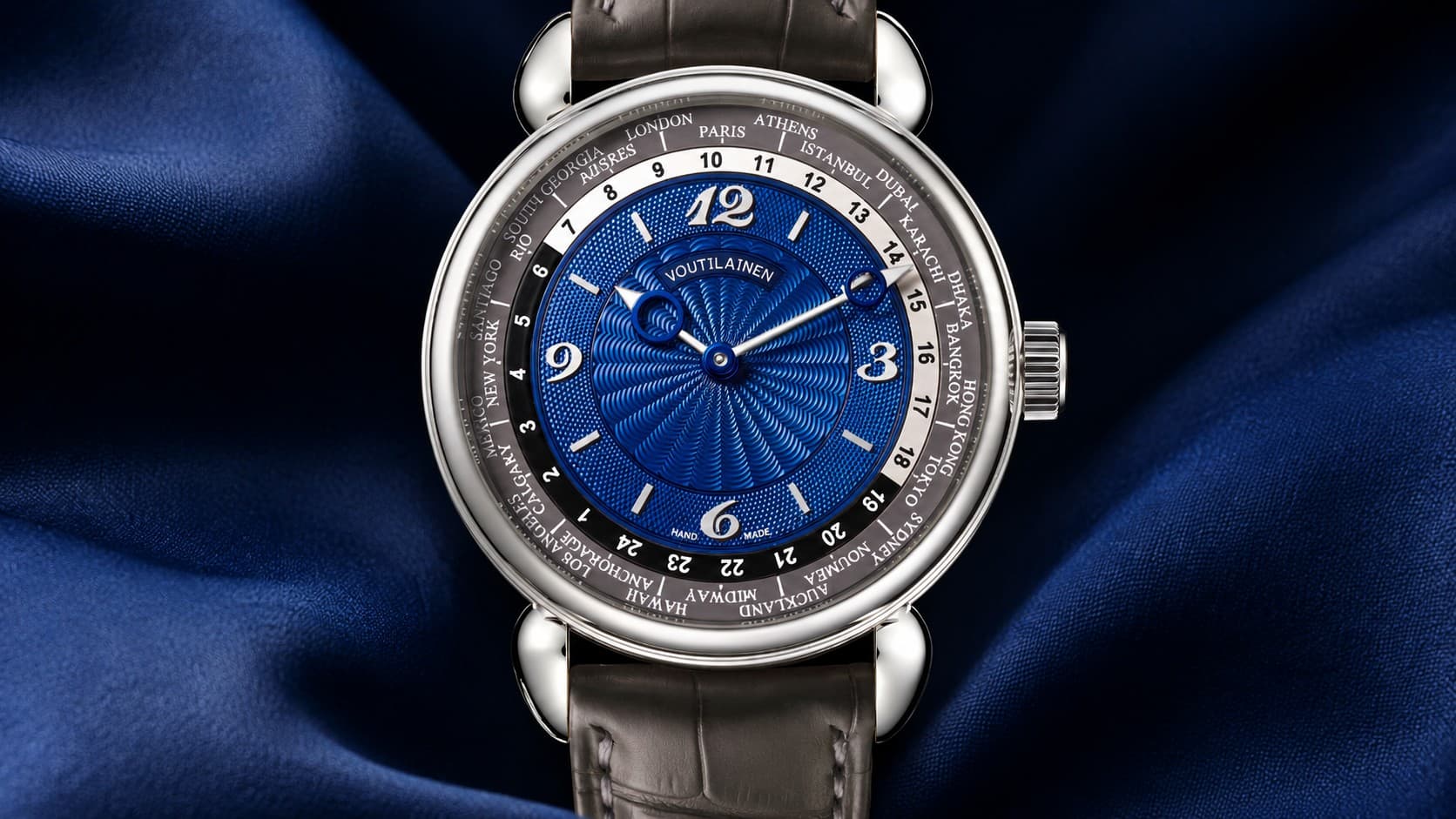
Best Voutilainen Watches: Finnish Independent Watchmaking

Discover the best Voutilainen watches from Finland's master watchmaker, including models, prices, investment value, and how to buy these rare timepieces.

We include products we think are useful for our readers. If you buy through links on this page, we may earn a small commission.

Read more

Affiliate Disclosure: This post may contain affiliate links, which means we may receive a commission if you click a link and purchase something that we have recommended. While clicking these links won't cost you any extra money, they help us keep this site up and running. We only recommend products or services that we genuinely believe will add value to our readers. Thank you for supporting us!

Transparency: We are a participant in various affiliate programs, including the Amazon Services LLC Associates Program, an affiliate advertising program designed to provide a means for us to earn fees by linking to Amazon.com and affiliated sites. Our editorial content is not influenced by affiliate partnerships, and we strive to provide honest and unbiased reviews and recommendations.

To learn more about our vetting process, please visit our Affiliate Disclosure Statement

Article Content

Voutilainen watch with deep blue hand-guillochéd dial, Arabic numerals, small seconds, power reserve indicator, and rose gold case

Voutilainen represents something increasingly rare in modern watchmaking: a small independent workshop where genuine craftsmanship trumps mass production and marketing budgets. Founded by Finnish master watchmaker Kari Voutilainen in 2002, this Swiss-based atelier produces just 50 to 60 meticulously handcrafted watches each year. With 11 Grand Prix d’Horlogerie de Genève awards, decade-long waiting lists, and prices ranging from 120,000 to over 500,000 dollars, these watches have become the ultimate prize for serious collectors. Every component receives hand-finishing that most modern watch companies abandoned generations ago, with hand-guillochéd dials created on antique rose engine lathes and a patented direct impulse escapement that improves efficiency by 30 percent.

How Kari Voutilainen Became a Master Watchmaker

Kari Voutilainen’s path to becoming one of the world’s most celebrated independent watchmakers started in an unlikely place. Born in the frozen harbor town of Kemi in Finnish Lapland, far from Switzerland’s traditional watchmaking centers, his story proves that passion and dedication matter more than geography. Over four decades, he transformed from a curious student into a master craftsman whose work now commands prices exceeding half a million dollars and waiting lists stretching over ten years.

  • Kari Voutilainen was born in 1962 in Kemi, a small harbor town in Finnish Lapland where winters are dark and summers never see sunset. A family friend who ran a local watch shop introduced young Kari to the fascinating world of mechanical timepieces. He spent countless hours in that shop, mesmerized by the tiny gears, springs, and jewels working together in perfect harmony. While other kids played outside, Kari studied how these miniature machines measured time with such precision. This childhood fascination would shape the rest of his life.
  • In 1986, Voutilainen graduated from Kelloseppäkoulu, Finland’s prestigious watchmaking school located in Tapiola. The Finnish approach to watchmaking education differed from Swiss programs in important ways. Students learned not just repair work but the complete craft, from understanding basic timekeeping mechanisms to complicated functions like chronographs and moon phases. The Finnish system emphasized patience, precision, and deep respect for traditional methods. Teachers pushed students to think critically about why certain designs work better than others, preparing them to eventually innovate rather than just replicate.
  • After finishing his Finnish education, Voutilainen moved to Switzerland in 1988 to attend WOSTEP (Watchmakers of Switzerland Training and Educational Program) in Neuchâtel. He specialized in restoring complicated antique timepieces, a field that requires extraordinary skill and knowledge. The two-year program from 1988 to 1989 taught him how to work with watches that were sometimes over a century old. He learned to identify different finishing techniques, understand the logic behind various mechanical solutions, and most importantly, how to preserve original work while making necessary repairs. This training in restoration would prove more valuable than anyone could have predicted.
  • From 1990 to 1999, Voutilainen spent nine crucial years working at Michel Parmigiani’s restoration workshop in Fleurier, Switzerland. Parmigiani’s atelier handled some of the most important historical pieces in existence, including watches from the Patek Philippe Museum and the Maurice Sandoz collection. Voutilainen’s hands touched timepieces created by Abraham-Louis Breguet, Ferdinand Berthoud, and other legendary masters. Each restoration project became a masterclass in watchmaking history. He studied how 18th and 19th century craftsmen solved problems, what materials they chose, and why certain finishing techniques produced superior results. This decade gave him knowledge that simply cannot be learned from books or modern manufacturing.
  • While still employed at Parmigiani’s workshop, Voutilainen began working on his first personal project in 1992. He spent three full years creating a tourbillon pocket watch entirely by hand. Every single component was made using traditional techniques, from filing the tourbillon cage by hand to engraving the movement plates with decorative patterns. The project took thousands of hours, all done during evenings and weekends. When he finally completed it in 1995, the watch demonstrated that he possessed skills matching the old masters whose work he had been restoring. The piece was exhibited at the International Museum of Watchmaking in La Chaux-de-Fonds in 1996, where it caught the attention of Peter Baumberger, owner of Urban Jürgensen, a historic Danish watch brand.
  • Peter Baumberger recognized exceptional talent when he saw Voutilainen’s pocket watch. This meeting led to a professional relationship that began in the late 1990s and continues today. Voutilainen started creating movements for Urban Jürgensen while also performing specialized restoration work for the brand. This collaboration provided steady income and allowed him to experiment with different technical approaches. Over time, his role expanded. He eventually became part owner and technical director of Urban Jürgensen. In recent years, Voutilainen acquired full ownership of the brand and now serves as its CEO, though he keeps Urban Jürgensen completely separate from his personal watchmaking business.
  • Between 1999 and 2002, Voutilainen worked as an instructor at WOSTEP, teaching complicated watch restoration to students from around the world. Teaching forced him to organize and articulate everything he had learned over the previous decade. What had been intuitive knowledge in his hands had to become clear explanations that students could follow. Many of his former students now work as respected watchmakers and restorers themselves. But teaching also revealed something important to Voutilainen. Working for others, even in teaching, meant compromising. He had ideas about watchmaking that couldn’t be fully explored while following someone else’s curriculum or business plan. He needed his own workshop.
  • In 2002, at age 40, Voutilainen made the leap to full independence. He established his own workshop in Môtiers, a quiet village in Switzerland’s Val-de-Travers region. The location offered several advantages. Val-de-Travers had deep watchmaking roots and plenty of skilled craftspeople nearby. Yet it sat far enough from major watch industry centers like Geneva and La Chaux-de-Fonds that he could work without constant pressure to follow industry trends. He started small, just himself and one assistant in a modest space. Those early years tested his resolve. Building a client base meant convincing collectors to pay substantial sums and wait years for a watch from an unknown independent maker. But Voutilainen believed in his vision of what watchmaking could be.
  • Voutilainen’s first major technical breakthrough came in 2005 with the Masterpiece 6, the world’s first decimal minute repeater wristwatch. Traditional minute repeaters strike hours, then quarter hours, then remaining minutes. To know the time, you have to do math in your head. If you hear two hour chimes, three quarter-hour chimes, and seven minute chimes, that’s 2:52. Voutilainen thought this was ridiculous. People don’t speak time that way. We say “two fifty-two,” not “two hours, three quarters, and seven minutes.” So he redesigned the entire repeater mechanism to strike hours, then ten-minute intervals, then remaining minutes. The Masterpiece 6 strikes decimally, matching how humans actually communicate. This seemingly simple idea required completely reimagining the racks, snails, and hammer systems inside a minute repeater. The watch announced that Voutilainen wasn’t just an excellent craftsman but a genuine innovator.
  • In 2007, Voutilainen received his first major industry recognition by winning the Grand Prix d’Horlogerie de Genève (GPHG) Men’s Watch Prize. Often called the Oscars of watchmaking, GPHG awards represent validation from the entire watch industry. His winning piece was the Observatoire, which housed a carefully restored vintage Peseux chronometer movement from the 1950s inside a case of his own design with his signature hand-guillochéd dial. The watch perfectly balanced respect for horological history with contemporary artistic vision. The GPHG win changed everything. Collectors worldwide suddenly knew his name. Orders increased dramatically. More importantly, other watchmakers now took him seriously as a peer rather than just another independent trying to make a name.
  • In 2011, Voutilainen introduced the Vingt-8, the watch that would define his brand. The name means “Twenty-8” in French, referring to the new Calibre 28 movement inside. This was his first completely original movement designed from scratch rather than based on vintage parts. The Calibre 28 featured a revolutionary patented direct impulse escapement with two escape wheels instead of the standard Swiss lever escapement used in almost every mechanical watch. This design improved efficiency by roughly 30%, meaning the watch could run longer on the same mainspring tension while keeping better time. The movement also featured a massive 13.5mm balance wheel, much larger than typical, which improved accuracy and stability. Combined with his distinctive hand-guillochéd dials and elegant case design, the Vingt-8 established the aesthetic that most people now associate with Voutilainen watches.
  • Starting in 2014, Voutilainen began strategically acquiring companies to gain control over more of the watchmaking process. That year he purchased Comblémine SA, a specialized dial manufacturer in Saint-Sulpice, Switzerland. This acquisition was critical because dials had always been Voutilainen’s signature element. The hand-guillochéd patterns created on antique rose engine lathes gave his watches their distinctive visual identity. By owning the dial manufacturer, he could guarantee quality and maintain complete control over this crucial component. The purchase also meant he could experiment with new patterns and techniques without depending on outside suppliers who might resist unusual requests. Other independent watchmakers had to accept whatever their dial suppliers offered. Voutilainen could now create exactly what he envisioned.
  • Voutilainen continued expanding his manufacturing capabilities with additional acquisitions in the following years. He purchased Voutilainen & Cattin SA, a case manufacturing facility in Le Noirmont, giving him control over another essential component. Then in 2022 came perhaps the most significant acquisition: the legendary Brodbeck Guillochage workshop. Georges Brodbeck had been one of the last true masters of engine turning, operating a workshop filled with antique rose engine lathes, some dating back to 1907. When Brodbeck retired, Voutilainen bought the entire operation, including over 30 guilloché machines. These antique machines, carefully maintained for over a century, could create patterns that modern CNC machines simply cannot replicate. The Brodbeck acquisition made Voutilainen one of the very few watchmakers in the world with the equipment and knowledge to produce authentic traditional guillochéd dials. These purchases weren’t about efficiency or cost savings. They were about preserving traditional craftsmanship and ensuring every component met his uncompromising standards.
  • From 2007 through 2024, Voutilainen collected an astounding 11 GPHG awards, more than any other independent watchmaker in the competition’s history. His wins span multiple categories. He won the Men’s Watch Prize six separate times (2007, 2013, 2015, 2019 for the 28ti, 2020, and 2024). He captured the Artistic Crafts Watch Prize four times (2014, 2017, 2019 for Starry Night Vine, and 2022). He also won the Men’s Complication Prize in 2023. The year 2019 was particularly remarkable when he won three awards in a single year. His winning pieces ranged from pure technical achievements to artistic collaborations with Japanese maki-e lacquer masters. This consistent success over 17 years proves his excellence isn’t a fluke or temporary trend. It represents sustained mastery that judges recognize year after year.
  • In 2021, the workshop moved to larger quarters in a building called Le Chapeau de Napoléon (Napoleon’s Hat), a former hotel-restaurant sitting on a mountain overlooking the Val-de-Travers valley. By this point, the operation had grown to approximately 30 skilled artisans. The new facility provided dedicated spaces for different stages of production: movement assembly, dial manufacture, case finishing, and quality control. Despite the growth, Voutilainen maintained the intimate workshop culture that defines independent watchmaking. He still spends over half his working time at the bench himself, personally finishing components. He dedicates roughly 50 to 60 full days each year just to finishing watch hands, spending an entire day on each set. This hands-on approach, unusual for someone running a company, ensures that every watch meets his personal standards.
  • In 2024, Voutilainen made a surprising announcement that sent shockwaves through the collector community. The Calibre 28, the movement that had defined his brand for 13 years and powered his signature Vingt-8 watches, would be discontinued. All orders for Calibre 28-based watches must be placed by December 31, 2025. After that date, production stops forever. The announcement created urgency among collectors who had been considering a Vingt-8 but hadn’t yet committed. For Voutilainen, the decision makes sense. After producing essentially the same movement for over a decade, he wants to explore new technical directions. The recently introduced KV20i and KV21 calibers represent his next chapter. But the Calibre 28 retirement marks the end of an era and will likely make existing Vingt-8 watches even more collectible in the future.

Voutilainen now stands among the tiny handful of truly independent watchmakers who have achieved both critical acclaim and commercial success without compromising their vision. His watches sell for $100,000 to over $500,000, with waiting lists extending beyond 10 years and secondary market prices often doubling original retail. Yet he still works at his bench daily, still answers client emails personally, and still produces only 50 to 60 watches per year despite enormous demand. His journey from a curious boy in Arctic Finland to an 11-time GPHG winner proves that in watchmaking, authenticity and skill ultimately triumph over marketing and mass production.

What Makes Voutilainen Different from Other Watch Brands?

Voutilainen watches occupy a unique position in modern watchmaking. While large luxury brands produce tens of thousands of watches annually using assembly line methods, and even some independent makers compromise on certain components, Voutilainen maintains an almost obsessive commitment to doing everything by hand using traditional techniques. This isn’t marketing rhetoric or romantic storytelling. Every single watch receives hand-finishing that takes weeks or months to complete, using skills that most watchmakers today have never learned. The result is a level of quality that collectors compare to the greatest work from watchmaking’s golden age in the 18th and 19th centuries.

  • Annual production stays deliberately capped at approximately 50 to 60 watches per year despite demand that could easily support ten times that number. This isn’t a temporary limit that will increase as the company grows. Voutilainen has explicitly stated he will never expand production beyond this level. With roughly 30 people in the workshop, this means each watch represents months of accumulated labor. The entire annual output could fit comfortably in a single briefcase. For context, Rolex produces roughly 1 million watches annually, Patek Philippe makes about 60,000, and even small independent F.P. Journe produces around 900. At 50 to 60 pieces per year, Voutilainen’s scarcity is genuine rather than artificial.
  • Every movement receives hand-finishing that most modern watch companies abandoned decades ago because it’s too time-consuming and expensive. Each bridge and plate is hand-frosted using techniques that create a matte texture visible under magnification. Every edge gets beveled and polished by hand, creating sharp internal angles that machines cannot achieve. Screw heads receive mirror polishes. The Geneva stripes (côtes de Genève) decorating the movement plates are applied individually by skilled finishers rather than stamped or machined. Steel components undergo black polishing, a particularly difficult technique that creates surfaces so smooth they appear perfectly black from certain angles. These finishing methods serve no functional purpose. They exist purely to demonstrate mastery and respect for traditional craftsmanship.
  • Voutilainen produces all dials in-house at his Comblémine facility using authentic hand-guillochéing techniques on antique rose engine lathes. These machines, some over a century old, create decorative patterns by slowly cutting grooves into metal while the operator manually controls depth, spacing, and rhythm. Each dial requires approximately three weeks of work involving multiple artisans and five separate processes. The base starts as a sterling silver blank. A craftsman then engine-turns the pattern using one of the antique lathes, a process taking hours of concentrated work. After guillochéing, the dial receives either translucent enamel (requiring multiple firings in a kiln at over 800 degrees Celsius) or galvanic treatment to achieve the desired color. Finally, markers and text are applied by hand. The result looks completely different from machine-made dials because it genuinely is different. Light plays across the hand-cut grooves in ways that stamped or laser-etched patterns cannot replicate.
  • The patented direct impulse escapement in Calibre 28 represents a genuine technical innovation rather than merely aesthetic variation. Most mechanical watches use the Swiss lever escapement, invented in the 18th century and refined over time but fundamentally unchanged. Voutilainen’s design uses two escape wheels instead of one, arranged so they deliver impulses directly to the balance wheel with minimal energy loss. This improves efficiency by approximately 30% compared to standard Swiss lever escapements. Practically, this means the watch maintains better accuracy over its entire power reserve and requires less frequent servicing because components experience less wear. The design draws inspiration from Abraham-Louis Breguet’s natural escapement concept from 1789 but executes it in a completely original way suitable for modern wristwatch production.
  • The balance wheel measures 13.5mm in diameter, substantially larger than the 10 to 11mm wheels found in most watches. Larger balance wheels oscillate more stably because they have greater rotational inertia, making them less susceptible to disturbance from shocks or position changes. The wheel features traditional timing screws around its rim for fine regulation rather than modern quick-adjustment systems. The hairspring includes both a Phillips terminal curve (where the spring attaches to the balance) and a Grossmann curve on the inner end (where it attaches to the collet). These curves, which must be formed by hand, help the hairspring breathe more concentrically as it expands and contracts, improving timekeeping precision. Most modern watches skip these curves because they’re difficult and time-consuming to create properly.
  • Every watch operates at 18,000 vibrations per hour (2.5 Hz), slower than the 28,800 vph (4 Hz) that became industry standard in the 1960s. This slower beat rate offers several advantages despite seeming technologically backward. The slower oscillation reduces wear on the escapement and other components, extending time between services. It allows for a larger balance wheel that wouldn’t have room to oscillate at higher speeds. It also creates a more graceful, deliberate tick that many collectors find more pleasant to observe through the exhibition caseback. The slower beat doesn’t compromise accuracy because the direct impulse escapement’s superior efficiency compensates for the lower frequency.
  • Hairsprings receive special attention that most watch companies no longer provide. While Voutilainen purchases hairspring blanks from specialized suppliers (one of the very few components he doesn’t make entirely in-house), his watchmakers then hand-form the terminal curves and count the exact number of oscillations to ensure proper tension. They pin the collet by hand and make fine adjustments to the curves until the spring breathes perfectly concentrically. This process, which can take hours per hairspring, ensures optimal performance but would be economically impossible at larger production scales. It’s the kind of work that disappeared from mainstream watchmaking in the 1970s when quartz watches threatened the entire mechanical watch industry.
  • Cases come from Voutilainen’s own facility, Voutilainen & Cattin SA, where they receive finishing that exceeds standards at most luxury brands. The signature teardrop lugs appear simple but require extensive hand-polishing to achieve their smooth, flowing form. Case edges receive brushing or polishing by hand depending on the design. Even the case backs, which many brands treat as afterthoughts, get careful attention. The vertical integration means Voutilainen can maintain quality control over every aspect of case production rather than hoping outside suppliers meet his standards. It also allows for special requests from clients who want unusual proportions or modifications.
  • Hands receive perhaps the most obsessive attention of any component. Voutilainen personally dedicates 50 to 60 full days each year exclusively to finishing hands, spending roughly one complete workday per set. Each hand gets carefully shaped, beveled, and polished until it meets his standards. The hands must be perfectly flat, perfectly balanced, and finished to a level where they disappear against certain dial colors (a traditional sign of excellent hand-making). For a company CEO and master watchmaker to spend this much time on such small components seems almost absurd. But for Voutilainen, hands are where many watchmakers compromise, and he refuses to accept that compromise on watches bearing his name.
  • Customization options far exceed what most watch brands offer, even at much higher price points. Clients can specify dial patterns from dozens of guillochéd designs, choose between various enamel or galvanic finishes, select case materials (including gold, platinum, stainless steel, or titanium), request specific hand styles, and even commission custom engravings on movement plates. Want a specific shade of blue enamel that matches a family heirloom? Voutilainen’s team can work with you to achieve it. Prefer a smaller or larger case size than standard? That can usually be accommodated. This bespoke approach means almost no two Voutilainen watches are exactly identical. Each becomes a unique creation tailored to its owner’s preferences.
  • The workshop maintains vertical integration that rivals major manufacturers despite its tiny size. Between the main workshop in Môtiers, the dial facility at Comblémine, the case manufacturer Voutilainen & Cattin, and the guilloché workshop acquired from Brodbeck, Voutilainen controls nearly every stage of production. The only externally sourced components are hairspring blanks, mainsprings, jewels, and some raw materials like metal stock. Everything else gets made in-house. This vertical integration provides quality control, flexibility for customization, and preservation of traditional techniques that would otherwise disappear as older craftspeople retire.
  • Voutilainen personally remains involved in every watch despite running multiple companies. He doesn’t just oversee production from an office. He works at his bench daily, finishing components, checking quality, and making final adjustments. Clients who order watches communicate directly with him via email rather than through sales representatives or customer service departments. This level of personal involvement would be impossible at larger scales but remains feasible when producing only 50 to 60 watches annually. It ensures that every watch genuinely represents his vision rather than being diluted by layers of management or production managers making compromises.
  • The workshop attracts and retains some of the most skilled craftspeople in Swiss watchmaking. Many of the 30 artisans working at Voutilainen could easily find jobs at major brands, probably for higher salaries and certainly with less demanding standards. They stay because they want to practice traditional watchmaking at the highest level. The workshop environment encourages mastery rather than speed. A finisher might spend an entire day polishing a single bridge, knowing that Voutilainen will reject it if the work doesn’t meet his standards. This culture of uncompromising quality attracts craftspeople who view watchmaking as art rather than just manufacturing.
  • Every watch comes with a guarantee that becomes meaningful because of the workshop’s structure. If something goes wrong, even decades later, the watch returns to the same people who made it originally. There’s no outsourcing to service centers or relying on parts suppliers who might discontinue components. Because Voutilainen makes nearly everything in-house and maintains detailed records of every watch, he can service or repair any piece he’s ever created. The direct impulse escapement’s efficiency means watches often run for many years between services, but when service is needed, it happens at the source.

Voutilainen watches appeal to collectors who understand the difference between luxury marketing and genuine quality. Many expensive watches cost six figures primarily because of brand positioning, limited edition gimmicks, or precious metal cases. Voutilainen watches cost similar amounts because they require months of highly skilled handwork using techniques most modern watchmakers have never learned. The 10-year waiting lists aren’t marketing tactics but simple mathematics when you refuse to compromise on quality and refuse to increase production volume. For collectors seeking watches that represent watchmaking’s highest achievements rather than just impressive price tags, Voutilainen delivers authenticity that has become rare even at the very top of the market.

Top 10 Best Voutilainen Watches

Choosing the “best” Voutilainen watches presents an unusual challenge because the company’s entire output maintains such exceptional quality and almost every piece includes some degree of customization. Unlike mass-produced luxury watches where certain references clearly stand out, Voutilainen’s work consists largely of variations on core themes, with many pieces being unique or near-unique commissions. The watches listed here represent the most significant models in terms of technical innovation, historical importance, or collector demand. Some are currently available for order, others have been discontinued, and a few exist only as one-of-a-kind pieces that occasionally surface on the secondary market.

  • Vingt-8 (28) remains the cornerstone of Voutilainen’s collection and the watch most people think of when they hear his name. Introduced in 2011, it houses the revolutionary Calibre 28 with its patented direct impulse escapement. The case measures 39mm in diameter (though 37mm versions exist) and just 12.3mm thick, creating elegant proportions that wear comfortably despite the substantial movement inside. The signature hand-guillochéd dial typically features a sunburst or basket weave pattern in sterling silver with translucent enamel, though hundreds of variations exist based on client preferences. Power reserve ranges from 50 to 65 hours depending on configuration. Available case materials include 18k yellow gold, rose gold, white gold, platinum, and occasionally stainless steel. Prices when new ranged from approximately 70,000 to 80,000 Swiss francs depending on materials and customization. However, Calibre 28 production ends December 31, 2025, making this a limited-time opportunity. The Vingt-8 represents Voutilainen’s purest expression of time-only watchmaking, focusing entirely on perfection of execution rather than adding complications for their own sake.
  • KV20i Reversed represents Voutilainen’s current flagship model and won the GPHG Men’s Watch Prize in 2024. The name describes its key feature: the movement is installed “reversed” so the escapement and balance wheel appear on the dial side rather than hidden on the back. This inverted architecture creates fascinating visual drama as you watch the direct impulse escapement and oversized balance wheel working in real time. The small seconds display moves to the caseback, an unusual but logical arrangement given the inverted layout. The new Calibre KV20i contains 202 components and delivers 60 hours of power reserve. Cases measure 39mm in diameter and come in stainless steel (118,800 CHF), various gold alloys (121,600 to 124,800 CHF), or platinum (124,800 CHF). Multiple dial colors are available including classic silver, deep blue, and burgundy red. The KV20i succeeds the discontinued 28ti as Voutilainen’s premier sport-oriented model, though “sport” is relative when discussing watches finished to this level.
  • GMT-6 adds dual time zone functionality while maintaining the finishing standards that define all Voutilainen watches. A 24-hour disc at the 6 o’clock position displays the second time zone with day/night indication shown through contrasting colors on the disc. The crown features pushers that advance the GMT time zone by one-hour increments, making adjustments intuitive when crossing time zones. The system is more elegant than typical GMT watches that use an additional hand, as the disc integrates seamlessly into the dial architecture. Cases measure 39mm with the movement based on Calibre 28 architecture. Pricing starts around 100,000 Swiss francs for white gold versions, with unique pieces commanding substantially more. A special collaboration with Louis Vuitton called the LVKV-02 GMR 6 sold for 550,000 euros, demonstrating the premium unique versions can achieve. Production numbers remain very small, with perhaps only a few GMT-6 watches made per year based on client commissions.
  • Observatoire holds legendary status among collectors despite being discontinued over a decade ago. Produced approximately from 2005 to 2011, only about 50 examples exist worldwide. These watches housed meticulously restored vintage Peseux 260 chronometer movements from the 1950s and 1960s, calibers originally designed for precision timekeeping competitions. Voutilainen selected only the finest examples from New Old Stock, then completely disassembled them, refinished every component to his standards, and installed them in his own 37mm cases with hand-guillochéd dials. Original retail prices around 30,000 to 40,000 Swiss francs seem almost absurd compared to current market values. Recent auction results show Observatoire watches selling for 400,000 to 533,000 dollars, with a white gold example at Phillips New York in December 2025 achieving 533,400 dollars (256% above estimate). The combination of extreme rarity, historical significance as an early Voutilainen model, and exceptional finishing makes these watches intensely sought after. Finding one for sale requires patience and connections in the collector community.
  • 28ti was produced in an edition limited to just 10 pieces, making it one of the rarest modern Voutilainen watches. The name indicates its titanium case, an unusual material choice for haute horlogerie where gold and platinum dominate. Titanium offers light weight and hypoallergenic properties but presents significant finishing challenges because the metal is difficult to polish to a mirror shine. Voutilainen’s team mastered these challenges, creating cases that meet the same finishing standards as precious metal versions. The watch houses Calibre 28 with all its technical sophistication. The 28ti won the GPHG Men’s Watch Prize in 2019, validating titanium as a legitimate material for the highest level of watchmaking. With only 10 examples ever made and production now ended, the 28ti represents perhaps the most difficult regular production Voutilainen to acquire. Secondary market prices have not been widely reported due to extreme scarcity, but collectors estimate values substantially above the original retail price given the GPHG win and tiny production number.
  • Masterpiece 6 holds historical importance as the world’s first decimal minute repeater wristwatch, completed in 2005. Traditional minute repeaters strike hours, quarter hours, and remaining minutes, requiring mental arithmetic to determine the time. Voutilainen’s innovation strikes hours, ten-minute intervals, and remaining minutes, matching how humans actually speak time. If the watch strikes twice, then five times, then three times, that’s 2:53, not 2 hours, 45 minutes (three quarters), and 8 minutes like a traditional repeater would indicate. This seemingly simple change required completely redesigning the repeater mechanism with new racks, snails, and hammer systems. The technical achievement announced Voutilainen as an innovator rather than just a skilled finisher. Only a handful of decimal repeaters have been produced, each essentially unique based on client specifications. These pieces typically range from 200,000 to 400,000 Swiss francs or more depending on complications and finishing. One GMT decimal repeater achieved 457,000 dollars at auction. The Masterpiece 6 rarely appears for sale because owners recognize its historical significance and are reluctant to part with such important pieces.
  • Tourbillon 20th Anniversary celebrates both 20 years since Voutilainen founded his independent workshop (2002-2022) and 30 years since he completed his first tourbillon pocket watch (1995-2025). Released in 2024, production is limited to 61 total pieces: 20 in platinum, 20 in white gold, 20 in rose gold, and one unique piece in stainless steel. The new Calibre TBL22 delivers 72 hours of power reserve with a one-minute tourbillon visible through the exhibition caseback. The tourbillon cage rotates once per minute, constantly changing the position of the escapement and balance to average out gravitational effects that can affect timekeeping accuracy. While tourbillons serve more aesthetic than practical purposes in modern wristwatches (since wristwatches change position constantly anyway), they represent the pinnacle of traditional watchmaking skill. Prices range from 275,000 to 285,000 Swiss francs depending on case material. The relatively large production run of 61 pieces (large by Voutilainen standards) means this may be the most accessible tourbillon he has ever offered, though “accessible” is relative when discussing watches costing over a quarter million dollars.
  • 28Sport represents Voutilainen’s most sportive offering, though it maintains the refined finishing that defines all his work. Limited to just 8 pieces, the watch features a titanium case with a more robust design philosophy than typical Voutilainen models. It houses Calibre 28 with all its technical innovations but in a package intended for more active wear. The dial typically features a sportier aesthetic with better legibility and higher contrast than the delicate guillochéd dials on dress models. Despite the “sport” designation, this remains a hand-finished mechanical watch that should not be confused with actual tool watches designed for diving or extreme conditions. Water resistance specifications are not prominently advertised, and these watches should be treated with the same care as any haute horlogerie piece. The extreme limitation to 8 examples and the discontinued status of Calibre 28 make the 28Sport exceptionally rare. Secondary market appearances are virtually non-existent because owners of such rare pieces rarely sell.
  • 28MPR (Moon Phase Power Reserve) serves as the farewell edition to the Vingt-8 series, announced in 2024 as Calibre 28 approaches its final production run. This ultimate evolution of the platform adds two complications to the base movement: a moon phase display and a power reserve indicator. The moon phase uses a traditional disc showing the lunar cycle, while the power reserve indicator lets the owner monitor how much running time remains before the watch needs winding. These additions increase the movement’s complexity and the watch’s price to 142,000 to 149,000 Swiss francs depending on case material and customization. The 28MPR represents everything Voutilainen learned over 13 years of producing Calibre 28, incorporating refinements and improvements developed throughout that period. As the last and most sophisticated version of his signature movement, the 28MPR holds special significance for collectors who want the ultimate expression of the caliber that established his reputation. Production ends December 31, 2025, along with all other Calibre 28-based watches.
  • Japanese Artistic Collaborations represent some of Voutilainen’s most spectacular and expensive creations, though they occupy a separate category from his technical watches. These pieces feature dials created using traditional Japanese urushi lacquer techniques by master craftsmen from the Unryuan studio, particularly Tatsuo Kitamura. The maki-e process involves applying multiple layers of lacquer, some containing gold or silver powder, then carefully polishing and sometimes engraving the surface to create intricate pictorial scenes. Works like Ji-Ku, Aki-No-Kure, Starry Night Vine, and Hisui have won multiple GPHG Artistic Crafts prizes (2014, 2017, 2019, 2022). Each dial requires months of work by lacquer artists working completely separately from the watch workshop, then Voutilainen builds movements and cases worthy of these miniature artworks. These pieces are essentially unique or exist in tiny series of two to three examples. Pricing information rarely becomes public, but these watches command premiums far above standard models. The Hisui achieved 671,396 dollars at a Phillips auction in 2022, setting the current record for any Voutilainen at public sale. These artistic pieces appeal to collectors who view watches as wearable art rather than merely technical instruments.

The diversity within this top 10 list demonstrates Voutilainen’s range while maintaining uncompromising standards across every creation. Some collectors prefer the pure technical focus of a Vingt-8 or KV20i. Others seek complications like the GMT-6 or Masterpiece 6 decimal repeater. Still others value the extreme rarity of pieces like the 28ti or 28Sport. And some collectors approach these watches as art objects, gravitating toward the Japanese lacquer collaborations. Regardless of which model appeals most, all share the same foundation: months of hand finishing, traditional techniques, and personal oversight from one of the greatest living watchmakers. The challenge isn’t identifying which Voutilainen watches are best but rather which best matches your personal preferences and budget.

How to Buy a Voutilainen Watch

Purchasing a Voutilainen watch differs fundamentally from buying timepieces from established luxury brands. You cannot simply walk into a boutique, browse available models, and leave with a watch. The combination of extreme scarcity, bespoke customization options, decade-long waiting lists, and six-figure prices means buyers need to approach the process thoughtfully and strategically. Understanding what to expect, what choices you’ll need to make, and what the actual acquisition process involves will help you make informed decisions and avoid disappointment or mistakes that could cost tens of thousands of dollars.

  • Waiting times currently extend 10 to 12 years for new commissions placed directly with the workshop. Orders submitted in 2023 received estimated delivery dates around 2030. This isn’t marketing hyperbole or artificial scarcity tactics but simple mathematics based on production capacity. With only 50 to 60 watches made annually and strong demand from collectors worldwide, the backlog grows continuously. Some clients place orders knowing they may be in their 60s or 70s before delivery, essentially buying watches for their retirement years or as future heirlooms. The wait time should factor into your decision. If you want a Voutilainen to wear regularly in the near future, the secondary market becomes your only realistic option. If you can wait patiently and view the purchase as a long-term investment, direct commissioning offers more customization opportunities.
  • Budget planning requires more than just the purchase price because additional costs accumulate throughout ownership. Current retail prices start at 118,800 Swiss francs (approximately 131,000 dollars) for the entry-level KV20i Reversed in stainless steel. Gold versions cost 121,600 to 124,800 CHF depending on alloy. Platinum reaches 124,800 CHF. The retiring Vingt-8 models range from 70,000 to 80,000 CHF for standard versions, while the 28MPR finale edition costs 142,000 to 149,000 CHF. Complications push prices substantially higher, with GMT models around 100,000 CHF minimum and decimal repeaters from 200,000 to 400,000 CHF or more. Tourbillon models start at 275,000 CHF. Beyond purchase price, factor in insurance (typically 1 to 2 percent of value annually), eventual service costs (potentially 1,000 to 3,000 CHF or more every 3 to 5 years), and possible import duties if buying internationally. A 120,000 CHF watch might cost an additional 25,000 to 30,000 dollars over a decade of ownership when accounting for all expenses.
  • Deposit requirements and payment terms vary but typically involve substantial upfront commitments when ordering directly from the workshop. Specific percentages remain undisclosed as they may vary by client relationship and order details, but deposits of 30 to 50 percent would not be unusual in haute horlogerie for bespoke commissions. This means potentially committing 40,000 to 60,000 dollars or more years before receiving your watch. The deposit locks in your place in the queue and allows the workshop to plan production. Clarify the cancellation policy before committing. If your financial situation changes or you simply change your mind during a 10-year wait, can you receive a refund? What penalties apply? These details matter significantly when discussing six-figure purchases with decade-long timelines.
  • Movement selection currently focuses on newer calibers since Calibre 28 production ends December 31, 2025. The deadline means anyone wanting a Vingt-8 or other Calibre 28-based watch must place orders immediately. After that cutoff, the KV20i and recently introduced KV21 become the standard options. The KV20i features the inverted architecture with the escapement visible on the dial side, creating dramatic visual appeal but resulting in a less traditional aesthetic. The KV21, announced in 2024, provides a more conventional movement layout in a tonneau (barrel) shaped case. Both deliver exceptional finishing and technical sophistication, but they represent different design philosophies. Consider whether you prefer the theatrical presentation of the KV20i or the understated elegance of more traditional layouts. For complication lovers, GMT, decimal repeater, and tourbillon options exist but dramatically increase both price and waiting time.
  • Case material choices carry both aesthetic and practical implications beyond simple preference. Stainless steel offers durability, lighter weight than precious metals, and a more understated appearance. However, steel Voutilainen watches are relatively rare, making them potentially more collectible. Yellow gold provides classic warmth and traditional luxury appeal. Rose gold offers a more contemporary aesthetic with pinkish tones. White gold appears similar to platinum or steel but weighs more than steel and less than platinum. Platinum delivers the ultimate in precious metal prestige with substantial heft and natural white color that never needs plating, but it costs the most and shows scratches more readily than gold. Titanium appeared in the limited 28ti and 28Sport models, offering light weight and hypoallergenic properties but presenting finishing challenges. Consider your lifestyle, skin sensitivity, and aesthetic preferences. Also remember that precious metal cases increase insurance costs proportionally.
  • Case sizing typically centers around 39mm diameter, though 37mm versions of some models exist for those preferring smaller proportions. Modern watch trends favor larger sizes, with many luxury sports watches reaching 42mm to 44mm or beyond. Voutilainen’s relatively modest dimensions reflect classical dress watch proportions and ensure the watches wear comfortably under shirt cuffs. The 39mm diameter suits most wrist sizes from about 6.5 inches to 8 inches. Smaller wrists may prefer the 37mm option if available. Thickness varies by model but generally stays moderate, typically 11mm to 13mm depending on complications. Try to see Voutilainen watches in person before committing if possible, either at authorized retailers or at watch events where owners sometimes gather. Photos can be deceiving regarding how watches wear on actual wrists.
  • Dial customization represents one of the most exciting aspects of commissioning a Voutilainen watch because nearly infinite variations exist. The hand-guillochéd patterns include dozens of options: basket weave, sunburst, clous de Paris, barleycorn, wave patterns, and many others. Each pattern interacts differently with light, creating varied visual effects. Color choices span from classic silver to deep blues, burgundy reds, champagne tones, and occasionally more unusual options like green or black. Translucent enamel adds depth and richness but increases cost and production time. Galvanic finishes offer different aesthetic effects with slightly lower cost. Hand styles vary from simple baton hands to more elaborate leaf or Breguet-style hands. Text and marker styles can be customized. Some clients request personal engravings or special design elements. The workshop will work with you to develop mockups and visualizations. Take this customization seriously because you’ll live with these choices for decades.
  • Complications add both appeal and complexity to your watch while substantially increasing price and waiting time. Time-only models like the Vingt-8 or KV20i offer purity of purpose and lower service costs. Adding a GMT function increases utility for travelers but adds mechanical complexity. Moon phase and power reserve indicators (as in the 28MPR) provide useful information and visual interest. Decimal minute repeaters represent the pinnacle of Voutilainen’s technical achievement but cost 200,000 CHF and up while requiring extensive specialized service. Tourbillons provide spectacular visual appeal but serve more aesthetic than practical purposes in wristwatches. Consider your actual needs versus desires. Will you realistically use a GMT function regularly, or does it just sound appealing? Will you appreciate a minute repeater often enough to justify the massive price premium? Honest self-assessment prevents expensive mistakes.
  • Authentication becomes crucial when buying on the secondary market given the high values involved. Fortunately, Voutilainen’s tiny production and meticulous record-keeping mean every watch is documented. Contact the workshop directly with the serial number to verify authenticity and production details. The workshop can confirm whether a specific watch exists, its original specification, and its service history. Authentic Voutilainen watches display distinctive characteristics that fakes struggle to replicate: extremely high-quality hand-finishing on movements with sharp internal angles, hand-frosted German silver bridges, precise guilloché patterns on dials, and flawless assembly. The signature teardrop lugs have specific proportions. Because of the extreme finishing quality, fake Voutilainen watches remain relatively rare compared to fakes of Rolex or Patek Philippe. The amount of skilled handwork required to create a convincing fake would approach the cost of genuine watches. Nevertheless, always verify authenticity before purchasing, especially at prices exceeding 100,000 dollars.
  • Documentation completeness significantly affects resale value when buying pre-owned or eventually selling your watch. Complete documentation includes the original presentation box (crafted by master cabinetmaker and worth thousands of dollars by itself), certificate of authenticity, detailed specification sheet, any correspondence with the workshop regarding customization, service records, and original purchase receipt. Watches with complete documentation typically command 10 to 20 percent premiums over identical pieces lacking papers. Some collectors refuse to buy watches without complete documentation regardless of price. If buying secondary market pieces, verify documentation completeness before negotiating price. If buying new from the workshop, store all documentation carefully in a safe location. Consider photographing or scanning important documents as backup.
  • Personal communication style matters because you’ll interact directly with Kari Voutilainen rather than sales representatives or customer service departments. He personally responds to client inquiries and discusses customization options. This direct access to the watchmaker himself is remarkable but requires appropriate communication etiquette. Be respectful of his time. Prepare your questions in advance rather than fragmenting communications. Be clear about your preferences and budget constraints upfront rather than wasting time discussing options you cannot afford. The personal nature of the relationship means your conduct affects not just your purchase but potentially your future relationship with the workshop. Collectors who demonstrate genuine appreciation for the craft and reasonable expectations tend to receive the best service.
  • Exit strategy planning might seem premature when buying a watch, but knowing resale dynamics helps make smarter purchasing decisions. Voutilainen watches generally hold value well on the secondary market, with many models selling above original retail prices. Auction results from 2024 and 2025 show strong demand, with pieces regularly exceeding estimates by 50 to 450 percent. However, liquidity is limited because of the tiny collector base knowledgeable about the brand. Selling a Voutilainen watch may take months or even years to find the right buyer willing to pay fair market value. Auction houses provide one avenue but charge 15 to 25 percent in fees. Specialized dealers offer another option but also take commissions. Private sales to other collectors avoid fees but require connections in the watch community. These watches can be difficult to sell quickly, though they do sell for strong prices given time. Only buy if you can afford to hold the watch for years if necessary.

Purchasing a Voutilainen watch represents a significant commitment financially, temporally, and emotionally. The 10-year waiting lists, extensive customization decisions, six-figure prices, and personal interaction with the watchmaker himself create an experience unlike buying watches from mainstream luxury brands. Approach the process thoughtfully, do extensive research, know all costs involved, make deliberate customization choices, and ensure you genuinely want to own and wear this specific watch for decades. The reward for careful consideration is a timepiece representing some of the finest craftsmanship in modern watchmaking, finished to standards matching the greatest historical masters, and personalized to your exact preferences. Rush the decision or approach it casually, and you risk expensive mistakes with assets that can be difficult to liquidate quickly.

How to Find Voutilainen Watches for Sale

Voutilainen watch with red hand-guillochéd dial featuring Roman numerals, small seconds subdial, and white gold case on black leather strap

Finding a Voutilainen watch to purchase presents unique challenges compared to acquiring timepieces from mainstream luxury brands. The extreme scarcity of production, combined with decade-long waiting lists and the bespoke nature of most pieces, means traditional retail distribution doesn’t really exist. Instead, prospective buyers must navigate a combination of direct workshop contact, a small network of authorized retailers, the secondary market through auctions and specialized dealers, and occasionally private collector-to-collector transactions. Each acquisition path offers different advantages and disadvantages regarding customization options, waiting times, prices, and authentication certainty.

  • Direct purchase from the Voutilainen workshop in Môtiers, Switzerland represents the primary method for acquiring a new watch. The workshop operates from Le Chapeau de Napoléon, a former hotel-restaurant perched on a mountain overlooking the Val-de-Travers valley. Contact information is available through the official Voutilainen website, including telephone numbers and contact forms. This direct approach offers maximum customization freedom since you’ll work with Kari Voutilainen himself to specify every detail of your watch. You can choose from the full range of dial patterns, case materials, hand styles, and complications. The downside is the 10 to 12 year waiting period and the requirement to commit financially years before receiving your watch. Direct commissioning suits buyers who value personalization over immediate gratification and who have the patience and financial stability to wait a decade.
  • Authorized retailers exist in select locations worldwide, though their numbers remain deliberately small to maintain exclusivity and quality of service. In the United States, a handful of high-end jewelers carry Voutilainen watches or can facilitate orders. These retailers typically display a few examples and can arrange viewings of additional pieces. European retailers cluster mainly in Switzerland and the United Kingdom, with Geneva hosting some of the most knowledgeable dealers. Asian markets, particularly in Taiwan and Hong Kong, have authorized points of sale catering to the region’s sophisticated collector community. Working through authorized retailers provides several benefits. You may be able to see watches in person before committing, retailers can guide you through the customization process, and they handle logistics like shipping and insurance. However, retailers typically cannot reduce waiting times significantly, and they may add markup to workshop prices to cover their costs.
  • The secondary market through auction houses represents the fastest way to acquire a Voutilainen watch if you’re willing to pay premium prices. Major auction houses conduct watch sales multiple times annually, with Geneva and New York hosting the most significant events. Geneva sales typically occur in May and November, while New York features important December sales. Auction houses authenticate pieces before sale and provide detailed condition reports, offering some buyer protection. Recent auction results show strong demand, with many Voutilainen pieces selling for 50 to 450 percent above pre-sale estimates. Rare models like the Observatoire regularly achieve 400,000 to 533,000 dollars at auction, well above their original retail prices from a decade ago. The main advantage is immediate acquisition, you can own the watch within weeks rather than waiting years. Disadvantages include buyer’s premiums (typically 25 percent added to the hammer price), no customization options since you’re buying an existing watch, and fierce bidding competition for desirable pieces.
  • Specialized pre-owned watch dealers offer another secondary market option with different dynamics than auctions. These dealers acquire watches through various channels, authenticate them thoroughly, and resell to collectors. Some dealers focus specifically on independent watchmakers and maintain deep expertise in brands like Voutilainen. The advantage over auctions is that you can negotiate prices directly rather than competing in open bidding, and you typically have more time to inspect the watch before committing. Dealers also often provide warranties or return periods that auctions don’t offer. The disadvantage is that dealer asking prices usually include substantial markup over what they paid to acquire the piece, sometimes matching or exceeding auction prices. Selection varies dramatically depending on what each dealer has managed to source. Finding a specific Voutilainen model through dealers requires patience and regular checking of their inventory.
  • Private sales between collectors represent a fourth acquisition path, though this route requires connections within the watch collecting community. Collectors occasionally sell pieces for various reasons: financial needs, collection refinement, or simply changing tastes. Private sales avoid the fees associated with auctions and dealers, potentially benefiting both buyer and seller. The seller receives more than they would after auction fees, while the buyer pays less than they might at auction or through a dealer. However, private sales carry risks. Authentication becomes the buyer’s responsibility entirely, with no third-party verification. Payment and transfer logistics must be negotiated directly. Legal protections are minimal compared to buying through established businesses. Private sales work best when both parties have reputations to maintain within the collector community, creating incentive for honest dealing. For newcomers to high-end watch collecting, private sales carry too much risk unless you have trusted advisors who can authenticate the watch and facilitate the transaction.
  • Watch fairs and collector events occasionally provide opportunities to view Voutilainen watches in person and make connections that facilitate purchases. Events like Watches & Wonders in Geneva, the Dubai Watch Week, and various collector gatherings hosted by watch enthusiasm forums bring together owners, dealers, and industry figures. Voutilainen himself sometimes attends these events, particularly when launching new models or celebrating anniversaries. Attending these gatherings allows you to see multiple Voutilainen watches side by side, compare different dial patterns and case materials, and speak with experienced owners about their experiences. These events rarely result in immediate purchases but help build relationships and knowledge that inform future buying decisions. Many serious collectors report that their eventual Voutilainen purchase resulted from connections made at watch events months or years earlier.
  • Online watch forums and collector communities serve as information hubs and occasionally facilitate transactions. Dedicated forums for independent watchmaking attract knowledgeable collectors who discuss their pieces, share photos, and sometimes list watches for sale. These communities operate with varying levels of formality and buyer protection. Some forums have strict verification processes and escrow services, while others function more informally. The advantage is access to passionate collectors with deep knowledge who can answer questions and provide insights unavailable elsewhere. The disadvantage is that bad actors occasionally infiltrate these communities, making due diligence essential. Treat online forum transactions with the same caution as any private sale, verify the seller’s reputation extensively, insist on authentication by the workshop before finalizing payment, and use secure payment methods that offer some buyer protection.
  • Pre-ordering discontinued models requires special attention to deadlines, particularly given the imminent end of Calibre 28 production. The December 31, 2025 cutoff for Vingt-8 and all other Calibre 28-based watches creates urgency for collectors who want these models. After that date, you simply cannot order them anymore regardless of price or willingness to wait. If you’re interested in a Vingt-8, 28Sport, 28MPR, or any other Calibre 28 variant, contact the workshop immediately to secure your place before the deadline. Missing this cutoff means you’ll need to pursue the secondary market, where prices for discontinued Calibre 28 watches will likely appreciate substantially given their historical significance and the finality of the production end. This situation creates a unique window where direct ordering at retail prices remains possible for a limited time before these models transition permanently to the secondary market at higher prices.
  • Regional considerations affect purchasing decisions because import duties, taxes, and currency exchange rates impact total costs. Buying within your country of residence simplifies the process and avoids import complications. However, the combination of extreme scarcity and global collector demand means you may need to look internationally. Importing a watch worth 120,000 Swiss francs can trigger substantial duties depending on your country’s regulations. European Union members face VAT (value-added tax) of 15 to 25 percent when importing from Switzerland. United States buyers face relatively modest import duties on watches but must declare purchases over 10,000 dollars. Some buyers attempt to avoid duties through questionable methods, but this carries legal risks that far outweigh any savings when discussing six-figure purchases. Factor these costs into your budget planning and work with the seller (whether retailer, auction house, or private seller) to clearly establish who bears responsibility for duties and shipping insurance.
  • Verification of authorized status becomes important when working with retailers claiming to sell Voutilainen watches. The workshop maintains a relatively short list of authorized retailers, and this list doesn’t change frequently. Before committing to a purchase through any retailer, verify their authorized status directly with the workshop. Some retailers legitimately source watches through secondary channels rather than direct workshop allocation, which isn’t necessarily problematic but should be disclosed. Other retailers make false claims about relationships with the brand to seem more prestigious. A simple verification call prevents situations where you pay authorized dealer prices to someone without any official relationship to Voutilainen. Authorized retailers should willingly provide proof of their status and direct contact information for the workshop to confirm.
  • Timing considerations extend beyond just waiting lists to include life circumstances and financial planning. Ordering a watch with a 10-year delivery timeline requires thinking carefully about where you’ll be in a decade. Will you still want this specific watch? Will your financial situation remain stable enough to complete payment when delivery time arrives? Will you even still be alive and healthy enough to enjoy wearing it? These questions aren’t morbid but practical when discussing decade-long commitments. Some collectors in their 60s or 70s deliberately order watches they plan to pass directly to children or grandchildren, essentially commissioning heirlooms. Younger collectors have the luxury of time but should consider how their tastes might evolve. Many collectors report that their preferences change substantially over 10-year periods, sometimes making them regret commissions placed years earlier. One strategy involves placing an order with extensive customization options that remain flexible, allowing you to refine specifications as delivery approaches.

Acquiring a Voutilainen watch requires patience, research, financial resources, and often some luck. The combination of 50 to 60 annual production and global demand creates a market where simply wanting a watch and having money to buy one doesn’t guarantee success. Whether you choose to commission directly and wait a decade, pursue secondary market pieces at premium prices, or develop relationships with authorized retailers, expect the process to take time and effort. The challenge of acquisition contributes to these watches’ appeal among serious collectors who view the difficulty as filtering out casual buyers and ensuring pieces go to people who truly appreciate what Voutilainen represents. Those who successfully navigate the acquisition process join a small global community of owners who understand they possess something genuinely rare and special.

Are Voutilainen Watches a Good Investment?

Voutilainen watches occupy an unusual position in the luxury watch investment landscape. Unlike blue-chip brands with centuries of history and massive production volumes, or trendy contemporary brands that surge and crash with fashion cycles, Voutilainen represents genuine scarcity combined with critical acclaim and technical excellence. The combination of 50 to 60 annual pieces, 11 GPHG awards, decade-long waiting lists, and exceptional hand-finishing creates market dynamics that favor value retention and appreciation. However, the tiny production numbers also mean limited liquidity, and the relatively young brand history (founded 2002) lacks the multi-generational track record that defines established investment-grade watches.

  • Recent auction performance demonstrates strong and accelerating demand across multiple models and price segments. Data from major auction houses throughout 2024 and 2025 shows Voutilainen pieces consistently exceeding pre-sale estimates, often dramatically. An Observatoire in white gold achieved 533,400 dollars at Phillips New York in December 2025, representing 256 percent above the high estimate. A platinum KV20i Inversé sold for 460,913 dollars at Bonhams, beating estimates by 243 percent. A platinum 28SC reached 443,862 dollars, exceeding estimates by 451 percent. Even standard Vingt-8 models regularly sell for 100,000 to 200,000 dollars, well above their original retail prices of 70,000 to 80,000 CHF. These results indicate genuine collector demand rather than speculative buying, as the pieces attracting strongest bidding tend to be historically significant models or rare variants rather than simply the newest releases.
  • The Observatoire holds legendary status in the secondary market due to its historical importance and extreme rarity. Produced from approximately 2005 to 2011 with only 50 examples created, these watches originally sold for 30,000 to 40,000 Swiss francs. Current auction results show prices ranging from 400,000 to 533,000 dollars depending on condition and case material, representing appreciation of roughly 1,000 to 1,400 percent over 15 to 20 years. A steel example achieved 473,103 dollars at Phillips Geneva in November 2025, while the white gold version mentioned earlier reached 533,400 dollars. This dramatic appreciation reflects multiple factors: the Observatoire represents Voutilainen’s breakthrough into international recognition, it won his first GPHG award, the vintage Peseux movements will never be replicated as those NOS stocks are exhausted, and the extreme limitation to 50 pieces creates intense competition among collectors. The Observatoire demonstrates that early Voutilainen pieces can deliver extraordinary returns, though such appreciation should not be assumed for all models.
  • The all-time auction record for any Voutilainen watch stands at 671,396 dollars for a Vingt-8 Hisui featuring Japanese maki-e lacquer dial work. This piece sold at Phillips in partnership with Bacs & Russo in 2022. The Hisui falls into the category of artistic collaborations with Japanese lacquer masters rather than pure watchmaking pieces, making it somewhat different from technical models. The record price reflects both the watch’s exceptional artistic merit (it won the 2014 GPHG Artistic Crafts Prize) and its status as essentially unique. Artistic collaboration pieces consistently command premiums far above standard models because they combine Voutilainen’s movement excellence with extraordinary dial artistry requiring months of work by master craftsmen. However, these artistic pieces represent a separate market segment with different dynamics than the core collection models most collectors pursue.
  • Comparing Voutilainen to other independent watchmakers provides context for investment potential. Philippe Dufour’s Simplicity models sell for 400,000 to 600,000 dollars on the secondary market despite original prices around 100,000 to 150,000 CHF, and his Grande et Petite Sonnerie achieved 7.63 million dollars at auction. F.P. Journe watches generally trade at or above retail with desirable vintage models appreciating substantially, and his FFC Prototype sold for 10.75 million dollars in December 2025. Voutilainen occupies a middle position: more accessible than Dufour (who makes perhaps 10 watches annually) but smaller scale than Journe (approximately 900 annual pieces). Voutilainen’s 11 GPHG awards exceed both Dufour and Journe’s totals, suggesting strong institutional recognition. Market performance shows Voutilainen appreciating consistently but not yet reaching the stratospheric levels of the very top independents. This positioning suggests potential upside if Voutilainen achieves the same legendary status as Dufour in coming decades.
  • Material choices significantly affect both initial pricing and secondary market performance. Precious metal versions (gold and platinum) commanded premiums when new and typically maintain stronger resale values than steel examples from mainstream brands. However, Voutilainen’s steel pieces often outperform precious metal versions percentagewise because of their relative rarity. The brand produces mostly precious metal watches, making steel versions comparatively scarce and appealing to collectors who value rarity over material intrinsic value. The limited edition 28ti in titanium, restricted to 10 pieces, likely commands premiums approaching or exceeding 200,000 dollars despite original pricing well below that level. The 28Sport, limited to 8 pieces in titanium, faces similar dynamics. When considering investment potential, don’t automatically assume precious metals perform best. With Voutilainen, unusual materials and extreme limitations often drive stronger appreciation.
  • Model significance within brand history affects long-term value retention and appreciation potential. The Vingt-8 represents Voutilainen’s first completely in-house movement and his signature model, likely ensuring strong collector interest indefinitely. The imminent discontinuation of Calibre 28 production (December 31, 2025 cutoff) will likely enhance long-term values for all Vingt-8 variants as they transition from current production to historical pieces. First editions of new calibers (like early KV20i examples) often appreciate well as they represent milestones in a maker’s development. Anniversary pieces and limited editions tied to specific events carry historical significance that supports values. GPHG award winners benefit from documented recognition of excellence. When evaluating investment potential, consider where a specific watch fits in Voutilainen’s broader narrative rather than just its technical specifications or aesthetic appeal.
  • Condition and completeness dramatically affect secondary market values in ways that exceed most other luxury goods. A Voutilainen watch in unworn or barely worn condition with complete documentation commands substantial premiums over identical pieces showing wear or lacking papers. Collectors report that complete documentation (original box, certificate, specification sheets, correspondence regarding customization) can add 10 to 20 percent to value. The original wooden presentation boxes, handcrafted by master cabinetmakers, are themselves valuable and important to completeness. Service history documentation proves the watch received proper care. Even minor dial imperfections or case scratches significantly affect values because collectors expect perfection at these price levels. If purchasing with investment intent, prioritize condition and documentation even if it means paying more initially. The premium you pay for completeness will be recovered and amplified when you eventually sell.
  • Liquidity limitations represent the main drawback to treating Voutilainen watches as investments. While auction results show strong prices, actually selling a Voutilainen watch takes time because the potential buyer pool remains small. Unlike Rolex sports models that sell within days on enthusiast forums, or even Patek Philippe pieces that move relatively quickly, Voutilainen watches might sit on the market for months before finding the right buyer. Auction houses provide liquidity but charge 15 to 25 percent in fees that significantly reduce net proceeds. Private sales avoid fees but require connections in the collector community and negotiations that can stretch for months. If you need to convert a Voutilainen watch to cash quickly, you’ll likely have to accept a substantial discount from optimal market value. This liquidity constraint means Voutilainen watches work better as long-term holdings than short-term speculative plays.
  • The upcoming Calibre 28 discontinuation creates a unique market dynamic that may affect near-term and long-term values. The December 31, 2025 cutoff means the Vingt-8 and all its variants will transition from current production to discontinued models. Historical precedent with other watchmakers suggests that final production runs often appreciate strongly, particularly for models with emotional resonance among collectors. The Calibre 28’s status as Voutilainen’s signature movement that established his reputation adds to its historical significance. Current waiting lists mean watches ordered in the final months before cutoff won’t deliver until the mid-2030s, creating a gap of roughly 8 to 10 years where no new Calibre 28 watches enter circulation. This supply constraint while demand continues (or potentially grows as the model gains historical status) could drive secondary market appreciation. Collectors with existing Calibre 28 watches, particularly rare variants like the 28ti, 28Sport, or 28MPR, may benefit from this dynamic.
  • Diversification within the independent watchmaking category makes sense for serious collectors rather than concentrating entirely on a single maker. While Voutilainen offers strong fundamentals (scarcity, quality, awards, appreciation history), the watch market remains unpredictable and subject to taste shifts. Combining Voutilainen pieces with watches from other respected independents like Rexhep Rexhepi, Laurent Ferrier, Akrivia, or the established names like Dufour and Journe creates a portfolio approach that reduces concentration risk. Some collectors allocate a percentage of their watch budget to established blue-chip brands (Patek Philippe, Rolex, Audemars Piguet) for liquidity and stability, then invest more speculatively in independents like Voutilainen for potential outsized appreciation. This balanced approach provides both downside protection through liquid blue-chip pieces and upside potential through independents that might achieve legendary status.
  • Tax implications vary by jurisdiction but can significantly affect net investment returns. Some countries treat watches as collectibles subject to capital gains taxation when sold for profit. Others classify them as personal property exempt from capital gains below certain thresholds. Holding periods may affect tax rates, with some jurisdictions offering preferential treatment for assets held over specific durations. Estate and inheritance taxes can also impact watches passed to heirs. Consult with tax professionals familiar with collectibles in your specific jurisdiction before making investment-sized purchases. The difference between 20 to 30 percent capital gains tax and tax-free treatment can dramatically alter investment returns, turning a strong gain into a mediocre one or vice versa.
  • Insurance costs represent ongoing expenses that reduce investment returns and should factor into calculations. Insuring a 120,000 dollar watch typically costs 1 to 2 percent of value annually, meaning 1,200 to 2,400 dollars per year. Over a 10-year holding period, insurance alone costs 12,000 to 24,000 dollars, representing 10 to 20 percent of the initial investment. Some collectors opt to self-insure by accepting the risk of loss or theft, but this approach only makes sense for people with sufficient wealth that losing a six-figure watch wouldn’t create financial hardship. For most collectors, insurance remains necessary, and these costs must be subtracted from any appreciation to calculate true investment returns. A watch that appreciates from 120,000 to 180,000 dollars over 10 years (50 percent gain) delivers only about 35 to 40 percent net return after accounting for insurance costs.

Voutilainen watches demonstrate strong fundamentals for value retention and potential appreciation: genuine scarcity, critical acclaim, exceptional quality, and growing recognition among serious collectors. Recent auction results confirm that well-chosen pieces can deliver substantial returns over holding periods of 10 to 20 years. However, treating these watches purely as financial investments misses their primary purpose and creates unrealistic expectations. The limited liquidity, ongoing insurance costs, and unpredictability of future taste mean Voutilainen watches work best for collectors who genuinely want to own and wear them while appreciating that they’ll likely hold value well and potentially appreciate. Buy because you love the watch and want it in your collection. The investment characteristics should be secondary benefits that make the purchase feel more financially responsible rather than the primary motivation for buying.

Voutilainen Watch Maintenance: Service and Care

Owning a Voutilainen watch involves responsibilities that extend far beyond the initial purchase. These timepieces represent months of skilled handwork using traditional techniques and materials that require specific care approaches. Unlike modern sports watches designed for abuse or quartz watches that need minimal attention, Voutilainen watches demand thoughtful handling, proper storage, regular maintenance, and professional servicing at appropriate intervals. Proper care ensures your watch continues performing optimally for decades and preserves its value for eventual resale or passing to the next generation. Neglect or improper treatment can cause damage requiring expensive repairs or, in worst cases, irreversible harm to irreplaceable components.

  • Service intervals for Voutilainen watches typically fall between 3 to 5 years for regularly worn pieces, though the actual timeline depends on usage patterns and how the watch performs. Kari Voutilainen has noted that his watches often don’t return for service for many years because the direct impulse escapement’s superior efficiency reduces wear compared to conventional Swiss lever escapements. The larger balance wheel and slower 18,000 vibrations per hour beat rate also contribute to reduced component stress. Nevertheless, all mechanical watches eventually require service as lubricants degrade, dust accumulates, and wear occurs in pivots and gear teeth. If your watch starts running significantly fast or slow (more than 10 to 15 seconds per day variation from its normal rate), stops unexpectedly, or develops unusual sounds, service becomes necessary regardless of time since the last maintenance. Don’t wait for complete failure, as continued operation with degraded lubrication accelerates wear and can transform a routine service into an expensive repair.
  • Only the Voutilainen workshop can properly service these movements given the proprietary components, in-house manufacturing, and specialized finishing techniques. The direct impulse escapement uses parts made specifically for these watches that no outside service center stocks. The hand-finished bridges require specific polishing techniques to maintain their appearance if disassembly and cleaning disturb the original finishing. Even basic procedures like hairspring manipulation demand skills that general watchmakers, even highly skilled ones, may not possess. Contact the workshop directly when service becomes necessary to arrange shipping and discuss expected timelines and costs. Some authorized retailers can facilitate the service process by handling logistics, but the actual work returns to Môtiers regardless of where you purchased the watch. International shipping requires proper insurance (typically 2 to 3 percent of declared value) and secure packaging that the workshop or retailer can advise on.
  • Service costs typically range from 1,000 to 3,000 Swiss francs or more for routine maintenance on time-only models, with complications increasing costs substantially. A basic service includes complete disassembly, ultrasonic cleaning of all components, inspection for wear, replacement of any worn parts, relubrication, reassembly, regulation, and timing adjustments. If the watchmaker discovers worn pivots, damaged wheel teeth, or other problems during disassembly, repair costs escalate beyond basic service fees. Complications like GMT functions, moon phases, or especially minute repeaters require additional time and expertise, pushing costs higher. Expect decimal repeater services to cost several thousand francs given the complexity. Case and bracelet refinishing, if desired, adds further costs. Budget for these expenses when purchasing the watch initially rather than being surprised years later when a 2,500 franc service bill arrives. For a 120,000 franc watch, spending 2,500 francs every 4 years represents reasonable maintenance relative to the asset value.
  • Daily handling requires more care than with modern sports watches because these pieces weren’t designed for rough treatment. Avoid impacts and shocks whenever possible. Take the watch off before activities involving hand impacts like hammering, playing tennis, or golf. The balance wheel and hairspring, despite their robust construction, can be damaged by severe shocks. Don’t expose the watch to magnetic fields from speakers, MRI machines, induction cooktops, or magnetic phone cases. While modern watches often include antimagnetic protection, Voutilainen watches use traditional materials and construction that can be affected by strong magnetism. If the watch suddenly starts running extremely fast (gaining hours per day), magnetization is the likely culprit and requires professional demagnetization. The crown should be operated gently when winding or setting the time. Don’t force it or wind with excessive vigor. The movement winds easily and shouldn’t require strength.
  • Water exposure should be avoided entirely despite these being mechanical watches with some degree of case sealing. Voutilainen does not prominently advertise water resistance ratings, and these watches should be treated as non-water-resistant dress pieces. Don’t wear them while washing hands, in the shower, swimming, or in any situation involving water contact. The hand-guillochéd sterling silver dials are particularly vulnerable to moisture, which can cause tarnishing, corrosion, or damage to enamel finishes. If the watch accidentally gets wet, dry it immediately with a soft cloth and have it inspected by the workshop at the next opportunity to ensure no moisture penetrated the case. The case seals and gaskets, if present, degrade over time and are not routinely replaced like they would be on dive watches, so whatever water resistance existed when new diminishes with age.
  • Dial care requires particular attention because the hand-guillochéd dials represent irreplaceable artistry. Never touch the dial directly with fingers, as skin oils can leave marks or cause tarnishing on sterling silver. If you need to handle a watch with the movement or dial exposed (which you shouldn’t except during professional service), use appropriate tools and gloves. For routine external cleaning, use only a soft, dry, lint-free cloth to wipe the crystal. Camel-hair brushes can remove dust from case crevices. Never use liquid cleaners, even mild soap and water, on the watch exterior unless absolutely necessary and then only on the case, never near the dial. For watches with grand feu enamel dials, gentle cleaning with slightly damp cloths is safer than on guilloché-only dials, but still minimize moisture exposure. The Japanese urushi lacquer dials on artistic collaboration pieces demand extreme caution. These should only be cleaned professionally, and even displaying them requires avoiding extended direct sunlight that can affect the lacquer over decades.
  • Storage conditions significantly affect long-term condition and performance. Store your Voutilainen in its original wooden presentation box when not wearing it. These handcrafted boxes provide proper cushioning and protection while maintaining appropriate environmental conditions. Keep the storage location temperature stable, ideally between 15 to 25 degrees Celsius (59 to 77 Fahrenheit), avoiding extreme heat or cold. Humidity should stay moderate, roughly 40 to 60 percent relative humidity. Excessive dryness can affect lubricants and certain materials, while excessive humidity promotes corrosion and tarnishing. Don’t store the watch near strong magnetic sources or in locations subject to vibration. If you own multiple watches and rotate them, consider a watch winder for the Voutilainen, though opinions differ on whether winders help or harm mechanical watches. The advantage is maintaining lubrication distribution and avoiding the inconvenience of a stopped watch. The disadvantage is continuous wear that might slightly reduce service intervals. For Voutilainen watches, manual winding when you want to wear them probably makes more sense than constant winding.
  • Strap and bracelet maintenance requires attention because leather straps degrade with wear and metal bracelets accumulate dirt and skin oils. Most Voutilainen watches use leather straps rather than metal bracelets, reflecting their dress watch character. High-quality leather straps typically last 1 to 3 years with regular wear before showing significant deterioration. Sweat, moisture, and skin oils gradually break down the leather. Have replacement straps sourced from the workshop or authorized retailers to ensure proper fit and quality appropriate to a six-figure watch. Using cheap replacement straps on a Voutilainen makes no sense and looks jarring. For watches with metal bracelets, clean them periodically using warm water and mild soap with a soft brush, ensuring no water contacts the case back or crown. Dry thoroughly after cleaning. Check bracelet screws periodically to ensure they haven’t loosened, as lost screws or bracelet sections can be difficult to replace.
  • Movement observation through the exhibition caseback provides opportunities to monitor the watch’s condition and appreciate the craftsmanship. Regularly examine the movement for any unusual appearances. The bridges should maintain their frosted finish without discoloration or spots that might indicate moisture intrusion. The balance wheel should oscillate smoothly and consistently without catching or hesitating. The direct impulse escapement visible on many models should operate with crisp, regular impulses. If you notice any changes in how the movement looks or sounds, document them and mention them when arranging service. Experienced owners become attuned to their watches’ normal behavior and can detect subtle changes that indicate developing problems. However, don’t obsess over minor variations. All mechanical watches exhibit some rate variation depending on position, winding state, and temperature.
  • Travel precautions become important when transporting valuable watches. Never pack a Voutilainen in checked luggage where it could be stolen, damaged by rough handling, or lost entirely. Carry it in your hand luggage, preferably in its original box or a secure watch travel case. Be aware of insurance coverage limitations. Many homeowners or watch insurance policies have coverage limits for items outside the home or traveling internationally. Verify your coverage before traveling and arrange additional insurance if necessary. When going through airport security, you may need to remove the watch for separate screening. Have documentation of ownership available in case customs officials question the watch’s value when crossing international borders. Some collectors photograph their watches with serial numbers visible and keep these photos on their phones as documentation of ownership in case of theft. Consider whether wearing a 120,000 dollar watch in unfamiliar or high-crime areas makes sense, or if a less valuable timepiece would be wiser for certain destinations.
  • Adjustment and regulation should only be performed by qualified watchmakers, preferably at the Voutilainen workshop. Some watch enthusiasts learn to perform minor timing adjustments on their watches using timing machines and careful regulation screw manipulation. This approach is inadvisable with Voutilainen watches because the direct impulse escapement and free-sprung balance with timing screws require deep expertise to adjust properly. Incorrect adjustment can affect timekeeping or damage components. If your watch runs consistently fast or slow by more than a few seconds per day, arrange professional regulation rather than attempting it yourself. The watch should be capable of performing within chronometer standards (roughly plus 4 to minus 6 seconds per day) when properly regulated, though actual performance depends on usage patterns and position.
  • Documentation of service history contributes to long-term value preservation and should be maintained carefully. Keep all service receipts, correspondence with the workshop regarding repairs or adjustments, and notes about when services were performed and what work was done. This documentation proves the watch received proper care and professional maintenance, which matters significantly to future buyers if you eventually sell. Create a file (physical or digital) specifically for your Voutilainen that includes purchase documentation, service records, correspondence, photos, and any other relevant information. Consider storing backup copies separately from the originals in case of fire, theft, or other disaster. This attention to documentation seems tedious but pays dividends when you need to prove provenance, arrange insurance claims, or sell the watch years later.

Proper care of a Voutilainen watch requires time, attention, and financial investment beyond the initial purchase price. These are not watches you can wear carelessly, forget to service for a decade, or treat like modern tool watches designed for abuse. The reward for proper care is a timepiece that continues performing beautifully for generations, maintains its value, and provides decades of enjoyment. The combination of traditional materials, hand-finishing, and mechanical complexity means these watches need respect and thoughtful treatment. Collectors who embrace these responsibilities find that caring for their watches becomes part of the pleasure of ownership, a tangible connection to traditional craftsmanship and the slower, more deliberate pace that mechanical watches represent in an increasingly digital world.

Frequently Asked Questions About Buying Voutilainen Watches

Prospective Voutilainen buyers and watch enthusiasts frequently ask similar questions about these exceptional timepieces. The brand’s unique position as a small independent workshop producing fewer than 60 watches annually, combined with six-figure prices and decade-long waiting lists, creates natural curiosity and confusion. These questions and answers address the most common concerns and provide practical information that helps collectors make informed decisions about whether pursuing a Voutilainen watch makes sense for their specific circumstances and what to expect throughout the acquisition and ownership process.

How long is the current waiting list for a Voutilainen watch?

The waiting list currently extends approximately 10 to 12 years for new commissions placed directly with the workshop. Orders submitted in 2023 received estimated delivery dates around 2030. This extraordinary timeline results from simple mathematics rather than artificial scarcity. With production deliberately capped at 50 to 60 watches annually and strong global demand from serious collectors, the backlog grows continuously. Kari Voutilainen has explicitly stated he will never increase production volume because doing so would require compromising the hand-finishing standards that define his work. Some specific models or customization requests might have slightly shorter or longer timelines depending on complexity and current production schedules, but expecting a decade wait represents realistic planning. The secondary market offers the only path to immediate acquisition, though at substantial premiums over retail prices.

Are Voutilainen watches a good investment?

Voutilainen watches demonstrate strong fundamentals that support value retention and potential appreciation, but treating them purely as financial investments creates inappropriate expectations. Recent auction results show consistent demand with many pieces selling 50 to 450 percent above estimates. The Observatoire has appreciated roughly 1,000 to 1,400 percent over 15 to 20 years. However, these watches have limited liquidity because the potential buyer pool remains small globally. Selling can take months, and quick sales require accepting discounts from optimal values. Ongoing costs like insurance (1 to 2 percent annually) and service (1,000 to 3,000 CHF every 3 to 5 years) reduce net returns. The watches work best for collectors who genuinely want to own and wear them while appreciating that they’ll likely hold value well. Buy because you love the watch and want it in your collection, with investment characteristics as secondary benefits rather than primary motivation.

What is the most affordable Voutilainen watch currently available?

The KV20i Reversed in stainless steel represents the current entry point at 118,800 Swiss francs (approximately 131,000 dollars). Gold versions cost 121,600 to 124,800 CHF depending on the specific alloy, while platinum reaches 124,800 CHF. The retiring Vingt-8 models originally started around 70,000 to 80,000 CHF, but with Calibre 28 production ending December 31, 2025, these can only be ordered for a few more months. On the secondary market, prices vary dramatically based on model, condition, and market timing. Occasionally pieces appear in the 80,000 to 100,000 dollar range, though most trade between 100,000 to 200,000 dollars. The rarest models like the Observatoire or limited editions command 400,000 dollars and up. Regardless of which model you pursue, expect to spend at minimum six figures for entry into Voutilainen ownership.

How many watches does Voutilainen produce each year?

The workshop produces approximately 50 to 60 watches annually with a team of roughly 30 skilled artisans. This represents 15,000 hand-finished components across 880 different part references each year. For context, this production level is extraordinarily small even among independent watchmakers. Rolex makes roughly 1 million watches yearly, Patek Philippe around 60,000, and even small independent F.P. Journe produces approximately 900. Philippe Dufour makes perhaps 10 watches per year, making him even more exclusive, but among active independent workshops, Voutilainen ranks among the smallest. The limited production isn’t a marketing strategy but a natural consequence of the time required for proper hand-finishing. Kari Voutilainen has stated explicitly that he will not increase volume because doing so would require compromising standards that define his work.

Can I customize my Voutilainen watch?

Extensive customization represents one of the defining characteristics of ordering a Voutilainen watch directly from the workshop. Clients can specify dial patterns from dozens of hand-guillochéd designs including basket weave, sunburst, clous de Paris, barleycorn, and wave patterns among others. Color choices span classic silver, various blues, burgundy, champagne, green, black, and custom requests. Finishing options include translucent grand feu enamel or galvanic treatments. Case materials include various gold alloys, platinum, stainless steel, and occasionally titanium. Hand styles vary from simple batons to elaborate leaf or Breguet designs. Clients can request specific engravings on movement plates or case backs. Some collectors commission entirely unique pieces with custom complications or artistic elements. The bespoke process involves direct communication with Kari Voutilainen himself, who works with clients to realize their vision while maintaining the technical and aesthetic standards his watches require. Secondary market purchases offer no customization since you’re buying existing watches.

Where is Voutilainen based?

The Voutilainen workshop operates from Môtiers, a small village in Switzerland’s Val-de-Travers region in Canton Neuchâtel. The facility occupies a building called Le Chapeau de Napoléon (Napoleon’s Hat), a former hotel-restaurant perched on a mountain overlooking the valley. The workshop relocated to this larger space in 2021 to accommodate the growing team while maintaining the intimate atmosphere that defines independent watchmaking. Val-de-Travers has deep watchmaking heritage and provided Voutilainen with access to skilled craftspeople while keeping distance from major industry centers like Geneva and La Chaux-de-Fonds. The region also hosts the dial manufacturing facility Comblémine in nearby Saint-Sulpice and the case manufacturer Voutilainen & Cattin in Le Noirmont, both acquired by Voutilainen to achieve vertical integration.

What makes Voutilainen different from other independent watchmakers?

Three elements distinguish Voutilainen from other independent makers. First, the patented direct impulse escapement with dual escape wheels improves efficiency by approximately 30 percent compared to standard Swiss lever escapements, representing genuine technical innovation rather than just aesthetic variation. Second, complete in-house dial manufacturing through the acquired Comblémine facility using authentic hand-guillochéing on antique rose engine lathes (some dating to 1907) gives Voutilainen control over this signature element that most independents outsource. Third, the unprecedented 11 Grand Prix d’Horlogerie de Genève awards since 2007 represent more recognition than any other independent watchmaker in the competition’s history, validating both technical achievement and artistic merit. The combination of smaller production than most independents (50 to 60 annually), greater vertical integration, technical innovation, and sustained critical acclaim creates a unique position in the independent watchmaking landscape.

How do I authenticate a Voutilainen watch?

Contact the Voutilainen workshop directly with the watch’s serial number to verify authenticity and obtain production details. With only 50 to 60 pieces made annually since 2002, every watch is thoroughly documented. The workshop can confirm whether a specific serial number exists, its original specifications, and service history. Authentic Voutilainen watches display several distinctive characteristics. The movement finishing shows extremely high quality with sharp internal angles on beveled edges, hand-frosted German silver bridges, and precise polishing that machines cannot replicate. The dial guilloché patterns show the slight irregularities inherent in hand-operated rose engine work rather than the perfect uniformity of CNC machining. The signature teardrop lugs have specific proportions and flowing shapes. Assembly quality appears flawless under magnification. Because creating convincing fakes would require skilled handwork approaching the cost of genuine pieces, Voutilainen fakes remain relatively rare compared to counterfeits of more mainstream luxury brands. Nevertheless, always verify authenticity before purchasing, particularly on the secondary market where six-figure sums are at stake.

What should I do if I change my mind during the 10-year waiting period?

Cancellation policies vary and should be clarified directly with the workshop before placing your order and deposit. In haute horlogerie, substantial deposits (potentially 30 to 50 percent of total price) are common for bespoke commissions. These deposits compensate the workshop for reserving production capacity and beginning preliminary work. Whether deposits are refundable, partially refundable, or non-refundable depends on the specific terms you agree to when ordering. Some workshops allow transfers of orders to other collectors if you can find someone willing to assume your place in the queue, potentially at a premium given the long wait times. Discuss these possibilities before committing tens of thousands of dollars. If your financial circumstances or preferences might change over a decade, consider whether committing to such a long-term purchase makes sense. The decade wait requires financial stability and sustained interest in the specific watch you commission.

Do Voutilainen watches require special storage or care?

Yes, these watches require more care than modern sports watches designed for rough treatment. Store them in the original wooden presentation box in temperature-stable environments (15 to 25 degrees Celsius) with moderate humidity (40 to 60 percent). Avoid water exposure entirely, as these are dress watches without significant water resistance. The hand-guillochéd sterling silver dials are particularly vulnerable to moisture. Remove the watch before activities involving hand impacts or exposure to magnetic fields. Service every 3 to 5 years at the Voutilainen workshop, as only they have the expertise and parts for proper maintenance. Clean only with soft, dry cloths. Never touch the dial directly. Treat the watch as a delicate piece of wearable art requiring thoughtful handling rather than a tool watch. Proper care ensures decades of reliable performance and preserves value for eventual resale or inheritance.

Can I visit the Voutilainen workshop?

The workshop does not operate as a public showroom with regular visiting hours. These are working facilities where craftspeople need quiet concentration to perform the detailed hand-finishing that defines Voutilainen watches. However, serious prospective clients can sometimes arrange visits by appointment to discuss commissions, view examples, and meet with Kari Voutilainen personally. Contact the workshop well in advance to inquire about visit possibilities and explain your interest. Expect that visits might not always be possible depending on production schedules and other commitments. Some authorized retailers maintain small collections of Voutilainen watches that can be viewed without traveling to Switzerland. Watch fairs and collector events occasionally provide opportunities to see multiple examples and meet Voutilainen himself when he attends to present new models or anniversary pieces.

What happens to my watch if Voutilainen retires or the company closes?

This concern is reasonable given that the brand depends heavily on one individual. However, several factors provide some reassurance. First, Voutilainen has built a team of approximately 30 skilled craftspeople who have learned his techniques and standards. Second, the vertical integration means the company controls most manufacturing processes rather than depending on external suppliers who might discontinue parts. Third, the detailed documentation of every watch and retention of technical specifications means the company could theoretically continue servicing watches even if Kari himself could no longer work. Fourth, Voutilainen’s acquisition of Urban Jürgensen and his role as CEO there suggests he’s thinking about legacy and continuity. Nevertheless, the risk exists that these watches might become difficult to service if the company ceased operations. This risk applies to all small independent makers and represents a trade-off for the exclusivity and personal touch these brands offer. Collectors must weigh this uncertainty against the watches’ exceptional quality and current strong market performance.

These frequently asked questions address the most common concerns and curiosities about Voutilainen watches, but they cannot cover every situation or answer every possible question. The brand’s unique characteristics, extreme scarcity, and bespoke nature mean each collector’s experience will differ somewhat based on their specific circumstances, preferences, and relationship with the workshop. Prospective buyers with additional questions should contact the workshop directly or consult with authorized retailers and experienced collectors who can provide guidance based on firsthand knowledge. The time invested in thorough research and careful consideration before committing to a six-figure purchase with a decade-long timeline pays dividends in satisfaction with your eventual acquisition and confidence that you made an informed decision.

Conclusion

Voutilainen represents the pinnacle of what independent watchmaking can achieve when an individual pursues perfection without compromise. From his origins in Finnish Lapland to his current position as an 11-time GPHG winner, Kari Voutilainen has proven that exceptional craftsmanship, technical innovation, and artistic vision can compete with centuries-old Swiss houses. The patented direct impulse escapement, hand-guillochéd dials created on antique rose engines, vertical integration that controls nearly every production stage, and personal involvement in every watch create timepieces that genuinely justify their six-figure prices. With only 50 to 60 watches produced annually, these pieces offer scarcity that’s real rather than manufactured, making each one a significant acquisition for serious collectors.

The investment in a Voutilainen watch extends beyond money to include patience, research, and acceptance of the responsibilities that come with owning such refined mechanical art. The 10 to 12 year waiting lists aren’t marketing gimmicks but mathematical realities of production capacity versus global demand. The extensive customization options mean you can create a truly personal timepiece, but they also require thoughtful decisions you’ll live with for decades. The care requirements demand more attention than modern sports watches, and the limited liquidity means these work better as long-term holdings than quick flips. Yet for collectors who understand what they’re acquiring, these challenges become part of the appeal, filtering out casual buyers and ensuring Voutilainen watches reach people who genuinely appreciate watchmaking at its highest level.

Whether you pursue a classic Vingt-8 before Calibre 28 production ends, commission a KV20i Reversed with its theatrical inverted movement, seek a rare Observatoire on the secondary market, or dream of a decimal minute repeater masterpiece, Voutilainen offers something available nowhere else. These watches will never be produced in large numbers, waiting lists will likely never shrink significantly, and prices will probably continue rising as recognition grows. For collectors who value authenticity over marketing, substance over brand heritage, and genuine scarcity over limited edition gimmicks, Voutilainen delivers everything that makes mechanical watchmaking worth preserving in an increasingly digital age. The question isn’t whether these watches are worth their prices and wait times, but whether you’re ready to commit to ownership of something this special.

Nobbier logo

Subscribe To Our Weekly Newsletter

Get notified about new articles