IWC Schaffhausen has spent more than 150 years building watches that feel more like tools than jewelry, and that reputation is exactly why so many people search for the brand before buying their first serious timepiece. The company was started in 1868 by an American engineer named Florentine Ariosto Jones, who wanted to mix Swiss watchmaking skill with American factory methods. That mix still shapes how IWC designs watches today: clean dials, strong engineering, and a focus on doing one job well instead of chasing trends. For anyone drawn to aviation history, dress watches, or dive watches, IWC builds a dedicated collection around each of those interests, and knowing the differences between them can prevent an expensive mismatch.
What Makes IWC Different From Other Swiss Watch Brands
IWC built its name on engineering, not decoration. Unlike brands that lean on sparkle or celebrity marketing, IWC has always centered its story on function first. Early pocket watches used hydropower from the Rhine River to run production, and that same practical mindset carried into famous IWC ideas like the soft-iron inner case that protects a watch from magnets, and Kurt Klaus’s easy-to-set perpetual calendar, first introduced in the Da Vinci collection in 1985.
The brand is also known for taking risks with materials. IWC was one of the first Swiss watchmakers to use ceramic and titanium in regular production, long before most competitors saw the value in them. That willingness to experiment with materials, combined with a design language that rarely changes just for the sake of change, is why IWC watches tend to look modern for decades instead of dated after a few years.
Much of that engineering-first identity traces back to one company motto: “Probus Scafusia,” Latin for “good, solid craftsmanship from Schaffhausen,” adopted back in 1903. One of the clearest examples is the Pellaton winding system, invented by IWC’s technical director Albert Pellaton in the 1940s and patented in 1946. Instead of the gear-based winding most automatic watches use, it relies on small pawls that pull the mainspring tight from both directions of the rotor’s spin, which wastes less motion and winds the watch more efficiently. The system fell out of use during the quartz crisis of the 1970s but returned in the 2000s and still appears in updated form across several of IWC’s in-house movements today.
IWC has been owned by the Swiss luxury group Richemont since 2000, but the watches are still made at the original Schaffhausen factory on the banks of the Rhine.
Best IWC Pilot’s Watches
IWC’s Pilot’s Watches are the brand’s most recognized collection, and they actually trace back to two separate wartime histories that later merged into one modern lineup. The first came from Britain: IWC built the Mark 11 for the Royal Air Force in 1948, a rugged, anti-magnetic watch issued to navigators, and that watch is the direct ancestor of today’s Mark XX. The second came from Germany: in 1940, IWC was one of five companies asked to build the “B-Uhr,” a giant 55mm observation watch for Luftwaffe bomber navigators, and that oversized case shape is exactly what modern Big Pilot’s Watches are still based on.
Knowing that split helps explain why the collection looks the way it does today. Every model still shares the same core DNA drawn from those two originals: big, easy-to-read numbers, strong luminous markings, and cases built to shrug off knocks in the cockpit.
Big Pilot’s Watch 43
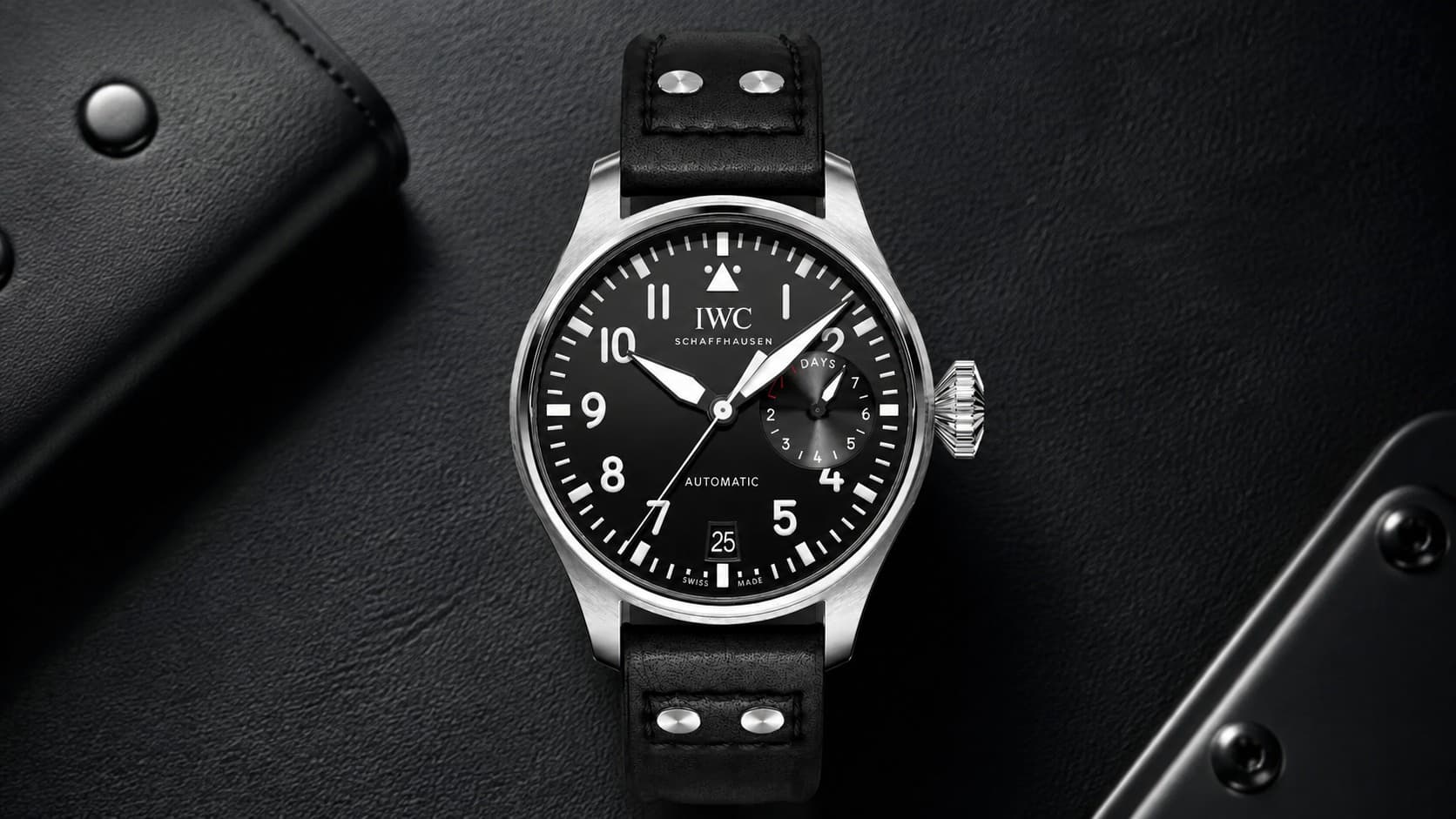
The Big Pilot’s Watch 43 is the answer for anyone who wants IWC’s most iconic silhouette without the older 46mm case feeling too heavy on the wrist. It uses a 43mm stainless steel case, an in-house automatic movement (the caliber 82100), and the brand’s signature oversized crown that was originally designed so pilots could adjust the time while wearing thick gloves. Current retail pricing sits at roughly $9,700, though exact pricing depends on the strap or bracelet chosen.
What makes this watch stand out is how little it has changed since the original 1940s pocket-watch-style pilot’s instrument it was based on. The dial still uses a simple triangle at 12 o’clock flanked by two dots, a marking system borrowed straight from cockpit instruments so pilots could tell at a glance which way was up even in bad light. Newer versions also include IWC’s EasX-Change system, which allows strap swaps without tools, so the same watch can move between a leather strap for the office and a rubber one for the weekend.
Pilot’s Watch Mark XX
The Mark XX is IWC’s entry point into serious pilot’s watches, and it directly continues a line built for the Royal Air Force back in 1948. It uses a 40mm stainless steel case, an in-house caliber 32111 movement with a long 120-hour power reserve, and a closed case back with a soft-iron shield that protects the movement from magnetic fields. Retail pricing starts around $5,800 on a strap.
This is the watch most reviewers point new IWC buyers toward, and for good reason. It keeps the same no-nonsense dial layout that has defined the Mark series for generations, while updating the movement to last five days on a single wind instead of the one or two days older versions offered. The five-row steel bracelet is a popular upgrade, though it does add roughly $900 to the price of the strap version.
Pilot’s Watch Chronograph and Top Gun
For anyone who wants a stopwatch function built in, IWC’s Pilot’s Watch Chronograph line adds two extra subdials for timing without losing the collection’s clean, cockpit-inspired look. The Top Gun versions take this further with black ceramic cases, a nod to IWC’s long partnership with the U.S. Navy’s Fighter Weapons School, nicknamed Top Gun. These cases resist scratches far better than steel, which matters if the watch is going to see daily wear.
Ceramic isn’t just about looks here. It’s roughly as hard as sapphire crystal, which means the case itself resists the scuffs and scratches that steel cases pick up over years of wear. That durability comes at a price bump compared to the steel chronograph models, but for someone who wants a tougher daily watch, it is usually worth the extra cost.
Some Top Gun models go a step further with a material IWC calls Ceratanium, developed over roughly five years and introduced in 2017. It starts life as a titanium alloy, which is machined into the case, crown, and pushers like any normal metal, then fired in a furnace so the surface transforms into something as hard and scratch-resistant as ceramic. The result is a completely black watch with no coating to wear off over time, and it’s lighter on the wrist than solid ceramic would be.
Pilot’s Watch Spitfire
The Spitfire line takes its name from the British WWII fighter plane and leans into a warmer, more vintage look than the rest of the Pilot’s Watch family, using bronze cases, green or brown dials, and sustainably tanned leather straps instead of the usual steel and black palette. It comes in automatic, chronograph, and even perpetual calendar versions, with the automatic starting around $5,700 and the chronograph closer to $7,500.
IWC’s connection to the Spitfire isn’t just a name on a dial. In 2019, the brand sponsored “The Longest Flight,” a four-month, 43,000-kilometer trip around the world in a fully restored 1943 Spitfire nicknamed the Silver Spitfire, flown by pilots Steve Boultbee-Brooks and Matt Jones. Both pilots wore a limited-edition IWC Timezoner built specifically for the journey, tying the watch to a real aviation event rather than borrowed imagery alone.
Best IWC Portugieser Watches
The Portugieser collection tells one of the more unusual origin stories in watchmaking. In the late 1930s, two Portuguese businessmen asked IWC to build a large, extremely accurate wristwatch using pocket-watch-grade movements, since wristwatches at the time weren’t precise enough for their needs. That request created the oversized, thin-bezeled look that still defines the collection today.
Portugieser Chronograph
The Portugieser Chronograph is the most popular model in the line, and the reasons become clear next to the Pilot’s Watches. Where the Pilot’s line is bold and tool-like, the Portugieser Chronograph is slim, elegant, and built for wearing with a suit. The current 41mm steel version uses IWC’s in-house caliber 69355 movement and retails for roughly $8,400 to $8,900 depending on the retailer and dial.
The design has barely changed since it launched in 1998, and that consistency is part of the appeal. A narrow bezel lets the 41mm dial look larger than it technically is, while the down-angled lugs help the watch sit comfortably even on smaller wrists. It’s water resistant to just 30 meters, so this is a dress watch meant for the office and dinner, not the pool.
For buyers who don’t need the chronograph function, the plain three-hand Portugieser Automatic runs several thousand dollars less and keeps the same elegant proportions.
Best IWC Ingenieur
The Ingenieur has one of the more interesting comeback stories in modern watchmaking. It was originally released in 1955 as an anti-magnetic tool watch for engineers and scientists working near magnetic fields, then redesigned in 1976 by the legendary designer Gérald Genta, the same person behind the Audemars Piguet Royal Oak and Patek Philippe Nautilus. After the collection quietly faded from IWC’s lineup, it returned in 2023 as a faithful update of Genta’s original vision.
The modern Ingenieur Automatic 40 uses a 40mm steel case with an integrated H-link bracelet, a screw-secured bezel with five visible screws (a signature Genta touch), and the same 32111 movement found in the Mark XX with its 120-hour power reserve. Steel models retail for roughly $12,900 as of 2026, with a titanium version priced higher.
That price puts the Ingenieur above most of IWC’s other steel sport watches, and it has drawn some criticism for that reason. But the demand has stayed strong since the relaunch, largely because genuine Genta-designed integrated bracelet watches from the 1970s era are rare and expensive on the vintage market. For collectors who want that design lineage without paying vintage prices, the new Ingenieur is one of the more direct paths in.
The Ingenieur name also carries a motorsport chapter. Between 2005 and 2017, IWC redesigned the entire collection around a partnership with Mercedes-AMG, producing larger, more technical-looking watches in titanium, ceramic, and carbon fiber, some built with matching dashboard clocks for AMG road cars. That racing partnership never went away, either; IWC has been the official engineering partner of the Mercedes-AMG Petronas Formula 1 team since 2013. The 2023 relaunch simply moved the watch back to its classic round Genta shape, so any older AMG-branded Ingenieur found on the resale market represents a separate design era rather than a mistake.
Best IWC Portofino
Named after the Italian coastal town, the Portofino collection is IWC’s answer to anyone who wants a slim, quiet dress watch rather than a tool watch. It uses thin cases (many under 10mm thick), narrow leaf-shaped hands, and long, simple hour markers.
The Portofino Automatic 40 is the standard men’s option, using a 40mm steel case just 9.2mm thick and an automatic movement based on the Sellita SW300. Retail pricing for the steel version starts at roughly $5,200. Because it’s so slim, it slides easily under a shirt cuff, which is exactly the point of a proper dress watch. The line also comes in 34mm and 37mm sizes aimed at smaller wrists, along with rose gold versions and moonphase complications for people who want more visual detail on the dial.
Beyond the simple three-hand version, Portofino also houses some of IWC’s quieter but more technical work. The collection includes a hand-wound Eight Days model, built to run for a full eight days on a single wind, and higher-end perpetual calendar and chronograph references for buyers who want real complications without the bolder, sportier look of the Big Pilot or Portugieser. It’s a reminder that Portofino isn’t just IWC’s simplest line, it’s also where the brand quietly puts some of its more advanced watchmaking behind a very understated face.
Best IWC Aquatimer
IWC’s dive watch line doesn’t get the same spotlight as the Pilot’s Watches or Portugieser, but the Aquatimer has been around since 1967 and remains a genuinely capable tool watch. It uses IWC’s SafeDive system, an internal rotating bezel controlled by the crown, which prevents the bezel from accidentally shifting during a dive the way an external bezel sometimes can.
The current Aquatimer Automatic uses a 42mm case and, since 2022, the same 120-hour caliber 32111 found in the Mark XX and Ingenieur. Retail pricing for the steel version runs roughly $6,400 to $6,700, with chronograph versions priced higher. It’s rated to 300 meters of water resistance, which covers recreational diving with plenty of room to spare. Because IWC promotes this collection less aggressively than its other lines, it tends to fly under the radar, which also translates to better availability for buyers wary of waitlists on more hyped dive watches.
Over the years, IWC has also used the Aquatimer to honor real ocean explorers, including special editions dedicated to French oceanographer Jacques Cousteau and naturalist Charles Darwin. The Darwin edition, released in 2014, was notable for another reason too: it was the first time IWC had ever used bronze for a watch case, a material chosen because it was common in 19th-century shipbuilding and develops a unique greenish patina over time. Those specific editions have since been discontinued, but they show how the Aquatimer has always leaned on real diving and exploration history rather than pure marketing.
How Much Do IWC Watches Cost
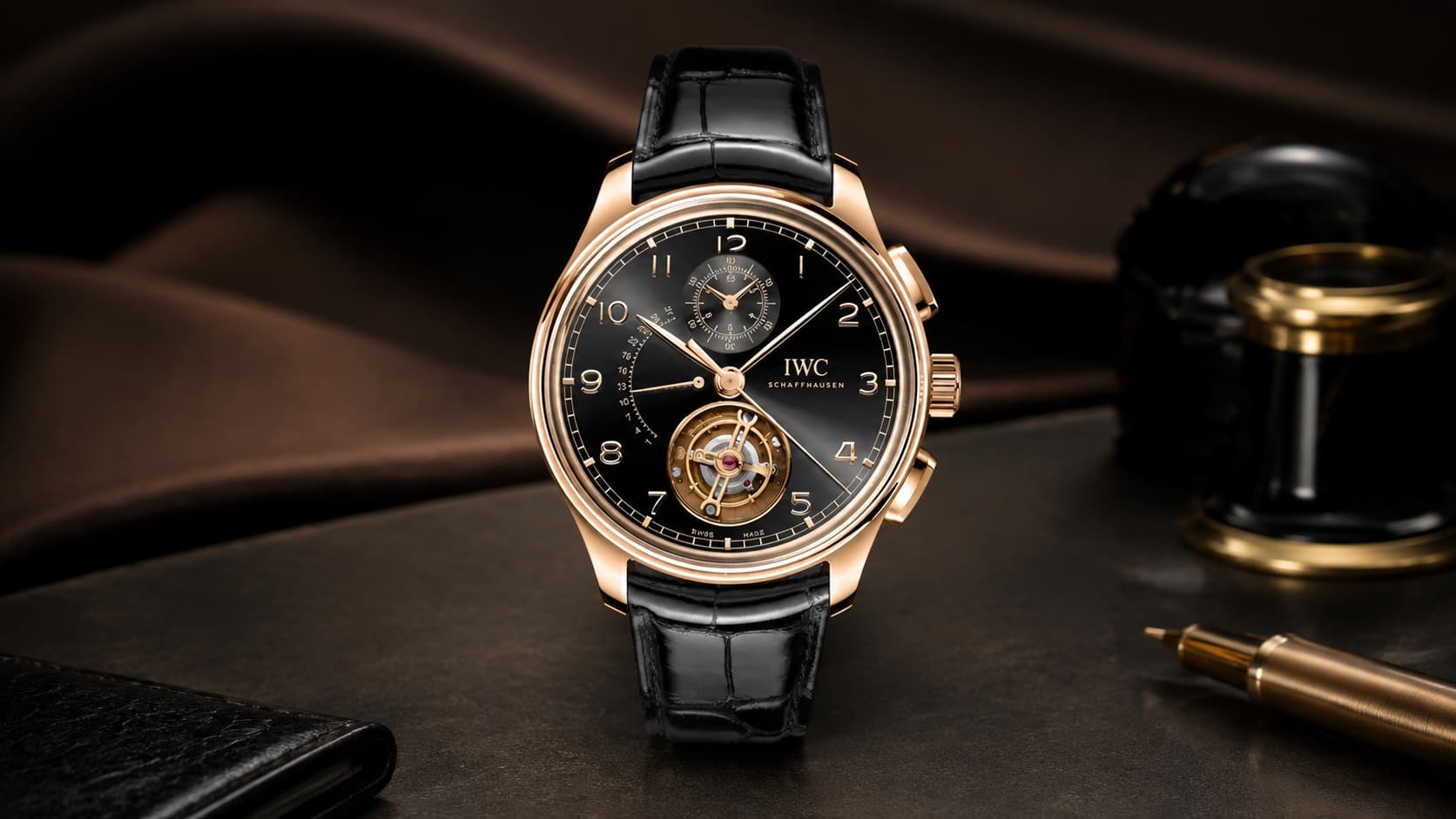
IWC sits in a similar price bracket to brands like Omega, Breitling, and Jaeger-LeCoultre, generally more expensive than Tudor or Longines but below names like Patek Philippe or Audemars Piguet.
| Collection | Typical Starting Price (Steel) |
|---|---|
| Pilot’s Watch Mark XX | Around $5,800 |
| Pilot’s Watch Spitfire Automatic | Around $5,700 |
| Portofino Automatic 40 | Around $5,200 |
| Big Pilot’s Watch 43 | Around $9,700 |
| Portugieser Chronograph | Around $8,400–$8,900 |
| Ingenieur Automatic 40 | Around $12,900 |
| Aquatimer Automatic | Around $6,400–$6,700 |
Prices shift over time and vary by country because of taxes and currency exchange, so these figures work best as a general guide rather than a fixed number.
Matching an IWC Collection to Everyday Use
Choosing between collections comes down to how the watch will actually be worn, not which one looks the most impressive in photos.
- Bold, everyday wear: The Pilot’s Watch Mark XX or Big Pilot’s Watch 43 are built for daily knocks and bumps.
- Work or formal events: The Portofino Automatic or Portugieser Chronograph fit under a cuff and pair well with suits.
- A sportier, design-forward look: The Ingenieur’s integrated bracelet gives it a more modern, luxury-sport feel.
- Regular swimming or diving: The Aquatimer is the only line built specifically for real water resistance beyond splashes.
Frequently Asked Questions
Is IWC a luxury watch brand?
Yes. IWC is considered a mid-to-high luxury Swiss watch brand, generally priced above Tudor and Longines but below ultra-luxury names like Patek Philippe or Audemars Piguet. It has been part of the Richemont luxury group since 2000.
What does IWC stand for?
IWC stands for International Watch Company, reflecting founder Florentine Ariosto Jones’s original plan to combine American manufacturing methods with Swiss watchmaking skill and sell the finished watches internationally, particularly back home in the United States.
Which IWC watch is best for a beginner?
The Pilot’s Watch Mark XX is usually the recommended starting point. It’s the most affordable current model, has a straightforward time-and-date function, and connects to one of IWC’s most historically important designs.
Are IWC watches a good investment?
IWC watches generally hold value less aggressively on the resale market than brands like Rolex, often trading well below their original retail price. They’re better bought for the design, engineering, and history than as a financial investment.
What is the difference between the Portugieser and Portofino?
The Portugieser is larger and bolder, built around big dials and often includes complications like chronographs, while the Portofino is thinner and quieter, designed purely as a slim dress watch with fewer complications.
Whatever happened to the IWC Da Vinci?
The Da Vinci is currently out of production, with no new models in IWC’s catalog since around 2021. It’s still an important part of IWC’s history, though, since it introduced Kurt Klaus’s famous easy-to-set perpetual calendar in 1985 and, decades earlier, housed IWC’s first quartz movement in 1969. Pre-owned Da Vinci models remain easy to find for anyone interested in the design or its history.
Conclusion
Choosing a “best” IWC watch really depends on the role it needs to fill. The Mark XX makes the most sense as a durable everyday piece with real history behind its design, the Portugieser Chronograph and Portofino cover formal wear better than almost anything else in this price range, and the Ingenieur and Aquatimer fill more specific roles for people who already know they want an integrated bracelet or a dive watch. What ties every model together is IWC’s consistent focus on function over flash, which is exactly why watches designed decades ago still look and perform like they belong on wrists today.