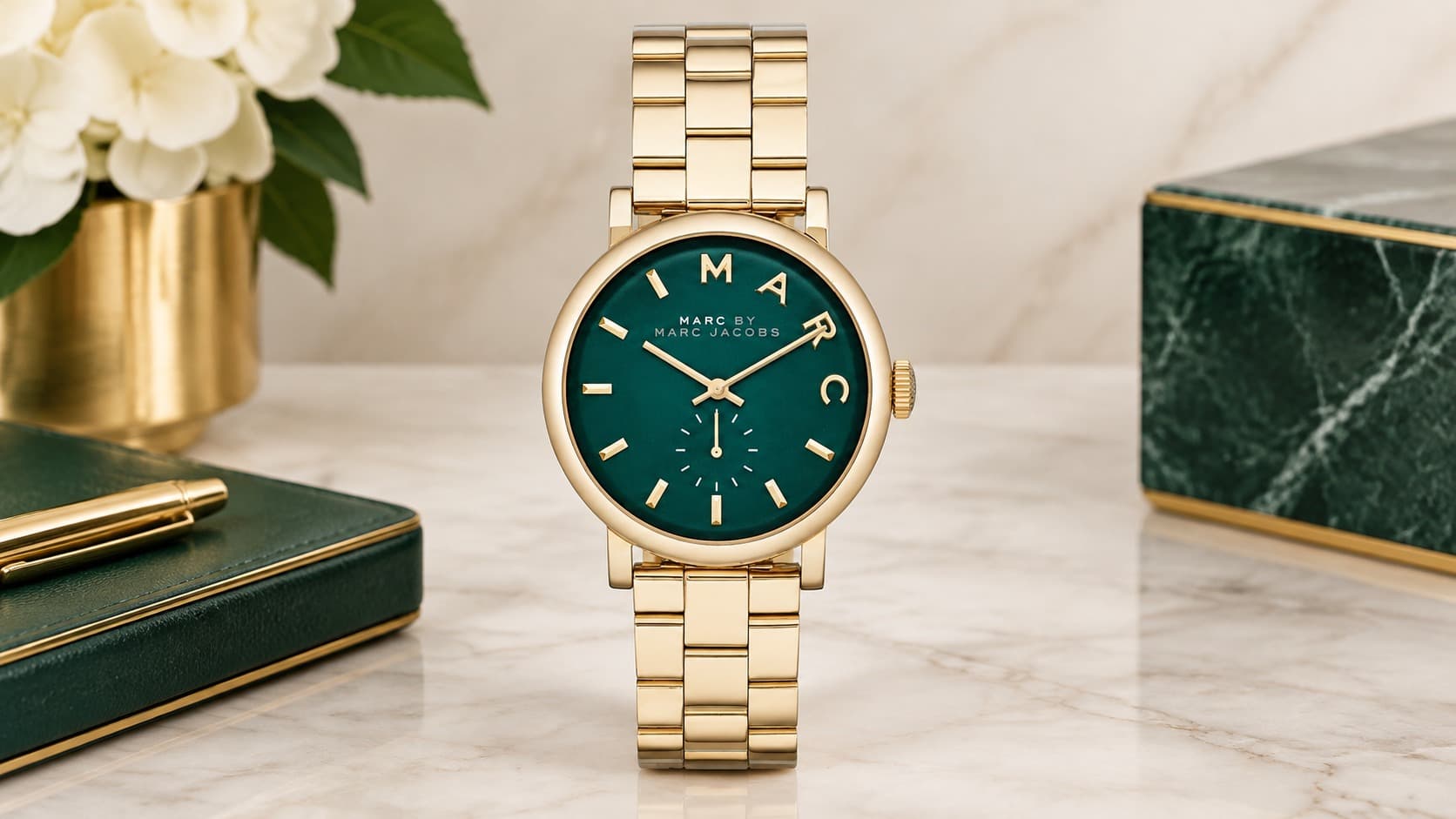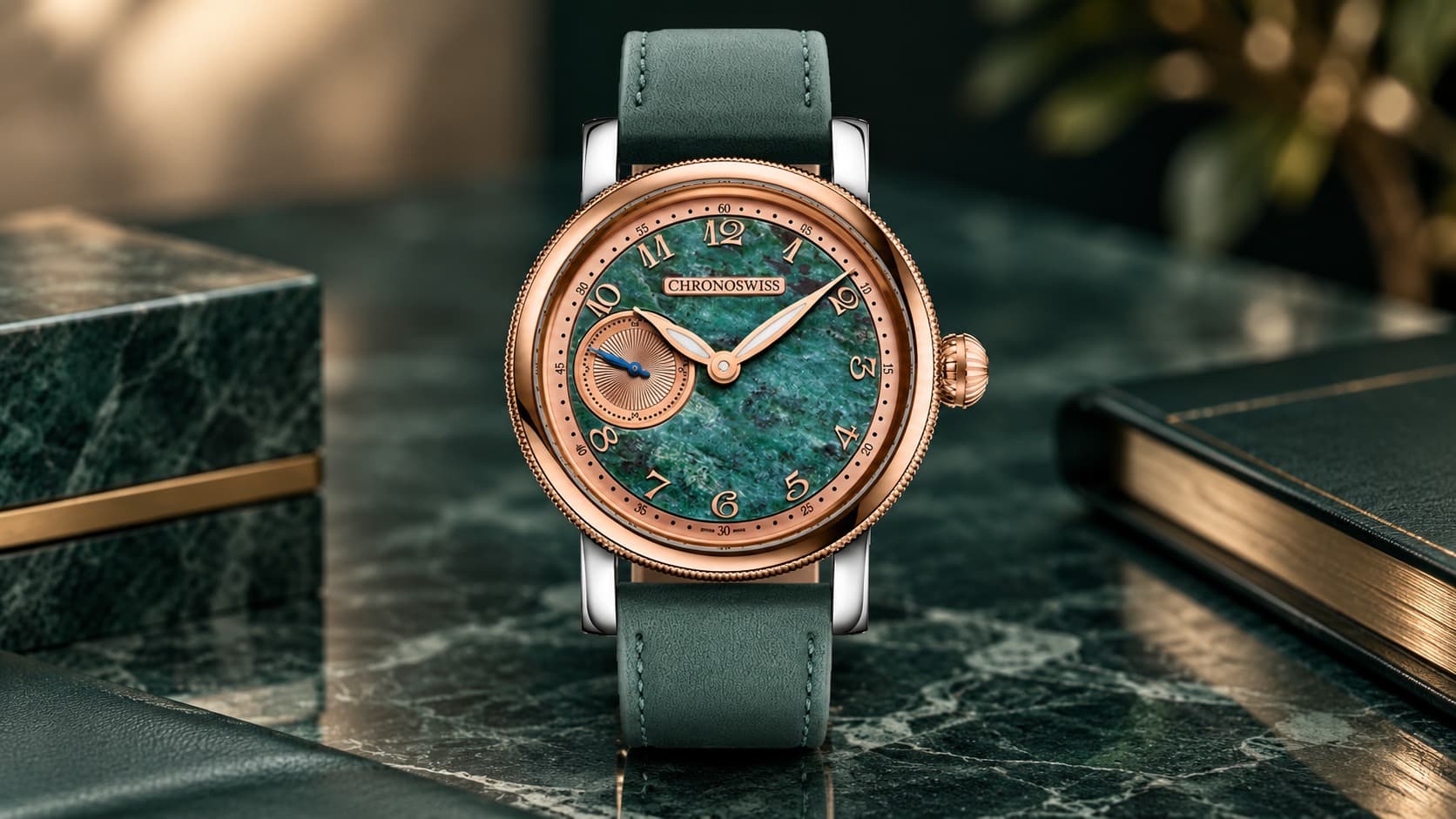
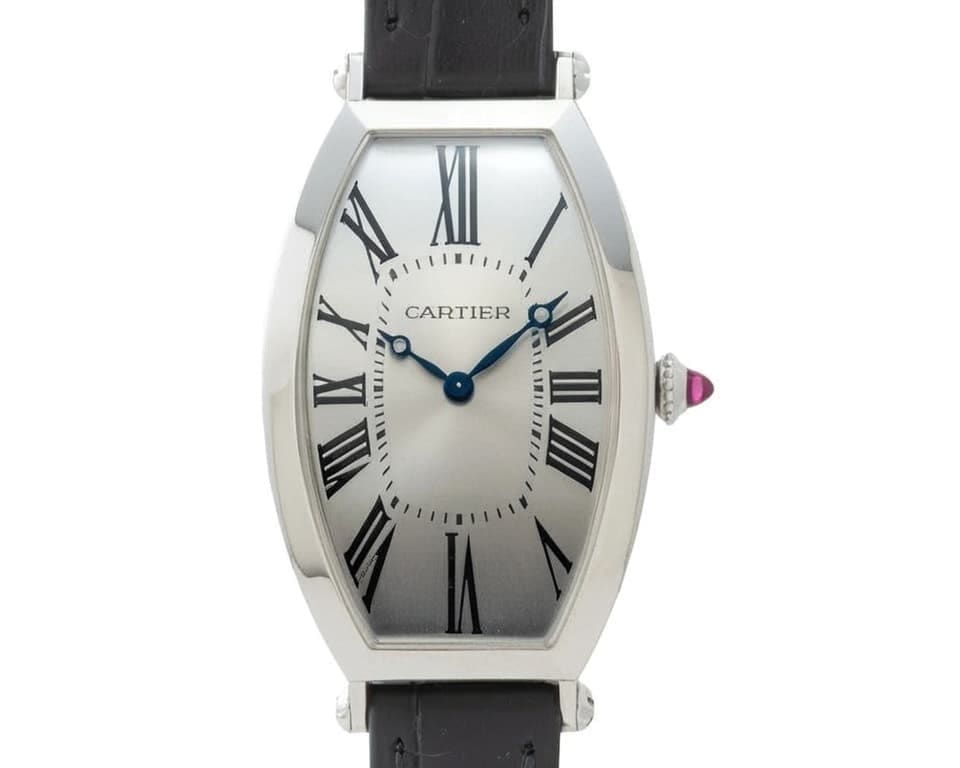
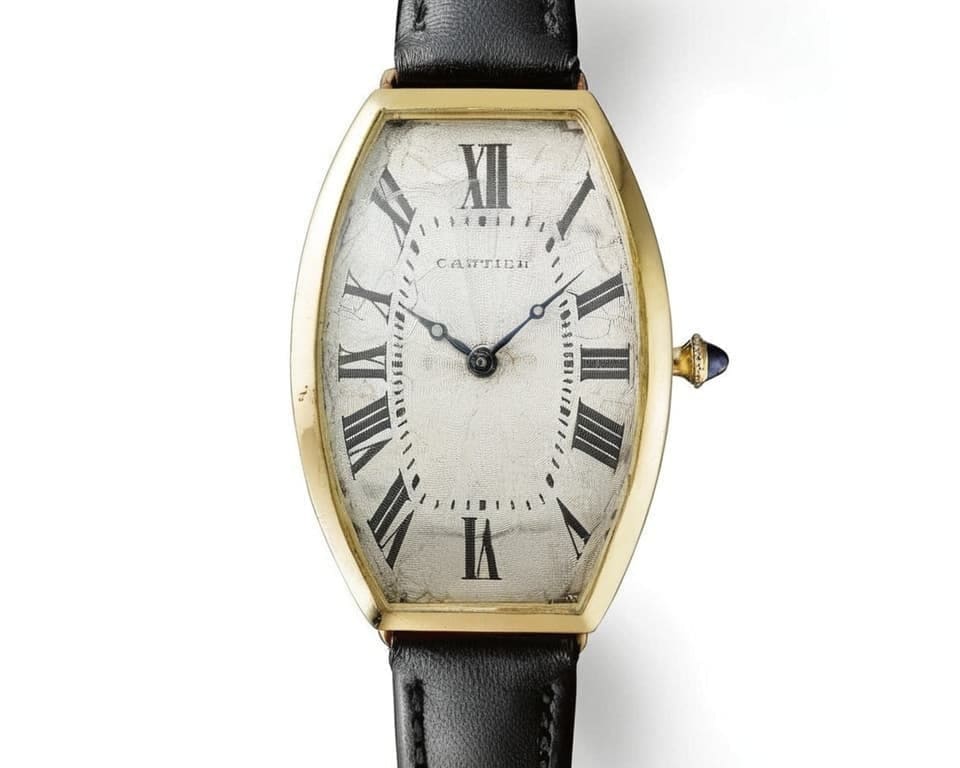
A tonneau watch features a distinctive barrel-shaped case that curves naturally with your wrist, first created by Louis Cartier in 1906. These Art Deco-inspired timepieces (pronounced “ton-OH”) offer superior comfort compared to rectangular cases while providing more visual presence than round watches. From affordable Swiss options around $300 to ultra-luxury pieces exceeding $1 million, tonneau watches span every price range while maintaining their sophisticated aesthetic that combines elegance with distinctive character.
What Makes Tonneau Watches Different from Round Watches?
Tonneau watches stand apart from all other case shapes through their barrel-like form that creates both practical advantages and aesthetic appeal. The curved sides that bulge outward at the center, combined with parallel flat edges at top and bottom, produce a watch that sits differently on your wrist and interacts with your arm in ways that round, square, or rectangular cases simply cannot match.
- The curved barrel design follows your wrist’s natural shape much better than flat rectangular cases, which often dig into your arm or sit awkwardly. When you bend your wrist, the tonneau case moves with you instead of fighting against your arm’s movement, making these watches surprisingly comfortable for all-day wear even in larger sizes.
- Your tonneau watch will look bigger on your wrist than its actual measurements suggest because the curved sides extend the visual footprint beyond what the numbers tell you. A 35mm tonneau can easily appear as substantial as a 38mm round watch, giving you more presence without the bulk that comes with genuinely oversized timepieces.
- The barrel shape gives watchmakers extra room inside the case to fit larger movements, more complications, or innovative materials without making the watch look chunky or oversized. This space advantage explains why some of the world’s most complex movements, like those in Richard Mille watches, use tonneau cases to house cutting-edge technology while maintaining wearable proportions.
- Most tonneau watches either have very short lugs or no lugs at all, which means the strap attaches directly to the case body. This creates a smooth, flowing line from case to strap that eliminates the sharp angles you get with traditional lugged watches, contributing to both comfort and the watch’s distinctive appearance.
- The proportions of a tonneau case follow mathematical relationships that were popular during the Art Deco period, creating visual harmony through geometric balance. The curves aren’t random – they follow specific ratios that make the watch pleasing to look at from any angle, which explains why these designs have remained attractive for over a century.
- Water resistance can be more challenging to achieve in tonneau cases because the curved shape creates more potential points where water could enter compared to simple round cases. The crown position also varies between models, with some placing it at 2 or 4 o’clock instead of the traditional 3 o’clock position.
- Reading the time takes a moment to adjust to if you’re used to round watches, as your eyes need to adapt to the different dial proportions. However, most people find that tonneau watches actually display time quite clearly once you get used to the shape, with some arguing that the wider dial makes reading easier.
The manufacturing process for tonneau cases requires specialized equipment and more complex machining than round cases, which drives up production costs even for entry-level models. Every curve must be precisely calculated and executed to achieve the flowing lines that define a proper tonneau, and any imperfection in the case shaping becomes immediately obvious to the eye. This technical complexity contributes to the higher prices you’ll typically pay for tonneau watches compared to round alternatives, but it also ensures that every genuine tonneau represents a significant investment in craftsmanship and engineering expertise.
History of Tonneau Watches
The tonneau watch emerged during a revolutionary period in timekeeping when wristwatches were just beginning to replace pocket watches, and its creation marked one of the most significant design breakthroughs in horological history. This barrel-shaped case represented a complete departure from the circular forms that had dominated timekeeping for centuries, establishing a new aesthetic language that would influence luxury watchmaking for generations to come.
- Louis Cartier created the first tonneau watch in 1906, just two years after his groundbreaking Santos design, making it only the second purpose-built wristwatch shape ever conceived. This wasn’t simply a converted pocket watch strapped to the wrist – Cartier designed the tonneau from scratch specifically for wrist wear, with proportions and curves calculated to complement the human arm rather than sit in a vest pocket.
- The early adoption period from 1906 to 1920 saw rapid acceptance among the world’s most prestigious watchmakers, with Patek Philippe beginning tonneau production by 1908 and Vacheron Constantin joining in 1912. These early models were exclusively crafted in precious metals like gold and platinum, immediately establishing tonneau watches as luxury items rather than practical timekeepers for the masses.
- Cartier expanded the concept in 1912 with the Tortue (meaning “tortoise” in French), a rounder variation of the tonneau that softened the barrel’s more angular edges. This demonstrated that the basic tonneau concept could be adapted and refined, leading to numerous interpretations by different manufacturers throughout the 1910s.
- World War I accelerated wristwatch adoption generally, but tonneau watches gained particular favor among officers and wealthy civilians who wanted timepieces that looked distinctly modern and sophisticated. The elongated shape was seen as progressive and forward-thinking, embodying the era’s move away from Victorian sensibilities toward 20th-century modernism.
- The 1920s and 1930s represent the tonneau’s golden age, when Art Deco design principles perfectly aligned with the watch’s geometric proportions and mathematical curves. During this period, tonneau watches became symbols of wealth, sophistication, and cultural awareness, worn by celebrities, industrialists, and artistic figures who wanted to display their modern sensibilities.
- Automobile culture of the 1920s influenced tonneau design significantly, with manufacturers creating “driving watches” that could be worn on the side or back of the wrist for easy reading while gripping a steering wheel. The curved case was particularly well-suited to this application, and many tonneau watches from this era were marketed specifically to the growing community of automotive enthusiasts.
- The decline began in the 1940s as round watches became more dominant and practical concerns during World War II shifted focus toward utility over aesthetics. By the 1950s and 1960s, tonneau production had slowed dramatically as consumers gravitated toward simpler, more versatile round cases that worked better with the era’s more casual lifestyle.
- A sporty revival occurred in the 1970s with models like the Heuer Autavia and Omega Speedmaster Mark II, which used tonneau-inspired shapes for chronographs aimed at racing enthusiasts. These watches departed from the dress watch traditions of earlier tonneau designs, proving the shape could work in athletic contexts with the right proportions and styling.
- Franck Muller single-handedly revived tonneau watches in 1992 with his Cintrée Curvex design, which featured three-dimensional curvature that bent not just horizontally but vertically as well. This innovation created the modern “celebrity watchmaker” phenomenon and sparked renewed interest in tonneau shapes among collectors and luxury watch buyers.
- Richard Mille revolutionized the category again in 2001 with the RM001 Tourbillon, applying Formula 1 aerodynamics principles to tonneau case design and incorporating aerospace materials like titanium, carbon fiber, and sapphire crystal. These watches cost hundreds of thousands of dollars and attracted athletes, celebrities, and tech entrepreneurs who wanted cutting-edge technology in a distinctive package.
The tonneau’s journey through more than a century of watchmaking reflects broader changes in society, technology, and fashion, with each revival bringing new interpretations while respecting the fundamental appeal of Cartier’s original 1906 vision. Today’s tonneau watches range from faithful reproductions of early designs to radical reinterpretations using materials and techniques that Louis Cartier could never have imagined, proving that this distinctive shape continues to inspire innovation and creativity in luxury timekeeping.
Best Tonneau Watch Brands
The tonneau watch market spans from accessible Swiss manufacturers to ultra-luxury houses, with each brand bringing distinct philosophies, price points, and design approaches that cater to different collector preferences and budgets. The hierarchy of tonneau producers reflects both historical significance and contemporary innovation, creating opportunities for every level of enthusiast to find appropriate options.
- Cartier remains the undisputed king of tonneau watches, having created the category in 1906 and continuing to produce the most faithful interpretations of the original design. Current Tonneau models start around $35,000 for basic steel versions and climb above $100,000 for platinum limited editions, with the brand’s unmatched heritage and impeccable finishing justifying premium pricing for collectors seeking authentic tonneau DNA.
- Vacheron Constantin offers tonneau excellence through their Malte collection, which spans over a century of continuous production and provides some of the finest Swiss complications available in barrel-shaped cases. Prices range from approximately $25,000 for time-only models to over $150,000 for tourbillon versions, with 270+ years of watchmaking expertise evident in every detail of case construction and movement finishing.
- Patek Philippe’s historic tonneau models represent the ultimate collector prizes, with vintage pieces from the early 1900s commanding $30,000 to $500,000+ at auction depending on condition and complications. The brand’s current production focuses on round cases, making their vintage tonneau watches increasingly rare and valuable among serious collectors seeking horological history.
- Richard Mille has revolutionized tonneau design for the 21st century, applying Formula 1 technology and aerospace materials to create watches that cost $200,000 to over $1 million. These extreme tonneau interpretations attract athletes, celebrities, and tech entrepreneurs who want cutting-edge innovation wrapped in the distinctive barrel shape that Louis Cartier pioneered over a century ago.
- Franck Muller democratized modern tonneau collecting with their Cintrée Curvex line, offering entry points around $4,000 for steel models and climbing to $70,000+ for complicated gold versions. The brand’s playful approach to tonneau design includes unique complications like Crazy Hours and Color Dreams that bring contemporary flair to traditional case shapes.
- Audemars Piguet produces limited tonneau pieces that bridge their sports watch expertise with classical case shapes, typically priced from $40,000 to $200,000+ for precious metal versions with manufacture complications. Their tonneau offerings remain relatively rare, making them particularly sought-after by collectors who appreciate the brand’s Royal Oak legacy applied to barrel-shaped cases.
- Longines provides accessible luxury through their Evidenza collection, offering Swiss automatic movements and quality finishing for approximately $2,500 to $5,000 depending on complications and materials. The brand’s 190+ year heritage and competitive pricing make their tonneau watches excellent entry points for buyers seeking genuine Swiss luxury without ultra-premium costs.
- Hamilton delivers American tonneau heritage through their Boulton collection, which pays homage to 1940s designs with hand-winding movements and classic proportions starting around $1,000. The Indiana Jones movie connection and 80-hour power reserve Swiss movements provide compelling value for buyers wanting tonneau character with reliable modern performance.
- Tissot offers the most accessible genuine Swiss tonneau watches through their Heritage Porto line, priced around $650 for mechanical versions with ETA movements and traditional styling. These watches prove that tonneau elegance doesn’t require luxury budgets, though finishing and materials reflect the entry-level positioning compared to higher-tier alternatives.
- Frederique Constant bridges affordable and luxury segments with their Art Déco Tonneau models ranging from $695 to $4,000, featuring Swiss movements, sapphire crystals, and respectable finishing that outperforms many fashion brands while remaining accessible to middle-market buyers seeking quality tonneau watches.
- Bulgari creates distinctive tonneau interpretations through their Assioma collection, combining Italian design flair with Swiss manufacturing expertise in pieces typically priced from $8,000 to $50,000+. The brand’s jewelry heritage brings unique aesthetic perspectives to tonneau design, often featuring bold proportions and unconventional material combinations.
- Tudor occasionally produces tonneau-inspired pieces that apply their tool watch philosophy to barrel-shaped cases, offering Rolex manufacturing quality at more accessible prices typically ranging from $3,000 to $8,000. These sporty tonneau interpretations demonstrate how the classic shape can work in contemporary, practical contexts.
- Independent manufacturers like Habring², Moritz Grossmann, and various German producers offer boutique tonneau watches that combine traditional craftsmanship with modern innovation, typically priced from $5,000 to $25,000 for limited production pieces that provide exclusivity without mega-luxury costs.
- Fashion brands including Armani, Hugo Boss, and various designer labels produce tonneau-styled watches priced under $1,000, though these typically feature quartz movements, minimal water resistance, and finishing that reflects their fashion-first rather than horological priorities.
- Vintage specialists and auction houses regularly offer tonneau pieces from discontinued lines by major manufacturers, creating opportunities to acquire quality Swiss tonneau watches from respected brands at prices often below current production equivalents, though buyers must carefully evaluate condition and authenticity.
- Microbrand producers have embraced tonneau shapes in recent years, offering unique interpretations with modern materials and competitive pricing typically ranging from $300 to $2,000, though long-term service support and resale value remain uncertain compared to established manufacturers.
The tonneau market’s diversity means buyers can find appropriate options regardless of budget, from fashion-focused pieces under $200 to museum-quality masterpieces exceeding $1 million, with the key being to match brand reputation, build quality, and features to your specific needs and long-term collecting goals.
Most Famous Tonneau Watches
The tonneau category includes some of the most iconic and desirable timepieces ever created, ranging from historically significant vintage pieces to cutting-edge modern interpretations that push the boundaries of materials and craftsmanship. These models have defined the category and continue to influence new designs across all price ranges.
- The Cartier Tonneau remains the gold standard for the category, with current production models faithfully honoring the original 1906 design while incorporating modern manufacturing techniques. The Large Hand Wound model measures 46.1 x 26.2mm and houses the manual-wind Caliber 1917 MC with a 38-hour power reserve, available in 18K rose gold for approximately $50,000 or platinum limited to 100 pieces worldwide.
- Cartier’s Extra Large Skeleton Dual Time represents the pinnacle of tonneau complexity, measuring 52 x 29mm and featuring the skeletonized Caliber 9919 MC movement that displays the mechanical beauty through an open dial. Limited to 100 pieces each in rose gold and platinum, these watches command prices exceeding $99,000 and showcase how traditional tonneau aesthetics can accommodate modern complications.
- The Vacheron Constantin Malte collection offers sophisticated Swiss craftsmanship in multiple sizes, with the standard model measuring 34.4 x 28.4mm and larger variants reaching 41.5mm and 42mm. Notable pieces include the Malte Tourbillon at approximately $150,000, while standard manual-wind models start around $25,000 to $35,000 depending on materials and complications.
- Vacheron Constantin’s Malte collection spans the full range of horological complications, from simple time-only pieces to complex models featuring tourbillons, moon phases, chronographs, and regulator functions. The collection demonstrates how tonneau cases can accommodate virtually any complication while maintaining classical proportions and elegant finishing.
- Franck Muller’s Cintrée Curvex represents the modern tonneau revival, with the entry-level Casablanca offering distinctive styling for $3,900 to $6,500 in steel and $6,300 and up in gold. The signature Cintrée Curvex models range from $5,700 to $7,500 in steel and $15,000 to $30,000 in precious metals, with complicated versions reaching $55,000 to $70,000.
- The Franck Muller Aeternitas Mega 4 stands as perhaps the most complex tonneau watch ever created, featuring 36 complications including minute repeater, tourbillon, perpetual calendar, and equation of time. Limited to extremely small production numbers, these masterpieces command over $3.1 million and represent the absolute pinnacle of tonneau watchmaking.
- Richard Mille has redefined tonneau watches for the 21st century, with models like the RM 27-04 Tourbillon Rafael Nadal weighing just 30 grams including the strap and capable of withstanding forces up to 12,000 Gs. These watches cost $1 million or more and use materials like TPT carbon, titanium, and synthetic sapphire in construction techniques borrowed from aerospace engineering.
- The Richard Mille RM 66 Flying Tourbillon represents the brand’s ultimate expression of tonneau design, featuring a movement suspended within the case like a Formula 1 engine and constructed from materials that didn’t exist when Louis Cartier created the first tonneau. At $1,095,000, it demonstrates how far tonneau design has evolved while maintaining the essential barrel shape.
- Tissot Heritage Porto offers authentic tonneau styling at accessible prices, with the manual-wind version measuring 42.45 x 31.10mm and powered by the ETA Valjoux 7753 movement. Priced around $650 in steel, these watches provide genuine Swiss manufacturing and classic tonneau proportions without the luxury price tag.
- Frederique Constant’s Art Déco Tonneau Collection bridges the gap between affordable and luxury, offering ladies’ models priced from $695 to $895 with Swiss quartz movements and traditional tonneau styling.
- Hamilton’s Boulton collection pays homage to American tonneau heritage with 1941-inspired designs starting around $1,000 for mechanical versions. These watches gained cultural significance through their appearance in Indiana Jones films and offer hand-winding movements with 80-hour power reserves in classically proportioned cases.
- Patek Philippe’s vintage tonneau models from the early 1900s through 1970s represent some of the most collectible timepieces ever made, with early gold examples commanding $30,000 to $100,000 at auction depending on condition and provenance. Steel examples from the 1970s are extremely rare and can exceed $200,000 when they appear at major auction houses.
These models demonstrate the tonneau’s versatility across every price range and style preference, from faithful historical reproductions to radical modern interpretations that push technological boundaries. Whether choosing a vintage piece with historical significance or a contemporary model with cutting-edge features, buyers enter a category where distinctive design meets exceptional craftsmanship across more than a century of continuous development.
Tonneau Watch vs Other Shapes
The choice between tonneau and other watch case shapes involves more than just aesthetic preference, as each shape offers distinct advantages in comfort, versatility, and visual impact that can significantly affect your daily wearing experience. Round watches have dominated the market for decades, but tonneau cases provide unique benefits that make them worth serious consideration for specific needs and style preferences.
- Round watches offer maximum versatility across formal and casual settings, working equally well with business suits, weekend casual wear, and everything in between. They’re also easier to manufacture, which typically results in lower prices, and they offer the widest selection of strap and bracelet options since most accessories are designed around circular cases.
- Tonneau watches excel in formal settings due to their Art Deco heritage and architectural elegance, making them ideal choices for black-tie events, business meetings, and occasions where you want to make a sophisticated impression. However, they can look out of place in very casual settings like beach wear or athletic activities where round sports watches would be more appropriate.
- Size perception works differently across shapes, with tonneau watches appearing larger than their actual measurements due to the elongated profile and curved sides that extend visual presence beyond stated dimensions. A 35mm tonneau can easily look as substantial as a 38mm round watch, while rectangular watches often appear smaller than their measurements suggest due to their flat, angular profiles.
- Comfort advantages strongly favor tonneau designs for extended wear, as the curved case follows your wrist’s natural contours instead of sitting flat against your arm like rectangular watches. Round watches offer balanced comfort but lack the tonneau’s ergonomic advantages, while square watches can feel bulky and create pressure points if not properly sized to your wrist.
- Strap compatibility presents more challenges with tonneau cases, as the curved shape requires specially designed straps or bracelets that match the case’s contours. Round watches accept virtually any strap style, while rectangular and square watches work best with straight-end straps that complement their angular lines.
- Investment potential and resale value generally favor round watches from established brands due to broader market appeal and easier replacement if damaged or lost. Tonneau watches typically have smaller collector markets, which can make them harder to sell quickly but may also create opportunities for better deals when buying vintage or discontinued models.
- Wrist presence varies significantly between shapes, with tonneau watches creating distinctive character through their unique silhouette that draws attention and starts conversations. Round watches blend into most situations without making strong style statements, while square and rectangular watches can appear bold and architectural but may also seem dated depending on current fashion trends.
- Water resistance considerations favor round cases, which create fewer potential leak points than the complex curves of tonneau designs. The crown placement on tonneau watches also varies more than round watches, with some models positioning it at 2 or 4 o’clock instead of the traditional 3 o’clock spot, which can affect both water resistance and ease of operation.
- Gender versatility works differently across shapes, with round watches being truly unisex and working equally well for men and women in appropriate sizes. Tonneau watches often lean slightly masculine due to their strong architectural lines, though smaller versions and certain brands like Cartier have created successfully feminine interpretations.
- Dial readability can be affected by case shape, with round watches offering the most intuitive time display since clock faces have been circular for centuries. Tonneau watches require a brief adjustment period as your eyes adapt to the different proportions, but most wearers find them perfectly readable once accustomed to the shape.
- Price premiums typically apply to tonneau watches even in entry-level segments due to the manufacturing complexity of creating precise curves and maintaining water resistance across multiple seal points. Round watches benefit from economies of scale and simpler manufacturing processes, while rectangular and square watches fall somewhere between the two in terms of production costs.
- Style longevity considerations suggest that round watches represent the safest choice for timeless appeal, as they’ve remained popular across multiple decades and fashion cycles. Tonneau watches experience periodic revivals and declines in popularity, which can affect both resale value and how current your watch appears over time.
The decision between tonneau and other shapes ultimately depends on your priorities regarding comfort, versatility, style impact, and long-term satisfaction. If you value distinctive design, formal elegance, and superior ergonomics over maximum versatility, tonneau watches offer compelling advantages that round alternatives simply cannot match.
Buying Your First Tonneau Watch
Purchasing a tonneau watch requires different considerations than buying round timepieces, as the unique case shape, specialized movements, and varying price structures create specific challenges and opportunities that can significantly impact your satisfaction and long-term value. Smart buyers need to evaluate multiple factors beyond simple aesthetics to ensure their tonneau watch meets both immediate needs and future expectations.
- Size considerations become critical with tonneau watches due to their elongated proportions that can overwhelm smaller wrists or appear lost on larger arms. For wrists measuring 6.5 inches and under, look for cases between 32-36mm in width and under 45mm lug-to-lug, as the curved design naturally conforms to smaller wrists better than oversized round alternatives.
- Medium wrists from 6.5 to 7.5 inches can accommodate most modern tonneau sizes ranging from 34-40mm in width, with the curved case shape providing more comfortable wear than equivalent rectangular watches. The barrel design’s visual presence often makes these sizes appear more substantial than their measurements suggest.
- Large wrists over 7.5 inches should consider modern interpretations with cases measuring 38-42mm in width, potentially with integrated bracelets that enhance the overall proportional relationship between watch and arm. Avoid vintage-sized tonneau watches that may appear disproportionately small on substantial wrists.
- Movement types in tonneau watches span from basic quartz to ultra-complicated mechanical calibers, with each offering distinct advantages depending on your priorities and budget. Quartz movements provide superior accuracy within 15 seconds per month, require minimal maintenance beyond battery changes every 2-5 years, and allow for thinner case profiles that enhance the tonneau’s elegant lines.
- Mechanical movements offer traditional craftsmanship appeal with smooth sweeping seconds, better long-term value retention, and the satisfaction of owning a mechanical marvel, but they require professional servicing every 3-5 years and cost significantly more initially. Popular reliable options include Swiss ETA movements, in-house calibers from established manufacturers, and specialty movements designed specifically for tonneau cases.
- Entry-level price ranges under $1,000 focus primarily on style over horological significance, featuring quartz movements, mineral crystals, and basic water resistance from brands like Tissot, Hamilton, and various fashion companies. These watches provide tonneau aesthetics at accessible prices but may lack the build quality and materials found in higher-tier alternatives.
- Mid-range options from $1,000 to $10,000 offer genuine Swiss manufacturing, automatic movements, sapphire crystals, and superior finishing from established brands like Longines, Frederique Constant, and entry-level luxury manufacturers. This price range provides the best balance of quality, features, and long-term satisfaction for most buyers.
- Luxury segments above $10,000 feature in-house manufacture calibers, hand-finishing, precious metals, and exceptional build quality from brands like Cartier, Vacheron Constantin, and Patek Philippe. These watches offer investment potential, heirloom quality, and the prestige associated with historic tonneau manufacturers.
- Ultra-luxury modern interpretations from brands like Richard Mille and high-end Franck Muller models can exceed $100,000 or even $1 million, featuring cutting-edge materials, innovative complications, and extreme exclusivity that appeals to collectors seeking the absolute pinnacle of tonneau design and technology.
- Quality indicators to evaluate include case finishing that combines brushed and polished surfaces with sharp, clean edges indicating precision manufacturing. Examine the integration between case and lugs or strap attachments, looking for seamless transitions that demonstrate proper tonneau construction techniques.
- Dial quality assessment should focus on applied markers rather than printed indices, consistent finishing like sunburst or guilloché patterns, crisp text alignment, and properly shaped hands with quality luminous material application. The dial should complement the case’s proportions without appearing cramped or oversized within the tonneau opening.
- Movement decoration and specifications matter more in tonneau watches due to their luxury positioning, with quality pieces featuring Geneva stripes, perlage, polished components, and regulation within plus or minus 10 seconds per day. Automatic movements should offer at least 40 hours of power reserve, while manual-wind calibers can vary widely in their reserve capacity.
- Water resistance ratings require careful evaluation in tonneau cases, as the curved construction creates more potential seal points than round cases. Don’t rely solely on stated ratings – consider professional testing if you plan water activities, and remember that tonneau cases may be less water-resistant than equivalent round watches due to their complex geometry.
- Strap and bracelet compatibility presents unique challenges with tonneau watches, as the curved case shape requires specially designed accessories that may be expensive to replace or difficult to source. Consider the long-term availability and cost of replacement straps when making your purchase decision.
- Brand reputation and service network become particularly important with tonneau watches, as their specialized nature may require manufacturer-specific expertise for repairs and maintenance. Choose brands with established service networks and readily available parts to ensure long-term ownership satisfaction.
- Resale value considerations should factor into your decision, as tonneau watches typically have smaller secondary markets than round alternatives. This can work in your favor when buying vintage or discontinued models but may present challenges if you need to sell quickly or want to trade up to different pieces.
The most successful tonneau watch purchases result from careful consideration of all these factors rather than impulse decisions based solely on appearance, ensuring that your chosen timepiece provides years of satisfaction while maintaining its value and functionality throughout your ownership experience.
Best Ways to Wear a Tonneau Watch: Style Tips and Ideas
Tonneau watches require more thoughtful styling considerations than round watches due to their distinctive shape and formal heritage, but when paired correctly with your wardrobe, they create sophisticated looks that few other timepieces can achieve. The key lies in recognizing when the tonneau’s architectural elegance enhances your outfit versus when it might clash with your intended style.
- Formal occasions represent tonneau watches at their absolute best, where the Art Deco heritage and geometric elegance perfectly complement black-tie events, weddings, galas, and high-end business meetings. Choose precious metal cases in gold or platinum with leather straps in black or brown, avoiding metal bracelets which can appear too casual for the most formal settings.
- Business formal settings allow slightly more flexibility while still showcasing the tonneau’s sophisticated character, with both leather straps and metal bracelets working well depending on your suit and personal style. The elongated case shape pairs excellently with tailored clothing, creating visual interest without overwhelming your professional appearance.
- Black leather straps create the most versatile formal combination, working with virtually any precious metal case and complementing dark suits, tuxedos, and evening wear. Ensure the strap hardware matches your case metal – gold buckles with gold cases, steel buckles with steel cases – to maintain visual harmony across your entire look.
- Brown leather straps offer warmth and richness that works particularly well with rose gold cases and earth-toned clothing, making them excellent choices for daytime formal events, business casual settings, and autumn or winter styling. Choose shade variations from light tan to dark chocolate based on your wardrobe’s color palette.
- Colored leather straps can add personality to tonneau watches while maintaining elegance, with burgundy, navy, and forest green working well for business casual and smart casual occasions. Avoid bright colors or heavily textured leathers that compete with the watch’s architectural lines.
- Metal bracelets work best when specifically designed for your tonneau model, as integrated designs that follow the case’s curves create seamless transitions from case to bracelet. Generic bracelets often look awkward on tonneau cases due to the curved lugs and distinctive proportions that require custom fitting.
- Business casual styling opens more creative possibilities, allowing combinations like steel tonneau watches with brown leather straps, rose gold cases with navy straps, or integrated metal bracelets that bridge formal and casual aesthetics. The key is maintaining sophistication while adding subtle personality through strap and case material choices.
- Smart casual occasions can accommodate tonneau watches when styled thoughtfully, focusing on cleaner casual pieces like quality chinos, blazers, and button-down shirts rather than jeans and t-shirts. The watch should enhance rather than clash with your relaxed but polished aesthetic.
- Casual styling presents the biggest challenges for tonneau watches, as their formal heritage can appear overdressed in very relaxed settings. When attempting casual wear, choose steel cases over precious metals, consider fabric NATO straps or quality rubber straps, and pair with your most elevated casual pieces.
- Seasonal considerations affect strap choices significantly, with brown leather feeling more appropriate for fall and winter styling while black leather works year-round. Summer styling might call for lighter colored straps or even high-quality fabric options that complement the season’s lighter clothing palette.
- Color coordination should focus on harmonious rather than matching tones, allowing your tonneau watch to complement rather than perfectly match your outfit. Silver-dial watches pair well with cool-toned clothing, while gold or champagne dials work better with warm earth tones and rich colors.
- Proportional balance becomes crucial when styling tonneau watches, as their elongated shape can appear overwhelming on smaller wrists or lost on very large wrists. Choose sizes that create visual harmony with your arm and avoid oversized models that dominate your entire look.
- Occasion appropriateness should guide your tonneau styling decisions, with simpler time-only models working better for conservative business environments while complicated pieces with multiple displays can enhance evening events where conversation starters are welcome.
- Personal style integration requires honest assessment of your wardrobe and lifestyle, as tonneau watches work best for people who regularly wear tailored clothing and appreciate distinctive design details. If your daily uniform consists of jeans and casual shirts, a tonneau might feel out of place regardless of how well you style it.
The most successful tonneau styling recognizes the watch’s inherent character and works with rather than against its formal heritage and distinctive proportions. When chosen and styled appropriately, a tonneau watch becomes a signature piece that elevates your entire wardrobe and creates a sophisticated personal aesthetic that sets you apart from the crowd of round watch wearers.
Tonneau Watch Maintenance: Cleaning, Service, and Storage
Tonneau watches require specialized care approaches that differ from round timepieces due to their curved case construction, unique seal points, and often delicate finishing that can be more susceptible to damage from improper handling. The distinctive shape creates specific maintenance challenges while also offering certain advantages that owners should leverage for optimal longevity and performance.
- Daily cleaning requires gentle attention to the curved case edges where skin oils, soap residue, and dirt accumulate more readily than on simple round cases. Use a soft, lint-free cloth to wipe down the case daily, paying special attention to the crevices where the curved sides meet the dial and caseback, as these areas trap debris that can cause long-term damage if left unaddressed.
- Water exposure demands extra caution with tonneau cases, as the curved construction creates multiple seal points that may be more vulnerable than traditional round case designs. Even if your watch carries a significant water resistance rating, the complex geometry means professional testing is more critical than with round watches, especially if you notice any moisture inside the crystal.
- Storage considerations become important due to the tonneau’s curved profile that doesn’t sit flat like round watches, potentially requiring special watch cushions, stands, or storage solutions that accommodate the unusual shape. Avoid storing tonneau watches in standard round watch boxes where they might rest unevenly and develop stress points over time.
- Professional servicing schedules should follow manufacturer recommendations more strictly than with round watches, as tonneau movements often feature specialized components or assembly techniques that require factory-trained expertise. Plan for full service every 3-5 years for daily wear pieces, with occasional wear watches potentially extending to 5-7 years between major services.
- Vintage tonneau watches need more frequent professional attention every 3-4 years due to aged seals, potentially discontinued parts, and delicate finishing that may not withstand modern service techniques. Seek specialists experienced with your specific brand and era, as improper service can permanently damage irreplaceable components or original finishes.
- Crown operation requires gentler handling in tonneau watches, particularly those with crowns positioned at 2 or 4 o’clock rather than the traditional 3 o’clock location. The unusual crown placement can create awkward winding angles that stress the stem mechanism if operated roughly, so always wind slowly and avoid forcing resistance.
- Strap maintenance becomes more complex with tonneau cases due to the curved attachments that create different stress patterns than straight lugs on round watches. Leather straps may crack at curved stress points sooner than on round watches, requiring more frequent inspection and earlier replacement to prevent damage to the case lugs or attachment points.
- Temperature sensitivity affects tonneau watches differently due to their often larger case volumes and complex internal structures that may expand and contract at different rates than simple round cases. Avoid extreme temperature changes and never expose your tonneau watch to rapid heating or cooling that could stress the case seals or movement components.
- Magnetic field protection applies equally to tonneau watches, but the larger case size in some models may actually provide better shielding for the movement than compact round cases. Still, maintain standard precautions around speakers, magnetic closures, and electronic devices that could affect timekeeping accuracy.
- Crystal care requires extra attention on tonneau watches, as the often larger crystal surface area provides more opportunity for scratches, and replacement crystals may be more expensive or difficult to source than standard round crystals. Use watch protectors during activities that might impact the crystal, and address any chips immediately to prevent larger cracks.
- Bracelet adjustments and repairs present unique challenges with tonneau watches, as integrated bracelets must follow the case’s curves precisely, often requiring specialized tools and expertise that general watch repair shops may not possess. Consider authorized dealers for bracelet work rather than independent repair shops that might not have proper equipment.
- Movement regulation may require more frequent attention in tonneau watches, particularly those with complications or specialty calibers designed specifically for the case shape. The larger case volume in some tonneau designs can affect temperature regulation and shock absorption, potentially impacting timekeeping consistency over time.
- Humidity control becomes important for tonneau watches stored in varying climates, as the complex case construction may be more susceptible to condensation issues than simple round cases. Use silica gel packets in storage containers and avoid sudden humidity changes that could cause internal fogging or moisture damage.
- Insurance documentation should include detailed photographs of your tonneau watch from multiple angles, as the unique case shape and often limited production numbers make replacement more challenging than with common round watches. Many tonneau watches appreciate in value over time, making regular appraisals important for adequate insurance coverage.
- Authorized service centers become more critical with tonneau watches than round alternatives, as the specialized construction often requires factory tools, training, and parts that independent repair shops cannot provide. Establish relationships with authorized service providers before you need repairs to ensure prompt, proper maintenance when required.
Proper care and maintenance of tonneau watches requires more attention and planning than round timepieces, but the investment in specialized care pays dividends in longevity, performance, and value retention. The unique character that makes tonneau watches special also makes them more dependent on knowledgeable, careful maintenance throughout their lifespan.
Tonneau Watch Questions: Everything You Need to Know
Tonneau watches generate unique questions due to their distinctive shape, specialized construction, and varied cultural perceptions that differ significantly from mainstream round timepieces. These common inquiries reflect the practical concerns and misconceptions that potential buyers encounter when considering their first barrel-shaped watch or expanding existing collections.
- Are tonneau watches suitable for small wrists? Small wrists actually benefit from tonneau watches more than most other case shapes, as the curved barrel design conforms naturally to wrist contours and can appear more proportional than oversized round watches. Look for vintage-inspired models measuring 32-36mm in width, as the elongated shape provides visual presence without overwhelming smaller arms, while the curved sides follow your wrist’s anatomy better than flat rectangular alternatives.
- Are tonneau watches considered dress watches? Tonneau watches absolutely qualify as dress watches and often excel in formal settings due to their Art Deco heritage and architectural elegance that perfectly complements tailored clothing. The geometric proportions and sophisticated finishing make them ideal for black-tie events, business meetings, and formal occasions, though they’re less versatile than round dress watches for transitioning between formal and casual contexts.
- Can you swim with a tonneau watch? Swimming compatibility depends entirely on the specific water resistance rating rather than the case shape, though tonneau cases do present additional challenges due to their complex curved construction that creates more potential seal points than simple round cases. Watches rated to 50m or higher should handle swimming, but professional water resistance testing is more critical for tonneau watches than round alternatives.
- Do tonneau watches hold their value? Value retention varies dramatically by brand and model, with excellent investment potential existing for vintage Cartier tonneau pieces, Patek Philippe historic models, and limited edition luxury tonneau watches that can appreciate 5-20% annually. However, most contemporary tonneau watches from mid-tier brands experience fair to good value stability rather than significant appreciation, making them lifestyle purchases rather than pure investments.
- How do you pronounce “tonneau”? Tonneau is pronounced “ton-OH” or “tuh-NOH” with emphasis on the second syllable, deriving from the French word meaning barrel, which perfectly describes the watch’s distinctive curved case shape that bulges outward at the center like a wine barrel.
- Are tonneau watches more fragile than round watches? Tonneau watches can be more fragile than round alternatives due to their complex case construction, curved crystal surfaces that may be more prone to impacts, and specialized movements that often require factory-trained service technicians. The curved case edges can also be more susceptible to dings and scratches if the watch receives side impacts during daily wear.
- Are tonneau watches suitable for both men and women? Gender appropriateness spans both masculine and feminine appeal, with tonneau watches offering unisex versatility when sized appropriately, though the architectural lines tend to lean slightly masculine compared to round watches. Brands like Cartier have successfully created feminine tonneau interpretations, while larger sport versions appeal primarily to male collectors seeking distinctive alternatives to round tool watches.
- Do tonneau watches cost more to maintain? Battery replacement in quartz tonneau watches may cost more than round alternatives due to the specialized case opening procedures required for curved constructions, and some models may require authorized dealer service rather than standard watch repair shops that lack proper tools for tonneau case work. Professional service intervals may also need to be shorter due to complex case construction.
- Are straps more expensive for tonneau watches? Strap replacement presents ongoing costs and sourcing challenges, as tonneau watches often require specially shaped straps with curved end pieces that match the case’s unique proportions. Standard straight-end straps designed for round watches rarely fit properly, and replacement options may be limited to manufacturer accessories or expensive custom leather work.
- Do tonneau watches wear larger than their size? Tonneau watches generally run larger on the wrist than their stated dimensions suggest due to the elongated profile and curved sides that extend visual presence beyond actual measurements. A 35mm tonneau typically appears as substantial as a 38mm round watch, making size selection more complex for buyers accustomed to round watch proportions.
- Are complications more expensive in tonneau watches? Complications in tonneau watches often cost significantly more than equivalent functions in round cases due to the specialized movements required to fit the barrel-shaped case properly. Chronographs, GMT functions, and calendars may require custom caliber modifications that increase both initial purchase price and long-term service costs.
- What should I know about buying vintage tonneau watches? Vintage tonneau watches require extra caution when purchasing, as authentication can be more challenging than round watches due to smaller production numbers, fewer reference materials, and specialized knowledge required to identify period-correct details. Always seek expert evaluation for significant vintage tonneau purchases, particularly pre-1950 pieces.
- Will a tonneau watch feel uncomfortable if I’m used to round watches? Tonneau watches may feel uncomfortable initially if you’re accustomed to round watches, as the different proportions and curved case shape require an adjustment period for both visual aesthetics and physical comfort. Most wearers adapt within days, but some prefer to try tonneau watches before purchasing to ensure compatibility with personal preferences.
- Are tonneau watches appropriate for business settings? Tonneau watches work well for business environments when chosen appropriately, with precious metal cases and leather straps being particularly suitable for conservative professional settings. However, large sport tonneau watches or pieces with unconventional complications might appear too flashy for traditional corporate environments where understated round dress watches would be safer choices.
These frequently asked questions demonstrate that tonneau watches require more research and consideration than round alternatives, but they also offer unique advantages and character that many collectors find irresistible once they experience the distinctive appeal of Louis Cartier’s revolutionary 1906 creation.
Conclusion
Tonneau watches represent a compelling intersection of horological innovation, artistic expression, and practical elegance that has endured for over a century. From Louis Cartier’s revolutionary 1906 creation to today’s cutting-edge interpretations by Richard Mille and Franck Muller, these distinctive timepieces offer collectors and enthusiasts something genuinely different from the ubiquitous round watch. The tonneau’s ergonomic advantages, Art Deco heritage, and unique visual presence create opportunities for personal expression while maintaining the sophistication demanded by serious collectors. Whether choosing an accessible Swiss piece like the Hamilton Boulton, a mid-range luxury option like the Longines Evidenza, or investing in a heritage Cartier tonneau, buyers enter a category rich with history, innovation, and enduring aesthetic appeal.
The practical considerations surrounding tonneau watches - from specialized maintenance requirements to limited strap options - reflect the price of owning something truly distinctive in a market dominated by conventional round cases. These challenges also create opportunities for knowledgeable buyers to acquire exceptional timepieces that stand apart from mainstream offerings while providing superior comfort and visual impact. The tonneau’s ability to bridge masculine strength with graceful curves, formal elegance with casual versatility, and historical significance with contemporary innovation makes it particularly appealing to collectors who appreciate watches that tell stories beyond simply displaying time.
As the watch industry continues evolving toward personalization and distinctive design, tonneau watches offer a proven alternative that has weathered multiple fashion cycles while maintaining its essential appeal. The shape’s continued evolution through materials science, movement innovation, and design creativity ensures that tonneau watches will remain relevant for future generations of collectors who value craftsmanship, history, and individuality over mainstream conformity. For those seeking a timepiece that reflects personal style while honoring horological heritage, the tonneau watch provides an elegant solution that connects today’s wearers with more than a century of innovative design and exceptional craftsmanship.