TAG Heuer has spent more than 160 years building watches for people who move fast, from early bicycle racers to today’s Formula 1 drivers. That racing connection is not a marketing story bolted on after the fact. It shaped almost every decision the brand made, from the shape of its cases to the movements ticking inside them. TAG Heuer covers a wide range, from $500 quartz Formula 1 models to six-figure limited editions, which makes it worth understanding what separates one collection from another and where each one fits in terms of budget and everyday wear.
TAG Heuer’s Identity: Sport, Price, and Movements
TAG Heuer built its name on chronographs, which are watches with a built-in stopwatch function. That single idea runs through almost the entire brand history. Long before wristwatches were common, founder Edouard Heuer was already making tools for measuring time in sport, and that focus never really left the company.
Most heritage Swiss brands split their identity between dress watches and sport watches. TAG Heuer leans hard into sport. Its most famous designs, the Carrera, Monaco, and Autavia, were all created for people timing races, not people going to the opera. Even the brand’s move into smartwatches with the Connected line kept that competitive, performance-first attitude rather than trying to copy a dress watch look.
Price is another difference. TAG Heuer sits in what the watch industry calls the accessible-luxury or mid-luxury tier. Watch price tracker WatchCharts puts the brand’s average price near $2,000, with the full catalog spanning from roughly $200 quartz models to five-figure limited editions. That is a wider spread than brands like Rolex or Patek Philippe show, since those catalogs mostly stay within luxury territory from top to bottom.
Movements are the third factor worth knowing. TAG Heuer builds several of its own automatic calibers, including the Heuer 02 used across the Carrera and Monaco lines, at its manufacturing sites in La Chaux-de-Fonds and Cornol, Switzerland. Its more affordable watches, especially in the Formula 1 and entry Aquaracer models, instead use quartz movements or automatic calibers based on outside suppliers like ETA or Sellita. Neither approach is inherently better, but it explains why two TAG Heuer watches with a similar look can carry very different price tags.
TAG Heuer’s Origin Story and Key Milestones
TAG Heuer started life in 1860 as a one-man watchmaking shop, not a racing brand. Edouard Heuer opened his workshop at age 20 in Saint-Imier, Switzerland, after training as a watchmaker from the age of 14. For its first few decades, the company mostly made pocket watches and stopwatches for sporting events like horse racing and cycling.
The brand’s engineering reputation was built early. In 1869, Edouard Heuer patented a winding mechanism operated from the crown, eliminating the loose key that watches had previously required for winding. Almost twenty years later, Heuer patented the “oscillating pinion” in 1887, a small geared shaft that made it possible to control a chronograph’s start-stop function with a single push of a button rather than a separate lever. That part is still used inside mechanical chronographs made by major watch brands today, which is a remarkable run for a 19th-century invention.
Like most Swiss watchmakers, Heuer nearly did not survive the 1970s. Cheap, accurate quartz watches from Japan gutted demand for mechanical watches across Switzerland, a period the industry still calls the quartz crisis. The financial strain got bad enough that Jack Heuer, the founder’s great-grandson and the man behind the Carrera, sold his shares in 1982 to a consortium led by Piaget. Three years later, in June 1985, that ownership group sold the now-stabilized company to a Saudi-owned investment firm called Techniques d’Avant-Garde, or TAG for short, which renamed the brand TAG Heuer.
In 1999, French luxury conglomerate LVMH purchased the brand and still owns it today. As of May 2026, TAG Heuer’s chief executive is Béatrice Goasglas, who joined the company in 2018 and became the first woman to lead the brand in its 166-year history.
Fun fact: TAG Heuer’s connection to motorsport is not just sponsorship talk. The brand was the first luxury company to have its logo appear on a Formula 1 car back in 1969, and the first watch brand to sponsor an F1 team, in 1971. Decades earlier, Heuer had already worked as the official timekeeper for the Olympic Games in Antwerp, Paris, and Amsterdam during the 1920s.
The Best TAG Heuer Collections
TAG Heuer organizes its watches into a handful of core collections, and each one has a distinct personality. These six collections define almost everything the brand is known for today.
TAG Heuer Carrera
The Carrera is TAG Heuer’s flagship chronograph and the collection most people picture when they hear the brand’s name. It was introduced in 1963 to honor the Carrera Panamericana, a dangerous road race across Mexico, and was designed by Jack Heuer, the founder’s great-grandson.
What makes the Carrera stand out is how balanced it looks. It combines large, easy-to-read numerals with a clean dial that avoids the cluttered look many chronographs fall into. Modern versions range from simple three-hand watches to complex chronographs with tourbillons, so the Carrera works as both an entry point into the brand and a home for its most advanced watchmaking.
Recent Carrera chronographs are built around TAG Heuer’s in-house Heuer 02 automatic movement, which runs for about 80 hours on a full wind, well beyond the roughly 40 hours most automatic watches offer. One newer variant, nicknamed the “Glassbox” Carrera by collectors for its tall, domed sapphire crystal, has become a favorite for fans of the brand’s late-1960s look. Retail prices generally start in the low $3,000s for steel chronograph models and climb sharply from there for gold, tourbillon, or limited editions.
TAG Heuer Monaco
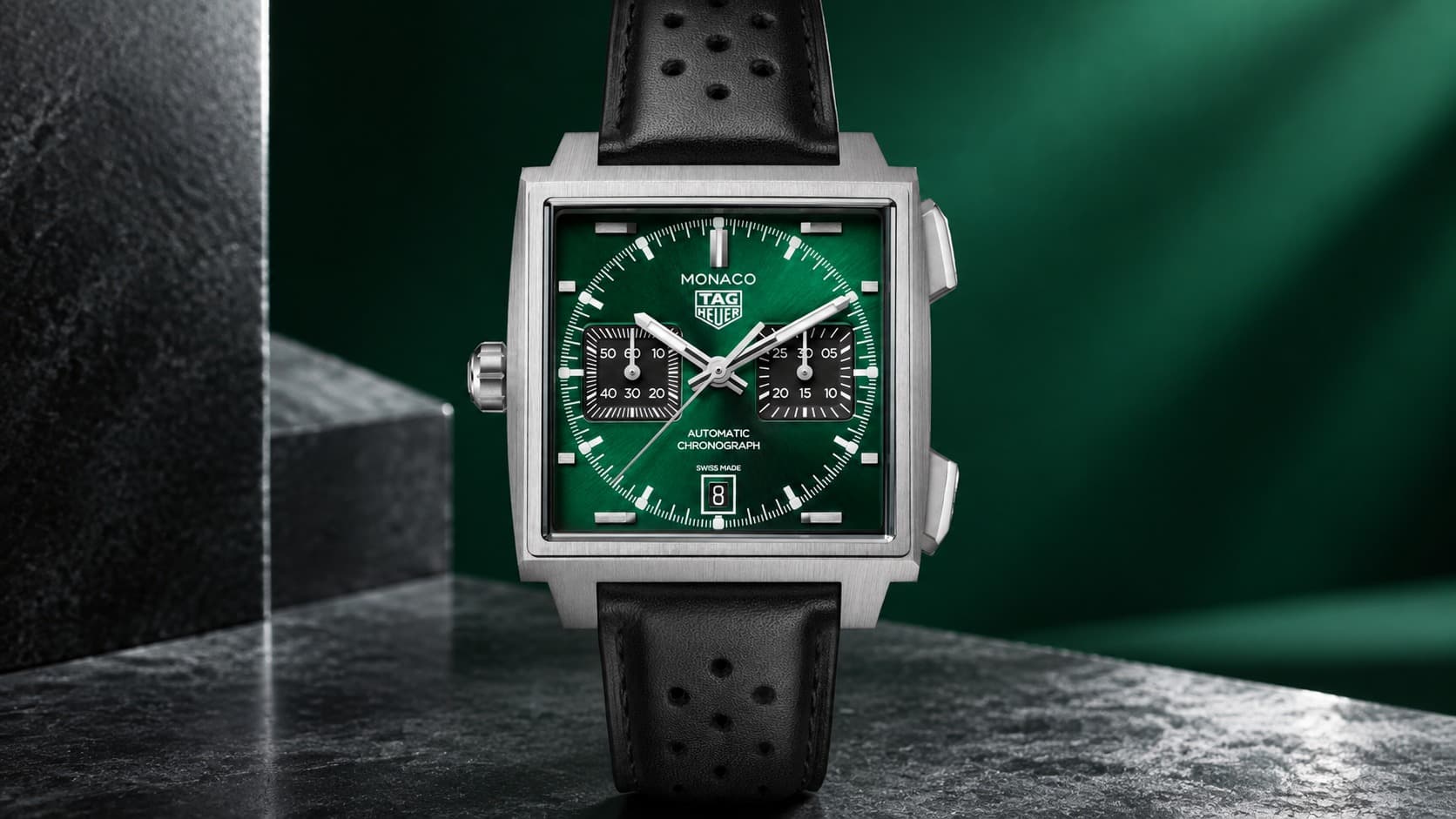
The Monaco is instantly recognizable because of its square case, which was unusual for a watch in 1969 and still stands out today. TAG Heuer has described it as the world’s first square, water-resistant automatic chronograph, and it became a cultural icon after actor Steve McQueen wore one in the 1971 film “Le Mans,” cementing the connection between the Monaco and endurance racing.
Beyond its shape, the Monaco was historically important for its movement. Heuer joined forces with Breitling and two movement specialists, Hamilton-Büren and Dubois-Dépraz, on a confidential effort known internally as Project 99, racing to build one of the industry’s first automatic chronograph movements, the Calibre 11. The base movement’s construction meant the crown landed on the left side of the case rather than the usual right, and rather than hide that quirk, Heuer’s leadership turned it into a selling point, with period advertising noting that the crown had moved because the watch no longer needed daily winding.
Today’s Monaco models keep the square silhouette but use modern in-house movements, and prices typically start around $6,000 to $7,000 for a steel chronograph.
TAG Heuer Aquaracer
The Aquaracer is TAG Heuer’s dive watch line, built for water resistance and everyday durability rather than racing. Every model shares the same core features: a unidirectional rotating bezel, a screw-down crown, a sapphire crystal, and water resistance that starts at 200 meters on most models.
The current lineup is organized by depth rating, running from the Professional 200 up through the Professional 300 and Professional 1000, with GMT versions available for tracking a second time zone. This is generally the most affordable entry into TAG Heuer as a brand, with WatchCharts pricing data putting the collection’s average near $1,000 and most models landing somewhere between $400 and $3,000. Newer Aquaracer Professional models with automatic movements or the brand’s solar-powered Solargraph technology, which runs for about ten months on a single charge, sit toward the higher end of that range, while older quartz models can be found for less.
TAG Heuer Formula 1
The Formula 1 collection is TAG Heuer’s most budget-friendly line and its bestseller. It uses lightweight cases, bold colors, and simple quartz or automatic movements to appeal to buyers who want the brand’s racing identity without a high price tag.
WatchCharts lists the Formula 1 as the brand’s best-selling collection, with an average sale price near $1,000, and current three-hand quartz models generally retail well under $2,000. TAG Heuer also uses the collection for lower-cost collaborations, including chronographs tied to Manchester United, which makes Formula 1 a common gift or first-timepiece purchase rather than a serious collector’s pick. This collection is often where new watch buyers start with TAG Heuer before moving on to a Carrera or Aquaracer later.
TAG Heuer Connected
Connected is TAG Heuer’s smartwatch line, first launched in 2015. TAG Heuer was the first traditional Swiss luxury watchmaker to release a true smartwatch, years before most of its competitors tried the category.
The watch runs on Google’s Wear OS software and tracks fitness metrics like heart rate and steps, alongside phone notifications. TAG Heuer has also released special Connected editions tied to its Formula 1 partnership, including versions with animated race-day dial displays. Prices for Connected models generally sit between $1,800 and $2,500.
TAG Heuer Link and Autavia
The Link is a bracelet-focused watch built around a distinctive S-link design, aimed at buyers who want a sportier alternative to a dress watch without the racing branding of the Carrera or Formula 1.
The Autavia deserves a mention even though it currently sits outside TAG Heuer’s active lineup. Short for “Automobile and Aviation,” the original Autavia chronograph launched on March 3, 1962, and became known for its large sub-dials and rotating bezel. TAG Heuer has revived the Autavia name periodically, most recently around its 60th anniversary in 2022, so it may return again given the model’s cult following among collectors.
How Much Do TAG Heuer Watches Cost
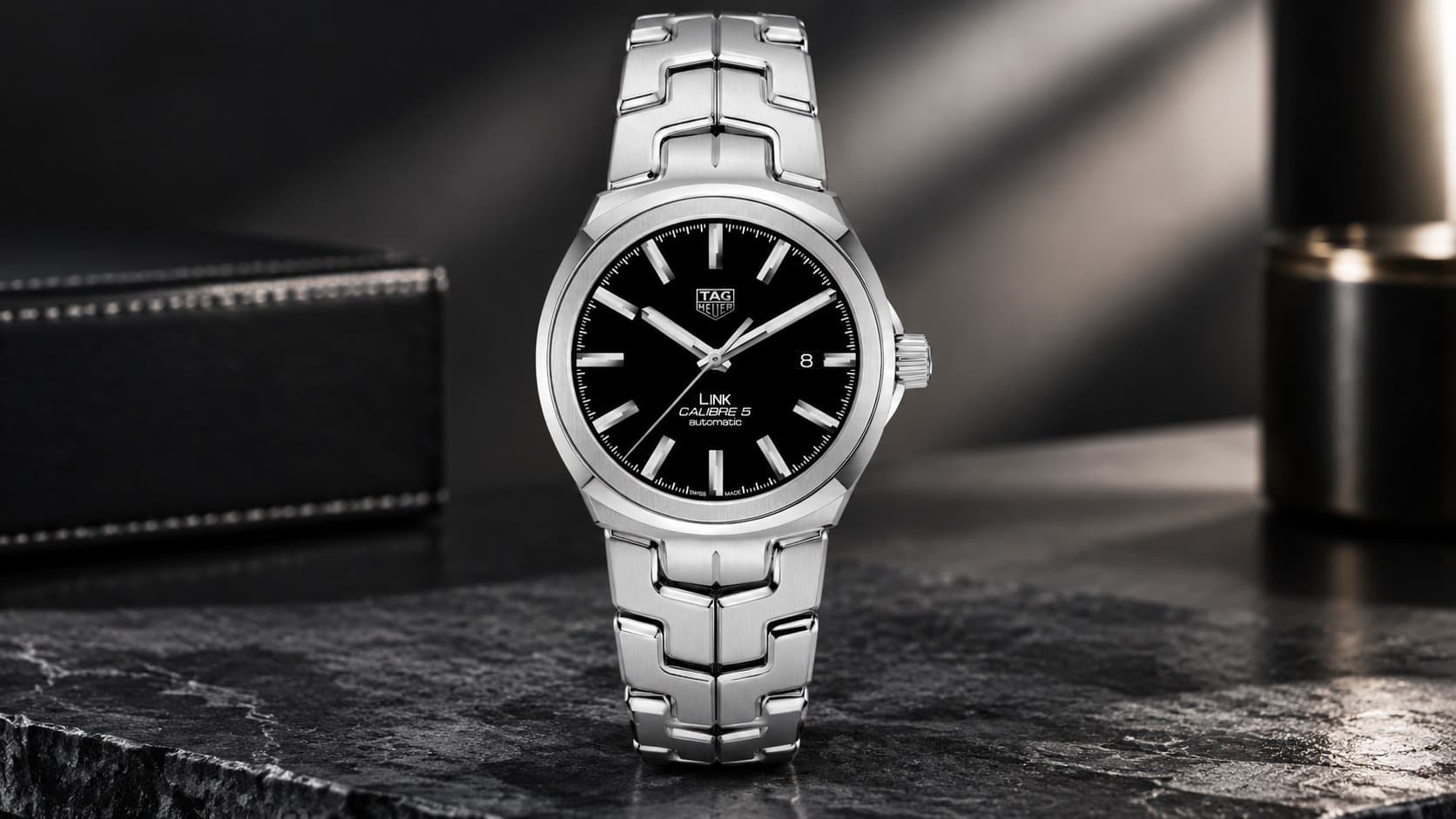
TAG Heuer’s price range spans from budget-friendly quartz models to five-figure limited editions, and the gap between collections is wide enough that it helps to see them side by side.
| Collection | Typical Starting Price | Best For |
|---|---|---|
| Formula 1 | Under $2,000 | First TAG Heuer, budget-friendly racing style |
| Aquaracer | Around $1,850–$3,000 | Everyday dive watch, water resistance |
| Connected | $1,800–$2,500 | Smartwatch features with TAG Heuer design |
| Link | Around $2,500–$4,000 | Sporty bracelet watch, less racing branding |
| Carrera | $3,000 and up | The brand’s signature chronograph |
| Monaco | $6,000 and up | Square-case icon, Steve McQueen history |
These figures reflect general retail ranges, and they will shift with currency changes, metal choices, and limited editions.
TAG Heuer’s Formula 1 Partnership Explained
TAG Heuer is not just a sponsor sitting on the sidelines of Formula 1. As of the 2025 season, TAG Heuer holds the official title of Formula 1’s Official Timekeeper, through a ten-year global agreement between LVMH and Formula 1. It is actually the second time TAG Heuer has held that role, having also served as timekeeper from 1992 to 2003 before Rolex took over.
The brand’s motorsport résumé backs up the role. TAG Heuer’s relationship with F1 teams began in 1971, supplying timing equipment to Ferrari’s Fiorano test track, and later grew into a 30-year sponsorship of McLaren from 1985 to 2015 that spanned the careers of drivers like Ayrton Senna, Mika Häkkinen, and Lewis Hamilton. Formula 1’s own accounting credits TAG Heuer’s various team partnerships with more than 200 race wins and 11 Constructors’ Championships across the decades, along with 14 Drivers’ titles. That history explains why so many of the brand’s watches, from the Formula 1 collection’s name to the Carrera’s racing pedigree, lean into speed and precision as their core identity.
Which TAG Heuer Collection Fits Different Needs
The right collection usually comes down to what the watch needs to do day to day and what budget it needs to fit.
- First Swiss watch under $2,000: the Formula 1 or an entry Aquaracer Professional 200 covers this range.
- A watch built for swimming or diving: the Aquaracer is purpose-built for water resistance.
- The most recognizable design in the catalog: the Monaco’s square case stands apart from nearly everything else on the market.
- The widest range of styles and price points: the Carrera runs from simple three-hand models to complex chronographs with tourbillons.
- Fitness tracking alongside the TAG Heuer name: the Connected line is the brand’s only smartwatch option.
- A women’s watch: TAG Heuer does not run separate men’s and women’s collections, so smaller-diameter Carrera, Aquaracer, and Monaco cases fill that role within the existing lines.
Frequently Asked Questions
What does TAG actually stand for?
TAG stands for Techniques d’Avant-Garde, the name of the investment group that bought Heuer in 1985 and renamed it TAG Heuer. The full brand name combines that acronym with the surname of founder Edouard Heuer, joining the company’s engineering-focused ownership with its 19th-century watchmaking roots.
Is TAG Heuer considered a luxury brand?
Yes, but it sits at the accessible end of Swiss luxury watchmaking. TAG Heuer is priced well below brands like Rolex, Omega, or Patek Philippe, which makes it a common entry point for people getting into Swiss watches for the first time.
What is TAG Heuer’s most iconic watch?
The Monaco is usually considered the most iconic single model because of its square case and its connection to Steve McQueen and endurance racing. The Carrera, however, is the brand’s best-known collection overall and has the longest continuous production history.
Does TAG Heuer make its own watch movements?
Yes, for many of its higher-end models. TAG Heuer produces in-house calibers like the Heuer 02 automatic chronograph movement, though some of its more affordable models use movements built with outside partners like Sellita.
Who owns TAG Heuer?
French luxury group LVMH has owned TAG Heuer since 1999. The brand operates as one of LVMH’s watch and jewelry houses, alongside names like Bulgari and Hublot.
Are TAG Heuer watches a good investment?
Most TAG Heuer models are built to be worn and enjoyed rather than treated as financial investments, since they typically lose value on the resale market like most mid-range watches. Certain vintage Heuer models from before the TAG ownership era, along with rare limited editions, are exceptions that have gained collector value over time.
The Bottom Line
TAG Heuer’s identity comes down to one consistent idea: watches built for people who care about speed, whether that speed is measured on a racetrack, underwater, or in daily life. The Carrera and Monaco carry the brand’s motorsport heritage, the Aquaracer covers everyday durability, and the Formula 1 and Connected lines keep the door open at lower price points. Matching a budget to the collection built for a specific use, whether that is diving, racing history, or smartwatch features, turns the choice between TAG Heuer models into an easy call rather than a guessing game.