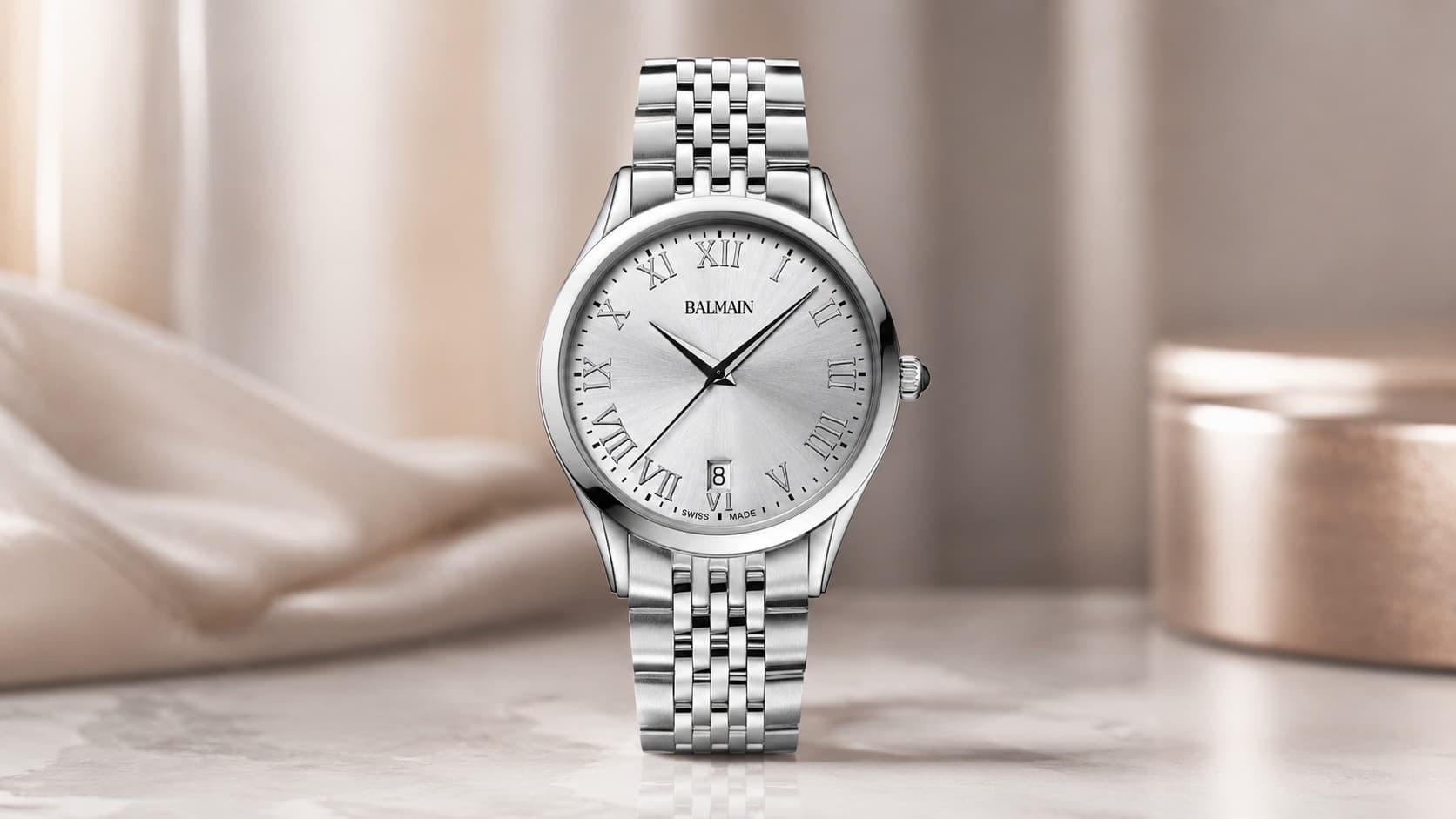
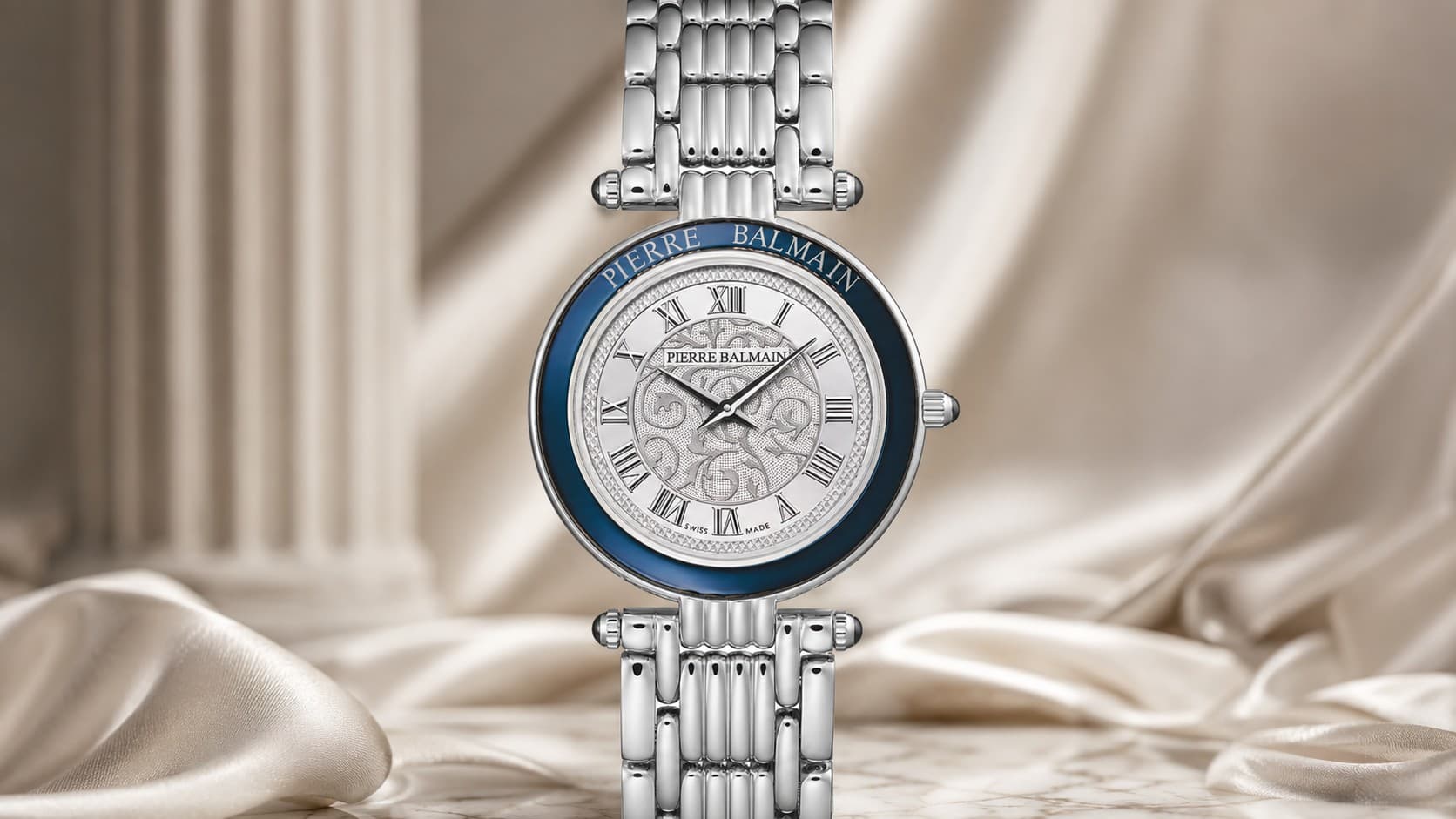
Balmain watches represent a unique intersection of Parisian haute couture heritage and Swiss watchmaking precision. As part of the Swatch Group since 1995, Balmain offers Swiss-made timepieces with genuine ETA movements, sapphire crystals, and elegant designs inspired by Pierre Balmain’s architectural vision at accessible price points ranging from $300 to $1,600. The brand remains in active production with new collections like the dive-inspired Ophrys series and the refined Classic R line continuing Pierre Balmain’s 1945 philosophy that “dressmaking is the architecture of movement.” While these fashion watches won’t appreciate in value like traditional luxury timepieces, they deliver exceptional quality-to-price ratios for buyers who value refined Parisian aesthetics backed by Switzerland’s most respected watch conglomerate.
The History of Balmain Watches
Balmain’s journey from Parisian fashion house to Swiss watchmaker spans eight decades, combining haute couture elegance with mechanical precision. The watchmaking division emerged through strategic partnership with the Swatch Group, transforming a licensing agreement into a fully-owned subsidiary that continues innovating today. This history reveals why Balmain watches balance fashion-forward design with genuine Swiss manufacturing credentials.
- Pierre Balmain opened his first fashion atelier on October 12, 1945, at 44 rue François 1er in Paris’s prestigious Golden Triangle district. Before starting his own brand, he worked alongside Christian Dior at the house of Lucien Lelong during World War II, where both designers learned their craft under one of Paris’s most respected couturiers. His education at the École des Beaux-Arts focused on architecture, teaching him to think about structure, proportion, and how forms occupy space. When American writer Gertrude Stein attended his debut collection of roughly 50 models, she called it the “New French Style,” recognizing something fresh in his emphasis on elegant silhouettes and precise construction.
- His architectural training shaped everything about how Balmain approached fashion design. He famously said “La couture est l’architecture du mouvement,” meaning dressmaking is the architecture of movement. For him, every garment needed structural integrity to hold its shape while allowing the wearer to move naturally, similar to how buildings must balance beauty with stability. This thinking about proportion, balance, and three-dimensional form would later influence watch designs, where case shapes, dial layouts, and bracelet construction all reflect geometric precision.
- The fashion house grew rapidly through the 1950s and 1960s, making Pierre Balmain one of haute couture’s most important voices. His client roster included Marlene Dietrich, Sophia Loren, Brigitte Bardot, Josephine Baker, Katharine Hepburn, and Vivien Leigh, who wore his creations to film premieres and major events. Royalty also sought his designs, including Queen Sirikit of Thailand, for whom he created an entire wardrobe for her 1960 tour of Europe and America. The Duchess of Windsor’s patronage proved particularly valuable given her reputation for impeccable taste. His work emphasized feminine curves through architectural tailoring, featured elaborate embroidery inspired by Middle Eastern art, and prioritized lasting quality over fleeting trends.
- Pierre Balmain developed a particular fascination with Middle Eastern artistic traditions, especially the flowing arabesque patterns found in Islamic architecture and textiles. These intricate floral and geometric motifs became signature elements in his haute couture embroidery, appearing on evening gowns and cocktail dresses throughout the 1950s and 1960s. The arabesques represented complexity and artistry, transforming hand-drawn flowing lines into three-dimensional embroidered textures on fine fabrics. This visual language would eventually transfer to watch dials, where the arabesque pattern remains the brand’s most recognizable design element today.
- The brand entered watchmaking in 1987 through an exclusive licensing deal with the Swatch Group, Switzerland’s largest watch manufacturer. Swatch Group operates a portfolio spanning from affordable Swatch watches up through luxury brands like Omega, Longines, and Breguet. The arrangement let Swiss factories produce timepieces bearing the Balmain name, merging Swiss technical expertise with French fashion heritage. Both companies benefited: Swatch Group gained access to haute couture credibility and style-conscious buyers, while Balmain could expand into a new luxury category without building factories. Early production centered on elegant quartz watches that emphasized looks while maintaining Swiss quality.
- In December 1995, Swatch Group bought exclusive worldwide rights to manufacture, market, and distribute all Balmain watches. This purchase transformed the relationship from a licensing agreement into full ownership, with Balmain Watches operating as a division of Longines Watch Co. Francillon Ltd. Swatch Group now controlled every aspect including design direction, quality standards, and where watches sold. The acquisition signaled long-term commitment to developing the brand. Production moved to Saint-Imier in the Bernese Jura region, known as Switzerland’s “Watch Valley,” where Longines and other prestigious Swatch Group brands manufacture their timepieces.
- Saint-Imier’s location provides significant advantages for producing quality watches. The town sits in the heart of Switzerland’s watchmaking industry, surrounded by suppliers of every component needed: movements, cases, dials, hands, crystals, and more. This concentration means Balmain can access ETA movements from nearby Grenchen (ETA is Swatch Group’s movement manufacturer), work with case makers who have decades of experience, and find dial producers capable of executing complex patterns like the arabesque design. The region also has a deep pool of skilled watchmakers trained through Switzerland’s rigorous apprenticeship system, ensuring consistent assembly quality.
- During the 1990s, Balmain pioneered combining diamond settings with stainless steel cases rather than requiring expensive precious metals. This innovation made luxury aesthetics more accessible by keeping case costs lower while still delivering genuine gemstone sparkle. The technique aligned with Balmain’s position in the Swatch Group lineup as an approachable entry to Swiss watchmaking. Setting diamonds in steel’s harder surface required developing new techniques compared to traditional gold settings, showing genuine technical capability beyond just aesthetic design.
- The 1998 Chronolady collection featured what Balmain claimed was the world’s smallest mass-produced chronograph movement made specifically for women’s watches. Most chronographs used larger movements developed for men’s watches, creating bulky proportions on smaller wrists. The Chronolady’s compact movement delivered genuine three-subdial chronograph functionality in cases under 36mm, giving women sporty features without oversized cases. This collection showed Balmain could solve technical problems, not just create attractive designs.
- In 2000, Balmain introduced the Madrigal Mirror collection with an actual functional mirror built into the watch case. This practical feature appealed to fashion-conscious buyers who wanted to check their appearance without carrying a separate compact. Engineering the mirror while maintaining water resistance and providing adequate size and quality required careful design work. The Madrigal became one of Balmain’s signature collections, continuing in various forms for over a decade.
- For the brand’s 75th anniversary in 2020, Balmain released the Haute Elegance Vintage limited edition of exactly 750 numbered pieces. Each watch featured the arabesque dial pattern that directly referenced Pierre Balmain’s haute couture embroidery from the 1940s and 1950s. The collection combined vintage aesthetics like smaller 30mm cases and “Pierre Balmain” bezel engravings with modern specifications including Swiss quartz movements, sapphire crystals, and contemporary water resistance. Available in steel with yellow or rose gold PVD coating, these anniversary pieces bridged seven decades while remaining practical for daily wear.
- Many buyers don’t realize the Balmain fashion house and Balmain Watches operate under completely separate ownership with no operational connection beyond the name. Qatari investment firm Mayhoola bought the fashion house in 2016 for roughly 500 million euros, controlling clothing, accessories, fragrances, and all fashion business. This purchase didn’t affect Balmain Watches at all since Swatch Group owns that division under the 1995 acquisition. The fashion house designs runway collections in Paris under creative directors, while watch design happens in Switzerland under Swatch Group management.
- When Olivier Rousteing left as creative director of the fashion house in November 2025 after 14 years and Antonin Tron took over, fashion media covered the change extensively. However, this leadership shift has zero impact on watches. The watch division reports directly to Swatch Group management in Biel, Switzerland, not to anyone in Paris. Design direction, collection planning, manufacturing decisions, distribution strategy, and all other watch operations remain entirely under Swatch Group control. This separation protects watches from fashion industry volatility while still allowing use of the Balmain name and heritage.
- Balmain Watches continues active production with new releases as of January 2025. The Classic R 2025 collection launched with clean dials featuring modern Roman numerals and five-link steel bracelets, targeting dress watch buyers at accessible prices starting around 475 Swiss francs. More importantly, the new Ophrys collection marks Balmain’s first true dive watches with 200-meter water resistance, rotating ceramic bezels, sapphire crystals with anti-reflective coating, and ETA HeavyDrive movements built for enhanced shock resistance. These launches show continued investment in product development rather than just maintaining existing lines.
- Multiple indicators confirm the brand’s healthy status today. The official balmainwatches.com website runs full e-commerce with secure payment, warranty registration, and complete product details for all current collections. Authorized dealers worldwide stock Balmain watches with full manufacturer support, including Macy’s and Nordstrom in America, Boutique von Burg in Europe, and numerous retailers across India and Asia. The Swatch Group’s 2024 Annual Report published in March 2025 explicitly lists Balmain among active watch brands in its Middle Range segment alongside Tissot, Certina, Mido, and Hamilton. Social media channels post regularly with new products and heritage content.
Pierre Balmain’s path from a 1945 Parisian atelier to today’s Swiss-made timepieces shows how haute couture values can successfully translate into watches. His architectural training and belief in “architecture in movement” proved prophetic, as the same structural thinking that shaped his fashion designs now informs watch case geometry, dial layouts, and bracelet construction. The 1987 partnership and 1995 acquisition by Swatch Group brought manufacturing excellence and technical credibility that pure fashion brands can’t match, while the Balmain name contributed design heritage that distinguishes these watches from generic fashion timepieces. The current separation between fashion house and watch division actually strengthens the watch business by protecting it from fashion industry turbulence while preserving access to eight decades of design archives and Pierre Balmain’s legacy.
Balmain Watch Quality and Features
Balmain watches occupy a specific position in the market: Swiss-made timepieces with legitimate haute couture heritage at prices that won’t require a second mortgage. The brand delivers genuine ETA movements, sapphire crystals, and thoughtful design details within the Swatch Group’s Middle Range tier, positioned between entry-level fashion watches and true luxury timepieces. Several distinctive characteristics set Balmain apart from both generic fashion brands and traditional Swiss watchmakers.
- All current Balmain watches carry “Swiss Made” designation, meaning they meet Switzerland’s strict legal requirements for the label. At least 60% of manufacturing costs must originate in Switzerland, the movement must be Swiss and cased in Switzerland, and final inspection must occur in Switzerland. This certification isn’t just marketing language but a legally protected designation enforced by the Federation of the Swiss Watch Industry. Unlike fashion brands that simply design watches and outsource production to Asia, Balmain manufactures in Saint-Imier using the same supply chain and quality standards as sister brands Tissot, Certina, and Mido.
- Every Balmain watch uses genuine ETA movements manufactured in Grenchen, Switzerland. ETA operates as the Swatch Group’s dedicated movement manufacturer, producing millions of reliable calibers annually for brands across the portfolio and external clients. Current Balmain models use movements like the ETA F03.115, F07.115, 282.002, 902.002, and F05.841 for moon phase complications. The Ophrys collection features the ETA HeavyDrive variant with enhanced shock resistance for sports use. These movements represent proven technology with decades of reliability data, offering accuracy within +/- 15 seconds per month and battery life of 3-5 years depending on complications.
- The arabesque dial pattern remains Balmain’s most distinctive visual signature, directly inspired by Pierre Balmain’s haute couture embroidery from the 1940s-1960s. These flowing floral and geometric motifs appear subtly engraved or stamped into dials across multiple collections, creating visual texture that catches light at different angles. The pattern references Pierre Balmain’s appreciation for Middle Eastern artistic traditions, where arabesque designs symbolized complexity, artistry, and the richness of fine craftsmanship. This detail connects modern watches to the brand’s fashion heritage in a tangible way rather than just slapping a logo on generic watch designs.
- Balmain positions within the Swatch Group’s Middle Range tier, sitting alongside Tissot, Certina, Mido, and Hamilton. This placement means Balmain watches cost more than entry-level Swatch but significantly less than Prestige Range brands like Longines, Omega, and Breguet. The Middle Range targets buyers who want genuine Swiss quality and some design distinction but aren’t ready to spend $3,000-$10,000+ on luxury tier pieces. This positioning allows Balmain to deliver sapphire crystals, solid steel construction, and Swiss movements at $300-$1,600 price points that would be impossible at smaller scale outside the Swatch Group ecosystem.
- Case construction uses 316L surgical-grade stainless steel across the line, a material prized for durability, corrosion resistance, and hypoallergenic properties. The “L” designation indicates low carbon content, which improves resistance to corrosion in humid or salty environments. This grade of steel costs more than the 304 stainless often used in cheaper watches but holds polished finishes better and resists scratching from daily wear. Finishing quality varies by collection, with some models featuring fully polished cases, others using brushed surfaces, and higher-end pieces combining both techniques in alternating surfaces.
- Most collections feature scratch-resistant sapphire crystals rather than mineral glass or acrylic. Sapphire rates 9 on the Mohs hardness scale, second only to diamond at 10, making it highly resistant to scratches from daily contact with keys, coins, or desk surfaces. Only diamond, sapphire, or specialized ceramic can scratch sapphire crystal. The Ophrys collection adds anti-reflective coating to the sapphire, reducing glare and improving dial legibility in bright light. This feature typically appears only on higher-priced watches but makes a noticeable difference in real-world visibility.
- Diamond-set models use Top Wesselton VS-SI grade diamonds, the second-highest color grade for white diamonds. Top Wesselton falls within the D-E-F color range on the Gemological Institute of America scale, meaning these stones appear colorless to the naked eye without yellow or brown tints. VS-SI clarity rating indicates very small inclusions visible only under 10x magnification, not to the unaided eye. These specifications ensure Balmain uses genuine quality diamonds rather than low-grade stones that appear cloudy or tinted. Models range from 10-12 diamonds on dial markers up to 56 diamonds on full-set bracelets.
- Mother-of-pearl dials appear across multiple women’s collections, adding natural iridescence that changes appearance based on viewing angle and lighting conditions. True mother-of-pearl comes from the inner shell layer of mollusks, composed of nacre that creates the characteristic rainbow shimmer. Each dial shows unique patterns since natural material varies, making every watch slightly different. Working with mother-of-pearl requires skill since the material is brittle and can crack during cutting or drilling for dial markers. The organic beauty adds luxury appeal while keeping costs lower than full diamond-set dials.
- Dauphine-style hands with sharply tapered profiles appear on many models, chosen specifically for optimal legibility. These hands narrow to fine points, creating strong contrast between their polished surfaces and the dial background. The sharp cut catches light differently than the dial, making hands easily distinguishable even at glance. This design choice reflects Pierre Balmain’s architectural thinking about form and function, where aesthetic choices also serve practical purposes. Some collections use leaf-shaped or simple stick hands depending on the dial design, but the Dauphine style remains most common.
- PVD coating in yellow gold and rose gold tones provides gold aesthetics without solid gold prices. Physical Vapor Deposition bonds a microscopically thin layer of gold alloy to stainless steel through a vacuum chamber process, creating a surface that’s more durable than traditional plating. PVD coating resists scratching and fading better than electroplating since it penetrates slightly into the base metal rather than sitting entirely on the surface. Balmain offers bicolor models mixing steel and gold PVD or full gold-toned pieces. The rose gold uses 5N pink gold alloy for a warm tone that photographs well and complements various skin tones.
- Black cabochon stones adorn the crowns on select women’s collections, adding a jewelry-like detail. Cabochon refers to a gemstone shaped into a smooth dome without facets, typically using black onyx or spinel. This decorative element references luxury watch traditions where brands like Cartier made crown cabochons iconic design features. On Balmain watches, the cabochon is small and functional rather than oversized, serving as a grip enhancement while adding visual interest. The detail costs little to implement but elevates perceived quality beyond watches with plain crowns.
- Case shapes span beyond standard round designs, offering rectangular Art Deco-inspired options, oval cases, and the distinctive hexagonal Taffetas collection. This variety reflects Pierre Balmain’s architectural background and his interest in how geometric forms occupy space on the wrist. The rectangular cases often feature stepped bezels that create multiple planes catching light differently, adding visual complexity. The Taffetas hexagon shape mimics the faceted surfaces of taffeta fabric when light hits its textured weave. Even round cases often incorporate subtle details like coin-edge bezels or alternating polished and brushed surfaces.
- The new Ophrys collection represents Balmain’s most technical offering with features usually found on watches costing $1,000-$2,000 more. The 200-meter water resistance qualifies for actual recreational diving, not just swimming. The unidirectional rotating ceramic bezel provides dive timing with a material that resists scratches and fading from saltwater and sun exposure. Sapphire crystal gets anti-reflective coating for underwater visibility. The ETA HeavyDrive movement includes enhanced shock resistance for sports use. Super-LumiNova coating on hands and markers glows in darkness for low-light reading. This combination delivers genuine tool-watch capability at $640-$750, undercutting similar specifications from brands like Longines or Oris by 30-50%.
- Water resistance specifications vary by collection based on intended use. Dress-oriented pieces like Haute Elegance Vintage and Eirini offer 3 ATM (30 meters), sufficient for rain and hand washing but not swimming. Most collections provide 5 ATM (50 meters), allowing swimming and showering though not diving. Only the Ophrys reaches 20 ATM (200 meters) for actual dive capability. These ratings indicate static pressure resistance in laboratory conditions, not real-world diving depth. Water resistance degrades over time as gaskets age, requiring testing every 18-24 months if swimming regularly with the watch.
- Bracelet designs range from simple three-link constructions to more sophisticated five-link patterns and integrated designs like the Be Balmain’s octagonal links. Better bracelets feature solid end links that connect firmly to the case lugs rather than folded metal that feels hollow and cheap. Most Balmain bracelets use push-button deployant clasps or butterfly clasps that fold over for secure wear, though some leather strap models use traditional pin buckles. The Taffetas collection matches its hexagonal case shape with faceted hexagonal bracelet links, creating visual continuity from case to clasp.
- Balmain offers both men’s and women’s specific collections rather than just shrinking men’s designs for women’s wrists. Women’s watches span 22.5mm (Taffetas jewelry pieces) to 39mm (Balmainia chronographs), with most falling in the 25-33mm range that suits smaller wrists without looking like children’s watches. Men’s options run 40-42.5mm, aligning with contemporary preferences for substantial wrist presence without entering oversized fashion watch territory above 45mm. Case thickness stays reasonable at 6.5-11mm depending on complications, avoiding the ultra-thin dress watch category but remaining comfortable under shirt cuffs.
- The brand maintains active design evolution rather than recycling the same models for decades. The 2025 Classic R collection introduced refined dial layouts with improved legibility through larger applied numerals and more negative space. The Ophrys represents an entirely new category for Balmain, targeting active buyers who want Swiss quality in sports watches. Earlier innovations like the Madrigal Mirror and Chronolady showed willingness to solve practical problems rather than just following trends. This ongoing development matters because it indicates Swatch Group continues investing in the brand rather than letting it stagnate on past designs.
- Celebrity and fashion industry connections remain part of Balmain’s appeal, though watch-specific endorsements are minimal compared to the fashion house’s high-profile campaigns. The watches appear occasionally on red carpets and in fashion editorial shoots, benefiting from association with the Balmain fashion brand’s visibility during Paris Fashion Week and celebrity dressing. However, the watch division doesn’t spend heavily on watch-specific celebrity endorsements like luxury brands do, instead relying on the broader Balmain name recognition and fashion credibility. This approach keeps marketing costs lower, allowing more budget for manufacturing quality and competitive pricing.
Balmain’s special qualities center on delivering legitimate Swiss manufacturing credentials with distinctive French design sensibility at accessible prices. The Swatch Group ownership provides movement reliability, manufacturing quality, and economies of scale that independent fashion watch brands can’t match. The Pierre Balmain heritage contributes design elements like arabesque patterns and architectural case shapes that reference actual fashion history rather than invented backstories. For buyers who want something more interesting than generic fashion watches but don’t need the prestige or investment potential of luxury brands, Balmain occupies a practical middle ground where Swiss quality meets Parisian style without requiring luxury-tier budgets.
Top 10 Best Balmain Watches
Selecting the best Balmain watches requires balancing technical specifications, design appeal, and value proposition across the brand’s diverse collections. The following ten models represent standout options for different wearing occasions, budgets, and style preferences. Each watch delivers Swiss manufacturing quality while expressing distinct aspects of Balmain’s design philosophy, from elegant dress pieces to the brand’s first genuine dive-capable timepieces.
- The Balmain Madrigal Chronograph 42mm combines sporty functionality with refined aesthetics in a versatile package. The 42mm stainless steel case houses an ETA quartz chronograph movement with three sub-dials measuring elapsed time, while modern Roman numerals and stick markers create balanced legibility. Anti-reflective sapphire crystal and 50-meter water resistance handle daily wear including swimming. Available in green, blue, silver, and anthracite dial colors on steel bracelet or leather strap. Pricing runs 525-625 Swiss francs, roughly $575-700. Best for buyers needing stopwatch functionality for sports, cooking, or work tasks while maintaining dress-casual versatility.
- The Balmain Ophrys Gent 42.50mm represents the brand’s most technical offering with genuine dive watch capability. The 42.5mm case achieves 200-meter water resistance through screw-down crown construction, while a unidirectional ceramic bezel provides dive timing with scratch and fade resistance. The ETA HeavyDrive movement includes enhanced shock resistance, and Super-LumiNova coating ensures low-light readability. Sapphire crystal with anti-reflective coating reduces glare underwater or in bright conditions. Available in black, blue, and green dial variants with steel bracelet. Priced at 585-685 Swiss francs, approximately $640-750. Best for active buyers wanting Swiss quality in a tool watch without luxury pricing.
- The Balmain Classic R 41mm from the 2025 collection emphasizes refined simplicity for everyday wear. The 41mm round case suits most wrist sizes, while clean dial layout with modern Roman numerals and date window at 3 o’clock provides instant legibility. The five-link bracelet tapers comfortably with alternating polished and brushed surfaces. Available in steel, bicolor, or full yellow gold PVD with matching dial treatments. Sapphire crystal and 50-meter water resistance handle daily activities. Starting at 435 Swiss francs for steel, reaching 485 francs for gold-tone versions, roughly $475-530. Best for buyers seeking versatile dress-casual watches bridging office and weekend wear.
- The Balmain Beleganza Gent II 40mm delivers understated elegance for formal occasions. The 40mm case with circular geometrical dial pattern creates sophisticated presence without unnecessary complications. Uniform polished case lines and sapphire crystal maintain refined appearance, while 50-meter water resistance provides practical durability. Available in steel with various dial colors on leather strap or bracelet. Pricing runs 445-495 Swiss francs, approximately $490-545. Best for buyers prioritizing classic dress watch aesthetics for business meetings, formal events, and professional settings.
- The Balmain Haute Elegance Vintage 30mm celebrates retro 1970s-80s aesthetics in women’s sizing. The collection features “Pierre Balmain” engraved on the bezel with signature arabesques dial pattern connecting directly to fashion heritage. The 30mm case with 6.5mm thickness creates elegant proportions on smaller wrists. Available in steel with yellow or rose gold PVD, or bicolor combinations. Sapphire crystal and practical quartz movement eliminate maintenance concerns. Pricing runs 575-675 Swiss francs, roughly $630-740. Best for women seeking vintage-inspired elegance with modern reliability.
- The Balmain Balmainia Chrono Lady 38mm combines sporty chronograph functionality with feminine refinement. The 38mm case houses three sub-counters in a layout that remains legible without feeling cramped. Options include 12 Top Wesselton diamonds totaling 0.070 carats, mother-of-pearl dials, and bicolor steel with rose or yellow gold PVD. Sapphire crystal and 50-meter water resistance suit active lifestyles. Pricing ranges 675-875 Swiss francs, approximately $740-960 depending on diamond options. Best for women wanting genuine chronograph function in elegant packaging suitable for both sport and dress occasions.
- The Balmain Eirini 25-28mm brings natural stone dials to rectangular elegant cases. The collection offers malachite, black aventurine, and other natural materials creating unique visual depth that varies by individual watch. Moon phase complications appear on select models, adding mechanical interest. Rectangular case shapes range 25-28mm with butterfly clasps and embossed crocodile leather options. Sapphire crystal and quartz reliability maintain practicality. Pricing runs 585-735 Swiss francs, roughly $640-805. Best for women seeking distinctive jewelry-watch aesthetics with natural materials and unusual case shapes.
- The Balmain de Balmain 25-31mm serves as the flagship women’s collection spanning understated elegance to statement pieces. Available in three size options (25mm, 29mm, 31mm) to accommodate different wrist proportions. White mother-of-pearl dials with classical Roman numerals and arabesques pattern define the line, with options ranging from simple three-hand models to versions with up to 56 diamonds. Steel and gold PVD combinations provide color variety. Pricing spans 375-1,460 Swiss francs, approximately $410-1,600, with the wide range reflecting base models versus heavily diamond-set variants. Best for women wanting traditional feminine elegance with adjustable luxury levels through diamond options.
- The Balmain Be Balmain 31-33mm features octagonal cases with softened angles for contemporary edge. The integrated bracelet design adds sporty dynamism missing from traditional dress watches. Moon phase complications and diamond dial options with 10-12 stones available across the range. Available in 31mm and 33mm sizes with steel or bicolor finishes. Sapphire crystal and 50-meter water resistance maintain durability. Pricing ranges 525-725 Swiss francs, roughly $575-795. Best for women seeking modern geometric design that stands out from traditional round or rectangular watches.
- The Balmain Taffetas 22.50mm represents the most jewelry-forward collection with asymmetric hexagonal cases. Faceted case surfaces reflect light from multiple angles, inspired by silk taffeta fabric’s visual texture. The matching hexagonal-link bracelet creates sculptural continuity from case to clasp. The 22.5mm size emphasizes jewelry aesthetics over watch functionality, perfect for formal occasions where the watch serves as bracelet alternative. Available in steel and gold PVD combinations with various dial treatments. Pricing runs 495-545 Swiss francs, approximately $545-600. Best for buyers treating watches primarily as jewelry who want architectural design in smallest available size.
These ten models cover Balmain’s range from technical dive watches through elegant dress pieces to jewelry-focused designs. The Ophrys delivers best value for specification-conscious buyers, while the Classic R provides maximum versatility. Women’s collections offer more variety in case shapes and decoration levels, reflecting different occasions from daily wear through formal events. Pricing stays accessible throughout, with even diamond-set pieces remaining under $1,000 in most cases. The consistent use of Swiss ETA movements, sapphire crystals, and solid steel construction ensures reliable performance regardless of which collection appeals most to individual style preferences.
How to Choose a Balmain Watch
Buying a Balmain watch requires evaluating several practical factors beyond just aesthetics. The brand’s positioning as accessible Swiss watches means certain trade-offs compared to luxury timepieces, while offering advantages over generic fashion brands. Smart buyers understand these considerations before purchasing to ensure their watch matches actual needs and expectations rather than just initial visual appeal.
- Budget considerations for Balmain watches span roughly $300-$1,600 depending on complications and materials. Entry-level pieces like basic Balmain de Balmain models start around $280-$410, offering simple three-hand time display with date on leather straps. Mid-range options with chronographs, mother-of-pearl dials, or modest diamond accents run $560-$840. High-end pieces with extensive diamond settings or special editions reach $1,200-$1,600. The Ophrys dive collection sits at $640-$750, delivering exceptional value for its technical specifications. Buyers should compare prices across authorized dealers since some offer periodic sales, though discounts rarely exceed 10-15% on current models. Pre-owned markets through Chrono24 show typical prices at $256-$1,118, often 30-50% below original retail for watches in good condition.
- All current Balmain watches use Swiss quartz movements exclusively, with no automatic or manual-wind mechanical options in the catalog. Quartz movements offer significant practical advantages: accuracy within seconds per month versus minutes for mechanical watches, no daily winding required, lower maintenance costs, and immunity to position errors or magnetic fields. Battery life runs 3-5 years depending on complications like chronographs or moon phases. The trade-off is less romantic appeal for enthusiasts who value mechanical craftsmanship, no visible movement through case backs, and eventual battery disposal environmental concerns. Vintage Balmain pieces from the 1960s-70s may feature manual-wind movements, but anything produced since the 1990s runs quartz. Buyers seeking mechanical watches should look elsewhere in the Swatch Group portfolio like Tissot or Hamilton.
- Size selection matters significantly for wrist fit and wearing comfort. Men’s Balmain watches range 40-42.5mm in diameter, hitting modern preferences for substantial presence without entering oversized territory above 44mm. A 41-42mm case suits most male wrist sizes from 6.5-8 inches in circumference. Smaller wrists under 6.5 inches may prefer the 40mm Beleganza, while larger wrists above 8 inches can handle the 42.5mm Ophrys comfortably. Women’s options span 22.5mm (Taffetas jewelry pieces) to 39mm (Balmainia chronographs), with most falling in 25-33mm. Wrists under 6 inches typically look best with 25-30mm cases, while 6-7 inch wrists can handle 31-33mm sizes. Try watches in person when possible since case thickness, lug-to-lug measurement, and bracelet taper affect fit as much as diameter.
- Style versatility depends heavily on which collection and specific configuration chosen. The Classic R and Beleganza dress models transition reasonably well from business settings through casual weekends, especially in steel without gold accents. Chronographs like the Madrigal lean sporty but work with business casual due to refined finishing. The Ophrys dive watch looks too casual for formal business or black-tie events but handles everything from beach to office casual. Women’s collections range from highly versatile de Balmain models suitable for daily wear to jewelry-focused Taffetas pieces that demand formal occasions. Consider how many different contexts the watch needs to cover before buying a highly specialized design that only works in limited situations.
- Gender-specific designs mean Balmain creates distinct men’s and women’s collections rather than unisex models. Men’s watches feature larger cases, sportier aesthetics, and fewer decorative elements. Women’s collections emphasize smaller proportions, jewelry details like diamonds and mother-of-pearl, and more color variety. Some women with larger wrists may prefer smaller men’s models like the 40mm Beleganza for a fashion-forward oversized look, though bracelet and strap sizing may require adjustment. Men wearing women’s models face greater challenges since 25-30mm cases typically look too small on male wrists. The gender distinction reflects traditional watch marketing, though some newer brands offer more truly unisex sizing.
- Water resistance ratings require realistic interpretation for actual use. The 3 ATM (30 meters) rating on dress models like Haute Elegance Vintage handles rain, hand washing, and incidental splashes only. Swimming, showering, or any intentional water immersion will likely cause water damage despite the “30 meter” number suggesting otherwise. The 5 ATM (50 meters) rating on most collections permits swimming, showering, and surface water sports but not diving or high-impact water entry like jumping off boats. Only the 20 ATM (200 meters) Ophrys qualifies for actual recreational diving per ISO standards. These ratings indicate static pressure resistance tested in laboratory conditions, not real-world diving depths. Water resistance degrades over time as gaskets age and compress, requiring professional testing every 18-24 months if swimming regularly.
- Strap and bracelet options affect both comfort and longevity costs. Steel bracelets offer durability, water resistance, and low maintenance beyond occasional cleaning. They adjust via removing links, a simple process most jewelers perform for $10-20. Integrated bracelets like the Be Balmain cannot swap for leather straps, limiting versatility but creating sleeker aesthetics. Leather straps provide softer wearing comfort and easier size adjustment through buckle holes, but require replacement every 6-18 months with regular wear. Replacement costs run $40-120 for quality leather from the manufacturer or third-party sources. Crocodile embossed leather costs more than plain calfskin but offers more formal appearance. Consider total ownership cost when choosing between bracelet and strap versions of the same model.
- Warranty coverage through Balmain provides 24 months international protection on all new watches purchased from authorized dealers. The warranty covers material defects, manufacturing flaws, movement malfunctions, and component failures under normal use. It excludes battery life beyond the initial battery, normal wear like scratches or strap deterioration, accidental damage from drops or impacts, water damage from exceeding the stated resistance rating, and any servicing by non-authorized repair centers. The warranty becomes void if unauthorized technicians open the case or modify the watch. Grey market purchases from retailers like Jomashop provide the seller’s own warranty instead, typically 1-5 years, but lack manufacturer service network access and official documentation that helps resale value. Keep the warranty card with dealer stamp and purchase date in a safe location separate from the watch itself.
- Authentication becomes important when buying pre-owned or from non-authorized sources. Genuine Balmain watches feature several verification markers: serial numbers engraved on the case back that match warranty documentation, genuine Swiss ETA movements visible through case back or verifiable during battery replacement, clearly printed “Swiss Made” text on the dial without blurring or misspellings, scratch-resistant sapphire crystal that resists knife blade scratching (mineral glass scratches easily), precise “Pierre Balmain” engravings on bezels without rough edges or poor letter spacing, substantial weight from solid 316L stainless steel construction rather than hollow-feeling plated brass, and original packaging with warranty cards bearing dealer stamps. Red flags include prices more than 50% below retail from unknown sellers, any misspellings on dial or case, poor quality leather stitching or bracelet finishing, missing documentation, and sellers unwilling to provide detailed photographs of case back, movement, and dial printing.
- Complications beyond basic time and date affect both functionality and maintenance costs. Chronographs add stopwatch capability through pushers flanking the crown, useful for timing events but requiring more complex movements that cost slightly more to service. Moon phase displays track lunar cycles through a rotating disc, appealing to astronomy enthusiasts or those who appreciate mechanical romance, though offering no practical function for most users. Multiple time zones appear on some models through additional hands or subdials, valuable for frequent travelers. Each complication adds potential failure points and typically increases service costs by $30-75 compared to simple three-hand models. Consider whether you’ll actually use complications regularly before paying extra for features that remain idle most days.
- Brand positioning within the Swatch Group hierarchy means Balmain sits in the Middle Range tier alongside Tissot, Certina, Mido, and Hamilton. This placement indicates the brand targets buyers wanting genuine Swiss manufacturing without luxury-tier pricing or prestige. Balmain delivers better value than pure fashion brands that outsource production to Asia, but lacks the horological history and collector interest of brands like Longines, Omega, or higher tiers. The positioning is honest: these are well-made Swiss watches at fair prices, not future heirlooms or investment pieces. Buyers seeking maximum watchmaking pedigree or resale value should budget up to Longines or Omega. Those wanting best Swiss-for-the-money with distinctive design will find Balmain delivers appropriately for its price point.
- Personal style compatibility matters more than trending designs. Balmain’s aesthetic skews elegant and fashion-forward with French sensibility rather than sporty tool-watch utility or traditional conservative dress watches. The arabesque dial patterns, gold PVD accents, and jewelry details appeal to buyers who enjoy fashion and personal adornment. More conservative dressers or those preferring minimalist designs may find Balmain too decorative. Try visualizing the watch with your actual wardrobe and lifestyle: will it complement your daily clothing, or will it clash with your typical jeans and t-shirts or conservative business suits? The watch should enhance your existing style rather than require wardrobe changes to match it.
Smart Balmain buying means understanding exactly what the brand offers and doesn’t offer. These are legitimate Swiss watches with quality movements, sapphire crystals, and solid construction at accessible prices. They provide style distinction through fashion heritage and thoughtful design. However, they use quartz movements exclusively, depreciate significantly from retail prices, and lack the horological prestige of luxury brands. The ideal Balmain buyer values Swiss quality and French design aesthetics over mechanical romance or investment potential, wants something more interesting than generic fashion watches, but doesn’t need luxury tier status symbols. Matching these realistic expectations to the actual product ensures satisfaction with the purchase rather than disappointment from misaligned hopes.
Where to Buy Balmain Watches

Purchasing Balmain watches through proper channels ensures authentic products, valid warranties, and manufacturer support if problems arise. Multiple buying options exist from official direct sales through authorized retailers to pre-owned marketplaces, each with distinct advantages and trade-offs. Knowing where to buy safely and how to avoid counterfeit or grey market complications protects your investment and ensures long-term satisfaction.
- The official Balmain website operates full e-commerce for direct purchases from the manufacturer. The site displays all current collections with detailed specifications, high-resolution photographs from multiple angles, and accurate pricing in Swiss francs with automatic currency conversion. Ordering directly guarantees authenticity, includes the full 24-month international warranty with proper documentation, and provides manufacturer customer service for any questions or concerns. Free delivery applies throughout Switzerland and Liechtenstein, while international shipping costs vary by destination. The site accepts Apple Pay, major credit cards, Twint (Swiss mobile payment), and Klarna 30-day payment plans. A 14-day return policy allows sending watches back for full refund if unworn and in original condition. Direct buying works best when you know exactly which model you want, since you cannot try watches on before purchase.
- Authorized retailers provide the advantage of trying watches in person before buying while still receiving full manufacturer warranty. Physical watch boutiques and jewelry stores that hold authorized dealer status offer the full Balmain range or can order specific models not currently in stock, typically arriving within 2-4 weeks. These retailers receive regular training from Swatch Group representatives, maintain proper display conditions, and provide warranty cards with proper stamps and signatures. Staff at dedicated watch retailers typically possess specialized knowledge about movements, water resistance, and sizing compared to general jewelry stores. The warranty cards they provide carry official authentication for future service or resale.
- The official store locator at balmainwatches.com/en/revendeurs/ identifies local authorized dealers by country and city. This tool proves invaluable for finding nearby retailers where you can see watches in person, try different sizes on your wrist, and compare models side-by-side. Always confirm a dealer appears on the official locator before purchasing to ensure legitimate authorized status. Retailers not appearing on the official list may still sell genuine watches but cannot provide manufacturer warranty coverage, offering only their own store warranty instead.
- Department stores stock Balmain watches in their fine jewelry and watch sections, though selection tends toward more commercial models rather than the full range. The advantage lies in convenient locations in major shopping malls, regular sales events that may offer 10-15% discounts, and store credit cards that provide additional savings. Department stores typically have liberal return policies and familiar customer service. However, staff may lack specialized watch knowledge compared to dedicated watch retailers, and stock tends toward women’s jewelry-style pieces rather than technical models like dive watches.
- Grey market retailers offer authentic Balmain watches at 20-40% discounts below authorized dealer pricing. These watches are genuine products legally purchased in bulk from authorized dealers in markets with lower pricing, then resold internationally. The significant savings come with important trade-offs: no manufacturer warranty card included, meaning Swatch Group service centers may refuse service or charge higher rates. Grey market sellers provide their own warranties ranging from 1-5 years depending on the model, but servicing happens through their networks rather than official Balmain centers. Missing manufacturer warranty documentation reduces resale value by approximately 10-15% since buyers cannot verify purchase date or original authenticity easily. Grey market buying makes sense for budget-conscious buyers who plan to keep watches long-term rather than resell, understand the warranty limitations, and want maximum savings. Avoid grey market sources if you might want factory service, plan to resell eventually, or value official documentation.
- Pre-owned marketplaces provide access to discontinued models and significant savings on current production. Dedicated watch marketplace websites host hundreds of Balmain listings at any time, with prices typically 30-60% below original retail depending on condition and completeness. Look for platforms offering escrow services where the marketplace holds payment until you receive and approve the watch, protecting against fraud. Dealer ratings and reviews help identify reliable sellers versus risky unknowns. Online auction sites offer broader selection but require more caution with authentication. Verify seller ratings carefully, demand detailed photographs of case back, dial, and movement, and use buyer protection programs when available. Luxury consignment sites specializing in authenticated goods employ expert inspection before shipping, charging premium prices but eliminating counterfeit risk. Discounts on these authenticated platforms run up to 70% off retail for older models.
- Counterfeit warnings apply primarily to online marketplaces and social media sellers rather than physical retailers. Balmain occupies a market position where counterfeiting exists but remains less prevalent than with top-tier luxury brands. Red flags signaling fake watches include prices more than 50% below retail from unknown sellers with no verifiable reputation, listings on random social media platforms rather than established marketplaces, sellers unwilling to provide detailed photographs of movement, case back, serial numbers, and dial printing up close, any misspellings on dial text like “Swiis Made” or incorrect font styles, poor quality finishing with rough case edges or misaligned dial printing, lightweight construction suggesting plated brass rather than solid stainless steel, mineral glass or acrylic crystals instead of sapphire (test with knife blade as sapphire won’t scratch), and missing or photocopied documentation rather than original warranty cards. When buying pre-owned, insist on seeing the watch in person when possible, or use escrow services. Avoid wire transfer payments to unknown international sellers.
- Major online retailers require caution since some allow third-party merchants to list watches regardless of authorization status. While large retailers may carry Balmain watches through authenticated luxury watch programs with full guarantees, many listings come from unknown third-party merchants. These sellers may offer grey market watches without warranty cards, used watches misrepresented as new, or in worst cases outright counterfeits. Return policies provide some protection, but the hassle of receiving a fake watch and fighting for refund outweighs any small savings. If buying through major online retailers, verify the seller is either the retailer’s authenticated program directly or a clearly identified authorized dealer with verifiable physical locations. Read negative reviews carefully since dissatisfied buyers often detail authenticity concerns or missing documentation.
- Physical watch boutiques and jewelry stores not appearing on the official locator may still sell genuine Balmain watches acquired through grey market channels. These stores offer legitimate products but cannot provide manufacturer warranty cards, meaning you receive only store warranty. Pricing may beat authorized dealers slightly, though without the documentation and service network access. Such stores serve buyers who prioritize immediate try-on availability and slight savings over official warranty. The risk lies in no recourse with Swatch Group if problems arise, and potential resale difficulties without provenance documentation. Ask specifically about warranty terms and documentation before purchasing from non-authorized retailers.
- Direct purchase from Switzerland when traveling provides no price advantage for Balmain watches since the brand maintains consistent pricing across markets. Swiss VAT refunds for tourists only apply to purchases exceeding minimum thresholds and require export paperwork, typically saving 7-8% after processing fees. This saving rarely exceeds what authorized dealers in your home country offer during sales. The main advantage of Swiss purchase lies in seeing the full current collection in person in watch boutiques throughout major Swiss cities, and the experience of buying a Swiss watch in Switzerland itself. If traveling to Switzerland for other reasons, visiting a Balmain retailer makes sense, but don’t plan trips specifically for watch purchases expecting major savings.
- Negotiation possibilities vary significantly by retailer type. Authorized dealers rarely discount current production models more than 10% due to Swatch Group pricing policies, though they may offer slightly better prices during sales events or when purchasing multiple items. Grey market dealers build discounts into their standard pricing and typically don’t negotiate further. Pre-owned private sellers on marketplace platforms often accept offers below asking price, with successful negotiations typically achieving 10-20% reductions depending on how long the watch has been listed. Department stores during major sales events may offer the deepest authorized dealer discounts, sometimes reaching 20-25% off retail. Never expect negotiation at the official Balmain website, which maintains fixed pricing.
- Payment methods matter for buyer protection and fraud prevention. Credit cards offer best protection through chargeback rights if disputes arise over authenticity or condition. Many card issuers extend warranties automatically on purchases, adding 1-2 years beyond manufacturer coverage. Avoid wire transfers, Western Union, or money orders when buying from unknown sellers since these methods offer no recourse if problems occur. Payment platforms with buyer protection programs add security for private party purchases by holding funds until you confirm receipt and satisfaction. For expensive purchases over $1,000, consider using credit cards that offer purchase protection insurance covering theft or damage for the first 90-120 days.
Buying from authorized sources costs more upfront but provides peace of mind through authentic products, proper warranty coverage, and manufacturer support. The premium typically runs 20-40% compared to grey market options, representing insurance against authenticity questions and service complications. Grey market buying suits experienced buyers who can verify authenticity themselves and accept warranty limitations for significant savings. Pre-owned markets offer best value for discontinued models no longer available new, though requiring more diligence on authentication. Avoid unknown sellers, social media deals that seem too good to be true, and any source unwilling to provide detailed documentation and photographs. When spending $300-$1,600 on a watch, the small extra cost of authorized purchase protects against much larger potential losses from counterfeits or unserviceable grey market pieces.
Are Balmain Watches a Good Investment?
Balmain watches should be purchased for personal enjoyment and style rather than financial returns. As fashion watches with mass-produced quartz movements, they lack the exclusivity and collectibility that drive appreciation in traditional luxury timepieces. Setting realistic expectations about value retention prevents disappointment and helps buyers make informed decisions based on actual wearing pleasure rather than imagined investment potential.
- Balmain watches are not investment-grade timepieces and buyers should never purchase them expecting financial appreciation. Fashion watches universally depreciate from retail prices regardless of brand name, condition, or rarity. The combination of quartz movements, high production volumes, and positioning as accessible Swiss watches rather than exclusive luxury goods means these timepieces serve as consumable fashion accessories similar to handbags or shoes. The pleasure and utility come from wearing them over years, not from eventual resale. Anyone suggesting Balmain watches as investments either misunderstands the watch market or deliberately misleads buyers.
- Actual market data confirms typical depreciation of 40-60% from original retail prices once watches enter the secondary market. Pre-owned marketplace listings show entry-level models selling for $174-$350, mid-range pieces at $350-$550, and diamond-set chronographs at $500-$800. Luxury consignment platforms report average Balmain selling prices around $283, with exceptional pieces reaching $1,600 only when heavily diamond-set or rare limited editions. Auction site listings cluster in the $225-$550 range for watches in good condition with complete documentation. Even watches only 1-2 years old typically sell for 50-60% of original retail since buyers prefer the security of authorized dealer purchases with full warranty for similar prices.
- Comparison to investment-grade watches reveals the stark difference in value retention. Rolex Daytona chronographs trade at 148-168% of manufacturer suggested retail price in the secondary market, meaning they appreciate above original cost. Rolex GMT-Master II models command 117-188% of MSRP depending on specific reference. Patek Philippe Nautilus sports watches reach up to 215% of retail prices due to extreme demand and limited production. Even more accessible luxury brands like Omega Speedmaster Professional maintain 80-95% of retail value when sold pre-owned in excellent condition. These brands achieve value retention through mechanical movements, limited production volumes, strong brand heritage, and active collector communities. Balmain possesses none of these characteristics at sufficient levels to support value retention.
- Fashion watches as a category depreciate regardless of brand prestige in the fashion industry. Watches from Chanel, Hermès, Dior, and other haute couture houses similarly lose 40-70% of retail value once sold, despite these brands commanding higher fashion credibility than Balmain. The watch market judges timepieces primarily on horological merit, movement quality, production volumes, and brand history within watchmaking specifically. Fashion heritage matters far less than watchmaking pedigree when collectors and enthusiasts evaluate secondary market values. Buyers should not assume Balmain’s fashion house prestige translates into watch value retention.
- Models with better resale prospects include chronographs since the additional complications attract more buyer interest than simple three-hand models. The stopwatch functionality provides practical utility that appeals to broader audiences. Diamond-set pieces retain slightly more value due to intrinsic gemstone material worth, though the labor cost of setting disappears entirely in resale valuations. Any rare automatic or manual-wind Balmain watches from vintage production would command premiums since mechanical movements appeal to collectors, though finding these proves difficult since the brand focused on quartz since the 1990s. Limited editions and anniversary pieces like the 2020 Haute Elegance Vintage collection of 750 pieces maintain value marginally better than unlimited production, though still depreciating 30-50% from retail. Complete sets with original boxes, papers, warranty cards, and all links or strap parts preserve more value than watches missing documentation or accessories.
- Condition dramatically affects resale prices within the already depreciated range. Watches in excellent condition with minimal scratching, all original components, and functioning perfectly sell for the higher end of market ranges. Pieces showing significant case scratches, replacement straps or bracelets, non-functional complications, or moisture damage inside the crystal fetch bottom-tier prices or become unsellable. Polishing cases to remove scratches helps cosmetically but removes metal and can destroy original brushed finishes, sometimes reducing value further if done poorly. Replaced crystals with aftermarket rather than genuine sapphire parts signal prior damage and reduce buyer confidence. Any evidence of unauthorized repairs or modifications severely impacts value since buyers cannot verify what internal changes occurred.
- Documentation proves crucial for maximizing resale value within the depreciated range. Original warranty cards with authorized dealer stamps and purchase dates verify authenticity and age, providing buyer confidence worth 10-15% price premiums over watches lacking papers. Original boxes protect watches during shipping and signal careful ownership. Service records showing regular maintenance through authorized centers demonstrate responsible care and proper servicing. Receipts from authorized dealers provide provenance that grey market purchases cannot match. Watches lacking any documentation sell at steep discounts since buyers assume worst-case scenarios about authenticity, age, and service history.
- Timing of resale affects prices significantly based on fashion cycles and brand visibility. Selling immediately after purchase results in steepest losses since buyers perceive the watch as used regardless of actual condition, preferring to buy new with full warranty for slightly more money. Waiting 3-5 years doesn’t improve values but allows extracting wearing enjoyment before selling. Vintage Balmain pieces from the 1960s-1970s occasionally attract collector interest if featuring unusual designs or mechanical movements, though this market remains tiny compared to vintage Omega, Rolex, or even Tissot. Modern quartz Balmain watches from the 1990s onward hold no vintage appeal since too recent for nostalgia and too common for rarity value.
- Realistic expectations mean understanding you’ll recover 30-50% of purchase price when selling, less any service costs incurred during ownership. A $600 Balmain watch bought new will typically sell for $200-$300 pre-owned depending on condition and model desirability. The $300-$400 loss over several years of ownership represents the cost of wearing the watch, similar to depreciation on cars or fashion accessories. Buyers who cannot accept this loss should reconsider purchasing or buy pre-owned initially to let previous owners absorb the steepest depreciation. The math only makes sense if you’ll extract sufficient wearing pleasure to justify the cost.
- Alternatives for buyers prioritizing value retention include spending more on entry-level models from brands with stronger secondary markets. Tissot PRX automatics around $700, Hamilton Khaki Fields at $500-$600, or saving for used Omega Seamasters at $2,500-$3,000 all retain 60-80% of purchase price when resold. These watches cost more upfront but lose less absolute dollars over ownership periods. The trade-off is less distinctive design and fashion credibility compared to Balmain’s French aesthetic. Buyers must decide whether Balmain’s unique style justifies worse value retention, or whether they prefer more conservative designs with better resale prospects.
- When fashion watches make sense as purchases rather than investments involves honest self-assessment about priorities. If you love Balmain’s specific aesthetic, appreciate the Swiss quality at accessible prices, and plan to wear the watch regularly for 5-10+ years, the depreciation becomes irrelevant since you’re buying for use rather than resale. The cost per wear over years of enjoyment may total just dollars per wearing, reasonable for any fashion accessory. If you frequently change watches, tire of designs quickly, or need to resell to fund future purchases, Balmain’s poor value retention becomes problematic. Buy fashion watches only when prepared to view them as consumable accessories rather than stored value.
- Selling strategies to minimize losses include using pre-owned marketplaces with buyer protection rather than local classifieds where scams proliferate. Price competitively based on actual completed sales rather than optimistic asking prices that never sell. Include all original documentation, boxes, and accessories to maximize appeal. Professional photographs showing watch from multiple angles, close-ups of dial and case details, and honest disclosure of any flaws build buyer trust. Selling during holiday shopping seasons when watch buying increases may attract more buyers. Consider selling to watch-buying services that offer instant payment at lower prices rather than waiting months for private buyers if you need quick cash.
- Tax implications rarely matter for fashion watch sales since losses cannot be deducted and gains are unlikely. If somehow selling for profit, capital gains taxes might apply depending on jurisdiction and whether the watch qualifies as collectible. Consult tax professionals for specific situations, though the reality is most Balmain sellers lose money and face no tax reporting requirements. Keep purchase receipts regardless to document cost basis if questions arise.
The fundamental reality is Balmain watches depreciate significantly and should never be purchased as investments. This depreciation doesn’t make them bad watches, just bad investments. The Swiss manufacturing quality, distinctive French design, and genuine enjoyment from wearing them over years justify purchases for the right buyers. Those seeking investment-grade timepieces should look to Rolex, Patek Philippe, Audemars Piguet, or at minimum brands like Omega or Tudor with proven secondary market strength. Balmain serves buyers who value current style and wearing pleasure over future resale value, offering accessible Swiss quality with fashion credibility that pure tool-watch brands cannot match. Accept the depreciation as the price of fashion, enjoy the watches while wearing them, and don’t expect to recover purchase costs when eventually selling.
Balmain Watch Maintenance and Care
Proper care extends the life of Balmain watches and maintains their appearance over years of wear. While Swiss manufacturing provides inherent durability, daily exposure to elements, physical impacts, and time itself gradually degrade components without attention. Following manufacturer guidelines and developing good wearing habits prevents most common problems while keeping service costs manageable.
- Routine cleaning should happen weekly for watches worn daily to remove accumulated dirt, oils, and debris. Wipe the case, crystal, and bracelet with a soft microfiber cloth designed for eyeglasses or camera lenses, avoiding paper towels that can scratch polished surfaces. For deeper cleaning, dampen the cloth slightly with plain water and wipe thoroughly, then dry immediately with a separate dry cloth. The gentle mechanical action removes most surface contamination without risking damage. Clean under the bezel edges where dirt accumulates using a soft brush with very light pressure. Avoid cleaning products, window cleaners, or anything containing alcohol or ammonia since these chemicals can damage gaskets, degrade PVD coatings, or cloud certain dial finishes over time.
- Metal bracelet care requires monthly deep cleaning to remove buildup between links where dirt, dead skin, soap residue, and oils accumulate invisibly. Remove the bracelet from the watch if possible by pressing spring bars with a spring bar tool, allowing thorough cleaning without risking water exposure to the case. Soak the bracelet in lukewarm water with a few drops of mild dish soap for 10-15 minutes to loosen debris. Use a soft toothbrush to scrub between each link, paying special attention to the clasp mechanism and end links where grime concentrates. Rinse thoroughly under running water to remove all soap residue, then shake vigorously to expel water from hollow spaces. Air dry completely for several hours before reattaching to the watch. Never use ultrasonic cleaners on bracelets still attached to watches since the vibrations can damage the movement.
- Leather strap maintenance follows different rules since leather absorbs water and degrades when wet. Clean leather straps every 1-2 weeks using only a dry soft cloth to wipe away surface dirt and oils. For stubborn stains, very lightly dampen the cloth with water and wipe quickly, then dry immediately with a separate cloth. Never soak leather straps or expose them to prolonged moisture. Keep leather away from perfumes, lotions, and sunscreen which contain chemicals that stain and deteriorate the material. Condition leather sparingly 2-3 times yearly using leather conditioner designed for fine leather goods, applying a tiny amount and buffing away excess. Over-conditioning softens leather excessively and accelerates stretching. Expect leather strap replacement every 6-12 months with daily wear, 12-18 months with occasional wear. Replacement straps cost $40-120 depending on quality and whether purchasing from the manufacturer or third-party suppliers.
- Water resistance requires careful attention despite the rated specifications. The 3 ATM (30 meters) rating on dress models permits only rain and hand washing, never swimming, showering, or intentional water exposure. The 5 ATM (50 meters) rating allows swimming and showering but not diving or high-velocity water contact like waterskiing or jet skiing. The 20 ATM (200 meters) Ophrys collection handles recreational diving per ISO standards. These ratings indicate static pressure resistance tested in laboratory conditions with new gaskets, not real-world performance after years of wear. Water resistance degrades inevitably as rubber gaskets compress, dry out, and lose elasticity over time. Temperature changes from hot showers or saunas accelerate gasket deterioration. Have gaskets inspected and tested every 18-24 months if swimming regularly with the watch, replacing them preventively costs $30-50 versus $200-400 for water damage repair.
- Crown care prevents most water damage incidents since the crown provides the primary entry point for moisture. Always ensure the crown pushes fully against the case after setting time or date, feeling for the slight click or resistance that indicates proper seating. Never pull the crown while the watch is wet or underwater since this guarantees water intrusion past the gasket. On the Ophrys collection with screw-down crown, always verify the crown threads down completely and tightens firmly against the case before any water exposure. The screw-down mechanism compresses the gasket creating watertight seal, but only when properly secured. Avoid pulling the crown to set time unless necessary, letting the quartz movement maintain accuracy for weeks without adjustment. Each crown pull gradually wears the gasket and stem, accumulating toward eventual replacement need.
- Storage recommendations vary by wearing frequency. Watches worn daily need simple storage in a drawer or on a dresser, away from direct sunlight that can fade dials over years. Watches not worn for weeks or months should be stored in their original boxes with silica gel packets to control humidity, preventing moisture accumulation that causes internal corrosion. Store watches separately rather than touching each other to prevent scratches from case-to-case or bracelet-to-case contact. Avoid storing near magnets including speaker systems, laptop computers, or magnetic closures on bags since magnetic fields can affect movement accuracy. While most quartz movements resist magnetization better than mechanical ones, strong fields still cause problems. Store away from extreme temperatures above 60°C or below -10°C which can damage movements and gaskets.
- Daily wearing practices prevent most damage incidents. Remove watches before activities involving repetitive wrist motions like tennis, golf, or weightlifting since the impacts and vibrations exceed design specifications even with shock-resistant movements. Take watches off before showering if wearing products like exfoliating scrubs that contain abrasive particles capable of scratching sapphire crystals. Remove watches when working with harsh chemicals including bleach, paint thinners, or industrial solvents that attack gaskets and PVD coatings. Avoid exposing watches to extreme temperature changes like jumping into cold pools after sunbathing or entering air-conditioned buildings from summer heat, since rapid temperature swings cause condensation inside cases even with intact gaskets.
- Service intervals for Balmain watches run every 3-5 years for comprehensive maintenance ensuring continued reliable operation. Complete service includes opening the case, removing the movement, disassembling and cleaning all components, replacing lubricants that dry over time, replacing all gaskets regardless of appearance, adjusting timing if accuracy has drifted, replacing the battery on quartz movements, reassembling everything, and pressure testing water resistance. Service through authorized Swatch Group service centers costs approximately $150-300 depending on complications and any additional repairs needed beyond routine maintenance. Independent watchmakers charge less, typically $100-200, but may void remaining warranty and lack access to genuine Balmain parts. Service intervals can extend to 5-7 years if the watch keeps accurate time and shows no problems, though gasket replacement should happen every 3-4 years minimum if swimming with the watch.
- Battery replacement becomes necessary every 1.5-5 years depending on movement complications and usage patterns. Simple three-hand models last 3-5 years on a battery. Chronographs drain batteries faster, typically lasting 2-3 years. Moon phase complications fall in between at 2-4 years. Warning signs of dying batteries include the watch stopping completely, or the second hand jumping 2-4 seconds at a time rather than ticking smoothly. This jumping behavior is the end-of-life indicator built into many ETA quartz movements, signaling that battery replacement should happen within 2-3 weeks before the watch stops. Basic battery replacement costs $10-25 for non-water-resistant models or simple replacements. Water-resistant watches require gasket replacement and pressure testing during battery service, costing $45-60. Authorized service centers and quality independent watchmakers charge $50-100 including testing. Always request pressure testing after any service that opens the case to verify water resistance remains intact.
- Scratch prevention proves easier than scratch removal. Sapphire crystals resist scratching from normal daily contact but can shatter from hard impacts against concrete or tile floors. Remove watches when moving furniture, doing household repairs, or working with tools to prevent impact damage. Case and bracelet scratches accumulate inevitably from desk diving, door frames, and daily contact. Light scratches on polished surfaces can be buffed out using professional polishing, though this removes metal and should be done sparingly. Brushed finishes cannot be restored once scratched without specialized equipment. Some owners embrace scratches as character that tells the watch’s story rather than pursuing pristine condition. Deep gouges or scratches exposing bare metal through PVD coating cannot be repaired without complete refinishing that’s rarely economical for fashion watches.
- Bracelet and clasp maintenance prevents the most common mechanical failure points. Check bracelet screws monthly for looseness, tightening any that have backed out slightly using properly sized screwdrivers. Loose screws fall out eventually, causing link loss and bracelet failure. The clasp receives most stress during daily on-off cycles, gradually wearing the locking mechanism. If the clasp feels loose or pops open accidentally, have it adjusted or replaced before the watch falls off your wrist. Spring bars connecting straps and bracelets to the case degrade over time, becoming brittle and prone to snapping. Replace spring bars every 2-3 years preventively, costing just $5-10 per pair versus losing the watch when one breaks while wearing it.
- Seasonal considerations affect wearing patterns and care needs. Summer heat and humidity increase sweat exposure that degrades leather straps and can corrode case backs on lower-grade watches, though Balmain’s 316L stainless steel resists this well. Rinse watches after beach or pool exposure even if water-resistant, since saltwater and chlorine residues attack gaskets and corrode metal components over time. Winter cold makes leather straps brittle and prone to cracking, requiring more frequent conditioning. Cold temperatures below -10°C can affect quartz movement accuracy temporarily and damage LCD displays if present. Remove watches before winter sports like skiing where impacts and extreme cold combine.
- Professional inspections every 2-3 years catch developing problems before they become expensive repairs. A watchmaker can check water resistance, inspect gaskets for cracks or compression, verify movement accuracy, examine the case and crystal for damage, and assess bracelet or strap condition. This inspection costs $30-60 but identifies issues like failing gaskets before water damage occurs or dying batteries before they leak corrosive chemicals inside the movement. Think of professional inspection like dental checkups, catching small problems when they’re cheap to fix rather than waiting for catastrophic failure.
Proper care for Balmain watches involves consistent basic maintenance like regular cleaning and careful wearing habits, combined with professional service every 3-5 years and immediate attention to any problems like water resistance failures or accuracy loss. The combination of Swiss quality construction and reasonable care practices should deliver 10-20+ years of reliable service from these watches. While the resale value depreciates regardless of condition, well-maintained watches provide better wearing experience and avoid expensive repairs from neglect. The modest cost of routine maintenance and occasional service proves far less than replacement costs, making care practices worthwhile investments even for fashion watches that won’t appreciate in value.
Common Questions About Balmain Watches
Common questions about Balmain watches reveal recurring concerns about manufacturing origin, quality standards, value retention, and practical specifications. These answers provide direct information based on current production realities and market positioning, helping potential buyers make informed decisions.
Are Balmain watches Swiss made?
Yes, all current Balmain watches carry authentic Swiss Made designation meeting Switzerland’s legal requirements. At least 60% of manufacturing costs originate in Switzerland, movements come from ETA in Grenchen, final assembly happens in Saint-Imier in the Bernese Jura region, and final inspection occurs in Switzerland. The Swatch Group owns Balmain Watches as a division of Longines Watch Co. Francillon Ltd., ensuring genuine Swiss manufacturing rather than just Swiss branding on Asian-made products. Every watch dial displays “Swiss Made” legally protected text verifying compliance with Federation of the Swiss Watch Industry standards.
Do Balmain watches hold their value?
No, Balmain watches depreciate significantly like all fashion watches, typically losing 40-60% of retail price once entering the secondary market. Pre-owned examples sell for $174-$800 depending on model and condition, well below original $300-$1,600 retail prices. They lack the mechanical movements, limited production, and collector demand that allow luxury brands like Rolex or Patek Philippe to retain or appreciate in value. Buyers should purchase Balmain watches for wearing enjoyment rather than investment potential, accepting depreciation as the cost of owning fashionable accessories.
What movement does Balmain use?
Balmain exclusively uses Swiss quartz movements manufactured by ETA, the Swatch Group’s dedicated movement supplier. Current models feature calibers including ETA F03.115, F07.115, 282.002, 902.002, and F05.841 for moon phase complications. The Ophrys collection uses ETA HeavyDrive variants with enhanced shock resistance. These movements provide accuracy within seconds per month, 3-5 year battery life depending on complications, and proven reliability across millions of watches. No automatic or manual-wind mechanical movements exist in current production, though vintage Balmain pieces from the 1960s-70s may feature mechanical calibers.
Are Balmain watches good quality?
Yes, Balmain watches deliver solid quality appropriate for their $300-$1,600 price positioning within the Swatch Group’s Middle Range tier. They feature genuine Swiss ETA movements with proven reliability, scratch-resistant sapphire crystals on most models, 316L surgical-grade stainless steel cases resisting corrosion, proper water resistance gaskets and construction, and finishing quality meeting Swiss manufacturing standards. They cannot match luxury brands costing $3,000-$10,000+ in movement decoration, case finishing, or materials, but they significantly exceed fashion brands that outsource production to Asia. The quality justifies the price for buyers wanting legitimate Swiss watches with distinctive design.
How much do Balmain watches cost?
Balmain watches range from approximately $300-$1,600 retail depending on complications and materials. Entry-level simple models start around $280-$410, mid-range pieces with chronographs or modest diamond settings run $560-$840, and heavily diamond-set special editions reach $1,200-$1,600. The Ophrys dive collection sits at $640-$750. Grey market pricing typically offers 20-40% discounts, while pre-owned watches sell for 40-60% below original retail. Current model pricing in Swiss francs runs 375-1,460 CHF, with most popular models clustering around 450-650 CHF.
Where are Balmain watches manufactured?
Balmain watches are manufactured in Saint-Imier, Switzerland, located in the Bernese Jura region known as the Watch Valley. This production facility operates under Longines Watch Co. Francillon Ltd., a Swatch Group subsidiary. ETA movements come from nearby Grenchen, also in Switzerland. Cases, dials, hands, and other components source from Swiss suppliers concentrated in the Jura region. Final assembly, quality control, and testing all occur in Saint-Imier before shipping to authorized dealers worldwide. This Swiss manufacturing has continued since the Swatch Group acquired exclusive rights in 1995.
Do Balmain watches come with a warranty?
Yes, all new Balmain watches purchased from authorized dealers include a 24-month international warranty covering material defects, manufacturing flaws, and movement malfunctions under normal use. The warranty excludes battery life beyond the initial battery, normal wear like scratches, accidental damage, water damage from exceeding stated resistance, and unauthorized repairs. Grey market purchases receive seller warranties instead of manufacturer coverage, typically 1-5 years but without Swatch Group service network access. The warranty card must carry authorized dealer stamp and purchase date to remain valid.
Are Balmain watches waterproof?
No watch is truly waterproof, but Balmain watches offer varying water resistance levels. Most collections provide 3 ATM (30 meters) for rain and hand washing only, or 5 ATM (50 meters) allowing swimming and showering. The Ophrys collection achieves 20 ATM (200 meters) qualifying for recreational diving. These ratings indicate static pressure resistance tested in laboratory conditions with new gaskets, not guaranteed performance after years of wear. Water resistance degrades over time as gaskets age, requiring testing every 18-24 months if swimming regularly. Always ensure the crown seats properly and avoid pulling it while wet.
How accurate are Balmain watches?
Balmain quartz watches typically maintain accuracy within plus or minus 15 seconds per month, or about 3 minutes per year. This precision vastly exceeds mechanical watches which commonly vary by 4-6 seconds daily. ETA quartz movements use oscillating quartz crystals vibrating at 32,768 times per second, providing inherent accuracy. Extreme temperatures below -10°C or above 60°C can temporarily affect accuracy, as can battery voltage dropping near end of life. If accuracy drifts beyond normal specifications, the movement may need service or the battery requires replacement.
Can Balmain watches be repaired?
Yes, Balmain watches can be repaired through Swatch Group authorized service centers or qualified independent watchmakers. Common repairs include battery replacement, gasket replacement and water resistance restoration, movement service or replacement, crystal replacement if cracked, crown and stem replacement, bracelet repair or link replacement, and refinishing services for cases and bracelets. Repair costs range from $10 for simple battery replacement up to $300-400 for complete movement overhaul with parts. Parts availability remains good since ETA movements are standard across many brands and Swatch Group maintains inventory of Balmain-specific components.
How long do Balmain watch batteries last?
Battery life varies by complications from 1.5-5 years. Simple three-hand models typically last 3-5 years on a single battery. Chronographs drain power faster, averaging 2-3 years. Moon phase complications fall in between at 2-4 years. Some models feature end-of-life indicators where the second hand jumps 2-4 seconds at a time rather than ticking smoothly, signaling battery replacement needed within 2-3 weeks. Battery replacement costs $10-60 depending on whether water resistance testing and gasket replacement are included.
Are Balmain watches suitable for formal occasions?
Yes, many Balmain collections suit formal occasions excellently. The Classic R, Beleganza, Haute Elegance Vintage, and de Balmain dress models feature refined aesthetics appropriate for business meetings, weddings, and formal events. Women’s jewelry-focused collections like Taffetas and Eirini serve as elegant accessories for black-tie occasions. However, sporty models like the Madrigal Chronograph and Ophrys dive watch lean too casual for formal dress codes. Match the watch style to occasion formality, choosing simpler dials and precious metal tones for dressiest events.
Can you shower with a Balmain watch?
Only watches rated 5 ATM (50 meters) or higher should be worn in the shower, and even then it’s not recommended. The 3 ATM (30 meters) dress models cannot handle shower exposure. Shower water pressure, soap, shampoo, and rapid temperature changes all stress water resistance systems beyond design specifications. Hot water accelerates gasket deterioration. Many manufacturers void water resistance warranties if watches are worn in hot showers or baths. Remove all watches before showering to maximize longevity, regardless of water resistance rating.
Do Balmain watches have sapphire crystal?
Most current Balmain models feature scratch-resistant sapphire crystal, though some entry-level pieces may use mineral glass. Sapphire rates 9 on the Mohs hardness scale, second only to diamond, making it highly resistant to scratches from daily wear. The Ophrys collection adds anti-reflective coating to sapphire for improved legibility. Check specific model specifications since crystal material varies across collections. Sapphire crystals can still shatter from hard impacts against concrete or tile despite scratch resistance.
Are Balmain watches made by the fashion house?
No, Balmain watches and the Balmain fashion house operate under completely separate ownership. The Swatch Group owns Balmain Watches as a division of Longines Watch Co. Francillon Ltd. since 1995, controlling all design, manufacturing, and distribution. The fashion house was acquired by Qatari investment firm Mayhoola in 2016, controlling clothing, accessories, and fragrances. The watch division licenses the Balmain name and heritage but operates independently from the Paris fashion operations. Leadership changes at the fashion house have no impact on watch production or design.
Conclusion
Balmain watches occupy a specific and honest position in the watch market: legitimate Swiss-made timepieces with genuine fashion heritage at accessible prices. The Swatch Group ownership since 1995 ensures manufacturing quality through ETA movements, sapphire crystals, and solid stainless steel construction that exceeds generic fashion brands while remaining more affordable than luxury tier Swiss watches. Pierre Balmain’s architectural design philosophy translates into distinctive case shapes and the signature arabesque dial patterns that connect modern timepieces to eight decades of haute couture history. Current collections span from elegant dress pieces like the Classic R through technical dive watches in the Ophrys line, offering genuine variety for different wearing occasions and style preferences.
The ideal Balmain buyer understands what these watches offer and what they don’t. They provide reliable Swiss quartz movements requiring minimal maintenance, thoughtful French-inspired design that stands apart from generic watches, and quality appropriate for their $300-$1,600 pricing. They don’t offer mechanical movements for enthusiasts who value traditional watchmaking, they won’t retain value or appreciate as investments, and they lack the prestige of luxury brands. Buyers seeking maximum horological credibility, investment potential, or status symbols should look to Rolex, Omega, or Patek Philippe. Those wanting distinctive style, proven Swiss reliability, and fashion heritage without luxury pricing will find Balmain delivers genuine value within realistic expectations.
Whether choosing an elegant Haute Elegance Vintage for formal occasions, a versatile Classic R for daily wear, or the capable Ophrys for active lifestyles, Balmain watches serve buyers who value personal style and wearing enjoyment over resale concerns. Purchase from authorized dealers for full warranty protection, maintain with regular cleaning and periodic service, and appreciate these watches for what they are: well-made Swiss timepieces that bring Parisian elegance to accessible price points. The brand continues evolving with new collections in 2025, showing Swatch Group’s ongoing commitment to developing Balmain as a viable option for style-conscious buyers wanting something more interesting than mass-market fashion watches but less expensive than traditional luxury timepieces.