Anyone who has walked into an elevator moments after someone wearing a bold perfume has left knows the feeling of sillage without knowing its name. It is that invisible cloud of scent that lingers in a hallway, clings to a scarf left on a chair, or announces someone’s arrival before they’ve said a word. Among people who love fragrance, sillage is one of the most talked-about qualities of a perfume, right up there with how long it lasts. What actually drives it comes down to a mix of chemistry, formulation, and habit, and understanding those factors makes it far easier to choose a scent that matches the impression it’s meant to leave.
What Is Sillage?
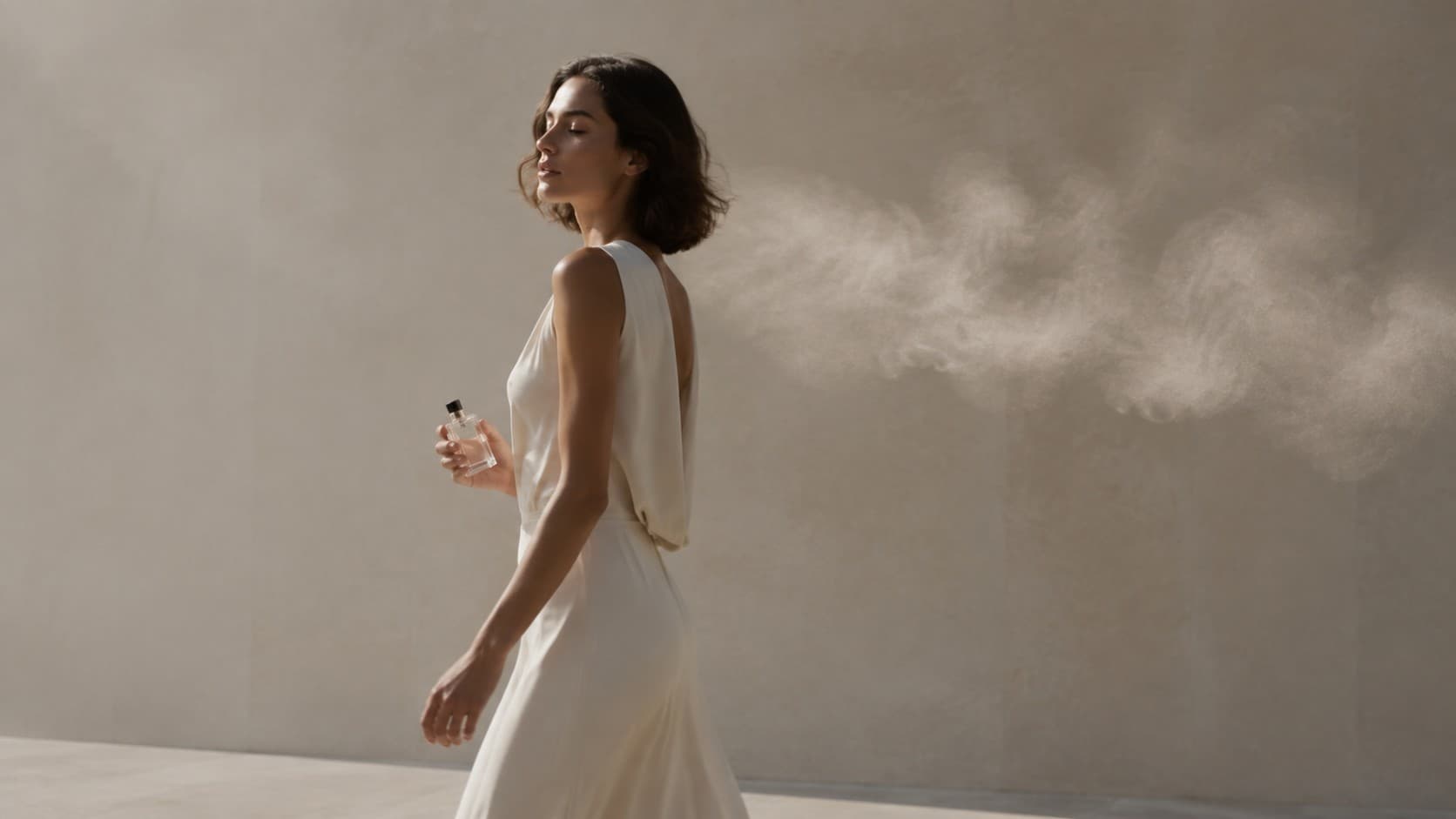
Sillage is the trail of scent a perfume leaves in the air after the wearer has moved on. The word comes from the French term for a boat’s wake, the ripples that spread out and linger behind a ship long after it has passed. Perfumers borrowed the word because it captures the same idea: a fragrance disturbs the air around it, and that disturbance keeps drifting even once the wearer is gone.
Sillage is best understood as the part of a perfume that other people experience without the wearer being present. When a coworker mentions smelling someone’s perfume in the break room ten minutes after that person left, that’s sillage doing its job. It is a separate quality from how strong a perfume smells right up close, and separate again from how long it lasts on the skin over the course of a day.
The word is pronounced “see-yahzh,” and it shows up constantly in perfume reviews and fragrance discussions. On a chemical level, sillage happens because the alcohol in a perfume evaporates first and carries fragrance molecules up into the air, where they keep spreading outward until they become too diluted to detect. That’s also why sillage tends to fade gradually rather than stopping all at once.
How Sillage Differs From Projection
Projection covers the scent someone standing nearby can pick up while a person is actually in the room, whether they’d need to lean in close or could catch it from several feet away. Sillage, by contrast, is what’s left behind once the wearer has already gone. The two are related but they answer different questions. Projection is about the here and now. Sillage is about the after.
A perfume can have strong projection but weak sillage, filling the space around the wearer while they’re standing there but fading fast once they leave. Others do the opposite: staying fairly close to the skin in the moment, then somehow leaving a trail once the wearer walks through a doorway. Neither pattern is better or worse. It simply depends on the mood a fragrance is going for and the notes the perfumer built the composition around.
What Determines How Far a Scent Travels
Several things combine to decide whether a perfume barely leaves the wrist or fills an entire room. Some of these are baked into the formula before the bottle is ever opened, and some depend on how the perfume is worn.
Fragrance Concentration
The percentage of pure perfume oil in the bottle is one of the biggest factors in sillage. Parfum and Eau de Parfum typically pack in more concentrated oil than Eau de Toilette or Eau de Cologne, which means more scent molecules are released into the air as the alcohol evaporates. A higher concentration generally produces a stronger, longer trail, though the actual ingredients matter just as much as the percentage on the label.
| Concentration | Typical Oil % | General Sillage |
|---|---|---|
| Eau de Cologne (EDC) | 2–5% | Light, close to skin |
| Eau de Toilette (EDT) | 5–15% | Moderate |
| Eau de Parfum (EDP) | 15–20% | Strong |
| Parfum / Extrait | 20–30%+ | Strongest, though often worn closer to the skin |
Concentration alone doesn’t guarantee a bigger trail, though. A well-blended Extrait at a lower percentage can out-project a poorly balanced Eau de Parfum at a higher one, because how the oils are combined matters as much as how much oil is used. Concentration essentially sets the ceiling for how much scent is available to release, while the formula itself decides how much of that ceiling gets used.
The Notes Themselves
Some fragrance ingredients are simply built to travel further than others. Heavy, dense materials such as oud, amber, vanilla, musk, and certain woods diffuse widely into the air, while lighter, more transparent notes like citrus or soft florals tend to stay closer to the skin. This is one reason two perfumes at the exact same concentration can behave completely differently once worn.
Top notes, the citrus, herbal, or light fruity smells noticeable in the first few minutes, are usually the most volatile and evaporate fastest, producing an initial burst of sillage that fades within an hour or so. Base notes like musk, amber, and woods evaporate much more slowly, which is why a perfume’s trail often changes character over the course of a day, sometimes turning quieter and staying closer to the skin even if it started out with a big presence.
Skin Chemistry and Body Heat
Body chemistry plays a bigger role in sillage than most people realize. Warmer skin speeds up evaporation, which pushes more fragrance molecules into the air, so perfume tends to project more on a hot day or after exercise than on a cold one. Skin type matters too, since drier skin can cause a scent to fade faster because there’s less natural oil to help it linger.
Hydration levels make a noticeable difference as well, since well-moisturized skin gives fragrance molecules something to hold onto rather than evaporating too quickly. This is why perfumers often recommend applying scent right after a shower, while the skin is still slightly damp and warm. Everyday factors such as diet, stress, and certain medications can also subtly shift a person’s natural skin chemistry, which is part of why the same perfume never smells quite identical on two different wearers.
Where and How It’s Applied
Sillage also depends on which parts of the body a perfume is applied to. Pulse points such as the neck, wrists, and chest generate more heat, which helps release scent molecules steadily throughout the day. Spraying into the air and walking through the mist, rather than applying directly to skin, tends to spread a lighter, more even trail rather than concentrating scent in a single spot.
The Environment
Humidity, temperature, and even airflow change how a scent moves. Fragrance tends to diffuse more in warm, humid air, which is part of why the same perfume can feel completely different in summer compared to a dry winter room. A breezy outdoor space also carries scent differently than a small, enclosed office.
Weight and strength aren’t the same thing in perfumery. Some of the most diffusive fragrances smell delicate up close, built around molecules engineered to spread rather than dominate.
How to Make Perfume Sillage Stronger
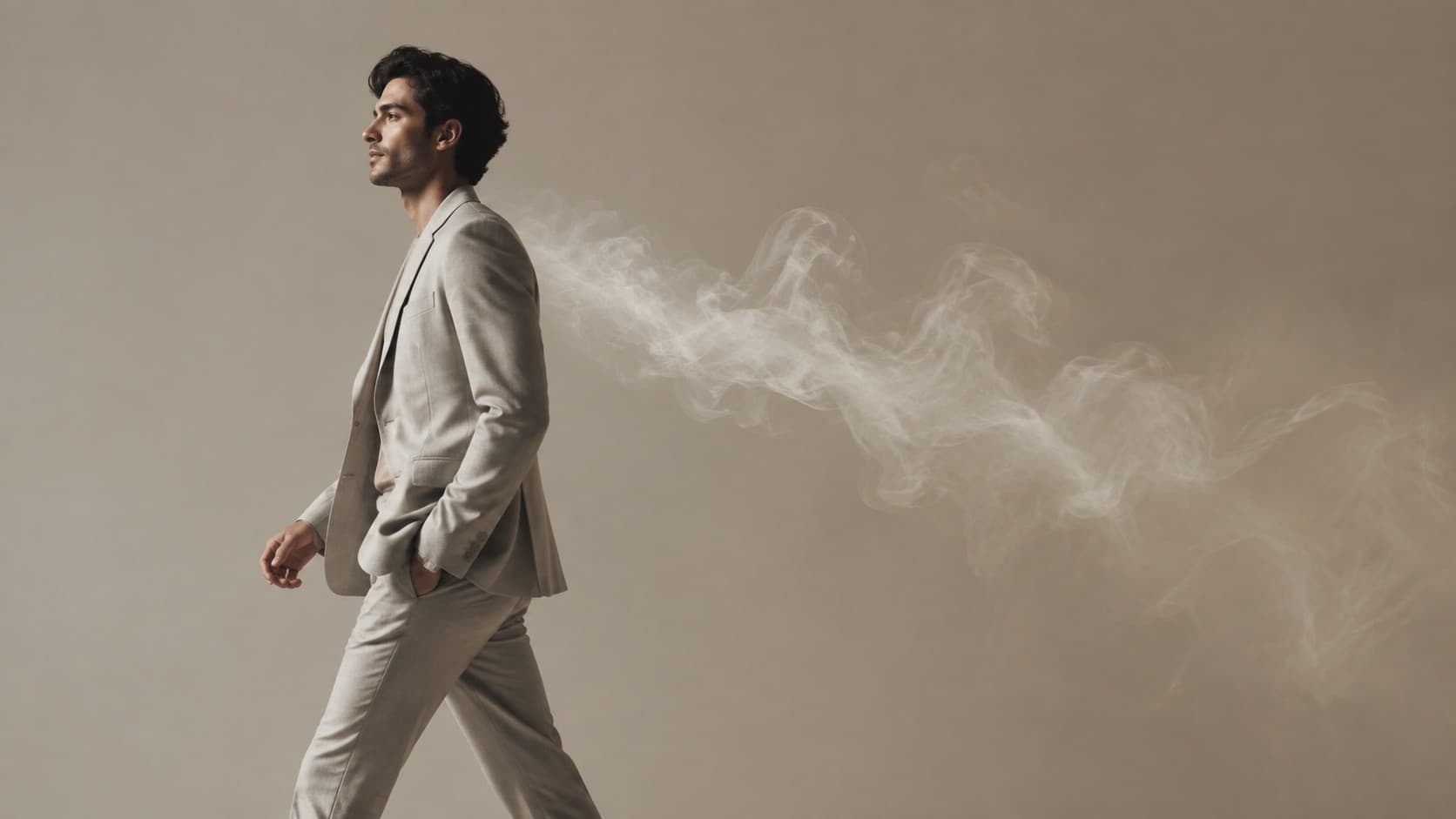
A few application habits noticeably strengthen how far a fragrance travels and how long its trail lasts. Moisturized skin holds scent better than dry skin, so applying an unscented lotion before perfume gives the fragrance something to cling to. Layering the same scent, using a matching body lotion or shower gel underneath the perfume, also builds a stronger base that projects further. Applying to pulse points rather than clothing lets body heat activate the fragrance throughout the day, and choosing an Eau de Parfum or Parfum over a lighter concentration provides more oil to work with from the start.
How to Reduce Sillage for a Subtler Scent
Not every setting calls for a big trail, and plenty of wearers prefer a fragrance that stays personal rather than filling a room. Fewer sprays is the simplest fix, since less product on the skin means fewer molecules released into the air. Applying to clothing instead of skin also softens a scent’s reach, since fabric releases fragrance more slowly than warm skin does. A lighter concentration, such as an Eau de Toilette or Eau de Cologne, naturally limits how far a perfume travels, and fragrances built around lighter notes like citrus, green tea, or soft musks tend to stay closer to the body by design.
How to Test a Perfume’s Sillage Before Buying
The most reliable way to judge sillage is to apply a perfume to skin, let it develop, and see what remains after some time has passed. A quick sniff on a paper strip in a store reveals whether the smell is appealing, but it doesn’t show how the fragrance behaves once it has warmed up on skin, so paper testing alone isn’t a dependable way to judge how far a scent will travel.
A more accurate test involves applying the perfume to the wrist or inner elbow, then continuing on with the day and checking back after an hour or two. The key signs are whether the scent is still noticeable without holding the arm up to the nose, and whether someone else can pick it up from a normal conversational distance. Testing in the environment the perfume will actually be worn in matters too, since a fragrance that seems large in a small changing room might feel entirely different in an open office or outdoors. A sample worn for a full day reveals far more than any amount of strip-sniffing at a counter.
Frequently Asked Questions
Is strong sillage a sign of a better perfume?
No, sillage is a stylistic quality, not a measure of quality. Some of the most respected fragrances in perfumery are designed to stay close to the skin, while others are built to project widely; neither approach is objectively superior, and the right amount of sillage comes down to personal preference and the occasion.
Why can a perfume smell strong to the wearer but go unnoticed by others?
This usually happens because the nose adjusts to a scent quickly through a process called olfactory fatigue, so a perfume that seems obvious to the wearer may register much more faintly to people nearby. It doesn’t necessarily mean the sillage is weak; it simply means the wearer’s own perception of it fades faster than everyone else’s.
Does sillage change over the course of the day?
Yes, sillage typically shifts as a fragrance moves through its top, heart, and base notes. Top notes are usually the most diffusive and create the strongest initial trail, while base notes tend to stay closer to the skin as the day goes on, which is why a perfume can feel like it “quiets down” a few hours after application.
Can two people wear the same perfume and get different sillage?
Yes. Skin chemistry, body temperature, hydration levels, and even diet can all affect how a fragrance releases from one person’s skin compared to another’s, so the same bottle can behave quite differently depending on who’s wearing it.
Does spraying more perfume always increase sillage?
Not proportionally. Beyond a certain point, extra sprays mostly add intensity right at the source rather than meaningfully extending how far the scent travels, and can sometimes overwhelm a space rather than creating a pleasant trail. A few well-placed sprays on pulse points, paired with a moisturized base, tend to be more effective than heavy application.
Conclusion
Sillage comes down to a mix of chemistry and habit: the concentration and notes in the bottle set the ceiling, while skin, application method, and environment decide how close that ceiling gets reached on any given day. A fragrance meant to be remembered after the wearer has left the room benefits from higher concentrations built around diffusive notes like amber or musk, applied to moisturized pulse points and left to body heat to carry. A fragrance meant to stay personal works best at a lighter concentration, with fewer sprays and application to clothing rather than skin. Either way, sillage isn’t about right or wrong. It’s about matching the trail to the moment.