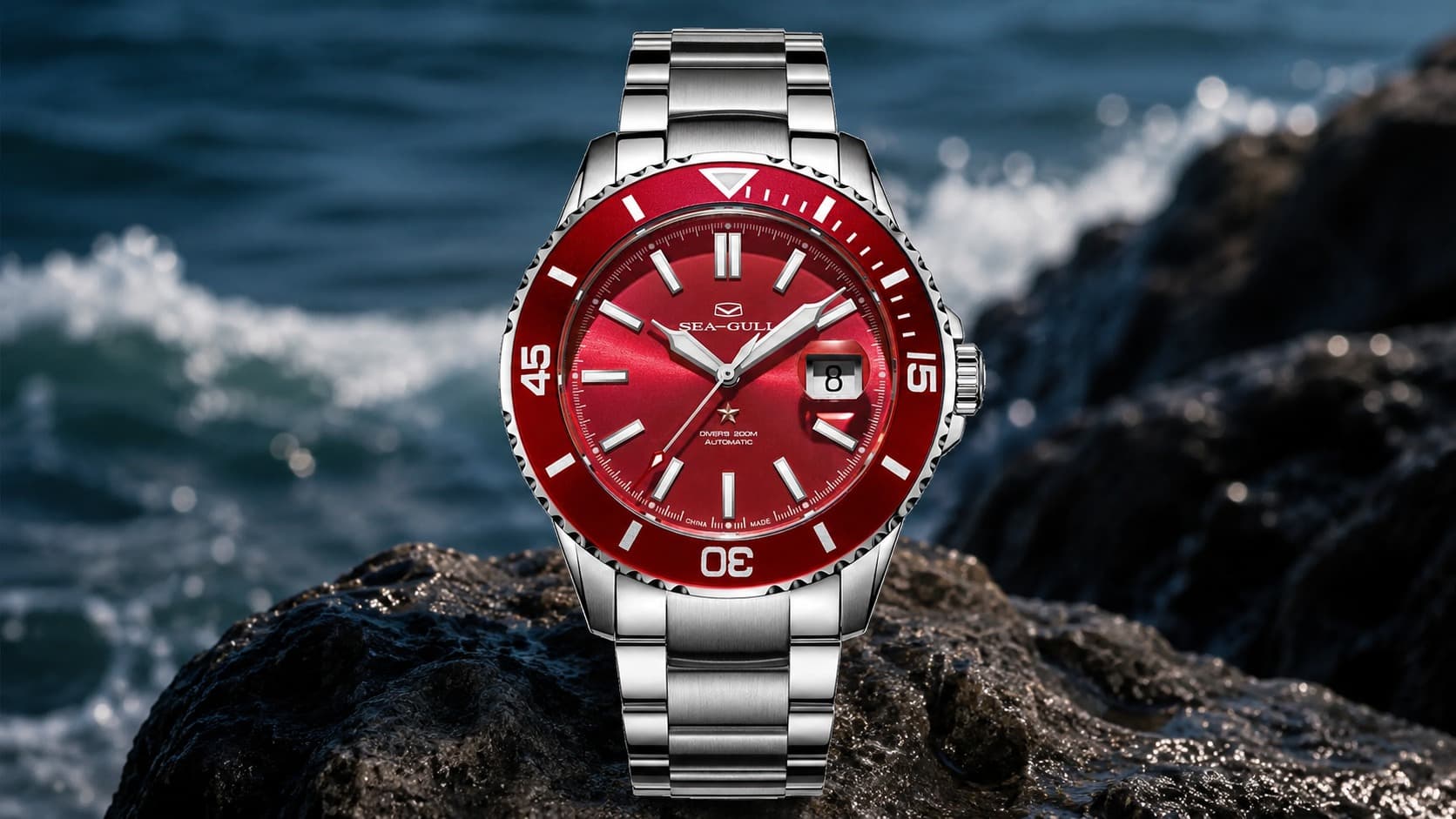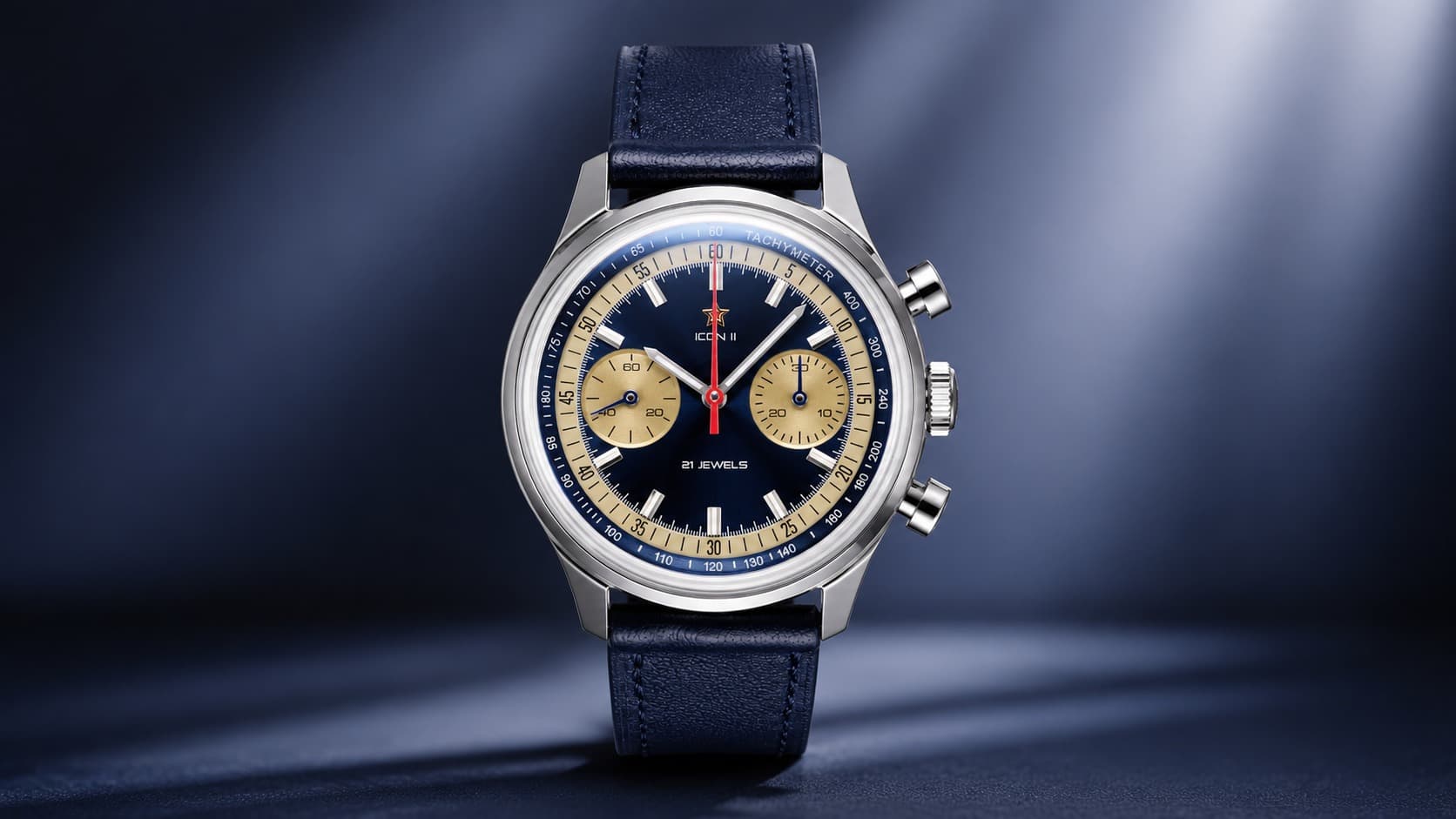
Seagull stands as China’s premier mechanical watch manufacturer and a legitimate alternative to Swiss watchmaking tradition. Founded in 1955 as Tianjin Watch Factory, the brand has evolved from producing China’s first domestically-made wristwatch to becoming the world’s largest mechanical movement manufacturer, responsible for approximately 25% of global production. What makes Seagull particularly compelling for watch enthusiasts is their ability to deliver Swiss-quality complications—including column-wheel chronographs and tourbillons—at prices that are often one-tenth of comparable Swiss pieces. The iconic Seagull 1963 chronograph, priced at $250-400, features a movement directly descended from the legendary Swiss Venus 175 caliber, offering mechanical sophistication typically reserved for watches costing $2,000-5,000. While the brand faces challenges with quality control consistency and service availability outside China, their 70-year heritage of innovation and exceptional value proposition has earned them cult status among affordable watch collectors worldwide.

How Seagull Became China’s Top Watch Brand

Seagull’s transformation from a small state workshop into the world’s dominant mechanical movement producer tells a story of ambition, near-collapse, and ultimate vindication. The company’s path includes supplying military aviators, abandoning their core expertise for quartz production, then betting everything on a return to traditional watchmaking. Their success in mastering complications like tourbillons—once exclusive to Swiss luxury houses—while keeping prices accessible has fundamentally altered what collectors expect to pay for genuine mechanical sophistication.

  • On January 1, 1955, the People’s Republic of China established Tianjin Watch Factory with just four craftsmen tasked with creating the nation’s first domestically-manufactured wristwatch. This initiative carried enormous symbolic weight beyond simple manufacturing—it represented China’s determination to master precision engineering without depending on foreign expertise or imports. The tiny team worked almost entirely by hand with basic tools, attempting to compress centuries of European horological development into just a few months of intense learning and experimentation.
  • March 24, 1955 marked a breakthrough when the factory completed the “Wu Xing” (Five Stars) watch—a 15-jewel timepiece crafted almost entirely by hand and proudly stamped “Made in China.” This modest mechanical watch ended an era when China could repair imported timepieces but lacked the capability to manufacture them from scratch. For a nation rebuilding after decades of conflict and seeking to prove its industrial potential, this simple watch carried profound meaning. The Wu Xing became an immediate symbol of Chinese manufacturing capability and national pride.
  • In 1961, Tianjin Watch Factory executed its most important strategic move by purchasing complete production machinery, tooling, and technical blueprints for the Swiss Venus 175 chronograph movement directly from Venus Watch Company. This wasn’t a licensing arrangement or technology partnership—China bought everything outright, including the actual manufacturing equipment, precision tooling, technical drawings, assembly instructions, and production expertise that Swiss watchmakers had refined over decades. The transaction gave China immediate access to world-class chronograph technology and the ability to produce it independently.
  • The Venus 175, introduced in the 1940s, ranked among the finest manual-wind chronograph movements Swiss manufacturers had created. Its column-wheel mechanism represented the gold standard for chronograph design—delivering smoother operation, greater reliability, and more pleasant tactile feedback than cheaper cam-actuated alternatives, though requiring significantly more manufacturing expertise and expense. This Swiss engineering formed the foundation for what would become Seagull’s signature movement and their most celebrated watches for decades to come.
  • Between 1963-1965, operating under classified military designation “Project 304,” the factory engineered China’s first aviation chronograph for People’s Liberation Army Air Force fighter pilots. Engineers enhanced the Venus 175 design to 19 jewels from the original 17 (establishing what would become the ST19 designation), strengthened components for high-altitude combat conditions, and subjected prototypes to punishing tests including extreme temperature swings, sustained vibration, and magnetic field exposure. The watch needed to function perfectly in fighter cockpits at 40,000 feet while pilots wore heavy flight gloves during combat maneuvers.
  • After surviving more than 10 rigorous aviation qualification tests—including altitude chamber trials, vibration stress testing, and temperature cycling from -40°C to +60°C—1,400 completed watches reached frontline fighter squadrons in 1966. The design featured elements that would become iconic: cream-colored dials with heat-blued hands for maximum cockpit legibility, oversized Arabic numerals, an inner rotating bezel for navigation timing, and a red star at 12 o’clock representing the PLA. These military chronographs remained classified equipment for decades before becoming legendary as the “Seagull 1963” when the company reissued them for civilian watch collectors.
  • In 1973, the brand adopted “Seagull” as their English export name, selecting imagery that symbolized vast distances and global reach as China began opening to international trade. During this era, their “Dong Feng” (East Wind) mechanical watch achieved status as one of the “Three Great Pieces” of Chinese consumer goods—alongside Phoenix bicycles and Butterfly sewing machines—that signified middle-class prosperity and the success of domestic manufacturing. Initial export efforts targeted Hong Kong and Southeast Asian markets, building the foundation for eventual worldwide distribution.
  • Tianjin Watch Factory received prestigious national company designation in 1990, bringing substantial government investment, modern production facilities, and recognition as a strategic industrial enterprise. Despite this momentum, management made a nearly fatal decision in 1992 to abandon all mechanical watch production in favor of quartz movements. Following the “Quartz Crisis” that had devastated Swiss watchmaking through the 1970s-80s, the logic appeared sound—quartz watches offered superior accuracy, lower production costs, and dominated global sales. The decision would prove disastrous for nearly everything the company had built over four decades.
  • The shift to quartz almost destroyed Seagull’s mechanical watchmaking capabilities as skilled craftsmen left for other industries, accumulated knowledge risked permanent loss, and the Venus 175-derived movement expertise nearly vanished. Between 1992-1997, decades of specialized skill in crafting mechanical complications nearly disappeared within five years. Production equipment fell into disrepair, master watchmakers retired without training replacements, and China’s connection to traditional horology teetered toward extinction. This period represents the darkest chapter in Seagull’s history—when shortsighted strategy nearly erased irreplaceable expertise.
  • In 1997, new leadership executed a complete strategic reversal by abandoning quartz production entirely and recommitting exclusively to mechanical movements. This contrarian decision came as Swiss houses like Rolex, Patek Philippe, and Omega had proven mechanical watches could thrive as luxury items despite quartz accuracy advantages. Seagull’s management recognized they couldn’t compete with Japanese quartz manufacturing efficiency but could carve out territory in affordable mechanical watchmaking. The company bet its entire future on reviving traditional skills that had nearly been lost.
  • The 2000 public offering generated capital for massive facility upgrades while simultaneously rescuing traditional watchmaking expertise. Funds financed CNC machinery, clean room facilities, and research laboratories that would enable breakthrough complications within years. Critically, the company recruited retired master watchmakers to train new generations, blending hand-finishing traditions with modern precision manufacturing. This combination of traditional craft knowledge and contemporary production technology created the foundation for Seagull’s resurgence.
  • Between 2003-2005, Seagull achieved a breakthrough by developing tourbillon wristwatches with completely independent intellectual property, designing and manufacturing every component internally without licensing Swiss technology. This accomplishment placed Seagull among a tiny group of manufacturers worldwide capable of producing horology’s most demanding complication—joining an exclusive club that included Breguet, Patek Philippe, Jaeger-LeCoultre, and handful of other elite Swiss houses. The achievement shattered the Swiss-German monopoly on haute horlogerie that had persisted since Abraham-Louis Breguet invented the tourbillon mechanism in 1795.
  • Seagull’s tourbillon pricing at $1,500-3,000 versus Swiss equivalents starting above $20,000 (typically $50,000-100,000+) represented revolutionary market disruption. The company achieved this through vertical integration controlling all production stages, economies of scale from high-volume manufacturing, and Chinese labor economics—while maintaining genuine mechanical sophistication. This pricing transformed tourbillons from exclusive treasures for ultra-wealthy collectors into complications accessible to middle-class enthusiasts, fundamentally reshaping who could own haute horlogerie.
  • In 2007, Seagull introduced China’s first double tourbillon featuring two independent mechanisms in one watch, followed by 2008’s triple complication combining tourbillon with minute repeater and perpetual calendar. The company successfully integrated all “three grand complications”—achievements that took Swiss manufacturers centuries to master individually and additional generations to combine. These weren’t mere reproductions of Swiss designs but genuine innovations protected by patents covering unique technical solutions and manufacturing approaches.
  • When Roger Dubuis publicly accused Seagull at Baselworld 2008 of copying their dual-axis tourbillon design, Swiss patent authorities launched formal investigation and concluded Seagull’s movement employed completely different construction with independent intellectual property showing no infringement. This ruling validated Seagull’s innovation capacity and earned respect from Swiss watchmaking establishment by proving Chinese manufacturers could innovate rather than simply imitate. The controversy actually strengthened Seagull’s reputation by demonstrating they had become significant enough to worry Swiss luxury brands.
  • The 2019 corporate restructuring from pure state ownership to mixed public-private ownership enabled more agile business operations, faster decision-making, and better market responsiveness while maintaining manufacturing infrastructure in Tianjin. Private investment brought commercial discipline and profit incentives, while government stakes preserved stability and access to capital for long-term research that might not generate immediate returns. This hybrid structure positioned Seagull to compete against established Swiss and Japanese brands while maintaining advantages of state support.
  • Seagull has secured over 1,450 patents globally with more than 1,300 granted covering movement architecture, complication mechanisms, manufacturing processes, and materials science. This patent portfolio demonstrates serious commitment to intellectual property development rather than relying on expired Swiss patents that entered public domain. The company earned invitations to prestigious industry events including Watches & Wonders Geneva—the watch world’s most important trade show—as the first Chinese brand exhibiting alongside Rolex, Patek Philippe, and Cartier. Recent technical achievements include ultra-thin automatic tourbillon movements measuring just 4.3mm thickness, competing directly with Swiss specialists in slim complications.
  • Current flagship models combine tourbillon, perpetual calendar, and minute repeater in single watches priced around $150,000—representing genuine haute horlogerie with hand-finished components and traditional assembly methods. While expensive in absolute terms, these prices represent fractions of comparable Swiss pieces from Patek Philippe or Vacheron Constantin commanding $500,000 and above for similar triple complications. Simultaneously, Seagull maintains affordable core products like the $300 1963 chronograph, demonstrating capability to compete from entry-level through true luxury segments.

Seagull’s transformation from four craftsmen producing China’s first wristwatch to the world’s largest mechanical movement manufacturer represents one of modern horology’s most dramatic success stories. The company now manufactures over 3 million movements annually—roughly one-quarter of global mechanical movement production—supplying hundreds of watch brands worldwide while building their own reputation. Quality control consistency remains below Japanese standards, and international service infrastructure lags Swiss networks, but Seagull’s mastery of traditional complications combined with accessible pricing has permanently changed what the watch industry can charge for mechanical sophistication.

Why Seagull Watches Offer Great Value

Seagull’s appeal extends far beyond simple affordability—the brand delivers genuine mechanical sophistication through vertically-integrated manufacturing that few competitors can match. Their movements trace directly to legendary Swiss designs while incorporating decades of refinement, their tourbillons cost less than most Swiss three-hand automatics, and their production scale enables quality standards impossible for smaller manufacturers. What truly distinguishes Seagull is their ability to offer complications typically reserved for luxury watches at prices that make mechanical horology accessible to enthusiasts rather than exclusively collectors with unlimited budgets.

  • Seagull controls nearly every aspect of watch production internally, from raw movement components to finished cases, dials, and hands. This vertical integration means the company doesn’t rely on outside suppliers for critical parts, enabling better quality oversight throughout production and eliminating supplier markups that inflate costs. The Tianjin facilities include movement design and engineering departments, component manufacturing with CNC machinery, hand-finishing workshops, case production, dial and hand fabrication, and final assembly and testing. Few watch manufacturers worldwide—even prestigious Swiss brands—maintain this level of production control, with most assembling watches from components sourced from specialized suppliers.
  • The ST19/ST1901 movement represents Seagull’s crown achievement and their most historically significant caliber. This manual-wind chronograph descends directly from the Swiss Venus 175 through the complete production machinery and technical blueprints acquired in 1961. While the Venus 175 originally featured 17 jewels, Seagull enhanced the design to 19 jewels (establishing the ST19 designation), with contemporary versions incorporating 21-22 jewels for improved longevity. Operating at 21,600 vibrations per hour with 40-45 hour power reserve, the movement delivers smooth chronograph operation through its column-wheel mechanism—the hallmark of high-quality chronographs that provides superior tactile feedback compared to cheaper cam-actuated alternatives.
  • The column wheel mechanism in the ST19 separates it from budget chronographs and places it among movements typically costing thousands more. This vertical clutch system—consisting of a wheel with vertical columns around its perimeter—controls chronograph start, stop, and reset functions through precise mechanical interaction. Column wheels require significantly more manufacturing expertise and expense than cam-actuated systems but deliver smoother operation, more reliable function, and better long-term durability. The ST19’s integrated chronograph architecture, where timing complications are built into the base movement rather than added as modules, makes servicing simpler and enhances reliability compared to modular designs.
  • Movement finishing on the ST19 includes Geneva stripes decoration on bridges, blued screws providing visual contrast, perlage circular graining on plates, and beveled edges on components—finishing techniques traditionally associated with Swiss luxury watches. While not quite matching the hand-finishing of true haute horlogerie pieces costing tens of thousands, the decoration exceeds what buyers normally find at this price point. The visible movement through exhibition casebacks on many Seagull watches lets owners appreciate this finishing, turning the watch over to see the mechanical artistry that powers their timepiece.
  • Seagull manufactures complete movement families spanning various complications and price points beyond just the famous ST19. The ST2130 series clones the workhorse ETA 2824-2 automatic movement, operating at 28,800 vph with 39-hour power reserve and bidirectional winding—this serves as Seagull’s most widely-used base automatic movement. The ST18 series mirrors the ETA 2892-A2 with ultra-thin architecture measuring 25.6mm diameter, incorporating Swiss Incabloc shock absorbers and achieving 42-hour power reserve. These movements power Seagull’s dress watches and many microbrands seeking reliable, affordable Swiss-style automatics.
  • The ST25 movement family represents pure in-house development from 2000 featuring double-bridged balance specifically designed for “open heart” applications where the balance wheel remains visible through dial cutouts. With configurations ranging from 25-45 jewels depending on complications, operating at 21,600 vph with 45-48 hour reserves, these movements accommodate moonphase displays, big date windows, retrograde functions, and power reserve indicators. The visible balance design creates visual interest reminiscent of expensive Vacheron Constantin styling but at fraction of the cost, making these movements popular for skeleton and exhibition dial watches.
  • Seagull’s production scale enables manufacturing quality that smaller operations simply cannot achieve. Producing over 3 million movements annually creates economies allowing investment in precision CNC machinery, clean room facilities, and quality control systems that would be economically impossible for low-volume manufacturers. This scale means Seagull can afford specialized equipment for specific operations, maintain redundant production capacity to ensure delivery schedules, and invest in research and development for new calibers. The volume also generates data on component failure rates and manufacturing tolerances that inform continuous improvement—advantages unavailable to boutique manufacturers producing hundreds rather than millions of movements yearly.
  • The tourbillon achievement fundamentally altered luxury watch economics and remains Seagull’s most significant technical accomplishment. Developed entirely in-house between 2003-2005 without licensing Swiss technology, Seagull’s tourbillon capability places them among fewer than a dozen manufacturers globally who can produce this complication from scratch. A tourbillon—invented by Abraham-Louis Breguet in 1795 to counter gravity’s effects on pocket watch accuracy—mounts the escapement and balance wheel in a rotating cage that completes one revolution per minute, theoretically averaging out positional errors. The mechanism requires extreme precision in manufacturing dozens of tiny components that must function perfectly while rotating continuously.
  • Seagull tourbillon movements typically contain 130+ parts in basic versions, expanding to 500+ components in complicated variants incorporating additional functions. The company has mastered single-axis tourbillons, double tourbillon configurations with two independent mechanisms, dual-axis tourbillons rotating on two planes simultaneously, multi-axial orbital tourbillons, flying tourbillons without upper bridge, and combinations incorporating perpetual calendars or minute repeaters. Independent laboratory testing shows Seagull tourbillons typically deviate 5-6 seconds daily—well within COSC chronometer standards—demonstrating that their accuracy matches the complication’s theoretical benefits.
  • Pricing represents the most dramatic disruption—Seagull tourbillons start around $1,500-3,000 for basic models while Swiss tourbillons from houses like Jaeger-LeCoultre begin at $45,000 and typically cost $100,000-200,000+. Entry-level Swiss tourbillons from any manufacturer rarely drop below $20,000, making Seagull’s pricing genuinely revolutionary. The company achieves this through Chinese labor economics, vertical integration eliminating middlemen, and production scale spreading development costs across more units. Critically, the lower prices don’t reflect fake complications or quartz movements disguised as mechanical—these are genuine tourbillons with all the manufacturing complexity the complication demands.
  • Recent innovations demonstrate continued technical development rather than resting on past achievements. The ST1961 rattrapante (split-seconds chronograph) movement introduced recently features column wheel and horizontal clutch design with over 400 components, enabling measurement of two events simultaneously or lap timing. Watches featuring this movement cost approximately $3,300-3,650—making it the world’s most affordable split-seconds chronograph when comparable Swiss rattrapante watches command $30,000 to over $2 million. The company is developing ultra-thin movements targeting sub-2mm thickness (currently achieved 2.5mm), attempting to challenge world records in slim movement architecture while maintaining reliability.
  • Movement decoration and finishing quality, while not matching true Swiss luxury pieces, significantly exceeds expectations for the price. Seagull applies traditional decorative techniques including Geneva stripes (Côtes de Genève) creating linear wave patterns on bridges and rotors, perlage circular graining on plates providing textured appearance, anglage beveling and polishing component edges, blued screws heat-treated for blue coloring, and circular graining on ratchet wheels. Higher-end Seagull models incorporate additional hand-finishing including mirror polishing on select components and engraved balance cocks. While Swiss haute horlogerie involves more extensive hand-finishing with sharper anglage and deeper Geneva stripes, Seagull’s finishing surpasses what appears on most watches under $1,000.
  • Technical specifications across Seagull’s movement range demonstrate serious horological capability. Power reserves span from 37-45 hours for chronographs to 60+ hours for tourbillons, matching or exceeding many Swiss movements. Jewel counts range from 17-25 jewels for basic movements to 40+ jewels in complicated pieces, with jewels serving as low-friction bearings for pivoting components. Operating frequencies include 21,600 vph (3 Hz) for vintage-style movements like the ST19, providing slower tick rates that some collectors prefer for traditional aesthetic, and 28,800 vph (4 Hz) for modern automatics like the ST2130, delivering smoother seconds hand sweep. The variety demonstrates Seagull can manufacture across the full spectrum of mechanical movement architecture.
  • Quality control represents both a strength and weakness—Seagull’s best examples rival Swiss entry-level quality, but consistency remains problematic. Some watches run flawlessly for years with excellent timekeeping, while others from the same production batch may exhibit issues within months. This variability stems from rapid production scaling, inconsistent component tolerances, and quality inspection processes that don’t catch all defects. Japanese manufacturers like Seiko maintain more consistent quality control, making every watch perform within tighter tolerances. However, Seagull’s best pieces demonstrate the company possesses technical capability to produce excellent watches—they simply haven’t achieved the process control to ensure every piece meets that standard.
  • The value proposition fundamentally challenges traditional watch industry economics where Swiss made commands premium pricing regardless of actual manufacturing cost or quality. A Seagull 1963 chronograph at $300 delivers column-wheel chronograph, hand-wind movement with exhibition caseback, historically-inspired design, and genuine mechanical sophistication. Comparable Swiss chronographs with column-wheel movements cost $2,000-5,000 minimum from brands like Hamilton or Longines, with prestigious houses charging $5,000-15,000+. Seagull proves that much of luxury watch pricing reflects brand heritage, marketing, and retail markup rather than pure manufacturing cost—forcing collectors to confront whether they’re paying for mechanical quality or brand prestige.

Seagull’s manufacturing capabilities and technical achievements place them in genuinely elite company despite their affordable pricing. The combination of Swiss-derived movement architecture, mastery of complications from chronographs to tourbillons, vertical integration controlling quality, and production scale enabling consistent improvement creates a value equation unmatched in mechanical watchmaking. Quality control inconsistency and finishing that doesn’t quite reach Swiss luxury standards represent real limitations, but for enthusiasts prioritizing mechanical sophistication over brand prestige, Seagull delivers more watch per dollar than virtually any competitor worldwide.

Top 10 Best Seagull Watches

Seagull’s catalog spans from affordable entry pieces to genuine luxury complications, with each model targeting specific collector needs and budgets. The lineup includes military-inspired chronographs with actual aviation heritage, tourbillons priced like entry-level Swiss automatics, and dress watches showcasing movement finishing through exhibition casebacks. This selection represents the models that best demonstrate Seagull’s capabilities across price points while offering the strongest combination of value, reliability, and mechanical interest for watch enthusiasts building collections.

  • Seagull 1963 (D304) - The most iconic Chinese watch ever made, this faithful recreation of the 1966 military aviation chronograph features the ST1901 manual-wind column-wheel movement with 22 jewels operating at 21,600 vph. Available in 38mm, 40mm, and 42mm case sizes with either acrylic crystal (vintage authentic) or sapphire (scratch resistant), the classic cream dial with blue heat-treated hands and red star at 12 o’clock remains most recognizable. Water resistance sits at 30-50m—splash resistant only. Current pricing ranges $250-400 depending on size and crystal, delivering genuine column-wheel chronograph complexity typically reserved for Swiss pieces costing $2,000-5,000+, with exhibition casebacks revealing beautifully decorated movements.
  • Seagull M172S Flywheel - This sophisticated automatic showcases multiple complications in a 40mm case with ST2505 movement featuring 48-hour power reserve. The distinctive dial displays open balance wheel at 6 o’clock, power reserve indicator at 3 o’clock, and retrograde date at 9 o’clock. Guilloche pattern dial with blue hands provides classical elegance, while sapphire crystals front and back offer movement viewing. Currently priced around $440-490 at European retailers with limited availability as discontinued status at some dealers, though new old stock appears at authorized sellers.
  • Seagull M182SK Double Skeleton - The M182SK showcases finishing capabilities through double skeleton dial design revealing the ST1602 automatic movement in a 38.5mm case measuring 13mm thick. Available with blue or black hands against skeletonized backdrop, the watch provides constant visual entertainment as mechanics operate visibly beneath sapphire crystal. Exhibition caseback offers rear view, creating full transparency of operation. Current pricing ranges $109-150 at authorized dealers, making it affordable entry into skeleton watches that typically cost $500-1,000+ from Swiss brands.
  • Seagull Ocean Star Pro (816.42.1210) - Seagull’s serious dive watch features ST2130 automatic movement with 28 jewels at 28,800 vph in 40mm or 44mm brushed stainless steel case. Professional specifications include 300m water resistance, unidirectional rotating bezel, screw-down crown, sapphire crystal with AR coating, and Superluminova C3 luminescence. Available in Ocean Blue, Coral Green, Shark Black, and Glacier White, the watch meets ISO 6425 dive watch standards. Pricing spans $300-569 depending on retailer, with official website at $569 while street prices typically run $300-450.
  • Seagull M201S Ultra-Thin Dress Watch - This elegant dress watch prioritizes slim profile with just 8mm thickness in 38mm diameter, housing ST1812 automatic movement. The minimalist design includes date window, exhibition caseback, and sapphire crystal. Available in plain or guilloche dial, the improved ST1812 addresses earlier issues with users reporting +2 seconds/day accuracy and 48-hour power reserve exceeding ETA 2892’s 42 hours. Pricing around $200-275 makes it exceptional value for ultra-thin automatics typically costing $800-2,000+ from Swiss manufacturers.
  • Seagull D819.612 - Despite “GMT” in some listings, this is an ultra-thin dress watch with small seconds, not dual time zone function. Features ST17 manual-winding movement in 40mm diameter with remarkable 7.5-8mm thickness. Bauhaus-inspired minimalist design includes small seconds subdial, sapphire crystal, and 50m water resistance. Available in white or black dial across 40mm and 34.5mm sizes. Pricing varies $140-312 depending on seller, with limited availability and some authenticity concerns—buyers should verify authorized dealer status carefully.
  • Seagull M308S Moonphase - Delivers genuine 29.5-day moonphase using 59-tooth gear accuracy through ST2528 automatic with 48-hour reserve in 42mm case. Complex dial displays true moon phase at 6 o’clock, big date at 12 o’clock, power reserve at 3 o’clock, retrograde date at 9 o’clock, and guilloche pattern. Exhibition caseback reveals proper decoration while sapphire crystal and 50m water resistance complete specs. Pricing shows €445 at European retailers, $220-275 on AliExpress, typically $275-350 street prices. Highly regarded for delivering true moonphase at prices where most brands offer only day/night indicators.
  • Seagull 819.368 Roman Skeleton - Classical dress watch housing reliable ST2130 automatic (ETA 2824-2 clone) with 28 jewels in 38-39mm case measuring 12mm thick. Design features Roman numerals, guilloche pattern, blue hands, date window, and onion crown. Exhibition caseback reveals decorated movement through sapphire crystal. Available in men’s 38.5-39mm and women’s 27mm with 50m water resistance. Official pricing $311 with typical street prices $200-300, offering reliable classical dress watch option with well-executed movement clone.
  • Seagull M182SK Tourbillon - While M182SK commonly refers to double skeleton, higher-end tourbillon versions exist showcasing Seagull’s signature complication. Features ST8000 series movements with single-axis tourbillon rotating once per minute, visible through dial and exhibition caseback. The mechanism consists of 130+ precisely manufactured components in rotating cage. Case sizes typically 40-42mm in steel or precious metals with various dial configurations. Pricing starts around $1,500-3,000 for basic versions, climbing to $5,000-15,000 for complicated variants—revolutionary value when Swiss tourbillons rarely drop below $20,000 and typically cost $50,000-200,000+.
  • Seagull M199S Moonphase Chronograph - Combines manual-winding chronograph with true moonphase using ST1908 movement with 22 jewels at 21,600 vph in 40-41mm case. Dial integrates 30-minute chronograph counter at 3 o’clock, moon phase at 6 o’clock, small seconds at 9 o’clock, and date at 12 o’clock on guilloche dial. Column-wheel mechanism ensures smooth operation with exhibition caseback revealing traditional finishing. European retailers around €1,040 ($1,040-1,150), with SUGESS homage versions more available at $270-400. Original Seagull versions limited with forum mentions $349-395, highly regarded for combining moonphase with Venus 175-based movement and column-wheel chronograph.

These ten models represent the strongest offerings in Seagull’s catalog, demonstrating their range from affordable mechanical chronographs to genuine haute horlogerie complications. The 1963 remains the essential gateway model, while tourbillon and complex moonphase models prove Seagull can compete with Swiss manufacturers on technical sophistication. Pricing across this selection spans $150-3,000+, offering mechanical watch enthusiasts options at virtually every budget while maintaining genuine horological interest.

Seagull Watch Buying Tips and Advice

Purchasing a Seagull watch requires different considerations than buying established Swiss or Japanese brands due to quality control variability, authentication challenges, and movement options that significantly impact long-term satisfaction. Smart buyers research movement reliability for specific calibers, verify seller authorization to avoid counterfeits, and set realistic expectations for accuracy and service requirements. The decisions made during purchase—particularly regarding movement type, case size, and seller selection—determine whether a Seagull watch becomes a beloved daily wearer or a disappointing drawer queen requiring expensive repairs.

  • Movement type fundamentally determines the ownership experience, with manual-winding and automatic options offering distinct advantages and compromises. The ST19/ST1901 manual-wind chronograph requires daily winding by turning the crown 30-40 times, providing tactile connection but demanding consistent attention—skip a day and the watch stops. Automatic movements like the ST2130 wind themselves through wrist motion, offering convenience but adding thickness and potential failure points in the auto-winding mechanism. The ST19 earns reputation as Seagull’s most reliable movement due to its proven Venus 175 heritage and simpler architecture, making it the safest choice for first-time buyers.
  • Case size selection impacts both aesthetics and wearability across Seagull’s vintage-proportioned and modern offerings. The 38mm 1963 wears authentically to its 1960s military origins, sliding easily under dress shirt cuffs and suiting 6-7.5 inch wrists without looking oversized. Modern 40-42mm versions provide contemporary presence and improved legibility but require 7+ inch wrists to avoid overhang. Lug-to-lug measurement matters more than diameter for actual fit—a 40mm watch with 48mm lug-to-lug wears larger than 42mm with 46mm lug-to-lug. Seagull’s chronographs typically measure 14-15mm thick due to column-wheel mechanism complexity, making them unsuitable for tight cuffs despite moderate diameters.
  • Dial variations within single model lines offer personalization but impact collectibility and resale value differently. The cream dial with blue hands represents the most historically accurate and collectible 1963 configuration, closely matching original 1966 military issue and commanding best resale prices. Black dials offer improved legibility but lack historical authenticity, while panda dials with high contrast appeal to collectors seeking distinctive appearance. Limited edition dials like the 70th Anniversary red/blue/yellow color blocking typically hold value better than standard production but require verification of authenticity and production numbers.
  • Crystal choice between acrylic and sapphire presents trade-offs in authenticity versus practicality. Acrylic crystals offer vintage authenticity with warm glow and easier polishing to remove scratches using polyWatch, but scratch easily from daily contact with doorframes and desks. Sapphire crystals rate 9 on Mohs hardness scale making them virtually scratchproof in normal use, maintaining clarity for years without maintenance. The trade-off involves higher cost, impossibility of polishing rare deep scratches, and slightly less vintage character. Most buyers find sapphire worth the $30-50 premium for daily wearers, while collectors seeking authenticity prefer acrylic on historical pieces.
  • Price ranges across Seagull’s catalog reflect genuine manufacturing complexity rather than arbitrary brand positioning. Entry-level $200-500 pieces include basic 1963 chronographs and simple three-hand automatics delivering mechanical fundamentals without complications. Mid-range $500-1,500 watches incorporate genuine complications like moonphase, GMT functions, or power reserve indicators with enhanced finishing. Premium pieces above $1,500 feature tourbillons, rattrapante chronographs, or multiple complications representing genuine haute horlogerie that would cost $20,000-200,000+ from Swiss manufacturers. Pricing directly correlates with manufacturing complexity and component count.
  • Authentication separates genuine Seagull watches from counterfeits through specific verification methods. Post-2017 genuine Seagull watches feature QR codes on casebacks that scan through WeChat Official Sea-Gull account, providing foolproof factory verification and extended warranty registration—these codes cannot be credibly faked. Movement inspection reveals authenticity through crisp “SEAGULL” engraving, properly positioned column wheel on ST19 movements, blued screws, Geneva stripes on bridges, and correct jewel count marked “19 ZUAN” or “21 ZUAN.” Counterfeit movements show crude finishing, missing decorative elements, incorrect jewel counts, or misspellings. Case engravings should appear sharp and precise, while dial printing must show clean edges without smudging.
  • Build quality indicators separate well-manufactured examples from quality control failures before problems develop. Chronograph pushers should operate smoothly without sticking, with distinct clicks and immediate response—sticky or mushy action indicates lubrication problems. The seconds hand should sweep smoothly without jumping or hesitation, maintaining consistent speed without wobble. Crown winding should feel smooth with slight resistance increasing near full wind, without grinding or loose play. Exhibition casebacks reveal movement quality through finishing consistency—look for even Geneva stripes, properly blued screws, clean assembly without dust, and secure movement holder. Weight should feel substantial as genuine watches use quality materials while counterfeits often feel surprisingly light.
  • Production origin matters significantly as not all “Seagull” branded watches receive equal quality control. Genuine Tianjin Seagull Watch Factory products marked “Sea-Gull” on dial and caseback represent highest quality with full factory oversight and warranty support. Red Star 1963 watches use genuine ST19 movements but assemble separately as original manufacturer of 1963 reissues—legitimate but not factory Seagull branded. Homage brands like Sugess, HKED, and Seakoss use genuine Seagull movements in their own cases—legitimate watches but without Seagull branding or quality control. The key distinction separates watches assembled in Seagull’s Tianjin factory from those using Seagull movements but assembled elsewhere.
  • Documentation and packaging provide secondary authentication while supporting warranty claims and resale value. Genuine Seagull watches include branded presentation boxes, user manuals in Chinese and English, warranty cards stamped by authorized dealers with purchase date and serial numbers, and sometimes spare straps or tools. Missing documentation doesn’t definitively indicate counterfeits but complete sets command higher resale values and provide easier warranty service. Buyers should photograph box contents including serial numbers at purchase for insurance documentation and future authentication needs.
  • Service accessibility varies dramatically by location, affecting long-term ownership costs and convenience. United States buyers benefit from Long Island Watch’s in-house service, third-party specialists like Total Watch Repair and Times Ticking, and gradually expanding authorized service network. European buyers face more limited options with most repairs requiring shipping to China or finding independent watchmakers willing to work on Chinese movements. International buyers outside these regions almost certainly need to ship watches to Tianjin factory service center for warranty work, with turnaround times approaching 3 months. Many independent watchmakers refuse Seagull service due to unfamiliarity and parts sourcing challenges—buyers should identify service options in their region before purchase.

Smart Seagull buyers prioritize movement reliability over complications for first purchases, verify seller authorization through official dealer lists, choose case sizes based on lug-to-lug measurements rather than diameter alone, and plan for service costs that may approach purchase price. The brand rewards research and careful purchasing decisions with exceptional mechanical value, while impulse purchases from questionable sellers or complicated movements with spotty reliability often end in disappointment.

Best Places to Buy Authentic Seagull Watches

Seagull manual wind dress watch featuring clean white dial with small seconds subdial at 6 o'clock and black crocodile leather strap

Purchasing Seagull watches requires navigating a complex landscape of official distributors, authorized dealers, gray market sellers, and outright counterfeiters. Only two websites represent genuine Seagull official channels internationally, while numerous sellers claim authorization without factory backing. The challenge for buyers involves distinguishing legitimate sources offering genuine products with warranty support from fraudulent operations selling counterfeits or homages misrepresented as authentic Seagull watches. Location significantly impacts buying options—North American and European buyers access established authorized dealers, while buyers in other regions often face limited choices beyond direct China purchases or risky marketplace sellers.

  • Official Seagull websites operate only two genuine channels—one for international English-language sales and one for China mainland in Chinese—with any other website claiming official status treated with extreme suspicion. These factory-direct sites offer complete model selection including limited editions, direct warranty support from manufacturer, and QR code registration for extended coverage. Pricing typically runs higher than gray market but includes full documentation, authentic packaging, and guaranteed genuine products. The China site also operates official stores on Tmall and JD.com managed by three authorized distribution entities.
  • United States authorized retailers provide the safest option for North American buyers with 1-2 year warranties, in-house repair services, and customer support familiar with Seagull products. These retailers focus on Seagull 1963 models priced $280-450 across various sizes and crystal options, maintaining US inventory enabling fast shipping with clear 30-60 day return policies. Some also sell Red Star 1963 reissues using genuine ST19 movements—legitimate products clearly marked as Red Star rather than Seagull branded.
  • Authorized dealer networks vary by region with official distributor lists available on factory websites showing verified sellers. These dealers source directly from Tianjin factory, provide guarantee cards, include authentic packaging, and offer warranty support through official channels. Warranty structure varies by price tier—under $300 receives 1 year, $300-$600 receives 1-2 years, $600-$1,500 receives 2 years, over $1,500 receives 3 years, with additional 1-year warranty through QR code registration. Buyers should verify current authorization status as distributor networks change periodically.
  • European authorized dealers serve EU markets with pricing in euros typically ranging €299-€445 depending on model. Established dealers often maintain direct factory relationships including Tianjin facility visits, offering models with quality straps or metal bracelets. Physical Seagull stores exist in Beijing, Shanghai, and Tianjin factory direct sales, though these serve primarily domestic Chinese market. European buyers benefit from local warranty service and faster shipping versus ordering from China, though prices run 10-20% higher than direct purchasing.
  • Chinese marketplace platforms require careful discrimination between legitimate distributors and fraudulent operations. Several stores claim authorized reseller status with 90%+ ratings and verification through official channels, while others sell counterfeits misrepresented as genuine. Legitimate sellers provide QR codes on post-2017 watches, respond professionally to questions, and maintain consistent pricing aligned with other dealers. Watch forums maintain updated trusted seller lists based on member authentication experiences.
  • Major online retailers feature mixed reliability with some authorized dealers operating official storefronts providing 2-year warranties, but numerous questionable third-party sellers. Buyer protection enables returns after discovering fraud but doesn’t prevent receiving counterfeits initially. Buyers should verify sellers appear on official authorized dealer lists, check ratings and review history extensively, confirm images show actual items rather than stock photos, and request additional photos when listings seem questionable.
  • Watch marketplace platforms operate as secondary markets with Sea-Gull watches ranging $200-$10,000+ across new and pre-owned inventory. These platforms provide buyer protection including escrow services and dealer ratings, but require verification of individual seller reputation. Legitimate authorized dealers use these platforms alongside gray market sellers and individual collectors, making them mixed marketplaces requiring due diligence. Pre-owned watches offer 20-40% savings off retail but lack manufacturer warranty and carry authentication risk.
  • Direct China purchasing through Chinese e-commerce offers lowest prices—often 30-50% less than Western retailers—with wider selection including limited editions. Major platforms require agent services for international buyers not fluent in Mandarin, offering genuine Sea-Gull at 700-6,000 RMB ($100-$850) depending on model. Official stores operated by authorized distributors prove more reliable than individual sellers. Challenges include language barriers, 2-4 week shipping, potential customs duties, warranty service requiring China shipping with 3-month turnaround, and currency exchange considerations.
  • Auction and classified platforms present high counterfeit risk requiring extreme caution and verification expertise. Known fake sellers have operated extensively on these platforms, making them particularly dangerous without authentication knowledge. Buyers must verify seller reputation with hundreds of positive reviews, request detailed movement photos, confirm QR code presence on post-2017 models, recognize prices significantly below market indicate counterfeits, and understand even experienced collectors sometimes receive sophisticated fakes.
  • Warranty coverage varies by retailer and purchase price with standard periods ranging 1-3 years. Coverage includes manufacturing defects in movement, factory quality issues, and normal performance problems, while excluding human damage from impacts, water ingress from improper use, chemical contact, self-disassembly attempts, external damage, normal wear and tear, and magnetization. Some retailers offer extended programs up to 8 years for premium models, while QR code registration provides additional 1-year manufacturer warranty.
  • Red flag warnings identify scam operations through pricing and seller behavior patterns. Pricing red flags include 1963 chronographs under $200, tourbillons under $800, discount claims exceeding 70% off, and inconsistent pricing across listings. Seller red flags include no established reputation, generic stock photos, inability to provide movement photos, vague warranty terms, no return policy or extremely short windows, unprofessional communication, pressure tactics creating artificial urgency, and refusal to answer specific questions about specifications or QR codes.
  • Gray market considerations involve weighing cost savings against warranty limitations and authentication risks. Gray market sellers acquire watches through unofficial channels selling genuine products at 20-40% below authorized pricing. Benefits include substantial savings on higher-priced models, access to discontinued models, and often faster domestic shipping. Risks include no manufacturer warranty requiring paid repairs, potential rejection by authorized service centers, possibility of B-stock sold as new, and authentication challenges. Gray market suits experienced buyers comfortable with authentication, while first-time buyers should prioritize authorized dealers.

Buying Seagull watches rewards patience and research while punishing impulse purchases from questionable sources. Stick to established authorized dealers listed on official websites for maximum security, verify seller authorization before purchasing from unfamiliar sources, accept gray market risks only when familiar with authentication methods, and avoid marketplace sellers with limited reputation. The modest savings from risky sources rarely justify the hassle of receiving counterfeits, while authorized dealer premiums of 10-20% provide peace of mind and warranty support worth paying.

Seagull Watch Resale Value and Depreciation

Seagull watches deliver exceptional mechanical value when purchased new but depreciate significantly the moment they leave the box, making them poor financial investments despite their horological merit. The secondary market consistently prices used Seagull watches 40-60% below retail regardless of condition, while service costs approaching original purchase prices create unfavorable economics for long-term ownership. Collectors should buy Seagull watches for personal enjoyment and mechanical appreciation rather than expecting value retention or appreciation—these are consumption purchases like cars or electronics rather than store-of-value assets like precious metals or blue-chip Swiss watches.

  • Secondary market pricing reveals harsh depreciation reality across all Seagull models. Used market shows Seagull 1963 38mm models selling $165-216, 40mm versions at $159-262, sapphire crystal editions reaching $200-385, and higher-end models like Moon Phase at $300-365. Standard 38mm models appear around $180-250, 40mm sapphire models $199-262, while heavily used examples drop to $119-180. Comparing these to retail reveals the pattern—new retail from official sources costs $350-600 depending on model, while secondary market typically delivers $150-300 for most common configurations representing 40-60% immediate depreciation.
  • Depreciation timeline follows predictable pattern matching consumer goods rather than collectible watches. New to used depreciation involves immediate 30-50% loss upon purchase, with $350-600 retail resulting in $150-300 resale value the moment ownership transfers. First year experiences 30-40% depreciation as the watch transitions from “new” to “used” in market perception. Years 2-5 see stabilization at 40-60% of retail value if well-maintained with regular service, while long-term holding remains steady at 40-60% of original retail for well-maintained examples. Heavily worn or poorly maintained pieces drop to 25-40% of retail.
  • Models holding value best include specific limited editions and premium features appealing to collectors. Original Seagull 1963 Limited Edition from 2018 limited to 5,500 pieces maintains better value due to collectibility and sold-out status creating scarcity. 70th Anniversary editions in limited production runs command premium prices and hold value better than standard production. Display caseback models showcasing ST19/ST1901 column-wheel movement prove more desirable than solid casebacks. Swan neck regulator versions with higher-grade movements and visible regulation mechanisms command better resale due to enhanced finishing.
  • Vintage Seagull collectibility centers on original 1963 models from Project 304 military production, with only approximately 1,400 pieces originally manufactured for Chinese Air Force in the 1960s. These extremely rare true vintage originals can command significant premiums when they surface but rarely appear on market. Most “1963” watches available today are modern reissues from 1990s onward—the history creates compelling backstory but these modern pieces are affordable interpretations rather than investment-grade vintage watches.
  • Factors affecting resale value reveal buyer priorities when purchasing used Seagull watches. Official factory authentication through QR codes and proper documentation dramatically improves resale prospects versus unmarked pieces. Condition and service history matter enormously—watches with documented service records and minimal wear command 20-30% premiums over heavily worn examples. Sapphire crystal holds better value than acrylic due to scratch resistance. Complete sets with box, papers, extra straps, and original accessories bring 15-25% more than watch-only sales. ST19 manual wind proves more desirable than automatic variants due to reliability reputation.
  • Market trends show growing acceptance among enthusiasts but continued prejudice in broader secondary market. Seagull represents the most respected Chinese brand on watch forums with genuine collector following for 1963 chronographs and tourbillon models. Growing acceptance among younger collectors less influenced by “Swiss made” prestige continues, though stigma remains compared to Swiss, Japanese, or Russian brands. Seagull depreciates less than other Chinese manufacturers but still substantially more than Japanese or Swiss brands at similar price points.
  • Service cost reality fundamentally undermines long-term value retention. Basic automatic service costs $170-200, chronograph service runs $170-299, approaching or exceeding many models’ original purchase prices. A $300 watch needing $250 service every 3-5 years creates economically difficult long-term ownership. Many service centers prefer replacing movements rather than servicing due to low movement costs ($20-80) versus labor costs—replacements often make more economic sense than traditional servicing.
  • Realistic resale expectations based on purchase type and condition provide honest framework. Best case with official factory authentication and limited edition status retains 50-60% of retail in excellent condition with complete documentation. Standard models in 38-40mm sizes typically achieve 40-50% of retail when well-maintained. Worn or heavily used condition drops values to 25-40% of retail regardless of model, with buyers heavily discounting pieces showing significant wear or lacking service history.
  • Comparison to other brands reveals Seagull’s position in depreciation hierarchy. Swiss luxury brands like Rolex and Patek Philippe often maintain 70-100% of retail or appreciate—these truly function as investments. Mid-tier Swiss brands typically retain 50-70% of retail with slower depreciation. Japanese brands follow similar patterns to Seagull with 40-60% retention. Seagull’s 40-60% retention places them in the consumption purchase category alongside entry-level mechanicals rather than investment-grade timepieces.

The bottom line on Seagull investment potential is unambiguous—these watches offer exceptional value when purchased new for personal enjoyment but terrible value as financial investments. Expect significant depreciation, plan for service costs approaching purchase price, and buy for the pleasure of owning interesting mechanical watches rather than building wealth. Collectors who accept these realities find Seagull watches rewarding and affordable, while those expecting Swiss-level value retention face inevitable disappointment.

Seagull Watch Service and Care Tips

Proper maintenance extends Seagull watch lifespan significantly while neglect leads to expensive repairs or complete movement failure within just a few years. The brand’s movements require the same care as Swiss or Japanese mechanicals despite lower purchase prices—skipping regular service, exposing watches to water beyond their ratings, or ignoring accuracy degradation causes damage that often costs more to repair than the watch’s value. Smart owners establish maintenance routines matching their watches’ complexity, find qualified service providers before problems develop, and recognize warning signs requiring immediate professional attention rather than continued wearing that compounds damage.

  • Professional service intervals follow manufacturer recommendations of every 3-5 years depending on wear frequency, with chronographs requiring service every 3-4 years due to additional complexity while simple automatics can stretch to 5 years. Warning signs requiring immediate service include watch stops running unexpectedly, significant accuracy degradation beyond ±30 seconds/day, stiff winding action indicating dried lubricants, chronograph failing to reset to zero, moisture inside case visible as condensation, and physical damage from impacts potentially affecting internal components.
  • Service costs in the United States reveal challenging economics where maintenance expenses approach or exceed watch purchase prices. Basic three-hand automatic service costs $170-200 including cleaning, lubrication, and regulation. Chronograph service runs $170-299 due to timing mechanism complexity. Movement replacement costs $70-80 for ST2130 alone when watchmakers determine replacement more economical than repair—many prefer this approach as Seagull movements cost less than service labor. Crystal replacement ranges $50-100 depending on type and case design.
  • Service provider options vary dramatically by location affecting both cost and convenience. Official Seagull Service Centers are establishing United States locations, while international customers ship to Tianjin, China where Seagull covers warranty shipping but turnaround reaches 2-3 months. Independent watchmakers with Seagull experience exist but many refuse service due to unfamiliarity and parts sourcing challenges. Critical reality involves many centers preferring movement replacement over service due to economics—owners should clarify approach before authorizing work and verify the watchmaker has experience with Chinese movements.
  • Daily wearing practices significantly impact movement longevity and accuracy. Hand-wound movements require winding at approximately the same time daily by turning crown 30-40 times until resistance increases—overwinding is nearly impossible with modern slipping mainspring barrels. Automatic movements need regular wearing or winder use to maintain lubrication distribution, as sitting unworn for weeks allows oils to settle and dry. Avoid time setting between 9pm-3am when date mechanism engages, as forcing changes can damage calendar wheels. Remove watches before sustained vibration activities like power tools or motorcycles. Store away from speakers, phone chargers, and magnetic sources to prevent magnetization.
  • Cleaning and storage between wears prevents environmental damage and maintains appearance. Wipe cases with soft microfiber cloth after wearing to remove skin oils, sweat, and dirt that corrode metal and degrade gaskets. Use slightly dampened cloth for stainless steel but never submerge watches rated below 50m. Clean leather straps with leather cleaner periodically, replacing when they develop odor or cracking. Store in cool, dry location away from direct sunlight that fades dials and degrades lubricants. Watch boxes with individual cushions prevent scratches. Humidity control prevents corrosion while avoiding extreme dryness that cracks leather.
  • Accuracy expectations vary by caliber and individual watch due to quality control inconsistency. ST19/ST1901 manual-wind advertises ±10 seconds/day with real-world +/-20 seconds/day typical, though +5 to +10 seconds/day achievable with regulation. ST2130 automatic shows expected +25 to -35 seconds/day per specifications, with well-regulated examples achieving +/-10 seconds/day. User reports demonstrate +2 to +8 seconds/day possible, comparable to entry Swiss movements. Accuracy varies by position (dial-up versus crown-up versus on wrist), temperature extremes, wearing habits, magnetism exposure, and lubricant age requiring periodic service.
  • Common issues stem from quality control variability and specific movement vulnerabilities. ST19/ST1901 problems include chronograph stopping prematurely after 5-10 minutes due to insufficient lubrication, hands not resetting perfectly to zero, second hand jumping when setting time indicating loose cannon pinion, and stiff winding suggesting dried lubricants. ST2130 experiences reverser wheel jamming in auto-wind mechanism causing winding failure, though generally reliable when functioning. Structural issues include bezel rattle on dive models, moisture penetration despite ratings due to gasket failures, plastic movement holders creating aesthetic issues, and crystal quality variations. Cosmetic defects span dial printing inconsistencies, misaligned date windows, and case finishing showing tool marks.
  • Water resistance ratings require careful interpretation as laboratory static testing doesn’t reflect real-world dynamic conditions. Seagull 1963 chronograph rates 3 ATM (30 meters) meaning splash resistant only—NOT suitable for swimming or showering. Standard dress watches rate 3-5 ATM for daily wear and light moisture but not swimming. Ocean Star rates 10-20 ATM (100-200 meters) suitable for swimming and snorkeling. Important warnings note ratings don’t account for wrist motion during swimming creating pressure exceeding static ratings, never adjust crown or pushers when wet, avoid hot environments like saunas that weaken seals, rinse after saltwater exposure, and water resistance degrades requiring gasket replacement every 1-2 years.
  • Magnetization represents common accuracy problem easily fixed without expensive service. Symptoms include sudden accuracy loss of several minutes per day, erratic timekeeping varying unpredictably, and seconds hand jumping or stuttering. Sources include speakers, phone chargers, magnetic clasps, MRI machines, and workshop tools. Demagnetization requires passing watch through demagnetizer device available for $15-30 online, taking seconds with no disassembly required. Many watchmakers perform demagnetization free or for minimal fee. Prevention involves storing away from magnetic sources and checking accuracy regularly.
  • Strap and bracelet maintenance extends beyond watches but significantly impacts comfort and appearance. Leather straps require conditioning every few months preventing drying and cracking, with replacement every 1-2 years for daily wear as leather degrades. Nylon straps wash easily with soap and water, ideal for active wear. Metal bracelets benefit from occasional cleaning with soft brush and soapy water removing debris, with periodic screw inspection ensuring none have loosened. Replacement straps cost $20-100 depending on quality, with Seagull using standard lug widths (18mm, 20mm, or 22mm) allowing use of aftermarket options offering better quality than stock straps on affordable models.

Proper care transforms Seagull watches from disposable novelties into long-term companions, while neglect turns even well-made examples into expensive paperweights. The key involves treating these affordable watches with the same respect as Swiss pieces—regular service, appropriate use within water resistance limits, and prompt attention to problems. Owners who establish good maintenance habits enjoy years of reliable service, while those who ignore care recommendations face repairs costing more than replacement.

Frequently Asked Questions About Seagull Watches

Prospective Seagull buyers consistently ask the same questions about reliability, value retention, and practical ownership before committing to purchase. The concerns reflect legitimate uncertainty about Chinese mechanical watches, comparisons against established Swiss and Japanese alternatives, and whether low prices indicate compromised quality. These honest answers based on owner experiences and technical specifications help set realistic expectations.

Are Seagull watches worth buying?

Yes, for mechanical watch enthusiasts on budgets. A $300 column-wheel chronograph versus $2,000-5,000+ Swiss alternatives represents exceptional value. The 1963’s vintage military aesthetic and low cost make it ideal for enjoying mechanical complications without luxury pricing. However, expect quality control inconsistency, 40-60% depreciation, service costs approaching purchase price, and limited resale. Buy for enjoyment, not investment or Swiss-level consistency.

How reliable are Seagull movements?

Reliability varies significantly due to inconsistent quality control. The ST19/ST1901 manual-wind proves most reliable with Swiss Venus 175 heritage. The ST2130 automatic performs well but auto-wind can jam. User experiences range from excellent accuracy to failures within 30 days. Solid architecture but inconsistent execution means individual examples vary dramatically even within same production batch.

How do Seagull watches compare to Swiss brands?

Seagull uses Swiss-derived designs (ST19 from Venus 175, ST2130 from ETA 2824-2) with accuracy matching entry-level Swiss. Finishing doesn’t reach Swiss standards but exceeds price expectations. Key difference is consistency—Swiss delivers uniform performance, Seagull varies between individual watches. Swiss wins on service networks, prestige, and resale (50-80% retention versus 40-60%). Seagull offers 70-80% of Swiss performance at 10-20% of price.

What’s the typical accuracy of Seagull movements?

ST19 chronograph runs ±10-20 seconds/day, achievable to +5-10 with regulation. ST2130 automatic shows ±25-35 seconds/day per specs, though well-regulated examples reach ±10 or better. All mechanicals affected by position, temperature, and magnetization. Accuracy improves during break-in as components settle. Expect mechanical watch characteristics, not quartz precision.

Do Seagull watches hold their value?

No. Expect 40-60% depreciation regardless of condition. A $350 retail 1963 sells used for $150-250 with immediate 30-50% loss upon purchase. Limited editions retain marginally better at 50-60% versus 40-50% standard models. Unlike Swiss maintaining 70-100% retail, Seagull functions as consumption purchase. Buy for enjoyment, not investment.

Where can I get a Seagull watch serviced?

US: Long Island Watch, Total Watch Repair, Times Ticking, expanding Seagull centers. Europe: limited options, often requires China shipping. International: typically ships to Tianjin factory with 3-month turnaround. Many watchmakers refuse Seagull due to unfamiliarity. Service costs $170-299, often approaching purchase price. Identify local options before buying.

Are Seagull tourbillons real or fake?

Real. Genuine mechanical tourbillons manufactured in-house with independent IP since 2003-2005. Contains 130+ parts with rotating cage like Swiss equivalents. Independent testing shows 5-6 seconds/day accuracy within COSC standards. Low prices ($1,500-3,000 versus Swiss $20,000+) reflect Chinese economics and vertical integration, not fake construction.

Can I wear my Seagull 1963 daily?

Yes, with limits. Handles desk work and normal activities but 30m water resistance means splash only—no swimming or showering. Acrylic crystal scratches easily. Manual-winding requires daily attention. For active lifestyles or water exposure, choose Ocean Star dive models with 200-300m resistance.

How long do Seagull watches last?

Best case: decades with 3-5 year service intervals. Typical: 10-20+ years with proper care. Worst case: failures within months due to quality control. Inconsistency means identical models perform vastly differently—some bulletproof, others fail quickly. Individual luck matters significantly.

What makes the Seagull 1963 special?

Genuine 1966 military heritage from Chinese Air Force Project 304. ST19 movement traces to Swiss Venus 175 through original 1961 machinery. Column-wheel chronograph typically costs thousands more. Distinctive cream dial with blue hands and red star. Combination of authentic history, Swiss-derived mechanics, and sub-$400 pricing makes it arguably best value in mechanical watchmaking.

Buyers who grasp both exceptional value and genuine limitations before purchase generally enjoy their Seagull watches, while unrealistic expectations about Swiss-level consistency or investment potential lead to disappointment.

Conclusion

Seagull watches represent a compelling proposition for mechanical watch enthusiasts who prioritize horological substance over brand prestige and accept the trade-offs inherent in affordable Chinese manufacturing. The brand’s seven-decade evolution from producing China’s first wristwatch to manufacturing 25% of global mechanical movements demonstrates genuine technical capability, particularly in mastering complications like tourbillons that democratize haute horlogerie previously exclusive to wealthy collectors. The ST19 chronograph movement’s direct lineage to the Swiss Venus 175 through original 1961 machinery acquisition provides proven architecture at revolutionary pricing—a genuine column-wheel chronograph for $250-400 versus Swiss equivalents costing $2,000-5,000+ represents fundamental disruption of traditional watch industry economics.

The limitations require honest acknowledgment—quality control consistency falls significantly below Japanese standards, with individual watches from identical production batches performing vastly differently. Service costs of $170-299 approach or exceed many models’ purchase prices, creating unfavorable long-term ownership economics that some collectors describe as making these watches “disposable.” Immediate depreciation of 40-60% means Seagull watches function as consumption purchases rather than investments or heirlooms, with secondary market pricing consistently reflecting this reality. Limited service infrastructure outside China creates practical challenges for warranty claims and routine maintenance, requiring buyers to identify qualified watchmakers in their regions before purchase rather than after problems develop.

For watch enthusiasts seeking mechanical complications without luxury pricing, understanding depreciation realities, comfortable with variable quality control, and attracted to Chinese horological heritage, Seagull watches deliver genuine value that few competitors can match. The 1963 chronograph remains the ideal entry point at $250-400, offering military history, column-wheel sophistication, and mechanical interest that justifies purchase purely for enjoyment. Buyers prioritizing consistent quality control, worldwide service networks, or value retention should invest more in Japanese or Swiss alternatives despite significantly higher pricing. The choice ultimately depends on aligning expectations with reality—Seagull combines remarkable mechanical achievement with practical ownership challenges requiring informed acceptance rather than disappointed discovery after purchase.