Stowa represents nearly a century of authentic German watchmaking, creating timepieces that blend historical significance with exceptional value. Founded in 1927, this Pforzheim manufacturer was one of only five companies authorized to produce pilot watches for the German Luftwaffe during WWII, making their modern reproductions genuine historical artifacts rather than marketing interpretations. Today, Stowa offers everything from faithful Flieger recreations to contemporary marine models, featuring Swiss movements and German craftsmanship at $800-$2,000 prices. Their direct-to-consumer approach eliminates retail markups while maintaining authenticity, delivering exceptional quality for collectors and newcomers seeking genuine horological value without luxury premiums.
Stowa Watch Brand: Heritage & Manufacturing
Stowa represents nearly a century of German watchmaking tradition, built on a foundation of practical engineering and honest craftsmanship that has remained largely unchanged since 1927. This Black Forest manufacturer operates as one of Germany’s most respected independent watch companies, focusing on creating timepieces that prioritize function and reliability over flashy marketing campaigns or luxury positioning.
- Walter Storz established the company in 1927 in the small town of Hornberg, nestled in Germany’s Black Forest region. The brand name combines the first letters of his surname “Sto” with the first letters of his given name “Wa,” creating a personal connection between founder and company that reflects the intimate, family-oriented approach that continues today.
- The company gained historical significance during World War II when they became one of only five manufacturers selected to produce observation watches for the German Luftwaffe. These pilot timepieces, known as “B-Uhren,” were massive 55mm instruments designed for cockpit use and established Stowa’s reputation for creating highly legible, reliable aviation tools that could withstand extreme conditions.
- Following the destruction of their Pforzheim factory during Allied bombing in 1945, Walter Storz relocated production to Rheinfelden near the Swiss border. The company rebuilt itself through the post-war decades, with Walter’s son Werner Storz taking over operations in 1960 and successfully managing the business until 1996.
- Jörg Schauer acquired the company and all trademark rights from Werner Storz in 1996, revitalizing the brand by returning to its historical roots while modernizing production methods. Under his leadership, Stowa focused heavily on recreating their famous pilot watches and developing new models that honored the company’s aviation heritage.
- The brand operates with a direct-to-consumer sales model, primarily selling through their website and factory location in Engelsbrand. This approach eliminates traditional retail markups, allowing them to offer exceptional quality at prices typically ranging from €800 to €2,000, making genuine German craftsmanship accessible to serious watch enthusiasts.
- In July 2021, Stowa became part of the Tempus Arte Group, joining other German watch brands including Lang & Heyne Dresden and Uhren-Werke-Dresden. Despite the ownership change, Jörg Schauer remains as CEO and continues to guide the brand’s direction while maintaining its core philosophy and manufacturing approach.
Today’s Stowa builds watches that serve as functional tools first and fashion accessories second, maintaining the practical German engineering philosophy that made their wartime pilot watches legendary among aviation professionals. Their commitment to direct sales, reasonable pricing, and authentic historical reproductions has earned them a devoted following among collectors who value substance over status symbols.
The History of Stowa Watches
The story of Stowa watches reads like a classic tale of German resilience and engineering excellence, spanning nearly a century of dramatic upheavals, wartime service, and remarkable reinvention. From its humble beginnings in the Black Forest to becoming one of the most respected names in aviation timepieces, Stowa’s journey reflects the broader narrative of 20th-century German manufacturing and the enduring appeal of functional design.
- Walter Storz launched his watchmaking venture in 1927 from the picturesque town of Hornberg in Germany’s Black Forest region, initially focusing on pocket watches during an era when wristwatches were still gaining mainstream acceptance. By 1935, recognizing the growing importance of Pforzheim as Germany’s watchmaking center, he relocated operations there and began serious wristwatch production.
- The late 1930s marked Stowa’s pioneering embrace of Bauhaus design principles, making them one of the few companies to implement this revolutionary aesthetic philosophy in timepieces. These minimalist watches, with their clean lines and functional focus, became the foundation for what would later evolve into their famous Antea collection.
- World War II transformed Stowa from a regional manufacturer into a strategic military supplier when the German Air Ministry selected them as one of only five companies authorized to produce B-Uhren observation watches for Luftwaffe navigators. These massive 55mm timepieces, built to exacting specifications with oversized crowns and exceptional legibility, established Stowa’s reputation for creating precision instruments under extreme conditions.
- The bombing of Pforzheim on February 23, 1945, completely destroyed Stowa’s factory, forcing Walter Storz to rebuild from scratch in Rheinfelden near the Swiss border. This devastating setback actually positioned the company advantageously for post-war recovery, as the new location provided better access to Swiss movement suppliers and components.
- Throughout the 1950s and 1960s, Stowa flourished under Walter’s leadership, developing innovative shock protection systems through their RUFA subsidiary and expanding their catalog to include over 1,000 different watch models by 1970. When Walter died in 1974, his son Werner successfully navigated the company through the quartz crisis, though production shifted toward more affordable timepieces.
- The modern Stowa renaissance began in 1996 when Jörg Schauer, a skilled independent watchmaker, acquired the company from Werner Storz. Schauer’s vision involved returning to Stowa’s historical roots while embracing contemporary manufacturing techniques, leading to faithful reproductions of their famous pilot watches and a renewed focus on direct-to-consumer sales.
Stowa’s history demonstrates how authentic heritage can be preserved and leveraged in modern markets, with their wartime pilot watches serving not as mere marketing nostalgia but as genuine technological achievements that continue to influence contemporary design. Their story proves that smaller manufacturers can compete successfully against industry giants by focusing on what they do best rather than chasing every trend.
Stowa Watches Advantages: Quality, Price & Heritage
Stowa occupies a unique position in the watch industry by delivering authentic German engineering at prices that make Swiss alternatives seem overpriced, while maintaining production standards that put many luxury brands to shame. Their approach centers on substance over style, prioritizing functional excellence and honest craftsmanship rather than flashy marketing campaigns or celebrity endorsements that drive up costs without improving the actual timepiece.
- Authentic wartime heritage sets Stowa apart from countless brands that merely reference military history for marketing purposes. As one of only five manufacturers authorized to produce B-Uhren observation watches for the Luftwaffe, Stowa’s pilot watch designs represent genuine historical artifacts rather than modern interpretations, giving collectors access to timepieces with real significance in aviation development.
- German manufacturing philosophy emphasizes precision engineering and long-term reliability over short-term profitability. Stowa maintains extensive in-house production capabilities at their Engelsbrand facility, personally handling everything from case finishing to movement decoration, allowing them to control quality at every stage while keeping costs reasonable through efficient operations.
- Movement selection demonstrates their commitment to horological excellence, primarily using Swiss ETA and Sellita calibers in various grades from standard to chronometer specification. These proven workhorses receive additional decoration and regulation in-house, with options ranging from basic reliable timekeeping to chronometer-certified precision that rivals movements costing thousands more in luxury branded watches.
- Bauhaus design influence permeates their aesthetic philosophy, creating timepieces that embody the “form follows function” principle pioneered by the German design school. This minimalist approach results in exceptionally legible dials and clean case designs that age gracefully, avoiding trendy elements that quickly become dated or compromise readability.
- Direct-to-consumer sales model eliminates traditional retail markups that can double or triple final prices, allowing customers to access genuine German craftsmanship at prices typically associated with mass-market products. This approach also enables personalization options like custom engravings and movement modifications that larger manufacturers cannot economically offer.
- Price-to-quality ratio remains Stowa’s most compelling advantage, with watches featuring sapphire crystals, high-grade Swiss movements, and meticulous finishing available for prices ranging from €800 to €2,000. This positioning makes them accessible to serious enthusiasts who appreciate quality but cannot justify spending luxury watch prices for similar mechanical specifications.
The combination of legitimate historical significance, honest pricing, and uncompromising build quality makes Stowa watches particularly appealing to knowledgeable collectors who value substance over brand prestige. Their success proves that smaller manufacturers can compete effectively against industry giants by focusing on what they do best rather than trying to be everything to everyone.
Top 10 Best Stowa Watches
Choosing the best Stowa watches requires balancing historical significance, modern functionality, and personal style preferences across their diverse catalog. Each model represents different aspects of Stowa’s expertise, from authentic pilot watch reproductions to elegant Bauhaus interpretations, ensuring there’s an ideal timepiece for every serious collector or newcomer to German horology.
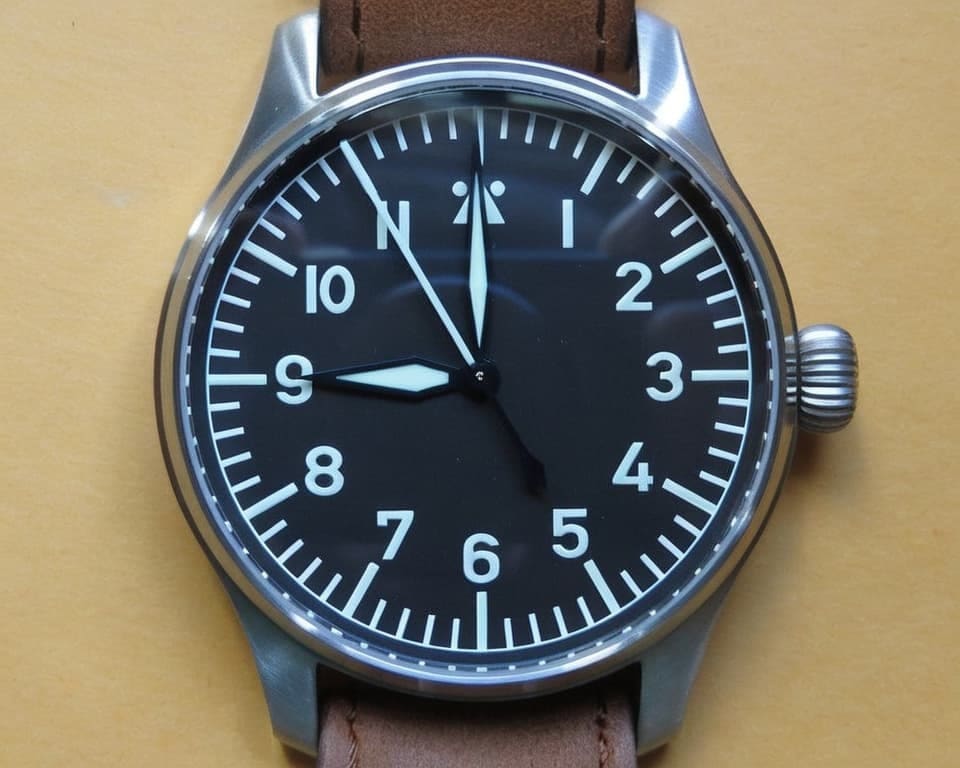
- Stowa Flieger Classic 40 Baumuster A stands as the quintessential pilot watch and Stowa’s bestselling model, featuring the iconic triangle-and-dots marker at 12 o’clock with large Arabic numerals. Available with automatic ETA 2824-2 or manual ETA 2804-2 movements, this 40mm steel case delivers exceptional legibility with blued steel hands and SuperLuminova coating, making it perfect for aviation enthusiasts seeking authentic WWII heritage in wearable proportions.
- Stowa Marine Original Arabic 41mm recreates the precision of 1940s marine chronometers with a pristine white dial, railroad minute track, and heat-blued hands powered by the robust Unitas 6498-1 manual movement. This 41mm timepiece offers 46 hours of power reserve and showcases Stowa’s decorative finishing through its sapphire display caseback, ideal for collectors who appreciate nautical heritage and pocket watch-inspired designs.
- Stowa Antea Klassik 390 embodies pure Bauhaus philosophy with its clean 39mm steel case, minimal white dial, and subtle small seconds subdial, creating one of the most elegant dress watches available at this price point. Powered by reliable Swiss movements and measuring just 9.2mm thick, it transitions seamlessly from office meetings to formal events while representing authentic 1930s German design principles.
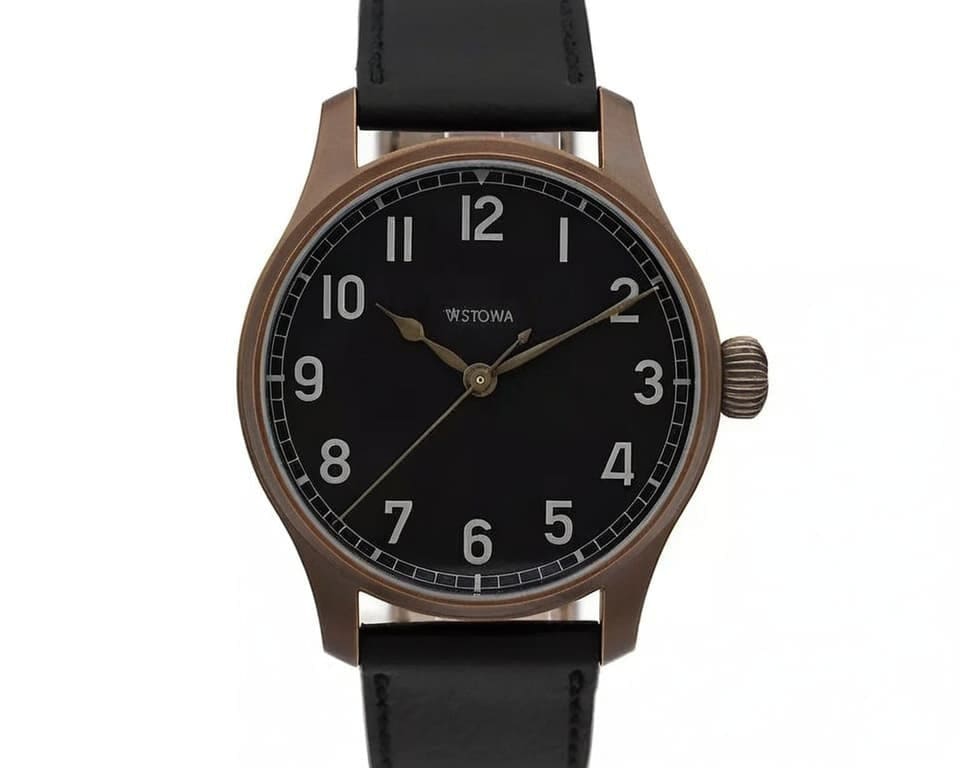
- Stowa Flieger Bronze Vintage 40mm combines historical aviation aesthetics with contemporary bronze case materials that develop unique patina over time, featuring vintage-style luminescent coating in “Old Radium” color. This automatic timepiece appeals to collectors seeking distinctive aging characteristics while maintaining the functional excellence of traditional pilot watches with modern 40mm proportions.
- Stowa Partitio offers exceptional value as an underrated gem inspired by 1930s designs, featuring distinctive fine dial scaling and luminous hands with numerals in a compact package. Available exclusively through select retailers, this manual-wind timepiece provides collectors access to authentic pre-war Stowa aesthetics without the premium pricing of limited editions or mainstream pilot watches.
- Stowa Marine Classic 36mm delivers refined elegance in a perfectly proportioned case size that works exceptionally well on smaller wrists, featuring Roman or Arabic numerals with railroad minute tracks. This versatile timepiece works equally well as a dress watch or daily wearer, offering Swiss movement reliability and Stowa’s signature blued hands in an accessible size that many other brands overlook.
- Stowa Flieger Verus Black Forest 40mm represents modern pilot watch evolution with contemporary design elements while maintaining core flieger DNA, featuring black-coated cases and distinctive color schemes. This tool watch prioritizes functionality and durability for active users who appreciate pilot watch heritage but prefer modern aesthetics over historical reproductions.
- Stowa Flieger Classic 41mm Unitas 6498 appeals to purists seeking larger case proportions with the legendary pocket watch movement, offering exceptional hand-winding experience and impressive 46-hour power reserve. The oversized movement fills nearly the entire case, creating spectacular visual impact through the display caseback while delivering the robust reliability that made Unitas movements legendary.
- Stowa Marine Bronze Vintage 40mm combines marine chronometer heritage with bronze case materials for distinctive aging characteristics, featuring classic white dials and blued steel hands that complement the warm bronze tones. This timepiece offers collectors the opportunity to own a watch that develops unique character over time while maintaining the precision and elegance of traditional marine instruments.
- Stowa Antea Back to Bauhaus Limited showcases collaboration with legendary designer Hartmut Esslinger, featuring refreshed typography and modern interpretations of classic Bauhaus principles in limited production runs. These special editions demonstrate how timeless design concepts can be updated for contemporary tastes while respecting the original aesthetic philosophy that made Bauhaus watches influential.
Each model represents exceptional value within its category, offering Swiss movement quality, German case finishing, and authentic historical connections at prices significantly below comparable luxury alternatives. The key to choosing lies in determining whether you prioritize pilot watch heritage, marine chronometer elegance, or Bauhaus minimalism.
What to Consider When Buying a Stowa Watch
Making the right Stowa purchase requires careful evaluation of several key factors that will determine your long-term satisfaction with the timepiece. Unlike mass-market watches where options are limited, Stowa’s extensive customization possibilities mean that thoughtful consideration upfront can result in a watch perfectly tailored to your preferences, lifestyle, and budget constraints.
- Budget considerations extend beyond the base price to include movement upgrades, custom engravings, premium straps, and potential service costs. Base models start around €800 for Marine Classic versions, while top-specification pilot watches with chronometer movements can reach €2,000. The €80-130 premium for Top Grade movements often proves worthwhile for the improved accuracy and decoration, particularly if you plan to keep the watch long-term.
- Size preferences require careful evaluation since Stowa offers cases ranging from 36mm to 43mm across different collections, with each size creating dramatically different wrist presence. The 40mm models provide optimal versatility for most wearers, while 36mm options suit smaller wrists or those preferring understated elegance. Consider that pilot watches tend to wear larger due to long lugs and minimal bezels, making actual measurements more important than specifications alone.
- Movement selection significantly impacts daily experience and ownership costs, with automatic ETA 2824-2 variants offering convenience for regular wear, while manual ETA 2804-2 or Unitas 6498-1 movements provide traditional winding rituals and superior visual appeal through display casebacks. Hand-wound movements require daily attention but offer thinner cases and unobstructed movement views, making them ideal for enthusiasts who appreciate mechanical interaction.
- Style preferences should align with intended use scenarios since Stowa’s collections serve distinctly different purposes despite sharing quality construction. Flieger models work best for casual and tool watch applications, Marine pieces transition seamlessly between dress and daily wear, while Antea Bauhaus designs excel in formal business environments. Consider whether you want authentic historical reproductions or modern interpretations with contemporary features.
- Customization options allow for significant personalization including sterile dials without logos, date complications, premium leather straps, custom engravings on movements or cases, and various dial colors within certain collections. These choices affect both aesthetics and value retention, with some collectors preferring historically accurate no-logo configurations while others appreciate modern conveniences like date displays.
- New versus vintage considerations involve different value propositions since modern Stowa watches offer current warranty coverage, latest movement specifications, and direct factory support, while vintage pieces provide authentic historical character and potential appreciation but require careful authentication and may need immediate service. Current production allows for exact specification matching, while vintage hunting requires patience and expertise.
The direct-to-consumer sales model means you’ll work directly with Stowa rather than through retailers, ensuring authentic products but requiring international shipping and potential customs considerations. Their excellent customer service reputation and willingness to accommodate special requests make this process smoother than dealing with traditional retail channels, though delivery times can extend several weeks during busy periods.
Best Places to Buy Stowa Watches
Finding the right source for purchasing a Stowa watch involves choosing between official channels that guarantee authenticity and after-sales support versus secondary markets that may offer different pricing or availability. Each purchasing avenue presents distinct advantages and considerations that serious buyers should evaluate based on their priorities regarding price, warranty coverage, and peace of mind.
- Direct from manufacturer represents the primary and most reliable purchasing method through Stowa’s official website (stowa.de), where customers can configure watches to exact specifications including movement grades, dial options, custom engravings, and premium strap selections. This approach ensures authentic products with full warranty coverage while eliminating retailer markups, though delivery times can extend several weeks to months depending on current production schedules and customization complexity.
- Factory visits provide hands-on experience for customers who can travel to Stowa’s Pforzheim facility, where appointments allow for personal consultations, examination of current models, and access to their historical museum. This option suits collectors seeking deeper brand connection and those wanting to inspect watches before purchase, though geographical limitations restrict this opportunity to European visitors or dedicated enthusiasts willing to travel.
- Authorized regional dealers exist in limited markets where Stowa has established official distribution partnerships, though these arrangements typically result in higher pricing compared to direct factory purchases due to distributor markups and local taxes. These dealers may offer advantages like immediate availability and local language support, but often charge premiums of 30-100% above factory pricing while limiting customization options.
- Secondary market sources include established online platforms that aggregate listings from private sellers, watch forums, and specialty retailers offering both new and pre-owned examples. These venues can provide access to discontinued models, limited editions, or current production at potentially reduced prices, though buyers must exercise careful due diligence regarding authenticity verification and seller reputation assessment.
- Exhibition and special offer watches appear periodically on Stowa’s official website at reduced prices, typically featuring models that have been displayed at trade shows or serve as demonstrations. These timepieces carry full warranties despite their exhibition status and represent excellent value opportunities, though selection remains limited and availability unpredictable.
- Vintage and collector markets offer historical pieces through auction houses, specialty dealers, and collector networks, providing access to authentic wartime examples and discontinued models that command premium pricing due to rarity and historical significance. These purchases require expert authentication and often involve higher risks regarding condition and provenance verification.
The direct-from-manufacturer approach remains most advisable for first-time buyers seeking current production models, as it ensures authentic products, comprehensive warranty coverage, and access to full customization options. Stowa’s excellent customer service reputation and willingness to accommodate special requests make their direct sales model particularly attractive despite longer delivery times compared to immediate retail availability.
International customers should note that factory-direct purchasing eliminates concerns about gray market products while maintaining the competitive pricing that makes Stowa watches exceptional value propositions in their respective categories.
Stowa Watches as Investment and Resale Value
While Stowa watches should primarily be purchased for personal enjoyment rather than purely financial considerations, they demonstrate remarkably strong value retention characteristics that make them appealing to collectors who appreciate both horological merit and reasonable depreciation rates. Their combination of authentic heritage, quality construction, and honest pricing creates a foundation for stable secondary market performance that outpaces many competitors in similar price ranges.
- Value retention rates significantly exceed industry averages for watches in the €800-€2,000 price segment, with well-maintained examples typically selling for 70-80% of original retail prices after several years of ownership. This performance stems from Stowa’s conservative pricing strategy that avoids the inflated markups common among luxury brands, creating less dramatic depreciation curves compared to overpriced alternatives.
- Limited edition and discontinued models often appreciate beyond original retail pricing, particularly special releases like anniversary editions, collaborative designs with Hartmut Esslinger, or models with unique specifications that are no longer available. The brand’s controlled production volumes and selective release strategy creates natural scarcity that collectors value, though buyers should never assume appreciation will occur.
- Vintage wartime examples command significant premiums with authentic WWII-era B-Uhren selling for $15,000-$50,000+ depending on condition and provenance, representing some of the strongest investment potential in the vintage watch market. However, these pieces require expert authentication and represent entirely different risk profiles compared to modern production watches.
- Current production models maintain strong demand in secondary markets due to extended delivery times for new orders, reasonable pricing that attracts multiple buyer segments, and the brand’s reputation for quality construction. Well-maintained examples with original documentation often sell quickly at or near asking prices, indicating healthy market demand.
- Factors supporting value retention include the brand’s authentic historical significance as one of only five original B-Uhr manufacturers, timeless design aesthetics that avoid trendy elements, robust Swiss movements that ensure long-term functionality, and direct-to-consumer pricing that eliminates retail markup bubbles common in luxury watch segments.
- Risk factors affecting resale values include the relatively small collector base compared to major luxury brands, limited brand recognition outside enthusiast circles, and dependence on continued Tempus Arte support for parts availability and service infrastructure. Economic downturns typically affect mid-tier brands more severely than established luxury names.
- Best investment characteristics appear in historically significant models like authentic pilot watch reproductions, limited production pieces with unique features, and discontinued variants that develop collector interest over time. Standard production models should be viewed as luxury goods that depreciate gracefully rather than appreciating assets.
- Market liquidity remains reasonable through enthusiast forums, specialty dealers, and online platforms, though selling times may exceed those of mainstream luxury brands due to smaller buyer pools. Patience and realistic pricing typically result in successful sales, while unrealistic expectations can lead to extended listing periods.
The most prudent approach treats Stowa watches as high-quality luxury goods that retain value better than most alternatives in their price range, rather than investments expected to generate positive returns. Their strong value retention makes them excellent choices for collectors who want to minimize depreciation costs while enjoying authentic German engineering and historical significance.
Stowa Watch Care: Maintenance & Service
Proper care and maintenance ensure your Stowa watch continues delivering reliable performance and maintains its aesthetic appeal for decades, making these practices essential investments in protecting both the mechanical integrity and long-term value of your timepiece. German engineering requires respectful treatment and periodic professional attention to achieve the longevity these watches are designed to provide.
- Daily care practices protect against common damage sources including exposure to extreme temperatures, magnetic fields, and unnecessary impacts that can affect timekeeping accuracy and movement longevity. Keep your Stowa away from speakers, laptops, smartphones, and magnetic clasps that can magnetize the movement, while avoiding saunas, freezing conditions, and direct sunlight that can damage seals and lubricants.
- Water resistance awareness prevents costly damage since most Stowa models offer only 50 meters water resistance, suitable for hand washing and light rain but not swimming or showering. Remove your watch before any water activities beyond basic splash resistance, and never operate the crown or pushers while the watch is wet, as this can compromise case seals and allow moisture infiltration.
- Regular wearing keeps automatic movements healthy by providing consistent winding through natural wrist motion, preventing lubricants from congealing and maintaining optimal performance. If storing automatic Stowa watches for extended periods, consider a quality watch winder set to appropriate rotation specifications, or manually wind them periodically to keep internal components active.
- Professional servicing intervals follow the industry standard of every 4-5 years for regularly worn timepieces, though Stowa’s robust ETA and Sellita movements can often exceed this timeline if properly maintained. Service includes complete movement disassembly, ultrasonic cleaning, parts inspection and replacement as needed, fresh lubrication, and accuracy regulation to factory specifications.
- Service options include both factory and independent routes with Stowa offering comprehensive factory service through their Pforzheim facility, including movement overhaul, case refinishing, and strap replacement for approximately €147-200 depending on required work. Competent independent watchmakers can service ETA-based Stowa watches at similar or lower costs, though factory service ensures genuine parts and maintains warranty coverage.
- Storage considerations protect both mechanical and aesthetic components by keeping watches in dry, temperature-stable environments away from direct sunlight and magnetic fields. Use proper watch boxes or soft pouches that prevent scratching, and store leather straps separately in humid climates to prevent cracking and deterioration.
- Warning signs indicating service needs include significant time gains or losses beyond normal specifications, unusual sounds from the movement, sticky crowns or pushers, condensation under the crystal, or visible damage to case or crystal. Address these issues promptly to prevent minor problems from becoming expensive repairs requiring parts replacement.
- Strap and bracelet maintenance extends overall watch life through regular cleaning with appropriate methods for different materials, proper storage to prevent cracking or stretching, and timely replacement when wear becomes excessive. Leather straps benefit from occasional conditioning, while metal bracelets can be cleaned with mild soap and soft brushes.
The combination of thoughtful daily care and timely professional maintenance ensures your Stowa watch continues performing as intended while preserving the aesthetic qualities that make these timepieces so appealing. Given their reasonable service costs and widespread parts availability, proper maintenance represents excellent value compared to replacement expenses, making care practices essential elements of Stowa ownership rather than optional luxuries.
Frequently Asked Questions About Stowa Watches
These frequently asked questions address the most common concerns from people considering Stowa watches, covering everything from pricing and delivery to technical specifications and customization options. These answers provide the essential details needed to make informed decisions about these German timepieces.
How much do Stowa watches cost?
Stowa watches range from €800 for basic Marine Classic models to €4,000 for special editions. Most popular models fall between €1,000-€2,000, with Flieger Classic starting around €1,250, Antea Bauhaus from €890-€1,200, and Marine models €800-€2,200. Movement upgrades (Top Grade ETA) add €80-130 to base prices.
How long is the delivery time for new Stowa watches?
Current delivery times range from 3-8 weeks depending on model and customization. Stowa produces watches to order rather than maintaining stock, ensuring individual attention but requiring patience. Highly customized pieces may take longer during busy periods.
Do Stowa watches hold their value?
Yes, Stowa watches demonstrate excellent value retention, typically selling for 70-80% of retail in good condition. Their authentic heritage, quality construction, and reasonable original pricing support strong secondary market demand better than many competitors in similar price ranges.
What warranty coverage does Stowa provide?
Stowa offers standard warranty against manufacturing defects, handled through their Pforzheim facility. For valid warranty claims, they typically cover repair costs and return shipping, though customers initially pay shipping to Germany with reimbursement for legitimate issues.
Are Stowa movements serviceable by independent watchmakers?
Absolutely. Stowa uses standard ETA and Sellita movements that any competent independent watchmaker can service, often at lower costs. However, factory service ensures genuine parts, warranty preservation, and specialized case refinishing unavailable elsewhere.
What makes Stowa different from other German watch brands?
Stowa’s authenticity comes from genuine WWII pilot watch heritage as one of only five original B-Uhr manufacturers, plus direct-to-consumer pricing eliminating retail markups. Unlike brands referencing military history for marketing, Stowa’s designs represent actual historical instruments.
Can I customize my Stowa watch order?
Yes, extensive customization includes sterile dials, various movement grades, custom engravings, different straps, and specific dial configurations. These options make each watch unique while matching exact preferences, though customization may extend delivery times.
How water resistant are Stowa watches?
Most models offer 50 meters water resistance suitable for daily wear and light rain but not swimming. The Prodiver collection provides up to 1000 meters for diving, while standard models focus on dress and tool watch functionality rather than aquatic sports.
What’s the difference between Baumuster A and B pilot watches?
Baumuster A features the original 1940 design with Arabic numerals and triangle-dot marker. Baumuster B adds an inner hour ring introduced around 1942 for improved readability. Both represent authentic historical specifications with choice based on aesthetic preference.
This information should give you everything needed to understand Stowa’s offerings and make decisions that match your preferences, budget, and intended use. The brand’s straightforward approach to both design and customer service makes the buying process much clearer than dealing with many other watch manufacturers.
Conclusion
Stowa watches represent one of the finest examples of authentic German horological heritage combined with exceptional value positioning in today’s competitive marketplace. Their nearly century-long commitment to functional excellence, honest pricing, and genuine historical significance creates timepieces that satisfy both practical daily wear requirements and collector appreciation for meaningful provenance. The brand’s unique position as one of only five original WWII pilot watch manufacturers provides authenticity that marketing campaigns cannot replicate, while their direct-to-consumer business model delivers Swiss movement quality and German case finishing at prices that make luxury alternatives seem overpriced.
For newcomers to serious watchmaking, Stowa offers an accessible entry point into genuine horological craftsmanship without the premium pricing typically associated with European manufacturing. Experienced collectors appreciate their honest approach to heritage reproduction and the brand’s commitment to substance over style, making Stowa watches worthy additions to any thoughtful collection focused on quality rather than status symbols. Whether choosing a historically accurate Flieger reproduction, elegant Bauhaus-inspired Antea, or nautical Marine chronometer, each model connects wearers to authentic traditions while delivering contemporary reliability and precision.
The combination of authentic historical significance, exceptional build quality, reasonable pricing, and excellent customer service makes Stowa watches particularly appealing for enthusiasts who value genuine craftsmanship over brand prestige. Their success proves that smaller manufacturers can compete effectively against industry giants by focusing on what they do best rather than chasing every trend or market segment, creating timepieces that honor the past while serving modern needs with distinction.