A chronograph is one of the most useful tools ever strapped to a wrist — it’s simply a watch with a built-in stopwatch, letting the wearer start, stop, and measure elapsed time without any extra gadgets. But not all chronographs work the same way under the dial. A flyback chronograph and a standard chronograph can look almost identical from the outside, with the same three pushers and sub-dials, yet the way they reset the stopwatch hands is completely different. That difference sounds small, but it was once a matter of life and death for pilots navigating before GPS existed, and it still explains why two similar-looking chronographs can carry very different price tags today.
What Is the Main Difference Between a Flyback and Standard Chronograph?
A standard chronograph needs three separate button presses to time a new event after the first one, while a flyback chronograph does the same job with a single press. On a standard chronograph, the top pusher stops the timer, the bottom pusher resets the hands to zero, and the top pusher starts timing again. A flyback chronograph skips straight from stop to zero to running again the moment the reset pusher is pressed, even while the hands are still moving.
Think of it like a relay race. A standard chronograph is like a runner who has to come to a complete stop, hand off the baton, and wait for the next runner to get set before the race continues. A flyback chronograph is like a runner who never breaks stride, passing the baton at full speed without anyone slowing down. The end result on both watches is the same: elapsed time gets measured. The flyback simply returns to zero and starts running again in a fraction of a second instead of a few fumbling moments.
| Standard Chronograph | Flyback Chronograph | |
|---|---|---|
| Steps to time a second event | 3 (stop, reset, restart) | 1 (press and release) |
| Pushers used for reset | Stop and reset are separate pushers | Same pusher does the entire reset-and-restart |
| Can the hands be reset while running? | No, this can damage the movement | Yes, that’s the entire point of the mechanism |
| Best suited for | A single, uninterrupted event | Back-to-back or repeated timing |
| Typical price impact | Baseline chronograph pricing | Usually priced higher due to added complexity |
Neither design is objectively superior. Each was engineered to solve a different problem, which is why both continue to exist side by side across the watch industry rather than one replacing the other.
How Does a Standard Chronograph Work?
A standard chronograph follows a simple three-step rhythm: start, stop, reset. The pusher at 2 o’clock starts the seconds hand sweeping around the dial, the same pusher stops it and reveals the elapsed time, and the pusher at 4 o’clock sends the hand back to zero.
This start-stop-reset sequence is intentional, not a design flaw. Inside a mechanical chronograph, the reset function works by using small hammers that strike heart-shaped cams attached to the chronograph hands, snapping them back to zero. Triggering that reset while the chronograph is still running would mean those hammers striking a cam that’s spinning at speed, which can bend or damage the delicate parts inside. That’s exactly why traditional chronographs lock out the reset pusher until the stopwatch has been stopped first. It’s a safety feature built into the mechanism, and it works perfectly well for timing one event at a time, whether that’s a boiled egg, a workout interval, or a parking meter.
Most standard chronographs today are considered the “default” version of the complication, which is why watch brands rarely bother labeling them as anything special. If a chronograph watch doesn’t mention flyback, rattrapante, or another specific chronograph type in its name or specs, it’s almost always this straightforward start-stop-reset type, regardless of whether it’s a $200 quartz watch or a $20,000 mechanical one.
How Does a Flyback Chronograph Work?
A flyback chronograph resets and restarts the stopwatch with a single press of one pusher, without the wearer ever having to stop it first. Pressing and holding that pusher while the chronograph is running sends the hands snapping back to zero, and releasing the pusher starts the count again instantly.
The clever part is what happens mechanically to make this safe. When the reset pusher is pressed while the chronograph is already stopped, it behaves like a normal reset and the hands simply return to zero. But when that same pusher is pressed and held while the chronograph is running, the movement performs a hidden reset internally first, and the moment the pusher is released, timing starts fresh from zero. In other words, the watch briefly disconnects the chronograph gear train, resets the hands, and reconnects it, all within a fraction of a second and all triggered by one motion. This requires extra components and more careful engineering than a standard chronograph, which is part of why flyback movements tend to sit at a higher price point than simpler chronographs from the same brand.
Flyback isn’t exclusive to mechanical watches, either. Quartz and digital chronographs can offer an instant reset-and-restart function too, though it’s handled electronically rather than through hammers and cams, so there’s no risk of damaging delicate parts by resetting mid-run. The mechanical version is the one collectors and watchmakers usually mean when they talk about “flyback,” largely because building it into a hand-wound or automatic movement takes genuine engineering skill, but the electronic version exists too and occasionally shows up as a term on sports or digital watches.
A flyback chronograph combines three separate actions — stop, reset, and restart — into a single, uninterrupted motion.
Why Was the Flyback Chronograph Invented?
The flyback chronograph was invented for military and civilian pilots who needed to time flight legs back-to-back without losing precious seconds or taking their eyes off the instrument panel. Longines is generally credited with bringing out the first flyback chronograph in 1936, and once the Second World War began, the feature spread quickly across watch brands because it suited military pilots who relied on it for a range of in-flight navigation calculations. Breitling, meanwhile, is often credited with popularizing the modern two-pusher standard chronograph layout a few years earlier, in 1932, which is the same basic pusher arrangement most chronographs still use today.
Before satellite navigation, pilots relied on a technique called dead reckoning, which meant calculating position using speed, heading, and elapsed time between landmarks. Every time a pilot crossed a checkpoint, like a river, coastline, or another aircraft, they needed to note the exact time that leg took and immediately start timing the next one. With a standard chronograph, that meant three separate button presses at the exact moment they needed to be focused on flying the plane and reading their charts. Every fumbled press introduced timing errors that could throw off the whole calculation. The flyback function solved that problem by reducing the action to a single, decisive press, letting pilots keep their hands steady and their eyes where they needed to be.
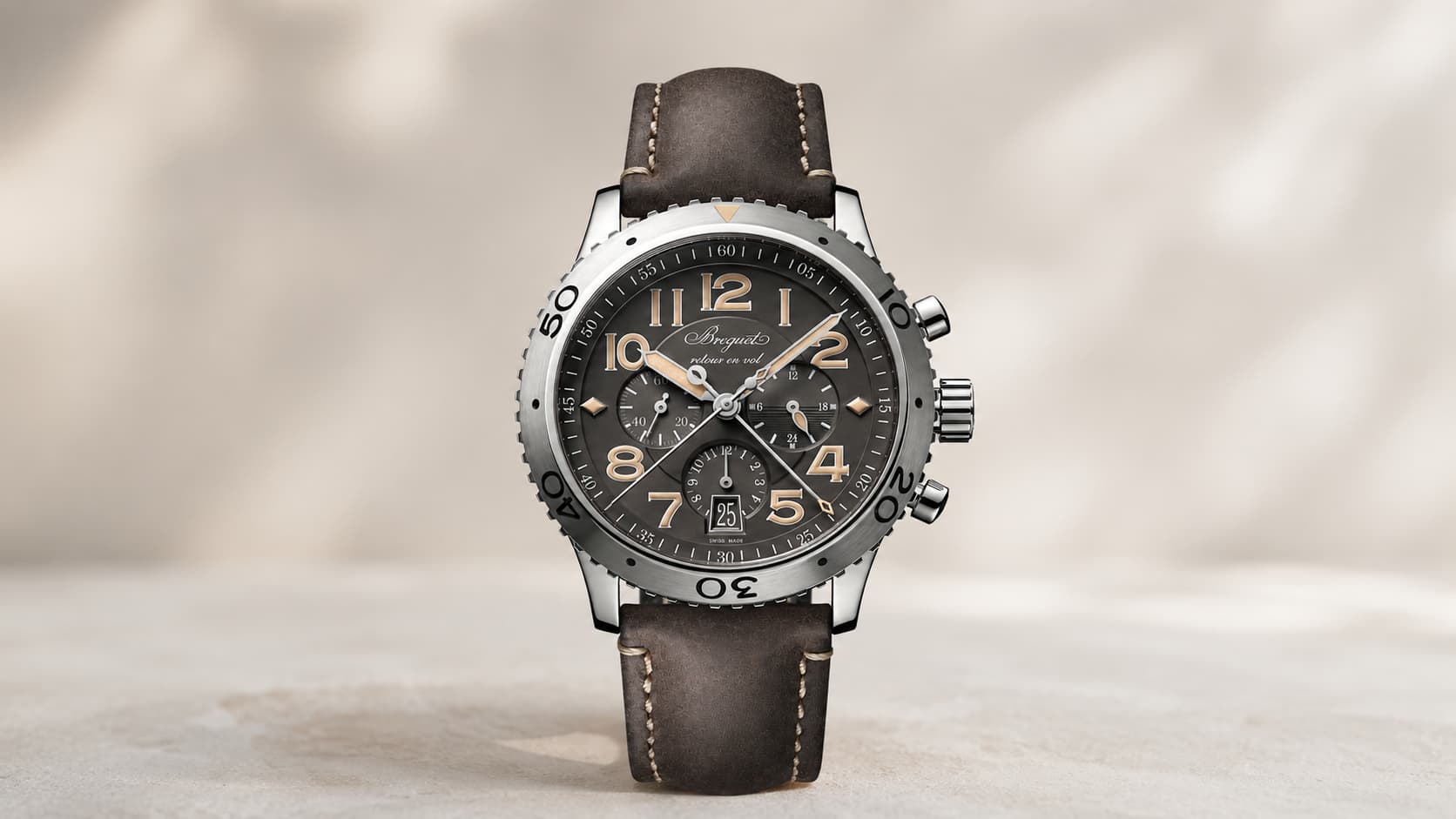
The military roots of the flyback run deep. Breguet built its Type XX chronograph for French naval and air force pilots in the 1950s, and that model’s modern descendant, the Type XXI, still carries the flyback function today as a direct nod to its original job. German manufacturer Urofa also built a similar instant-reset function for Tutima’s wartime pilot chronographs, calling it “Tempostopp” rather than flyback, and that name still shows up on revived Tutima models. Depending on where and when the term surfaces, the flyback function is also sometimes called “retour-en-vol,” French for “return in flight,” or the “Taylor system,” an older name tied to its early patents.
Who Actually Benefits From a Flyback Chronograph?
For most everyday uses, a standard chronograph does everything a person needs, and the flyback function only becomes genuinely useful when timing a rapid sequence of back-to-back events. Someone timing a single race, a cooking step, or a phone call would notice no real difference from the extra speed of a flyback reset.
A flyback earns its keep in situations involving repeated, consecutive timing:
- Motorsport lap timing, where drivers or teams need to capture one lap’s time and start the next without any gap
- Multi-leg flight navigation, the original use case, where a pilot times one leg and immediately begins the next
- Sailing regattas, where race committees time starts and successive legs in quick succession
- Interval-based activities, like coaching or officiating events with back-to-back timed segments
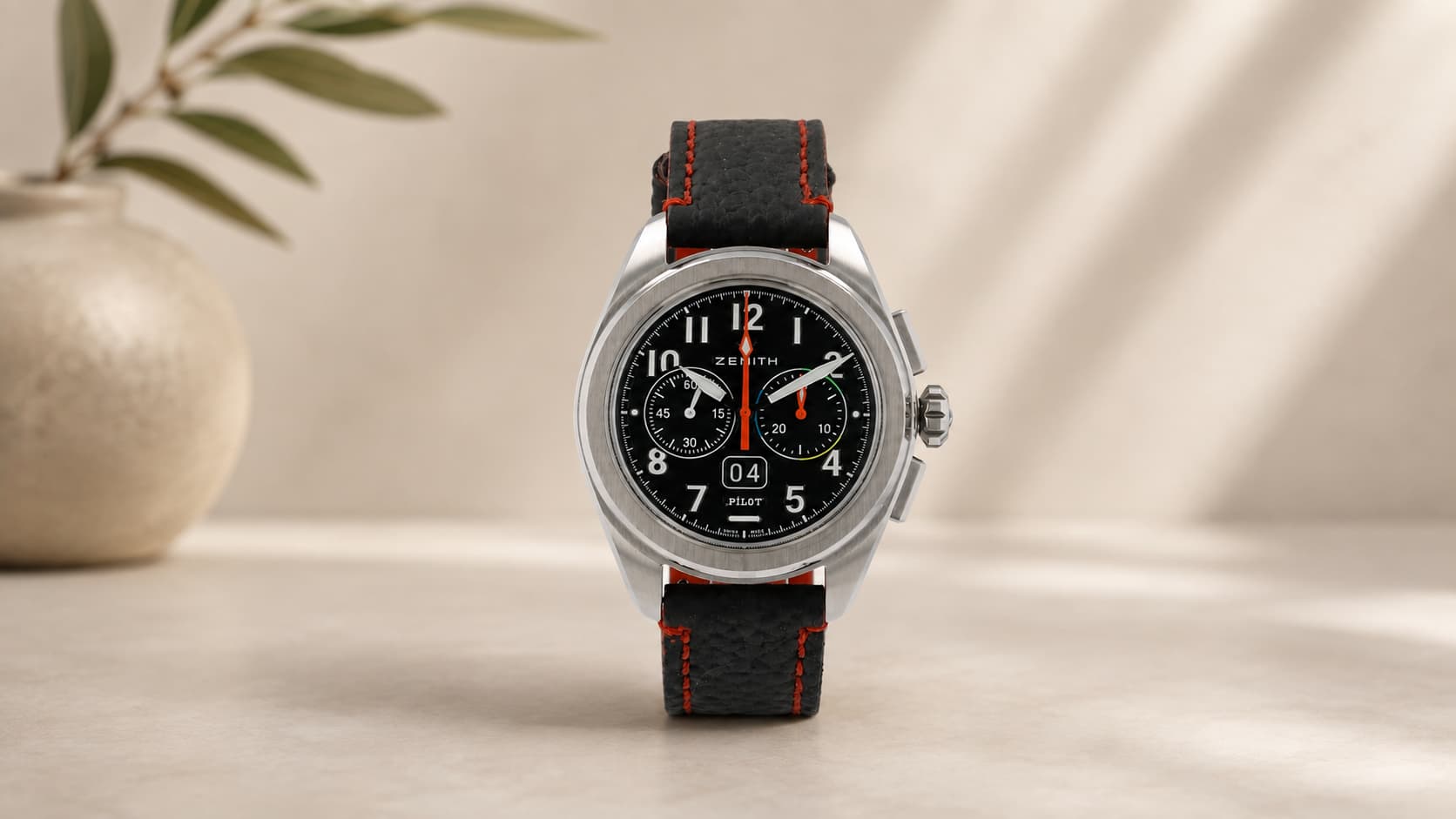
This is also why flyback chronographs remain closely associated with aviation-inspired watches. Brands like Breitling, IWC, Zenith, and Breguet have built entire pilot watch collections around chronograph movements, with certain lines specifically offering flyback versions as a step above their standard chronograph siblings. Zenith’s Pilot Big Date Flyback, for example, runs on a high-frequency El Primero-based movement that measures elapsed time to a tenth of a second, while Breguet’s Type XXI carries the flyback function forward from its 1950s military ancestor. Higher up the price ladder, brands including Patek Philippe and A. Lange & Söhne have also built flyback function into some of their most complicated chronograph references.
On the dial, a flyback chronograph looks no different from a standard one; the only way to know for sure is to check the watch’s specifications or the movement caliber it uses, since the difference lives entirely inside the case.
Frequently Asked Questions
Can a flyback chronograph be identified just by looking at it?
No, in almost all cases the dial and pushers look identical on the outside. The only reliable way to know if a chronograph has a flyback function is to check the watch’s official specifications, the movement caliber name, or sometimes text printed on the case back or dial.
Is it dangerous to try to reset a standard chronograph while it’s running?
Yes, forcing the reset pusher on a non-flyback chronograph while the hands are still moving can bend or damage the internal hammers and heart-shaped cams that snap the hands back to zero. A standard chronograph should always be stopped fully before the reset pusher is pressed, to avoid an expensive repair.
Do flyback chronographs cost more than standard chronographs?
Generally yes, because a flyback mechanism requires additional components and more complex engineering to safely combine the stop, reset, and restart functions into one motion. Watches with flyback movements often sit higher in a brand’s lineup than their standard chronograph counterparts.
Are all pilot watches flyback chronographs?
No. Many pilot watches use standard chronograph movements, and the flyback function is typically reserved for higher-tier models within a collection. Brands such as Breitling, IWC, Zenith, and Breguet offer both standard and flyback chronographs within their aviation-inspired lines.
Is a flyback chronograph the same thing as a rattrapante chronograph?
No, they solve different problems even though people sometimes mix them up. A flyback resets and restarts a single chronograph hand instantly to time consecutive events one after another, while a rattrapante, or split-seconds chronograph, uses two overlapping hands to time two events at the same time, such as comparing two runners in the same race. A rattrapante is generally considered the more complex and expensive of the two complications.
What does “flyback” actually mean as a word?
The name refers to how the chronograph hand instantly “flies back” to zero and restarts, rather than the wearer having to stop it manually first. It’s also occasionally called “retour-en-vol,” a French term meaning “return in flight,” which nods directly to its aviation origins.
Conclusion
Both chronograph types measure elapsed time accurately and reliably, and neither one is objectively “better” in every situation. A standard chronograph is a straightforward, dependable tool built for timing one event at a time, while a flyback chronograph is a more specialized piece of engineering built to solve a very specific problem: measuring consecutive intervals without losing a beat between them. Knowing which mechanism sits inside a chronograph won’t change how well the watch tells time, but it does change how that stopwatch function gets used in practice, and it explains why two chronographs that look nearly identical can carry very different price tags.