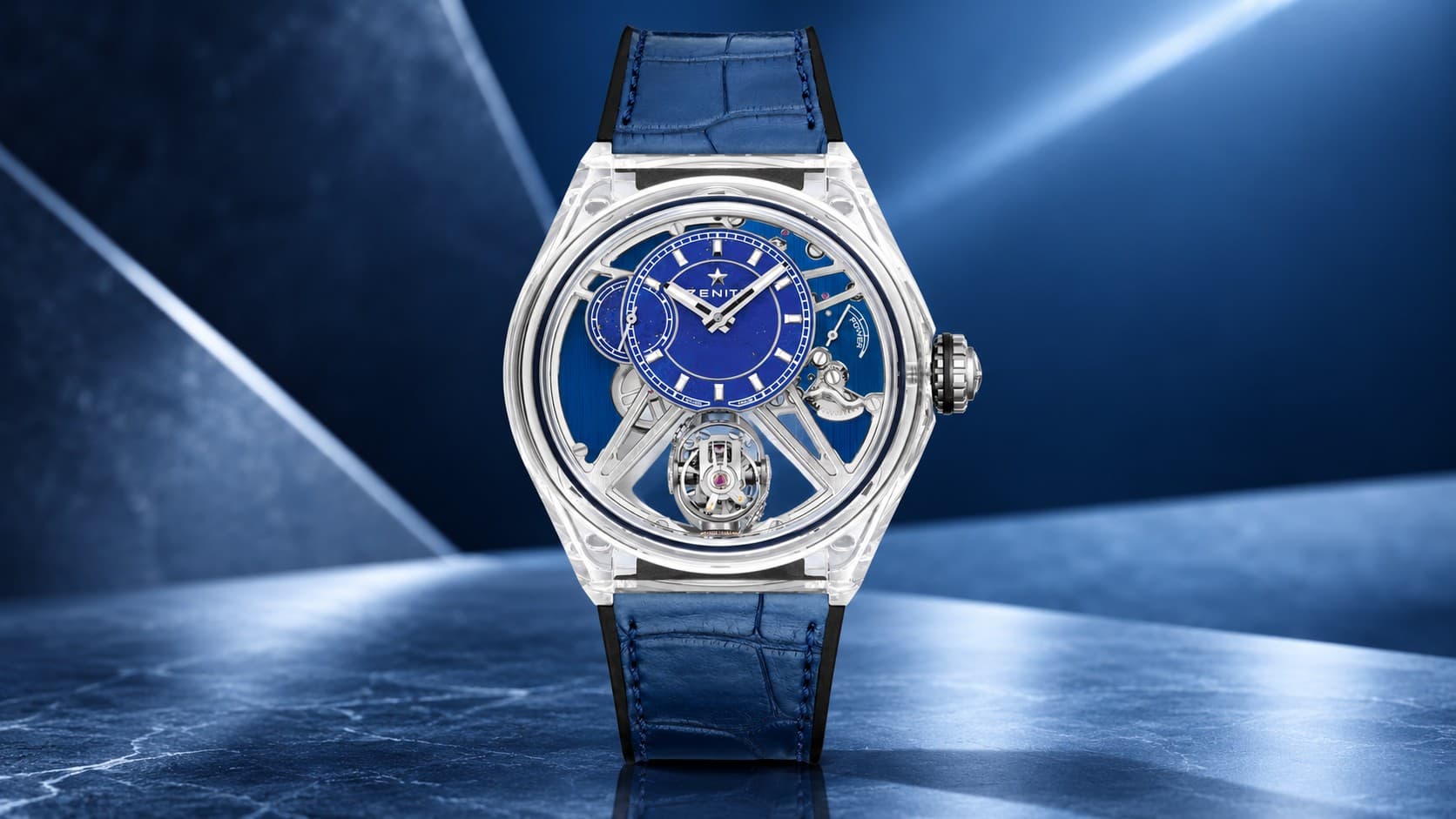
Zenith is one of the few Swiss watch brands that changed the entire industry with a single invention. In 1969, it built the world’s first automatic chronograph movement, a feat that still shapes how the company designs watches today. Because Zenith makes almost all of its own parts in-house, in the same small town where it started 160 years ago, its watches carry a kind of engineering pride that’s hard to find elsewhere. That history runs through every current collection, from the record-setting Chronomaster line to the sportier Defy, Pilot, and Elite watches, each built around a different piece of the brand’s engineering.
What Zenith Is Known For
Zenith is best known for building its own chronograph movement instead of buying one from another company. Many watch brands buy movements, the mechanical “engine” inside a watch, from outside suppliers. Zenith builds its own, and it has done so since 1865. That matters because Zenith controls the quality of nearly every part inside the watch, from the tiny gears to the springs that keep time.
The brand’s calling card is the El Primero movement, first shown to the public on January 10, 1969. It was the world’s first automatic chronograph, meaning a self-winding watch that can also work as a stopwatch. It ticks at 36,000 vibrations per hour, much faster than most mechanical watches, which lets it measure time down to a tenth of a second. That speed and precision earned Zenith more chronometry awards than any other watchmaker, with a tally that now sits above 2,300 prizes won in timing competitions since the early 1900s.
Over its history, Zenith has also developed roughly 600 different movement variations and filed around 300 patents for its mechanical inventions. That’s an unusually deep engineering catalog for a company of its size, and it’s the reason Zenith is often described by other watchmakers as a “manufacture,” a brand that genuinely builds its own components instead of assembling parts made elsewhere.
The History of Zenith Watches
Zenith was founded in 1865 by a 22-year-old watchmaker named Georges Favre-Jacot in Le Locle, Switzerland. That single fact explains a lot about the brand’s identity today. Favre-Jacot had a bold idea for his time: instead of buying watch parts from different workshops scattered around town, he gathered every craftsman under one roof, from case makers to dial painters. This setup is now called a “manufacture,” and Zenith is considered one of the first companies in the world to build one.
The name Zenith came later, officially adopted in 1911, and it refers to the highest point a star or planet reaches in the sky. It fit the brand’s ambition to reach the top of precision watchmaking. By the 1920s, Zenith employed around 1,000 people and had earned a nickname translating to “the Manufacture with 2,000 gold and silver hands,” a nod to how many watches it was producing.
The switch to the Zenith name in 1911 came with some family drama attached. Favre-Jacot’s nephew and son-in-law, James Favre, pushed the shareholders to remove the founder from the company that same year, and Favre-Jacot reportedly left without even keeping his own desk or watch. It’s an unusual footnote for a brand built on precision and control, but it shows how quickly a small Swiss workshop had grown into a business worth fighting over. Before any of that happened, the company had already built its first pocket chronograph in 1899 and won a gold medal at the 1900 Paris Universal Exhibition, early proof that its precision-focused approach was working.
Why the El Primero Nearly Vanished
The El Primero movement almost never survived past the 1970s. During the quartz crisis, a period when cheap and accurate quartz watches from Japan nearly wiped out Swiss mechanical watchmaking, Zenith’s owners at the time ordered the tooling for the El Primero to be scrapped in 1975. A watchmaker at the company named Charles Vermot disagreed with that decision. Rather than argue with management, he quietly moved the blueprints, tools, and machinery into a bricked-off attic space in the factory and kept the secret for years.
That decision turned out to be one of the most important in Swiss watch history. Vermot’s hidden workshop stayed untouched until 1984, when demand for mechanical watches began returning and Zenith needed the El Primero tooling again. Because everything was still intact, the movement could be relaunched in 1986 almost exactly as it had been designed, and it’s still made today, in updated form, inside current Chronomaster models. Rolex even used a modified version of the El Primero in its Daytona chronograph starting in 1988, running it for over a decade before switching to a fully in-house movement in the early 2000s.
Zenith’s Ownership and Parent Company
Zenith has been part of LVMH, the French luxury group, since November 1999. LVMH also owns TAG Heuer, Hublot, and Bulgari, and Zenith’s El Primero movement has shown up inside watches from those sister brands over the years, including Hublot’s Big Bang chronographs and past Panerai models. Despite being part of a large group, Zenith still designs and builds its watches at the same site in Le Locle where Favre-Jacot started the company in 1865.
Being part of LVMH has also given Zenith more freedom to experiment than a smaller independent brand might have. The group’s watchmaking division supported the 2017 launch of the El Primero 21, a movement that pushed Zenith’s chronograph technology further than it had gone in decades, and it has backed the brand’s growing lineup of historical reissues under the Chronomaster Revival and Defy Revival names.
The Best Zenith Watch Collections
Zenith’s current lineup is organized into a handful of collections, each built around a different movement and a different purpose.
Zenith Chronomaster Sport
The Chronomaster Sport is the modern heir to the original 1969 El Primero chronograph. It uses the El Primero 3600 movement, which keeps the tenth-of-a-second chronograph function that made the original famous, along with a 60-hour power reserve, an improvement over the 50-hour reserve of earlier El Primero versions. Its tricolor dial with three small sub-dials is a direct callback to the panda-style dials Zenith used in 1969, right down to the 1/10th-of-a-second scale printed around the edge.
The Chronomaster Sport offers a real piece of chronograph history without the restoration work that comes with an actual vintage watch.
The standard steel model measures 41mm across, close to the size collectors consider ideal for the El Primero’s tricompax dial layout, and it typically starts in the low five figures. Zenith has also released far more elaborate versions of the same watch, including a Chronomaster Sport Rainbow set with baguette-cut diamonds and rainbow sapphires that retails above $100,000, showing just how wide the range gets once precious stones and metals are involved.
Zenith Defy Skyline
The Defy Skyline is Zenith’s take on a sporty, everyday watch, built around an octagonal case shape and faceted bezel borrowed from the original 1969 Defy, nicknamed the “bank vault” case at the time for its heavy, angular design. Instead of a chronograph, most Skyline models focus on telling time with an unusual star-patterned dial, though chronograph and skeleton versions exist too. The three-hand version uses the automatic Elite 670 caliber, running at 28,800 vibrations per hour with a 50-hour power reserve, while the chronograph version switches to a version of the El Primero.
This collection tends to appeal to people who want Zenith’s engineering without a chronograph function. Zenith’s official list price for the 41mm steel Defy Skyline sits around $8,400, and the watch is built for daily wear rather than special occasions, with 100 meters of water resistance and a bracelet designed for comfort.
Zenith Defy El Primero 21
If the Chronomaster Sport represents Zenith’s history, the Defy El Primero 21 represents where the brand has pushed next. Released in 2017, it uses the El Primero 9004 caliber, a movement built with two separate escapements instead of one, a genuinely unusual piece of engineering. One escapement runs the normal timekeeping at 36,000 vibrations per hour, while a second, dedicated purely to the chronograph, spins at an extraordinary 360,000 vibrations per hour.
That second escapement is what lets the Defy El Primero 21 measure time down to a hundredth of a second instead of a tenth, something almost no other mechanical chronograph can do. The central chronograph hand completes a full rotation around the dial every single second rather than every minute, a striking effect on the wrist. Despite all that extra machinery, the watch still holds a 50-hour power reserve and 100 meters of water resistance, and open-worked versions reveal both escapements working side by side through the dial.
Zenith Pilot
The Pilot collection traces its design language back to aviation watches Zenith made for early 20th-century flyers. These watches use large, legible numerals, oversized “onion” crowns built to be turned with gloves on, and cases built to handle rough use. Zenith has a genuine historical claim here: Louis Blériot wore a Zenith watch on his wrist when he became the first pilot to fly across the English Channel in 1909, and he later said in 1912 that he used a Zenith regularly and recommended it to anyone who needed precision.
That relationship with aviation continued for decades. In 1939, Zenith began building the Type 20 Montre d’Aéronef, a hand-wound clock designed to sit in an aircraft’s instrument panel for the French Air Force, complete with a knurled bezel for winding and setting. Zenith revived that design in 2012 as the modern Pilot Type 20 wristwatch, keeping the oversized crown and cathedral-style hands, and the collection has since grown to include chronograph versions and materials like bronze and titanium. Pilot watches today lean toward larger case sizes and a more rugged look than the brand’s dressier lines, favored by people who want a watch that feels purposeful rather than decorative.
Zenith Elite
The Elite collection is where Zenith shows it can do more than chronographs. The Elite caliber is thinner and simpler than the El Primero, with most versions under 4mm in height, built for clean, classic watches rather than stopwatch functions. It still runs on an in-house automatic movement with around a 50-hour power reserve, so it keeps Zenith’s manufacture credentials even though it skips the chronograph entirely.
These pieces are Zenith’s dress-watch answer, often featuring moonphase complications or simple three-hand designs meant to sit quietly under a shirt cuff. Because the Elite movement is slimmer than the El Primero, watches built around it tend to sit lower on the wrist too, which is part of why Zenith uses it across some of the Pilot and Defy Skyline references aimed at a more understated look.
Zenith Chronomaster Revival
The Chronomaster Revival line takes specific historical references, like the A384 or the Chronomaster 1969, and rebuilds them with modern components while keeping the original look almost untouched. These are aimed squarely at collectors who want the vintage aesthetic without the maintenance headaches of an actual 55-year-old watch.
Zenith Watch Price Ranges by Collection
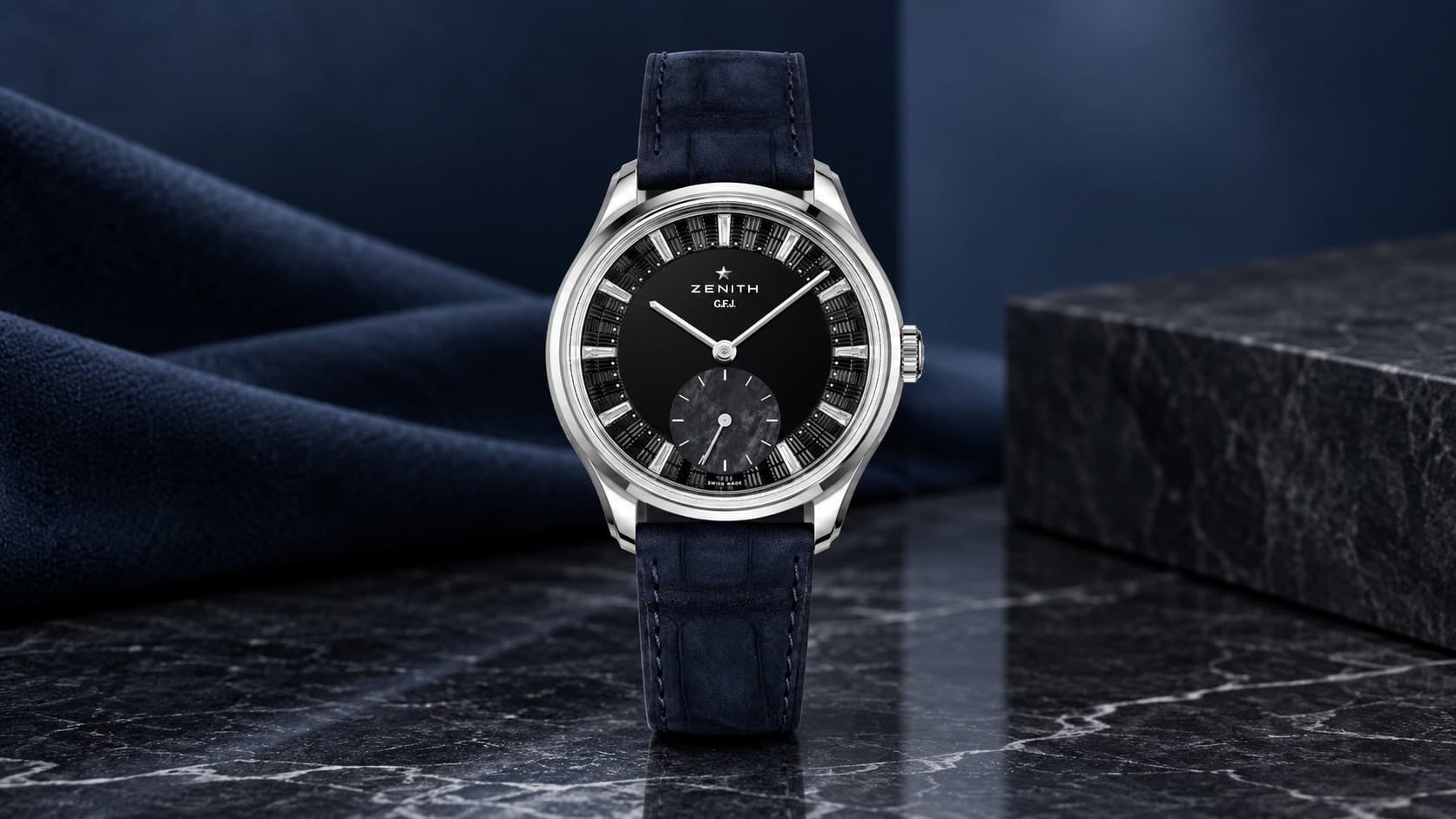
Most Zenith watches fall somewhere between $6,000 and $15,000, though the range stretches much wider at both ends. Simple steel models in the Defy or Chronomaster lines sit at the lower end, while limited editions in precious metals, or pieces set with diamonds like the Chronomaster Sport Rainbow, can climb past $100,000. On the secondary market, older El Primero references and Defy Revival limited editions sometimes trade close to their original retail price, or above it, because collectors value the historical models.
| Collection | Typical Focus | Rough Price Starting Point |
|---|---|---|
| Chronomaster Sport | Chronograph, sporty | Low five figures (USD) |
| Defy Skyline | Everyday, sporty | Around $8,400 (USD) |
| Defy El Primero 21 | High-precision chronograph | Around $9,800–$12,000 (USD) |
| Pilot | Aviation-inspired | Low to mid thousands (USD) |
| Elite | Dress, classic | Low thousands (USD) |
| Chronomaster Revival | Vintage remakes | Mid thousands to low tens of thousands (USD) |
Exact prices shift often based on materials, complications, and limited-edition status, so these figures are general starting points rather than a fixed price list.
Zenith’s Edge Over Other Watchmakers
Zenith’s biggest advantage is speed and precision in its chronograph function. Because the El Primero runs at a higher frequency than most competing chronograph movements, it can measure smaller slices of time, a tenth of a second instead of an eighth or a quarter. That’s a real mechanical difference, not just marketing language.
Zenith also has a genuine adventure pedigree that goes beyond typical brand storytelling. In 2012, skydiver Felix Baumgartner wore a Zenith El Primero Stratos on his wrist during the Red Bull Stratos jump, when he fell from 128,100 feet and became the first person to break the speed of sound without a vehicle. The watch kept working through huge swings in temperature, pressure, and speed during the jump, the kind of real-world stress test most watch brands can only simulate in a lab.
At the far end of its engineering, Zenith also builds a small number of ultra-high-end watches under its Academy label. One of them, the Academy Christophe Colomb, solves the problem of gravity in a way almost no other watchmaker attempts. Most brands deal with gravity throwing off a watch’s accuracy by using a tourbillon, a rotating cage invented by Abraham-Louis Breguet that spins the escapement in a slow circle to average out the errors over time.
The Christophe Colomb takes a different approach. It mounts the escapement inside a gimbal, the same kind of pivoting cradle once used to keep ship-based marine chronometers level at sea, so the escapement stays horizontal no matter how the wrist moves, canceling out the error instead of averaging it. Zenith calls it the Gravity Control system, patented technology that has stayed almost exclusively theirs since it debuted in 2008. These pieces are produced in very small numbers and sit well outside the brand’s regular lineup, but they show how far past the El Primero Zenith’s engineering actually reaches.
Which Zenith Watch Should You Get?
Picking a Zenith watch comes down to what it will be used for and which part of the brand’s history appeals most.
- The most famous chronograph in Swiss history: the Chronomaster Sport or a Chronomaster Revival model.
- A sporty daily watch without a stopwatch function: the Defy Skyline.
- The most technically extreme chronograph Zenith makes: the Defy El Primero 21, measuring down to a hundredth of a second.
- A tough, no-nonsense watch with aviation roots: the Pilot collection.
- A slim, classic watch for formal occasions: the Elite collection.
Zenith isn’t only a men’s-watch brand, either. Several collections, including Elite and Defy Midnight, come in smaller case sizes, generally in the 32mm to 36mm range, aimed at women or anyone who prefers a more compact watch, alongside the larger 41mm-and-up cases common in the Chronomaster and Pilot lines.
Trying a watch on in person is the best way to judge fit, since Zenith cases run larger than some other Swiss brands and weight varies a lot between collections.
Frequently Asked Questions
What is Zenith most famous for?
Zenith is most famous for the El Primero, the world’s first automatic chronograph movement, released in 1969. It’s also known for being one of the few Swiss brands that builds its own movements entirely in-house.
Is Zenith considered a luxury watch brand?
Yes. Zenith is a Swiss luxury watchmaker owned by LVMH, sitting in a similar tier to brands like TAG Heuer, though generally priced above TAG Heuer and below brands like Patek Philippe.
Did Rolex use a Zenith movement?
Yes. Rolex used a modified version of the El Primero movement in its Daytona chronograph from 1988 until the early 2000s, when Rolex switched to a fully in-house movement.
What’s the difference between the Chronomaster and Defy lines?
The Chronomaster line is built around chronograph functions and historical El Primero designs, while the Defy line focuses more on sporty, everyday watches, with chronograph versions available but not the main focus of every model.
Are Zenith watches a good investment?
Some limited editions and historically significant references, like Defy Revival pieces or vintage El Primero models, have held or grown in value. Most modern production Zenith watches, like most watches from any brand, are better thought of as long-term purchases to enjoy rather than guaranteed financial investments.
What does “El Primero” mean?
El Primero means “the first” in Spanish. Zenith chose the name in 1969 because the movement was the first automatic chronograph ever brought to market, and it has kept the name on its flagship chronograph movement ever since.
The Bottom Line
Zenith earned its place in watchmaking history by building the first automatic chronograph, and it has kept that engineering identity alive through a quartz crisis, several ownership changes, and six decades of new technology. The clearest link to that 1969 breakthrough runs through the Chronomaster Sport and Chronomaster Revival models, while the Defy and Elite collections carry the same in-house engineering into sportier or dressier shapes. Either way, a Zenith watch comes from a brand that built the movement inside it, tested it in genuine extremes, and kept the blueprints alive when the rest of the industry nearly let them go.