Citizen has been building watches in Japan for more than a hundred years, and somewhere along the way it turned into one of the few brands that can make a watch for almost anyone — a $150 solar-powered diver, a dressy automatic under $500, or a titanium GMT that syncs to satellites. That range is exactly why people get a little lost trying to figure out which Citizen is actually worth their attention. Instead of just naming a list of models, it helps to understand what the brand is actually good at, where the technology came from, and which collections solve which problems, so the choice makes sense instead of feeling random.
The Technology Behind Citizen Watches
Citizen’s biggest strength is that it invents its own watch parts instead of buying them from other companies. Most watch brands buy movements (the little engine inside a watch) from outside suppliers. Citizen builds its own, including the famous light-powered Eco-Drive movement, in-house.
That kind of control means Citizen can make watches that solve real problems: never needing a battery, resisting scratches better than steel, or keeping time accurate to one second a year. Citizen launched the Eco-Drive brand in 1996 and upgraded the technology in 2000 so it could run on any light source, and that single invention still shapes almost everything the company makes today. On top of that, Citizen also owns Bulova, and together the two brands make it one of the largest watchmaking groups in the world, which gives it the manufacturing muscle to keep prices lower than the technology inside would otherwise suggest.
The History of Citizen Watches
Citizen started in Tokyo in 1918 as a small research lab, not a watch brand. It began life under the name Shokosha Watch Research Institute, founded by Kamekichi Yamazaki with the goal of building a Japanese-made alternative to the imported pocket watches that were common at the time.
The name “Citizen” almost happened by accident. Tokyo’s mayor, Shinpei Gotoh, gave Shokosha’s first timepieces the name “Citizen” because he wanted them to feel close to the hearts of ordinary people. The name stuck so well that the whole company eventually took it. Citizen kept innovating through the 20th century, introducing shock-resistant and water-resistant watches years before that was standard, and it became a truly global company when it bought the American brand Bulova. On January 10, 2008, Citizen acquired Bulova Watch Company along with its affiliated brands, Caravelle, Wittnauer, and Accutron, for roughly $250 million, making the combined company one of the biggest watchmakers on the planet.
What Is Citizen Eco-Drive?
Eco-Drive is Citizen’s technology that turns any light — sunlight, a lamp, even office lighting — into power for the watch, so it never needs a disposable battery. A tiny solar cell sits just beneath the dial, and it quietly recharges a battery inside the watch every time light hits it.
The idea goes back further than most people think. Citizen’s first version of this technology appeared in 1976 with the Quartz Crystron Solar Cell, the first watch with a quartz movement whose rechargeable battery sat under a photovoltaic solar panel that could soak up energy from any light source, not just direct sunlight. It took two more decades of refining before the brand had something ready for the mass market. The Eco-Drive name itself arrived in the mid-1990s, first reaching shelves outside Japan in 1995 before making its way to American retailers the following spring, powered by a new movement that let the solar cell hide invisibly under the dial instead of sitting on top of it looking obvious.
The technology has kept improving ever since:
- 1986: A model that could run 200 hours (over eight days) on a single full charge.
- 1996: The first Eco-Drive watches using Caliber 7878 reached the US.
- 2000: Citizen released an Eco-Drive Radio-Controlled watch with a 10-year charge interval that could sync itself to a radio time signal.
- 2011: The Caliber A010 pushed accuracy to roughly plus or minus five seconds per year.
- 2016: Eco-Drive One arrived with a movement just 1.00mm thick, the world’s thinnest light-powered analog movement at the time.
A fully charged Eco-Drive watch can keep running in total darkness for months, and some high-end models can go over a year without seeing any light at all.
The result is a watch that requires almost no thought day to day — no battery replacement, and no dead watch on the one morning it’s needed most.
Best Citizen Watch Collections
Citizen splits its lineup into a handful of collections, and each one is built around a different kind of wearer. Understanding the differences between them makes the lineup far easier to navigate.
Promaster — Built for Adventure
Promaster is Citizen’s tool-watch family, made for diving, flying, and outdoor use rather than dressing up. These watches are grouped by where they’re meant to be used: Land, Marine, or Sky, and the arrow logo on the crown stands for the idea of going “higher and deeper” than an ordinary watch.
The collection officially launched in 1989, but its most famous model came four years earlier. The original Aqualand, released in 1985, was the first watch in the world to include an electronic depth gauge, letting a diver read how deep they were straight off the dial instead of guessing. That watch became the foundation the whole Promaster line was built on, and updated Aqualand models are still sold today.
Inside Promaster sit proper dive watches rated to depths of 200 meters or more, pilot watches with slide-rule bezels for calculating fuel and speed, and rugged field watches built to survive drops and knocks. The entry-level Promaster Diver, the BN0151, is often pointed to as one of the best-value ISO-certified dive watches on the market, while the Promaster Nighthawk pilot’s watch keeps a functional internal slide-rule bezel that’s genuinely usable for basic flight calculations. Many Promaster models use Eco-Drive, so the same watch that survives a dive can also go months without needing attention.
Tsuyosa — Modern and Affordable Automatic
Tsuyosa is Citizen’s answer to the popularity of retro-styled, integrated-bracelet watches. It first launched in Asia in 2021 as an integrated bracelet watch with a mechanical movement, reaching Europe the following year and the US and Japan by 2023, priced under $500 — genuinely affordable for that style of watch.
Unlike Eco-Drive pieces, Tsuyosa uses a traditional automatic movement, meaning it winds itself from the motion of the wearer’s wrist instead of light. Models like the Tsuyosa NJ0151, with its barrel-shaped case and 40-hour power reserve, offer a mechanical watch — the kind with visible moving parts and old-school watchmaking charm — without the usual price tag.
Attesa — Titanium and High-Tech
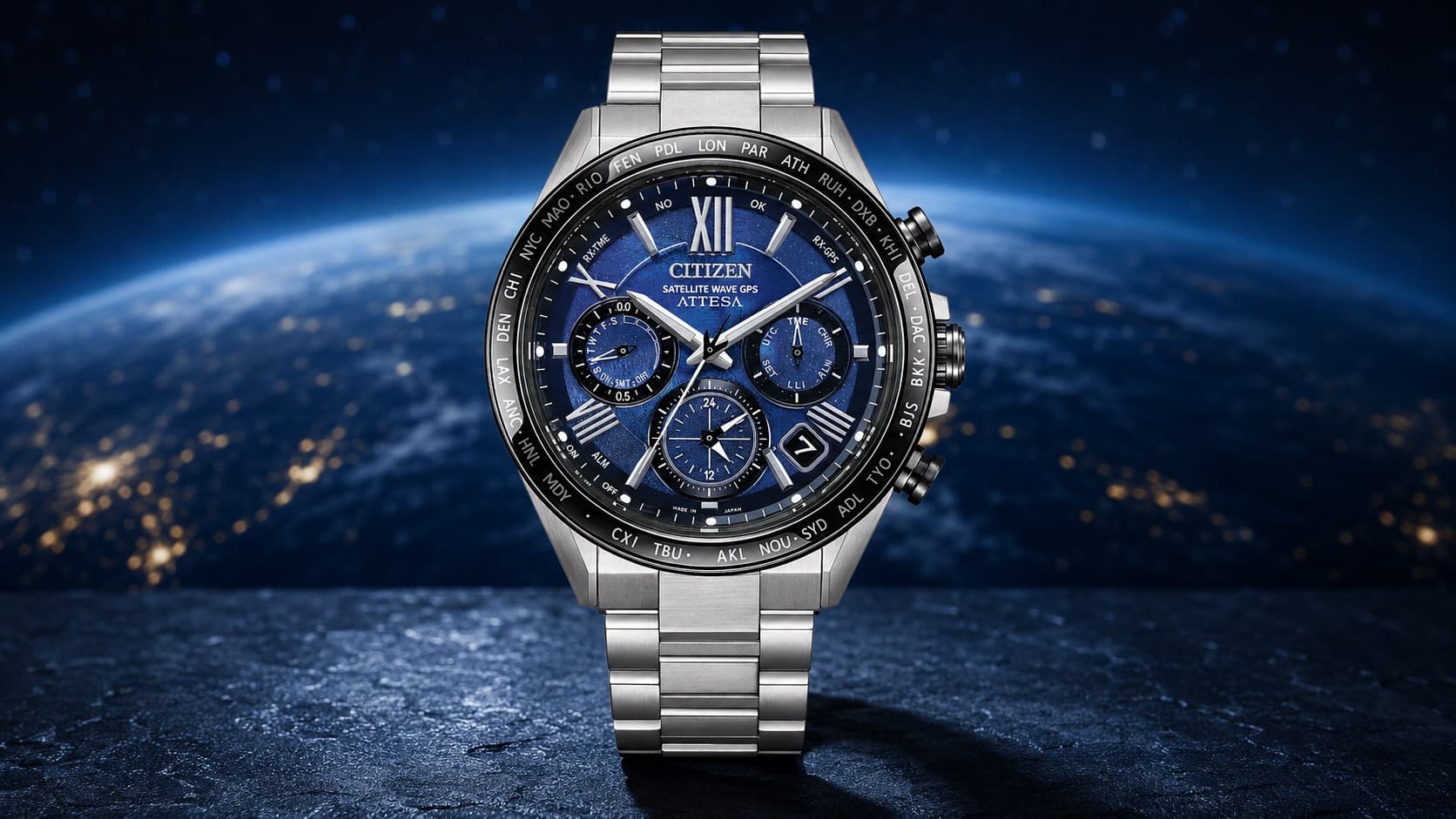
Attesa sits near the top of Citizen’s lineup and is built around Super Titanium, a hardened version of titanium that resists scratches far better than regular steel or titanium while staying much lighter on the wrist. Many Attesa models also include satellite or radio timekeeping, so the watch can correct its own time automatically.
This collection is the clearest example of Citizen showing off its engineering. Its top GPS models, like the Attesa Satellite Timekeeping watch, sync to a satellite in about three seconds — one of the fastest signal pickups of any watch on the market — and then correct the display instantly after crossing into a new time zone, which is genuinely useful for frequent travelers rather than just a party trick. Citizen also builds a separate, non-Attesa quartz movement called the Caliber 0100 that’s accurate to within one second per year without needing any satellite or radio signal at all — currently recognized as the most accurate wristwatch movement in the world. It’s less about looking flashy and more about proving the watch works better than watches costing several times as much.
Corso — Everyday Classic Style
Corso is built for people who want a clean, no-fuss watch for daily wear — the office, dinner, weekend errands, all of it. These are solar-powered Eco-Drive watches with simple, classic dials that don’t try too hard to stand out, which is exactly the point.
Series8 — Citizen’s Modern Luxury Line
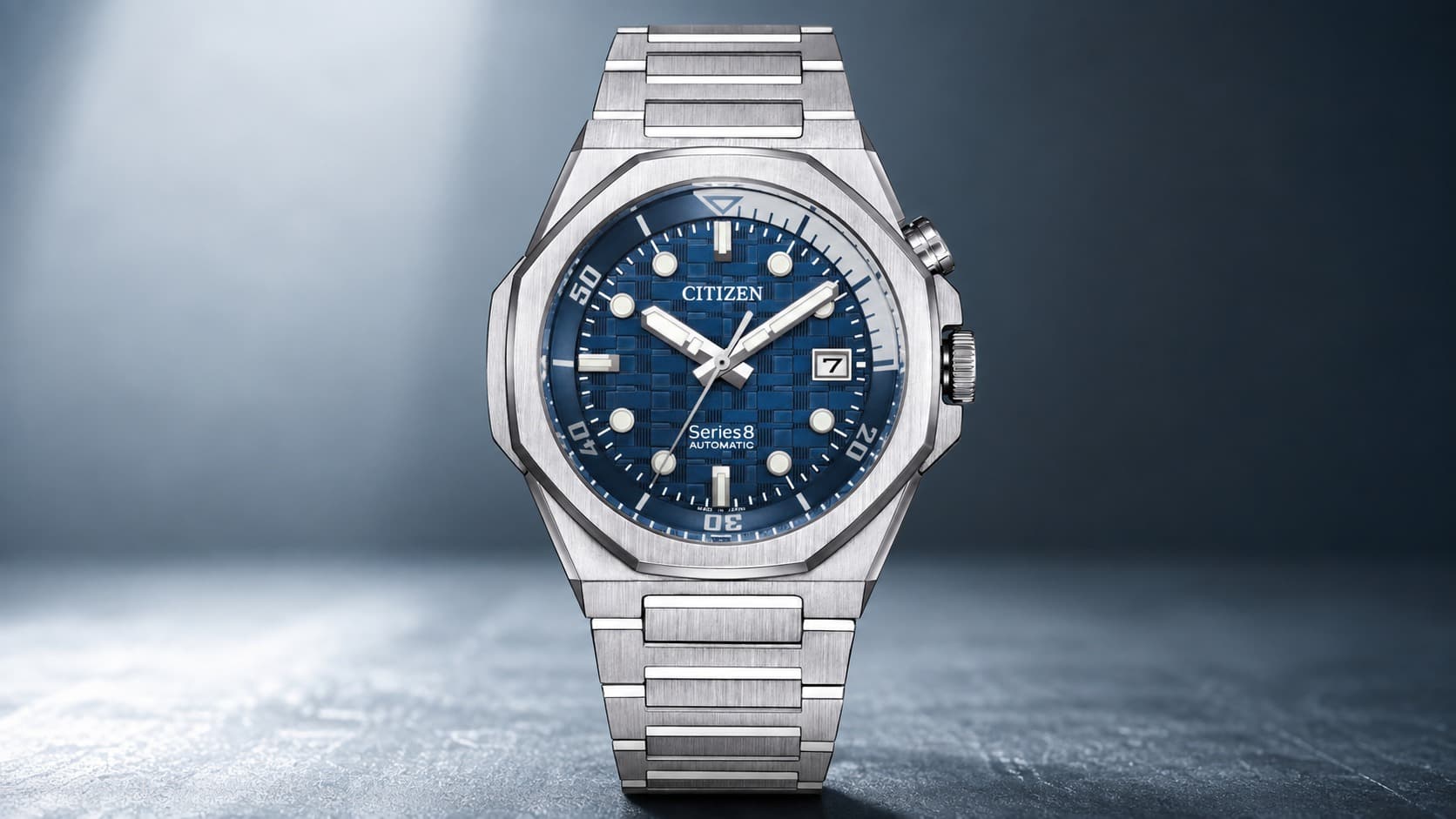
Series8 is a more premium automatic collection aimed at people who want a watch that feels closer to a Swiss luxury piece, with careful finishing and a more expensive-feeling case, while still costing far less than an actual Swiss luxury watch.
The line actually started in Japan back in 2008 as a domestic-only release, and Citizen didn’t bring it to the rest of the world until relaunching it globally in 2021 with new in-house automatic movements. The name is a nod to the number 8 turned on its side to form the infinity symbol, which Citizen uses to represent both the endless craftsmanship behind the collection and the long-term bond between a watch and the person wearing it. The entry point into the collection, the Series8 831 model, keeps things intentionally simple with a clean dial and no extra complications, while other references within the line add sportier features like GMT hands or dive bezels.
How Much Do Citizen Watches Cost?
Most people can find a genuinely good Citizen watch for well under $500, and prices climb from there depending on the materials and technology inside.
| Price range | What it typically includes |
|---|---|
| Under $200 | Simple Eco-Drive quartz watches, basic field and dress styles |
| $200–$500 | Most Promaster divers and pilots, Tsuyosa automatics, Corso |
| $500–$1,500 | Series8 automatics, higher-spec Promaster models |
| $1,500–$3,500 | Attesa Super Titanium and satellite-synced models |
| $5,000+ | Rare limited editions, often sold only in Japan |
Citizen also sells some genuinely rare pieces that push far past typical prices. Limited editions made mostly for the Japanese market, some using materials like 18-karat gold cases or hand-made washi paper dials, can sell for well into the thousands of dollars on the secondary market because so few were ever produced.
What’s the Difference Between Citizen and Seiko?
Both are major Japanese watchmakers, but they built their reputations around different strengths. Seiko is best known for mechanical movements and its higher-end Grand Seiko line, while Citizen built its identity almost entirely around solar-powered Eco-Drive technology and titanium durability.
In practice, this means Citizen tends to be the more “set it and forget it” option — a watch that keeps running without maintenance for years at a time. Seiko, especially in its mechanical lines, leans more into traditional watchmaking that some collectors find more emotionally satisfying, even if it needs more attention like regular winding or occasional servicing.
Are Citizen Watches Durable Enough for Daily Use?
Yes — Citizen watches are built specifically for everyday use rather than just sitting in a display case. Eco-Drive models in particular are designed to be worn without a second thought, since they charge themselves from whatever ambient light happens to be around.
The Promaster and Corso lines in particular hold up well to daily bumps, water exposure, and long stretches without any attention from the wearer. Even the more premium Attesa pieces, despite their higher price, are built with Super Titanium specifically because it resists the scratches that come from normal daily life, not just because it looks good.
How to Take Care of a Citizen Watch
Eco-Drive watches need very little maintenance, but they aren’t completely maintenance-free.
- Give it light regularly. If an Eco-Drive watch sits in a dark drawer for months, its internal battery can eventually run down. A few hours near a window or under a lamp every week or two keeps it charged.
- Avoid magnets. Strong magnets, like those in some phone cases or speakers, can throw off the accuracy of any quartz-based watch, including Eco-Drive models.
- Check the water resistance rating before swimming or showering. Not every Citizen is rated for the same depth, so it’s worth confirming before assuming a watch can handle water.
- Get automatic models serviced. Mechanical watches like Tsuyosa still need occasional professional servicing, generally every several years, since they rely on physical moving parts rather than a battery.
Frequently Asked Questions
Are Citizen watches considered good quality?
Yes. Citizen is one of the few watch brands that designs and builds its own movements rather than buying them from outside suppliers, which is generally seen as a sign of serious watchmaking capability. Its Eco-Drive technology in particular is widely respected for its reliability.
Do Citizen Eco-Drive watches ever need a battery?
Not under normal use. The rechargeable battery inside an Eco-Drive watch is designed to last the lifetime of the watch as long as it gets occasional exposure to light. It’s a very different system from a standard quartz watch, which uses a disposable battery that needs replacing every couple of years.
Is Citizen owned by Seiko?
No, Citizen and Seiko are separate, competing companies. Citizen actually owns the American brand Bulova, which it purchased in 2008, along with Bulova’s affiliated brands Caravelle, Wittnauer, and Accutron.
What is the most durable Citizen watch material?
Super Titanium, used in the Attesa collection, is Citizen’s most scratch-resistant material. It keeps the light weight of regular titanium while resisting surface scratches far better than standard steel or titanium cases.
Are Citizen watches made in Japan?
Many are, though not all. Citizen manufactures watches and movements across several facilities, including in Japan, and some lower-cost models are assembled elsewhere using Citizen-designed movements. Higher-end lines like Attesa and certain limited editions are more consistently tied to Japanese production.
Conclusion
Citizen earned its place among the world’s biggest watchmakers by solving practical problems most other brands never bothered to fix, from batteries that never needed replacing to cases that resist scratches other metals can’t. Whether the goal is a rugged Promaster diver, an affordable Tsuyosa automatic, or a technical Attesa built from Super Titanium, the right choice usually comes down to how much daily durability and self-sufficiency matter versus wanting the feel of a traditional mechanical watch. For most people who want a watch that just works without fuss, Citizen’s Eco-Drive lineup remains one of the smartest, lowest-maintenance choices in the entire watch industry.