Casio makes more different kinds of watches than almost any other brand on Earth, and that is exactly why picking one feels confusing. A single company sells a $20 plastic digital watch and a $17,000 titanium G-Shock with a bomb-defusal aesthetic, and both of them say “CASIO” on the dial. The trick to shopping Casio well is not finding “the best watch.” It is understanding which of its five or six main families actually matches a given purpose, because a hiking watch, a dress watch, and a shock-proof tool watch are built with completely different goals in mind.
The Different Types of Casio Watches
Casio splits its watches into a handful of clear families, and each one has its own job. Knowing the family names first makes everything else easier to place.
The main lines are G-Shock (toughness), Edifice (affordable sporty chronographs), Pro Trek (outdoor and navigation tools), Oceanus (Casio’s premium dress-and-tech line), MR-G (the most expensive G-Shocks, built like fine jewelry), and Casio Vintage/Classic (retro digital watches like the F-91W). A few decades ago these lines didn’t exist yet — Casio just made calculators and simple digital watches. Everything changed in 1983, after an engineer named Kikuo Ibe lost a watch his own father had given him and set out to build one that couldn’t be destroyed so easily.
Ibe’s team, nicknamed “Team Tough,” went through more than 200 discarded prototypes chasing what they called the “Triple Ten”: a case tough enough to survive a fall from 10 meters, water pressure equal to 10 bar, and a battery that would still be running after 10 years.
That single obsession with toughness is still the thread connecting almost every Casio watch made today, even the fancy ones.
G-Shock: Casio’s Toughest Watches
G-Shock exists to survive things that would destroy a normal watch. It is Casio’s most famous line, and for good reason — the whole idea started with a personal accident. Kikuo Ibe was walking through Tokyo when he collided with someone, and the watch on his wrist, a gift from his own father, was knocked off and shattered on the ground. Losing that watch pushed him to design something built around a floating, shock-absorbing module rather than a rigid case.
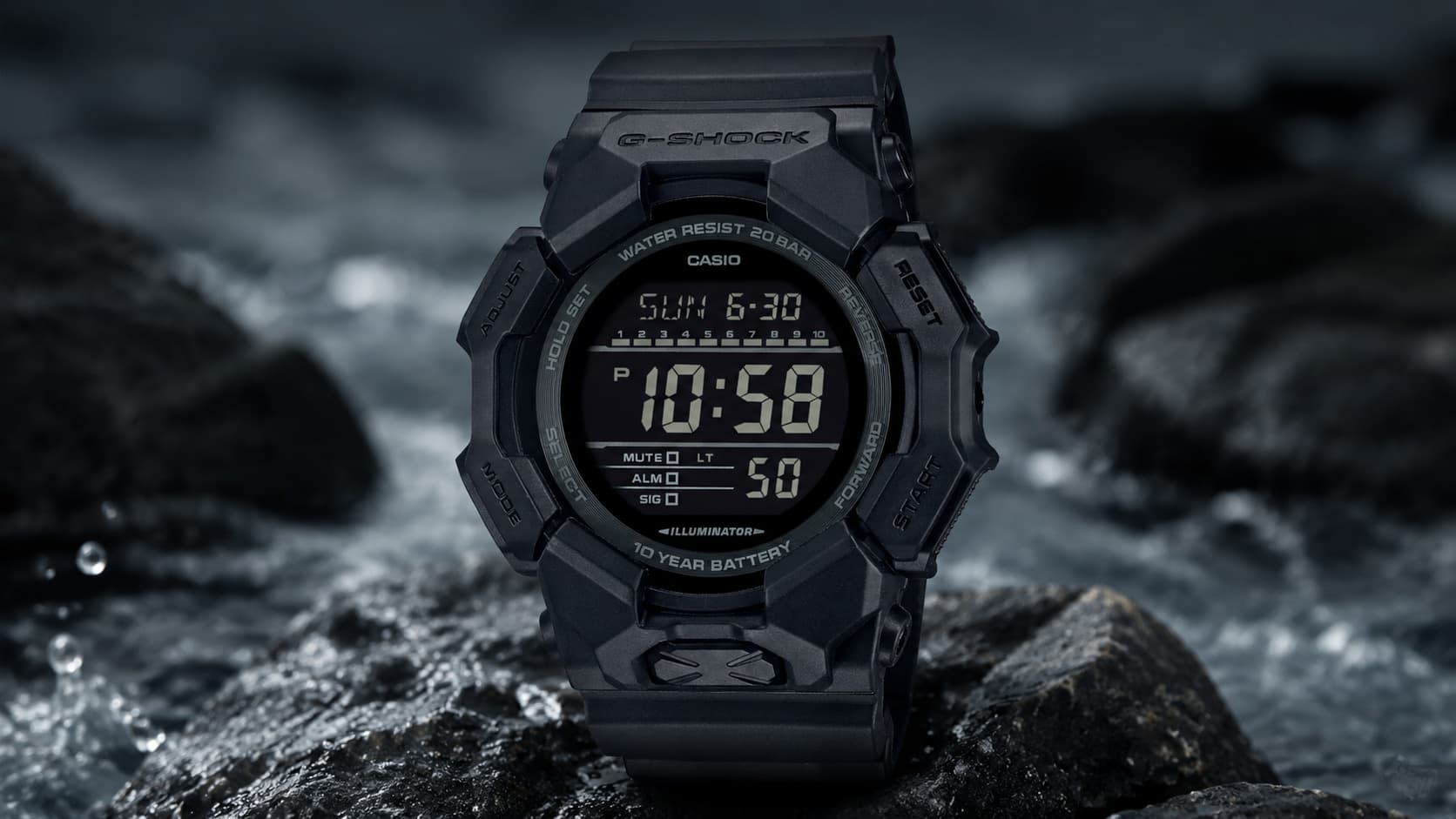
G-Shock has since split into dozens of sub-lines. The square DW-5600 carries forward the shape of the original 1983 model, and a current version typically costs about $99, comes rated to 200 meters of water resistance, and includes a stopwatch, an alarm, and support for tracking a second time zone. The newer GA-2100, nicknamed the “CasiOak” because its octagonal bezel resembles a far more expensive luxury sports watch, has become a modern classic in its own right since launching in 2019. Beyond those, “Master of G” models add specialized tools: the Mudman resists dust and mud, and the Frogman was tough enough to become standard-issue gear for U.S. Navy SEAL trainees during underwater demolition training.
Baby-G is the smaller-cased branch of the G-Shock family, built around the same shock-absorbing principles in more compact, often more colorful designs. It isn’t a “lesser” G-Shock — the internal toughness engineering is the same — it’s simply sized and styled differently, which makes it a common pick for anyone who finds standard G-Shock cases too large for their wrist.
Edifice: Casio’s Budget Chronographs
Edifice is Casio’s answer to racing-inspired chronograph watches without a racing-watch price tag. Casio introduced the line in 2000 specifically to focus on analog watches for the first time, giving it steel cases and bracelets that looked and felt more like conventional watchmaking than anything the company had put out before. A quarter-century on, the pricing philosophy hasn’t shifted — Edifice models still stay under roughly $300.
Most Edifice models borrow visual cues from motorsport: multiple sub-dials, tachymeter scales, and metallic finishes. Many newer versions add Bluetooth phone-linking and Tough Solar charging, so the watch never needs a battery replacement as long as it sees occasional light.
The racing look isn’t just styling — Edifice has real motorsport ties. Casio sponsored Formula 1’s Red Bull Racing team from 2009 to 2015, then followed the same ownership group over to Scuderia Toro Rosso starting in 2016, continuing the relationship under the team’s new name, AlphaTauri, into the early 2020s, with limited-edition team watches released throughout. Casio has also partnered with Japanese motorsport names like Honda Racing, NISMO, and TOM’S, which is why certain Edifice models carry team liveries and driver signature editions instead of generic colorways.
Pro Trek: Casio’s Outdoor Watches
Pro Trek is designed for people who need real information outside, not just a tough case. Unlike G-Shock, Pro Trek watches don’t rely on shock-absorbing construction — instead they’re built around sensors that help hikers avoid getting into trouble on a trail, like altimeters, barometers, and compasses.
A typical Pro Trek combines a “Triple Sensor” (direction, pressure, and altitude) with solar charging, producing a genuine outdoor instrument rather than a rugged-looking fashion piece. Some models even add a thermometer, and Casio uses bio-based resin in several cases to soften the environmental footprint of the plastic.
The model codes reveal what’s inside, once the naming pattern is understood. Watches starting with PRG run on solar power alone, which generally lets Casio build them slimmer and less bulky on the wrist. Watches starting with PRW add Multi-Band 6 radio time-syncing on top of solar, so the clock corrects itself automatically. A few flagship models, like the PRW-B1000, go further still and add Bluetooth so the watch can sync with a phone app for logging hikes.
Oceanus and MR-G: Casio’s High-End Watches
Oceanus and MR-G are where Casio proves it can compete with expensive Swiss brands on materials and precision. Oceanus is Casio’s premium dress-focused line, and the range is built around titanium cases, sapphire crystal, solar charging, and radio-controlled timekeeping as the standard rather than an upsell. The standout sub-line is the Oceanus Manta, a slim, elegant watch that recently launched a limited titanium edition using traditional Japanese indigo dye on its dial — priced at $1,900 in the US for a run limited to 800 pieces.
MR-G takes the opposite approach: it starts from G-Shock’s toughness and adds hand-finished titanium, sapphire, and traditional Japanese metalworking techniques on top. Every MR-G is assembled at Casio’s Yamagata factory in Japan, and several models use a bezel material called Cobarion, an alloy about four times harder than pure titanium with a shine similar to platinum, paired with a separate titanium alloy called DAT55G for the bracelet. Some dials even reference kigumi, a traditional Japanese wood-joinery technique, reflected in a lattice pattern that also happens to let extra light through to the solar cell underneath. Shoppers looking at either MR-G or Oceanus should generally expect entry prices near $1,000, with plenty of models climbing past $3,000, and a handful of rare collaborations selling for many times that at auction.
Best Casio Watches Under $50
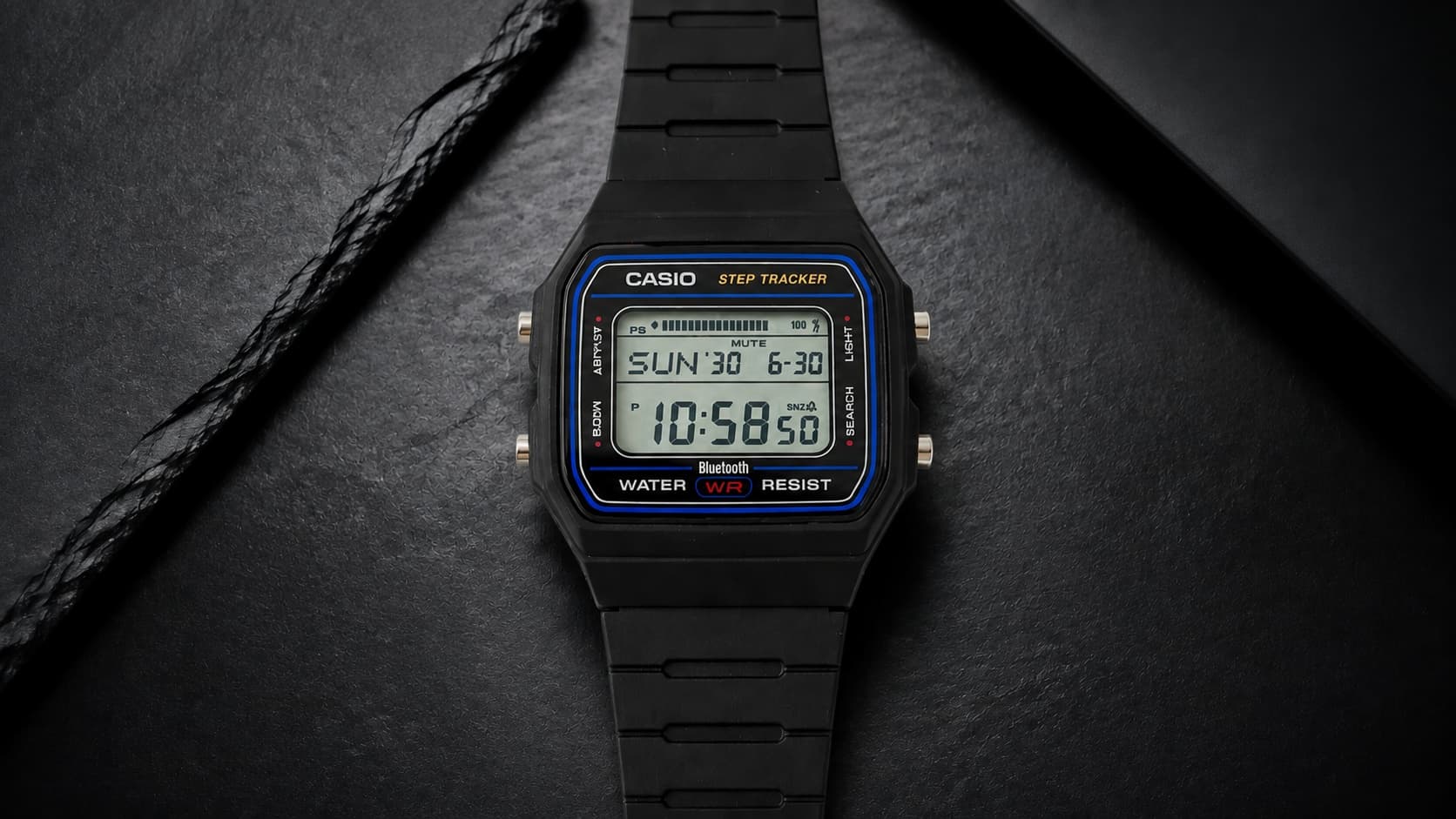
This price range is where the brand made its name, built around watches that simply tell time and refuse to die. The undisputed icon here is the F-91W. First released in 1989, it’s widely cited as the most-produced digital watch of all time, with fresh units still coming off the line every year decades later. It has a stopwatch, an alarm, and a battery that can last years.
The F-91W carries an odd reputation in security circles. Because it’s cheap, reliable, and widely available, similar models were documented as timer components in bomb-making cases going back to the 1990s, and the pattern continued into the 2000s, which is why U.S. defense reports flagged the watch and why wearers have occasionally faced extra questions at security checkpoints in certain contexts. None of that reflects any flaw in the watch — it’s the same durability and low price that make it a favorite for millions of ordinary buyers, just noticed for a different reason by a small number of people.
For more variety at this price, the A168 and A158 series offer a retro stainless-steel look with the same basic digital functions, a metal-band alternative to the resin-strapped F-91W without leaving the budget tier.
Best Casio Watches Under $150
This is the sweet spot where G-Shock’s toughness meets genuinely modern design. The GA-2100 “CasiOak” leads the category: it costs roughly $110, and its case is noticeably thinner and slimmer than older G-Shock squares while keeping the same shock protection, which is a big part of why it took off with buyers who found earlier models too bulky. The classic DW-5600 square sits right alongside it for people who prefer the original silhouette over the newer analog-digital face.
Solar-powered peace of mind comes from models labeled “Tough Solar” combined with “Multi-Band 6,” Casio’s term for atomic radio time-syncing. The GW-M5610 is a good example — it charges itself off ordinary indoor or outdoor light, so a battery change is rarely something an owner has to think about.
Best Casio Watches for Camping and Hiking
For hiking, camping, or fishing trips, a Pro Trek model earns its price by actually helping with navigation. The PRG series pairs a Triple Sensor with Tough Solar charging, so the instruments keep working without any need for battery changes. Some versions, like certain PRG models, even fold in a thermometer — a genuinely rare feature for a watch this size.
For toughness over navigation tools, a Master of G model such as the Mudman or Rangeman makes more sense. These add pressure resistance, temperature sensors, or compass functions on top of G-Shock’s usual drop and water resistance, aimed at people who need a tool rather than a trail computer.
Best Casio Watches for Formal Wear
Not every Casio needs to look rugged. Edifice covers this well at an accessible price, offering steel cases and bracelets with a motorsport-inspired but still office-friendly design, especially in three-hand models that skip the busier chronograph sub-dials.
For something noticeably more upscale, an Oceanus model like the Manta offers a slim titanium dress watch that quietly outperforms much more expensive Swiss watches on accuracy, since it corrects itself using radio time signals. The name itself is a nod to Oceanus, the Greek god of the sea, and the line’s wave-inspired logo is meant to echo that theme. Because every Oceanus watch ships with titanium and sapphire crystal as a baseline rather than an upgrade, it’s one of the few places where an affordable brand delivers materials usually reserved for watches costing several times as much.
Comparing Casio’s Watch Collections
| Line | Best For | Typical Price Range | Signature Feature |
|---|---|---|---|
| Casio Vintage/Classic | Everyday simplicity | $20–$60 | Long battery life, minimal design |
| G-Shock | Durability, active lifestyles | $50–$300 (most models) | Shock resistance |
| Edifice | Sporty style on a budget | $80–$300 | Chronograph, motorsport design |
| Pro Trek | Hiking and outdoor navigation | $150–$500 | Compass, altimeter, barometer |
| Oceanus | Elegant, high-precision dress watches | $500–$3,000+ | Titanium, sapphire, radio sync |
| MR-G | Luxury-grade G-Shock toughness | $1,000–$3,000+ | Hand-finished titanium, artisan techniques |
These figures shift constantly and vary by retailer, functioning as general ranges rather than fixed prices.
G-Shock and Edifice rank among the most counterfeited watch lines online, precisely because the real versions are already affordable. Casio’s own site and established authorized retailers remain the safest sources.
Casio’s History of Building Tough Watches
Casio didn’t start out making watches at all. The company was founded in 1946 by Tadao Kashio in Tokyo, and its very first product was an odd little invention: a ring worn on the finger that gripped a lit cigarette, letting a smoker get all the way to the end of it without burning their fingers, at a time when wasting even part of a cigarette in postwar Japan felt wasteful. The money that invention brought in helped fund Casio’s move into electronics, and by 1957 the company had built one of the earliest calculators to run entirely on electronic circuitry rather than mechanical parts.
Watches came later, and the moment that mattered most happened by accident. In 1981, engineer Kikuo Ibe was walking through Tokyo when he collided with someone and the watch on his wrist — a gift from his own father — was knocked loose and shattered on the pavement. Losing it bothered him enough that he set out to build a watch that simply wouldn’t break. The inspiration for the actual shock-absorbing mechanism reportedly came from watching a child bouncing a rubber ball on a playground; Ibe noticed the core of the ball barely registers the impact of each bounce, and he applied that same idea to a floating watch movement. The first G-Shock, the DW-5000, reached shelves in April 1983, and the line has gone on to sell over 100 million units worldwide.
Frequently Asked Questions
Is Casio a good watch brand?
Yes. Casio is respected for building watches that are reliable, accurate, and far cheaper than comparable Swiss options, while its higher-end MR-G and Oceanus lines can genuinely compete with luxury brands on materials and finishing.
How long does a Casio watch battery last?
It depends on the watch. A standard quartz Casio typically runs two to five years on one battery, while Tough Solar models recharge from light and rarely need a battery replacement at all.
What is the toughest Casio watch?
Within G-Shock’s own lineup, the Master of G models — like the Mudman, Rangeman, and Frogman — are built for the harshest specific environments, adding mud, altitude, or dive-rated features on top of standard G-Shock shock resistance.
Are Casio watches made in Japan?
Some are and some aren’t. High-end lines like Oceanus and MR-G are largely made in Japan, while many everyday G-Shock and Edifice models are manufactured in other countries such as Thailand or China, depending on the specific reference.
Is the Casio GA-2100 “CasiOak” worth buying?
For most people, yes. It combines G-Shock’s shock resistance with a slim, modern case for around $100 to $120, which is why it has become one of the most popular G-Shocks released in the last decade.
Conclusion
Casio’s real strength is range, not any single “best” watch. A $30 F-91W and a $2,000 titanium Oceanus Manta are built from the same design philosophy Kikuo Ibe started in 1981 — make something that keeps working no matter what. Once the line matches the actual use — daily durability, outdoor navigation, office style, or genuine luxury materials — choosing the right Casio becomes a much simpler decision than the brand’s massive catalog first suggests.