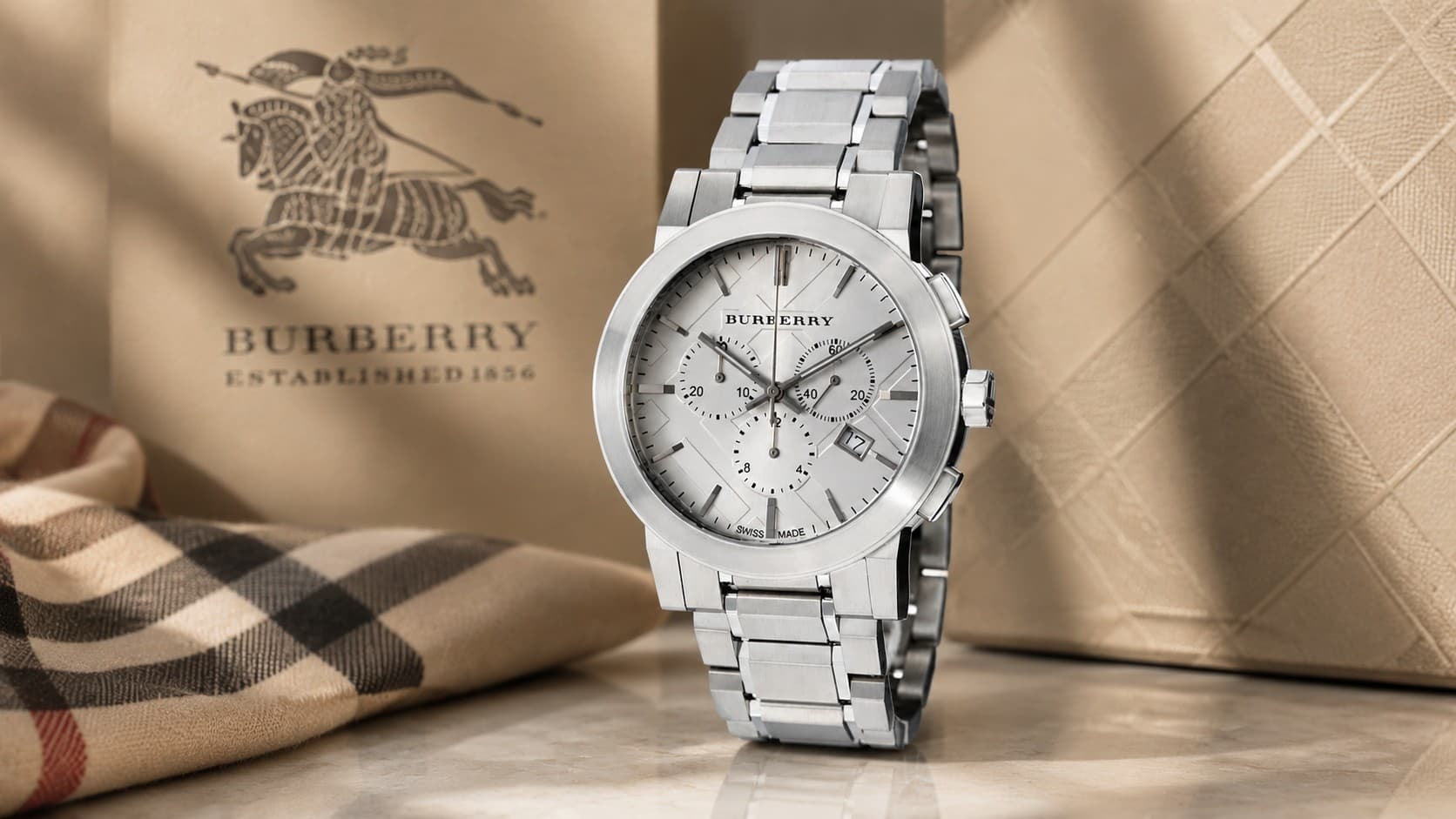
Burberry watches represent a fascinating chapter in luxury fashion brand watchmaking, combining the iconic British heritage of Thomas Burberry’s 1856 company with genuine Swiss manufacturing expertise. While Burberry discontinued their watch production in 2017 after ending their partnership with Fossil Group, these timepieces remain highly sought after in the secondary market for their distinctive design elements, quality Swiss movements, and the perfect marriage of British fashion sensibility with horological craftsmanship. From the signature check pattern integration to Swiss automatic movements, Burberry watches offered something unique in the crowded fashion watch space – genuine luxury construction at accessible price points, making them an interesting proposition for both collectors and everyday wearers seeking distinctive British style on their wrist.
Burberry Watch History: From Fashion House to Swiss Timepieces
Burberry’s transformation from traditional British outerwear manufacturer to Swiss watch producer represents one of fashion’s most ambitious and successful entries into serious horology. Beginning in the mid-1990s, the brand embarked on a carefully planned expansion that would see them partner with genuine Swiss manufacturers, insist on quality movements, and create timepieces that honored both British heritage and Swiss craftsmanship traditions. This journey spanned over two decades and produced watches that stood apart from typical fashion brand offerings through their commitment to authentic Swiss production and distinctive design elements rooted in Burberry’s military and outdoor heritage.
- Thomas Burberry started his company in 1856 with a simple goal: create better outdoor clothing for Britain’s unpredictable weather. His breakthrough came with gabardine fabric in 1879, a tightly woven material that repelled water while allowing air circulation. This innovation led to the trench coat design that British officers wore during World War I, establishing Burberry as a brand synonymous with durability, functionality, and distinctly British style. The company spent over 130 years perfecting their craft in textiles and clothing before ever considering watches, building the reputation for quality and heritage that would later give credibility to their timepieces.
- Rose Marie Bravo took over as CEO in the 1990s and recognized that luxury consumers wanted complete lifestyle brands rather than single-category specialists. Her strategy involved expanding Burberry beyond clothing into handbags, fragrances, and accessories that could capture more spending from existing customers while attracting new buyers. This wasn’t just about slapping the Burberry name on random products – each category needed to reflect the brand’s core values of British heritage, quality construction, and timeless style. Watches represented the natural culmination of this expansion, combining technical craftsmanship with fashion sensibility.
- The Swiss partnership came together in November 2001 when Burberry signed with Fossil Group’s Swiss division, specifically working with Montres Antima SA in Bienne. This wasn’t a typical fashion brand licensing deal where a company just puts their logo on existing designs. Burberry insisted on genuine Swiss production using quality components, working with a manufacturer that had been making watches since 1919 and possessed real horological expertise. The partnership gave Burberry access to Swiss Technology Production movements from Basel, the same calibers used by respected watch brands, ensuring their timepieces met authentic Swiss standards.
- Production volumes reached impressive levels, with the partnership producing approximately 400,000 to 450,000 watches annually at its peak. This scale allowed Burberry to achieve competitive pricing while maintaining Swiss quality, positioning their watches as accessible luxury rather than ultra-premium pieces. The manufacturing process incorporated traditional Swiss techniques with modern efficiency, using genuine stainless steel cases, sapphire crystals on premium models, and proper water resistance testing that met or exceeded industry standards for luxury watches.
- Christopher Bailey’s Britain Collection launched in 2013 as the brand’s most ambitious horological project, featuring automatic movements, exhibition case backs, and sophisticated case construction. Bailey personally oversaw the design process, incorporating elements that directly referenced Burberry’s heritage: D-ring shaped bezels inspired by trench coat hardware, rounded octagonal cases reminiscent of British pocket watches, and color schemes that echoed the brand’s signature trench coat palette. These watches used established Swiss movements like the ETA 2824-2, with some models achieving COSC chronometer certification for accuracy.
- Market dynamics and strategic priorities led to the partnership’s end in December 2017, with Burberry choosing to concentrate resources on their core fashion and accessories business. The decision reflected broader trends in luxury where brands increasingly focused on their most profitable categories rather than maintaining diverse product portfolios across multiple industries. While the watch business generated substantial revenue – estimates suggest $100-200 million annually for Fossil Group – Burberry determined that focusing on fashion would better serve long-term brand positioning and profitability.
The Burberry watch story demonstrates how heritage luxury brands can successfully enter traditional Swiss watchmaking when they commit to authentic quality and respect established craftsmanship traditions. Their insistence on genuine Swiss manufacturing, quality movements, and design elements rooted in brand history created timepieces that transcended typical fashion watch limitations. While strategic business decisions ultimately ended production, the watches produced during this period remain compelling examples of successful collaboration between British fashion heritage and Swiss horological expertise, continuing to attract collectors and enthusiasts who appreciate this unique intersection of traditions.
Burberry Watch Features: Swiss Movements and British Style
Burberry watches earned recognition in the crowded fashion timepiece market by combining authentic British design heritage with legitimate Swiss manufacturing standards, creating pieces that felt both fashionable and horologically credible. Rather than simply applying logos to generic watch designs, Burberry developed distinct visual languages and construction methods that made their timepieces immediately recognizable while maintaining the technical quality expected from Swiss-made watches.
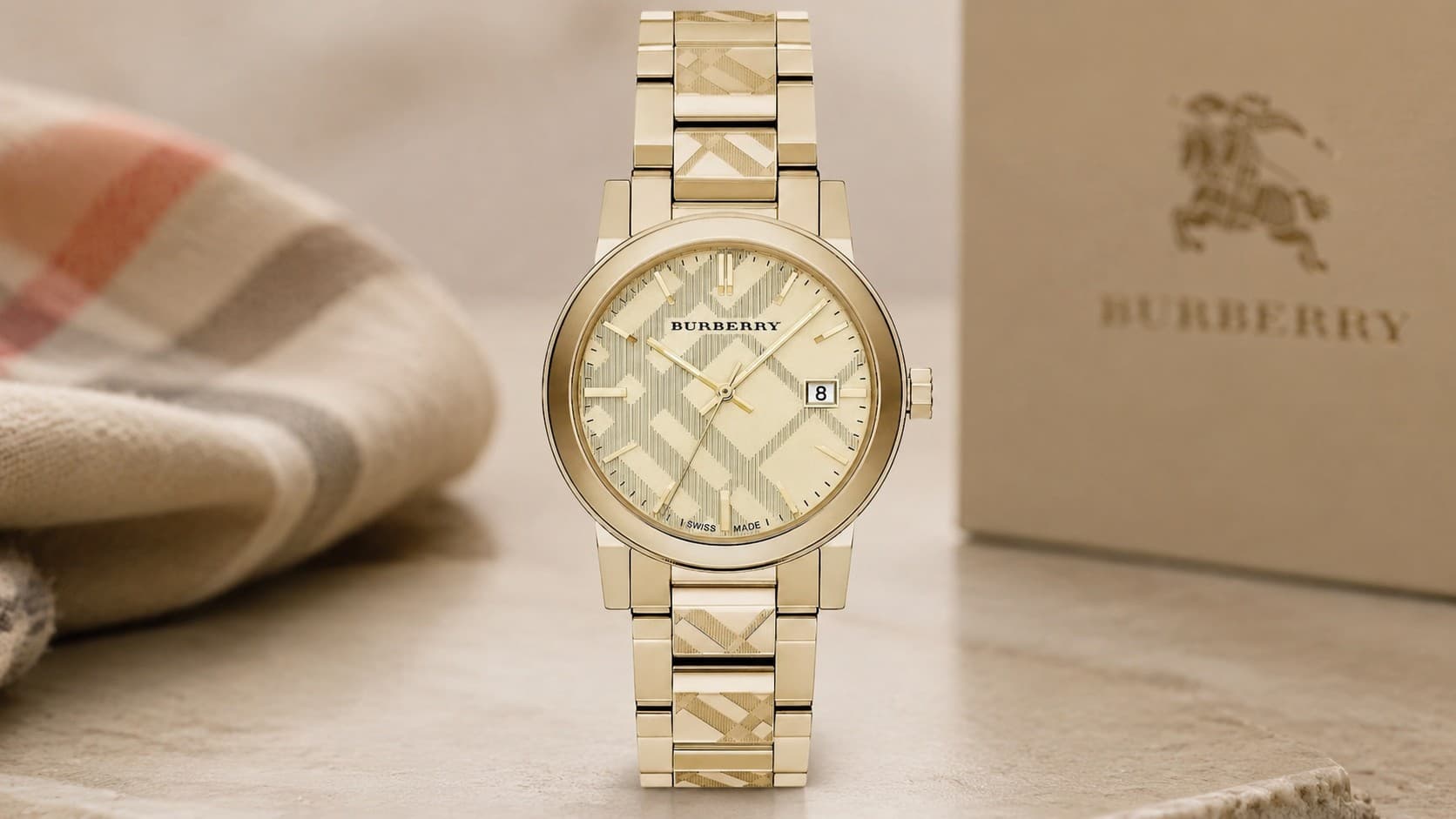
- The signature Burberry check pattern appeared across multiple watch elements through sophisticated manufacturing techniques that went far beyond simple printing or stickers. Fabric straps incorporated actual woven check material from the same mills that produced Burberry clothing, while leather straps featured embossed check patterns that maintained durability despite the intricate detailing. Some dial designs used hydraulic stamping to create raised check patterns in the metal surface itself, creating subtle texture that caught light differently throughout the day. This integration felt organic rather than forced, making the pattern seem like a natural part of the watch design rather than obvious branding.
- British military heritage influenced every aspect of the design language, from case shapes to color selections and hardware details. The premium Britain Collection featured rounded octagonal cases that directly referenced vintage British pocket watches carried by military officers, while bezel shapes mimicked the D-rings found on authentic Burberry trench coats. Color palettes drew from military traditions with gunmetal finishes, khaki tones, and the distinctive beige-tan-brown combinations that defined British field equipment. Even the typography on dials used fonts inspired by military instruments and British railway clocks, creating cohesive design themes that felt authentically connected to the brand’s heritage.
- Case construction exceeded typical fashion watch standards through the use of 316L surgical-grade stainless steel and sophisticated manufacturing processes. Premium models incorporated 32 to 34 individual case components compared to the 8-12 pieces found in basic fashion watches, allowing for complex finishing techniques including brushed surfaces, polished edges, and PVD coatings that maintained their appearance over time. The Britain Collection specifically featured cases machined from solid steel blocks rather than stamped sheet metal, providing superior durability and the weight distribution expected from serious timepieces.
- Crystal quality separated Burberry watches from most fashion competitors through the use of sapphire glass on premium models rather than basic mineral crystals. Sapphire crystals offered scratch resistance nearly matching diamonds while providing superior optical clarity that enhanced dial readability. Anti-reflective coatings applied to both surfaces reduced glare in bright conditions, a feature typically reserved for sports and professional watches. Even standard models used high-grade mineral crystals with hardness ratings significantly above basic fashion watch glass.
- Movement selection demonstrated serious commitment to horological quality through partnerships with established Swiss manufacturers. Standard quartz models used Swiss Technology Production calibers from Basel rather than generic Chinese movements, providing superior accuracy and longevity. Automatic models incorporated proven Swiss movements including the ETA 2824-2 and Soprod 9040, the same calibers found in respected Swiss watch brands costing significantly more. Some premium pieces achieved COSC chronometer certification, requiring accuracy within -4/+6 seconds per day and extensive testing protocols that few fashion watches attempt.
- Water resistance consistently reached 50 meters across most collections, with premium chronographs achieving 100 meters through proper case sealing and crown construction. This level of water protection enabled daily wear including hand washing, rain exposure, and accidental splashing without concern for damage. The sealing systems used multiple O-rings and threaded case backs rather than snap-on construction, providing reliability that matched or exceeded many Swiss sport watches in similar price ranges.
- Luminescent materials appeared on hour markers and hands using Swiss Super-LumiNova rather than cheaper alternatives that fade quickly or provide poor visibility. The luminescence charged rapidly under artificial or natural light and maintained readable glow for hours in darkness, meeting aviation and diving watch standards despite the fashion positioning. Applied hour markers used actual metal pieces rather than printed indices, providing depth and light reflection that enhanced dial legibility while adding perceived value.
- Strap and bracelet quality reflected Burberry’s leather goods expertise, with genuine leather straps using the same tanning processes and finishing techniques found on their handbags and accessories. Metal bracelets featured solid links with polished and brushed finishing combinations, deployant clasps with safety mechanisms, and micro-adjustment systems that allowed precise sizing. The attention to these details created wearing experiences that felt premium and well-considered rather than afterthoughts designed merely to hold the watch case.
These technical and aesthetic choices positioned Burberry watches as legitimate timepieces rather than fashion accessories that happened to tell time. The combination of authentic Swiss manufacturing, quality materials, British heritage design, and attention to details typically ignored by fashion brands created watches that appealed to both style-conscious buyers and watch enthusiasts who appreciated the technical competence behind the attractive exteriors. This approach required significantly higher development costs and manufacturing complexity than typical fashion watches, but resulted in timepieces that maintained credibility in both fashion and horological circles.
Top 10 Best Burberry Watches
Since Burberry ceased watch production in 2017, all available models represent either remaining new-old-stock from authorized dealers or pre-owned pieces through secondary markets. Current pricing reflects dramatic depreciation from original retail values, with most models available for 20-30% of their launch prices, making quality Swiss-made Burberry watches surprisingly accessible for collectors and everyday wearers seeking distinctive British design.
- The Britain Automatic Collection represents Burberry’s pinnacle achievement in serious watchmaking, featuring genuine Swiss automatic movements housed in sophisticated 43mm stainless steel cases. These watches originally retailed between $1,795-$4,995 but now sell for $495-$995 depending on condition and specific model. The collection used ETA 2824-2 and similar grade movements with exhibition case backs showcasing decorated rotors and traditional finishing. Cases featured rounded octagonal shapes inspired by vintage British pocket watches, with brushed and polished surfaces that required extensive hand-finishing. The automatic winding system provided 38-42 hour power reserves, making these suitable for regular rotation wear without manual winding concerns.
- The City Chronograph Series offered Swiss quartz chronograph functionality in sport-oriented 42mm cases with three-register layouts and tachymeter bezels for timing calculations. Original pricing ranged $695-$1,295, with current availability at $275-$475 reflecting strong value for Swiss chronograph complications. These watches featured 100-meter water resistance, making them suitable for swimming and water sports unlike most fashion chronographs limited to splash resistance. Dial options included gunmetal, white, black, and blue with contrasting subdials and applied markers that provided excellent legibility. The Swiss quartz movements offered split-second accuracy with battery life exceeding three years under normal use.
- Heritage Collection Dress Watches provided classic three-hand functionality in elegant 38-40mm cases designed for formal and business wear. These pieces originally sold for $350-$695 but currently trade at $200-$395, representing exceptional value for Swiss-made dress watches with Burberry’s distinctive styling. Cases used polished stainless steel with thin profiles that slipped easily under shirt cuffs, while dials featured subtle check pattern integration that added visual interest without overwhelming the classic aesthetic. Date windows at 3 o’clock and Swiss quartz movements provided practical daily functionality with minimal maintenance requirements.
- Nova Check Ladies Collection showcased the signature Burberry pattern prominently across dials, straps, and case details in sizes ranging from 26mm to 34mm. Original retail prices spanned $295-$795, with current market values at $195-$350 making these among the most affordable entries into Swiss-made ladies’ watches. The collection offered both stainless steel bracelets and signature check fabric straps that used actual Burberry textile materials rather than printed imitations. Smaller case sizes accommodated petite wrists while maintaining proper proportions, and Swiss quartz movements provided reliable timekeeping in compact packages designed specifically for feminine proportions.
- The Endurance Sport Collection targeted active lifestyles with robust 44-47mm cases featuring enhanced water resistance, rotating timing bezels, and military-inspired aesthetics. These watches launched at $495-$895 but now sell for $225-$425, offering substantial sports watch functionality at accessible prices. Cases used brushed stainless steel with anti-reflective treatments, while NATO-style fabric straps provided comfort during physical activities and quick-drying properties for water exposure. The larger case sizes accommodated Swiss movements with additional complications including dual time zones and extended battery life exceeding five years.
- Square Ladies Models offered distinctive rectangular case shapes in 26-30mm sizes that provided elegant alternatives to traditional round watches. Original pricing of $395-$695 has dropped to current levels of $175-$325, making these unique case shapes particularly attractive for buyers seeking uncommon designs. Available finishes included stainless steel, gold-plated, and two-tone combinations with matching bracelets or leather straps. The square cases required specialized Swiss movements designed for rectangular spaces, demonstrating Burberry’s commitment to proper technical execution rather than forcing round movements into inappropriate cases.
- Chronograph Sport Series delivered professional timing functionality with Swiss chronograph movements, sapphire crystals, and 100-meter water resistance in 40-44mm cases. These technical pieces originally commanded $895-$1,495 but now trade at $325-$575, providing access to serious chronograph complications at fraction of Swiss brand pricing. Features included split-second timing, 12-hour totalizers, date functions, and tachymeter scales for speed calculations. Case construction used multiple components with exhibition backs on select models, while deployment clasps with safety locks provided security during active use.
- Two-Tone Mixed Metal Collection combined stainless steel construction with gold or rose gold PVD coating to create versatile pieces suitable for various occasions. Original retail spans of $450-$850 have compressed to $285-$485, making mixed-metal luxury accessible without the premium pricing of solid gold alternatives. The PVD coating process provided durability superior to simple gold plating, maintaining color consistency through regular wear while offering scratch resistance. Both bracelet and case received matching treatments, creating cohesive designs that avoided the mismatched appearance common in lower-quality two-tone watches.
- Slim Profile Dress Series emphasized elegance through ultra-thin cases in 34-38mm sizes designed specifically for formal wear and business attire. These refined pieces launched at $395-$695 but currently sell for $195-$375, representing exceptional value for Swiss-made dress watches with premium finishing. Case thickness remained under 8mm to ensure comfortable wear under dress shirt cuffs, while polished surfaces and applied markers created sophisticated appearances appropriate for professional environments. Swiss quartz movements provided accuracy and reliability while maintaining the thin profiles essential for dress watch functionality.
- Limited Edition and Special Models appeared periodically with unique dial colors, materials, or commemorative themes that created additional collectible interest. These pieces originally commanded premium pricing of $695-$1,495 but now range from $395-$995 depending on rarity and desirability among collectors. Limited production runs, special packaging, and unique serial numbering added collectible appeal beyond standard models. Some featured unusual materials like mother-of-pearl dials, diamond markers, or special edition case finishes that distinguished them from regular production pieces while maintaining the same Swiss movement quality and construction standards.
The diverse range of Burberry watch collections provided options for virtually every style preference and budget level, from entry-level Swiss quartz pieces to sophisticated automatic chronographs rivaling established Swiss brands. Current secondary market pricing makes these watches particularly attractive for buyers seeking Swiss quality with distinctive British styling at prices significantly below original retail values. The variety ensures collectors can build comprehensive Burberry watch collections spanning dress, sport, and casual categories while maintaining consistent quality standards throughout their selections.
Things to Consider When Buying Burberry Watches
Purchasing discontinued Burberry watches requires different considerations than buying current production timepieces, as buyers must navigate secondary markets, assess condition accurately, and make informed decisions about models that no longer receive factory support. The dramatic price reductions from original retail create opportunities for excellent value, but also require careful evaluation to ensure satisfactory purchases.
- Budget planning should account for current market realities where most Burberry watches trade between $200-$400 regardless of original retail pricing, with exceptional pieces occasionally reaching $500-$800. The Britain Automatic Collection commands the highest prices due to Swiss automatic movements, while basic quartz models offer the best value propositions. Buyers can access genuine Swiss-made watches with distinctive styling for prices comparable to new fashion watches from contemporary brands, making Burberry an attractive option for those seeking unique designs with proven manufacturing quality.
- Condition assessment becomes critical when purchasing pre-owned pieces, as cosmetic wear significantly impacts both appearance and value. Case scratches, dial blemishes, crystal damage, and bracelet stretch all affect the wearing experience and potential resale value. Original packaging, papers, and accessories add value and authenticity assurance, though their absence doesn’t necessarily indicate problems with the watch itself. Buyers should request detailed photographs showing case sides, dial close-ups, and movement views when available, particularly for higher-priced automatic models where movement condition affects long-term reliability.
- Movement type selection depends on personal preferences and maintenance willingness, with Swiss quartz models offering accuracy and low maintenance while automatic pieces provide traditional mechanical appeal at the cost of regular service requirements. Quartz movements typically run 3-5 years on single batteries and maintain excellent accuracy throughout their lifespan, making them ideal for occasional wear or buyers who prefer minimal maintenance. Automatic movements require more frequent service every 3-5 years and daily wear or regular winding to maintain operation, but offer the satisfaction of mechanical timekeeping and exhibition case backs that showcase the movement.
- Size considerations matter significantly given Burberry’s range from 26mm ladies’ pieces to 47mm sport models, with most buyers finding optimal comfort in 38-42mm cases depending on wrist size and style preferences. Smaller vintage-style pieces like the Heritage Collection work well for formal wear and smaller wrists, while larger sport models suit casual wear and provide better proportion on larger wrists. Case thickness affects comfort under clothing, with dress models designed for slim profiles while sport chronographs necessarily feature thicker cases to accommodate additional complications.
- Water resistance capabilities vary across collections, with most models providing 50-meter protection suitable for daily wear including hand washing and light rain exposure, while premium chronographs achieve 100-meter ratings for swimming activities. However, gasket deterioration over time can compromise water resistance regardless of original specifications, making professional testing advisable before water exposure. Buyers planning water activities should prioritize models with screw-down crowns and higher original water resistance ratings, though even these require periodic seal replacement to maintain protection.
- Authenticity verification requires attention to specific details unique to Burberry watches, including proper logo spelling, correct serial number formatting, appropriate movement markings, and quality construction details. Genuine Burberry watches feature precise logo application, high-quality materials throughout construction, and proper Swiss movement markings corresponding to the stated caliber. Counterfeits exist but remain less common than fake Rolex or other high-value brands due to relatively modest resale values, though basic verification steps help ensure authentic purchases.
- Service availability and costs affect long-term ownership, as discontinued status means factory service is no longer available, requiring independent watchmakers familiar with Swiss movements for maintenance and repairs. Battery replacements for quartz models cost $60-150 through professional service centers, while complete servicing ranges $250-450 for both quartz and automatic models. Buyers should factor these ongoing costs into their purchase decisions, particularly for automatic models that require more frequent attention to maintain proper operation and accuracy.
- Parts availability generally remains good for Swiss movements used in Burberry watches, as the same calibers appear in many other Swiss brands and aftermarket suppliers maintain inventory for common components. However, Burberry-specific parts like dials, hands, and cases may prove difficult to source if replacement becomes necessary due to damage or wear. This consideration particularly affects buyers of limited edition or unusual models where specific components might be irreplaceable.
- Market timing can affect pricing, with seasonal variations and specific model availability creating opportunities for patient buyers willing to wait for optimal deals. Holiday seasons and economic uncertainty often increase supply as sellers liquidate collections, while spring and summer typically see increased demand for luxury accessories. Buyers with specific model preferences should monitor multiple sources over time rather than rushing into immediate purchases, as better examples or pricing often emerge with patience.
Successful Burberry watch purchasing requires balancing desired features against current market conditions and individual priorities, whether emphasizing maximum value, specific functionality, or particular aesthetic preferences. The discontinued status creates both opportunities through reduced pricing and challenges through limited selection and service considerations, making informed decision-making essential for satisfactory long-term ownership experiences.
Where to Buy Burberry Watches
Finding Burberry watches requires navigating secondary markets and remaining dealer inventory, as official Burberry channels completely discontinued timepieces in 2017 and no longer offer any watch-related products or services. The search for quality pieces demands patience and knowledge of reputable sources that can provide authentication assurance and reasonable buyer protection for discontinued luxury goods.
- Specialized watch retailer platforms provide the most comprehensive selection with professional dealer networks offering authenticated pieces and standardized condition descriptions. These platforms feature hundreds of Burberry watches ranging from basic quartz models to premium automatic chronographs, with pricing transparency and buyer protection programs that reduce purchase risks. Dealers on these platforms typically provide detailed condition reports, multiple high-resolution photographs, and return policies that traditional auction sites cannot match. Professional dealers also understand Burberry watch specifications and can answer technical questions about specific models, movements, and authenticity markers.
- Luxury watch resale platforms occasionally stock Burberry pieces that have passed rigorous authentication processes and come with condition guarantees. These companies specialize in pre-owned luxury watches and employ trained professionals who can identify authentic pieces while screening out problematic examples. Their inventory turns over regularly, so interested buyers should check periodically or set up notifications for specific models. Prices may be higher than individual sellers, but the authentication assurance and return policies provide valuable protection for significant purchases.
- Online auction platforms offer the largest selection with competitive pricing but require careful seller evaluation and personal authentication knowledge to avoid problematic purchases. Successful buying depends on identifying sellers with strong feedback records, detailed photographs, and accurate descriptions that demonstrate knowledge of the watches they’re selling. Buyers should request additional photographs of specific details like movement markings, serial numbers, and case condition before committing to purchases. These platforms’ buyer protection programs provide some recourse for misrepresented items, though prevention through careful selection remains preferable.
- Remaining authorized dealer stock exists at select jewelry stores and watch retailers who purchased inventory before the 2017 discontinuation and still maintain some pieces. These sources offer new-old-stock condition with original packaging and potential warranty coverage through the original manufacturing agreement. Various independent jewelry stores occasionally list Burberry watches at significant discounts from original retail pricing. Calling local authorized dealers who previously carried the brand may uncover hidden inventory, as some stores retained stock without actively marketing it online.
- Estate sales and auction houses present opportunities for finding Burberry watches at competitive prices, though selections remain unpredictable and buyers must possess sufficient knowledge to evaluate authenticity and condition independently. Local estate sales sometimes include luxury watch collections where Burberry pieces might appear alongside other brands, often with minimal reserve pricing due to sellers’ limited knowledge of current market values. Regional auction houses and online estate sale companies occasionally feature luxury watch lots that include Burberry pieces, though proper research and condition assessment become buyer responsibilities.
- Department store outlet sections sometimes carry remaining Burberry watch inventory at heavily discounted prices from their parent companies’ clearance operations. These sources offer authentic merchandise with return policies but limited selection and unpredictable availability. Buyers should check periodically both online and in physical locations, as inventory appears sporadically when parent companies liquidate old stock or when individual stores clear remaining luxury accessories.
- Local jewelry stores and pawn shops occasionally acquire Burberry watches through trade-ins or estate purchases, offering opportunities for negotiation and immediate possession without shipping delays. Experienced local jewelers can often provide basic authentication and condition assessment, while relationships with regular customers may lead to notifications when interesting pieces become available. Pawn shops in affluent areas sometimes receive luxury watches and may offer competitive pricing for buyers willing to search multiple locations regularly.
- Watch collector forums and communities feature marketplace sections where private collectors sell pieces from their collections. These sources often provide detailed knowledge about specific models and honest condition descriptions from enthusiasts who understand watch collecting. Prices may reflect collector knowledge and demand, but the detailed information and collector-to-collector trust can result in excellent purchases of well-maintained examples. Community members often share authentication tips and market insights that help buyers make informed decisions.
- Social media marketplaces and local classifieds offer direct purchase opportunities from individual sellers in local markets, allowing buyers to examine watches in person before purchasing. This approach eliminates shipping risks and provides opportunities to test functionality, assess condition, and verify authenticity through hands-on inspection. Local purchases also enable immediate possession and potential for negotiation, though buyers must possess sufficient knowledge to evaluate watches independently without professional authentication services.
- Antique and vintage watch dealers sometimes stock Burberry pieces as part of broader luxury watch inventories, particularly those specializing in fashion brand timepieces or Swiss watches from recent decades. These dealers typically possess authentication knowledge and can provide condition assessments, though inventory depends on their specific focus and recent acquisitions. Building relationships with dealers who specialize in luxury fashion watches can lead to notifications when Burberry pieces become available.
Success in finding quality Burberry watches depends on monitoring multiple sources consistently while developing the knowledge necessary to evaluate authenticity and condition independently. The discontinued status means inventory availability remains unpredictable, requiring patience and persistence from serious buyers willing to wait for the right combination of model, condition, and pricing that meets their specific requirements.
Are Burberry Watches a Good Investment?

Burberry watches present a sobering lesson in luxury fashion watch depreciation, experiencing some of the steepest value declines among discontinued designer timepieces. While their Swiss manufacturing quality and distinctive British styling create appealing ownership experiences, buyers should approach these watches as personal accessories rather than financial investments, with realistic expectations about future value retention.
- Current market values reflect catastrophic depreciation from original retail pricing, with most Burberry watches now selling for 15-30% of their launch prices regardless of condition or original cost. A Britain Automatic that retailed for $3,995 might sell for $700-900 today, while Heritage Collection pieces originally priced at $495 now trade around $200-275. This depreciation pattern exceeds even typical luxury watch declines and approaches the territory usually reserved for mass-market fashion accessories rather than Swiss-made timepieces.
- Comparison with other fashion watch brands reveals consistently poor performance across the entire category, though Burberry sits somewhere in the middle of fashion brand depreciation rates. Hermès watches typically retain 60-80% of retail value due to limited production and strong brand equity, while Cartier often maintains 70-90% through established horological reputation and timeless designs. Burberry watches perform similarly to other discontinued fashion brands like Guess or Hugo Boss, losing 70-85% of retail value within 5-10 years of discontinuation.
- Market dynamics work against value retention through multiple factors including abundant supply, limited collector interest, and the fashion industry’s emphasis on current trends over vintage pieces. The secondary market contains thousands of Burberry watches from the 20-year production run, creating supply that far exceeds demand from collectors or enthusiasts. Unlike traditional Swiss brands where scarcity drives values, Burberry’s relatively high production volumes ensure continued availability at depressed prices.
- The Britain Automatic Collection shows marginally better retention at 25-35% of original retail, reflecting recognition among watch enthusiasts that these pieces offered genuine Swiss automatic movements and superior construction quality. However, even these premium models lose 65-75% of retail value, making them unsuitable for investment purposes despite their horological merits. Limited edition models occasionally command slight premiums but rarely exceed 40% of original pricing even in exceptional condition.
- Discontinued status creates additional downward pressure on values, as buyers recognize that no new production will create future scarcity or renewed brand support. Unlike temporary production pauses that might generate speculative interest, Burberry’s complete exit from watchmaking signals permanent availability limitations through existing inventory only. This finality typically dampens collector enthusiasm and reduces speculative buying that might support higher resale values.
- Brand perception affects long-term prospects, with Burberry viewed primarily as a fashion company rather than a serious watch manufacturer despite their Swiss production quality. Watch collectors and enthusiasts generally prefer pieces from established horological brands with long watchmaking traditions, viewing fashion brand watches as temporary diversions rather than collectible timepieces worthy of long-term ownership. This perception limits the potential buyer pool for resale transactions.
- Condition becomes disproportionately important when values are already severely depressed, as buyers at these price levels become particularly selective about cosmetic and mechanical condition. A Heritage model with significant case scratches might sell for $150-175 while an excellent example brings $225-250, creating percentage differences that matter significantly to sellers despite modest absolute amounts. Original packaging, papers, and accessories add more relative value when base prices are low.
- Regional variations in pricing remain minimal, with global secondary markets creating consistent pricing across different geographic areas through online platforms and international shipping. European, American, and Asian markets show similar depreciation patterns and current values, eliminating arbitrage opportunities that might exist with more collectible watch brands. This price consistency reflects the limited collector base and abundant supply available worldwide.
- Realistic selling expectations should assume total loss of purchase price over time, treating any recovery as pleasant surprise rather than planned outcome. Sellers should expect offers significantly below asking prices and extended selling periods due to limited buyer interest and price sensitivity in the target market. Professional watch dealers typically avoid Burberry pieces due to slow turnover and low profit margins, leaving private sales as the primary disposal method.
- Future market trends appear unfavorable for Burberry watch values, with continuing supply from estate sales and collection liquidations while demand remains limited to occasional buyers seeking specific models for personal use. The rise of smartwatches and renewed interest in established Swiss brands both work against fashion watch collecting, while younger luxury consumers show little interest in discontinued fashion timepieces from previous decades.
The investment reality for Burberry watches demonstrates why experienced collectors focus on established watch brands with proven value retention rather than fashion brand extensions, regardless of manufacturing quality or initial pricing. While these watches offer excellent value for personal enjoyment and distinctive styling, buyers should purchase based on wearing pleasure and aesthetic appeal rather than any expectation of financial returns or value preservation over time.
Burberry Watch Repair and Service
Maintaining Burberry watches presents unique challenges due to their discontinued status, requiring owners to work with independent service providers and aftermarket suppliers rather than factory-authorized repair networks. However, the Swiss movements and quality construction allow for professional maintenance that can extend service life significantly beyond typical fashion watch expectations.
- Professional servicing remains readily available through independent Swiss-trained watchmakers and established repair centers that specialize in luxury timepieces, as the movements used in Burberry watches appear in many other Swiss brands. Companies like Watch Repairs USA, Total Watch Repair, and Ross Watch Repairs offer mail-in service programs specifically designed for fashion brand watches with Swiss movements. These services typically include complete disassembly, ultrasonic cleaning, lubrication, calibration, and water resistance testing using the same procedures applied to traditional Swiss brands.
- Battery replacement intervals for quartz models typically range from 3-5 years depending on movement type and usage patterns, with professional replacement costing $60-150 including basic service and water resistance testing. The Swiss quartz movements used in Burberry watches accept standard battery types available through any professional service center, unlike some fashion brands that require proprietary components. Owners should replace batteries promptly when watches stop running to prevent corrosion damage from leaking batteries, which can destroy expensive Swiss movements if left unattended.
- Complete servicing schedules depend on movement type, with quartz models requiring full service every 7-10 years to maintain accuracy and water resistance, while automatic pieces need attention every 3-5 years to preserve proper operation. Swiss automatic movements contain hundreds of precisely manufactured components that require periodic cleaning and lubrication to prevent excessive wear and maintain timekeeping accuracy. Service costs typically range $250-450 regardless of movement type, reflecting the complexity of Swiss calibers compared to basic fashion watch movements.
- Common mechanical issues include battery failure in quartz models, accuracy problems from magnetic field exposure, crown operation difficulties from worn seals, and water ingress through compromised gaskets. Automatic models may experience winding problems, rotor bearing wear, or mainspring fatigue that affects power reserve and accuracy. Most mechanical problems result from age-related component wear rather than design defects, as the Swiss movements used in Burberry watches have proven reliability records spanning decades of production.
- Water resistance deterioration occurs naturally over time as rubber gaskets age and lose flexibility, potentially allowing moisture penetration even in watches originally rated for swimming. Professional water resistance testing costs $40-80 and should be performed annually for watches exposed to water regularly. New gasket sets typically cost $25-50 plus installation labor, making preventive seal replacement economical compared to movement replacement costs if water damage occurs.
- Parts availability generally remains good for standard movement components, as the Swiss calibers used in Burberry watches share parts with many other brands using the same movements. Generic components like springs, gears, jewels, and basic electronic parts remain available through horological supply networks. However, Burberry-specific components like dials, hands, crowns, and case parts may prove difficult or impossible to source if replacement becomes necessary due to damage or wear.
- Daily care practices significantly extend service intervals and prevent common problems that require professional attention. Simple habits like avoiding extreme temperatures, removing watches before vigorous activities, cleaning with soft cloths after exposure to salt or chemicals, and storing in cool, dry locations prevent most premature wear patterns. Automatic watches benefit from regular wearing or use of watch winders to maintain lubrication distribution throughout the movement.
- Magnetic field exposure poses serious risks to both quartz and mechanical movements, potentially affecting accuracy permanently without obvious external symptoms. Modern electronic devices, magnetic phone cases, speakers, and medical equipment can magnetize watch movements, requiring professional demagnetization equipment for correction. Owners should maintain distance between watches and strong magnetic sources, particularly during airport security screening and medical procedures.
- Service cost considerations often approach current watch values, making economic decisions important for owners of lower-value models where complete service costs might exceed replacement costs through secondary market purchases. However, sentimental attachment, perfect fit, or preference for specific models may justify service expenses regardless of economic logic. Professional service providers can provide cost estimates before proceeding with work, allowing owners to make informed decisions about repair versus replacement.
- Storage and handling affect long-term condition, with proper techniques preventing damage that might require expensive repairs or reduce aesthetic appeal. Watches should be stored away from temperature extremes, direct sunlight, and magnetic fields in padded containers that prevent impact damage. Leather straps benefit from occasional conditioning to prevent cracking, while metal bracelets require periodic cleaning to remove accumulated oils and debris that can cause wear over time.
- Authorized warranty service ended with Burberry’s discontinuation decision, though some remaining dealer stock might retain limited coverage through original Fossil Group agreements. Warranty coverage typically included movement defects but excluded damage from impact, water exposure, or normal wear, making understanding of coverage limitations important for owners of newer pieces. Independent service providers cannot honor original warranties but often provide their own guarantees on completed work.
The key to successful Burberry watch maintenance lies in establishing relationships with competent independent service providers who understand Swiss movements and can provide ongoing support throughout the ownership experience. While discontinued status eliminates factory support, the quality movements and construction allow for professional maintenance that can preserve functionality and appearance for decades with proper care and periodic attention.
Frequently Asked Questions About Burberry Watches
Burberry watch ownership raises numerous questions due to their discontinued status and unique position as Swiss-made fashion brand timepieces. These frequently asked questions address the most common concerns about longevity, authenticity, value, and practical ownership considerations that potential buyers and current owners encounter.
- How long do Burberry watches last with proper maintenance? Burberry watches can provide decades of reliable service with proper care. Quartz models typically run 15-25 years with periodic battery changes, while automatic pieces can function indefinitely with regular professional maintenance every 3-5 years. The Swiss movements are designed for long-term operation, making service life dependent on owner care rather than design limitations.
- Are Burberry watches actually made in Switzerland? Yes, authentic Burberry watches were manufactured in Switzerland through Montres Antima SA in Bienne using genuine Swiss movements. They met Swiss Made requirements for components and assembly, distinguishing them from most fashion brands that use Chinese production with imported movements.
- What warranty coverage exists for Burberry watches today? No active warranty coverage exists since Burberry discontinued production in 2017. Some remaining new-old-stock might retain limited coverage through original dealers, but most watches rely on independent service provider warranties of 6 months to 2 years on completed work only.
- Can I swim or shower while wearing my Burberry watch? Most models feature 50-meter water resistance suitable for swimming when seals are good, while premium chronographs achieve 100 meters. However, aging gaskets can compromise protection, so professional testing is recommended before water exposure. Avoid hot showers and soap exposure.
- How can I tell if my Burberry watch is authentic? Authentic pieces feature precise logo application, quality materials, appropriate Swiss movement markings, and proper serial numbers. Look for quality stainless steel construction, genuine crystals, and Swiss manufacturer marks on movements. Counterfeits show poor logos, lightweight construction, and incorrect movement markings.
- Are Burberry watches good value at current prices? At $200-400 for most models, they represent excellent value for Swiss-made timepieces with distinctive styling. The dramatic depreciation creates opportunities to acquire genuine Swiss watches for less than many new fashion brands charge for Chinese pieces, though they should be considered accessories rather than investments.
- What’s the difference between quartz and automatic Burberry models? Quartz models use battery-powered Swiss movements offering superior accuracy and minimal maintenance, running regardless of wearing frequency. Automatic models feature mechanical movements with exhibition backs but require daily wear or winding and professional service every 3-5 years.
- Where can I find replacement parts for damaged Burberry watches? Generic movement parts remain available through horological suppliers since the Swiss calibers appear in other brands. However, Burberry-specific components like dials, hands, and cases may be difficult to source due to discontinued status and limited aftermarket production.
- Do Burberry watches hold value better than other fashion brands? They experience similar depreciation to most fashion watches, losing 70-85% of retail value within 5-10 years. While slightly better than basic fashion brands due to Swiss manufacturing, they perform far below established watch brands that maintain 50-80% of retail value.
- What should I do if my watch stops working? Seek professional diagnosis from Swiss-trained watchmakers for repair estimates. Common issues like battery failure or magnetization cost $100-300 to fix, while major problems require $250-450 overhauls. Compare repair costs to current watch values before proceeding.
- Are any Burberry models particularly collectible? The Britain Automatic Collection commands highest values at $500-900 due to Swiss automatic movements. Limited editions bring slight premiums, but no Burberry watches show strong collectible appreciation due to limited collector demand for fashion brand timepieces.
- How often should I service my Burberry watch? Quartz models need complete service every 7-10 years with battery changes every 3-5 years. Automatic pieces require professional attention every 3-5 years to maintain operation and prevent wear from aged lubricants. Service frequency varies with usage and environmental exposure.
These answers address the practical ownership considerations that arise from Burberry watches’ unique combination of Swiss quality, fashion brand positioning, and discontinued status, helping owners and buyers make informed decisions about purchase, maintenance, and long-term ownership expectations.
Conclusion
Burberry watches represent a fascinating intersection of British heritage fashion and authentic Swiss horological craftsmanship that lasted just over two decades before strategic business decisions ended production in 2017. During their manufacturing period, these timepieces demonstrated how luxury fashion brands could successfully enter traditional Swiss watchmaking when committed to genuine quality, proper materials, and respect for established craftsmanship traditions. The use of legitimate Swiss movements, quality case construction, distinctive British design elements, and attention to details typically ignored by fashion watch brands created timepieces that earned respect from both style-conscious buyers and watch enthusiasts who appreciated the technical competence behind the attractive exteriors.
The current secondary market presents compelling opportunities for buyers seeking Swiss-made watches with unique styling at dramatically reduced prices, with most models available for 20-30% of their original retail values. While the severe depreciation makes Burberry watches unsuitable for investment purposes, it creates exceptional value propositions for personal enjoyment and everyday wear. The quality Swiss movements, distinctive check pattern integration, British military heritage design elements, and superior construction compared to contemporary fashion watches provide ownership experiences that justify purchase prices for buyers who appreciate the combination of authentic craftsmanship and recognizable luxury branding.
Burberry watches should be evaluated as well-made Swiss timepieces with distinctive styling rather than typical fashion accessories or potential investments. Their discontinued status ensures no future production will dilute the existing market, while the quality components and construction allow for professional maintenance that can preserve functionality and appearance for decades with proper care. For buyers seeking unique alternatives to mainstream Swiss brands or those drawn to British heritage design executed with Swiss precision, Burberry watches offer compelling combinations of quality, style, and value that continue to reward ownership long after production ceased.