Coach built its name on leather handbags, but the brand’s watches have quietly become one of its most popular accessory categories. They sit in a sweet spot: nicer than a mall-brand fashion watch, but far cheaper than a Swiss luxury piece. That mix has made Coach a common first “real” watch for a lot of people, and a reliable gift pick for a lot more. Before buying one, it helps to know who actually makes these watches, what the different collections are built for, and what price matches the quality on offer.
Who Manufactures Coach Watches?
Coach does not manufacture its own watches. Since 1997, Coach watches have been designed and produced under a licensing deal with Movado Group, the same American company behind Movado, Concord, and several other fashion watch lines. This is a normal setup in the fashion world. Coach focuses on the design, branding, and leather details, while Movado handles the engineering, manufacturing, and distribution.
This matters because it explains why Coach watches feel a certain way. They borrow design cues straight from Coach’s handbags, like buckle shapes, the “C” monogram, and signature hardware finishes. At the same time, they use the kind of mass-produced quartz movements and steel cases expected from a fashion watch company, not a traditional watchmaker. Knowing this helps set realistic expectations before any purchase.
Coach itself started long before watches entered the picture. Miles and Lillian Cahn took over a small family leather workshop in Manhattan in the late 1940s and built it into a national handbag brand. The company went public in 2000, and in 2017 its parent company renamed itself Tapestry, Inc. after buying Kate Spade and Stuart Weitzman. Watches, along with eyewear and fragrance, are part of the licensing side of that larger business rather than something Coach produces in-house.
How Much Do Coach Watches Cost?
Most Coach watches cost between $150 and $350 at full retail price, with outlet and sale prices often dropping to $80–$150. When the watch line first launched, it covered seven collections priced from $195 to $795, and today’s lineup still follows that same idea: entry-level pieces for everyday wear, and a few dressier or gift-set styles that cost more.
Coach watches are priced as fashion accessories, not investment pieces. The appeal is in the look and the price point, not any expectation that the watch will gain value later.
Where a watch is purchased changes the price a lot. Department stores and Coach boutiques usually sell at full retail. Movado’s own outlet stores, along with major retailers like Walmart, regularly discount older styles by 30% or more, sometimes bringing a $150 watch down closer to $90–$100. Shoppers who aren’t attached to the newest release can save real money by waiting for a sale.
The Best Coach Watch Collections
Coach organizes its watches into named collections rather than model numbers, similar to how a shoe brand names its sneaker lines.
Coach Elliot
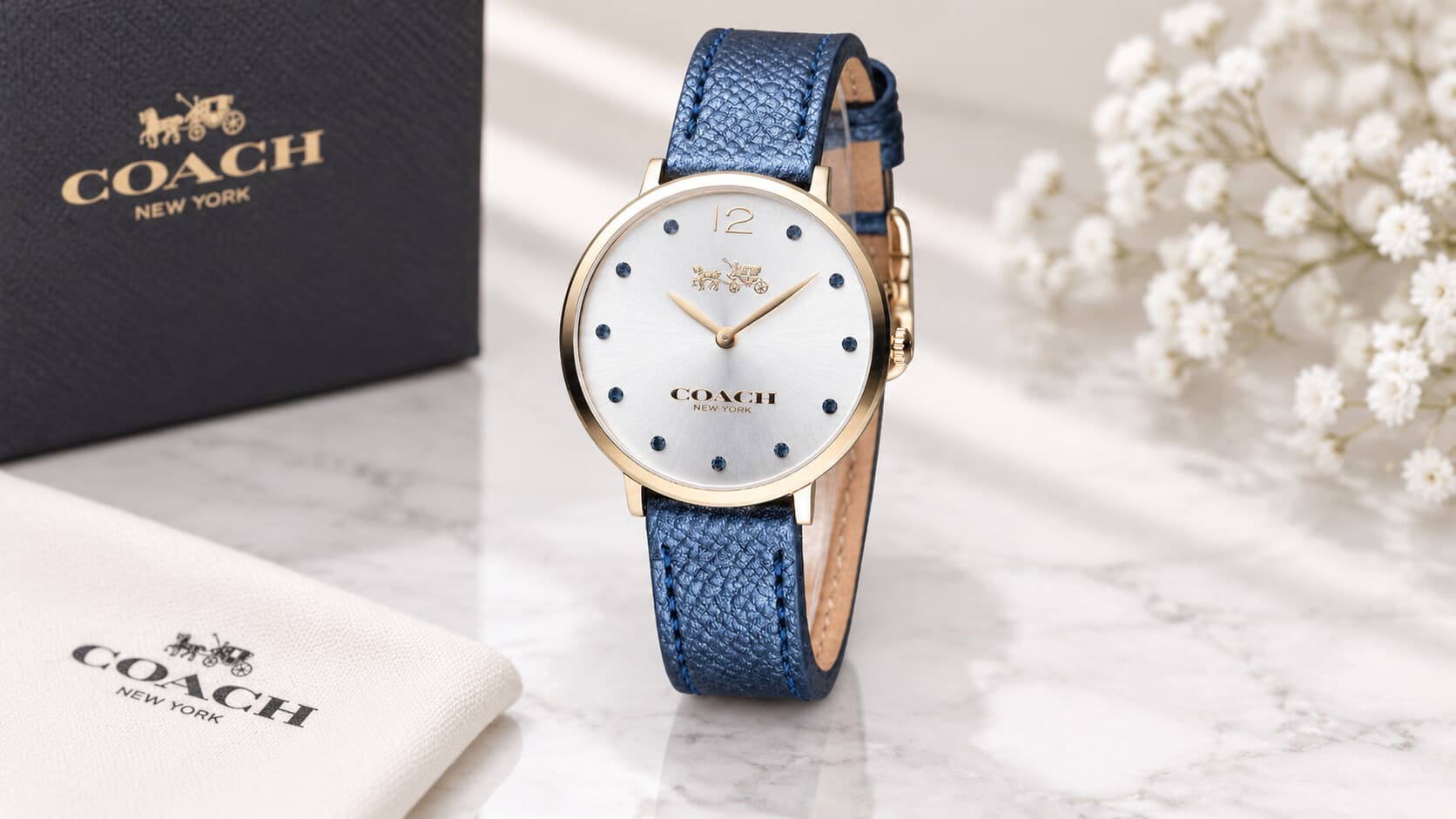
The Elliot line is Coach’s most versatile everyday watch. It comes in three case sizes, roughly 28mm, 36mm, and 41mm, so it works for smaller wrists and larger ones alike. The dials are clean and simple, with just a small Coach logo instead of heavy branding, and buyers can choose between a leather strap or a stainless steel bracelet.
This is usually the best starting point for a first Coach watch. It looks appropriate for both an office and a casual weekend, and it avoids the more decorated look of some of the brand’s other lines.
Coach Grand
Grand watches lean into bold hardware, the kind of chunky buckle and rivet details Coach is known for on its bags. Several Grand models come as gift sets with two or three interchangeable straps, which is useful for anyone who wants one watch that can switch looks for different outfits.
Because of the added straps and packaging, gift-set versions typically cost more than a single-strap watch of similar size. For buyers who don’t need interchangeable straps, a single-strap Grand watch is the more budget-friendly option.
Coach Charles
Charles is one of Coach’s main men’s collections. It typically features a round stainless steel case, a straightforward dial with bold numerals, and either a leather strap or a metal bracelet. Some versions add a goldtone finish for a dressier look.
It’s aimed at men who want a watch that reads as classic rather than trendy. There’s nothing flashy about the Charles line, which is exactly why it has stayed in the lineup for years while flashier styles have come and gone.
Coach Delancey
Delancey has an older, more vintage-feeling design language than most of the lineup. The case shape echoes the rounded hardware found on classic Coach handbags, and several models add Swarovski crystal accents around the dial.
This line skews toward women who want something with a bit more sparkle without going overboard. The crystal bezel versions in particular are a popular pick for special occasions rather than daily wear.
Coach Kent
Kent is Coach’s answer to a sportier, more rugged watch. Expect chronograph-style dials, steel cases, and stronger water resistance than the brand’s dressier lines. It’s built for wear beyond a desk job.
Compared side by side with Elliot or Delancey, the difference is obvious. Kent has more going on visually and functionally, with sub-dials and a more technical look.
Coach Preston
Preston stands out because several models use ceramic instead of steel for the case and bracelet. Ceramic feels lighter on the wrist and resists scratches better than most metals, though it can crack if dropped on a hard surface. Preston dials often use a lacquered finish with crystal hour markers.
This collection is aimed squarely at women who want a distinctive, polished look. It’s less common than Elliot or Grand, which can make it feel more special for anyone after something less mainstream.
Coach Perry
Named after Perry Street in Manhattan’s West Village, this collection keeps things simple with clean round cases and understated dials. It’s a smaller, quieter line compared to Grand or Delancey, aimed at buyers who want the Coach name without heavy branding on the face.
Smaller or rotating lines also appear from time to time, including Madison, Sullivan, and Slim Easton for men, and Ludlow, Allie, and Boyfriend for women. These tend to come and go faster than the core collections above, since availability depends on what’s currently in production rather than being a permanent part of the lineup.
The differences in material, positioning, and price become clear when the collections are compared side by side:
| Collection | Best For | Case Material | Typical Price |
|---|---|---|---|
| Elliot | Everyday, first Coach watch | Stainless steel | $195–$295 |
| Grand | Bold hardware, gift sets | Stainless steel | $295–$450 |
| Charles | Classic men’s style | Stainless steel | $195–$350 |
| Delancey | Dressier, vintage-inspired | Stainless steel | $200–$350 |
| Kent | Sport, chronograph styling | Stainless steel | $200–$350 |
| Preston | Distinctive, lightweight | Ceramic | $250–$400 |
| Perry | Understated, minimal branding | Stainless steel | $195–$295 |
What Materials and Movements Do Coach Watches Use?
Coach watches almost always run on quartz movements, meaning a small battery sends an electric signal through a tiny crystal to keep time, instead of a wound spring powering a set of tiny gears. Quartz movements are accurate, low-maintenance, and cheap to produce, which is a big part of why Coach can keep prices reasonable. Some Kent models add a chronograph function, which just means extra small dials, called sub-dials, that work like a built-in stopwatch.
Cases are typically stainless steel, sometimes with a goldtone or gunmetal finish, while a few lines like Preston use ceramic instead. Crystal, the clear cover over the dial, is usually mineral glass rather than the scratch-resistant sapphire crystal found on higher-end watches. Mineral glass holds up fine against everyday knocks, but it can scratch under rougher use, which is why sapphire remains the better choice for anyone hard on their gear. Straps come in genuine leather or stainless steel, depending on the collection. Most models carry a water resistance rating around 30 meters, sometimes written as 99 feet, which is enough for rain and hand-washing but not for swimming.
Do Coach Watches Come with a Warranty?
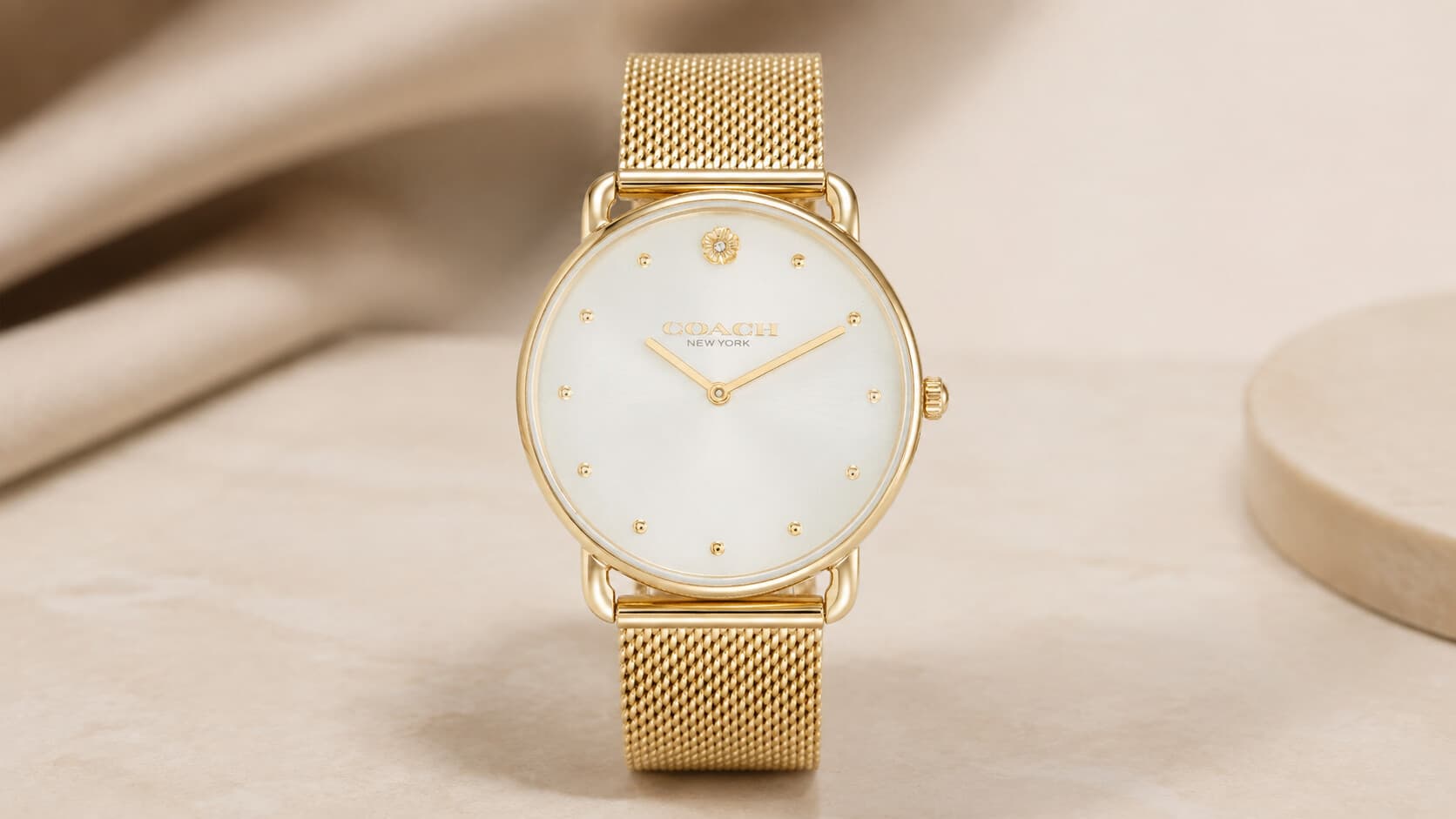
A new Coach watch bought from an authorized seller comes with a two-year limited warranty covering the movement, backed by Movado Group. If the movement stops working correctly under normal use within those two years, Movado will repair or replace it at no cost. Goldtone-plated models get an extra year of coverage, three years total, specifically against the plating flaking or peeling.
This warranty does not cover batteries, leather straps, bracelets, or crystals, and it becomes void if the watch wasn’t bought from an authorized dealer. That last point matters more than it might seem, since a lot of discounted Coach watches sold on general marketplaces come from unauthorized third-party sellers. Keeping the receipt and buying from a recognized retailer is what actually provides protection if something goes wrong.
How to Spot a Real Coach Watch
Counterfeit fashion watches are common, which makes a few checks worth knowing before buying secondhand.
- The caseback on genuine Coach watches carries an engraved model number, along with “Movado Group” or manufacturing details stamped into the metal.
- Weight is a giveaway too — authentic watches feel solid because of real steel or ceramic construction, while fakes often feel noticeably lighter or hollow.
- Logo printing on a real dial is crisp and evenly spaced; blurry or crooked text is a red flag.
- Authorized sellers, such as department stores, the Coach website, and Movado’s official outlet, are safer bets than unverified third-party marketplace listings.
How to Clean and Maintain a Coach Watch
A little basic care keeps any watch looking better for longer, and Coach watches are no exception.
- Wiping the case and strap with a soft, dry cloth after wear, especially after sweating, keeps grime from building up.
- Keeping leather straps away from water and lotion prevents the leather from drying out or discoloring over time.
- Storing the watch in a box or pouch, rather than loose in a drawer, keeps it from knocking against other objects.
- Replacing the battery through a jeweler or watch shop, rather than opening the case at home, avoids breaking the water-resistance seal.
| Care Task | How Often |
|---|---|
| Wipe down case and strap | After each wear |
| Deep clean steel bracelet | Every few months |
| Battery replacement | When the second hand starts skipping, roughly every 1–3 years |
| Professional inspection | Once a year if worn daily |
Frequently Asked Questions
Are Coach watches made in Switzerland?
No, not entirely. Coach watches are produced under license by Movado Group, an American company, and while some models use Swiss-made quartz movements, the watches are not marketed or certified as fully “Swiss Made.”
Is Coach a luxury watch brand?
Coach is best described as accessible or contemporary luxury rather than a true luxury watch brand. It sits above mass-market fashion watches in price and detail, but below Swiss houses that build and finish their own movements in-house.
Do Coach watches hold their value?
Generally, no. Like most fashion watches, Coach pieces are built to be worn and enjoyed rather than resold for profit, and secondhand prices usually drop well below the original retail cost.
How long does a Coach watch battery last?
Most Coach quartz watches run on a standard battery that lasts between one and three years, depending on how often the watch is worn and which functions, like a chronograph, are used.
Are Coach watches waterproof?
No watch is truly waterproof, and Coach watches are no exception. Most models are water-resistant to around 30 meters, which handles splashes and rain but is not rated for swimming or submerging the watch.
How does Coach compare to brands like Fossil or Michael Kors?
Coach sits in roughly the same tier as Fossil and Michael Kors, since all three are fashion watches produced under license rather than by an in-house watchmaker. The real difference comes down to design language: Coach leans on its leather-goods heritage and monogram details, while Fossil and Michael Kors draw more from general fashion trends. Pricing and build quality across the three are close enough that the decision usually comes down to personal taste.
Conclusion
Coach watches earn their popularity by doing one thing well: they bring the brand’s recognizable leather-goods style onto the wrist at a price most people can actually afford. Elliot works best as an everyday piece, Grand and Delancey lean into bolder or more decorative details, and Kent covers the sportier end of the lineup. None of them are built to compete with true Swiss watchmaking, and that’s fine, because that was never the point. The right pick comes down to matching a collection to how it will actually be worn, buying from an authorized seller, and giving the leather and battery basic care — after that, a Coach watch does its job well for years.