India makes more watches than most people realize, and the story behind them is stranger and more interesting than a simple list of brand names. It starts with a government factory built with help from a Swiss firm, gets flipped upside down by a car and steel company that decided to sell watches instead, and ends up today with everything from ₹500 plastic-strap watches to boutique mechanical pieces made in Rajasthan. Understanding Indian watch brands means understanding a bit of India’s economic history too, since politics and factory policy shaped this industry as much as design ever did.
HMT Watches: India’s Original Timekeeper
HMT, short for Hindustan Machine Tools, made India’s first wristwatches and held a near-total monopoly on the market for over two decades. The company was founded in 1961 in Bangalore with technical help from Citizen Watch Co. of Japan, and its first hand-wound watches were handed out by Prime Minister Jawaharlal Nehru himself, underscoring how much national pride was riding on the project.
For a long time, an HMT watch was something people waited months to buy. Strict import taxes kept foreign watches out of the country, so HMT had the field almost to itself, and its slogan, “Timekeepers to the Nation,” wasn’t just marketing. The brand built factories across the country, including one in Srinagar in 1972, and introduced several genuine firsts for India: the country’s first automatic day-date watch, its first quartz watch, and even a Braille watch for blind users.
HMT eventually produced more than 115 million watches over its lifetime, making it one of the largest watchmakers in the world at its peak.
The trouble came in the 1990s. HMT stuck to mechanical watches for too long, missed the global shift to cheap and accurate quartz movements, and lost its protective import barriers just as competition arrived. The company posted its first loss, ₹90 crore, in 1994, and by 2013-14 that number had ballooned to over ₹233 crore. In 2016, the Indian government formally approved the closure of HMT Watches Limited, ending a run that had produced more than 115 million watches.
As of 2026, there’s no working factory, but HMT hasn’t fully disappeared from the conversation. A government technical committee led by former NITI Aayog member VK Saraswat spent over a year studying a possible relaunch, and a Mumbai design collective called NYUCT Design Labs has separately been pitching a modern revival built on the brand’s nostalgic pull. Vintage HMTs are still sold and collected today, and a small museum near Bengaluru keeps the brand’s history on display for anyone curious about where India’s watch industry actually began.
Titan: How It Took Over India’s Watch Market
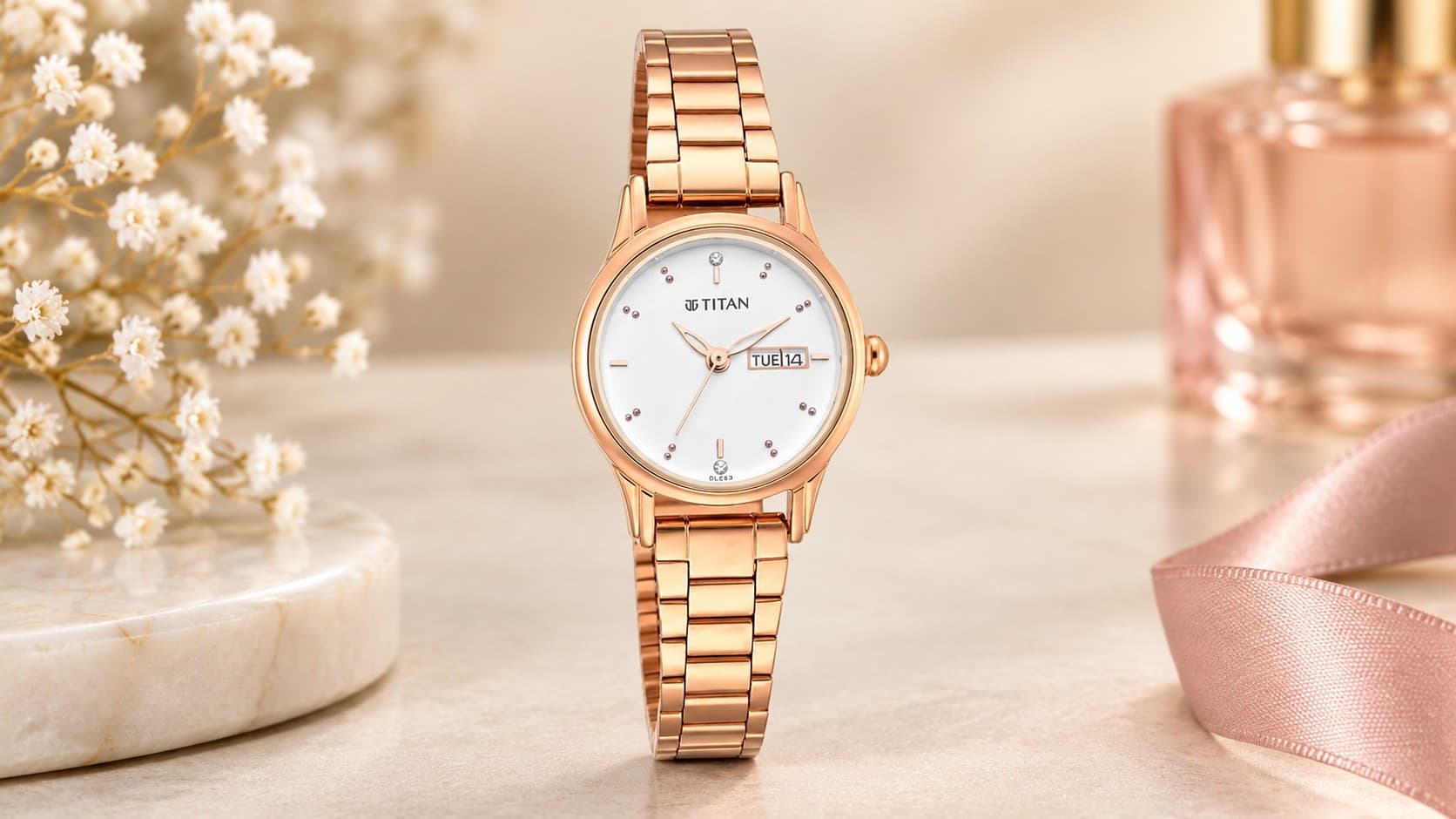
Titan is the brand that actually built India’s modern watch industry, and it did this by doing the opposite of everything HMT was doing. It was founded in 1984 as a joint venture between the Tata Group and the Tamil Nadu Industrial Development Corporation, led by a Tata executive named Xerxes Desai, and its first watches reached shops in 1987. Getting there wasn’t simple: India’s “Licence Raj” regulations at the time reserved watchmaking for state-owned companies like HMT or small private makers, so Tata had to work through years of government approvals just to enter the market at all.
The plan was simple but bold once Titan got moving: while HMT kept making old-fashioned mechanical watches, Titan built its factory in Hosur, Tamil Nadu, specifically to produce quartz watches, which are more accurate and much cheaper to manufacture at scale. Because skilled watchmaking labor barely existed in India outside HMT, Titan recruited school and college graduates aged 17 and up directly, trained them from scratch, and even provided housing and local foster families for recruits who had to relocate. That factory, inaugurated by JRD Tata in March 1988, became India’s first modern watchmaking hub. Within two years of launch, Titan had already sold over one million watches.
Titan didn’t just sell a product, it changed how Indians thought about watches. Instead of a purely functional item buyers waited months for, a watch became a fashion accessory and a gift, sold through Titan’s own retail stores rather than through the older network of small, unorganized watch dealers. That shift in retail experience was just as important as the shift in technology.
Titan also kept pushing on the technical side. In 2002, it launched the Titan Edge, which was the world’s slimmest quartz watch at the time, and in 2011 it introduced HTSE watches, which are self-charging and powered by light rather than a replaceable battery. Today Titan Company is one of the five largest watch manufacturers in the world by volume, and it has grown far beyond watches into jewelry (through its Tanishq brand), eyewear, and other lifestyle categories. The company’s watch and wider consumer business has continued to post strong growth, with total revenue across all segments crossing ₹40,000 crore in recent years.
Titan’s Watch Brands: Fastrack, Sonata, and More
Titan doesn’t sell every watch under the Titan name. Instead, it runs a family of sub-brands, each aimed at a different customer and price point, and this multi-brand strategy is a big reason Titan dominates so much of the Indian watch market.
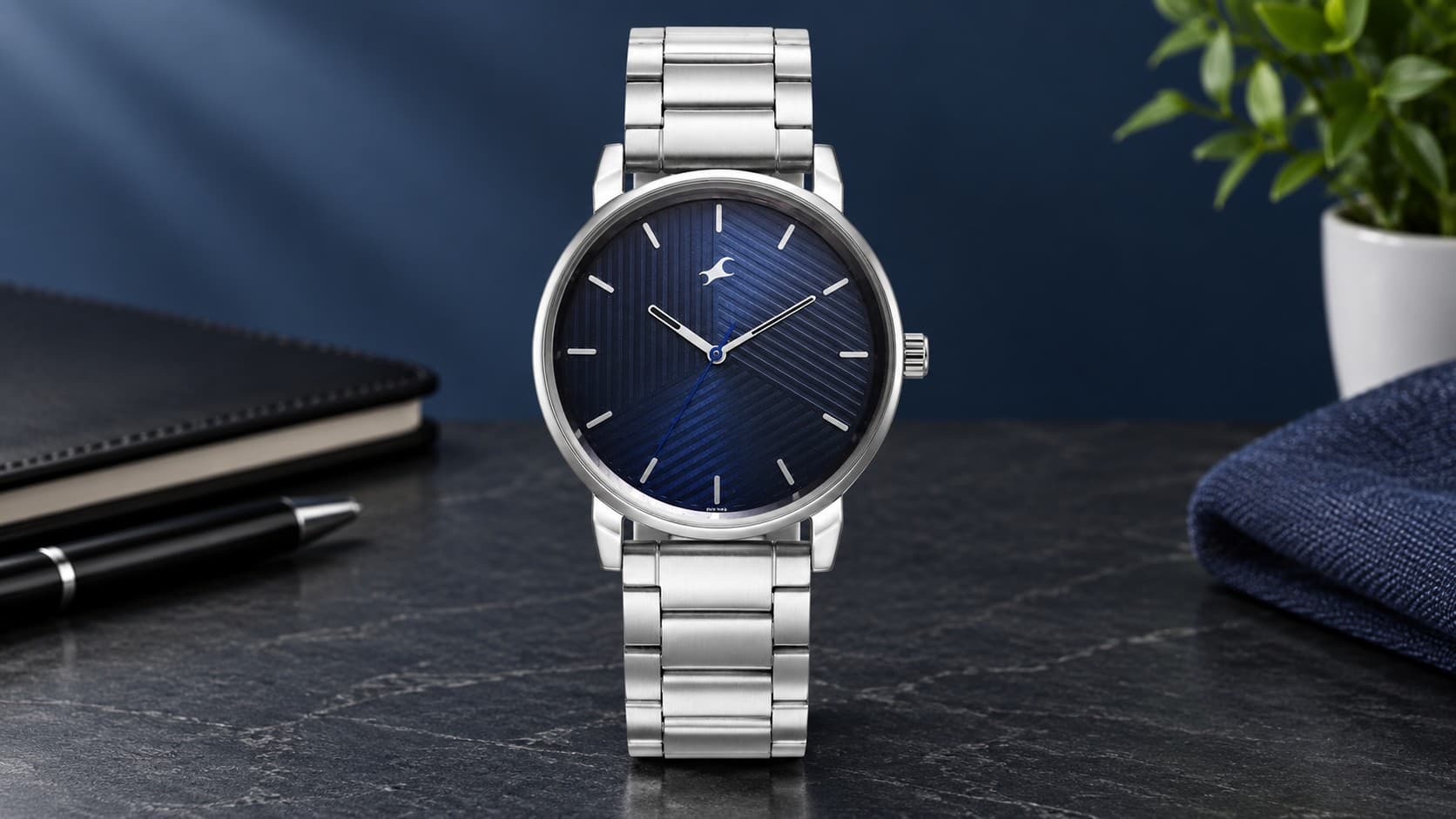
- Fastrack launched in 1998 as a youth-focused line inside Titan, then became its own independent brand in 2005. It targets teenagers and young adults with bold, casual designs and affordable smartwatches, and it also sells sunglasses, bags, and wallets.
- Sonata was created to serve the mass market with simple, budget-friendly watches, often priced well under ₹2,500. It focuses on everyday reliability rather than fashion statements.
- Xylys sits at the premium end of Titan’s portfolio, aimed at buyers who want a more upscale, design-forward watch without stepping into imported luxury territory.
- Nebula is Titan’s solid gold and diamond-studded watch line, sold through Tanishq jewelry stores rather than regular watch counters.
- Zoop is Titan’s watch line for children and pre-teens, built around brighter colors, cartoon and licensed character dials, and lower price points meant for a first watch.
This layered approach means Titan can compete with a ₹40,000 crore-plus watch, jewelry, and eyewear business while still selling a basic analog watch for a few hundred rupees. Few watch groups anywhere in the world cover that much ground under one roof.
Global Watch Brands Made and Sold in India
Not every watch sold under a familiar international name in India is imported wholesale. Timex has operated in the country since 1988 through Timex Group India, a publicly listed company that designs, distributes, and services Timex watches domestically rather than simply shipping finished stock from abroad. Over nearly four decades it moved from a mass-market value brand into a stronger fashion and premium positioning, while still keeping the affordability that made Timex famous worldwide since the brand’s 1854 founding.
Other global names, including Fossil and Casio, run substantial retail and distribution operations in India as well, which is part of why watch buyers in Indian cities can find such a wide spread of price points and styles from familiar brands, not just from homegrown ones.
How Smartwatches Took Over Indian Watches
Smartwatches now account for most of the unit volume sold in India’s watch market, marking one of the biggest shifts the industry has seen in years. Homegrown brands like Noise, boAt, and Fire-Boltt now sell more watches by volume in India than traditional analog brands, and they built that business almost entirely on affordability. Most of their smartwatches sell for well under ₹5,000, and Fire-Boltt in particular has pushed AMOLED touchscreens down to price points that were unheard of a few years ago.
The three brands have distinct identities even though they compete for the same budget-conscious shopper. Noise, run by a company called Nexxbase, has led the Indian smartwatch category in market share for several years running and was one of the first to bring features like Bluetooth calling to affordable devices. boAt built its name in audio products before expanding into watches, and its designs tend to be bold and sport-focused. Fire-Boltt has grown fastest by leaning hard on bright AMOLED displays and, more recently, by launching wristphones with SIM support and even moving into budget smartphones under its own name.
This market has cooled somewhat after its explosive early growth. Industry tracker IDC reported that India’s overall smartwatch shipments actually fell in 2025 compared to the year before, even as average prices rose, with newer categories like smart glasses picking up much of the growth instead. Still, Noise, boAt, and Fire-Boltt together continue to account for a large majority of all smartwatches sold in the country, and they represent a genuinely different, tech-first branch of India’s watch industry compared with Titan, HMT, or Ethos.
Ethos: India’s Luxury Watch Retailer
If Titan built India’s mass-market watch industry, Ethos built the country’s luxury watch retail industry almost from nothing. Founded in 2003 in Chandigarh by entrepreneur Yashovardhan Saboo, Ethos opened its doors right after India relaxed rules on importing high-value watches at scale, and it became the country’s first serious multi-brand retailer for genuine Swiss luxury pieces.
Ethos became the official retailer for Rolex in India in 2008, and its brand portfolio has grown to more than 60 names, including Omega, IWC, Jaeger-LeCoultre, TAG Heuer, Breitling, and smaller independent watchmakers such as H. Moser & Cie. and Bovet. In 2022, Ethos became the first luxury watch retailer in India to go public, listing on the Bombay Stock Exchange and the National Stock Exchange, and by the 2024-2025 financial year it was operating more than 70 boutiques across roughly 26 Indian cities, with annual revenue above ₹1,250 crore. It also runs a loyalty program called Club Echo with hundreds of thousands of members, and has recently expanded into luxury jewelry retail through a partnership with the French brand Messika.
What Ethos really did was give Indian collectors a legitimate, trustworthy path to buying genuine luxury watches at home, at prices aligned with the global market, instead of relying on relatives traveling abroad or a long-standing grey market built around smuggled pieces.
New Independent Indian Watch Brands
Alongside the giants, a small wave of newer, independent Indian watch brands has emerged, most of them built by watch enthusiasts rather than large industrial groups. These brands are far smaller than Titan or Timex, but they represent something different: an attempt to build genuinely original Indian watch design rather than just manufacturing at scale.
One example is the Jaipur Watch Company, founded in 2013 in Jaipur, Rajasthan by entrepreneur Gaurav Mehta, with the specific goal of creating an authentically Indian luxury watch brand that draws on the country’s craft heritage rather than copying Swiss design language, sometimes incorporating local motifs and stone work into its dials and cases. Other smaller names in this space include Bangalore Watch Company and premium-positioned labels like Ajwain, which leans on handcrafted dials and vintage-inspired styling, plus a handful of Delhi- and Mumbai-based microbrands that sell mostly online or through limited pop-up retail.
These companies typically can’t match the manufacturing scale or after-sales network of Titan or Timex, so buyers should expect a more boutique experience: smaller production runs, longer wait times, and a narrower service network if something needs repair.
Major Indian Watch Brands Compared
| Brand | Founded | Known For | Typical Price Range |
|---|---|---|---|
| HMT | 1961 | Historic mechanical watches, national heritage | Vintage/collector pricing only |
| Titan | 1984 | Mainstream quartz and fashion watches | ₹1,500 – ₹50,000+ |
| Fastrack | 1998 | Youth-oriented casual and smartwatches | ₹500 – ₹5,500 |
| Sonata | 1997 | Budget everyday watches | ₹600 – ₹2,500 |
| Timex India | 1988 (India ops) | Value and fashion-forward analog watches | ₹1,500 – ₹15,000 |
| Ethos (retailer) | 2003 | Multi-brand luxury Swiss watch retail | ₹50,000 and up |
| Jaipur Watch Company | 2013 | Independent Indian luxury design | ₹20,000 – ₹1,00,000+ |
| Noise | 2014 | India’s top-selling smartwatch brand | ₹1,500 – ₹5,000 |
| boAt | 2016 (2021 watches) | Sporty, feature-heavy smartwatches | ₹1,500 – ₹5,000 |
| Fire-Boltt | 2015 | Budget AMOLED smartwatches | ₹900 – ₹3,000 |
Prices are approximate and vary by model, materials, and retailer.
Frequently Asked Questions
Is Titan an Indian brand or a foreign one?
Titan is fully Indian. It’s a subsidiary of the Tata Group, founded in 1984 as a joint venture with the Tamil Nadu Industrial Development Corporation, and its watches are designed and manufactured in India, primarily at its Hosur factory in Tamil Nadu.
Is HMT still making watches?
No. HMT Watches Limited was formally closed by the Indian government in 2016 after decades of financial losses. There have been government-backed studies and private design efforts looking at a possible revival, but as of now there’s no active production line making new HMT watches.
What’s the difference between Titan, Fastrack, and Sonata?
They’re all owned by the same parent company, Titan, but aimed at different customers. Titan itself covers a broad mainstream range, Fastrack targets younger buyers with bold and casual designs, and Sonata focuses on the most affordable end of the market with simple, everyday watches.
Are Indian watch brands good quality?
Quality varies a lot by brand and price point, the same as anywhere else in the world. Titan and Timex India both run large-scale quality control processes and offer standard warranties, and Titan in particular has built a reputation over four decades for reliable everyday watches, even though it doesn’t compete with high-end Swiss mechanical watchmaking.
Where can I buy genuine luxury watches in India?
Authorized retailers are the safest route. Ethos is India’s largest multi-brand luxury watch retailer and holds official partnerships with brands including Rolex, Omega, and IWC, and most major luxury watch brands also run their own single-brand boutiques in large Indian cities.
Are Noise, boAt, and Fire-Boltt real Indian brands or rebadged imports?
They’re Indian companies, though most of their hardware is manufactured or assembled overseas, which is standard practice across the global electronics industry. Noise (run by Nexxbase) was founded in Gurugram in 2014, Fire-Boltt was founded in 2015, and boAt built its name in audio products before launching its own smartwatch lines. All three are headquartered in India, design their own products, and currently lead India’s smartwatch market by sales volume.
Conclusion
India’s watch industry tells the story of a country that first built its own manufacturing from scratch with HMT, watched that model collapse under the weight of slow innovation, and then rebuilt itself through Titan’s aggressive, fashion-forward approach to quartz watches. Today that legacy has split into four distinct lanes: Titan and its sub-brands dominating the traditional mass market, retailers like Ethos opening genuine access to Swiss luxury, homegrown smartwatch makers like Noise, boAt, and Fire-Boltt now leading watches by sheer sales volume, and a small but growing group of independent Indian designers trying to build something entirely their own. Whichever price point or category someone is shopping in, the brand they choose in India carries a piece of that history on the wrist.