Timex has been putting watches on wrists for more than a century, and it still makes some of the most trusted, affordable timepieces on the market today. The brand built its name on toughness, not shine. It survived world wars, the rise of digital watches, and a flood of cheap imports by sticking to one simple idea: a watch should work, look good, and not cost a fortune. That mix of history and value is exactly why Timex still matters to shoppers who want a reliable watch without paying luxury prices.
How Timex Became a Watch Icon
Timex started in 1854 as the Waterbury Clock Company in Connecticut, long before “Timex” was even a word. The company made pocket watches and clocks for decades before wristwatches became popular. During World War II, it switched to building fuse timers for bombs, work that taught its engineers how to mass-produce small mechanical parts with precision.
Even before the wristwatch era, the company found a huge hit by accident. In 1933, it struck a licensing deal with Disney to make Mickey Mouse watches and clocks, which became its first product line to earn a million dollars. During World War II, two Norwegian engineers who had fled the Nazi occupation of their home country bought the business and renamed it the United States Time Corporation, steering it toward wartime production before returning to consumer watches once the war ended.
That wartime skill paid off after the war ended. In 1950, the company released its first Timex-branded wristwatch, and by 1969 it officially changed its name to Timex. The brand became famous for brutal ad campaigns showing its watches strapped to speedboat propellers, thrown in paint mixers, and worn by cliff divers, all to prove the slogan “It takes a licking and keeps on ticking.” By the early 1960s, Timex accounted for roughly a third of all watches purchased in the United States.
The company kept adapting. It introduced the Ironman in the mid-1980s after partnering with the organizers of the Ironman Triathlon in Hawaii, and the watch went on to become the best-selling model in the world for a decade. In 1992, Timex launched Indiglo, the glow-in-the-dark lighting feature still found on many of its watches today. Timex Group B.V., a Dutch holding company, has owned the brand since 2008, and Timex now runs manufacturing and design operations worldwide while its main U.S. offices sit in Connecticut.
Why Timex Watches Are Worth the Price
A good Timex watch does its job without asking much of its owner. It does not need daily winding, careful handling around water, or the anxiety that comes with an expensive crystal. Most Timex watches use simple, dependable quartz movements powered by a battery, so they keep accurate time with almost no maintenance.
A watch does not need to be expensive to be good. It needs to be honest about what it does, and Timex has built its whole identity around that idea.
The brand also offers real variety across its price range. A plain $30 field watch covers everyday errands, while a $200-plus mechanical Marlin comes with a movement visible through a display caseback. That range is rare in the watch world, where most brands stick to one price tier.
Timex also backs its watches with a standard one-year warranty against manufacturing defects, covering the movement and case against faults that occur through no fault of the owner. It does not cover normal wear items like the battery, strap, or crystal, but it is solid coverage for a watch in this price range, and Timex operates its own repair centers for out-of-warranty fixes as well.
The Best Timex Watches by Category
Not every Timex watch fits every person. Some are built for style, some for sport, and some for pure nostalgia, and each of the brand’s main lines was designed around a different kind of wearer.
Timex Weekender: Best for Daily Wear
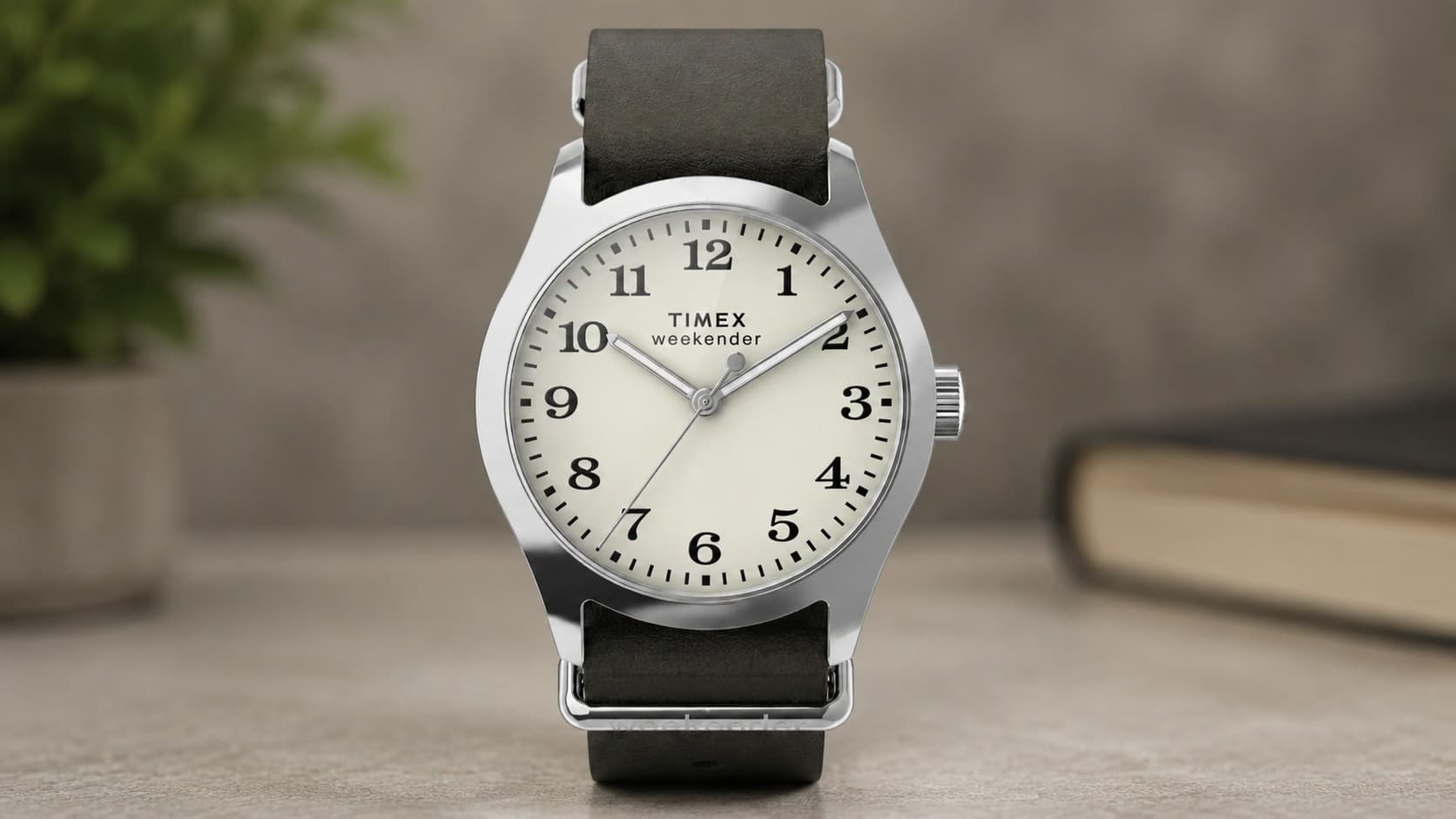
The Weekender suits anyone who wants something simple that tells time and looks sharp. It has a clean round dial, a nylon or leather strap, and a price that usually sits around $30 to $50, making it one of the most affordable watches Timex sells.
It will not impress a watch collector, but that is not the point. The Weekender is built to be worn every day without a second thought, packed for travel, or handed to a teenager as a first “real” watch. Its straps are also easy to swap, changing the whole look of the watch in seconds, and most versions use standard spring bars that fit widely available replacement straps.
Timex Marlin: Best Mechanical Model
The Marlin brings back a design Timex first sold in the 1960s, and it does it with real mechanical parts instead of a battery. Most Marlin models use a hand-wound or automatic movement, meaning the watch runs off tiny gears and a spring rather than electricity.
That makes the Marlin the pick for anyone curious about mechanical watches without spending Swiss-luxury money. Prices typically land between $200 and $250, and many versions have a see-through caseback that reveals the movement at work. The domed crystal and thin case also give it a mid-century look that feels genuinely different from most modern watches, and since mechanical movements need periodic winding or wrist motion instead of a battery, the Marlin also serves as a low-cost way to experience what owning a mechanical watch actually feels like day to day.
Under the hood, the 40mm Marlin Automatic uses a Japanese Miyota 8215 movement, which has 21 jewels, ticks at 21,600 beats per hour, and holds around 38 to 40 hours of power once fully wound. The smaller 34mm hand-wound Marlin uses a different movement that Timex has not officially detailed, though watch enthusiasts who have taken it apart widely believe it to be a modified Seagull ST6 caliber with the automatic rotor removed, since that version is meant to be wound by hand each day rather than worn constantly to keep it running.
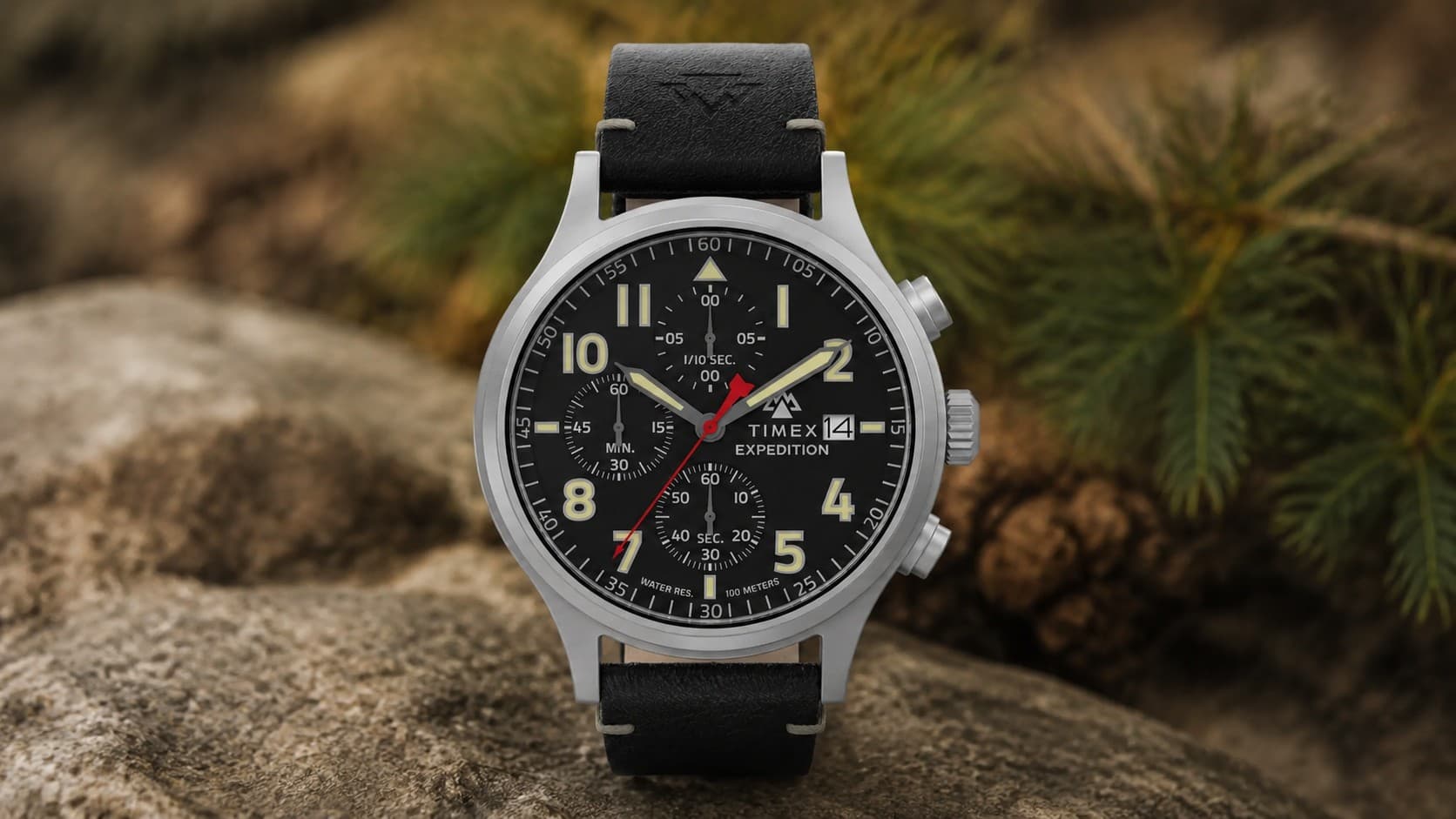
Timex Expedition: Best for Outdoor Use
Expedition watches are built for hiking, camping, and rough weather, not office desks. They use tougher resin cases, larger dials that stay easy to read outdoors, and often include an Indiglo backlight for checking the time in the dark.
Water resistance across the line ranges from 50 meters on entry models to 100 or 200 meters on higher-end titanium versions, covering everything from rain and swimming up to recreational scuba diving on the toughest models. Prices generally run from $30 to $80 for the core lineup, which is low considering how much abuse these watches are designed to handle. Timex has also expanded the line with Expedition North, a higher-end sub-collection that adds automatic mechanical movements and recycled materials for buyers who want the same outdoor focus paired with more serious watchmaking.
Timex Ironman: Best for Fitness
The Ironman line was built for runners, and it still shows. These digital watches include stopwatch functions, lap memory, interval timers, and multiple alarms, all controlled through simple buttons instead of a touchscreen or app.
Because they run on a basic digital display instead of GPS or a full smartwatch chip, Ironman watches stay light, cheap to buy, and capable of running for a long time on one battery. Most models cost under $50, which makes them a strong pick for anyone who wants workout features without paying smartwatch prices or dealing with nightly charging.
The name itself comes from a real partnership. Timex worked directly with the organizers of the Ironman Triathlon in Hawaii starting in 1984, and by 1986 had licensed the Ironman name for its own watch line, becoming the event’s official timekeeper in the process. That original watch sold hundreds of thousands of units in its first year, and the Ironman remains one of Timex’s best-selling products worldwide nearly four decades later.
Q Timex: Best Retro Quartz Watch
The Q Timex line reproduces watches from Timex’s electronic “Q” era in the 1970s, when quartz technology was brand new and exciting. The modern reissues keep that retro dial design but use updated quartz movements inside.
These watches usually sell for around $200 to $250 and often come on a steel bracelet instead of a strap, giving them a dressier feel than the Weekender or Expedition lines. Timex has expanded the collection with special dial colors and even a chronograph “moon watch” style version, which has made Q Timex reissues popular among people who collect watches purely for their vintage looks. The line suits anyone drawn to retro style without wanting to deal with a fully mechanical watch.
Timex Waterbury: Best Smart-Casual Watch
The Waterbury Chronograph line adds stopwatch subdials to a classic dress-casual design, making it useful for timing a workout or a coffee brew without looking like a dedicated sports watch. It typically comes on a stainless steel bracelet or leather strap, priced around $150 to $250.
It works well as a step-up watch for someone who already owns a Weekender or Expedition and wants something a bit more polished for work or dinner. The name is also a nod to Timex’s own roots, since Waterbury, Connecticut, is where the company’s predecessor, the Waterbury Clock Company, first started making timepieces back in 1854.
Timex T80: Best 1980s Style Watch
The T80 is a faithful reissue of the digital watch Timex first sold in 1980, built around the same compact rectangular LCD case and simple seven-segment digits that defined that decade. It runs on a quartz digital movement, includes a date display, stopwatch, and alarm, and still uses the Indiglo backlight to light up the screen at night.
Since its relaunch in 2019, the T80 has become one of Timex’s most talked-about watches, largely because it caught on with a younger audience discovering retro digital style for the first time rather than remembering it from the original decade. Standard versions typically run $60 to $150, while collaboration editions with outside labels like End Clothing and Maison Margiela can push closer to $350, making the T80 one of the more distinctly 1980s-looking watches still in regular production.
How Much Do Timex Watches Cost
| Model Line | Typical Price Range | Best For |
|---|---|---|
| Weekender | $30–$50 | Everyday casual wear |
| Expedition | $30–$80 | Outdoor and travel use |
| Ironman | $25–$50 | Running and fitness |
| T80 | $60–$150 | Retro digital style |
| Q Timex | $190–$250 | Retro analog style, dressier looks |
| Waterbury Chronograph | $150–$250 | Smart-casual and office wear |
| Marlin (Automatic) | $200–$250 | Mechanical watch fans |
Prices vary by retailer and by the exact model, strap material, and any special editions or collaborations, so the figures above should be read as general ranges rather than fixed prices.
Are Timex Watches Good Quality
Timex watches are good for what they are built to do. They are not trying to compete with Swiss luxury brands on craftsmanship, and they never claimed to. Instead, they focus on being accurate, tough, and easy to repair or replace.
Quartz movements, which power most Timex watches, are known for being more accurate day-to-day than mechanical movements, since they rely on a vibrating quartz crystal rather than moving gears. A $30 Timex will often keep better daily time than a $10,000 mechanical watch, even though the mechanical watch is considered more prestigious. Timex’s mechanical lines, like the Marlin, are less about precision and more about offering an affordable way to own a “real” watch movement.
Timex has also leaned on decades of public durability testing to back up its reputation. Its old advertising campaigns strapped watches to speedboat propellers, ran them through dishwashers, and had them worn by cliff divers, and while modern marketing is less extreme, the same emphasis on toughness still shows up in features like shock resistance, scratch-resistant lenses, and water-resistant cases across most of the current lineup.
Timex Compared to Other Affordable Watch Brands
Seiko and Casio are the two brands most often compared to Timex, since all three make dependable watches at reasonable prices. Seiko tends to focus more on mechanical movements and dive watches, Casio leans heavily into digital and G-Shock durability, and Timex sits in between, offering both simple quartz watches and increasingly serious mechanical options like the Marlin.
None of the three brands is “better” across the board. The right choice depends on whether the goal is a dress watch, a rugged tool watch, or a mechanical piece for learning about watchmaking, since each brand has strengths in different areas.
Frequently Asked Questions
Are Timex watches made in the USA?
No, not anymore. Timex made its main watch lines in the United States until 2001, when production shifted overseas to keep prices low. A small number of premium or limited-run pieces have occasionally been made domestically since then, but most Timex watches today are manufactured in facilities across Asia.
What does Indiglo mean?
Indiglo is the name for Timex’s glow-in-the-dark lighting feature, introduced in 1992. Pressing a button lights up the entire dial with a soft electroluminescent glow, making the time easy to read in the dark without a separate flashlight.
Do all Timex watches use batteries?
No. Most Timex watches use quartz movements powered by a small battery, but a growing number of models, especially in the Marlin and Q Timex lines, use mechanical movements that run on a wound spring instead. Checking the product description is the best way to confirm the movement type, since it affects both price and how the watch needs to be cared for.
How long do Timex watches last?
A well-cared-for Timex can easily last 10 to 20 years or longer. Quartz models mainly need occasional battery replacements, while mechanical models benefit from a professional cleaning and servicing every few years, similar to any other mechanical watch.
Is Timex considered a luxury brand?
No. Timex has always positioned itself as an affordable, everyday watch brand rather than a luxury one, and its prices reflect that. It has released more expensive mechanical and limited-edition pieces in recent years, but its core identity is built around value, not prestige.
What is covered under a Timex warranty?
Timex covers manufacturing defects in the watch’s case and movement for one year from the original purchase date, as long as the watch was bought from an authorized retailer. It does not cover the battery, strap, crystal, or damage from normal wear and misuse, and Timex may also charge a handling fee even for in-warranty repairs.
Conclusion
Timex earns its reputation the honest way, by making watches that work without demanding a large budget. The Weekender and Expedition lines cover casual, everyday needs for under $80, the Ironman handles basic fitness tracking without a subscription or app, and the T80, Marlin, and Q Timex lines offer an affordable way into retro digital, mechanical, and vintage analog styles. Across every line, the brand rests on more than 70 years of one steady promise: reliable timekeeping that everyday people can actually afford.