A watch is one of the few objects a person can wear every day for decades and then hand to someone else who will do the same. Unlike most things we own, a well-made watch does not wear out from use. It gets serviced, cleaned, and passed along, carrying the fingerprints of every person who ever checked the time on it. That mix of durability and personal history is exactly why families keep watches longer than almost anything else they own, and why so many people choose one on purpose as a gift meant to last past their own lifetime.
Watches Are Made to Survive Generations
A good mechanical watch can keep running for well over 100 years with basic care. The parts inside a mechanical movement are metal gears, springs, and tiny synthetic ruby bearings, called jewels, designed to be cleaned, oiled, and replaced piece by piece rather than thrown away. A typical mechanical movement has somewhere between 100 and 200 individual parts, and almost every one of them can be swapped out by a trained watchmaker without needing to replace the whole watch.
This is different from most electronics or fast fashion items, which are designed to be replaced, not repaired. A phone becomes outdated in a few years. A pair of shoes wears through and gets tossed. A mechanical watch, by contrast, was built assuming someone would eventually need to open it up and fix it, because its makers expected it to outlive them, and often outlive their children too.
Because the basic design of a mechanical movement hasn’t changed all that much in over a century, a watchmaker today can usually still source or fabricate the parts for a decades-old watch. That’s not true of almost anything else in a typical household, from kitchen appliances to laptops, which is part of why watches stand out as heirlooms in the first place.
What Makes an Old Watch Feel More Personal
A brand-new watch tells the time. An inherited one tells a story too. Scratches on the case, a slightly stretched strap, or a dent from an old accident all become part of the object’s history rather than flaws to hide.
That sense of history is part of what made Patek Philippe’s long-running advertising line so effective. Since 1996, the brand’s “Generations” campaign has built its entire identity around a single idea, that a fine watch isn’t really owned by one person, but held in trust and eventually handed to whoever comes next in the family. The slogan worked because it named something true about watches specifically, that they are one of the few objects designed from the start to change hands.
A watch doesn’t need to be expensive to carry meaning. It just needs to keep being worn.
Jewelry can hold similar sentimental weight, but a watch adds something extra: it was actively used, wound, and checked thousands of times by the person who wore it. That daily interaction, the way someone glanced at it before a meeting or wound it every morning, is part of what makes it feel personal once it changes hands.
Why a Broken Watch Doesn’t Mean It’s Done
Almost any part inside a mechanical watch can be replaced by a skilled watchmaker, which is what keeps century-old watches ticking today. Gears wear down, springs lose tension, and gaskets dry out over the decades, but none of that means the watch is finished. A watchmaker can source or fabricate replacement parts, clean the movement, and put the watch back into working order, sometimes for a fraction of what the watch is worth.
A standard mechanical service, which includes taking the movement apart, cleaning every piece, re-lubricating, and putting it back together, typically costs somewhere between $200 and $500 for a simple watch, and can run higher for chronographs or watches with extra functions. That’s a manageable, predictable cost compared to replacing an entire device, and it’s the main reason mechanical watches are still economically worth maintaining generations later.
This is very different from a smartwatch or most quartz watches with sealed electronics, which are usually cheaper to replace than to fix once a key component fails. A mechanical watch was never meant to be disposable in the first place, so the entire repair industry around it, including watchmaking schools, tool makers, and parts suppliers, still exists specifically to keep old watches alive.
What Is the Lifespan of a Mechanical Watch?
With servicing every few years, a mechanical watch can realistically run for a hundred years or more. Most manufacturers recommend a full service every five to seven years, though some brands, including Rolex, now say their modern movements can go up to ten years between services. Servicing means a watchmaker opens the case, cleans out old oil and dust, checks for worn parts, and re-lubricates the movement.
Skipping service for too long can cause parts to wear against each other without lubrication, which does shorten a watch’s life, but regular care keeps it running indefinitely. Quartz watches, which use a battery and a vibrating crystal instead of springs and gears, also last a long time, often several decades, though upkeep mostly comes down to swapping the battery roughly once every year or two, and sourcing electronic parts gets harder once a model is discontinued.
How Worn Watches Gain Sentimental Value
Most objects lose meaning the moment they’re used. A watch tends to do the opposite: the more it’s worn, the more it means. A dent from a hike, a strap replaced after years of daily wear, or an engraving added for an anniversary all add to the story instead of taking away from it.
This is part of why watches show up so often in wills and family traditions, more than most other possessions besides jewelry and homes. A watch worn daily by a parent or grandparent becomes tied to memories of that specific person, the sound it made, the way they checked it, the events they wore it to. Many owners choose to have a short engraving added to the case back, a date, initials, or a short phrase, specifically so that meaning survives even after memories fade.
Because of that sentimental and sometimes financial value, it’s worth mentioning a watch by name on a homeowners or renters insurance policy, or adding a separate rider for it, rather than assuming it’s automatically covered. Standard policies often cap jewelry and watch claims at a few thousand dollars unless the item is specifically scheduled.
Why Certain Watches Gain Value Over Time
Certain models, especially from well-known Swiss brands, can be worth more decades later than they cost when new, because demand for well-preserved vintage pieces from established makers often grows faster than supply. This trend has roots in a specific moment in watch history. When cheap, extremely accurate quartz watches flooded the market starting in the late 1960s, they nearly destroyed the mechanical watch industry, and Swiss watchmaking lost roughly two-thirds of its workforce within about a decade.
The industry survived by repositioning mechanical watches as luxury and emotional objects rather than everyday tools, since quartz had already won on pure accuracy and price. That shift is part of why mechanical watches carry so much heirloom weight today: an entire industry rebuilt itself around the idea that a mechanical watch’s value comes from craftsmanship, scarcity, and story, not just from telling time. Even so, this isn’t true of every watch, and it’s never guaranteed. Most watches are bought to be worn and loved, not flipped for a profit, and treating a family watch purely as an investment misses the point of what makes it valuable in the first place.
Why Watch Designs Rarely Go Out of Style
A classic watch design rarely looks dated the way clothing or gadgets do. A simple round dial with clean hands has looked appropriate on a wrist for well over a century, which is part of why inherited watches don’t feel like hand-me-downs the way old clothing sometimes does.
That timelessness means a watch passed from a grandparent to a grandchild can still be worn confidently today, even if styles have shifted in almost every other category. A strap or bracelet can also be resized or swapped entirely, so a watch built for one wrist size or gender can be adjusted to fit whoever inherits it next, which isn’t true of most clothing or jewelry sized to a specific person.
Set beside a piece of decades-old technology or a once-trendy accessory, the difference is obvious. Almost nothing else in a typical household ages this gracefully while staying fully usable.
Watches vs. Other Family Heirlooms
Watches aren’t the only objects families pass down, and other heirlooms hold their own in some areas and even do better in others. Fine jewelry, for instance, can be just as durable as a watch, and in some ways more so. Gold doesn’t corrode, and a well-cut diamond or sapphire can outlast almost anything else in a house, since gemstones have no moving parts to wear out in the first place.
Where a watch pulls ahead is in what it does while it sits on a wrist. It has to keep running, which means someone has to actually engage with it, whether that’s winding it, resetting it after a flight, or simply putting it on each morning. That built-in interaction is something jewelry, however valuable, doesn’t require, and it’s a big part of why a watch can feel more like a living connection to the person who wore it.
Other common heirlooms fall further behind on practical grounds. China and glassware are decorative rather than functional, and one dropped plate ends the story for that piece entirely. Furniture can last for generations too, but it’s bulky, harder to move between homes, and vulnerable to water damage, pests, or simply not fitting anyone’s decor. Photos and letters carry irreplaceable history, but paper yellows, ink fades, and they need to be stored carefully to survive a century, since they can’t be serviced the way a broken gear or worn gasket can.
| Heirloom Type | Physical Durability | Repairable Long-Term | Usable Day to Day | Story Built In |
|---|---|---|---|---|
| Watches | High | Yes, by design | Yes | Yes, through daily wear |
| Fine jewelry | Very high | Yes, but mainly resizing/repair | Yes | Yes, but passive |
| Furniture | Medium | Sometimes | Yes, if it fits the space | Limited |
| China & glassware | Low | No | Rarely | Limited |
| Photos & letters | Low without care | No | No | Very high |
So watches aren’t automatically the toughest or the most valuable heirloom a family can own; jewelry often beats them on raw durability, and a photograph can carry more emotional weight than either. What makes a watch stand out is the combination: it survives daily use, it can be fixed instead of replaced for a century or more, it travels easily from one generation to the next, and it actively participates in someone’s daily life instead of sitting in a drawer or on a shelf. That mix of durability, usefulness, and built-in story is hard to find anywhere else in one object.
How to Choose a Watch Worth Passing Down
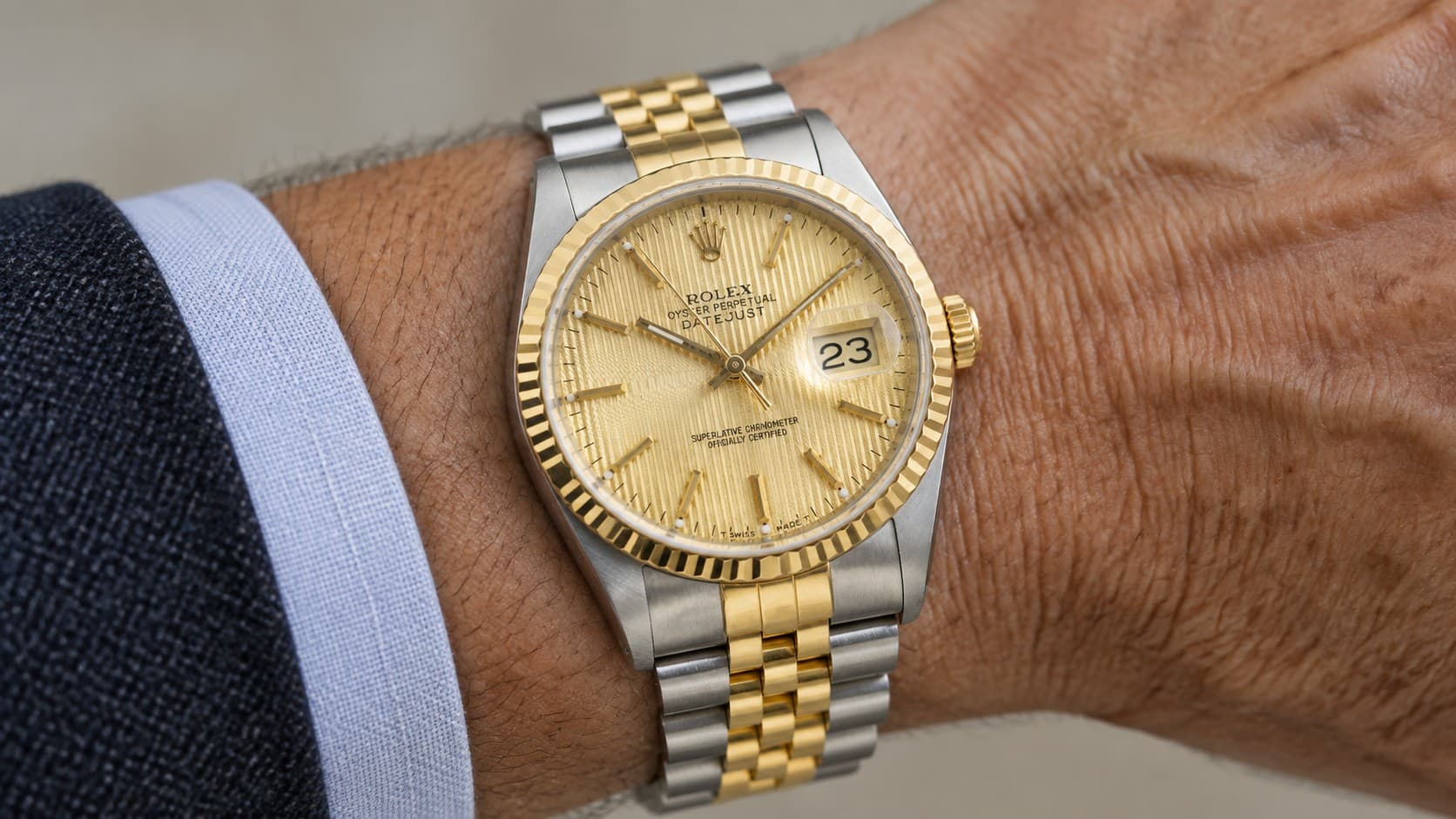
Not every watch is equally suited to being passed down, and a few features make a real difference over the long run.
Why Choose Mechanical Over Quartz
A mechanical or automatic movement is generally easier to keep running indefinitely than a quartz one, because every part inside it is designed to be serviced rather than replaced as a sealed unit. This doesn’t mean a quartz watch can’t be treasured too, but a mechanical piece has a clearer, longer-proven path to staying functional for generations, since watchmakers have been repairing the same basic mechanism for well over a hundred years.
How to Take Care of an Heirloom Watch
A watch that’s easy to maintain is more likely to survive being passed along. A few basic habits make a real difference over decades:
- Servicing every five to seven years, even when the watch seems to be running fine.
- Dry storage, away from direct sunlight and extreme temperature swings.
- Occasional winding for a mechanical watch that isn’t currently being worn.
- Staying clear of magnets, which can throw off timekeeping in mechanical movements.
- Keeping the original box, papers, and any receipts together with the watch itself.
Why Brand History Matters for Heirloom Watches
A watch from a maker with a long, documented history is often easier to service decades later, since parts, records, and skilled watchmakers familiar with the brand are more likely to still exist. Some brands run their own heritage or restoration departments specifically to service vintage pieces, which can make a real difference if a watch needs parts that are no longer mass-produced. This matters more the further into the future a family expects to keep passing the watch along.
How to Pass an Heirloom Watch to the Next Owner
Handing a watch to the next generation works best when it comes with its story attached, not just the object itself. A few practices help preserve both:
- Writing down what is known about the watch: when it was bought, who wore it, and any repairs or events tied to it.
- Keeping original papers, boxes, or receipts together with the watch, since these can matter for future servicing or valuation.
- Having the watch professionally serviced before passing it on, so the next owner starts with something reliable.
- Getting it appraised if there’s meaningful monetary value, so it can be properly covered on an insurance policy.
- Talking about the watch’s history with the person receiving it, rather than handing it over silently.
| Step | Why It Matters |
|---|---|
| Record the history | Keeps the personal story from being lost |
| Keep original documents | Helps with future service and value |
| Service before handing it down | Starts the next owner off on the right foot |
| Get it appraised | Confirms value for insurance and family records |
| Share the story out loud | Turns an object into a memory |
Frequently Asked Questions
Do quartz watches make good heirlooms too?
Yes, a quartz watch can absolutely become a family heirloom, especially if it’s tied to a meaningful memory. The main difference is that its electronic parts are sometimes harder to repair decades later than a mechanical movement’s mechanical ones, so long-term durability can vary more from model to model, and the battery will typically need replacing every couple of years.
How often does an heirloom watch need servicing?
Most mechanical watches should be serviced every five to seven years, even when they seem to be keeping good time, and a basic service usually costs between $200 and $500. Regular servicing prevents small issues, like dried-out lubricant, from turning into expensive repairs later on, and it’s cheaper in the long run than waiting until something breaks.
What if the watch was worn by someone who has passed away?
The watch can still be worn, serviced, and enjoyed exactly as it was before. Many people find it comforting to keep wearing a watch that belonged to someone they loved, since it becomes a physical connection to that person, and a service beforehand ensures it runs reliably going forward.
Should I get an heirloom watch appraised before passing it on?
A professional appraisal is a good idea if the watch has real monetary value or if the family wants documentation for insurance purposes. It’s not required for the watch to remain meaningful, but it does protect its value, confirms what condition it’s currently in, and makes sure it’s properly covered if it’s ever lost, stolen, or damaged.
Can a watch be an heirloom if it’s not expensive?
Yes, cost has very little to do with whether a watch becomes a treasured heirloom. What matters most is who wore it, what it was part of, and whether it still works well enough to be worn by someone new.
Conclusion
A watch doesn’t have to be the toughest or most valuable thing a family owns to earn its place as an heirloom, jewelry and even a well-kept photograph can outdo it on those fronts alone. What a watch offers instead is a rare combination: it survives daily use, it can be repaired instead of replaced for a century or more, and it actively participates in someone’s life instead of sitting untouched in a drawer. Choosing a watch that can be serviced for a century, keeping its documents and story together, and actually talking about that history with the next person who wears it are the three things that turn a good watch into a lasting one.