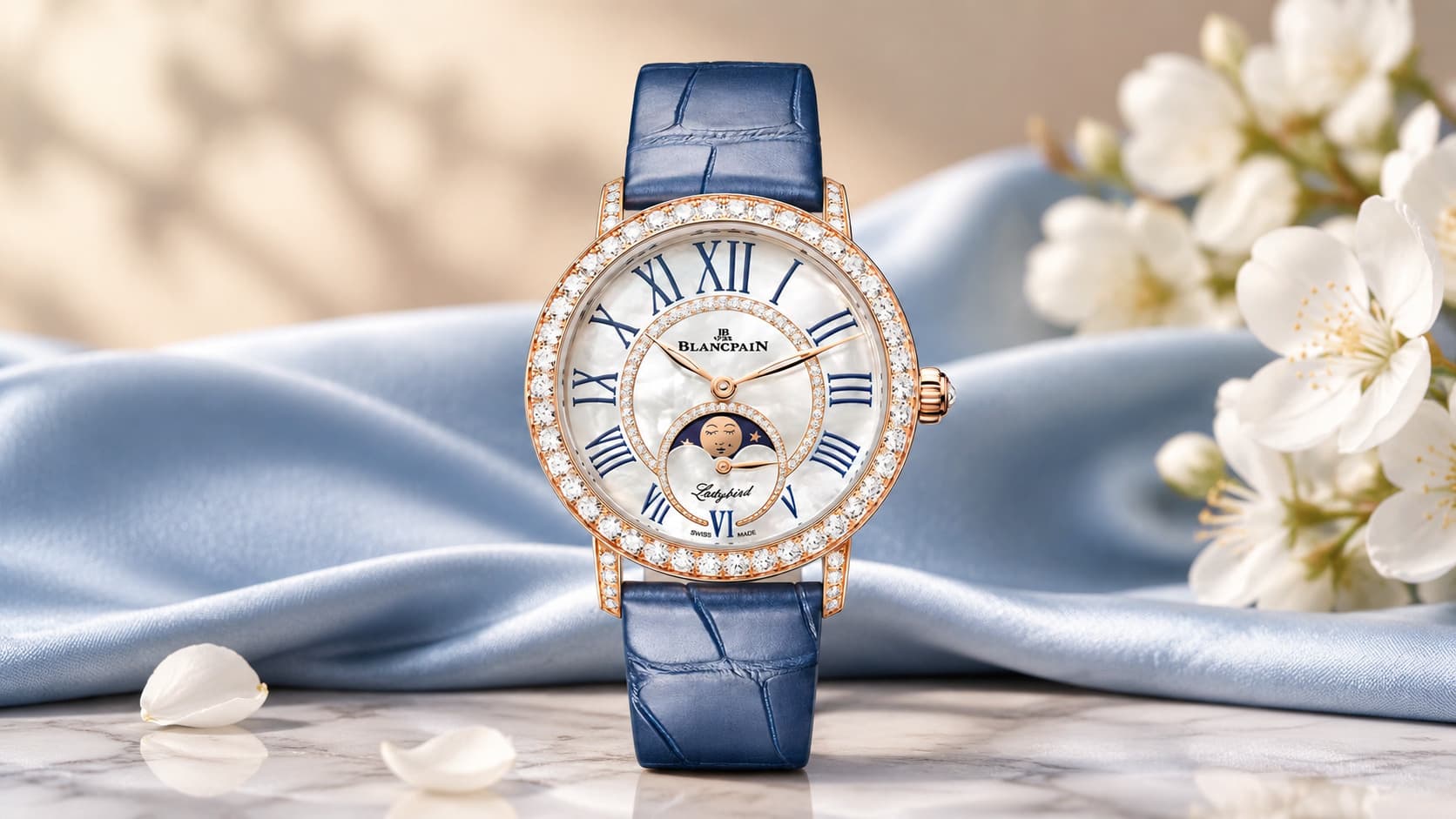
Blancpain is not the watch brand most people think of first. It has no celebrity ambassadors, no flashy advertising campaigns, and produces fewer than 30 watches per day. Yet among people who take watchmaking seriously, it carries a reputation that brands spending ten times as much on marketing would struggle to match. Founded in 1735 in a small Swiss village, it is the oldest watch brand in the world still actively making watches, it has never once produced a quartz movement, and it builds everything in-house from its manufacture in the Swiss Jura mountains. If you have been researching luxury watches long enough to find your way to Blancpain, everything you need to know before buying one is right here.
How Blancpain Became the World’s Oldest Watch Brand
Few watch brands can claim a history that genuinely matters. Most founding stories are polished marketing, dates picked for prestige rather than documentation. Blancpain is different. Its history is messy, nearly fatal at multiple points, and far more interesting than the clean origin story the brand sometimes presents. Understanding where it came from explains a lot about why the watches are the way they are today.
From a Farmhouse in 1735 to a Global Watch Brand
Jehan-Jacques Blancpain was born in 1693 into a family of farmers. In 1735, he officially started his watch business by transforming the upper floor of his farmhouse in Villeret, Switzerland into a workshop, while horses and cattle occupied the ground floor. That makes Blancpain the oldest registered watch brand in the world still making watches today, though it is worth noting that some historians have questioned whether the 1735 date is fully supported by original records.
Beyond watchmaking, Jehan-Jacques was also the mayor of Villeret, which gives you a sense of the kind of man he was. He was not just a craftsman sitting in a workshop. He was a central figure in his community who happened to build something that would outlast everything around it.
The brand remained family-owned, handed down to descendants, for almost 200 years. Frédéric-Louis Blancpain, grandson of Jehan-Jacques, later upgraded the Villeret workshops, modified the watch escapement design, and developed an ultra-thin construction. His son Frédéric-Emile then changed the company name to his own and began construction of the largest watch manufacture in Villeret.
The company remained in the hands of its founding family until 1932, when no remaining family member wished to continue in watchmaking after the death of Jehan-Jacques’ great-grandson. The company was then sold to two members of staff, Betty Fiechter and Andre Leal. Betty Fiechter directed the company until 1950, when her nephew Jean-Jacques Fiechter joined her.
By the end of the 1950s, the manufacture was producing more than 100,000 watches a year. In 1961, Blancpain was acquired by SSIH, the Société Suisse pour l’Industrie Horlogère, whose other subsidiaries included Omega and Tissot.
The Quartz Crisis That Almost Killed Blancpain
In the 1970s, the Swiss watch industry faced a collapse that nobody saw coming. Japanese manufacturers, led by Seiko, began flooding the global market with battery-powered quartz watches that were far cheaper and more accurate than traditional mechanical ones. Swiss brands that had been the gold standard of timekeeping for centuries suddenly had no competitive answer.
Thousands of jobs were lost. Dozens of brands disappeared permanently. Among those leaving Omega was Jean-Claude Biver, who had been in charge of the brand’s high-end gold watch lines and believed the future of the industry lay in high-end mechanical watches, not ultra-thin quartz.
In 1981, Biver and Jacques Piguet, a movement manufacturer, purchased the Blancpain brand. Founded in Villeret in 1735, the company had fallen on hard times in recent decades. They reportedly paid about $16,000 for the brand, making good on a vision summed up by their now famous slogan: “Since 1735 there has never been a quartz Blancpain watch. And there never will be.”
Biver had befriended Jacques Piguet and learned that his family firm, Frédéric Piguet, would soon be forced to lay off watchmakers as they too switched to quartz. Biver proposed an alternative: launch a high-end mechanical watch company to absorb the excess production. The plan was to prove that mechanical watchmaking still had a future at a time when almost everyone in the industry had given up on it.
Blancpain’s first appearance at the annual Basel watch fair in 1984 had no watches on display at all, a deliberately provocative move that sent a message to the industry. The year after, they brought just one single watch. These stunts generated enormous attention and cemented the brand’s position as the defiant champion of mechanical horology.
How Jean-Claude Biver Saved Blancpain for $16,000
On July 8, 1992, Biver announced that he had sold Blancpain and Frédéric Piguet back to the SMH Group. The purchase price of CHF 60 million represented five years of revenue and a gain of over 2,500 times the original purchase price.
SMH had been reorganised by Nicolas Hayek in 1986 and later became the Swatch Group in 1998. Hayek is the man widely credited with engineering the recovery of the Swiss watch industry during the quartz crisis years, partly by creating the affordable Swatch watch and using those profits to invest in higher-end brands.
When Hayek bought both Blancpain and Frédéric Piguet, Biver initially left the company. He returned just three weeks later, called Hayek on the phone, and ended up managing not just Blancpain but also Omega. He remained at the Swatch Group until the end of 2003, before going on to lead Hublot and later TAG Heuer.
In 2002, Marc A. Hayek, the grandson of Nicolas Hayek, became chairman and CEO of Blancpain, a position he still holds today. In 2010, Blancpain absorbed Frédéric Piguet, also owned by the Swatch Group, which had already been making movements for Blancpain. This gave the company another manufacturing unit in the Joux valley.
Blancpain sat at the very top of the Swatch Group’s brand pyramid until Breguet joined the group in 1999, at which point Breguet took the top position. Today Blancpain sits just below Breguet in the group’s hierarchy and remains one of the most prestigious Swiss watch brands in production.
What makes Blancpain’s history unusual is not just its age. It is the fact that the brand nearly disappeared twice, was rescued both times by people who genuinely believed in mechanical watchmaking, and came out of each crisis more defined than before. That foundation shapes everything about how the brand operates today.
What Makes Blancpain Watches Special?
Plenty of luxury watch brands claim to be different. Blancpain actually is, but the reasons are more specific and more interesting than the marketing language suggests. The things that set Blancpain apart are not vague commitments to quality. They are concrete decisions about how the watches are built, finished, and designed, decisions that cost more time and money than most brands are willing to spend.
No Quartz. Ever. The Rule That Defines the Brand
Most watch brands will tell you they value tradition, but Blancpain is one of the very few that has turned that into a hard rule with no exceptions. One of the brand’s core slogans is “Blancpain has never made a quartz watch and never will.” That is not just marketing. Every single watch the brand produces runs on a mechanical movement, hand-assembled by skilled watchmakers. In an era where most brands have at least some quartz models in their lineup, that level of commitment genuinely stands out.
This matters because mechanical and quartz watches are fundamentally different objects. A quartz watch tells the time accurately and reliably because a battery sends an electric current through a small crystal. A mechanical watch does the same thing through hundreds of precisely engineered parts working together, powered either by winding or by the motion of your wrist. One is a product. The other is closer to a craft.
Why Every Blancpain Is Finished and Checked by Hand
Each Blancpain watch is hand-made, hand-decorated, and hand-checked by skilled craftsmen, which means no two watches are truly identical. The brand even has custom-designed tools made specifically for individual watchmakers to suit their particular tasks, including a machine created specifically to apply Geneva stripes to movement components.
Even on components that are never seen by the wearer, finishing is done by hand. That level of detail costs time and money, and it is part of why Blancpain watches sit at a significantly higher price point than most other brands, even within the luxury tier.
Finishing methods like anglage, perlage, and polished beveling are not purely decorative. They also reduce friction between moving parts, improve durability, and help ensure efficient energy transfer within the movement. So the hand-finishing serves a real mechanical purpose, not just an aesthetic one.
The 1735 Grande Complication: 740 Parts, One Year to Build
To get a clear picture of what Blancpain is actually capable of technically, you need to look at the 1735 Grande Complication. In 1988, Blancpain first presented what it called the Six Masterpieces of Watchmaking Art, six separate watches each featuring a different complex complication. Then in 1991, after six years of research, development, and testing, the brand unveiled the 1735, which combined all six complications into a single watch. The movement contains 740 individually finished parts.
Each watch is assembled twice. The first time brings it to full working condition. The watch is then completely taken apart so that every individual component can be finely polished, finished, and decorated before being put together again. Some of the parts are as small in diameter as a human hair.
Only a handful of watchmakers at Blancpain are qualified to build the 1735, and crafting each watch takes a full year’s work from a single person. Only 30 pieces were ever made. The complications packed into it include a tourbillon, a split-seconds chronograph, a perpetual calendar, and a minute repeater. It remains one of the most technically demanding watches ever produced in any series.
The Fifty Fathoms and the Villeret: Two Watches, One Brand
Blancpain’s collections cover a wide range of styles, but two in particular define the brand’s character and show how broad its range genuinely is.
The Fifty Fathoms is the sports side of Blancpain. Introduced in 1953, it was the first modern diving watch, designed to meet the needs of French Navy combat divers. It featured a unidirectional rotating bezel, a dual-gasket crown system, and water resistance to 50 fathoms, which is roughly 91 metres. It set the template that most modern dive watches still follow today. More recently, Blancpain developed bezels in dark sapphire for the Fifty Fathoms line, chosen for their exceptional scratch resistance. The collection also includes high-complication versions, such as models featuring flyback chronographs and tourbillons, which bring serious technical depth to a watch that was originally built as a functional tool.
The Villeret is the opposite end of the spectrum. Named after the village where the brand was born, it is Blancpain’s most classical line. Popular features include dials in grand feu enamel and serpentine hands in blued steel for the calendar indication. These are techniques drawn from traditional watchmaking that most brands no longer bother with because they are time-consuming and expensive to produce properly. Villeret watches are the ones you buy when you want something quiet, elegant, and built to last for generations.
Why Blancpain Decorates Parts You Will Never See
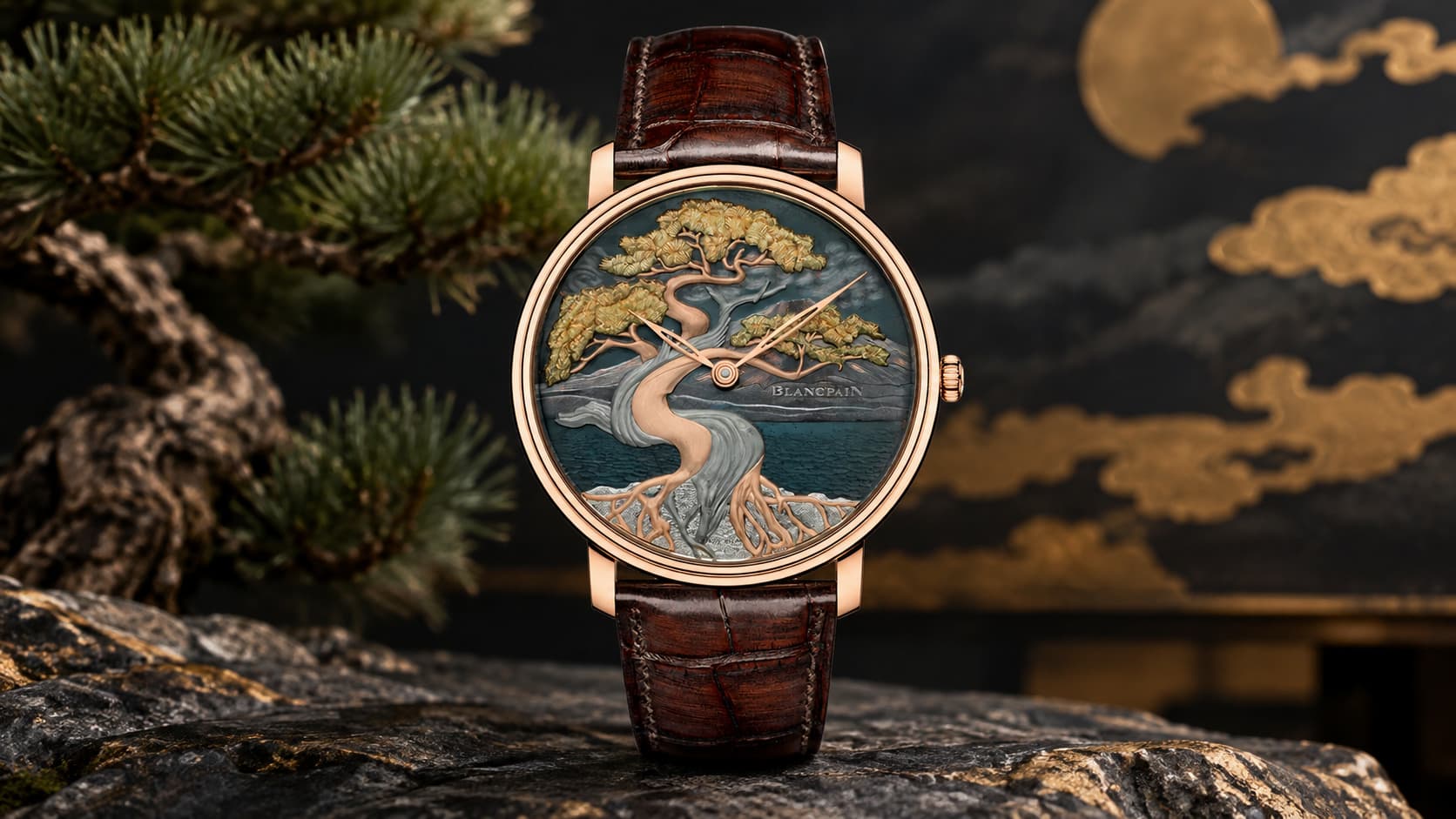
Ornamentation is treated with the same seriousness as movement engineering at Blancpain. This includes intricate dial engravings and miniature enamel portraits, and the brand’s craftsmen continue to learn rare techniques, including the Japanese art of shakudo, which involves working with a unique copper-gold alloy.
The Métiers d’Art collection is where this side of the brand gets the most attention. These watches showcase hand-engraving, enamelling, and other traditional decorative techniques, with each piece often featuring dials that depict intricate scenes. These are not mass-produced prints applied to a dial. They are individual works created by craftspeople who spend days or weeks on a single piece.
How Blancpain Controls Every Step of Its Own Movement Production
In 2010, Blancpain joined forces with the Frédéric Piguet manufacture, which meant the brand could control every stage of its timepiece production from that point forward. In the watch industry, this is called being a true manufacture, meaning the brand designs and builds its own movements rather than sourcing them from outside suppliers. Most brands in the middle and even upper price ranges buy their movements from third-party suppliers. Blancpain does not.
The brand’s current workshops are located in Le Brassus and Le Sentier in the Vallée de Joux, one of Switzerland’s most historic watchmaking regions, just a couple of hours from Villeret where the company first began.
Taken together, these are not isolated features. They form a consistent philosophy about what a watch should be. Blancpain’s position is that a watch is a mechanical object worthy of the same care and craft as any serious work of art. Whether that resonates with you as a buyer is personal, but the commitment behind it is real and verifiable in every piece the brand produces.
Top 10 Best Blancpain Watches
Blancpain makes watches across a wide range of styles, complications, and price points, which makes choosing one harder than it should be. The ten models below cover the full range of what the brand does well, from entry-level references that get you into genuine Blancpain territory without a painful price, all the way to pieces that represent the absolute ceiling of what mechanical watchmaking can achieve. Each one has a clear reason for being on this list.
1. Fifty Fathoms Automatique
The Fifty Fathoms Automatique was presented in 1953 on behalf of the French Navy and is considered alongside the Rolex Submariner as one of the first dive watches to feature a rotating diving ring. Its original water resistance of 50 fathoms, which equals 91.44 metres, was genuinely impressive for the time.
The modern version of the Automatique is now available in three sizes. In 2024, Blancpain expanded the collection beyond its original 45mm reference by adding a 42mm version, and more recently added a 38mm model to round out the range. The movement powering the Automatique is Blancpain’s Calibre 1315, which runs at 28,800 vibrations per hour and, thanks to three barrels coupled in series, delivers a power reserve of 120 hours, or five full days. The hairspring is made from silicon, making it non-magnetic and shock resistant.
Prices for the 38mm Automatique start from CHF 14,000 in steel and CHF 15,000 in grade 23 titanium. The 45mm titanium version sits at around CHF 14,700. It is the most accessible entry point into the Fifty Fathoms family and the one most collectors recommend as a starting point.
2. Villeret Ultraplate
The Villeret Ultraplate is Blancpain at its most restrained. It shows just the time, has an extremely slim profile, and makes no attempt to grab attention. That is precisely the point. In fine watchmaking, achieving a genuinely flat case while still housing a quality movement is harder than adding complications, and the Ultraplate is built around that idea.
The rose gold Villeret Ultraplate in 40mm is available on the secondary market for around $21,000. New retail pricing sits at CHF 9,900 in steel and CHF 20,500 in red gold.
The double-stepped bezel, Roman numerals, and clean dial are design codes Blancpain has kept consistent across the Villeret line for decades. It is a watch you wear to a formal event, but also one that looks equally right in a boardroom or at a dinner. If someone asked what the opposite of a flashy watch looks like, this would be a reasonable answer.
3. Fifty Fathoms Bathyscaphe
Blancpain introduced the Bathyscaphe collection in 2013 to mark the 60th anniversary of the Fifty Fathoms. The name references the deep-sea submarine developed by Swiss underwater explorer Auguste Piccard.
Where the standard Fifty Fathoms Automatique has a more traditional, tool-watch look, the Bathyscaphe takes a slightly more streamlined and modern approach. The bezel is thinner, the overall profile is slimmer, and it sits a little more comfortably under a shirt cuff. The core 43mm steel model with a grey sunburst dial can be found on the secondary market for around $11,000, while a black ceramic version adds a more contemporary edge at around $13,000.
The black ceramic Bathyscaphe is powered by the automatic Calibre 1315 and its five-day power reserve. Like all Fifty Fathoms models, it is water resistant to 300 metres.
4. Villeret Complete Calendar Moonphase
The defining aesthetic of the Villeret moonphase is Blancpain’s human-face moon, a design the brand has retained for generations, featuring two distinct facial expressions on the moon disc. It is one of those details you either love immediately or come to appreciate once you know what you are looking at.
The 40mm complete calendar moonphase features a weekday and month display at 12 o’clock, a pointer date, and a moonphase at 6 o’clock. The movement powering the automatic version is the Calibre 6654.P, which runs at 28,800 vibrations per hour, has a silicon balance spring, and delivers a 72-hour power reserve.
Retail pricing for the 40mm version sits at CHF 15,400 in steel and CHF 27,200 in red gold. The moonphase display on the Villeret is accurate enough that it only requires correction once every 122 years, which is a level of precision that very few moonphase watches at any price point can match.
5. Villeret Tourbillon Carrousel
This is one of the most technically demanding watches Blancpain currently produces. It combines a tourbillon and a carrousel in a single movement, two devices that both work to improve timekeeping accuracy by compensating for the effects of gravity. Having both in the same watch is something extremely few manufacturers have ever attempted.
The movement inside is Calibre 2322, a manual-wind in-house calibre with 379 components, 70 jewels, and a power reserve of 168 hours, which is seven full days. It runs at 21,600 vibrations per hour and features silicon hairsprings on both balances to further improve chronometric performance. The crown is positioned at 4 o’clock, a signature detail of the Le Brassus collection.
On the secondary market, this watch trades at around $276,000, which reflects both the complexity of what is inside and the limited production numbers. It is a watch for serious collectors rather than first-time buyers, but it represents what Blancpain is genuinely capable of at the top of its range.
6. Tribute to Fifty Fathoms No Rad
The original Fifty Fathoms No Rad is one of the most sought-after vintage Blancpain references in existence. The original model from the mid-1960s was used by the combat swimmers of the German Navy. It carried a crossed-out radioactivity symbol on its dial to indicate that Blancpain was not using radium-based luminescent materials, which were known to be harmful even then. That symbol became the watch’s most recognisable feature.
The 2021 Tribute to Fifty Fathoms No Rad is a modern reinterpretation of the original, limited to just 500 pieces. It is priced at $14,100 and houses Blancpain’s Calibre 1151 self-winding movement with a silicon balance spring and a four-day power reserve.
The matt black dial features geometric hour markers, old radium-coloured Super-LumiNova on the hands and bezel scale to replicate the warm patina of vintage examples, and the original yellow and red no-radiations logo at 6 o’clock. It sold out quickly and now trades above its original retail price on the secondary market.
7. Villeret Quantième Perpétuel
A perpetual calendar is one of the great complications in watchmaking. It tracks the different lengths of months, including February in leap years, and advances automatically without you ever needing to correct it manually. Blancpain’s perpetual calendar references in the Villeret collection use an in-house automatic movement and carry the brand’s characteristic calendar layout with day, date, and month displayed across the dial.
The perpetual calendar complication in Blancpain’s Villeret line only needs a single manual correction after February 28, 2100, when the Gregorian calendar skips what would otherwise be a leap year. For all practical purposes, you will never need to correct it in your lifetime.
Pricing for Villeret perpetual calendar references varies depending on configuration, but generally starts above CHF 25,000 at retail. Pre-owned examples can be found lower depending on the specific reference and condition.
8. Fifty Fathoms Bathyscaphe Chronographe Flyback
The Flyback Chronograph version of the Bathyscaphe takes the familiar dive watch platform and adds one of the most useful timing complications a chronograph can have. A flyback chronograph allows you to reset and restart the timer with a single button press rather than the standard three-press sequence of stopping, resetting, and restarting. For pilots or divers tracking intervals, this is a meaningful functional difference.
The Bathyscaphe Flyback Chronograph is housed in a 43mm steel case with 300 metres of water resistance. Prices range between approximately $17,500 and $21,700 depending on configuration. The combination of a serious dive watch case and a high-quality in-house flyback movement in one package is something very few brands offer at this level of finish.
9. Métiers d’Art
The Métiers d’Art collection sits apart from everything else in the Blancpain lineup. These are not defined by their movement complications. They are defined by what is on the dial. Each watch in the Métiers d’Art range features hand engraving, enamelling, and other traditional decorative techniques, with dials often depicting intricate scenes and motifs.
Recent examples have included work in Japanese shakudo, a historic copper-gold alloy, as well as binchōtan, a traditional Japanese charcoal technique adapted for dial decoration. These are not techniques that can be learned quickly or replicated easily. They are studied over years by specialist craftspeople.
Production numbers are extremely small and pricing varies significantly by reference, but Métiers d’Art pieces regularly trade above $50,000 given their limited nature. They represent one of the few areas in watchmaking where you are genuinely paying for art rather than engineering.
10. Air Command Flyback Chronograph
Blancpain originally developed the Air Command flyback chronograph in the 1950s for the United States Air Force. Only around a dozen of these were produced at the time, giving them cult status among collectors. A vintage original sold at auction in 2019 for approximately $150,000.
In 2019, Blancpain presented a modern reinterpretation of the Air Command as a limited edition, closely based on the historical watch in design while meeting contemporary technical standards. It later entered the permanent collection in titanium and gold variants.
The 42.5mm case is available in grade 23 titanium or 18k red gold with a sunburst blue dial. Inside is Blancpain’s Calibre F388B, an automatic movement running at 36,000 vibrations per hour. The gold oscillating weight visible through the open caseback is shaped like a vintage aircraft propeller, a nod to the model’s aviation roots. Retail pricing starts at around $21,800 for the 42.5mm version.
No list of ten watches can capture everything Blancpain makes, and the right model for you will depend on how you wear watches, what complications genuinely interest you, and what your budget realistically allows. These ten give you a strong starting point across every major category the brand covers.
What to Consider When Buying a Blancpain Watch
Buying a Blancpain is a bigger decision than most watch purchases, and the number of options can make it feel harder than it needs to be. The good news is that most of the decision comes down to a few straightforward questions: which collection suits your lifestyle, how much you want to spend, and whether you are buying new or pre-owned. Getting clear on those three things narrows the field considerably.
Start With What You Actually Need the Watch to Do
Before looking at specific references or prices, it helps to be honest about what you want the watch to do. Blancpain makes two very different kinds of watch, and the buying experience is completely different depending on which direction you go.
If you want something you can wear every day, take on holiday, wear while swimming, and not think twice about, the Fifty Fathoms family is the right starting point. If you want something for weddings, formal dinners, or occasions where it would be noticed by someone who knows watches, the Villeret family is where to look. The collections are not really interchangeable in that regard, and choosing the wrong one for your actual lifestyle is a common mistake first-time buyers make.
New vs Pre-Owned: Where the Real Value Is
This is probably the most practically important decision you will make. Buying a new Blancpain from an authorised dealer means you get the full official warranty, guaranteed authenticity, and the clean buying experience of a boutique. As of January 2025, all new Blancpain timepieces carry a five-year warranty from the date of purchase, which must be activated by an official Blancpain boutique or authorised dealer to come into force.
The trade-off is price. Pre-owned Blancpain watches typically sell for between 25% and 50% below the retail price of unworn examples. That is a meaningful saving on a watch that already starts above $10,000 for most references. Core production pieces like the Automatique, the Bathyscaphe, and the standard Villeret depreciate modestly from retail and stabilise on the secondary market, which means buying pre-owned lets you avoid absorbing that initial depreciation yourself.
The main risk with pre-owned is authenticity. Blancpain is not as heavily counterfeited as some other luxury brands, but fakes do exist. Buying from a specialist dealer with verifiable credentials, a clear return policy, and documented authentication processes significantly reduces that risk. Always ask for the original box and papers. A Blancpain without its original documentation is harder to authenticate and harder to resell further down the line.
The Grey Market: Lower Price, Real Trade-Offs
The grey market sits between buying new from an authorised dealer and buying outright pre-owned. Grey market dealers sell genuine watches, often brand new, that they sourced through channels outside the official distribution network. The appeal is a lower price than retail.
The main downside is the warranty. Manufacturer warranties may be void if the watch was purchased from a grey market seller, meaning repairs or replacements could become expensive burdens. Some grey market dealers offer their own in-house warranty of 12 or 24 months, which provides some protection but is not the same as the manufacturer’s official coverage.
If you go this route, use only dealers with established reputations and clear return policies. Ask directly about the warranty status of the specific watch you are buying, and check whether the warranty card is signed or dated before any money changes hands.
Fifty Fathoms, Villeret, or Le Brassus: Which Collection Fits Your Life
These three collections represent three very different purposes, and matching the right one to your lifestyle saves a lot of regret later.
Fifty Fathoms is the sports and tool watch family. It is large, bold, water resistant to 300 metres, and genuinely built to be used. The 45mm case of the standard Automatique is a big watch on smaller wrists. The recent addition of 42mm and 38mm versions gives buyers more options than before, making the collection accessible to a wider range of wrist sizes. If you actually dive, swim, or spend significant time outdoors, this is the practical choice.
Villeret is the dress watch family. Slim profiles and classic dials are the specialty here. The Villeret Ultra Slim in particular is one of the better options in fine watchmaking for someone who wants a high-quality dress watch without an extreme price tag. Water resistance on Villeret watches is typically 30 metres, meaning it handles everyday splashes but is not designed for sport use.
Le Brassus is the high complication tier. These are watches built around a specific technical achievement, whether that is a tourbillon, a carrousel, a minute repeater, or combinations of all of them. They are produced in very small numbers and priced accordingly. This collection is aimed at experienced collectors rather than first-time buyers.
Why Case Diameter Is Not the Only Number That Matters
Many people focus on the case diameter when choosing a watch, but the measurement that matters most for comfort and fit is the lug-to-lug distance. This is the distance from the tip of the top lugs to the tip of the bottom lugs. Diameter is the headline specification, but lug-to-lug is where the story actually lives. This dimension tells you how much vertical space the watch occupies on your wrist, and your wrist does not care how wide the dial is.
Most modern Fifty Fathoms models use a 23mm lug width. The 45mm Automatique has a lug-to-lug of around 56mm, which is substantial on most wrists. The 42mm version sits noticeably more compactly, and the 38mm version is genuinely trim. If you have a smaller wrist and have historically been put off by the size of the Fifty Fathoms, the newer references are worth trying in person before making a decision.
Case thickness matters too, especially if you wear dress shirts or suit jackets regularly. A thick watch will not slide under a cuff easily. The Villeret Ultra-Slim is around 10mm thick, which disappears under clothing effortlessly. The Fifty Fathoms Automatique sits closer to 15mm, which is a different experience entirely.
What Each Budget Level Gets You With Blancpain
The most affordable new Blancpain currently in production is the Villeret Ultra-Slim in stainless steel, which requires around $10,000 for an unworn example. Pre-owned Villeret references can occasionally be found lower than this, particularly older models without complications.
The Fifty Fathoms collection starts at around $10,000 on average on the secondary market. New retail for the steel Automatique in the smaller 38mm starts from around CHF 14,000.
At the top end, Blancpain prices range from approximately $4,750 up to $459,300 for current production models, with limited editions and highly complicated references on the secondary market exceeding $1,000,000.
A practical way to think about it across three tiers:
- Under $15,000 on the secondary market gets you into genuine Blancpain territory with entry Villeret or Fifty Fathoms references.
- $15,000 to $30,000 opens up most of the core collection, including calendar complications and chronograph versions.
- Above $30,000 is where precious metals, high complications, and limited editions live.
Box, Papers, and Service History: Always Ask Before You Buy
This applies whether you are buying new or pre-owned. A Blancpain with its original box, papers, and warranty card is easier to authenticate, easier to service at an authorised centre, and significantly easier to resell in the future.
Pre-owned buyers should look for models with complete original box and papers, which tend to secure higher resale values, and should opt for pieces with minimal modifications that retain the brand’s original specifications. If a seller cannot produce the original documentation, factor that meaningfully into what you are willing to pay. Missing papers do not automatically mean a watch is fake, but they remove one important layer of provenance that matters both for your peace of mind and for anyone you might eventually sell the watch to.
The most common buying mistake with Blancpain is choosing with your eyes before your head. A watch that looks perfect on a screen can wear completely differently on your wrist, and a reference that seems like a bargain without documentation can become a problem later. Take your time, try watches in person where possible, and buy the one that fits your actual life rather than the one that looks best in photos.
Where to Buy a Blancpain Watch

Where you buy a Blancpain matters almost as much as which one you buy. The same reference can come with completely different levels of protection, documentation, and recourse depending on the source. The options range from the safest and most straightforward to significantly more complex, and understanding what each one involves saves you from making an expensive mistake.
Blancpain Boutiques and Authorised Dealers: The Safest Starting Point
The cleanest and most straightforward way to buy a Blancpain is directly through the brand’s official network. Only official Blancpain retailers are authorised to sell and service a Blancpain watch. With the necessary skills, technical knowledge, and specialist equipment, they guarantee the authenticity of each piece and can guide you through the selection process.
Blancpain operates its own standalone boutiques in major cities around the world. In the United States, the brand has a flagship boutique on East 57th Street in New York. In the United Kingdom, the brand has a boutique on New Bond Street in London. These are not general watch shops. They are dedicated Blancpain spaces where the staff are trained specifically on the brand, the collections, and the movements inside each watch. You can also book an appointment in advance through the brand’s website, which is worth doing for higher-end models where you want unhurried time with a knowledgeable person rather than a shop floor experience.
Beyond its own boutiques, Blancpain also sells through a network of authorised dealers worldwide. These are established jewellers and watch retailers that carry the brand officially and can activate the full manufacturer warranty at the point of sale. The Blancpain website has a dealer locator that shows every authorised point of sale by country and city, which is the best place to start if there is no standalone boutique near you.
Buying In-Store vs Online: What Changes and What Doesn’t
Walking into a boutique or authorised dealer has one advantage that no online experience can replicate: you can try the watch on your wrist. Given how differently a 38mm and a 45mm Fifty Fathoms can feel on different wrist sizes, that matters considerably. A model that looks perfect in photos can wear very differently in person, and spending ten minutes with it on your wrist before committing is always worthwhile.
Blancpain does not sell directly through its own e-commerce website at time of writing. If you want to buy new and online, you need to go through an authorised dealer that operates an online shop. These exist, and they carry the full manufacturer warranty, but always verify that the retailer appears on Blancpain’s official dealer locator before purchasing. An unofficial seller claiming to be authorised is a red flag.
The Pre-Owned Market: Where Most Smart Buyers End Up
A significant portion of Blancpain purchases happen on the secondary market, and for good reason. Pre-owned Blancpain watches typically sell for between 25% and 50% below the prices of unworn examples, which represents a meaningful saving on watches that already start at five figures.
Blancpain produces fewer than 30 watches per day. That relative scarcity, combined with the brand’s growing profile among serious collectors, makes pre-owned examples a target for misrepresentation, ranging from honest misdescription of condition all the way to outright counterfeiting. Unlike Rolex, Blancpain does not face a large-scale counterfeit market since the watches are too complicated and too low-volume to make faking them worthwhile at any meaningful scale. However, mixed references, replaced components, and undisclosed service histories are common enough that any serious buyer should approach authentication methodically.
The most important things to check when buying pre-owned:
- Reference number: Every Blancpain carries a reference number engraved on the caseback and sometimes on the inner case wall between the lugs. This number encodes the specific model configuration and should match the dial, case, and papers.
- Box and papers: Original documentation does not guarantee authenticity on its own, but its absence removes an important layer of provenance. Verified documents serve as solid proof that the watch was purchased from an authorised dealer rather than an unverified source.
- Service history: Ask for any records of previous servicing. A well-documented service history tells you the watch has been maintained properly and gives you a clearer picture of what condition the movement is actually in.
- Movement inspection: For higher-value references, having the movement inspected by an independent watchmaker before purchase is worth the cost. A trained eye can spot replaced parts, incorrect components, or signs of undisclosed damage.
Auction Houses: When They Make Sense and When They Don’t
Major auction houses regularly include Blancpain watches in their watch sales, particularly vintage Fifty Fathoms references and high-complication pieces from the Le Brassus collection. Auction is one of the few places where genuinely rare pieces surface, and the major houses provide detailed condition reports, provenance information, and authenticity verification as part of their cataloguing process.
The trade-off with auctions is that the final price is unpredictable, buyer’s premiums can add 20% or more on top of the hammer price, and you typically cannot inspect the watch on your wrist before bidding. For rare vintage pieces, however, auction can be the only place to find them at all.
What to Avoid When Buying a Blancpain
Private sales through social media or unverified online marketplaces carry the highest risk for buyers. There is no authentication process, no return policy, and no recourse if the watch turns out to be misrepresented. The savings on offer are rarely worth the exposure, especially when buying a watch at this price level.
Key strategies for pre-owned buyers include ensuring complete documentation, verifying professional service records, and confirming authenticity through credible channels before any money changes hands.
If a deal looks noticeably cheaper than comparable examples anywhere else, that is worth pausing on. Blancpain watches do not come up at bargain prices from legitimate sources without a clear reason, such as condition issues, missing papers, or a specific model falling out of favour with collectors. Any other explanation for a dramatically low price deserves scepticism.
There is no single right answer for where to buy. New from an authorised source gives you maximum protection. Pre-owned from a credible seller gives you better value. Auction gives you access to pieces that rarely surface anywhere else. The best approach is to match the buying channel to the specific watch you want and the level of risk you are comfortable taking on.
Investment and Resale Value
The investment question follows almost every luxury watch purchase, and Blancpain is no exception. The honest answer is more nuanced than either enthusiasts or sceptics tend to admit. Some Blancpain references hold value well. Others depreciate steadily. The difference between the two is specific and worth knowing before you spend a significant amount of money.
The Honest Answer About Blancpain as an Investment
Blancpain makes exceptional watches. Whether they make exceptional investments is a different question, and it deserves an honest answer rather than a sales pitch.
Watches are not investment vehicles. They are personal objects that depreciate as assets, require maintenance costs, carry no yield, and depend on future buyer sentiment for any appreciation. The more accurate frame is value retention: some watches hold their value better than others over time, which affects the real cost of ownership. If you pay $15,000 for a watch and sell it five years later for $12,000, your cost of ownership before maintenance was $600 per year. That is not nothing, but it is reasonable for the enjoyment of a serious mechanical object.
How Blancpain Compares to Rolex and Patek on Resale
By the metrics of secondary market premium and liquidity, Blancpain does not compete with Rolex, Patek Philippe, or Audemars Piguet in the current collector hierarchy. Rolex Submariners and Daytonas have historically commanded premiums of 30 to 80 percent above retail at peak periods, driven by Rolex’s extraordinary mainstream cultural profile, high production consistency, and decades of reliable secondary market liquidity.
Market data from 2025 shows that of the 25 most notable watch brands tracked, only five gained value year-to-date: Patek Philippe at plus 2.8%, Rolex at plus 1.6%, Grand Seiko at plus 1.6%, Omega at plus 0.9%, and Cartier at plus 0.3%. Blancpain was among the worst performers, declining 12.6% overall, with the Fifty Fathoms collection down 10.7% and the Villeret down 16.9%.
This is not a reason to avoid Blancpain. It is simply context. If your primary goal is financial return, there are better options in the luxury watch space. If your goal is to own an exceptional mechanical watch at a fair price, the secondary market decline actually works in your favour as a buyer.
Which Blancpain Models Hold Their Value Best
Not all Blancpain references behave the same way on the secondary market. There is a meaningful difference between core production models and limited edition references with direct historical connections.
Beginning in 2017, Blancpain has released one limited edition Fifty Fathoms per year directly referencing a specific vintage model. These are produced in limited quantities, typically 250 to 500 pieces, priced at retail around $14,000 to $16,000, and have consistently sold above retail on the secondary market. The 2017 Tribute to Mil-Spec achieved CHF 53,000 at Only Watch 2017, and the 2019 Barakuda achieved CHF 45,000. Standard production examples of these limited editions resell in the $20,000 to $30,000 range. The combination of limited production, direct historical reference, and a strong Fifty Fathoms collector base has made these among the most reliably appreciating pieces in Blancpain’s modern lineup.
Core production pieces, including the Automatique, the Bathyscaphe, and the standard Villeret, depreciate modestly from retail and stabilise on the secondary market. The Bathyscaphe typically retains 70 to 85 percent of retail value in good condition. These are not watches that will make you money, but they are watches that will not cost you as much as you might expect to own over time either.
Why Vintage Fifty Fathoms Is a Category of Its Own
Vintage Blancpain, and particularly early Fifty Fathoms references from the 1950s and 1960s, sits in a different category entirely from the modern production market. The Air Command from the 1950s and 1960s is considered one of the most mythical collector’s watches due to its extreme rarity, with original examples extremely difficult to find on the market.
In 2019, a vintage Air Command sold at auction for approximately $150,000. Original Fifty Fathoms references from the 1950s with their original dials and complete provenance attract serious collector premiums. These are not watches most people will encounter in normal buying situations, but they demonstrate the ceiling of what Blancpain commands when historical significance meets genuine scarcity.
The key distinction with vintage Blancpain is that value is driven almost entirely by condition and originality. A vintage Fifty Fathoms with a replaced dial, refinished case, or incorrect hands is worth considerably less than the same reference in untouched original condition. For vintage buying, knowledge matters enormously, and getting things wrong is expensive.
What Actually Affects the Resale Value of Any Blancpain
Regardless of the specific model, several factors consistently influence how well any Blancpain holds its value over time:
Completeness of documentation. Models with complete original box and papers tend to secure higher resale values, and pieces with minimal modifications that retain the brand’s original specifications perform better on the secondary market.
Condition. A watch that has been worn carefully and serviced properly by an authorised centre will always sell more easily and at a better price than one showing heavy wear or with an undocumented service history.
Limited edition status. Limited references with strong historical connections, particularly in the Fifty Fathoms line, consistently outperform standard production pieces in resale performance.
Timing. The luxury watch market experienced a broad correction from 2022 onward, with values across many brands falling from their pandemic-era peaks. As of 2024, Blancpain’s secondary market values were trending lower along with the broader market, not due to any particular problem with the brand itself. Buyers who purchased during the peak paid more than those who buy during the correction, which is the nature of any market.
The Right Way to Think About Buying a Blancpain
The most sensible approach to a Blancpain purchase is to buy a watch you genuinely want to wear, at a price that reflects the current secondary market, with full documentation, in good condition. If you buy well and take care of it properly, the cost of ownership over several years is likely to be far lower than most people expect. If you happen to buy a limited edition reference with strong collector demand, the outcome may be better still.
The goal is not to invest in Blancpain. It is to buy well, maintain properly, and have a clear sense of which references are most likely to hold value over your intended ownership period. A Blancpain is first and foremost a remarkable mechanical object. Approaching it as anything else tends to lead to disappointment.
Blancpain is not the right brand if your primary goal is financial return. But if your goal is to own a seriously well-made watch at a price point where secondary market depreciation has already done most of its damage, it is one of the more compelling options available at this level of quality. Buy smart, maintain it properly, and the cost of ownership tends to be far more reasonable than the purchase price initially suggests.
Care and Maintenance
A Blancpain is designed to last for generations, but only if it is looked after properly. Mechanical watches are not passive objects. They have hundreds of moving parts that require lubrication, seals that degrade over time, and finishing that responds to how carefully the watch is handled day to day. The good news is that the care requirements are not complicated. They just need to be consistent.
How Often a Blancpain Needs Servicing and What It Costs
Mechanical watches need periodic servicing in a way that quartz watches simply do not. Every moving part inside the movement relies on lubricants to reduce friction, and those lubricants dry out over time. When they do, the movement runs less accurately and components start wearing against each other in ways that cause real damage if left unaddressed.
Blancpain recommends a complete service every four to five years, though this period can be extended if regular water resistance checks are carried out. That interval applies to standard models. Watches with higher complications, more components, and more lubrication points may need attention more frequently since there are simply more places where the oil can degrade.
A full service includes opening the case, completely disassembling the movement, cleaning every component, replacing worn parts, reassembling and lubricating the movement, testing water resistance where applicable, and running a final quality control check. The entire process is essentially identical to the checks a new watch goes through before leaving the manufacture.
In terms of cost, a straightforward three-hand model with date costs roughly $1,000 for a full service. References with calendar complications, GMT functions, or chronographs typically run closer to $1,400 or above. Tourbillons, minute repeaters, and grand complications cost considerably more due to the time and specialist skill required. Service turnaround times at authorised Blancpain centres can run anywhere from several weeks to several months depending on the complexity of the model and the workload at the time.
Why You Should Only Use Authorised Blancpain Service Centres
Due to the complexity of Blancpain movements, the brand advises dealing exclusively with authorised Blancpain retailers and service centres for all servicing work. This is not just brand protectionism. Blancpain builds its own movements in-house, and the tools, spare parts, and technical documentation needed to service them properly are not available to independent watchmakers in the same way they are to authorised centres.
Using an in-house calibre means that the watch can only be properly serviced at a Blancpain authorised service centre. Taking a Blancpain to a general watch repair shop is a risk. The watchmaker may be skilled at servicing common movements but may not have the specific parts or experience needed for Blancpain’s proprietary calibres. Errors made during a service by an unauthorised repairer can also void any remaining warranty.
Water Resistance Ratings: What the Numbers Mean in Real Life
Water resistance ratings cause more confusion than almost any other aspect of watch ownership. A watch rated to 300 metres does not mean you can casually take it 300 metres underwater without preparation. The ratings are determined under specific laboratory conditions and represent a static pressure test, not a dynamic one.
The original Fifty Fathoms was built to specifications so rigorous that they eventually formed the basis for the ISO 6425 standard, which is still used today to measure dive watches for water resistance. Modern Fifty Fathoms models rated to 300 metres are fully capable of recreational and professional diving when the watch is properly maintained and the water resistance seals are in good condition.
The critical point is that water resistance degrades over time. Water resistance can be affected by accidental shocks, and Blancpain recommends having water resistance checked regularly by an accredited watchmaker. For water-resistant watches, an annual water resistance check is the best protection against moisture entering the case.
The Villeret collection is rated to 30 metres, which means it handles rain, hand washing, and incidental splashing without issue. It is not designed for swimming or any deliberate water immersion. Wearing a Villeret in a swimming pool is not a good idea, regardless of how briefly.
Daily Habits That Protect Your Watch Without Overthinking It
The biggest threats to a mechanical watch in daily life are not dramatic. They are gradual accumulation of sweat and grime, exposure to strong magnetic fields, shocks from everyday activities, and neglect.
Blancpain recommends protecting the watch from impacts and shocks, avoiding extremes of temperature, and steering clear of activities likely to subject it to intense or repeated vibrations. In the event of any significant shock, having the watch checked by an accredited watchmaker is advisable.
For winding, manually wound watches should be wound once a day, preferably in the morning. If an automatic watch is not worn regularly, Blancpain recommends winding it by hand once a month. When winding, removing the watch from the wrist makes it easier to manipulate the crown correctly.
Cleaning the exterior of the watch regularly with a soft, dry microfibre cloth removes sweat, skin oils, and fine dust before they can work their way into gaps around the crown or strap attachment points. For metal bracelets, a slightly damp cloth with mild soap applied gently and then thoroughly dried is effective. Leather straps should never be submerged in water, as moisture causes the leather to stiffen, crack, and deteriorate quickly.
Magnetic fields are a less obvious but real concern for mechanical watches. Proximity to smartphones, laptop speakers, magnetic bag clasps, and similar everyday objects can gradually magnetise the movement’s hairspring, causing the watch to run fast. Silicon hairsprings, which Blancpain now uses in several of its modern movements including the Calibre 1315 in the Fifty Fathoms, are inherently non-magnetic and largely immune to this problem. Older movements with traditional metal hairsprings are more susceptible.
How to Store a Blancpain You Are Not Wearing
If you own more than one watch, or travel frequently and leave your Blancpain at home for extended periods, how you store it matters.
A dedicated watch box lined with soft fabric offers protection against dust and moisture while preventing physical impacts from other objects. This is particularly useful during travel or periods when the watch is not worn regularly.
Avoid storing watches in direct sunlight for extended periods, as UV exposure can fade dials and degrade leather straps over time. Extreme heat, such as leaving a watch in a hot car, can affect lubricants inside the movement and cause gaskets to degrade faster, compromising water resistance.
If you wear your automatic Blancpain infrequently, a watch winder can keep the movement running between wears. However, running an automatic movement continuously on a winder when you are not wearing it also means the lubricants are working constantly, which can actually accelerate servicing needs rather than delay them. Occasional manual winding when the watch has wound down is a perfectly sensible alternative.
Strap Care by Material: Leather, Fabric, and Metal
Blancpain watches come on several different strap types depending on the collection and reference, and each material has different care requirements.
Alligator leather straps, common on Villeret models, are the most demanding. They should be kept dry, cleaned occasionally with a barely damp cloth, and conditioned with a product made specifically for fine leather. Exposure to sweat over time will degrade the leather and shorten its life, so removing the watch during exercise or in hot weather extends strap lifespan considerably.
Sailcloth and NATO fabric straps, common on Fifty Fathoms models, are far more resilient. They can be rinsed with fresh water after salt water exposure and air dried. They are not expensive to replace and can be swapped out seasonally without any mechanical work.
Steel and titanium bracelets accumulate grime between the links over time. Periodic cleaning with a soft brush, lukewarm water, and a small amount of mild soap keeps them looking and feeling clean. Always make sure the crown is properly secured before doing this on a water-resistant model, and dry the bracelet thoroughly afterward.
Looked after properly, a Blancpain should never need to be replaced. The brand builds its watches explicitly to be passed from one generation to the next, and the servicing infrastructure to support that exists worldwide. The investment in regular servicing and sensible daily habits is small compared to what the watches cost, and it is the single most effective thing you can do to protect both the performance and the long-term value of the piece.
FAQ Section
If you have made it this far through the article and still have questions, you are not alone. Blancpain is a brand that rewards research, and there are a handful of questions that come up again and again from people who are seriously considering buying one. Here are the most common ones with straight answers.
Is Blancpain the oldest watch brand in the world?
Yes. Founded in 1735 in Villeret, Switzerland, Blancpain holds the title of the oldest watch brand still actively producing watches today. That is nearly 100 years older than Patek Philippe and almost 200 years older than Rolex.
Does Blancpain make quartz watches?
No, and the brand is very deliberate about it. Every Blancpain ever made runs on a mechanical movement, either automatic or hand-wound. This has been a core part of the brand’s identity since Jean-Claude Biver revived it in 1981.
Is Blancpain owned by the Swatch Group?
What is the cheapest Blancpain you can buy new?
The Villeret Ultraplate in a 29mm case starts at $9,200 at retail, making it the one current production model that comes in under $10,000. Almost every other model in the current collection starts above that.
What is the cheapest Blancpain on the pre-owned market?
Older Villeret Ultra Slim examples in steel can be found from around $3,000 on the secondary market. These are still genuine Blancpain watches with quality in-house movements. The lower price reflects age rather than any drop in the core watchmaking standard.
How long is the Blancpain warranty?
Every Blancpain comes with a five-year limited warranty covering material and manufacturing defects from the date of purchase. The warranty must be activated through an official boutique or authorised dealer to come into effect.
How often does a Blancpain need servicing?
Blancpain recommends a full service every four to five years, though this interval can be extended if regular water resistance checks are carried out by an accredited watchmaker. More complicated models with higher numbers of moving parts may need attention sooner.
How much does a Blancpain service cost?
A basic three-hand model runs around $1,000 for a full service. Models with calendar complications or a chronograph typically cost $1,400 or more. Watches with tourbillons or multiple complications cost considerably higher due to the specialist time involved. Turnaround at authorised centres can run from several weeks to several months depending on the model.
Can a Blancpain be worn swimming?
It depends on the collection. Fifty Fathoms models are rated to 300 metres and are fully capable of swimming, snorkelling, and recreational diving. Villeret models are rated to 30 metres, which covers rain and hand washing but not any deliberate water immersion.
Do Blancpain watches hold their value?
Standard production models typically lose around 25 to 50 percent from retail on the secondary market, similar to most luxury watches outside of Rolex and Patek Philippe. However, limited edition Fifty Fathoms tribute pieces referencing specific vintage references have consistently sold above their retail price. Buying pre-owned already puts you past the steepest part of that initial drop.
Is Blancpain better than Rolex?
They are built around different priorities. Blancpain offers more movement complexity, more hand-finishing detail, and rarer complications at comparable price points. Rolex offers greater brand recognition, stronger and more predictable resale value, and a wider global service network. Which is better depends entirely on what matters most to you in a watch.
What is Blancpain’s most famous watch?
The Fifty Fathoms, introduced in 1953 for the French Navy. It was one of the first modern dive watches ever made and the technical specifications Blancpain built into it eventually became the basis for ISO 6425, the international standard for dive watch water resistance that the industry still uses today.
Are Blancpain movements made in-house?
Yes. Blancpain’s movement manufacturer Frédéric Piguet was fully integrated into the company in 2010, which means Blancpain now controls every stage of movement design and production. Critics who claim the movements are not truly in-house are referencing the pre-2010 arrangement, which no longer applies.
Who wears Blancpain?
Blancpain does not pursue celebrity endorsements or high-profile ambassador deals, which is very deliberate. The brand prefers to let the watches speak for themselves. Among publicly documented wearers, Vladimir Putin has been photographed in Blancpain timepieces on multiple occasions. Beyond that, the brand tends to attract buyers who know exactly what they are buying rather than those drawn by a famous face.
Can you buy Blancpain online?
Yes, in certain markets Blancpain sells directly through its own website and delivers with a personal presentation service included. Authorised dealers also operate online stores carrying the full manufacturer warranty. The brand’s website has a dealer locator that shows every legitimate point of sale by country.
Those are the questions most people have before making a decision. If something specific is not covered here, contacting Blancpain directly through their official website is always an option. The brand states it will happily examine any watch to confirm authenticity, and their customer service team handles questions about specific references, service bookings, and warranty queries.
Conclusion
Blancpain is a brand that does not chase trends, does not advertise aggressively, and does not put its name on anything it considers a compromise. That approach has kept it alive through two world wars, an industry-wide collapse, multiple ownership changes, and nearly three centuries of shifting tastes. In 2025, the brand pushed the Fifty Fathoms into smaller case sizes for the first time, added the Fifty Fathoms Tech to standard production, and continued refreshing the Villeret line, showing that it is willing to evolve without abandoning what made it worth caring about in the first place. That balance is hard to pull off, and Blancpain does it better than most.
Whether the Fifty Fathoms or the Villeret is the right watch for you comes down to how you actually live. One is a 300-metre dive-rated tool watch with nearly 75 years of documented history behind it. The other is one of the finest dress watches you can buy at any price, built in the same village where the whole story started in 1735. Both are genuinely well-made mechanical objects that, with proper servicing, are designed to outlast the person who buys them. That is a rarer thing than the luxury watch industry would have you believe, and it is worth something.
If you are buying your first Blancpain, start on the secondary market, buy with box and papers, stick to the core Fifty Fathoms or Villeret references, and have the water resistance checked before you rely on it. If you are an existing collector looking to go deeper, the Le Brassus collection and the annual tribute editions are where the most interesting pieces live. Either way, Blancpain rewards the kind of buyer who has done the reading, knows what they want, and is not buying for anyone else’s approval.