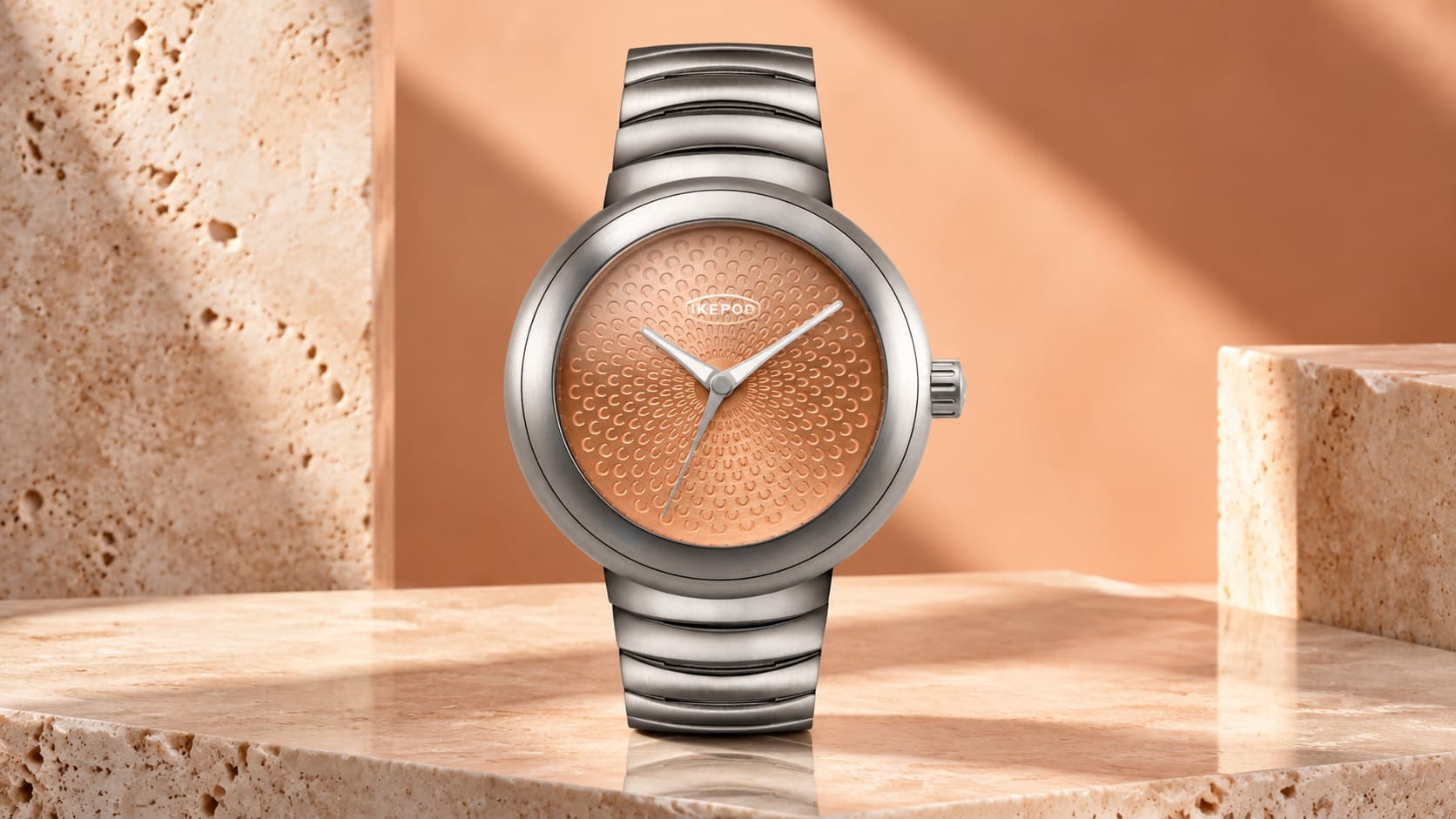
IKEPOD stands alone in watchmaking history as the brand that proved industrial design could drive horological success without relying on centuries of heritage or traditional craftsmanship narratives. Founded in 1994 by legendary Australian designer Marc Newson, IKEPOD challenged every convention with organic, sculptural cases introducing monocoque construction and integrated straps years before these concepts became industry trends. The brand’s influence extends far beyond its approximately 16,000 watches produced across three decades, with Newson’s design philosophy directly shaping the Apple Watch after he joined Apple in 2014. Today, IKEPOD watches range from accessible $600 quartz models to rare vintage chronographs commanding $50,000 at auction.
The Story Behind IKEPOD Watches
IKEPOD emerged from an unlikely collaboration between art and commerce that would reshape how the watch industry thought about design. Marc Newson, already celebrated for furniture pieces like the Lockheed Lounge, partnered with Swiss furniture distributor Oliver Ike to create watches that prioritized sculptural form over traditional horological aesthetics. The brand operated through three distinct eras between 1994 and today, each with different ownership, production philosophies, and market positioning.
- Marc Newson started IKEPOD in 1994 at age 31 after studying jewelry and sculpture at Sydney College of Arts, bringing a completely different perspective than traditional watchmakers who spent years learning centuries-old techniques and conventions that Newson had never been taught to follow
- The brand name combines Oliver Ike’s surname with “pod,” taken from Newson’s 1986 Large Pod Watch, a massive 60mm sculptural piece he built by hand in his Sydney bedroom that people wore over their clothes as a statement piece rather than strapping it to their wrist like a normal watch
- Oliver Ike had been tracking Newson’s furniture work for years and saw an opportunity to bring that same radical design thinking to watches, providing the business knowledge and Swiss factory connections that a young Australian designer working alone could never access
- The Seaslug dive watch launched first in 1994, introducing IKEPOD’s revolutionary approach where the case had no traditional lugs and the entire construction was built from the top down rather than assembled through the caseback like every other watch company was doing
- When the Hemipode chronograph arrived in 1997, its 44mm cushion-shaped case shocked the industry because most watches at that time measured 38mm or smaller, and the integrated rubber strap that flowed directly into the case without any visible attachment points looked completely alien to traditional watch design
- IKEPOD opened its own manufacturing facility in Bassecourt, Switzerland in the early 2000s, showing serious ambition to compete with established Swiss brands, but creating genuinely original watches for a small audience of design enthusiasts couldn’t generate enough revenue to sustain factory operations and the company filed for bankruptcy in 2006
- New York art dealer Adam Lindemann bought the defunct brand in 2008 and completely repositioned it as an ultra-luxury art object rather than trying to sell design watches to a wider market, keeping Newson involved but producing far fewer pieces at much higher prices
- The second era under Lindemann focused on collaborations with major contemporary artists like Jeff Koons, who created a 2009 edition with his signature “Cannonballs” imagery limited to only 10 platinum pieces, and street artist KAWS, whose 2012 collaboration produced 104 watches that now sell for many times their original retail price
- During this period IKEPOD introduced the Solaris, a reversible watch with two separate quartz movements so you could flip it over to check a different time zone, built with a rounded rectangular case shape and mesh loop bracelet that looked remarkably similar to what would later become the Apple Watch design language
- Everything changed when Marc Newson left to join Apple in 2014, working directly with Jony Ive on Apple Watch development, which essentially killed the second generation of IKEPOD production but gave the brand an unexpected legacy as the predecessor to the world’s best-selling watch
- A completely different IKEPOD emerged in 2017 when Christian-Louis Col took over and decided to make the brand accessible again, abandoning the ultra-luxury positioning to offer Newson’s design philosophy at prices normal watch enthusiasts could actually afford
- Col ran a Kickstarter campaign in 2018 that brought in CHF 400,000 from backers who wanted IKEPOD watches but couldn’t justify spending five figures on the previous generation, proving there was real demand if the brand would just make the watches affordable
- This current third generation achieves lower prices by using reliable Japanese Miyota movements instead of expensive Swiss calibers, but every watch still features the same monocoque case construction and sculptural design approach that made the original IKEPODs special
- The brand announced a Hemipod chronograph reissue in 2024 that brings back the classic 1997 design but with updated manufacturing and a modified Valjoux 7750 movement, creating a bridge between collectors who want vintage IKEPOD design and buyers who prefer new watches with warranties
IKEPOD’s survival through three completely different business strategies shows how strong Newson’s original design vision was. Most watch brands that go bankrupt stay dead, but IKEPOD kept coming back because the sculptural cases and unconventional construction appealed to people who cared more about how a watch looked on their wrist than what movement was inside. The fact that Marc Newson went from creating these niche design objects to shaping the Apple Watch alongside Jony Ive gave IKEPOD retroactive importance in watch history that nobody could have predicted when the Seaslug first launched in 1994. Today the brand exists in a strange position where vintage first-generation pieces are climbing in value among collectors, second-generation artist collaborations trade as contemporary art investments, and new third-generation models offer an affordable way to own genuinely distinctive design that doesn’t look like every other watch at the office.
IKEPOD Watch Design and Features
IKEPOD watches succeed or fail entirely on whether you value industrial design over traditional watchmaking heritage. These aren’t timepieces that compete on movement finishing, complications, or brand prestige accumulated over centuries. Instead, they represent a fundamentally different approach where the case itself is the product and the movement is simply the mechanism that makes it function. This design-first philosophy attracts collectors from outside traditional watch circles, including contemporary art buyers, furniture collectors, and people who appreciate Marc Newson’s broader work across industries from automotive to aerospace.
- The monocoque case construction remains IKEPOD’s most distinctive technical feature, borrowed from aircraft engineering where the outer shell carries structural loads rather than requiring an internal frame, creating a one-piece capsule that eliminates the traditional three-part case construction every other watch brand uses
- Unlike conventional watches that assemble from the caseback with the movement dropping in from behind, IKEPOD cases install the movement from the front with the bezel screwing down onto the case body, which allows for the perfectly smooth exterior without visible lugs, screws, or attachment points interrupting the flowing lines
- The caseback features an off-center porthole window revealing just the balance wheel rather than the typical centered exhibition window showing the entire movement, because Newson cared more about maintaining the sculptural form than displaying maximum mechanical content to the viewer
- Every IKEPOD case design follows organic, biomorphic shapes inspired by natural forms rather than the geometric circles, rectangles, and cushions that dominate traditional watchmaking, with names like Seaslug, Hemipode, and Megapode taken from biological organisms rather than places or technical specifications
- The integrated rubber strap system that IKEPOD pioneered in the 1990s attached flush with the case body using a clever engineering solution where the strap material flowed directly into the case without any visible connection hardware, a design innovation that later influenced the Apple Watch Sport Band
- Original first-generation straps came scented with vanilla or licorice fragrances, a playful detail that had nothing to do with watch function but showed Newson’s attention to sensory experience beyond just visual aesthetics, and these scented straps have become collectible items that enthusiasts specifically seek out
- IKEPOD deliberately chose oversized case diameters years before the industry trend toward larger watches, with the 44mm Hemipode and 46mm Megapode appearing massive in the late 1990s when Rolex Submariners measured 40mm and dress watches rarely exceeded 36mm
- The brand used genuinely high-quality Swiss movements rather than cutting corners with cheaper alternatives, equipping watches with COSC-certified chronometer-grade ETA and Valjoux calibers that provided the same accuracy and reliability as movements in watches costing significantly more
- First-generation production included precious metal versions in 18K yellow, white, and pink gold with strict limitations of just 999 pieces per metal type, giving even the most common IKEPOD references genuine scarcity compared to mainstream luxury brands producing tens of thousands annually
- The second-generation artist collaborations transformed watches into wearable contemporary art by bringing in major names like Jeff Koons and KAWS to design dials and cases, creating pieces that appeal to art collectors who might never otherwise buy watches
- IKEPOD’s complete indifference to traditional watch aesthetics meant the brand never tried to look “serious” or “professional” the way Swiss luxury watches do, instead embracing a futuristic, almost alien appearance that made them conversation pieces rather than status symbols
- The brand’s willingness to use unconventional materials like ceramics, black PVD coatings, and mixed metals in the second generation showed continued commitment to design experimentation even when those choices made manufacturing more complex and expensive
- Marc Newson’s involvement ended in 2014 but the design language he established continues through the current third generation, proving that the aesthetic principles work independently of any single designer’s ongoing participation
IKEPOD watches matter because they demonstrated an alternative path for watchmaking at a time when the industry was recovering from the quartz crisis by retreating into heritage and tradition. While other brands emphasized their founding dates and mechanical purity, IKEPOD asked why watches needed to look like they were designed in the 1950s when we were living in the 1990s. The monocoque construction and organic shapes weren’t just styling exercises but genuine engineering solutions that required convincing Swiss manufacturers to abandon their standard processes. This commitment to doing things differently even when it cost more and appealed to fewer buyers created a small but devoted following among people who wanted their watch to reflect contemporary design thinking rather than nostalgia for a past they never experienced. The fact that Marc Newson later brought these same principles to Apple Watch development, creating the best-selling watch in history, validates IKEPOD’s original vision even if the brand itself never achieved mainstream commercial success.
Top 10 Best IKEPOD Watches
IKEPOD’s model lineup spans three decades and three distinct production eras, making certain references significantly more collectible than others. The best IKEPOD watches balance design purity, mechanical quality, and availability, though “availability” remains relative since even common models rarely appear on the market. This ranking considers historical significance, current market performance, and practical wearability for collectors deciding which IKEPOD deserves space in their collection.
Hemipode Chronograph (1997-2012)
The Hemipode defines IKEPOD more than any other model, with its 44mm cushion-shaped case that was massive for 1997. The monocoque construction houses an ETA 7750 automatic chronograph with Dubois Dépraz module, COSC certified, in stainless steel numbered to 9,999 pieces and precious metals limited to 999 pieces each in 18K yellow, white, and pink gold, plus just 23 platinum pieces. Variations include Grande Date, Week Planner, GMT Chronograph, Rattrapante split-seconds, and “Rosso” Alfa Romeo edition. Water resistance sits at 50 meters. Current prices run $3,000-$6,000 for steel, $8,000-$15,000 for gold, and $29,000-$50,000 for platinum. Best for collectors wanting the definitive IKEPOD experience with Swiss mechanical quality.
Horizon (2008-2012)
The second-generation Horizon features Victor Vasarely-inspired Op-Art dials creating three-dimensional illusions, with under 300 total pieces produced. The 42-44mm case came in titanium, rose gold, platinum, and black PVD, housing an ETA 2892 displaying only hours and minutes to maximize visual impact. Key editions include HHT20 titanium (66 pieces), “Black Hole” (66 pieces, $11,000-$14,000), KAWS collaboration (104 pieces, $15,000-$40,000+), and Jeff Koons “Cannonballs” (10 platinum pieces). Auction results consistently exceed estimates. Best for contemporary art collectors wanting IKEPOD’s rarest references with strong appreciation potential.
Seaslug (1994-2006)
The original IKEPOD that launched the brand, featuring a 37-39mm bowl-shaped stainless steel case with ETA 2893-2 automatic COSC movement providing GMT and date functions. True dive watch capability with 100 meters water resistance and unidirectional bezel. Early “POD” branded variants from 1994-1995 with screw-down crowns are extremely rare. The smaller diameter makes it more wearable than later oversized models. Current prices range $3,000-$5,000. Best for collectors wanting the historically significant first IKEPOD with genuine dive capability and conservative sizing.
Solaris (2010-2012)
Marc Newson’s final IKEPOD design features a revolutionary reversible case with dual ETA quartz movements for different time zones on each side. The rounded rectangular “squircle” case came in ceramic (black/white) and 18K gold with mesh bracelet that clearly anticipated Apple Watch design. Under 300 pieces produced, making it among the rarest models. Named after Tarkovsky’s film “Solaris,” it represents the bridge between IKEPOD and Apple Watch development. Current prices range $2,500-$3,500 for ceramic, $8,000-$15,000 for gold. Best for collectors interested in the Apple Watch connection and IKEPOD’s most experimental concept.
Megapode (1999-2024)
IKEPOD’s largest watch at 46-47mm diameter, designed as a pilot’s instrument with dual-scale slide rule bezel for flight calculations. Titanium case housed La Joux-Perret LJP 8103 24dt movement (modified Valjoux 7750) with GMT and chronograph functions. First-generation models retailed CHF 5,000-15,000. Third-generation Megapod (2020-2024) used Miyota movements before discontinuation with final “Hourglass hands” edition of 100 pieces. Current prices for first-generation titanium run $3,800-$5,500, special editions reach $15,000-$17,000. Best for collectors wanting maximum IKEPOD wrist presence with pilot’s watch functionality.
Isopode (2001-2006)
A refined 38-39mm pebble-shaped case measuring 14mm thick brought IKEPOD aesthetics to conservative proportions suitable for formal wear. ETA 2894-2 or 2892 with Dubois Dépraz module offered dual time/GMT and date, with chronograph versions available. Steel and 18K gold (999 pieces) provided options across price points. The smaller diameter made it the most versatile IKEPOD for transitioning from casual to formal settings. Current prices range $2,800-$3,500 for steel, $8,000-$12,000 for gold. Best for smaller wrists or those wanting an IKEPOD that doesn’t dominate proportions.
Manatee (2001-2006)
IKEPOD’s first rectangular watch featured a 40mm x 33mm case with rounded edges housing ETA 2893-1 automatic with world time functionality displaying 24 zones via rotating inner dial. The integrated strap design notably influenced Apple Watch aesthetics. Available in steel and 18K yellow, white, and pink gold with playful manatee medallion caseback. Current prices sit around $3,800-$4,500. Best for collectors interested in the Apple Watch design connection and IKEPOD’s exploration of rectangular geometry.
KAWS Horizon Limited Edition (2012)
The most successful artist collaboration, with street artist KAWS designing four dial variations across 104 total pieces that command premium prices in both watch and contemporary art markets. Each featured KAWS’s signature “XX” eye motif in red, blue, black, or grey colorways. The 44mm cases used standard Horizon construction with ETA 2892 movements. Original $14,000 retail now sees current values of $15,000-$40,000+ depending on color. These represent the last artist editions under Marc Newson’s creative direction before he joined Apple. Best for collectors viewing watches as contemporary art investments.
Hemipod Chronograph 2025 Reissue
The 2024-announced reissue brings back the classic 1997 design with 44mm titanium case housing Arola C3IKE movement based on Valjoux 7750 with 48-hour power reserve. This third-generation model bridges vintage aesthetics with current production, maintaining monocoque construction while offering modern reliability and warranty. Priced at $6,500-$6,900, it positions between vintage models requiring service and premium second-generation pieces. Best for collectors wanting authentic Hemipode design without vintage uncertainty or original first-generation premium prices.
Seapod Dive Watch (2020-Present)
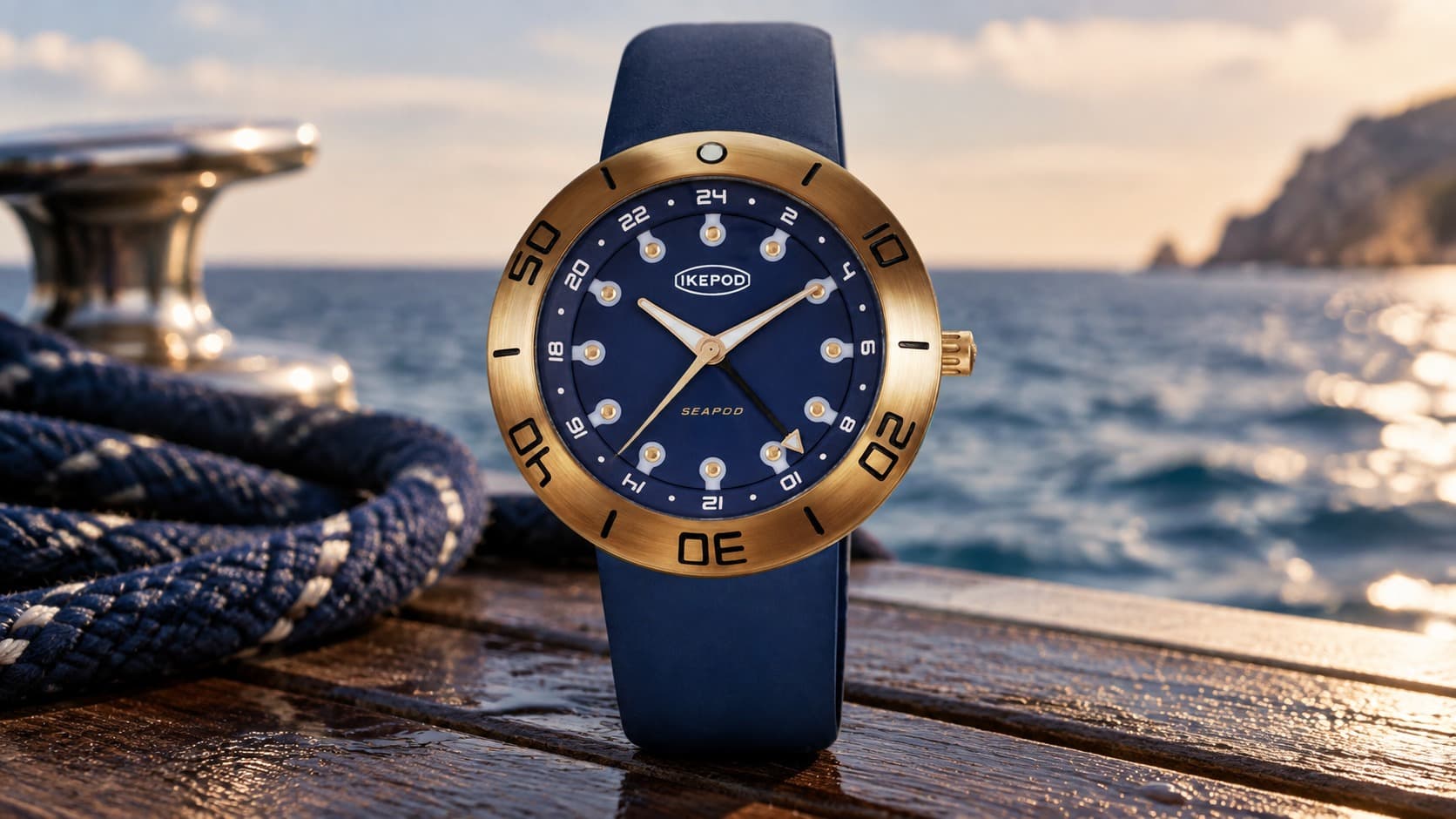
Current third-generation dive watch offering 200 meters water resistance in 46mm case available in stainless steel, titanium, or bronze with Miyota 9039 automatic movement. Maintains monocoque construction and sculptural aesthetic while meeting ISO dive watch standards with unidirectional bezel and luminous markers. Pricing from $1,500-$2,500 makes it the most affordable new IKEPOD with serious capability. Bronze version develops natural patina over time. Best for collectors wanting a contemporary IKEPOD they can use as a tool watch without worrying about damaging vintage collectibles.
Things to Consider When Buying IKEPOD Watches
Buying an IKEPOD requires different evaluation criteria than purchasing traditional Swiss watches because the brand’s value proposition rests entirely on design rather than heritage, movement finishing, or resale stability. Most IKEPOD purchases happen in the pre-owned market since first and second-generation production ended years ago, meaning buyers need to assess condition, authenticity, and functionality without the safety net of manufacturer warranties. The decision between vintage first-generation pieces, rare second-generation collaborations, and current third-generation models depends on whether you prioritize mechanical quality, investment potential, or simply owning wearable design at accessible prices.
- Design preferences matter more with IKEPOD than almost any other watch brand because the sculptural cases either appeal immediately or feel too unconventional for your taste, so handle one in person before committing if possible since the three-dimensional form photographs differently than it wears on the wrist
- Case size varies dramatically across models, with the Seaslug at 37-39mm suiting smaller wrists while the Megapode at 46-47mm dominates even larger wrists, and the monocoque construction without traditional lugs means the watch sits differently than conventional designs with the same diameter measurement
- Wearability depends on your tolerance for unusual aesthetics because IKEPOD watches attract attention and comments in ways that Rolex or Omega never will, making them poor choices if you need something that blends into conservative professional environments
- Movement type divides along generational lines, with first-generation models using COSC-certified Swiss ETA and Valjoux calibers requiring service every 3-5 years, second-generation pieces using similar Swiss movements, and third-generation watches using Japanese Miyota movements that trade prestige for serviceability and cost
- Condition assessment for pre-owned pieces focuses heavily on the case since refinishing monocoque construction costs significantly more than traditional three-piece cases, with deep scratches or dents potentially requiring complete case replacement rather than simple polishing
- Original rubber straps have become scarce and expensive, with many vintage IKEPODs now wearing aftermarket straps that don’t integrate as cleanly with the case design, so factor strap replacement costs into your budget if the original is missing or damaged
- Service history matters enormously because IKEPOD-specific parts like crowns, pushers, and case components don’t stock at regular watch service centers, meaning you need documentation showing the watch has been properly maintained by someone who understands the brand
- Authentication becomes critical in the pre-owned market since IKEPOD’s niche status means many watch dealers and even some auction houses lack expertise to spot franken-watches combining genuine cases with wrong movements or reproduction parts
- Box and papers command significant premiums, with complete sets including the COSC chronometer certificate adding 35% to value, while missing documentation can reduce prices by similar margins since proving authenticity becomes harder
- Budget considerations span an enormous range from $590 for new third-generation quartz models up to $50,000+ for platinum first-generation Hemipode chronographs, so clarify whether you want accessible IKEPOD design or a collectible investment piece before starting your search
- Water resistance varies by model with only the Seaslug at 100 meters and new Seapod at 200 meters suitable for swimming, while most Hemipode and Megapode chronographs at 50 meters handle only splash resistance, making them poor choices if you need a watch for active water sports
- Generation selection requires deciding between first-generation Swiss quality with appreciation potential, second-generation artist collaborations trading as contemporary art, or third-generation accessibility with modern reliability and warranties
- Parts availability challenges affect first and second-generation watches since production ended over a decade ago, with specialized service providers like E.B. Watch Service in Switzerland being one of few sources for IKEPOD-specific components
- Market liquidity remains low with only 40-60 IKEPODs typically available on Chrono24 at any given time, meaning you may wait months to find the specific model and condition you want, requiring patience that buyers of mainstream brands never experience
- Resale considerations should acknowledge that IKEPOD remains a niche brand with limited buyer pools, so while certain models appreciate significantly, you cannot assume easy resale at any price the way you might with Rolex or Patek Philippe
The most important consideration when buying IKEPOD is honest assessment of why you want one. If you’re attracted to Marc Newson’s industrial design work and want to own a piece of that creative vision on your wrist, IKEPOD delivers better than almost anything else in horology. If you’re hoping to flip the watch for profit in six months, you’re buying the wrong brand since the collector base remains small and specialized. If you need a watch that signals traditional luxury and status, IKEPOD actively works against that goal with its unconventional aesthetic. But if you value distinctive design that generates conversation and represents a genuine alternative to the sameness dominating the watch industry, IKEPOD offers something you cannot find anywhere else at any price point. Buy the generation and model that fits your budget, accept that you’re joining a small community of enthusiasts rather than a mainstream collecting category, and wear something that actually looks different from every other watch in the room.
Where Can I Buy an IKEPOD Watch?
Finding IKEPOD watches requires more effort than buying mainstream Swiss brands because the limited production numbers and three-generation model creates fragmented inventory across official retail, pre-owned platforms, auction houses, and private sales. Current third-generation models sell through authorized dealers with full warranties, while first and second-generation pieces exist only in the secondary market where authentication and condition verification become critical. The small collector base means fewer transactions happen annually compared to popular brands, but patient buyers can find examples across all price points from $600 entry-level pieces to $50,000 collector rarities.
- The official IKEPOD website sells the complete current third-generation collection including Duopod quartz models, Chronopod quartz chronographs, Seapod dive watches, Horopod with NOS ETA movements, Skypod with La Joux-Perret calibers, and the new Hemipod reissue, all with manufacturer warranties and authentic documentation
- IKEPOD’s “Vintage Corner” section on their official site occasionally offers new-old-stock first and second-generation pieces that were never sold during original production, providing rare opportunities to buy vintage models with one-year warranties directly from the brand
- Authorized IKEPOD retailers in the UK, Europe, and North America carry current production models with full manufacturer support and warranty coverage, providing trusted sources for buyers who prefer purchasing from established watch dealers with physical locations
- Major online watch marketplaces typically list 40-60 IKEPOD watches at any given time ranging from $600 to $35,000, with buyer protection programs covering authentication and returns if the watch arrives differently than described, though you pay a premium for this security
- Online auction platforms maintain larger inventories of approximately 100+ IKEPOD listings spanning all three generations at $800-$15,000 price points, with authentication services available for higher-value pieces, though buyer protection varies by seller and many listings come from private individuals without dealer expertise
- Curated design marketplaces focus on vintage IKEPOD pieces presented as design objects rather than watches, typically at premium prices reflecting their positioning as collectible industrial design rather than pre-owned timepieces
- Major auction houses have become important venues for IKEPOD sales, regularly featuring the brand in watch auctions with results consistently exceeding estimates as auctioneers begin recognizing the watches’ value, particularly for second-generation Horizon and artist collaboration models
- International auction specialists occasionally include IKEPOD pieces in larger watch auctions, though their cataloging sometimes undervalues the watches since auction specialists have less experience with design-focused brands compared to traditional haute horlogerie
- Private sales through watch forums and collector communities offer opportunities to buy directly from enthusiasts, potentially securing better pricing without dealer markups, though you assume all authentication and condition assessment responsibility yourself
- Specialist design watch dealers occasionally stock IKEPOD alongside other design-focused brands, providing expertise that mainstream watch dealers lack when evaluating condition and authenticity of unusual case constructions
- Social media platforms have become informal marketplaces where collectors and dealers post available IKEPOD pieces, often reaching buyers specifically interested in design watches who don’t regularly browse traditional watch sales platforms
- Watch collector forums occasionally feature IKEPOD sales in their private sale sections, connecting buyers directly with knowledgeable collectors who can provide detailed history and condition information
- Estate sales and jewelry liquidators sometimes include IKEPOD watches from owners who bought them as design objects rather than watch collectors, occasionally creating opportunities to find pieces at below-market prices from sellers who don’t recognize their value
- IKEPOD’s official website offers authentication assistance for uncertain buyers, stating “If you have any doubt, send us some pictures” and providing direct contact for verification questions before purchase
- First-generation pieces from 1994-2006 show authentication markers including the framed IKEPOD logo on the dial and COSC engraving on the caseback with serial numbers, while second-generation models from 2008-2012 feature the Hemipode bird logo subtly engraved on the sapphire crystal
- Early “POD” branded models from 1994-1995 display an eye logo on the dial and screw-down crowns, making them extremely rare and valuable but also more likely to have condition issues from three decades of existence
- Complete sets including box, papers, and COSC certificates command 35% premiums over watch-only examples, making documentation an important factor in pre-owned purchase decisions and long-term value retention
- Suspiciously low prices should raise red flags since genuine IKEPOD watches in good condition rarely sell at bargain levels due to production scarcity, with deep discounts often indicating authentication concerns or undisclosed condition problems
- Modified or franken-watches combining genuine cases with incorrect movements exist particularly for popular models like the Hemipode, so buyers should verify movement visibility through the caseback matches the specified caliber for that reference
- Missing original rubber straps are common on vintage pieces and shouldn’t disqualify a purchase since replacements are available through IKEPOD and specialist service providers, but budget $300+ for proper OEM strap replacement
- Budget for immediate service on any vintage piece without recent documentation since movement servicing costs approximately $700-$900 through specialists familiar with IKEPOD’s monocoque construction and specific parts requirements
- Low market liquidity means patient buyers may wait months to find their preferred model in acceptable condition at fair prices, requiring saved searches on multiple platforms and regular checking rather than expecting immediate availability
The best buying strategy depends entirely on which generation interests you and whether you prioritize having a warranty or owning vintage collectibles. For current third-generation models, authorized dealers provide the safest path with genuine products and valid warranties. For first-generation vintage pieces, online marketplaces with buyer protection offer the widest selection, while auctions occasionally present opportunities to acquire rare references below market value when conservative estimates fail to reflect true collector demand. Second-generation Horizon and artist collaborations trade primarily through specialized design watch dealers and auction houses, with many transactions happening through private sales between collectors that never appear on public platforms. The fragmented market means no single source dominates IKEPOD sales the way certain platforms do for Rolex or Omega, so successful buyers check multiple channels regularly and act quickly when the right piece appears at a reasonable price.
Are IKEPOD Watches a Good Investment?

IKEPOD occupies an unusual position in watch investment discussions because the brand operates outside traditional luxury watch market dynamics that drive values for Rolex, Patek Philippe, or Audemars Piguet. The watches attract buyers from industrial design and contemporary art markets who evaluate pieces differently than horological collectors, creating pricing patterns that don’t follow conventional watch appreciation models. Limited production across all three generations provides scarcity, but the small enthusiast base means liquidity remains low and resale timelines extend longer than mainstream luxury brands where buyers constantly search for available inventory.
- Market trends show IKEPOD values gradually climbing as Marc Newson’s profile has risen following his Apple Watch work, with auction results from 2020-2024 consistently exceeding estimates as specialists begin recognizing the brand’s historical significance in design-forward watchmaking
- Design collector market overlap brings buyers who normally purchase Newson furniture, lighting, or automotive projects into IKEPOD ownership, creating demand from audiences with different budget expectations than traditional watch collectors focused purely on horological merit
- Limited production numbers benefit long-term value since first-generation output of 5,000-10,000 total pieces, second-generation production under 1,000 watches, and ongoing third-generation releases create genuine scarcity compared to luxury brands producing 50,000+ pieces annually of single references
- Auction performance demonstrates systematic undervaluation with examples like the Horizon pink gold estimated at $1,300-$2,600 selling for $11,340, representing 567% above the high estimate, and KAWS Horizon pieces estimated at $15,600-$22,100 reaching $37,000 at final hammer
- IKEPOD itself acknowledges market inefficiency, stating “Auctioneers do not yet understand the value of Ikepod,” suggesting current auction estimates lag behind true collector demand and providing potential opportunities for buyers who recognize this gap
- First-generation Hemipode chronographs in steel have returned to original $3,000-$6,000 retail pricing after years of depreciation, essentially trading sideways for two decades, while precious metal versions show modest appreciation with 18K gold variants climbing from original retail to $8,000-$15,000 current values
- Platinum Hemipode chronographs limited to 23 pieces demonstrate the strongest appreciation among first-generation pieces, now commanding $29,000-$50,000 compared to original retail pricing, though finding available examples remains extremely difficult due to the tiny production run
- Second-generation KAWS collaborations show the clearest investment performance, with original $14,000 retail prices now bringing $15,000-$40,000+ depending on dial color, representing some pieces nearly tripling in value over approximately 12 years
- Second-generation Horizon models in any variant are considered strong investment candidates by specialists due to production limited to approximately 300 pieces total and their status representing “the pinnacle of Marc Newson design at Ikepod” during the ultra-luxury era
- Solaris ceramic and gold versions with fewer than 300 total pieces produced carry historical significance as the design that presaged Apple Watch aesthetics, though current $2,500-$15,000 pricing may undervalue their importance in design history
- Pink gold first-generation pieces across all models show stronger appreciation than yellow or white gold variants, possibly reflecting broader precious metal market preferences for rose gold that emerged in the 2010s luxury watch market
- Third-generation current production models trade as consumer products rather than investments, with immediate depreciation expected on new purchases similar to buying any contemporary watch brand without established secondary market strength
- Depreciation factors affecting values include common steel models with higher production numbers, modified or damaged pieces requiring expensive monocoque case work, missing original components like rubber straps or COSC certificates, and lack of service documentation raising buyer concerns about movement condition
- Artist collaboration pieces from the second generation should be evaluated as contemporary art investments rather than watches, with value drivers including the collaborating artist’s broader market performance, specific dial color rarity within the limited editions, and crossover appeal to art collectors beyond watch enthusiasts
- Neo-vintage collecting trends favor 1990s design-forward pieces as younger collectors seek alternatives to traditional luxury watches, potentially benefiting first-generation IKEPOD production as this demographic gains purchasing power and appreciation for period-correct industrial design
- Market liquidity challenges mean selling IKEPOD watches takes significantly longer than mainstream brands, with sellers often waiting months to find qualified buyers willing to pay fair market prices rather than experiencing the instant liquidity that Rolex Submariner or Speedmaster owners enjoy
The realistic investment perspective requires acknowledging that IKEPOD should be purchased primarily for design appreciation rather than financial return expectations. Certain models like KAWS Horizon collaborations, platinum Hemipode chronographs, and complete second-generation Horizon sets show documented appreciation and strong future potential, but these represent exceptions rather than the rule across IKEPOD’s entire catalog. Most first-generation steel models have traded sideways for twenty years, essentially keeping pace with inflation but not delivering the exponential returns that buyers fantasize about when considering watches as investments. The brand’s niche status means you’re buying into a small community of enthusiasts rather than a liquid market with constant buyer demand, so exit strategies require patience and realistic pricing rather than expectations of quick flips at premium prices. However, the systematic auction undervaluation that IKEPOD itself acknowledges, combined with Marc Newson’s rising profile and limited production numbers across all generations, suggests current prices may represent a temporary window before the broader market recognizes these watches’ significance in design history. Buy IKEPOD because you want to wear distinctive design that doesn’t look like every other watch, and treat any appreciation as a pleasant bonus rather than the primary purchase motivation.
How to Care for Your IKEPOD Watch
IKEPOD’s monocoque case construction and design-focused engineering create maintenance requirements that differ from traditional three-piece watch cases, requiring specialists who understand the brand’s unusual architecture rather than conventional watchmakers who may damage cases through improper disassembly. The use of standard Swiss ETA and Valjoux movements in first and second-generation models simplifies mechanical servicing since any competent watchmaker can work on the calibers themselves, but accessing those movements through IKEPOD’s front-loading case design requires specific knowledge. Third-generation models using Japanese Miyota movements offer simpler long-term maintenance with widely available parts and lower service costs, though the same case construction challenges apply across all three production eras.
- Daily handling requires awareness that monocoque construction without traditional lugs means the case edges take impacts differently than conventional watches, with the smooth flowing surfaces more susceptible to visible denting if struck against hard objects like doorframes or desk edges
- The integrated rubber strap system channels stress directly into the case at attachment points rather than dispersing forces through separate lugs, so avoid yanking the watch on and off your wrist since repeated stress can crack the case material at the strap junction over time
- Case scratches on the curved surfaces show more prominently than on flat traditional case sides, and polishing monocoque construction requires careful technique to maintain the sculptural curves without creating flat spots that destroy the organic geometry Newson designed
- Movement service intervals follow standard mechanical watch recommendations at every 3-5 years for automatic models, with full service including movement disassembly, cleaning, lubrication, regulation, and gasket replacement costing approximately $700-$900 through specialists familiar with IKEPOD construction
- Finding qualified watchmakers presents challenges since IKEPOD-specific knowledge remains rare, with most independent watchmakers lacking experience accessing movements through front-loading bezel construction rather than conventional caseback removal
- Specialist service providers in Switzerland maintain dedicated IKEPOD repair capabilities including parts sourcing for brand-specific components like crowns, pushers, and case elements that don’t stock at regular watch parts suppliers
- Parts availability for movements remains excellent since ETA 2893-2, Valjoux 7750, ETA 2892, and La Joux-Perret calibers used in first and second-generation pieces have extensive aftermarket support through Swiss parts networks
- IKEPOD-specific components including crowns, pushers, case screws, and bezel elements present sourcing challenges for first and second-generation models since production ended over a decade ago and replacement parts exist only through specialist suppliers with remaining stock
- Original rubber straps cost $300+ for proper OEM replacements when available, with IKEPOD’s current website offering straps for most models though supply for discontinued first and second-generation references depends on remaining inventory
- Strap compatibility varies significantly between models, with Seaslug and Manatee using different attachment systems than Hemipode and Megapode designs, so verify exact reference compatibility before purchasing replacement straps to avoid expensive mistakes
- Water resistance maintenance requires gasket replacement during every service to maintain the rated depth, with 50-meter chronographs like Hemipode and Megapode needing pressure testing after any case opening to verify seals remain intact
- After battery replacement on quartz models including Solaris and third-generation Duopod and Chronopod pieces, pressure testing becomes essential to confirm water resistance since improper gasket seating allows moisture penetration that corrodes movements
- Seaslug models rated to 100 meters and Seapod models at 200 meters can handle swimming and recreational diving if gaskets remain fresh, but chronographs rated to 50 meters should stay away from water beyond hand washing and rain exposure
- Long-term storage for automatic models benefits from watch winders maintaining movement lubrication, though this isn’t essential if you plan to service the watch before wearing after extended storage periods
- Watch winder settings for IKEPOD automatics should follow the specific movement requirements, with ETA 2893-2 and Valjoux 7750 calibers typically needing 650-800 turns per day in bidirectional winding mode to maintain proper power reserve
- Protecting unique case finishes requires avoiding contact with harsh chemicals, solvents, and abrasive cleaning products, with titanium cases particularly susceptible to showing scratches that contrast against the matte finish
- Documentation preservation matters significantly for resale value since complete sets with original box, papers, and COSC certificates command 35% premiums, so store these items separately from the watch in climate-controlled environments away from humidity and temperature extremes
- Crystal scratches on sapphire require professional replacement rather than polishing since sapphire hardness prevents buffing, with replacement crystals available through standard watch parts suppliers for most models using conventional curved sapphire shapes
- Bezel functionality on rotating models like Seaslug and Megapod requires periodic cleaning and relubrication of the spring mechanism underneath, with dirt accumulation causing stiff rotation that can damage internal components if forced
- Crown and pusher maintenance includes keeping threads clean and lubricated on screw-down variants, with early POD-branded Seaslug models requiring particular attention since these 30-year-old components may need complete replacement if threads show wear
- Professional inspection every 2-3 years catches developing problems before they cause expensive damage, with watchmakers checking gasket condition, movement amplitude, crown seal integrity, and case condition during routine examinations
The most critical maintenance consideration for IKEPOD ownership is finding a qualified specialist before you need emergency service, since the monocoque construction eliminates the option of taking your watch to any local watchmaker when problems arise. Research service providers with documented IKEPOD experience, verify they can source brand-specific parts, and establish a relationship before issues develop. Budget realistically for service costs that may exceed mainstream Swiss brands since the unusual case construction adds complexity and time to routine procedures, and accept that turnaround times extend longer than conventional watches while specialists source IKEPOD-specific components. Keep documentation of all service work including movement serial numbers and parts replaced, both for your own maintenance tracking and to provide complete service history if you eventually sell the watch. The good news is that once you find a competent IKEPOD specialist, the standard Swiss movements inside these unusual cases provide the same reliability and longevity as any other quality mechanical watch, with proper maintenance ensuring decades of reliable service from these distinctive design objects.
Frequently Asked Questions About IKEPOD Watches
IKEPOD’s unusual position as a design-first watch brand raises questions that don’t come up with traditional Swiss manufacturers, from finding qualified service to understanding which generation offers the best value. The brand’s three distinct production eras, limited output, and Marc Newson’s subsequent Apple Watch involvement create confusion about what’s currently available versus what exists only in the vintage market. These frequently asked questions address the practical concerns collectors face when considering IKEPOD ownership, covering everything from authentication markers to realistic investment expectations.
Are IKEPOD watches still being made?
Yes, IKEPOD remains in active production under the third-generation ownership that relaunched the brand in 2017. Current models include the Duopod quartz, Chronopod quartz chronograph, Seapod dive watch, Horopod with NOS ETA movements, Skypod with La Joux-Perret calibers, and the newly announced Hemipod chronograph reissue. These watches are available directly through the IKEPOD website and authorized retailers, though the current production uses Japanese Miyota movements rather than the Swiss COSC-certified calibers found in first-generation models from 1994-2006. The brand also occasionally offers new-old-stock vintage pieces through their “Vintage Corner” section, providing rare opportunities to buy first and second-generation models that were never sold during original production.
What makes IKEPOD watches so unique?
IKEPOD’s distinctiveness comes from treating watches as industrial design objects first and timekeeping instruments second, with monocoque case construction borrowed from aircraft engineering that eliminates traditional three-piece assembly. Marc Newson approached watchmaking without conventional training, creating organic, sculptural cases with names like Seaslug, Hemipode, and Megapode taken from biological organisms rather than geographic locations or technical specifications. The cases install movements from the front rather than the back, creating perfectly smooth exteriors without visible lugs, screws, or attachment points interrupting the flowing lines. The integrated rubber strap system that IKEPOD pioneered in the 1990s attached flush with the case body and directly influenced the Apple Watch Sport Band design that Newson later helped create, making these watches historically significant beyond just their aesthetic appeal.
Are IKEPOD watches a good investment?
IKEPOD should be purchased primarily for design appreciation rather than investment returns, though certain models show documented appreciation potential. Second-generation KAWS collaborations have nearly tripled from $14,000 original retail to $15,000-$40,000+ current values, and platinum Hemipode chronographs limited to 23 pieces now command $29,000-$50,000 compared to original pricing. However, most first-generation steel models have traded sideways for twenty years, essentially keeping pace with inflation without delivering exponential returns. The brand operates outside traditional luxury watch investment dynamics with low market liquidity and a small enthusiast base, meaning resale takes significantly longer than mainstream brands. IKEPOD itself acknowledges systematic auction undervaluation, suggesting current prices may not reflect true collector demand, but you’re buying into a niche collecting category rather than a liquid market with constant buyer demand.
Where can I get my IKEPOD watch serviced?
Finding qualified IKEPOD service requires specialists who understand monocoque case construction rather than taking your watch to any local watchmaker, since improper disassembly can damage the unusual front-loading case architecture. Specialist service providers in Switzerland maintain dedicated IKEPOD repair capabilities including parts sourcing for brand-specific components like crowns and pushers that don’t stock at regular watch parts suppliers. The movements themselves use standard Swiss ETA and Valjoux calibers that any competent watchmaker can service, but accessing those movements through IKEPOD’s unique case design requires specific knowledge. Service costs run approximately $700-$900 for full movement overhaul including cleaning, lubrication, regulation, and gasket replacement. Third-generation models can potentially receive service through IKEPOD directly or authorized dealers, while first and second-generation pieces require finding independent specialists with IKEPOD experience.
How do I authenticate an IKEPOD watch?
Authentication starts with visual markers specific to each production generation, with first-generation pieces from 1994-2006 showing a framed IKEPOD logo on the dial and COSC engraving on the caseback including serial numbers. Second-generation models from 2008-2012 feature the Hemipode bird logo subtly engraved on the sapphire crystal, primarily using titanium cases rather than steel. Early “POD” branded models from 1994-1995 display an eye logo on the dial and screw-down crowns, making them extremely rare and valuable. Verify the movement visible through the caseback matches the specified caliber for that reference, since franken-watches combining genuine cases with incorrect movements exist particularly for popular models like the Hemipode. IKEPOD’s official website offers authentication assistance, stating “If you have any doubt, send us some pictures,” and providing direct contact for verification before purchase. Watch for complete sets including box, papers, and COSC certificates since these document authenticity better than watch-only examples.
What’s the most collectible IKEPOD model?
The KAWS Horizon collaboration from 2012 represents the most collectible IKEPOD by appreciation metrics, with 104 pieces across four dial colors climbing from $14,000 original retail to $15,000-$40,000+ current values depending on color. Experts universally recommend buying these on sight when they appear since the combination of KAWS’s rising contemporary art market, limited production, and crossover appeal to collectors beyond watch enthusiasts drives consistent demand. Second-generation Horizon models in any variant rank highly due to production limited to approximately 300 total pieces representing “the pinnacle of Marc Newson design at IKEPOD.” Platinum Hemipode chronographs limited to 23 pieces show strong appreciation to $29,000-$50,000 but almost never come to market. The Solaris carries historical significance as the design that presaged Apple Watch aesthetics, though current $2,500-$15,000 pricing may undervalue its importance in design history.
Can I wear an IKEPOD watch daily?
Daily wearability depends entirely on which model you choose and your lifestyle requirements. The Seaslug with 100-meter water resistance and new Seapod with 200-meter rating handle swimming and active wear, while most chronographs like Hemipode and Megapode at 50-meter ratings suit only splash resistance from hand washing and rain. The sculptural cases attract attention and comments that mainstream luxury watches don’t generate, making them poor choices for conservative professional environments where blending in matters. Case sizes vary dramatically from the 37-39mm Seaslug suitable for smaller wrists to the 46-47mm Megapode that dominates even larger wrists, with the monocoque construction sitting differently than conventional watches with the same diameter measurements. The unusual aesthetics either appeal immediately or feel too unconventional for regular wear, so handle one in person before committing if possible since the three-dimensional form photographs differently than it wears on the wrist.
What movements do IKEPOD watches use?
First-generation models from 1994-2006 used high-quality Swiss movements including the ETA 2893-2 automatic GMT in the Seaslug, ETA 7750 with Dubois Dépraz chronograph module in the Hemipode, La Joux-Perret LJP 8103 24dt modified Valjoux 7750 with GMT in the Megapode, and ETA 2894-2 or ETA 2892 with complications in the Isopode and Manatee. All mechanical first-generation pieces received COSC chronometer certification for accuracy within strict tolerances. Second-generation models from 2008-2012 used ETA 2892 automatic movements in the Horizon and dual ETA quartz movements in the Solaris reversible watch. Current third-generation production uses Japanese Miyota movements including the Miyota 9039 automatic in the Seapod and various Miyota quartz calibers in the Duopod and Chronopod, with select premium models like the Skypod using new-old-stock Swiss La Joux-Perret movements and the Hemipod reissue featuring an Arola C3IKE based on Valjoux 7750 architecture.
Conclusion
IKEPOD represents watchmaking’s most successful experiment in prioritizing industrial design over horological tradition, creating timepieces that appeal to audiences far beyond conventional watch collectors. Marc Newson’s vision of sculptural, organic cases with monocoque construction challenged every industry convention when the Seaslug launched in 1994, and three decades later the brand continues producing watches that look fundamentally different from everything else available. The three-generation journey from Swiss luxury to ultra-exclusive art objects to accessible contemporary production shows a brand that survived bankruptcy, ownership changes, and its founder’s departure to Apple, yet maintained commitment to distinctive design throughout every transition. Whether you’re drawn to first-generation pieces with COSC-certified Swiss movements, second-generation artist collaborations trading as contemporary art, or current production offering Newson’s aesthetic at democratic prices, IKEPOD provides entry points across every budget and collecting philosophy.
The brand’s influence extends beyond its modest production numbers through Marc Newson’s direct impact on Apple Watch development, making IKEPOD watches historical artifacts documenting the evolution from mechanical timepieces to the world’s best-selling smartwatch. The monocoque construction, integrated strap design, and sculptural case geometry that defined IKEPOD in the 1990s reappeared in refined form on millions of wrists through Apple’s interpretation of Newson’s design language. This connection gives IKEPOD retroactive importance that collectors and design historians are only beginning to recognize, as evidenced by auction results consistently exceeding estimates and the brand’s acknowledgment that “auctioneers do not yet understand the value of Ikepod.” The systematic undervaluation, combined with genuinely limited production across all generations and neo-vintage collecting trends favoring 1990s design, suggests current prices may represent a temporary window before broader market recognition drives values higher.
Buy IKEPOD because you want something genuinely different on your wrist that doesn’t look like every other luxury watch at the office. These aren’t timepieces that compete on heritage, movement finishing, or social signaling the way Rolex and Patek Philippe do, but rather design objects that happen to tell time while making distinctive aesthetic statements. Accept that you’re joining a small community of enthusiasts rather than a mainstream collecting category, understand that resale takes longer than liquid mainstream brands, and recognize that the unusual monocoque construction requires finding specialists for service rather than visiting any local watchmaker. But if you value industrial design, appreciate Marc Newson’s broader creative work, or simply want a watch that generates genuine conversation rather than quiet status recognition, IKEPOD delivers experiences unavailable anywhere else in horology. The watches prove that alternative approaches to watchmaking can survive and even thrive outside traditional luxury paradigms, offering collectors willing to embrace unconventional aesthetics access to wearable design that documents an important chapter in both mechanical watchmaking and the evolution toward digital timekeeping.