Ulysse Nardin is one of the few Swiss watch brands that built its name on the ocean instead of the ballroom. For more than a century, its precision instruments guided ships across open water, and that history still shapes every watch the brand makes today. Even after passing through different owners and design eras, the company has kept a reputation for doing something genuinely different with mechanical watches, whether that means building a movement with no hands at all or engineering parts out of silicon before anyone else dared to try.
Who Founded Ulysse Nardin and When?
Ulysse Nardin founded his watch company in 1846 in Le Locle, Switzerland, when he was just 23 years old. He came from a family of watchmakers, learning the trade first from his father, Léonard-Frédéric Nardin, and then from two respected local experts in precision timekeeping, Frédéric-William Dubois and Louis Jean-Richard-dit-Bressel. Rather than chasing fashion, Nardin focused on something much harder: building instruments accurate enough for ships to navigate by. He got the business going with a small loan of 500 francs from his father and set up his first workshop in the attic of the family home. The company later moved into a proper workshop on Rue du Jardin in Le Locle in 1865, and that same address is still where Ulysse Nardin’s headquarters sits today.
His timing lined up with a period when global shipping and naval exploration desperately needed better tools. A ship’s crew could only figure out its longitude by comparing local time to the exact time back at a home port, which meant carrying a chronometer accurate to the second over months at sea. Nardin’s workshop became known for exactly that kind of precision, and by 1862 he had already won a top prize at the International Exhibition in London for his marine chronometers. His son, Paul-David Nardin, later took over the business and continued winning awards on the international stage, including a Grand Prix and Gold Medal at the 1889 Paris Universal Exhibition.
The company’s reputation only grew from there. Ulysse Nardin chronometers were used by more than 50 navies around the world, and during the Second World War the brand supplied timing instruments to both sides of the conflict, an unusual position that put its pieces into museum collections like London’s Imperial War Museum.
Ownership shifted several times over the following decades. Swiss businessman Rolf W. Schnyder bought the struggling company in 1983 and worked with watchmaker Ludwig Oechslin to modernize its designs, turning it back into a healthy, innovative business. In 2014, the French luxury group Kering, which also owns Gucci, acquired full ownership of Ulysse Nardin. That arrangement lasted until 2022, when the brand’s own management team bought the company back from Kering, restoring its independence under CEO Patrick Pruniaux, who has led the brand since 2017.
What Sets Ulysse Nardin Apart?
Ulysse Nardin is known for using silicon in its movements before almost any other watchmaker attempted it. In 2001, the brand released a watch called the Freak, and it was the first series-produced watch in the world to use silicon components inside the movement. Silicon does not need oil, resists magnetism, and barely wears down, which solves problems that metal watch parts have struggled with for centuries. Silicon parts are now common across many other high-end brands, a shift Ulysse Nardin’s Freak helped start.
That willingness to experiment runs through the rest of the lineup as well. Ulysse Nardin does not simply make small tweaks to old designs; it builds movements that skip the usual dial and hands entirely, invents its own way to display moon phases and tides, and buys up small specialist workshops to control more of the watchmaking process in-house. In 2006 it co-founded a company called Sigatec to manufacture silicon parts at scale, and in 2011 it acquired Donzé Cadrans, a workshop known for a traditional enamel technique called grand feu. Owning these steps in-house allows Ulysse Nardin to pursue ideas that brands relying on outside suppliers usually cannot.
The brand’s underwater credentials go back further than most people expect, too. Ulysse Nardin built its first waterproof instrument in 1893, released its first proper dive watch in 1964, and in 2001 launched the Aqua Perpetual, believed to be the only perpetual calendar watch ever made with 200 meters of water resistance.
Records from the Neuchâtel Observatory credit Ulysse Nardin with well over 4,300 official chronometry certificates and thousands of additional prizes between 1846 and 1975, including 18 gold medals from international exhibitions. Few watch brands in history can point to a comparable stack of independently verified precision awards, which is part of why the anchor remains on the company’s logo today.
The Best Ulysse Nardin Watch Collections
Freak
The Freak looks nothing like a normal watch because it has no dial, no hands, and no crown on the side. Instead, the entire movement rotates once every hour to point at the time, using the movement’s own baguette shape as the hour and minute hand. This was the watch that introduced silicon parts to the industry back in 2001, and it remains the brand’s most talked-about design nearly twenty-five years later.
Winding and setting the Freak works differently as well, since it has no traditional crown: the case back turns to wind it, and the bezel rotates to set the time. Some versions use a manual “carrousel” movement with a seven-day power reserve, which Ulysse Nardin describes as the first of its kind in watchmaking. Original Freak models have appeared in precious metals like rose gold, white gold, and platinum, with pricing on the high end running well past 100,000 US dollars for complicated or diamond-set versions such as the Freak Diamond Heart.
Freak X
The Freak X is the more affordable, easier-to-wear version of the Freak, introduced in 2019. It keeps the eye-catching rotating movement but swaps the manual winding system for a normal crown and an automatic movement, simplifying daily use considerably. It also skips the Freak’s unusual dual-direct escapement, a trade-off that keeps the price far more reasonable.
The Freak X serves as the brand’s main entry point into the rotating-movement concept without the six-figure price tag of the original. Prices typically start just under 19,000 US dollars, still a serious purchase but a fraction of what an original Freak commands.
Marine
The Marine collection is Ulysse Nardin’s tribute to its own founding story, built around the chronometer styling that made the brand famous with 19th-century navies. These watches favor clean dials, nautical details like the fluted bezels found on the Marine Torpilleur models, and reliable in-house movements over flashy visual tricks. The Torpilleur name itself references torpedo boats, small and fast historical naval vessels, and the line was introduced in 2017 as a slimmer, dressier take on the standard Marine Chronometer case.
The Marine line traces directly back to 1996, when the brand released its first modern Marine Chronometer wristwatch to mark its 150th anniversary. It is also the brand’s most popular collection by volume today, with an average price around 5,000 US dollars according to current market data, making it the most accessible entry point into Ulysse Nardin as a whole and sitting well below the Freak and Blast collections in typical cost.
Diver
The Diver collection takes Ulysse Nardin’s high-horology thinking and applies it to a proper tool watch built for actual underwater use, with rugged cases, unidirectional bezels, and screw-in crowns as standard features. Recent releases have pushed genuinely new ground, including the Diver (AIR), which weighs just 52 grams including its strap and holds the title of the world’s lightest mechanical dive watch. The model still manages 200 meters of water resistance and can survive shocks of up to 5,000g, achieved with a titanium and carbon-fiber case and a purpose-built movement called the UN-374, hollowed out to the point where solid material fills only about a fifth of the space inside its case. The same lightweight-material research used here eventually filters into other collections across the catalog.
Blast
The Blast collection is where Ulysse Nardin puts its most complicated and artistic work on display, often in bold, modern cases. It has been used to revive the brand’s famous Moonstruck complication, a watch that shows moon phases and tidal patterns for multiple locations around the world, first introduced in 2009. Newer Blast Moonstruck editions have reimagined the complication in different material combinations, including a 20-piece limited run in rose gold with five astronomical indications and a separate black DLC titanium and rose gold version. These pieces sit at the top of the brand’s price range, with some Blast Moonstruck editions priced above 90,000 Swiss francs.
Blast watches showcase the brand’s rarest complications and finishing techniques, aimed at collectors already familiar with mechanical watchmaking rather than first-time buyers. Prices run well into five figures and sometimes into six figures for the most complicated versions.
Executive
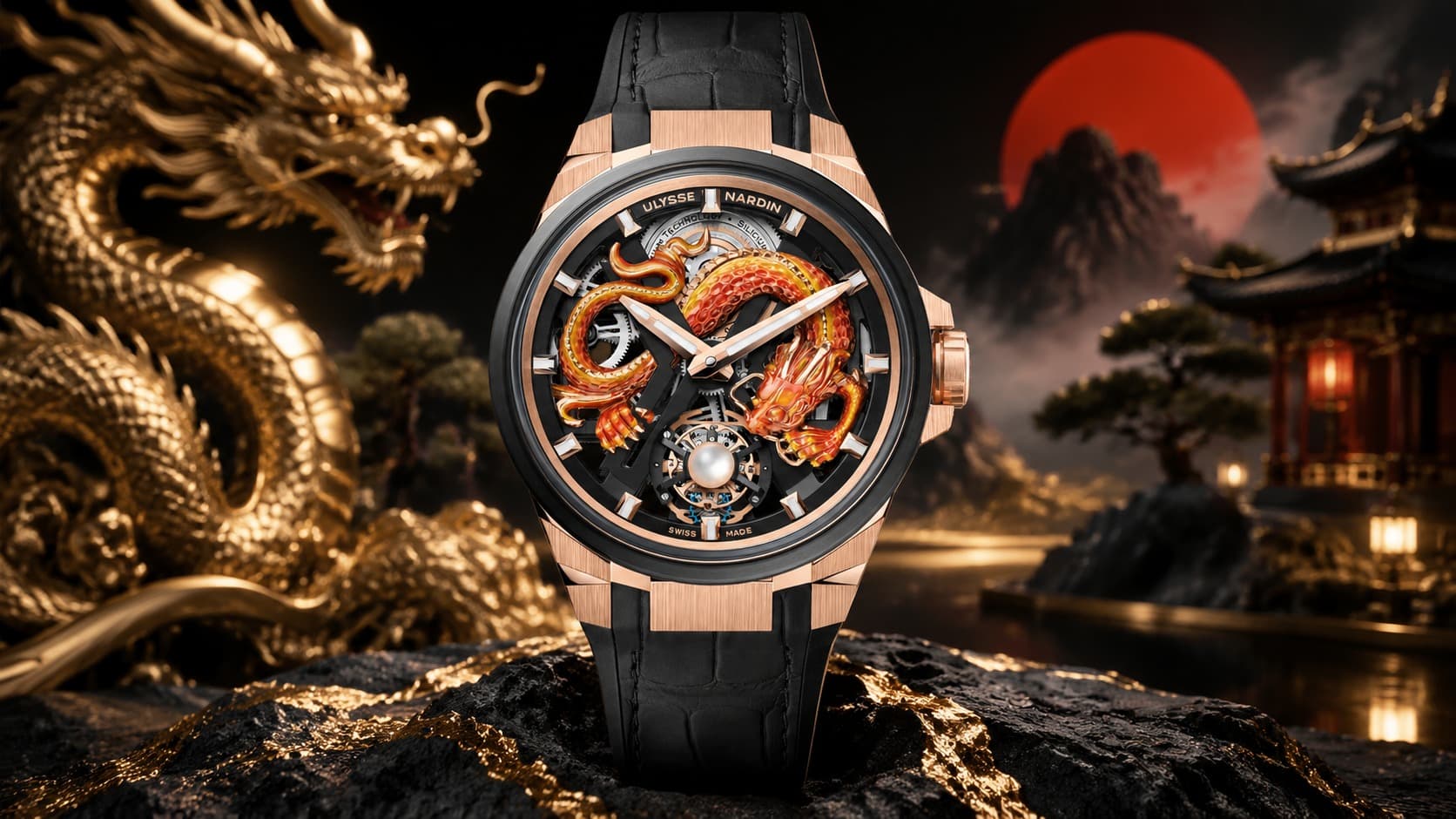
The Executive collection is Ulysse Nardin’s home for skeleton watches and tourbillons, built around a recognizable look: oversized Roman numerals, imposing sword-shaped hands, and a movement left fully visible instead of hidden behind a dial. The Executive Skeleton Tourbillon is the clearest example, using a manually wound in-house caliber that runs for an unusually long 170 hours, or just over seven days, on a single wind, with a silicon escapement wheel and balance spring performing the same job silicon does elsewhere in the brand’s watches.
Despite packing a flying tourbillon and a fully open movement, Executive watches lean sportier than a traditional skeleton tourbillon would suggest, often built in lightweight titanium with ceramic bezel rings rather than dressier metals. That combination makes the collection a relatively accessible route into real haute horlogerie, with base Executive Skeleton Tourbillon models priced around 38,000 Swiss francs, well below what a flying tourbillon typically costs from comparable Swiss manufactures.
Classico
The Classico collection is Ulysse Nardin’s answer for a traditional, elegant watch without any of the brand’s more experimental features. Round cases, simple dials, and refined details make it the closest thing to a dress watch in the current lineup, and several special editions in the line have showcased the brand’s grand feu enamel dial-making, a technique that suits a simple round dial better than a sportier design.
How Much Do Ulysse Nardin Watches Cost?
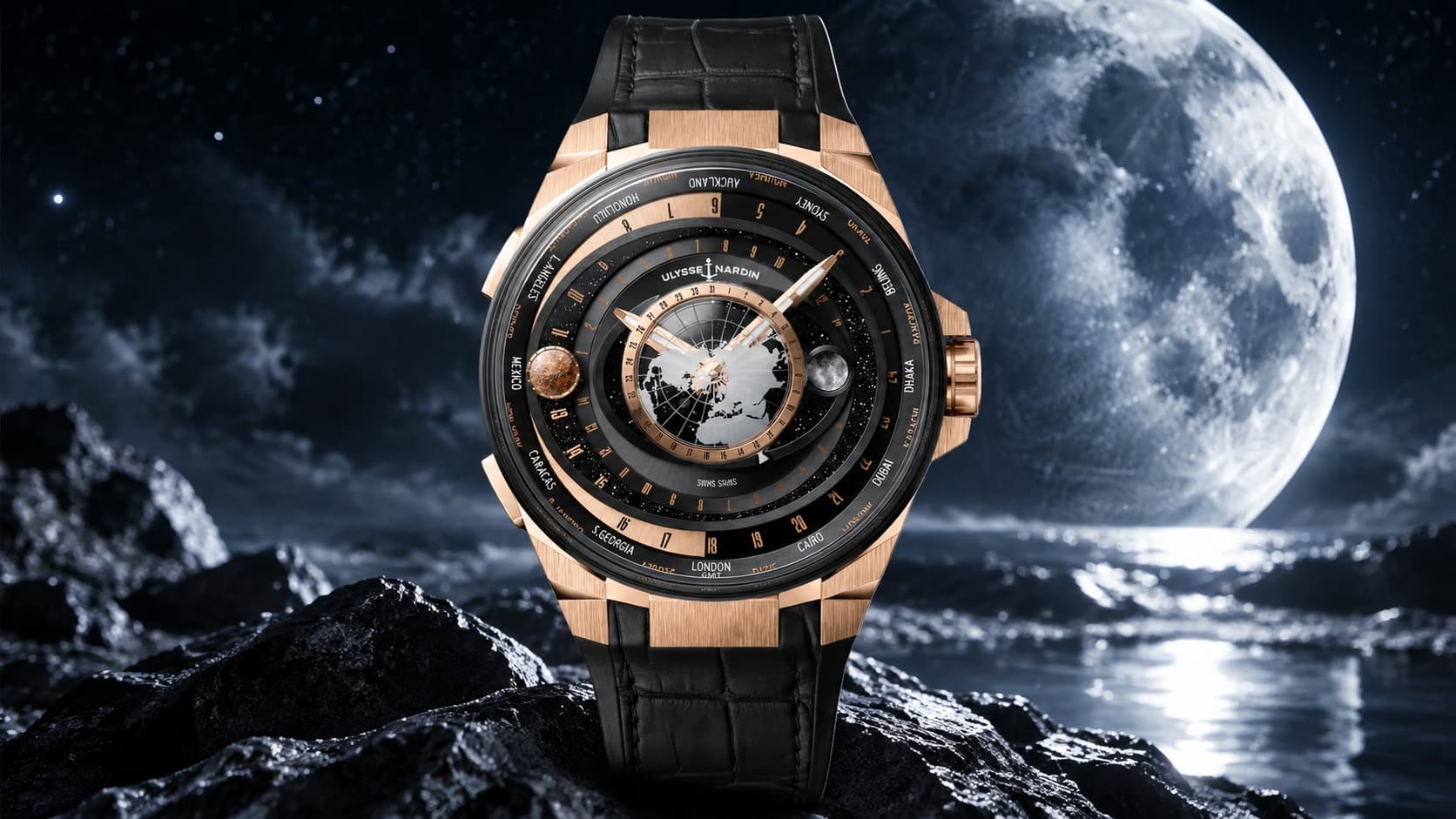
Ulysse Nardin watches generally cost between 1,000 and 33,000 US dollars for the bulk of the catalog, with an average price around 6,000 US dollars across current production models. Where a specific watch lands in that range depends heavily on which collection it comes from and what materials and complications it includes. Limited editions and haute horlogerie pieces regularly exceed that range by a wide margin.
| Collection | Typical Starting Price (USD) | Best For |
|---|---|---|
| Marine | ~$5,000 average | Classic nautical styling, most popular collection |
| Freak X | ~$19,000 | Entry point into the Freak’s rotating movement |
| Diver | Varies by model | Real underwater use and daily durability |
| Freak (original) | $40,000+ | Collectors seeking the full silicon movement story |
| Executive | ~CHF 38,000+ | An accessible entry into flying tourbillons |
| Blast | High five figures to six figures | Rare complications and limited editions |
Limited editions, precious metal cases, and diamond-set versions push prices well beyond these starting points. A basic steel Freak X and a rose gold Freak Diavolo with a tourbillon can differ in price by more than 80,000 US dollars, despite sharing the same core collection name.
Frequently Asked Questions
Is Ulysse Nardin considered a luxury brand?
Yes, Ulysse Nardin is a Swiss luxury watchmaker with nearly 180 years of history, known especially for marine chronometers and technical innovations like silicon movement parts. It sits alongside other respected independent Swiss manufactures, though it is smaller and less mainstream than brands like Rolex or Omega.
Who owns Ulysse Nardin now?
Ulysse Nardin has been independently owned since 2022, when its own management team bought the company back from the French luxury group Kering. CEO Patrick Pruniaux, who has led the brand since 2017, headed that buyout, and the same team also owns the sister brand Girard-Perregaux.
What is special about the Freak watch?
The Freak has no dial, hands, or traditional crown because the entire movement rotates to show the time, and it was the first series-made watch to use silicon parts back in 2001. Silicon needs no lubrication and resists magnetism, a major technical breakthrough for the watch industry at the time that pushed other Swiss brands to adopt the material.
Are Ulysse Nardin watches a good investment?
Some limited-edition and historically significant Ulysse Nardin models have held or increased their value over time, particularly rare Freak references and vintage marine chronometers. Most watches, including luxury ones, hold up best as a purchase driven by genuine interest in wearing them rather than as a guaranteed financial investment.
What is the most affordable Ulysse Nardin watch?
The Freak X is generally the most accessible way into the brand’s signature rotating movement design, with prices starting just under 19,000 US dollars. Watches from the Marine collection can also be found closer to that range or below, depending on the specific model and materials, since Marine is the brand’s most affordable collection on average.
Conclusion
Ulysse Nardin’s story connects a 19th-century workshop building instruments for sailors to a 21st-century brand building watches with no hands at all. The Marine collection carries the brand’s original purpose, the Freak and Freak X carry its appetite for risk, and the Diver, Executive, and Blast lines show a company capable of building rugged tools, technical haute horlogerie, and showpiece art within the same catalog. Nearly two centuries after its founding, precision and creativity remain the two ideas holding the entire brand together.