Formula 1 Racing Teams and their Watch Sponsors

Explore F1 watch partnerships from TAG Heuer's $1B deal to Richard Mille's $1.5M timepieces, covering luxury motorsport collaborations and collecting insights.

We include products we think are useful for our readers. If you buy through links on this page, we may earn a small commission.

Read more

Affiliate Disclosure: This post may contain affiliate links, which means we may receive a commission if you click a link and purchase something that we have recommended. While clicking these links won't cost you any extra money, they help us keep this site up and running. We only recommend products or services that we genuinely believe will add value to our readers. Thank you for supporting us!

Transparency: We are a participant in various affiliate programs, including the Amazon Services LLC Associates Program, an affiliate advertising program designed to provide a means for us to earn fees by linking to Amazon.com and affiliated sites. Our editorial content is not influenced by affiliate partnerships, and we strive to provide honest and unbiased reviews and recommendations.

To learn more about our vetting process, please visit our Affiliate Disclosure Statement

Article Content

Formula 1 car with dark blue and yellow livery racing on circuit showing modern aerodynamic design and advanced engineering racing season

Formula 1 and luxury watchmaking share an unbreakable bond rooted in precision, innovation, and the pursuit of perfection. Since Heuer first appeared on an F1 car in 1969, these partnerships have evolved from simple timekeeping deals into sophisticated multi-million dollar marketing ecosystems. LVMH’s historic $1 billion, 10-year partnership beginning in 2025 represents the ultimate evolution of this relationship, spanning from accessible $2,650 chronographs to ultra-exclusive $1.5 million Richard Mille masterpieces. With F1’s demographic transformation—45% of Gen Z Americans now follow the sport—watch brands must balance traditional luxury positioning with authentic storytelling and digital integration to reach over 750 million global fans across 24 races.

Why Watch Brands Sponsor Formula 1 Teams

Formula 1 teams and luxury watch manufacturers form partnerships that go beyond simple sponsorship deals, creating relationships built on shared values of excellence and performance. These collaborations work because both industries operate where every fraction of a second matters, with watch brands gaining access to motorsport’s most prestigious platform while F1 teams secure partners whose timing expertise directly supports their racing operations.

  • Timing technology forms the foundation of authentic partnerships – F1’s reliance on split-second precision creates natural synergy with watchmakers, dating back to Heuer’s development of the first electronic timing systems for motorsport in the 1960s. Modern partnerships continue this tradition, with brands like TAG Heuer providing advanced timing equipment that measures lap times to thousandths of a second, while teams benefit from partners whose core business involves mechanical precision and reliability under extreme conditions.
  • Luxury demographics alignment creates perfect marketing fit – F1 attracts exactly the audience that luxury watch brands want to reach: affluent consumers who value craftsmanship, exclusivity, and high-performance products. The sport’s global viewership of 1.5 billion includes significant concentrations of high-net-worth individuals in key markets like Monaco, Switzerland, and major metropolitan areas worldwide, making F1 partnerships more cost-effective than traditional luxury advertising channels.
  • Hospitality opportunities provide exclusive client experiences – Partnerships grant watch brands access to F1’s unmatched hospitality platform, including private paddock tours, garage visits, and exclusive events that create memorable experiences for VIP clients and potential customers. These intimate settings allow brands to showcase their products in environments where precision and performance matter most, creating authentic connections that translate into long-term customer loyalty.
  • Product development collaboration drives innovation – F1 partnerships enable watch brands to develop cutting-edge materials and technologies inspired by racing applications. Richard Mille’s use of Formula 1-derived carbon fiber composites, titanium alloys, and shock-resistant mechanisms in their timepieces demonstrates how motorsport partnerships drive technical advancement, while teams benefit from working with partners who push the boundaries of materials science and mechanical engineering.
  • Limited edition collections create collector value – Team partnerships allow watch brands to produce highly exclusive limited editions that command premium pricing and develop strong secondary markets. These special releases, often limited to just a few hundred pieces worldwide, create ongoing brand value and generate significant media attention while providing teams with additional revenue streams through licensing agreements and collaborative marketing efforts.
  • Global brand exposure maximizes marketing investment – F1’s 24-race calendar across six continents provides watch brands with year-round marketing opportunities in diverse markets, from traditional luxury strongholds in Europe to rapidly growing markets in Asia and the Americas. The sport’s extensive media coverage, including live television broadcasts, social media content, and digital platforms, ensures maximum visibility for brand partnerships throughout the racing season.

The relationship between F1 teams and watch brands represents one of sports marketing’s most successful partnerships because it builds on genuine shared values rather than superficial brand placement. Both industries celebrate precision, innovation, and the pursuit of excellence, creating authentic connections that resonate with consumers who appreciate quality and performance. As the sport continues to grow globally and attract new audiences, these partnerships will likely become even more valuable, offering watch brands unique opportunities to showcase their products in environments where every second counts and mechanical reliability determines victory or defeat.

Current F1 Team Watch Partnerships (2024-2025)

Six of the ten current Formula 1 teams maintain active watch partnerships, creating a clear hierarchy from accessible sports chronographs to ultra-luxury collector pieces. These relationships range from long-established collaborations like Mercedes-AMG’s partnership with IWC to newer alliances such as Alpine’s surprising move to H. Moser & Cie, while four teams remain without watch sponsors, presenting opportunities for emerging brands.

Red Bull Racing & TAG Heuer

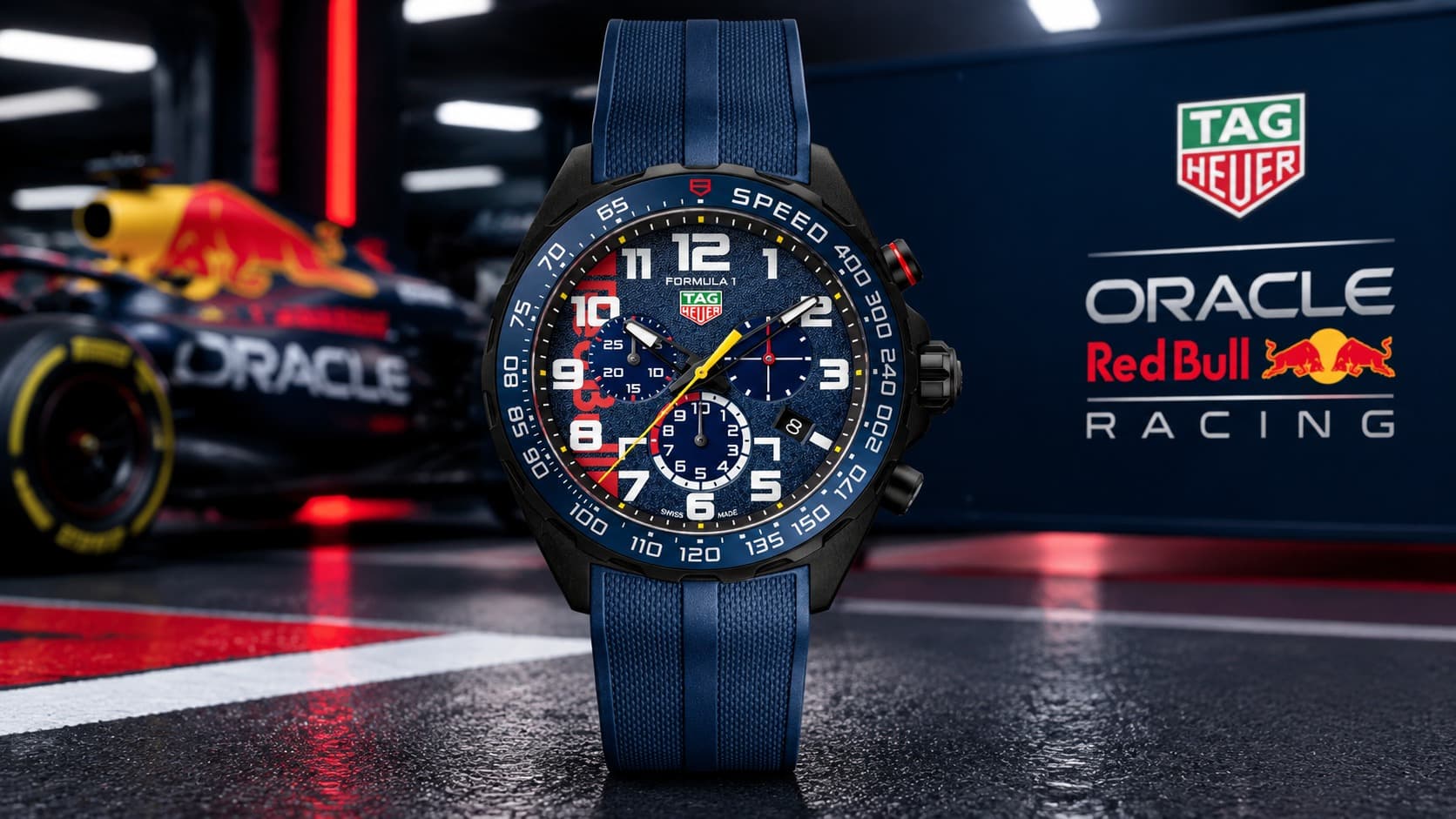
Red Bull Racing continues their relationship with TAG Heuer through 2025, featuring the Formula 1 Chronograph X Oracle Red Bull Racing Edition limited to 3,000 pieces at $2,650. This partnership includes custom Oracle Red Bull Racing apps that provide real-time race insights and telemetry data, while celebrating the team’s 20-year presence in Formula 1. The collaboration extends beyond simple branding, with TAG Heuer providing timing technology and developing special editions that reflect the team’s championship success under Max Verstappen’s dominance.

Mercedes-AMG F1 Team & IWC Schaffhausen

Since 2013, Mercedes has worked with the Swiss manufacturer to create technically focused timepieces that mirror the team’s engineering excellence. Key models include the Pilot’s Watch Performance Chronograph 41 priced at $13,700 for rubber strap versions and $19,900 for Ceratanium bracelet variants. The partnership faces transition as Lewis Hamilton’s departure to Ferrari ends his personal IWC sponsorship worth approximately $2 million annually, though the team relationship continues with George Russell and other Mercedes drivers promoting the brand’s precision engineering heritage.

Ferrari & Richard Mille

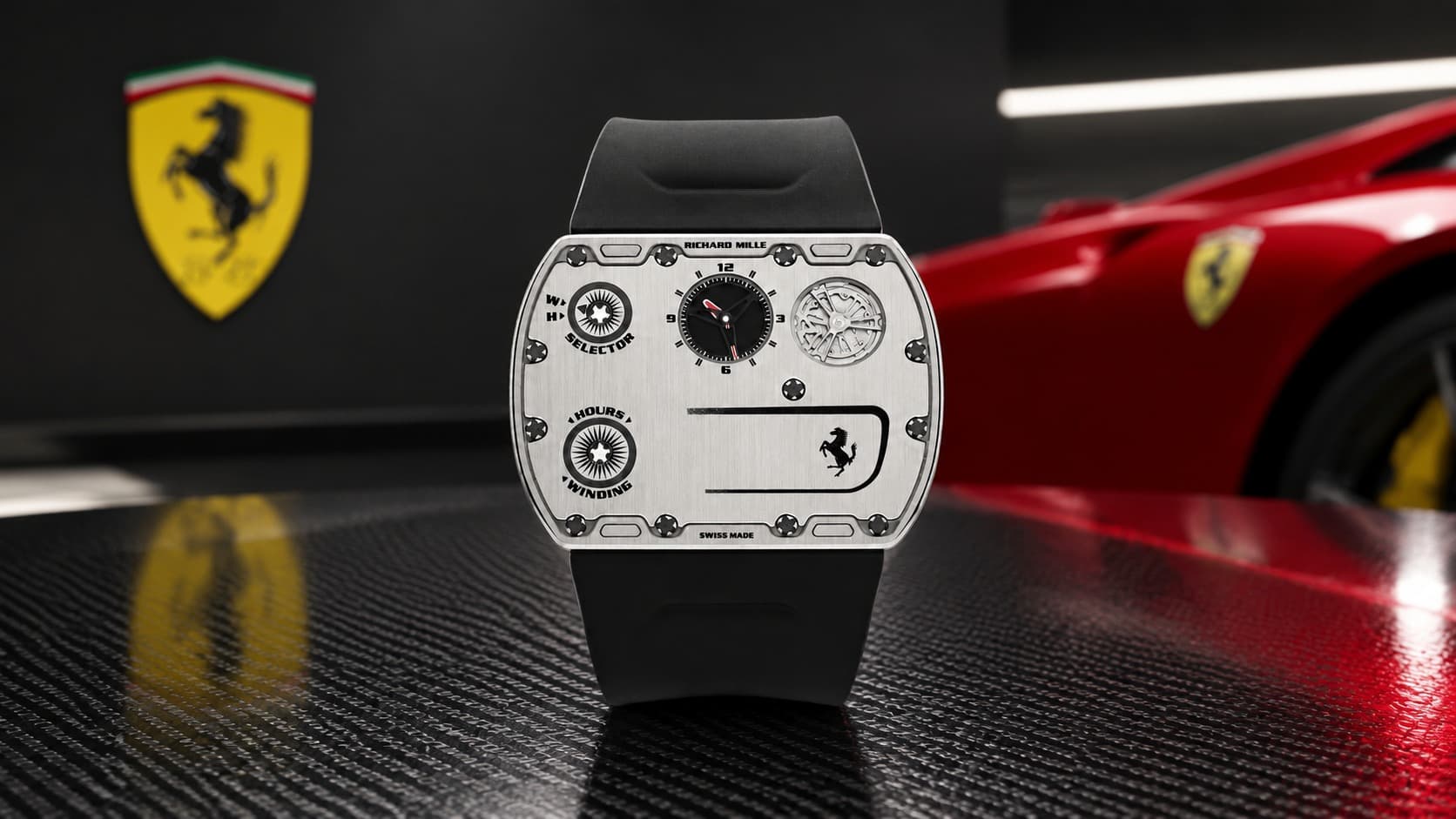
Active since 2021, this partnership produces some of motorsport’s most exclusive timepieces, including the RM UP-01 Ferrari, the world’s thinnest mechanical watch at just 1.75mm thick. The relationship extends to creating the RM 43-01 Ferrari split-seconds chronograph, limited to 150 pieces with Carbon TPT versions reaching $1.535 million. Ferrari’s partnership with Richard Mille represents the pinnacle of F1 watch collecting, where exclusivity and technical innovation meet Italian racing heritage, often selling out immediately upon release.

McLaren & Richard Mille

Running through 2027, this collaboration features the RM 50-03 McLaren F1, the world’s lightest mechanical chronograph utilizing GraphTPT graphene-enhanced carbon construction. The partnership demonstrates direct technology transfer from Formula 1, with McLaren’s expertise in carbon fiber and lightweight materials directly influencing watch design. Certain limited editions require buyers to prove McLaren car ownership, emphasizing the brand’s commitment to authentic motorsport enthusiasts rather than casual luxury consumers.

Alpine F1 Team & H. Moser & Cie

Replacing Bell & Ross in 2024, Alpine chose the understated Swiss independent manufacturer, featuring the Streamliner Chronograph Alpine Edition at CHF 89,000. This partnership represents H. Moser’s first global motorsport collaboration across all Alpine racing divisions, including Formula 1, World Endurance Championship, and customer racing programs. The choice reflects Alpine’s preference for authentic Swiss craftsmanship over mass-market luxury brands, appealing to collectors who appreciate independent watchmaking artistry.

Aston Martin F1 Team & Girard-Perregaux

Since 2021, this partnership has produced refined timepieces that match the team’s sophisticated British luxury positioning, including the Laureato Green Ceramic Limited Edition that mirrors Aston Martin’s distinctive Racing Green livery. The collaboration emphasizes traditional luxury craftsmanship and elegant design over extreme technical innovation, appealing to collectors who prefer understated exclusivity and classic aesthetic appeal over bold motorsport styling.

Racing Bulls & Tudor

The Red Bull sister team announced Tudor as their 2024 official timing partner, marking the Rolex subsidiary’s first Formula 1 appearance. The partnership features the Black Bay Chrono “Carbon 25” limited to 2,025 pieces at €7,400, demonstrating how emerging teams can attract established luxury brands seeking motorsport entry points without the premium costs of top-tier team partnerships.

Teams Without Current Watch Sponsors

Williams Racing (previously sponsored by Bremont 2021-2023), Haas F1 Team, Kick Sauber, and one additional team currently operate without watch sponsors. These partnerships represent significant opportunities as F1’s global audience continues expanding, particularly for brands seeking entry into motorsport’s premier marketing platform without the premium costs associated with championship-contending teams.


The current landscape of F1 watch partnerships reveals a mature market where established luxury brands compete for association with successful teams, while emerging manufacturers seek opportunities with teams lacking existing relationships. The diversity of partnerships, from TAG Heuer’s heritage-focused approach to Richard Mille’s ultra-luxury positioning, demonstrates how different watch brands can successfully leverage Formula 1’s platform to reach their target audiences. As teams continue to achieve success and new manufacturers enter the luxury watch market, these partnerships will likely become increasingly competitive, with brands willing to invest significantly for authentic motorsport associations that resonate with affluent consumers worldwide.

Evolution of Formula 1 Watch Brand Partnerships

The history of Formula 1 watch partnerships traces back over five decades, beginning with pioneering relationships that established the foundation for today’s billion-dollar industry. From Heuer’s groundbreaking 1969 appearance on a Formula 1 car to the evolution of official timekeeping partnerships, these historic collaborations demonstrate how watch brands and motorsport have grown together through technological advancement and marketing innovation.

  • Heuer establishes Formula 1 watch sponsorship foundations in 1969 – Jack Heuer’s company became the first luxury watch brand to appear on a Formula 1 car, marking the beginning of what would become motorsport’s most enduring luxury partnership category. This pioneering move was followed by the 1971 Ferrari partnership, motorsport’s first official watch brand team sponsorship, where Jack Heuer’s deal with Enzo Ferrari provided each driver with gold Carrera Caliber 1158 CHN watches engraved with their names and blood types, establishing the template for modern F1 watch collaborations.
  • Revolutionary timing technology development transforms motorsport accuracy – Heuer became Formula 1’s first official timekeeper in 1974, introducing the Automatic Car Identification Timing System that measured lap times to 1/100th of a second using revolutionary transponder technology. This technical leadership extended to developing the Le Mans Centigraph timing system for Ferrari’s Fiorano test track, setting worldwide standards for motorsport timekeeping that influenced racing accuracy across all categories for decades.
  • Official timekeeper transitions mark industry evolution phasesLongines partnered with Olivetti from 1982-1991 to develop groundbreaking radio wave car identification systems that further improved timing accuracy. TAG Heuer assumed official timekeeper duties from 1992-2003 while simultaneously developing their Formula 1 watch collection, demonstrating how brands could leverage technical partnerships to create consumer products that celebrated motorsport heritage and innovation.
  • Rolex era represents modern luxury sports marketing maturity – Rolex’s tenure as Global Partner from 2013-2024 represented the modern era of F1 watch partnerships, shifting from technical timekeeping focus to comprehensive luxury lifestyle marketing at $50 million annually. This approach emphasized brand prestige and global luxury positioning rather than direct technical contribution, establishing the model that LVMH’s current billion-dollar investment follows and expands upon.
  • Major team partnerships evolve through strategic brand alignments – IWC’s Mercedes relationship since 2013 represents current partnership longevity standards, surviving multiple driver changes and team ownership transitions through consistent technical innovation messaging. Conversely, the Hublot-Ferrari partnership (2012-2020) ended when Richard Mille offered more exclusive ultra-luxury arrangements, demonstrating how partnerships evolve as brands seek differentiation in increasingly competitive markets.
  • Notable discontinued relationships reveal changing market dynamics – Oris-Williams (2003-2018) terminated when Oris pivoted toward environmental conservation focus, while Bremont-Williams (2021-2023) ended as the British manufacturer reassessed motorsport marketing effectiveness. These departures illustrate how brands regularly evaluate partnership ROI and strategic alignment, particularly during periods of changing consumer preferences and marketing channel effectiveness.
  • Technical innovation partnerships drive industry advancement – Historic collaborations between watch manufacturers and F1 teams have produced significant technological breakthroughs, including shock-resistant mechanisms, lightweight materials, and precision timing systems that have influenced both industries. These technical partnerships demonstrate how motorsport collaboration drives innovation beyond simple marketing relationships, creating genuine value for both partners through shared research and development initiatives.
  • Championship success influences partnership values and longevity – Successful teams have historically commanded premium partnership terms and longer contract durations, with championship-winning teams like Ferrari, Mercedes, and Red Bull maintaining the most valuable and stable watch partnerships. This pattern continues today, where teams with consistent podium performance attract the most prestigious luxury watch brands and negotiate the most favorable commercial terms.

The historic evolution of Formula 1 watch partnerships reveals a progression from simple timing partnerships to sophisticated luxury marketing platforms that generate hundreds of millions in annual investment. LVMH’s unprecedented $1 billion commitment represents the ultimate evolution of relationships that began with Jack Heuer’s innovative vision over 50 years ago. These partnerships have consistently driven innovation in both industries, from revolutionary timing technology to cutting-edge materials science, while creating some of the most sought-after collector timepieces in luxury watch history. The foundation established by these historic partnerships continues to influence how modern brands approach Formula 1, emphasizing the importance of authentic technical collaboration alongside prestigious brand association.

Luxury F1 Watches: Prices and Collector Values

The ultra-luxury segment of Formula 1 timepieces represents the absolute pinnacle of horological craftsmanship and motorsport collaboration, where prices reach well into seven figures and exclusivity drives remarkable collector demand. These extraordinary pieces combine cutting-edge materials developed for racing applications with traditional Swiss watchmaking expertise, creating timepieces that serve as both functional chronometers and investment-grade collectibles.

  • Richard Mille RM 43-01 Ferrari reaches $1.535 million for ultimate exclusivity – Limited to just 150 total pieces across titanium and Carbon TPT variants, this split-seconds chronograph features a 514-component movement with 70-hour power reserve, representing the absolute pinnacle of F1 watch partnerships. The Carbon TPT version commands the highest pricing due to its Formula 1-derived composite construction, while the titanium variant offers slightly more accessible entry at approximately $1.2 million, though both versions sell out immediately upon release.
  • McLaren-Richard Mille RM 50-03 demonstrates extreme lightweight innovation – Priced at approximately $400,000, this world’s lightest mechanical chronograph weighs just 40 grams including the strap through GraphTPT construction that combines graphene with carbon fiber. The secondary market shows dramatic appreciation, with examples trading at $500,000 versus the original $191,500 retail price for earlier McLaren collaborations, demonstrating how Richard Mille’s motorsport partnerships consistently outperform broader luxury watch market trends.
  • Limited production quantities intensify collector premiums significantly – Richard Mille typically restricts F1 collaborations to 150-500 pieces globally, with the most exclusive models limited to single-digit production runs. The RM056 Tourbillon Chronograph Sapphire Felipe Massa produced only 5 pieces worldwide, achieving $1.65 million at auction, while most Richard Mille F1 models sell out at authorized dealers within hours of release, creating immediate secondary market premiums.
  • Historic auction performances establish sustained collector value – The Richard Mille RM56-02 AO Tourbillon Sapphire achieved $3.014 million at Christie’s 2024 auction, setting new benchmarks for modern F1-inspired timepieces. Even vintage pieces show remarkable appreciation, with Ayrton Senna’s personal TAG Heuer S25.706C reaching $69,000 at Bonhams 2007, demonstrating how driver provenance significantly affects valuations across all price segments from vintage to contemporary pieces.
  • Ferrari collaboration pieces command premium positioning within Richard Mille catalog – The RM UP-01 Ferrari, the world’s thinnest mechanical watch at 1.75mm thick, represents pure horological innovation rather than traditional chronograph function, with pricing approaching $2 million for the most exclusive variants. Ferrari-branded Richard Mille pieces consistently trade at premiums over comparable non-motorsport models, reflecting the power of Italian racing heritage in luxury watch collecting circles.
  • Mid-tier luxury partnerships offer accessible entry points – IWC Mercedes-AMG collaborations range from $13,700 to $19,900, representing significant value within the luxury sports watch category while maintaining Formula 1 authenticity. TAG Heuer’s Red Bull Racing editions at $2,650-$3,000 provide the most accessible genuine F1 partnership timepieces, though even these entry-level pieces often appreciate in secondary markets due to limited production runs and team championship success.
  • Materials innovation drives premium pricing justification – The use of Formula 1-derived materials like Carbon TPT, Grade 5 titanium, and ceramic composites adds substantial cost to manufacturing while creating genuine technical differentiation from standard luxury watches. These advanced materials, developed specifically for racing applications, provide shock resistance and weight reduction that justify premium pricing while offering collectors authentic motorsport technology in wearable form.
  • Investment performance exceeds traditional luxury watch categories – F1-inspired timepieces consistently show stronger secondary market performance than comparable luxury sports watches without motorsport connections, with Richard Mille F1 pieces averaging 15-20% annual appreciation over five-year periods. This investment potential attracts collectors who view these timepieces as alternative assets rather than simple luxury accessories, driving continued demand and price appreciation.

The most expensive Formula 1 timepieces represent far more than luxury accessories—they are wearable expressions of motorsport technology and craftsmanship that command investment-grade pricing through genuine scarcity and technical innovation. Richard Mille’s dominance in this ultra-luxury segment demonstrates how authentic motorsport partnerships can create extraordinary value when combined with cutting-edge materials and traditional Swiss manufacturing excellence. As Formula 1’s global popularity continues expanding and luxury watch collecting becomes increasingly sophisticated, these exceptional timepieces will likely maintain their position as among the most desirable and valuable modern luxury collectibles, where motorsport heritage meets horological artistry at the highest possible level.

How F1 Partnerships Change Watch Design

Formula 1 cars racing through turn at Singapore Grand Prix night race showing Ferrari Mercedes Red Bull teams competing on illuminated street circuit

Formula 1 partnerships fundamentally transform watch design by introducing motorsport-derived materials, aesthetic elements, and functional features that would never exist without racing collaboration. These partnerships push manufacturers beyond traditional luxury watch boundaries, creating timepieces that incorporate genuine racing technology while maintaining the elegance and craftsmanship expected from premium Swiss manufacturers.

  • Racing-inspired aesthetics reshape traditional watch design language – F1 partnerships introduce bold color schemes directly from team liveries, with Mercedes-IWC timepieces featuring the team’s distinctive Petronas teal accents and carbon fiber patterns that mirror the actual race car construction. Alpine’s H. Moser collaboration incorporates the team’s blue and pink racing colors in subtle dial details, while Aston Martin’s Girard-Perregaux pieces showcase the iconic Racing Green that defines the British team’s visual identity across all their motorsport activities.
  • Advanced materials transfer directly from race car construction – Richard Mille’s McLaren partnerships utilize GraphTPT, a revolutionary material combining graphene with carbon fiber that was originally developed for Formula 1 applications, creating watches that weigh just 40 grams while maintaining exceptional strength. Ferrari collaborations feature Carbon TPT construction techniques derived from their race car manufacturing processes, while IWC’s Mercedes pieces incorporate Grade 5 titanium and Ceratanium materials that provide aerospace-grade durability in lightweight packages.
  • Functional chronograph features reflect motorsport timing requirements – TAG Heuer’s Red Bull Racing editions include specialized tachymeter scales calibrated for Formula 1 lap timing, allowing users to calculate speeds based on race track distances. The Connected Calibre models feature dedicated F1 timing apps that synchronize with actual race data, providing real-time sector times and gap analysis that mirrors what teams use during race weekends for strategic decision-making.
  • Case construction adopts shock-resistant racing technology – F1-inspired timepieces incorporate shock absorption systems developed to withstand the extreme vibrations and impacts experienced during high-speed racing, with Richard Mille’s skeletonized movements featuring specialized mounting systems that protect delicate components. These innovations often filter down to manufacturers’ broader collections, advancing overall industry standards for sports watch durability and reliability under extreme conditions.
  • Dial layouts incorporate racing instrumentation design principles – Many F1 partnership watches feature dial arrangements inspired by race car dashboard layouts, with oversized numerals for rapid readability and contrasting color combinations that ensure visibility under varying light conditions. The TAG Heuer Formula 1 collection specifically mirrors automotive gauge cluster aesthetics, while Richard Mille pieces often feature open-worked dials that showcase movement components similar to visible mechanical elements in Formula 1 cars.
  • Limited edition numbering and personalization reflect team exclusivity – F1 partnership watches frequently incorporate unique numbering systems that reference significant racing milestones, championship years, or historic race victories, creating emotional connections between timepieces and motorsport heritage. Some models feature engravings of race track layouts, team logos integrated into movement bridges, or special edition packaging that mirrors the presentation of actual racing components delivered to Formula 1 teams.
  • Strap and bracelet design incorporates racing materials and patterns – Many F1 collaborations feature straps made from materials used in actual race car interiors, including perforated leather that matches driver seat patterns or rubber compounds similar to tire materials. Carbon fiber bracelet links, titanium mesh designs, and quick-release systems that allow rapid strap changes all derive from Formula 1’s emphasis on lightweight construction and rapid pit stop efficiency.
  • Movement decoration reflects motorsport mechanical aesthetics – High-end F1 partnership pieces often feature movement decoration that celebrates mechanical engineering, with skeletonized bridges shaped like suspension components, rotor designs that mirror wheel patterns, and finishing techniques that highlight the industrial precision found in Formula 1 powertrains. These decorative elements serve both aesthetic and functional purposes, reducing weight while showcasing the intricate craftsmanship required for both watchmaking and motorsport engineering.

Formula 1 partnerships have revolutionized luxury watch design by introducing authentic motorsport technology and aesthetics that create genuinely differentiated timepieces rather than simple cosmetic variations. The materials, construction techniques, and design principles developed through these collaborations often influence manufacturers’ broader collections, advancing the entire luxury watch industry’s technical capabilities. As Formula 1 technology continues evolving toward hybrid powertrains and sustainable materials, watch partnerships will likely drive further innovation in areas like recycled composites, energy-efficient movements, and environmentally conscious manufacturing processes that reflect the sport’s commitment to technological advancement and environmental responsibility.

F1 Watch Collecting Tips for Beginners

Formula 1 team watches represent one of the most dynamic and rewarding segments of luxury watch collecting, where motorsport heritage combines with horological craftsmanship to create timepieces that often appreciate significantly beyond their retail prices. The collecting landscape spans from accessible entry-level pieces to ultra-rare examples that command auction prices exceeding luxury real estate, with authentication, provenance, and timing playing crucial roles in building a valuable collection.

  • Championship success directly influences long-term collectible value – Watches associated with championship-winning teams and seasons consistently outperform pieces from less successful periods, with Red Bull Racing TAG Heuer models from their dominant 2010-2013 era now trading at significant premiums over retail prices. Mercedes-IWC collaborations from their eight consecutive championship years (2014-2021) show similar appreciation patterns, while Ferrari pieces from successful seasons command higher values than those from rebuilding periods, demonstrating how team performance affects collector interest decades later.
  • Limited production numbers create immediate scarcity premiums – Most F1 team watches feature production runs between 500-3,000 pieces globally, with the most exclusive Richard Mille collaborations limited to just 150 examples worldwide. These restrictions ensure immediate sellouts at authorized dealers and create secondary market premiums within months of release, particularly for pieces tied to significant racing milestones, driver championships, or historic team achievements that resonate with both watch and motorsport enthusiasts.
  • Driver association and provenance multiply collectible premiums significantly – Timepieces with direct driver connections command exponentially higher values, with Lewis Hamilton’s personal IWC pieces achieving auction prices 300-400% above equivalent retail models. Even production watches worn by drivers during public appearances or featured in official team photography show substantial appreciation, while watches gifted to team personnel, mechanics, or VIP guests often trade at premiums due to their authentic motorsport provenance and accompanying documentation.
  • Authentication requires specialized knowledge of partnership details – Genuine F1 team watches feature specific details that distinguish them from standard collections, including unique serial number ranges, special caseback engravings, and packaging elements that vary by partnership agreement. Collectors must verify model-specific details like limited edition numbering sequences, correct dial printing, and authentic team logos, as the high values involved have unfortunately created a market for sophisticated replicas that require expert evaluation to identify.
  • Timing market entry around team performance cycles maximizes investment potential – Experienced collectors often purchase pieces during a team’s less successful periods when prices remain accessible, anticipating future championship success that drives demand and values higher. This strategy proved highly successful for early Mercedes-IWC collectors who acquired pieces during the team’s pre-2014 years, before their hybrid era dominance created massive demand that now makes early collaboration pieces extremely difficult to acquire at reasonable prices.
  • Condition preservation requires motorsport-specific considerations – F1 team watches often feature materials and finishes that require specialized care, including carbon fiber components sensitive to temperature changes and ceramic elements prone to impact damage. Collectors must maintain original packaging, certificates, and documentation while avoiding exposure to magnetic fields, extreme temperatures, and impacts that could damage racing-derived materials not found in traditional luxury watches.
  • Secondary market platforms vary significantly in expertise and pricing – Specialized motorsport watch dealers often provide better authentication services and market knowledge than general luxury watch retailers, while auction houses like Christie’s and Bonhams have developed dedicated sports watch expertise. Online platforms require careful verification of seller credentials and return policies, particularly for rare pieces where authentication challenges and condition assessment difficulties can lead to expensive mistakes for inexperienced collectors.
  • Investment performance correlates with Formula 1’s global popularity growth – F1 team watches have benefited enormously from the sport’s expanding global audience, particularly growth in Asian markets and younger demographics that view luxury watches as alternative investments. Richard Mille F1 pieces show consistent 15-20% annual appreciation over five-year periods, while even mid-tier collaborations like TAG Heuer team editions often outperform broader luxury watch market indices during periods of strong team performance.

Collecting Formula 1 team watches offers unique opportunities to combine passion for motorsport with serious horological investment, though success requires extensive knowledge of both industries and careful attention to authentication, condition, and market timing. The most successful collectors typically focus on specific partnerships or eras rather than attempting to acquire every available model, building expertise that allows them to identify undervalued pieces and avoid common pitfalls. As Formula 1’s global popularity continues expanding and luxury watch collecting becomes increasingly sophisticated, F1 team timepieces will likely maintain their position among the most desirable and financially rewarding specialty collecting categories, where motorsport history meets horological artistry in timepieces that celebrate humanity’s ongoing pursuit of speed, precision, and mechanical excellence.

F1 Watch Deal Values and Marketing Returns

Formula 1 watch sponsorships represent sophisticated commercial arrangements where brands invest hundreds of millions of dollars annually for access to motorsport’s most prestigious marketing platform. These partnerships extend far beyond simple logo placement, involving complex activation strategies, performance metrics, and return-on-investment calculations that determine the financial success of what have become some of sports marketing’s most expensive deals.

  • LVMH’s record-breaking investment establishes new industry benchmarks – The luxury conglomerate’s $150 million annual commitment represents a 300% increase over Rolex’s final $50 million payments, demonstrating how Formula 1’s expanding global reach and younger demographic appeal justify premium partnership valuations. This 10-year, $1+ billion total investment includes TAG Heuer’s Official Timekeeper status alongside activation rights for Louis Vuitton and Moët Hennessy, creating an unprecedented multi-brand luxury ecosystem that maximizes marketing efficiency across LVMH’s portfolio.
  • Individual team partnerships command substantial annual investments – Red Bull Racing’s TAG Heuer relationship reportedly generates $8-12 million annually, while Mercedes-IWC arrangements reach similar levels through a combination of cash payments, product supply, and co-marketing commitments. Richard Mille’s dual partnerships with Ferrari and McLaren likely exceed $15-20 million annually each when considering the ultra-luxury positioning and exclusive product development involved in these ultra-premium collaborations.
  • Driver personal endorsements add significant premium layers – Lewis Hamilton’s individual IWC contract was valued at approximately $2 million annually, separate from the team partnership, demonstrating how top drivers command personal endorsement fees that often exceed those of athletes in other major sports. These individual deals include product development collaboration, lifestyle marketing appearances, and social media obligations that extend the partnership’s reach beyond race weekends throughout the calendar year.
  • Return on investment challenges require comprehensive activation strategies – Industry research indicates that only 10.1% of Formula 1 sponsors achieve positive ROI based purely on televised brand exposure value, making sophisticated activation essential for partnership success. Successful watch brands invest additional millions in hospitality experiences, digital content creation, social media campaigns, and limited edition product launches that extend well beyond passive logo placement to create meaningful consumer engagement.
  • Brand visibility metrics demonstrate social media’s growing importance – Australian Grand Prix analysis revealed $41 million total Sponsor Media Value across 23 billion social impressions, where 73% of brand value originated from social media platforms rather than traditional broadcast exposure. TikTok generates $33,400 per post versus Instagram’s $15,100 average, highlighting how brands must optimize content across multiple platforms to maximize their substantial Formula 1 investments.
  • Hospitality and experiential marketing justify premium partnership costs – F1 partnerships provide watch brands with unparalleled VIP entertainment opportunities, including paddock access for up to 100+ guests per race weekend, private team facility tours, and exclusive driver meet-and-greet experiences that create lasting customer relationships. These hospitality benefits often generate more direct sales impact than television exposure, particularly for ultra-luxury brands targeting high-net-worth individuals who value exclusive experiences over mass market advertising.
  • Product licensing and co-development create additional revenue streams – Beyond basic sponsorship fees, partnerships generate ongoing income through licensing agreements for team-branded timepieces, collaborative limited edition development, and retail partnerships that extend the commercial relationship throughout the year. Richard Mille’s Ferrari collaboration reportedly generates over $50 million annually in retail sales, with the brand keeping substantial margins while Ferrari benefits from licensing fees and brand association premiums.
  • Performance-based contract structures align partner and team incentives – Modern F1 watch partnerships increasingly include variable compensation tied to championship success, race wins, and media exposure metrics that ensure brands receive maximum value during successful seasons while providing cost protection during less competitive periods. These arrangements often include bonus payments for championship victories and penalty reductions for poor performance, creating aligned incentives between commercial and sporting objectives.

The commercial success of Formula 1 watch partnerships depends on brands’ ability to activate their investments across multiple touchpoints beyond simple logo visibility, creating comprehensive marketing programs that justify the substantial financial commitments involved. As Formula 1’s global audience continues expanding and luxury consumers increasingly seek authentic brand experiences, watch partnerships will likely become even more valuable, though brands must continue innovating their activation strategies to achieve positive returns on what represent some of sports marketing’s largest investments. The most successful partnerships combine heritage storytelling, technical innovation, exclusive product development, and experiential marketing to create emotional connections with consumers that translate into long-term brand loyalty and sustainable business growth.

Future of F1 Watch Partnerships

The future of Formula 1 watch partnerships will be shaped by technological innovation, demographic transformation, and evolving consumer expectations that demand more than traditional luxury positioning. As Formula 1 attracts increasingly diverse and digitally-native audiences, watch brands must adapt their partnership strategies to incorporate cutting-edge technology, sustainable practices, and interactive experiences that resonate with younger consumers while maintaining the exclusivity and craftsmanship that define luxury timepieces.

  • Digital authentication technology gains traction in luxury watch industry – Several luxury watch brands are exploring blockchain and digital certificate technologies to combat counterfeiting and provide ownership verification, with some manufacturers beginning to offer digital authentication services alongside their physical timepieces. These emerging technologies aim to create secure ownership records and authenticity verification systems, though widespread adoption and regulatory requirements remain in development stages across different markets.
  • Connected watch technology evolves beyond basic smartwatch applications – Future F1 partnerships will feature sophisticated “second-screen experiences” that synchronize with race broadcasts, providing real-time telemetry data, strategic analysis, and immersive fan engagement throughout race weekends. TAG Heuer’s Connected Calibre platform demonstrates early development in this direction, with planned integration of augmented reality features, biometric monitoring during races, and personalized content delivery based on individual viewing preferences and team loyalties.
  • Sustainability initiatives drive material innovation and partnership selection – Formula 1’s commitment to net-zero emissions by 2030 increasingly influences partner selection, with teams preferring watch brands that demonstrate environmental responsibility through recycled materials, carbon-neutral manufacturing, and sustainable packaging. Future partnerships will likely feature timepieces constructed from recycled carbon fiber, bio-based leather alternatives, and cases made from ocean plastic, reflecting both industries’ commitment to environmental stewardship while maintaining luxury positioning.
  • Demographic transformation demands authentic digital-first engagement strategies – With 45% of Gen Z Americans following Formula 1 and 77% of new fans under 35, future partnerships must prioritize authentic storytelling, interactive digital experiences, and social media engagement over traditional luxury marketing approaches. Successful brands will create content that celebrates technical innovation, diversity, and accessibility while maintaining the exclusivity that drives collector demand and premium pricing in luxury watch markets.
  • Artificial intelligence and personalization reshape partnership activation – Future F1 watch partnerships will utilize AI-powered personalization to create customized experiences for different consumer segments, from hardcore motorsport enthusiasts to casual luxury consumers. This technology will enable brands to deliver targeted content, personalized product recommendations, and exclusive access opportunities based on individual engagement patterns, purchase history, and demonstrated interests across digital platforms.
  • Virtual and augmented reality create immersive brand experiences – Partnerships will increasingly incorporate VR experiences that allow consumers to virtually visit F1 factories, experience pit stop procedures, and interact with drivers in ways previously impossible. AR applications will enable consumers to visualize how different timepieces look in various settings, access detailed technical information through smartphone cameras, and participate in exclusive virtual events that extend partnership engagement beyond physical race attendance.
  • Emerging markets drive partnership expansion and localization strategies – Growing F1 audiences in Asia, particularly China and Southeast Asia, will influence partnership strategies with increased focus on region-specific models, local cultural elements, and partnerships with emerging luxury watch manufacturers from these markets. Brands will need to balance global consistency with local market preferences, creating timepieces that celebrate both Formula 1’s international appeal and regional luxury traditions.
  • Independent and emerging watch brands seek motorsport entry opportunities – As established partnerships become increasingly expensive, smaller luxury manufacturers will pursue creative entry strategies through driver sponsorships, junior team partnerships, and specialized F1 Academy collaborations that provide authentic motorsport connections without premium costs. These emerging partnerships may focus on specific market segments, sustainable materials, or innovative complications that differentiate them from established luxury giants.

The future of Formula 1 watch partnerships will require brands to balance traditional luxury values with technological innovation, environmental responsibility, and authentic engagement with diverse global audiences. Success will depend on creating meaningful connections between motorsport heritage and contemporary consumer values, utilizing cutting-edge technology to enhance rather than replace the emotional appeal of mechanical timepieces. As both industries continue evolving, the most successful partnerships will be those that honor their shared commitment to precision, innovation, and excellence while adapting to meet the expectations of increasingly sophisticated and environmentally conscious luxury consumers who demand authenticity, sustainability, and genuine value from their premium purchases.

Conclusion

The landscape of Formula 1 watch partnerships has evolved from simple timekeeping arrangements into sophisticated billion-dollar marketing ecosystems that represent the pinnacle of luxury sports sponsorship. LVMH’s unprecedented $1 billion investment through TAG Heuer’s return as Official Timekeeper demonstrates how motorsport’s expanding global audience and demographic transformation have created unprecedented value for authentic luxury brand associations. From accessible $2,650 TAG Heuer chronographs to ultra-exclusive $1.5 million Richard Mille masterpieces, these partnerships span the complete luxury hierarchy while maintaining genuine connections to Formula 1’s core values of precision, innovation, and mechanical excellence.

The success of current partnerships—from Red Bull Racing’s heritage-focused TAG Heuer collaboration to Richard Mille’s revolutionary material science partnerships with Ferrari and McLaren—reveals how different luxury brands can leverage Formula 1’s platform to reach their target audiences through authentic storytelling and technical innovation. The integration of cutting-edge materials like GraphTPT carbon fiber, blockchain authentication systems, and connected watch technology demonstrates how these partnerships drive advancement in both industries while creating timepieces that serve as both functional instruments and valuable collector investments.

Looking ahead, the future of F1 watch partnerships will be shaped by sustainability requirements, digital integration, and the need to engage Formula 1’s increasingly diverse and younger global fanbase through authentic experiences rather than traditional luxury positioning alone. As emerging brands seek entry opportunities and established partnerships evolve to meet changing consumer expectations, Formula 1 watch sponsorship will continue representing luxury marketing’s most dynamic and valuable platform, where horological heritage meets motorsport innovation in timepieces that celebrate humanity’s endless pursuit of speed, precision, and mechanical perfection.

Nobbier logo

Subscribe To Our Weekly Newsletter

Get notified about new articles