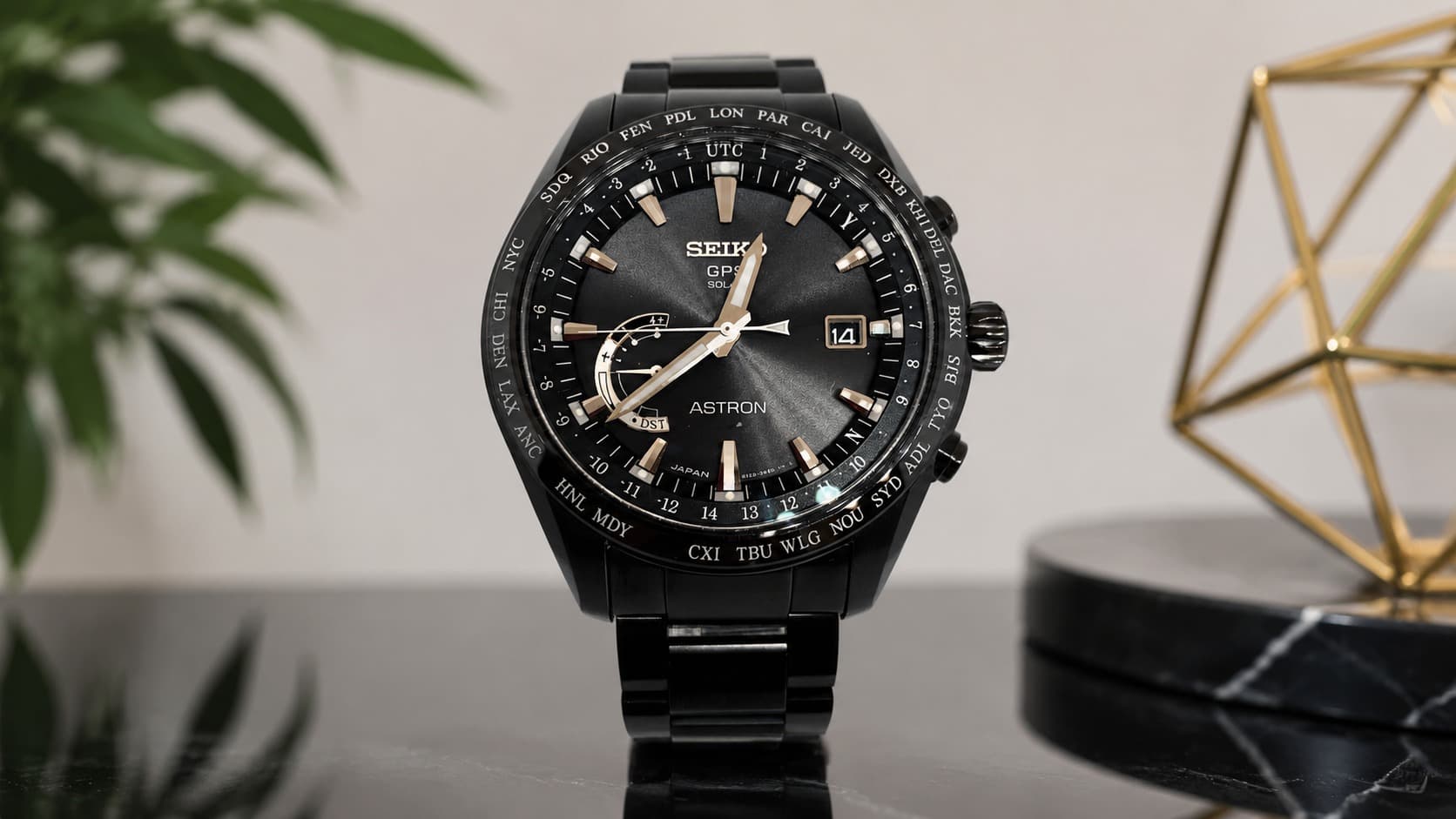
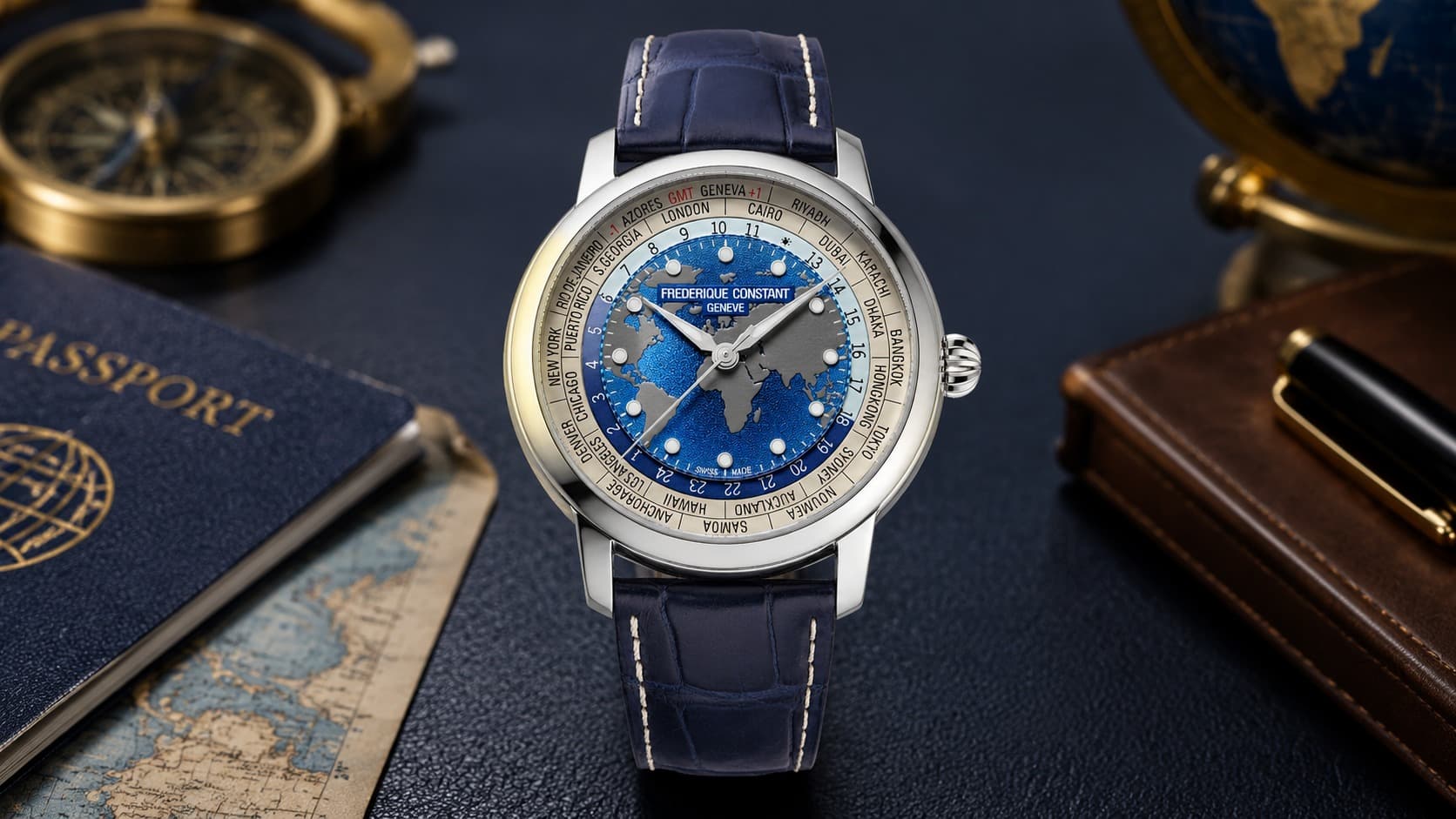
A world time watch is a sophisticated timepiece that displays the current time in multiple time zones simultaneously, typically showing all 24 major time zones around the globe through an intricate system of rotating rings, city names, and coordinated displays. These remarkable instruments solve one of modern life’s most persistent challenges: keeping track of time across different regions without mental calculations. Originally developed in the 1930s by Swiss watchmaker Louis Cottier, world time watches have evolved into essential tools for international business professionals, frequent travelers, and pilots. Whether you’re scheduling a conference call between continents or calling family abroad, a world time watch provides instant global time awareness at a glance, eliminating confusion in our increasingly interconnected world.
What Are World Time Watches?
World time watches stand out as the most comprehensive timekeeping solution for global time awareness, featuring complex dial layouts that show time across all major regions simultaneously. These timepieces solve the modern challenge of coordinating activities across continents by presenting multiple time zones through carefully arranged rotating elements and city references that eliminate the need for mental calculations or external tools.
- These watches display 24 to 37 different time zones at once, with major cities like New York, London, Tokyo, and Sydney positioned around the dial’s outer edge to represent their respective regions, while color-coded 24-hour rings rotate to show which areas experience daylight or nighttime hours
- The dial architecture consists of three main elements working together: standard hour and minute hands in the center showing your current location’s time, a 24-hour ring that makes one complete rotation daily, and a city ring featuring world capitals that corresponds to each time zone division
- World time watches offer superior global coverage compared to GMT watches that typically handle only 2-3 zones, or dual-time pieces that show exactly two locations, making them the ideal choice for people who regularly interact with multiple international markets or time zones
- Manufacturing approaches vary between intricate mechanical versions using gear trains and rotating discs driven by traditional watch movements, and modern digital alternatives with LCD screens that can display dozens of cities along with additional features like alarms, calendars, and world maps
- The core benefit lies in instant global time reference without external devices, allowing users to quickly determine appropriate calling times for international contacts, schedule meetings across continents, or track market opening hours in different financial centers
- Advanced models accommodate regions with non-standard time differences, including locations with 30-minute or 45-minute offsets like India, Iran, or parts of Australia, though simpler versions may only show full-hour time zone differences
- Setting procedures typically involve aligning your home city with the correct time on the 24-hour ring, after which all other locations automatically display their corresponding times, with some models featuring pushers for easy adjustment when traveling
World time watches transform what could be a confusing mathematical exercise into an elegant mechanical solution worn on your wrist. Rather than fumbling with phone apps or trying to remember time differences that change with daylight saving adjustments, these watches provide reliable reference that works anywhere in the world. This practical capability, combined with the impressive mechanical complexity or advanced digital features, makes world time watches valuable tools for anyone whose life or work extends beyond their local time zone.
History of World Time Watches
The story of world time watches begins with a missed train and ends with some of the most coveted timepieces ever created. This remarkable journey spans over a century of horological innovation, geopolitical changes, and the relentless pursuit of mechanical perfection in service of global connectivity.
- The foundation for world time watches emerged from the standardization of global time zones in 1884, when the International Meridian Conference in Washington established Greenwich as the prime meridian and divided the world into 24 time zones, creating the framework that would eventually make world time complications both necessary and possible
- Emmanuel Cottier, a Swiss engineer and watchmaker, first attempted to create a world time system in 1885 after being approached by Sandford Fleming, Chief Engineer of the Canadian Railway, who frequently missed connections due to constantly adjusting his watch to local time standards across different cities and proposed the need for standardized global timekeeping
- Louis Cottier, Emmanuel’s son, transformed his father’s failed concept into horological reality when he filed the crucial patent in 1931 at age 37, creating the fundamental mechanism that remains the basis for virtually all world time watches today, featuring coordinated city rings, 24-hour displays, and synchronized time zone relationships
- The first practical application came in 1931 when Cottier created a pocket watch for Baszanger, a jewelry retailer in Carouge near Geneva, but the real breakthrough occurred when prestigious Swiss manufacturers including Vacheron Constantin, Patek Philippe, and Rolex immediately recognized the potential and commissioned their own versions
- Patek Philippe launched their legendary partnership with Cottier in 1937, introducing the rectangular Reference 515 HU and the round Reference 96 HU in a Calatrava case, though the 515 remained largely experimental while the 96 HU became one of the most collectible vintage Patek Philippe watches ever produced
- The golden age of world time watches occurred during the 1940s and 1950s, when Patek Philippe produced the iconic Reference 1415 HU from 1939 to 1954 featuring 31mm cases and engraved city bezels, followed by the legendary Reference 2523 introduced in 1953 with larger 36mm cases and revolutionary dual-crown systems
- Cottier’s 1953 innovation added independent city ring adjustment through a second crown positioned at 9 o’clock, solving the previous limitation where travelers could only adjust world time settings through the main timekeeping crown, making the watches significantly more practical for international travel
- The most spectacular examples featured cloisonné enamel dials depicting world maps, with artisans creating intricate geographical representations using thin gold wire outlines filled with colored enamel and fired at high temperatures, resulting in timepieces that were both functional instruments and works of art
- Political changes reflected in vintage world time watches provide fascinating historical documentation, with Chinese cities listed as “Peiping,” “Beijing,” “Peking,” or “Nanking” depending on production dates during the tumultuous period of Chinese political transitions in the 1940s and 1950s
- Commercial failure paradoxically created collectible legends, as the complex dial layouts and high prices resulted in extremely limited production runs, with estimates suggesting fewer than 25 Reference 2523 watches ever made and only about 80 Reference 605 HU pocket watches produced over three decades
- The complications disappeared from Patek Philippe’s catalog in the late 1960s following Cottier’s death in September 1966, marking the end of an era as the remaining inventory of finished movements was gradually sold through the mid-1970s, creating a 30-year gap in world time production
- Renaissance arrived in 2000 when Patek Philippe introduced Reference 5110, the first new world time watch since the 1960s, featuring modern pusher operation instead of dual crowns, automatic movements replacing manual winding, and updated city selections reflecting contemporary global commerce
The historical arc of world time watches mirrors the evolution of international travel itself, from the romantic era of ocean liners and propeller aircraft to today’s jet age connectivity. These timepieces captured the imagination of an increasingly interconnected world while demonstrating Switzerland’s leadership in mechanical innovation. The vintage examples from Cottier’s era now command astronomical prices precisely because they represent a unique moment when practical necessity, artistic achievement, and mechanical mastery converged to create functional objects that transcended their utilitarian purpose to become cultural artifacts celebrating human ingenuity and global consciousness.
How Do World Time Watches Work?
World time watches achieve their remarkable global timekeeping through ingenious mechanical systems that coordinate multiple moving parts to maintain accurate time relationships across all displayed zones. The engineering behind these timepieces represents centuries of horological development, combining traditional watchmaking with sophisticated gear calculations to create a miniature mechanical computer on your wrist.
- The foundation starts with a standard watch movement that powers conventional hour and minute hands, but adds a complex gear train specifically designed to drive a 24-hour wheel at exactly half the speed of the normal hour wheel, ensuring the 24-hour ring completes one full rotation every 24 hours instead of 12
- City rings contain 24 major world cities evenly spaced around the dial’s perimeter, with each city representing its time zone’s reference point, and these rings can be manually rotated during initial setup or when traveling to align your current location with the correct time position
- The 24-hour ring features alternating colored sections, typically white or silver areas representing daytime hours and black or dark blue sections indicating nighttime, allowing you to instantly see whether any global location experiences day or night without counting hours
- Gear ratio calculations prove critical for accuracy, as the 24-hour wheel must maintain precise timing relationships with the base movement, requiring watchmakers to calculate exact tooth counts and gear ratios to prevent timing errors from accumulating over extended periods
- Advanced complications include pusher systems that allow simultaneous adjustment of multiple elements, where pressing a single button advances the hour hand, rotates the 24-hour ring, and moves the city ring in perfect coordination to maintain accurate global time relationships
- Some premium models feature jumping hour mechanisms that allow the local time hour hand to advance in one-hour increments without affecting the minute hand or global time display, making travel adjustments quick and precise
- Digital world time watches use quartz crystals and electronic circuits to divide time signals into multiple outputs, displaying various time zones on LCD screens with internal clocks maintaining separate time calculations for each programmed location
- Mechanical versions typically add 50-100 additional components to a base movement, including specialized wheels, pinions, and springs that coordinate the world time display, while maintaining the reliability and accuracy of the underlying timekeeping mechanism
- Day/night indication systems vary by manufacturer, with some using graduated color transitions that slowly shift from light to dark, while others employ sharp contrasts between day and night sections, and premium versions may feature sapphire crystal overlays with special coatings
The remarkable aspect of world time complications lies in their ability to maintain all these relationships automatically once properly set. Every minute that passes on your local time corresponds to the exact same minute advancement in every other displayed time zone, achieved through mechanical precision that continues operating regardless of external power sources. This self-contained global timekeeping system represents one of horology’s most practical achievements, delivering complex functionality through elegant mechanical solutions that have remained fundamentally unchanged for over 80 years.
Types of World Time Watches
The world time category encompasses several distinct approaches to multi-zone timekeeping, each designed for specific user needs and preferences. From simple dual-time displays to comprehensive 37-zone complications, these different types offer varying levels of complexity, functionality, and price points to suit everyone from occasional travelers to international business executives.
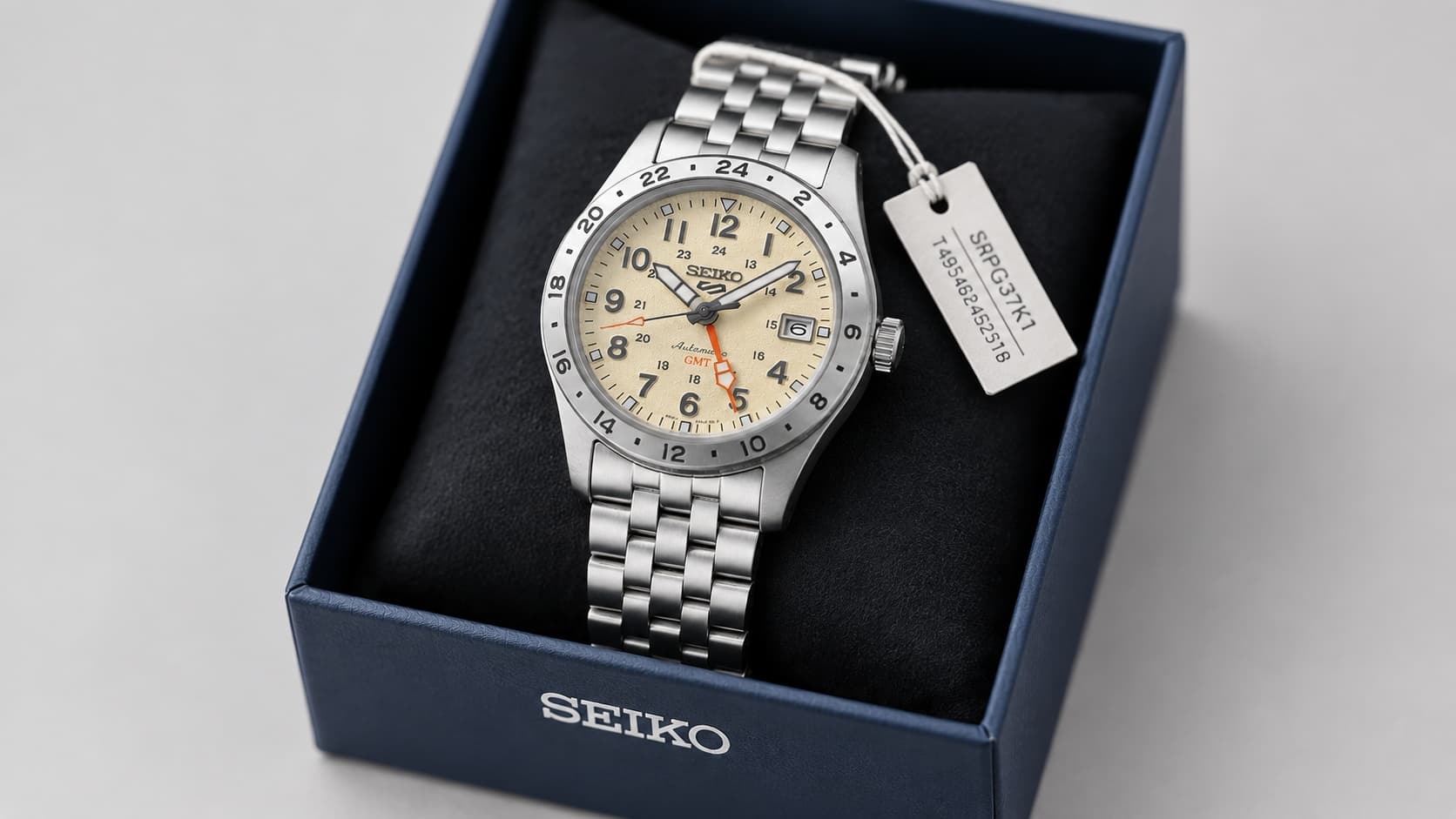
- GMT watches feature a fourth hand, usually colored red or orange, that rotates once every 24 hours and points to numbers on either a rotating bezel or fixed 24-hour scale around the dial’s edge, allowing you to track a second time zone while maintaining normal 12-hour local time display with standard hour and minute hands
- True GMT watches come in two main varieties: “caller” or “office” GMT where you independently set the 24-hour hand to track a second zone, and “traveler” or “flyer” GMT where the local hour hand jumps independently in one-hour increments while the 24-hour hand maintains home time reference
- Complete world time complications represent the most sophisticated approach, simultaneously displaying time for all 24 major time zones through rotating city rings and coordinated 24-hour scales, with premium versions accommodating up to 37 time zones including regions with 30-minute and 45-minute offsets like India and Nepal
- Dual time watches provide exactly two time zone displays through separate 12-hour subdials or digital readouts, offering familiar clock faces that many people find easier to read than 24-hour GMT formats, though they require more complex movements to drive independent hour mechanisms
- Digital world time models use electronic displays to show dozens of cities simultaneously, often including features like world maps, multiple alarms set to different time zones, countdown timers, and automatic daylight saving time adjustments that mechanical watches cannot provide
- Annual calendar world timers combine global time display with calendar complications showing date, day, and month across multiple time zones, though these represent some of the most complex and expensive mechanical watch complications available
- Solar-powered versions eliminate battery replacement concerns while maintaining accurate time through radio signal synchronization with atomic clocks, particularly popular in Japanese models from Citizen and Casio that automatically adjust for daylight saving changes
- Smartwatch world time applications offer unlimited customization with the ability to add any global location, though they depend on battery life and software updates, unlike mechanical alternatives that operate indefinitely with proper maintenance
- Regional specialists focus on specific geographic areas, such as watches designed primarily for European time zones or models optimized for Pacific Rim business hours, offering enhanced readability for users with consistent regional travel patterns
- Hybrid complications combine world time displays with other useful functions like chronographs, moon phases, or power reserve indicators, creating versatile timepieces that serve multiple purposes while maintaining world time functionality as the primary feature
Each type serves different lifestyle needs and budget considerations. Frequent travelers between two specific locations might prefer simple dual-time watches, while international business executives coordinating global operations benefit from complete world time complications. GMT watches offer an excellent middle ground for people who regularly track two or three time zones, and digital alternatives provide unmatched functionality for tech-savvy users who prioritize features over mechanical tradition. The key lies in matching the watch type to your specific global timekeeping requirements rather than simply choosing the most complex or expensive option available.
World Time vs GMT vs Dual Time Watches
The world of multi-zone timekeeping includes three distinct categories that serve different needs and preferences, each with unique advantages and limitations. Making the right choice requires clearly evaluating your specific time zone requirements, budget constraints, and personal preferences for display complexity versus simplicity.
- GMT watches feature an additional colored hand that rotates once every 24 hours, reading against either a bidirectional rotating bezel or fixed 24-hour scale printed on the dial, providing practical dual-time capability with minimal complexity and proven reliability across many decades of aviation and travel use
- True GMT functionality comes in two main variants: “caller” GMT watches where you independently set the 24-hour hand to track a home time zone while adjusting local time normally, and “traveler” GMT watches where the local hour hand jumps independently while the GMT hand maintains constant home time reference
- GMT advantages include simpler operation with fewer components to malfunction, cleaner dial layouts that remain easily readable during quick glances, lower manufacturing costs resulting in more affordable options, and widespread availability across numerous brands and price points from $500 to $20,000
- GMT limitations restrict you to tracking only 2-3 time zones maximum when using the rotating bezel for a third reference, require 24-hour format reading that some users find less intuitive than traditional 12-hour displays, and lack comprehensive global coverage for users needing multiple zone awareness
- Dual time watches display exactly two time zones through separate 12-hour subdials or digital readouts, offering familiar clock face reading without 24-hour format conversion, typically featuring AM/PM indicators or day/night symbols for clear morning/evening distinction
- Dual time benefits include intuitive 12-hour displays that require no learning curve, clean separation between time zones that prevents confusion, sophisticated movements showcasing advanced manufacturing capabilities, and elegant dress watch styling suitable for formal business environments
- Dual time drawbacks involve higher manufacturing complexity requiring independent gear trains for each subdial, resulting in premium pricing typically starting around $15,000 for quality mechanical versions, limitation to exactly two zones without expansion capability, and potential reliability concerns from increased movement complexity
- World time watches simultaneously display 24 or more time zones through rotating city rings and coordinated 24-hour scales, representing the most comprehensive global time solution with instant reference for any major world location
- World time advantages include complete global coverage eliminating mental calculations for any displayed location, impressive mechanical complexity demonstrating horological artistry, prestigious brand associations with luxury watchmaking traditions, and practical utility for users requiring multiple zone coordination
- World time limitations encompass premium pricing starting around $30,000 for luxury mechanical versions, complex dial layouts requiring practice to read quickly, larger case dimensions necessary to accommodate information density, and maintenance costs significantly higher than simpler alternatives
- Price comparisons reveal GMT watches ranging $500-20,000 with excellent options under $5,000, dual time watches typically $15,000-50,000 for mechanical versions, and world time complications $30,000-100,000+ for prestigious brands, though digital alternatives exist under $500 across all categories
- Usage pattern considerations help determine optimal choice: GMT watches suit frequent travelers between 2-3 consistent destinations, dual time watches work best for users managing regular communication between two specific locations, and world time watches serve international business executives coordinating across multiple continents
- Brand availability differs significantly with GMT watches offered by virtually every major manufacturer, dual time watches produced mainly by luxury brands specializing in complications, and true world time watches limited to prestigious manufacturers with advanced technical capabilities
- Resale value considerations favor GMT watches from established brands like Rolex and Omega that maintain strong secondary markets, while world time watches from Patek Philippe and Vacheron Constantin often appreciate as collectible complications, and dual time watches typically experience standard luxury watch depreciation
- Accuracy requirements remain similar across all types for mechanical versions, though world time complications may drift slightly more due to additional gear trains, while quartz alternatives provide superior precision regardless of complexity level
- Travel practicality varies with GMT watches offering simple crown-operated adjustments, dual time watches requiring careful subdial reading and potential crown position confusion, and world time watches needing pusher operation that some users find intimidating initially
The choice between these three options should reflect your actual usage patterns rather than impressive technical specifications or prestige factors. Someone regularly traveling between two specific cities benefits most from a high-quality GMT or dual time watch that handles their exact needs efficiently. International business executives coordinating with teams across multiple continents justify world time complications that provide comprehensive global reference. Consider long-term usage, maintenance costs, and whether you’ll actually utilize advanced features before investing in complexity that exceeds your practical requirements.
Who Should Buy World Time Watches?
World time watches serve specific groups of people whose professional responsibilities or personal situations require regular coordination across multiple time zones. These timepieces provide practical solutions for common global communication challenges while offering professional appearance and reliability that digital alternatives often lack.
- International business executives manage teams, suppliers, and clients across multiple continents, requiring instant awareness of appropriate calling times to avoid disturbing colleagues during evening hours or missing important market windows when coordinating with Asian, European, and American operations simultaneously
- Commercial airline pilots and flight crew members operate on coordinated universal time (UTC) for all flight planning, weather reports, and air traffic control communications, while also needing to track local arrival times and crew rest periods that vary by destination and route complexity
- Foreign exchange and commodity traders monitor market opening and closing times across major financial centers including London, New York, Tokyo, Hong Kong, and Sydney, where split-second timing affects trade execution and profit margins in volatile currency and commodity markets
- International consultants and project managers coordinate with distributed teams across time zones, scheduling calls and meetings that accommodate participants in multiple regions while tracking project deadlines that may reference different local business hours and holiday schedules
- Diplomatic personnel and government officials working with foreign counterparts need reliable time reference for official communications, treaty negotiations, and international incident response that operates across political boundaries and time zone differences
- Global shipping and logistics coordinators track vessel arrivals, cargo transfers, and delivery schedules that span multiple time zones, requiring coordination between ports, customs offices, and transportation networks operating on different local schedules
- International journalists and correspondents file stories with editors in different time zones while covering events that may have global significance, requiring awareness of publication deadlines and news cycle timing across multiple markets
- Military personnel deployed internationally coordinate operations with command structures in home countries while working with local forces and international coalitions that operate on different time standards and communication schedules
- Watch collectors and horology enthusiasts appreciate the mechanical complexity and craftsmanship involved in world time complications, often viewing these timepieces as functional art that demonstrates centuries of watchmaking innovation and precision engineering
- Frequent business travelers who regularly visit the same international destinations benefit from consistent time zone reference that eliminates mental calculations and reduces jet lag confusion when maintaining communication with home offices during extended trips
- Technology professionals supporting global software systems and server networks often work with distributed teams and must coordinate maintenance windows, software deployments, and incident response across multiple time zones with minimal disruption to users
- Academic researchers collaborating with international institutions coordinate conferences, data collection periods, and publication schedules across universities and research facilities operating in different time zones and academic calendar systems
The common thread among world time watch users involves responsibility for coordinating activities that extend beyond their immediate geographic location. These individuals typically find that smartphone apps and digital solutions, while functional, lack the professional appearance and instant accessibility that mechanical timepieces provide during meetings, presentations, and formal business settings. The reliability factor becomes particularly important for people whose mistakes in time coordination could result in missed opportunities, international incidents, or significant financial losses, making world time watches valuable insurance against costly scheduling errors in professional environments.
Best World Time Watch Features
Selecting the right world time watch requires careful consideration of multiple factors that directly impact daily usability and long-term satisfaction. The complexity of these timepieces means that seemingly minor details can significantly affect your experience, from quick glances during busy meetings to precise coordination of international activities.
- Time zone coverage determines the watch’s practical scope, with basic models showing 24 standard zones while advanced versions accommodate all 37 global time zones including locations with unusual offsets like Adelaide (+9:30), Kathmandu (+5:45), and Tehran (+3:30), which proves essential for comprehensive global business operations
- Dial readability becomes crucial given the dense information display, requiring high contrast between city names and backgrounds, appropriately sized fonts that remain legible without magnification, and clear separation between different ring elements to prevent confusion during quick time checks
- Day and night indicators provide essential visual reference through various methods including color-coded rings with white sections for daylight hours and black sections for nighttime, graduated transitions that slowly shift from light to dark, or special sapphire crystal overlays with tinted sections
- Pusher operation systems allow easy adjustment when traveling, with single-pusher models advancing all elements simultaneously while dual-pusher versions offer independent control of different functions, and the quality of pusher feel indicates overall manufacturing precision and long-term reliability
- City ring customization options let you replace standard city selections with locations more relevant to your specific needs, though this feature typically appears only in premium models from brands like Patek Philippe and Vacheron Constantin
- Case size considerations become important since world time complications require larger dial real estate, with most models ranging from 40mm to 44mm diameter, and thickness often exceeding 12mm due to complex movement architecture beneath the dial
- Water resistance ratings vary significantly, from basic 30-meter splash resistance in dress watch versions to 100-meter or greater protection in sport models, with consideration needed for crown and pusher sealing that maintains protection while allowing adjustment access
- Movement visibility through exhibition casebacks reveals the mechanical complexity and finishing quality, particularly important in luxury models where decorative world time wheels and engraved geographic details add visual appeal beyond pure functionality
- Crystal quality affects both aesthetics and durability, with sapphire crystal preferred for scratch resistance and optical clarity, while some models feature anti-reflective coatings that improve legibility under various lighting conditions
- Strap or bracelet integration should accommodate the typically larger case dimensions while providing comfort during extended wear, with quick-release systems increasingly popular for travelers who prefer different strap options for various occasions
- Power reserve indicators help mechanical watch owners track remaining energy, particularly important in complex movements that may have different power consumption characteristics compared to simple time-only watches
- Accuracy specifications matter more in quartz models where electronic precision enables exact global time coordination, while mechanical versions focus on consistent daily rate performance that maintains proper time zone relationships
The most important consideration involves matching features to your actual usage patterns rather than selecting the most impressive technical specifications. Someone who primarily travels between two continents might prioritize clear day/night indication and easy pusher operation over comprehensive 37-zone coverage. Conversely, international business executives coordinating with global teams benefit from maximum time zone coverage and premium readability features. Consider how often you’ll actually use advanced features versus paying for complexity that exceeds your practical needs, while ensuring essential functions like clear legibility and reliable operation meet your daily requirements.
How to Use World Time Watches

Mastering world time watch operation requires familiarity with multiple coordinated elements that work together to provide global time reference. While initial setup may seem complex, proper technique ensures accurate timekeeping across all displayed zones and prevents common mistakes that can lead to scheduling errors.
- Begin by identifying the three primary components on your watch dial: the outer city ring containing 24 major world cities, the 24-hour ring with day/night color coding that rotates once daily, and the central hour and minute hands that display your current local time using standard 12-hour format
- Set your local time first using the crown in position two, ensuring accuracy by synchronizing with a reliable time source like your smartphone or computer, as all other time zones depend on this initial setting being correct for the entire system to function properly
- Align the city ring by locating your current city and rotating the ring until it points to the correct hour on the 24-hour scale, for example if you’re in London at 3:00 PM, rotate the city ring until “London” aligns with “15” on the 24-hour ring
- Read other time zones by finding the desired city on the outer ring and noting where it points on the 24-hour scale, remembering that the white sections typically represent daytime hours (6:00-18:00) while dark sections indicate nighttime hours (18:00-6:00)
- Use pusher-operated models by pressing the advancement button to move forward one hour when traveling eastward, or use the reverse button if available when traveling westward, with each press simultaneously advancing the hour hand, 24-hour ring, and city ring in coordination
- Account for daylight saving time changes manually since mechanical watches cannot automatically adjust, requiring you to advance or retard the time by one hour when your local region changes between standard and daylight time
- Handle GMT watches differently by setting the main time normally, then using crown position two to independently adjust the 24-hour GMT hand to your desired second time zone, with the option to use a rotating bezel for tracking a third zone
- Read digital world time displays by scrolling through programmed cities using button controls, with most models allowing you to set multiple alarms for different time zones and customize the city list based on your specific travel destinations
- Verify accuracy periodically by checking displayed times against reliable sources, particularly after adjusting for travel or daylight saving changes, as small errors can compound over time if not corrected promptly
- Practice reading quickly by familiarizing yourself with common city positions and their typical relationships, such as knowing that when New York shows 9:00 AM, London displays 2:00 PM and Tokyo shows 11:00 PM
- Adjust for travel by determining your new time zone before departure and practicing the adjustment procedure at home, ensuring you can change settings confidently without accidentally disrupting other zones or damaging delicate mechanisms
- Maintain proper crown position awareness since many world time complications use multiple crown positions for different functions, with position one for winding, position two for time setting, and sometimes position three for world time adjustments
- Handle pushers gently but firmly, ensuring complete button engagement without excessive force that could damage internal mechanisms, and avoid rapid successive presses that might confuse the advancement system in mechanical models
- Keep written notes of frequently used time zones and their relationships to your home location, particularly for zones with unusual offsets that don’t appear on standard 24-city rings, helping you quickly calculate times for locations not directly displayed
The key to successful world time operation lies in developing consistent habits for setting and reading the watch rather than relying on intuition or guesswork. Regular practice with known time zones builds confidence and speed, while maintaining accuracy through periodic verification prevents small errors from becoming major scheduling mistakes. Remember that mechanical world time watches represent precision instruments that reward careful handling and systematic operation, providing decades of reliable global timekeeping when operated correctly.
Best World Time Watch Brands
The world time watch market spans from affordable digital options under $50 to exclusive mechanical masterpieces exceeding $100,000, with distinct tiers offering different levels of craftsmanship, functionality, and prestige. Each price segment serves specific user needs while maintaining the core global timekeeping functionality that defines this category.
- Casio dominates the ultra-affordable segment with models like the AE1200WH “Royale” at $25-30, featuring 31 time zones, LED backlight, and basic water resistance, plus the more advanced Edifice EFV-110 series around $150-200 that combines analog world time display with chronograph functions and solar charging capability
- Citizen Eco-Drive models range from $200-500 and eliminate battery concerns through solar power technology, with popular options including the BJ7000-52E Nighthawk featuring 24-city world time, while their Satellite Wave series around $400-600 automatically synchronizes with atomic clock signals for maximum accuracy
- Seiko offers compelling mid-range mechanical options like the SSA385 World Timer at $300-400 with automatic movement and 24-city display, while their Prospex Solar Chronograph SSC490 around $250 combines world time with pilot watch styling and 200-meter water resistance
- Tissot represents the entry point for Swiss mechanical world time watches with the Heritage Navigator at approximately $1,600, featuring the reliable ETA 2893-3 movement with COSC chronometer certification and traditional 24-city layout with day/night indication
- Frederique Constant produces elegant dress watch versions in their Worldtimer collection starting around $2,500-3,500, offering in-house movements, exhibition casebacks, and refined finishing suitable for business formal environments
- Montblanc Heritage Spirit Orbis Terrarum models around $5,000-6,000 feature functional world maps with day/night indication, MB 29.90 caliber movements, and luxurious case materials including steel and precious metals with detailed geographic engravings
- Ball Watch Company offers the Trainmaster Worldtime at $3,300 with extreme shock resistance rated to 5,000G, COSC certification, and tritium gas tube illumination that provides constant visibility without external light sources or battery power
- IWC Pilot’s Watch Timezoner models around $17,000-20,000 feature innovative bezel operation that allows time zone changes without crown manipulation, plus the brand’s renowned in-house movements and aviation-inspired design elements
- Vacheron Constantin Overseas World Time watches originally retailed around $37,000 but now trade for $22,000-30,000 on secondary markets, featuring 43.5mm steel cases, Caliber 2460 WT movements, and integrated bracelet systems with quick-release mechanisms
- Patek Philippe dominates the luxury segment with Reference 5230 series starting around $30,000-40,000 for white gold versions, while the prestigious Reference 5231 with cloisonné enamel dials commands $95,000-125,000, all featuring the legendary Caliber 240 HU movement
- A. Lange & Söhne Lange 1 Time Zone models around $45,000-55,000 offer German precision engineering with distinctive asymmetrical dial layouts, hand-engraved city rings, and movements finished to exceptional standards with hand-decorated components
- Girard-Perregaux WW.TC collections range $15,000-25,000 and feature both steel and precious metal cases with proprietary GP03300 movements, offering excellent value in the luxury mechanical segment with comprehensive 24-time zone coverage
- Jaeger-LeCoultre Geophysic Universal Time models around $25,000-35,000 combine world time complications with the brand’s Master Control precision standards, featuring antimagnetic movements and elegant dress watch styling suitable for formal occasions
- Rolex GMT-Master II models, while technically GMT rather than true world time watches, remain hugely popular at $10,000-15,000 retail, offering exceptional build quality, investment value, and practical dual-time functionality for frequent travelers
The secondary market offers opportunities to acquire discontinued luxury models at reduced prices, though buyers should verify authenticity and service history before purchasing. Entry-level buyers benefit most from reliable brands like Seiko, Citizen, and Casio that offer proven functionality without luxury premiums, while serious collectors typically focus on established Swiss manufacturers with long histories of world time production. Consider that luxury mechanical models require periodic servicing costing $1,000-3,000, while quartz alternatives need only occasional battery replacement, making total ownership costs significantly different across price categories.
Pros and Cons of World Time Watches
World time watches offer compelling advantages for global time coordination while presenting certain limitations that potential buyers should carefully consider. Like any specialized tool, these timepieces excel in specific situations while falling short in others, making honest evaluation essential for making the right purchase decision.
- Instant global time reference eliminates mental calculations and reduces scheduling errors, allowing you to see at a glance whether colleagues in different continents are likely to be working, sleeping, or available for communication without consulting external apps or conversion charts
- Professional appearance signals international business sophistication and attention to detail, making these watches excellent conversation starters during meetings while demonstrating your global perspective and commitment to precise coordination
- Independence from digital devices means your world time reference works regardless of battery life, internet connectivity, or smartphone availability, providing reliable backup when traveling through areas with limited connectivity or during extended outdoor activities
- Mechanical reliability in high-end models offers decades of service with proper maintenance, unlike electronic devices that become obsolete or require frequent updates, making quality world time watches potential heirloom pieces that maintain functionality across generations
- Enhanced travel confidence comes from always knowing appropriate calling times and meeting schedules across multiple zones, reducing anxiety about international coordination and helping maintain better relationships with global contacts through respectful timing
- Investment potential exists in luxury mechanical models from established brands, with certain vintage world time watches appreciating significantly in value while providing daily utility, unlike purely speculative investments that generate no practical benefit
- Conversation value and social recognition appeal to watch enthusiasts and professionals who appreciate mechanical complexity, often leading to networking opportunities and shared interests with other collectors or international business contacts
- Complex learning curve requires significant time investment to master proper setup and reading techniques, with many users finding the dense dial layouts initially overwhelming and prone to misreading during quick glances
- High purchase costs especially for quality mechanical models place these watches beyond many budgets, with entry-level Swiss mechanical options starting around $2,000 and luxury complications exceeding $50,000 for premium brands
- Maintenance requirements include professional servicing every 3-5 years for mechanical models, with world time service typically costing 25-50% more than simple watch repairs due to increased complexity and specialized knowledge requirements
- Size limitations make most world time watches quite large, typically 40-44mm diameter with increased thickness, potentially uncomfortable for smaller wrists or incompatible with dress shirt cuffs and formal wear requirements
- Accuracy drift over time affects mechanical models more than simple watches due to additional gear trains and complications, requiring more frequent regulation and potentially causing time zone relationships to become gradually misaligned
- Limited daylight saving accommodation since mechanical watches cannot automatically adjust for seasonal time changes, requiring manual correction twice yearly and creating temporary inaccuracy during transition periods
- Readability challenges arise from busy dial layouts packed with information, making quick time checks difficult in low light conditions or during situations requiring immediate time reference without careful examination
- Fragility concerns affect complex mechanical movements that include additional wheels, springs, and delicate components more susceptible to shock damage compared to robust time-only movements
- Obsolescence risk exists for digital models that may become incompatible with future software updates or lose support for specific features, while mechanical alternatives face parts availability issues for discontinued calibers
- Travel restrictions may apply to valuable timepieces when crossing certain international borders, with some countries requiring declaration of luxury goods or imposing import duties on expensive watches
- Insurance requirements increase for valuable world time watches, adding ongoing costs for comprehensive coverage that protects against theft, damage, or loss during international travel
- Limited customization options restrict most models to predetermined city selections that may not include your specific destinations, forcing compromises in displayed locations or requiring mental calculations for unlisted zones
The decision to purchase a world time watch should align with your actual global coordination needs rather than aspirational lifestyle goals. Frequent international travelers and business professionals who regularly coordinate across multiple time zones typically find these watches invaluable tools that justify their cost and complexity. However, occasional travelers or people whose international interactions remain limited may discover that smartphone apps provide sufficient functionality without the investment, maintenance, and learning curve associated with specialized timepieces. Consider your long-term international involvement, budget for ongoing maintenance, and honest assessment of whether you’ll fully utilize the complex capabilities before committing to a world time watch purchase.
World Time Watch Maintenance and Care
World time watches demand more specialized care than standard timepieces due to their complex mechanisms and additional components that coordinate global time displays. Proper maintenance ensures decades of reliable operation while protecting your investment from costly damage that could result from neglect or improper handling.
- Servicing intervals for mechanical world time watches typically range 3-5 years depending on usage patterns and movement quality, with luxury brands like Patek Philippe and Vacheron Constantin often extending intervals to 5-8 years through superior lubricants and manufacturing tolerances, while entry-level mechanical models may require more frequent attention
- Service costs significantly exceed simple watch maintenance due to specialized knowledge requirements and additional components, ranging from $800-1,500 for mid-range Swiss movements, $1,500-3,000 for luxury brand complications, and potentially $3,000-5,000+ for vintage or discontinued models requiring rare parts
- World time specific maintenance includes calibration of rotating city rings and 24-hour wheels to ensure proper alignment, replacement of specialized pushers and their sealing gaskets, cleaning and lubrication of complex gear trains that drive multiple displays, and verification that all time zone relationships remain accurate
- Water resistance maintenance requires annual pressure testing if you regularly expose the watch to moisture, with particular attention to pusher seals that can deteriorate faster than crown gaskets due to more frequent operation and complex internal mechanisms
- Crown and pusher care involves gentle operation without forcing resistance, ensuring complete engagement when making adjustments, avoiding rapid successive presses that can stress delicate mechanisms, and keeping these components clean and dry to prevent corrosion of internal springs
- Daily winding procedures for manual watches should follow consistent timing, typically 20-30 crown rotations each morning, while avoiding overwinding that can stress mainspring mechanisms already working harder to drive additional complications beyond basic timekeeping
- Automatic watch considerations include regular wear or quality watch winder use to maintain power reserve, as world time complications often consume more energy than simple movements, potentially causing shorter power reserves that require more frequent rewinding
- Magnetic field protection becomes crucial since complex gear trains with multiple wheels and pinions show greater susceptibility to magnetization, requiring degaussing services if the watch gains or loses time dramatically after exposure to electronic devices or magnetic sources
- Temperature extremes affect complex movements more severely than simple watches, with recommendations to avoid exposure below freezing or above 140°F that can cause lubricant breakdown, metal expansion issues, or temporary timing disruptions
- Shock protection varies by model quality, with luxury pieces typically featuring better shock absorption systems, though all world time watches benefit from careful handling during sports activities or situations involving potential impact
- Storage requirements include dedicated watch boxes or cases that protect from dust, moisture, and magnetic fields, with consideration for watch winders that maintain automatic movements during extended periods without wear
- Cleaning procedures involve gentle wiping with microfiber cloths for daily maintenance, avoiding harsh chemicals or ultrasonic cleaners without professional guidance, and periodic professional cleaning that includes disassembly and component inspection
- Parts availability concerns affect vintage and discontinued models where specialized world time components may require custom manufacturing, potentially making restoration extremely expensive or impossible for certain complications
- Documentation maintenance includes keeping original papers, service records, and instruction manuals that prove authenticity and provide technical specifications needed for proper service, while photographing serial numbers and case details for insurance purposes
- Professional service selection requires finding technicians experienced with world time complications, as general watch repair shops may lack expertise needed for complex calibers, potentially causing damage through improper handling or incorrect reassembly
- Warranty considerations vary significantly between brands, with some offering comprehensive coverage including world time complications while others exclude complex functions from standard warranty terms, requiring careful review of coverage limitations
- Preventive measures include avoiding exposure to strong magnetic fields from speakers, MRI machines, or industrial equipment, protecting from extreme temperature changes during travel, and storing away from direct sunlight that can fade dial colors or damage luminous materials
The most important maintenance principle involves establishing relationships with qualified service providers before problems arise, rather than seeking help during emergencies when proper care may be unavailable. Quality world time watches represent significant investments that reward proper care with decades of reliable operation, while neglect can result in expensive repairs that exceed the watch’s value. Consider maintenance costs as ongoing ownership expenses similar to luxury automobile care, budgeting for regular service intervals and unexpected repairs that maintain long-term functionality and value retention.
How to Buy World Time Watches
Purchasing a world time watch requires careful evaluation of multiple factors that extend beyond initial price considerations. These complex timepieces represent significant investments that demand thorough research and realistic assessment of your actual needs versus aspirational desires for prestigious complications.
- Budget planning should account for total ownership costs including purchase price, regular servicing, insurance coverage, and potential repairs, with realistic entry points starting around $500 for quality digital models, $2,000 for Swiss mechanical options, and $30,000+ for luxury complications from prestigious manufacturers
- Movement selection between mechanical and quartz depends on personal preferences and practical requirements, with mechanical offering traditional craftsmanship, collectible value, and perpetual operation without batteries, while quartz provides superior accuracy, lower maintenance costs, and additional features like automatic time zone updates
- Case sizing proves critical since world time watches typically range 40-44mm diameter with increased thickness from complex movements, requiring careful consideration of wrist proportions where 6-7 inch wrists suit 39-41mm cases, 7-8 inch wrists accommodate 41-44mm optimally, and larger wrists can handle 44mm+ comfortably
- Dial readability assessment involves examining contrast between text and backgrounds, font sizing that remains legible without magnification, logical organization of multiple information rings, and personal comfort with dense layouts that some users find overwhelming during quick time checks
- Brand reputation research includes investigating service network availability, parts sourcing for future repairs, warranty coverage specifics, and resale value history, with established manufacturers typically offering better long-term support than boutique brands with limited service infrastructure
- Feature prioritization requires honest evaluation of which capabilities you’ll actually use regularly versus impressive specifications that exceed practical needs, such as 37-zone coverage when you consistently work with only 6-8 locations, or elaborate calendar functions rarely referenced
- Water resistance requirements depend on intended usage patterns, with basic 30-meter ratings sufficient for dress watch applications, 100-meter protection recommended for daily wear including handwashing and rain exposure, and 200-meter ratings necessary for swimming or water sports activities
- Strap and bracelet considerations affect daily comfort and versatility, with integrated bracelets offering seamless appearance but limited style options, while traditional lugs accommodate various strap materials and colors suitable for different occasions and personal preferences
- Purchase timing can significantly impact pricing, with discontinued models often available at reduced prices from authorized dealers clearing inventory, though warranty coverage and service support may be limited compared to current production pieces
- Authentication verification becomes essential when purchasing from secondary markets, requiring examination of case serial numbers, movement markings, dial printing quality, and overall finish consistency that distinguishes genuine pieces from sophisticated replicas
- Warranty coverage evaluation includes understanding manufacturer terms, authorized dealer benefits, international service availability, and specific exclusions that may apply to complex complications or water damage incidents
- Insurance assessment involves determining replacement value coverage, international travel protection, and specific policy terms for luxury timepieces that may require separate riders beyond standard homeowner’s coverage
- Authorized dealer advantages include full manufacturer warranty, authentic parts guarantee, service network access, and often price protection policies, while grey market purchases sacrifice warranty coverage for reduced pricing that may prove false economy
- Online purchase considerations require careful seller verification, return policy review, and shipping insurance that protects valuable timepieces during transit, with preference for established retailers offering authentication guarantees and customer service support
- Try-before-buying opportunities through authorized dealers allow proper sizing assessment, comfort evaluation, and hands-on experience with complex functions, helping avoid expensive mistakes from purchasing watches that prove uncomfortable or difficult to operate
- Financing options from established dealers may offer attractive terms for luxury purchases, though careful evaluation of interest rates and total costs ensures financing arrangements make financial sense compared to delayed purchase savings
- Trade-in possibilities for existing watches can reduce net purchase costs, though realistic valuation expectations prevent disappointment when offered amounts fall below anticipated values
- Future service planning includes researching authorized service centers in your area, understanding typical service intervals and costs, and considering geographic accessibility if you frequently travel or relocate
- Collection planning for multiple watch ownership requires considering how world time pieces complement existing timepieces, avoiding redundant functions while ensuring sufficient variety for different occasions and practical needs
Common purchasing mistakes include choosing based on brand prestige rather than personal utility, underestimating ongoing maintenance costs, selecting cases too large for comfortable daily wear, and purchasing complex features rarely used in practice. Successful buyers typically spend considerable time researching specific models, visiting authorized dealers for hands-on evaluation, and honestly assessing their actual global timekeeping requirements before committing to purchases that will provide years of satisfactory service.
Conclusion
World time watches represent the perfect intersection of practical utility and mechanical artistry, transforming the complex challenge of global timekeeping into an elegant wrist-worn solution. These sophisticated timepieces eliminate the confusion and potential errors that come with mental time zone calculations, providing instant global awareness that proves invaluable for international business, travel, and personal coordination. Whether you choose an affordable digital model for basic functionality or invest in a luxury mechanical complication for horological appreciation, world time watches deliver reliable global time reference that works independently of batteries, internet connections, or smartphone apps.
The decision to purchase a world time watch should align with your actual global coordination needs rather than aspirational lifestyle goals or brand prestige considerations. Frequent international travelers, business executives managing global teams, and professionals coordinating across multiple time zones typically find these watches indispensable tools that justify their cost and complexity. However, occasional travelers or those with limited international interactions may discover that simpler GMT watches or smartphone applications provide sufficient functionality without the investment, learning curve, and maintenance requirements associated with comprehensive world time complications.
As our world becomes increasingly interconnected through digital communication and global commerce, world time watches remain relevant solutions that combine centuries of horological tradition with modern practical needs. These timepieces offer lasting value through mechanical reliability, professional appearance, and independence from digital infrastructure that can fail during critical moments. Whether you select an entry-level option to begin exploring multi-zone timekeeping or invest in a luxury complication that serves as both functional tool and collectible art, a quality world time watch provides decades of reliable global coordination while celebrating humanity’s ongoing quest to master time itself.