Sinn is a German watch brand built by people who cared more about function than fashion. It started with a pilot who wanted a better cockpit clock, and it grew into a company that builds watches tough enough for divers, police units, and even astronauts. Watch enthusiasts often bring up “German tool watches” in the same breath as Sinn, and the brand’s history, its best-known models, and the engineering behind every case explain exactly why.
Who Owns Sinn Watches?
Sinn watches are made by a company called Sinn Spezialuhren, based in Frankfurt am Main, Germany. A former World War II fighter pilot and flight instructor named Helmut Sinn started the company back in 1961, originally under his own name.
Helmut Sinn was not a trained watchmaker. He was a pilot first, and that background shaped everything his company built. He began by selling his own chronograph designs to fellow pilots and flying colleagues, built to his exacting specifications by manufacturers in Switzerland, and word slowly spread about how reliable and easy to read his designs were. By the mid-1980s the small operation had grown enough to move into a larger headquarters with dozens of employees, still built around the same idea: a watch should work perfectly under real, tough conditions.
From the very beginning, Helmut Sinn also did business differently than most watchmakers of his era. He sold watches directly to customers instead of going through retail stores, which was unusual for the time and let him keep prices lower by cutting out the middleman. That direct-sales habit is part of why Sinn watches have always felt like better value than their specs alone would suggest.
The company changed hands in 1994. An engineer named Lothar Schmidt, who had previously worked in production at the Swiss brand IWC, bought the business and renamed it Sinn Spezialuhren GmbH. Schmidt pushed the brand to start developing its own technologies in-house instead of relying only on outside suppliers, and that engineering-first mindset still drives the company today. Helmut Sinn himself did not retire quietly after selling the business. A year later, in 1995, he bought a separate Swiss watchmaker called Guinand and kept building watches under that name well into his old age.
Helmut Sinn passed away in 2018 at the age of 101, having spent nearly his entire life around aviation and precision instruments.
Why Are Sinn Watches Special?
Sinn watches stand out because they are built to solve real problems that pilots, divers, and rescue workers actually face, rather than to look good sitting in a display case. The brand has invented several of its own technologies instead of licensing them from someone else, and those inventions show up across nearly every collection it sells.
Several of Sinn’s proprietary technologies show this clearly:
- Ar-Dehumidifying Technology pulls moisture out from inside the case so the crystal never fogs up, even during sudden temperature swings.
- Tegiment Technology hardens the outer surface of the steel case to make it dramatically more scratch resistant than ordinary stainless steel.
- DIAPAL is a lubricant-free escapement system, meaning there is no oil inside that part of the movement that can thicken or break down in extreme cold.
- Temperature Resistance Technology keeps a watch working normally across a huge range, from well below freezing to well above body temperature.
None of this is just marketing talk, either. Sinn built its early reputation partly by surviving the 1970s “quartz crisis,” a period when cheap electronic watches from Japan put many traditional watchmakers out of business. Sinn actually used that crisis to its advantage, buying up leftover parts from a struggling Breitling to build the Sinn 903, one of its most famous models.
Best Sinn Watches by Category
The best Sinn watches fall into a few clear groups: everyday pilot watches, dedicated dive watches, and rugged “mission timer” watches designed for professional use. A handful of models stand out as the clearest examples of each.
Sinn 556: The Everyday Classic
The Sinn 556 is usually the first model people discover, and it earns that spot by being simple, compact, and genuinely well built. The case is compact by Sinn’s standards, measuring 38.5 millimeters across, which keeps it sitting comfortably on both larger and smaller wrists.
The 556 handles daily wear without complaint. A screw-down crown and sapphire crystal case back push its water resistance to 200 meters, while the case itself resists magnetic fields, shocks, and drops in air pressure that would trouble a more delicate watch. Inside sits a dependable Swiss automatic movement, dressed up with a decorated rotor rather than a plain, off-the-shelf part.
The 556 has stuck around for decades because it does one job extremely well instead of trying to do everything at once. Sinn has even released special anniversary versions of it over the years, which says a lot about how central this model is to the brand’s identity.
New Sinn 556 watches typically cost somewhere between $1,000 and $1,300 depending on the strap or bracelet, with pre-owned examples selling for noticeably less.
Sinn 104: The Modern Pilot’s Watch
The Sinn 104 is a newer pilot’s watch, launched in 2013, that quickly became a fan favorite. At 41 millimeters across and just under 12 millimeters thick, it sits comfortably on most wrists without feeling oversized.
The dial is designed for fast, easy reading at a glance, and the bezel that rotates in either direction is built from aluminum to keep the watch’s front end light. A Swiss automatic movement inside provides a day and date display along with a solid power reserve, and the watch is rated water resistant to 200 meters. Because the case back is clear sapphire crystal, the movement is visible from behind, a detail that mechanical watch enthusiasts tend to appreciate.
New Sinn 104 watches generally retail in the $1,900 to $2,600 range depending on the strap, bracelet, and dial color chosen, with pre-owned examples selling for less.
Sinn U1: The Submarine Steel Diver
The Sinn U1 is arguably the brand’s most famous single model, and the story behind its case material explains why. Sinn’s engineers went looking for a steel alloy tough enough for serious diving, and they found it at ThyssenKrupp Marine Systems, the same German company that builds hulls for the country’s Class 212 submarines. That supplier now provides Sinn with small quantities of the exact steel used on those subs.
This so-called “submarine steel” resists seawater corrosion extremely well and, just as importantly, carries almost no residual magnetism. That matters a great deal underwater, since regular steel can slowly pick up magnetism over time and start throwing off nearby instruments and compasses.
The U1 case measures 44 millimeters across, and the bezel uses Tegiment hardening for extra scratch protection. Independent testing labs have certified the watch’s water resistance down to 1,000 meters, and the rotating bezel is attached using a “captive” design, meaning it is built into the case in a way that stops it from working loose or popping off during a hard impact.
New Sinn U1 models generally start around $2,400 and climb higher depending on the strap, bracelet, or special coating chosen.
Sinn U50: The Smaller Diver
Not every collector wants a 44 millimeter watch on the wrist, and Sinn built the U50 to answer that exact complaint. The watch shrinks the U1’s case down while keeping nearly all of the original’s toughness intact. The U50 comes in three main looks: an all-black version, one with a black bezel over a natural steel case, and a fully uncoated steel version.
Even at the smaller size, the U50 keeps the key technologies that make the U1 special, including Tegiment hardening, the German submarine steel case, and the captive diver’s bezel, and it carries the same official diving certifications. For anyone drawn to the U1’s story but put off by its size, the U50 is the natural alternative.
New Sinn U50 watches generally price between about $2,300 and $3,600 depending on the version, coating, and strap or bracelet.
Sinn EZM Series: Built for Real Missions
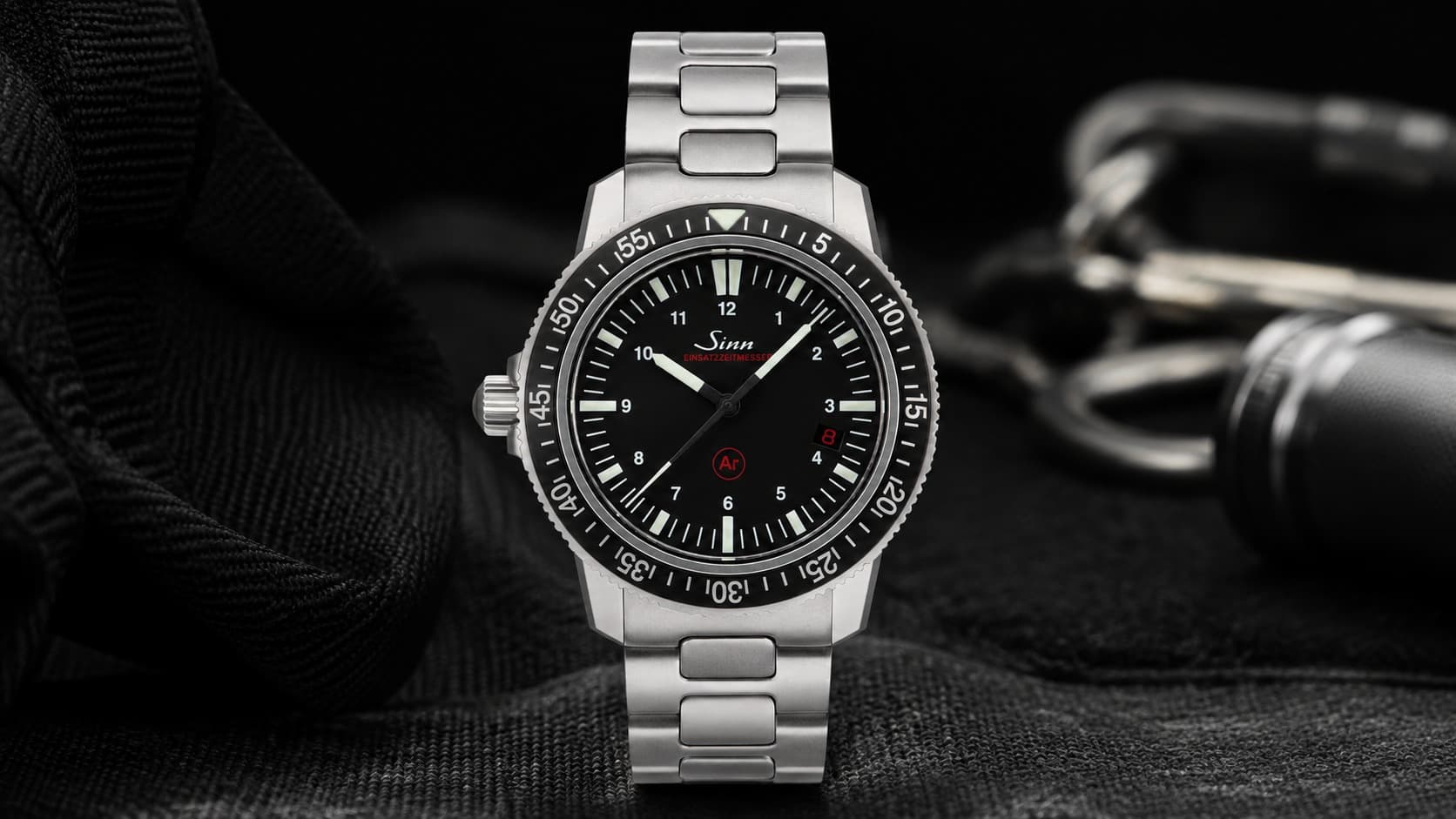
The EZM line, short for “Einsatzzeitmesser,” which is German for “mission timer,” is where Sinn’s tool-watch reputation is most obvious. The company introduced its first two models together in 1997: the EZM 1, a chronograph, and the EZM 2, a rugged diving watch that used an oil-filled case to withstand extreme underwater pressure. Each one was built around the specific needs of professionals like military units, police, and first responders, and each has grown into its own small family of successors over the years.
These watches were originally developed for the German Federal Police and German Customs, and today the list of professional users includes emergency doctors, pilots, firefighters, and elite tactical units. One of the most notable of those units is GSG 9, the counter-terrorism arm of Germany’s Federal Police. GSG 9 was formed in 1972, shortly after the tragedy at the Munich Olympics, and became internationally known after successfully ending a hijacking crisis in Mogadishu in 1977.
Sinn built a dedicated watch for that unit’s maritime division, made from the same submarine steel used in the U1. The model is officially certified functional to 5,000 meters of diving depth, using a temperature-stabilized quartz movement built for that kind of sustained pressure. Even at that depth, the watch is operating far beyond anything a human diver could survive, which says a lot about how much margin Sinn builds into its professional-use models.
Sinn 903: The Watch With a Breitling Connection
For a genuinely interesting piece of watch history, the Sinn 903 stands out from the rest of the lineup. The watch exists because of a business opportunity born out of crisis: Breitling halted production in 1979 as the quartz crisis hit hard, leaving behind a stock of unused Navitimer parts and movements. Helmut Sinn bought up that leftover stock and assembled the components into a new watch of his own, which eventually became known as the Sinn 903. On some early examples, internal parts still carried Breitling’s original branding, simply because the components being reused were genuine leftover Navitimer pieces.
When that supply of vintage parts eventually ran dry, Sinn didn’t stop production. The company began building its own cases instead, shaped closely after the original watch’s design. It’s a rare example of one watch brand’s history physically overlapping with a completely different one, which is part of why longtime collectors still treat the 903 as such a significant model.
Sinn 140/142: The Space Chronograph
The Sinn 140 and its close relative the 142 earned their nickname, “the Space Chronograph,” through a real trip off the planet. During the 1985 Spacelab D1 mission aboard the Space Shuttle Challenger, German astronaut and physicist Reinhard Furrer carried a Sinn 140 S into orbit, and the watch continued running normally in zero gravity. A sister model, the 142 S, flew again in 1992 on the Mir space station with astronaut Klaus-Dietrich Flade.
Sinn has long promoted this as the first automatic chronograph worn in space, though that claim has been disputed. Watch historians point out that a Seiko 6139 chronograph was actually worn during NASA’s Skylab 4 mission back in 1974, more than a decade earlier. Even with that asterisk, the 140’s real space history is well documented, and the modern version of the watch still carries Tegiment hardening and Ar-Dehumidifying technology, honoring the original’s no-nonsense design with today’s materials.
What Sinn Watch Technologies Should You Know About?
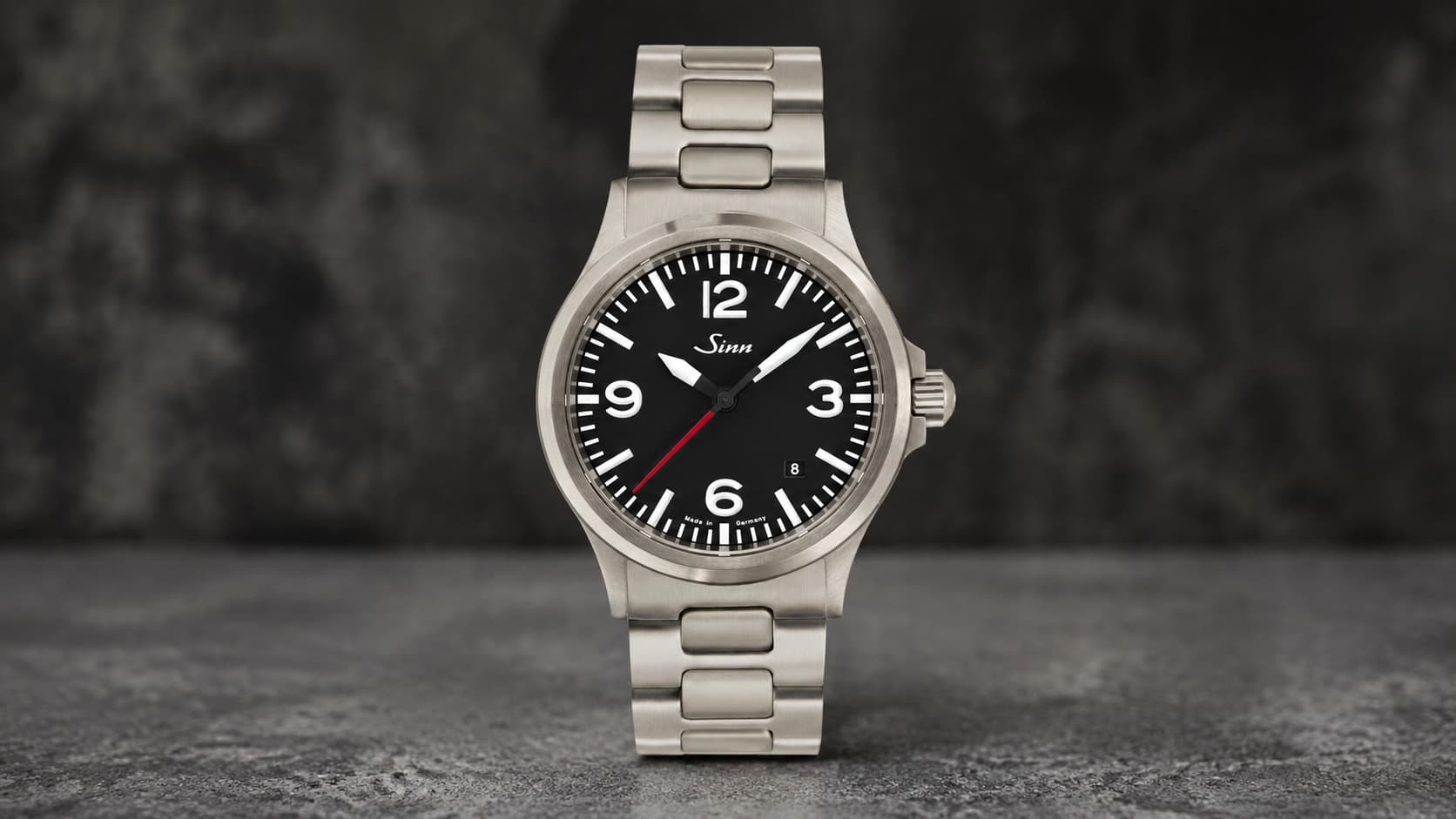
Sinn gives its technologies clear, specific names, which makes it easier to compare different watches once each term is understood.
| Technology | What It Does |
|---|---|
| Ar-Dehumidifying | Removes moisture from inside the case so the crystal never fogs up |
| Tegiment | Hardens the case surface for much stronger scratch resistance |
| DIAPAL | A lubricant-free escapement, avoiding oil that can thicken in the cold |
| Hydro Technology | Fills the case with a liquid to stay perfectly readable and fog-free underwater |
| Temperature Resistance | Keeps the watch working across an extreme range of hot and cold |
| Submarine Steel | A corrosion-resistant, virtually non-magnetic alloy borrowed from submarine hulls |
| Magnetic Field Protection | Shields the movement so nearby magnets don’t throw off timekeeping accuracy |
| D3-System | Seals the crown and chronograph pushers so they stay watertight without screw-down parts |
Each one of these solves a specific real-world problem instead of being a label slapped on for show, which fits the brand’s overall approach: build for function first, and let the looks follow naturally.
Frequently Asked Questions
Are Sinn watches good quality?
Yes. Sinn watches use proven, well-tested movements paired with hardened steel cases and proprietary technologies designed to handle moisture, magnetism, and extreme temperatures. Many models are worn daily by professionals such as pilots, police divers, and rescue teams, which is about as demanding a real-world test as a watch can face.
Where are Sinn watches made?
Sinn watches are made in Frankfurt am Main, Germany, where the company has been based since it was founded in 1961. Sinn handles its case manufacturing and technical development in-house, though like most brands in this price range, it sources its movements from established Swiss suppliers.
Is Sinn considered a luxury watch brand?
Sinn sits closer to the “affordable German tool watch” category than to traditional luxury brands. Most models fall somewhere between $1,000 and $3,000, which is modest next to major Swiss luxury names, and the brand has always leaned on engineering and durability rather than prestige branding to make its case.
What’s the difference between the Sinn 556 and the Sinn 104?
The 556 is the smaller and simpler of the two, at 38.5 millimeters, with a clean three-hand dial built for everyday wear. The 104 is a dedicated pilot’s watch at 41 millimeters, with a rotating bezel and a day-and-date display, pulling design details straight from aviation instruments.
Why is Sinn’s submarine steel special?
Sinn sources its submarine steel from ThyssenKrupp Marine Systems, the same manufacturer that builds hulls for Germany’s Class 212 submarines. This steel handles seawater corrosion exceptionally well and carries almost no magnetism, both of which matter enormously in a dive watch that needs to survive salt water and stay accurate near other instruments.
What movements do Sinn watches use?
Most Sinn watches run on modified movements from established Swiss suppliers like ETA and Sellita, which Sinn then adjusts, decorates, and tests to its own standards before installing them. A handful of higher-end models, mostly in the chronograph and mission-timer lines, use Sinn’s own in-house calibers instead.
How much do Sinn watches cost overall?
Across the full lineup, Sinn watches typically range from around $900 for the simplest quartz models up to roughly $6,000 for advanced chronographs like the EZM 10, which carries TESTAF certification, a German testing standard for pilot’s watches covering things like shock resistance, magnetic resistance, and readability. Limited editions and special collaborations can run higher still, but the vast majority of the collection sits comfortably in the $1,000 to $3,000 range.
Conclusion
Sinn built its name by solving real problems instead of chasing trends, and that shows clearly in every model covered here. The 556 and 104 prove the brand can make excellent everyday watches, the U1 and U50 show off its mastery of dive watch engineering through genuine submarine steel, and the EZM series explains why professional units like GSG 9 trust it in the field. The 903 and the 140 space chronograph, meanwhile, show a brand with a genuinely interesting history behind its no-nonsense reputation. For anyone drawn to watches built around function first, backed by real technology like Tegiment hardening and Ar-Dehumidifying protection, Sinn remains one of the clearest examples of German engineering applied to something worn every single day.