Racing watches represent one of the most specialized categories in luxury timepieces, combining precise chronograph functionality with motorsport heritage. These aren’t just regular watches with sporty looks – they’re purpose-built instruments featuring tachymeter scales for speed calculations, high-contrast dials for split-second readability, and robust construction to withstand racetrack demands. From the legendary Rolex Daytona to modern Formula 1 partnerships with TAG Heuer and Richard Mille, racing watches bridge functional timing instruments and luxury status symbols, creating a fascinating world where horological craftsmanship meets automotive passion.
What Is a Racing Watch?
Racing watches are specialized chronographs built specifically for motorsport timing, featuring unique characteristics that separate them from regular sports watches or dress timepieces. These instruments developed from real racing needs, where drivers and racing officials required dependable timing tools during competitions, leading to innovations that remain essential today.
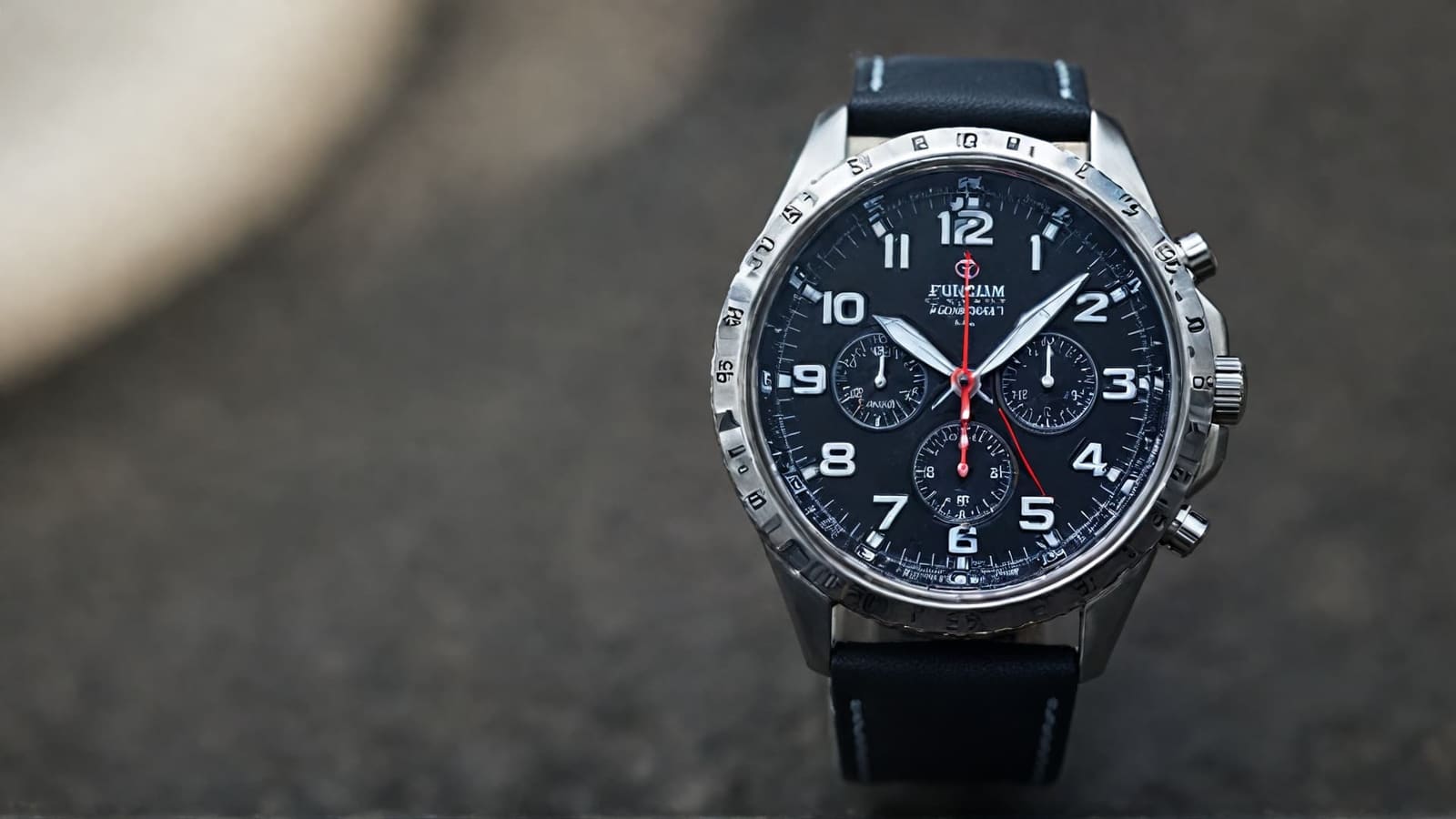
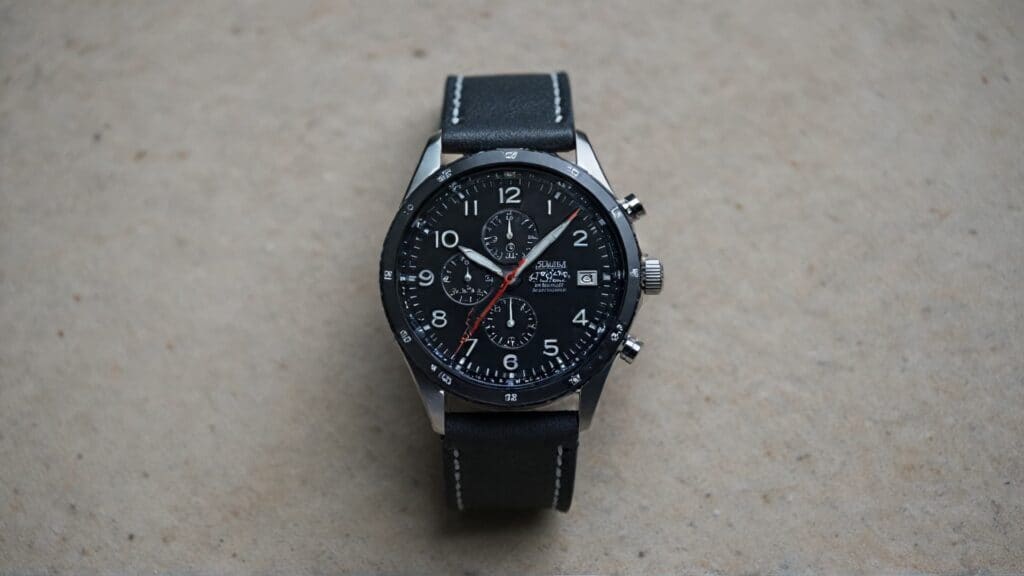
- Chronograph timing systems form the core feature with dedicated pushers at 2 and 4 o’clock positions that start, stop, and reset timing functions. The main chronograph hand sweeps continuously around the dial during operation, while subsidiary dials track elapsed minutes and hours. This allows precise measurement of lap times, sector splits, and total race duration with accuracy down to fractions of seconds.
- Tachymeter bezels or scales enable instant speed calculations without requiring mathematical computation. Drivers time a vehicle over exactly one mile, then read the average speed directly from the tachymeter markings where the chronograph hand stops. The scale typically ranges from 60 to 500 units, with larger numbers positioned near 12 o’clock for slower speeds and decreasing clockwise for faster measurements.
- Dial layouts prioritize racing readability through carefully planned color combinations and marker arrangements. The classic “panda” design uses white backgrounds with black chronograph subdials, while “reverse panda” configurations feature black dials with white subdials. Large Arabic numerals, thick hands with luminous coating, and bold hour markers ensure drivers can glance quickly at timing information without losing track focus.
- Case designs accommodate racing ergonomics with specific considerations for drivers wearing racing gloves or maintaining steering wheel grip. Many models feature slightly angled cases that face the driver when hands are positioned at 10 and 2 o’clock, while crown placement avoids interference with wrist movement during gear shifting or steering adjustments.
- Construction specifications exceed standard requirements to handle racing environment stresses including constant vibration, temperature extremes, and potential impacts. Shock-resistant balance wheel systems, reinforced crystal mounting, and robust case materials ensure continued operation despite harsh conditions that would affect delicate dress watches.
- Aesthetic elements reflect automotive culture through design choices that echo racing heritage. This includes color schemes matching famous racing liveries, perforated leather straps resembling racing gloves, carbon fiber dial elements, and subdial arrangements that mirror automotive instrument clusters. Some models incorporate actual materials from race cars or feature limited editions celebrating specific racing achievements.
- Water resistance ratings typically range from 50 to 200 meters to handle various weather conditions encountered during racing events. While not designed for diving, this protection ensures functionality during rain, car washing, or accidental submersion while maintaining chronograph pusher operation safety.
These distinctive characteristics make racing watches instantly recognizable to enthusiasts while serving practical timing needs that originated decades ago in professional motorsport. Each element serves both functional requirements and aesthetic appreciation of automotive culture, creating timepieces that celebrate the precision and excitement of racing.
The History of Racing Watches
The story of racing watches begins surprisingly before the automobile era, with timing instruments initially created for horse racing and early speed competitions. However, the connection between precision timepieces and motorsport truly crystallized in the early 20th century when emerging automobile racing demanded accurate timing solutions that existing pocket watches couldn’t provide in dynamic racing environments.
- Swiss manufacturer Heuer pioneered automotive timing in 1911 with the revolutionary “Time of Trip” chronograph, marking the first timepiece specifically engineered for automobile and aircraft applications. This dashboard-mounted instrument featured large, easily readable dials and robust construction designed to withstand vehicle vibrations, establishing the foundation for all future racing timepieces.
- The 1930s brought widespread motorsport adoption as Heuer developed specialized dashboard timers including the Master Time and Monte Carlo models for rally navigation teams. These instruments helped navigators track course progress and calculate average speeds over measured distances, proving essential for competitive rally events across Europe where precise timing determined winners.
- Sir Malcolm Campbell’s partnership with Rolex from 1931 to 1935 created the most famous early racing watch endorsement, as the legendary “King of Speed” wore Rolex Oyster watches during his record-breaking attempts. Campbell achieved nine world land speed records wearing Rolex timepieces, including his 1933 achievement of 272 mph at Daytona Beach and his final record of 301.337 mph at Bonneville Salt Flats in 1935, proving watch reliability under extreme conditions.
- The revolutionary 1960s marked racing watch’s golden age with multiple breakthrough models launching simultaneously. In 1963, Rolex introduced the Cosmograph Daytona specifically named after the famous speedway, featuring an integrated tachymeter bezel designed for professional racing drivers. The same year saw Jack Heuer create the Carrera, named after the dangerous Carrera Panamericana Mexican road race, with clean minimalist design optimized for racing legibility.
- 1969 proved historically significant with Heuer’s development of Caliber 11, among the first automatic chronograph movements, revolutionizing racing watch practicality. The same year introduced the Monaco as the world’s first square waterproof automatic chronograph, featuring the distinctive left-side crown placement necessitated by the new movement architecture.
- Steve McQueen’s endorsement transformed racing watches into cultural icons when he wore the TAG Heuer Monaco during filming of “Le Mans” in 1971. This association elevated racing watches beyond pure functionality into lifestyle statements, connecting Hollywood glamour with racing authenticity and creating lasting consumer desire for racing-inspired timepieces.
- Formula 1 partnerships began in 1969 when TAG Heuer became the first luxury brand logo appearing on a Formula 1 car through Jo Siffert’s Lotus. This initiated decades of prestigious partnerships including Ferrari collaboration from 1971-1979, McLaren partnership from 1985-2015, and current Red Bull Racing association, accumulating 230 wins, 595 podiums, and multiple championship titles.
- Modern era developments from 1990s onward saw racing watches evolve into luxury lifestyle products while maintaining motorsport connections. Richard Mille revolutionized the category with ultra-light, ultra-expensive models worn by current Formula 1 drivers, while traditional manufacturers continued developing technically advanced movements with enhanced shock resistance and precision.
The evolution from practical timing instruments to luxury status symbols reflects both technological advancement and cultural shift, where racing watches now serve as much to display automotive passion and luxury taste as to measure elapsed time. This rich heritage continues attracting collectors and enthusiasts who appreciate the authentic motorsport connections that distinguish racing watches from other luxury timepiece categories.
Best Racing Watch Models
The most iconic racing watches achieved legendary status through combinations of technical excellence, motorsport heritage, and cultural significance that transcended their original timing purposes. These models established the template for racing chronographs while creating enduring symbols of automotive passion that continue influencing contemporary watch design and collector behavior across multiple generations of enthusiasts.
- Rolex Cosmograph Daytona launched in 1963 as reference 6239 specifically targeting professional racing drivers with its integrated tachymeter bezel and clean three-register layout. Named after Daytona International Speedway where Rolex served as official timekeeper, the watch evolved through distinct periods including manual-wind Valjoux-powered models (1963-1987), automatic Zenith El Primero-based versions (1988-2000), and modern in-house Caliber 4130/4131 models from 2000 onward. Current steel models retail for $15,500 but command $30,000-$50,000 on secondary markets due to extreme scarcity, while vintage Paul Newman dial examples represent the ultimate collector prize with auction records reaching $17.8 million for the actor’s personal watch.
- TAG Heuer Monaco debuted in 1969 as the world’s first square waterproof chronograph featuring the revolutionary automatic Caliber 11 movement and distinctive blue dial with contrasting white subdials. The unconventional square case design challenged traditional round watch aesthetics while the left-side crown placement reflected movement architecture requirements. Steve McQueen’s association through the 1971 film “Le Mans” transformed the Monaco into a cultural icon representing racing authenticity and Hollywood glamour. Modern Monaco models priced $5,400-$6,000 feature updated movements and materials while maintaining the distinctive square profile, though vintage examples command $15,000-$50,000+ with McQueen’s actual film watch achieving $2.2 million at auction.
- Omega Speedmaster Racing originated in 1957 as a sports chronograph before NASA adoption, featuring the first tachymeter scale positioned on the bezel rather than dial face. The design drew inspiration from Italian sports car dashboards with clean layouts optimized for racing readability. Racing dial variants introduced in 1968 featured distinctive checkered minute tracks and automotive-inspired color schemes that distinguished them from space program models. Current Speedmaster Racing models utilize 44.25mm cases with Co-Axial Master Chronometer movements priced $7,200-$21,000, while vintage racing variants command $5,000-$15,000 depending on condition and rarity.
- Heuer Carrera launched in 1963 with minimalist design philosophy named after the dangerous Carrera Panamericana Mexican road race, emphasizing legibility through clean dial layouts and high-contrast subdials. Jack Heuer’s design brief prioritized readability above all other considerations, resulting in uncluttered aesthetics that became the template for sports chronographs. The original models featured manual-wind Valjoux movements in 36mm cases with applied hour markers and contrasting subdials. Modern TAG Heuer Carrera models range $1,800-$8,000 with various complications and materials, while vintage examples from the 1960s-1970s command $3,000-$15,000+ depending on condition and dial variations.
- Breitling Navitimer introduced in 1952 combined chronograph timing with slide rule bezel for aviation calculations, later adapted for racing applications through automotive partnerships and racing-specific dial configurations. The complex bezel allowed speed, distance, and fuel consumption calculations essential for both aviation and motorsport applications. Racing versions featured tachymeter scales and automotive branding while maintaining the distinctive slide rule functionality. Current Navitimer models priced $4,000-$12,000 continue serving both aviation and automotive enthusiasts, with vintage racing examples commanding $2,000-$8,000 depending on condition and provenance.
- Zenith El Primero debuted in 1969 as one of the first automatic chronograph movements, featuring 36,000 beats per hour for exceptional timing precision and distinctive tri-color subdials. The movement powered various racing watches including early Rolex Daytona models and dedicated Zenith racing chronographs with motorsport partnerships. The high-frequency movement provided timing accuracy superior to standard 18,000 or 21,600 beat movements, making it ideal for precise racing applications. Modern El Primero models range $6,000-$15,000 while vintage examples command $3,000-$10,000 based on condition and specific references.
- Porsche Design Chronograph I introduced in 1972 featured the first black PVD-coated case in watchmaking history, created by Ferdinand Alexander Porsche with automotive design principles applied to horology. The revolutionary matte black finish eliminated reflections that could distract drivers while the integrated bracelet design echoed automotive styling cues. Original models used Valjoux movements in distinctive angular cases that influenced decades of sports watch design. Vintage examples now command $5,000-$15,000+ while modern Porsche Design racing chronographs continue the legacy with contemporary materials and movements.
These legendary models established racing watches as essential elements of automotive culture while creating investment-grade collectibles that appreciate significantly over time. Their enduring popularity demonstrates how exceptional design combined with authentic motorsport heritage creates timepieces that transcend mere functionality to become cultural artifacts representing the golden age of racing.
Key Features of Racing Watches
Racing watches incorporate specialized mechanical and design elements that distinguish them from other chronograph categories, with each feature serving specific motorsport timing requirements. These technical characteristics evolved from decades of racing application, where split-second accuracy and instant readability could determine competitive outcomes, resulting in unique horological solutions found nowhere else in watchmaking.
- Chronograph mechanisms employ either column wheel or cam-and-lever systems to control start, stop, and reset functions with different performance characteristics. Column wheel systems use castle-shaped wheels that rotate incrementally with each pusher press, providing smooth operation and superior tactile feedback preferred in luxury models. Cam-and-lever systems offer reliable operation at lower costs, using shaped cams to engage and disengage timing functions, commonly found in mid-range racing watches.
- Tachymeter calculations follow the formula T = 3600/t where T represents the tachymeter reading and t equals elapsed time in seconds over a known distance. Most tachymeter scales accommodate measurements from 60 to 500 units, starting with large numbers at 12 o’clock for slower speeds and decreasing clockwise. Practical applications include timing a vehicle over one mile and reading average speed directly from the scale, measuring production rates by timing one unit completion, and calculating distances when traveling at constant speeds.
- Flyback chronograph functionality allows instant reset and restart during consecutive timing operations without stopping the chronograph first. Drivers press the reset pusher while the chronograph runs, immediately zeroing all hands and restarting timing for the next lap or segment. This feature proves essential during practice sessions where drivers need continuous lap timing without losing seconds between measurements.
- Subdial configurations vary between two-register and three-register layouts depending on timing requirements and movement complexity. Two-register models typically display running seconds at 9 o’clock and elapsed minutes at 3 o’clock, while three-register versions add elapsed hours at 6 o’clock for endurance racing applications. Some models feature additional subdials for 12-hour or 24-hour elapsed time measurements.
- Dial contrast optimization uses specific color combinations proven effective for racing readability. The “panda” configuration with white dial and black subdials provides maximum contrast in bright sunlight conditions, while “reverse panda” black dials with white subdials excel in low-light environments. Hour markers use thick, luminous-filled shapes rather than thin lines, ensuring visibility during quick glances while maintaining driving focus.
- Bezel designs integrate tachymeter scales or timing functions with different mounting methods affecting durability and precision. Fixed bezels provide permanent tachymeter scales with precise printing or engraving, while rotating bezels allow timing functions independent of chronograph operation. Some models feature ceramic bezels offering scratch resistance and color retention superior to aluminum alternatives.
- Shock resistance systems protect delicate balance wheel components from racing environment vibrations using spring-loaded jewel mounting systems. Technologies like Incabloc, KIF, Paraflex, and Nivashock allow balance wheel pivots to flex during impacts while returning to precise positions, maintaining timing accuracy despite constant vehicle movement and occasional impacts.
- Crown and pusher design prevents accidental operation during racing activities through various protective measures. Screw-down crowns ensure water resistance while preventing accidental time adjustment, while recessed or guarded pushers avoid inadvertent chronograph activation during steering or gear shifting movements.
- Water resistance construction typically ranges from 50 to 200 meters using multiple sealing systems at crystal, case back, crown, and pusher locations. O-ring seals at each penetration point combine with screw-down components to maintain protection during various weather conditions, though pushers should never be operated when wet to prevent water infiltration.
These technical features work together creating timepieces specifically optimized for racing applications, where functionality takes precedence over pure aesthetics. Each element serves practical timing needs while contributing to the distinctive appearance that makes racing watches instantly recognizable to motorsport enthusiasts and collectors worldwide.
How Racing Watches Work
Racing watch mechanisms combine traditional chronograph movements with specialized features designed specifically for motorsport timing applications. The intricate mechanical systems must deliver precise timing measurements while withstanding the harsh conditions of racing environments, requiring sophisticated engineering solutions that distinguish these timepieces from standard chronographs or simple time-only watches.
- Chronograph movement architecture uses separate gear trains for timekeeping and timing functions, allowing the main movement to continue running normally while chronograph hands operate independently. The base movement maintains hours, minutes, and seconds display, while the chronograph module adds timing capability through additional wheels, levers, and springs. When activated, the chronograph seconds hand connects to the main movement’s fourth wheel through a clutch system, allowing it to rotate at one revolution per minute for precise timing measurements.
- Column wheel systems provide premium chronograph control through a castle-shaped wheel with alternating tall and short teeth that rotate incrementally with each pusher press. The start pusher advances the column wheel one position, lifting levers that engage the chronograph clutch and allow timing to begin. The stop pusher advances another position, dropping levers to disengage the clutch and halt timing. The reset pusher returns all chronograph hands to zero position while resetting the column wheel to its starting configuration for the next timing cycle.
- Cam-and-lever alternatives offer reliable operation at lower manufacturing costs using shaped cams instead of column wheels to control chronograph functions. These systems employ heart-shaped cams that control hand positions and lever arrangements that manage clutch engagement, providing dependable timing capability while requiring less precision manufacturing than column wheel mechanisms. Many respected racing watches use cam-and-lever systems without compromising timing accuracy or reliability.
- Vertical clutch engagement eliminates hand flutter during chronograph operation by using friction discs that press together when timing starts, similar to automotive clutch systems. This design prevents the chronograph seconds hand from jumping or stuttering during operation, ensuring smooth movement that allows precise timing measurements. Rolex popularized this system in their Caliber 4130 movement, though it requires more complex manufacturing than traditional horizontal clutch designs.
- Tachymeter scale calculations convert elapsed time into speed readings using the mathematical relationship where tachymeter reading equals 3600 divided by elapsed seconds over one unit of distance. For example, timing a vehicle over exactly one mile in 40 seconds produces a tachymeter reading of 90, indicating 90 miles per hour average speed. The scale works for any consistent unit of measurement, whether miles, kilometers, or production units per hour.
- Flyback complications allow instant chronograph reset without stopping the timing function first, essential for consecutive lap timing during practice sessions. Pressing the reset pusher while the chronograph runs immediately returns all hands to zero and restarts timing, eliminating the time loss from stop-reset-start sequences. This function requires additional mechanical complexity but provides significant practical advantages for racing applications.
- Split-seconds chronographs enable comparative timing through dual chronograph seconds hands that can be stopped independently. One hand continues running while the other stops to record an intermediate time, allowing drivers to compare sector times or lap segments. The stopped hand can be advanced to rejoin the running hand, providing timing comparisons impossible with single chronograph hands.
- Power reserve considerations affect timing duration as chronograph operation consumes additional energy from the mainspring. Most racing watches provide 40-70 hours of power reserve with chronograph stopped, reduced to 24-48 hours during continuous chronograph operation. Automatic winding systems help maintain power during active wear, though chronograph use during long races may require manual winding to ensure continued operation.
- Shock resistance protection shields timing accuracy from racing environment vibrations through spring-loaded balance wheel mounting systems. These mechanisms allow the balance wheel to flex during impacts while returning to precise positions, maintaining chronograph timing accuracy despite constant vehicle movement, gear shifting impacts, and occasional collisions that would affect unprotected movements.
The mechanical complexity required for racing chronograph functions explains both the fascination these watches hold for collectors and their premium pricing compared to simple time-only pieces. Each component must work precisely with others to deliver timing accuracy suitable for competitive motorsport while maintaining reliability through years of demanding use.
Types of Racing Watches
Racing watches divide into distinct categories reflecting different motorsport disciplines, each with specific design languages and technical priorities that mirror their respective racing environments. These variations developed as manufacturers recognized that Formula 1 precision requirements differ significantly from NASCAR durability needs or rally racing practicality, leading to specialized approaches that serve particular racing communities while maintaining broad collector appeal.
- Formula 1 inspired models emphasize precision engineering and cutting-edge technology reflecting the pinnacle of motorsport sophistication. These watches feature ultra-precise automatic movements with COSC certification or higher standards, carbon fiber dial elements echoing F1 car construction, and sleek aerodynamic case profiles. Current examples include the TAG Heuer Formula 1 collection with tachymeter bezels and racing-inspired graphics priced $1,200-$3,000, while Richard Mille models worn by actual F1 drivers like Charles Leclerc and Lewis Hamilton cost $200,000-$500,000+ using exotic materials and complex mechanical complications.
- NASCAR style timepieces focus on American racing heritage with bold graphics, patriotic color schemes, and more accessible pricing targeting mainstream American consumers. These models often incorporate checkered flag patterns, American flag elements, and robust steel construction suitable for everyday wear. Tissot’s NASCAR collection exemplifies this category with models featuring official NASCAR branding, driver signatures, and speedway imagery priced $300-$800, designed for racing fans who want authentic connections without luxury watch investments.
- Rally racing watches prioritize rugged durability and practical functionality for off-road competition environments where dust, vibration, and extreme temperature variations demand exceptional resilience. These models typically feature earth-tone color schemes, perforated leather straps resembling driving gloves, and robust case construction with enhanced shock resistance. The Chopard Mille Miglia collection celebrates the famous Italian rally with vintage-inspired designs, classic car imagery, and limited production runs priced $4,000-$12,000, targeting collectors who appreciate automotive history.
- Vintage racing style models recreate golden age aesthetics from the 1950s-1970s period when racing watches achieved iconic status through association with legendary drivers and races. These watches feature clean, functional dial layouts with high-contrast subdials, manual-wind chronograph movements for authentic vintage feel, and modest case sizes reflecting period proportions. Examples include the Tissot Heritage 1973 honoring Formula 1 connections at $2,100, and Breitling Top Time series with 1960s-inspired cushion cases and colorful dial options priced $4,000-$6,000.
- Endurance racing timepieces accommodate long-distance competition requirements with enhanced chronograph capacity and durability for 12-hour or 24-hour race events. These models often feature additional timing subdials, GMT functions for international race scheduling, and robust construction for extended wear periods. The Rolex Daytona exemplifies this category with its association to the 24 Hours of Daytona, while Omega Speedmaster models serve similar functions with slightly different aesthetic approaches and pricing structures.
- Professional racing team editions celebrate specific partnerships between watch manufacturers and racing organizations, offering authentic connections to current competitive motorsport. These limited production models feature team colors, driver signatures, and exclusive design elements unavailable in regular collections. Examples include McLaren-Richard Mille collaborations, Ferrari-Hublot partnerships, and Mercedes-IWC associations, typically priced at significant premiums reflecting exclusivity and racing authenticity.
- Electric racing category emerges with Formula E partnerships as motorsport evolves toward sustainable technology, creating new aesthetic languages that blend traditional racing heritage with futuristic design elements. These models often feature clean, minimalist designs reflecting electric vehicle aesthetics while maintaining essential chronograph functionality and tachymeter scales.
Each category serves different aspects of racing culture and collector preferences, from affordable fan merchandise to ultra-luxury status symbols worn by professional drivers. The diversity ensures racing watch enthusiasts can find models matching their specific interests, budgets, and connections to particular motorsport disciplines while maintaining authentic heritage and functional capabilities that define the racing watch category.
Who Wears Racing Watches Today?
The modern racing watch market attracts a diverse audience spanning professional motorsport participants, luxury collectors, automotive enthusiasts, and style-conscious individuals who appreciate the blend of technical sophistication and cultural heritage these timepieces represent. This broad appeal reflects racing watches’ evolution from specialized timing instruments into lifestyle accessories that communicate passion for precision, performance, and automotive culture.
- Professional Formula 1 drivers maintain exclusive brand partnerships worth millions annually, wearing specific manufacturers during public appearances, interviews, and promotional events. Current high-profile associations include Max Verstappen with TAG Heuer Monaco models, Lewis Hamilton sporting Richard Mille pieces valued over $500,000, Charles Leclerc representing Richard Mille with ultra-lightweight carbon fiber models, and George Russell partnering with IWC for more traditional luxury positioning. These partnerships extend beyond simple endorsements to include input on watch design, limited edition development, and technical feedback from actual racing environments.
- Racing team partnerships create comprehensive brand ecosystems connecting watch manufacturers with entire racing organizations rather than individual drivers. McLaren’s association with Richard Mille produces team-specific models incorporating actual car materials and aerodynamic design principles, while Ferrari’s Hublot partnership creates limited editions celebrating race victories and championship achievements. Mercedes-AMG Petronas Formula 1 Team’s IWC collaboration focuses on engineering excellence and technical innovation, while Red Bull Racing’s TAG Heuer alliance emphasizes youthful energy and competitive performance across multiple motorsport categories.
- Serious watch collectors view racing chronographs as essential portfolio components due to their historical significance, technical complexity, and strong appreciation potential. Vintage racing watches from the 1960s-1970s golden era command premium prices at auction houses, with examples like Paul Newman Daytona models, Steve McQueen Monaco pieces, and first-generation Carrera chronographs achieving record-breaking sales. Contemporary collectors focus on limited production models, first editions of new movements, and pieces with documented racing provenance that enhance value and desirability.
- Automotive enthusiasts embrace racing watches as expressions of car culture regardless of personal racing participation, wearing them to car shows, track days, and automotive events as conversation starters and community identifiers. Classic car owners often choose vintage-inspired racing watches that complement their vehicles’ eras, while supercar collectors prefer modern luxury racing chronographs that match their automotive investments’ sophistication and exclusivity.
- Business executives and professionals select racing watches for their combination of sporty aesthetics and luxury positioning that communicates success while maintaining approachable masculinity. These buyers appreciate the technical complexity and craftsmanship while using racing heritage to express personality beyond traditional dress watches. The sport-luxury positioning allows appropriate wear in both business and casual environments without appearing overly formal or pretentious.
- Luxury lifestyle consumers increasingly view racing watches as status symbols that communicate taste, knowledge, and financial capability while expressing dynamic personality traits. This demographic appreciates brand prestige, exclusivity, and cultural cachet without necessarily participating in motorsport activities. Social media influence drives significant purchasing decisions as racing watches photograph well and communicate lifestyle aspirations effectively to online audiences.
- Younger demographics discover racing watches through digital content including YouTube reviews, Instagram posts, and TikTok features that showcase these timepieces to audiences previously unfamiliar with traditional luxury watches. Influencers and content creators often feature racing watches as examples of accessible luxury or investment potential, introducing new collectors to the category through contemporary communication channels.
- Women increasingly participate in racing watch collecting through specifically designed ladies’ models and smaller versions of popular men’s racing chronographs. Brands recognize this growing market with dedicated collections featuring refined proportions, elegant materials, and sophisticated aesthetics while maintaining authentic racing functionality and heritage connections.
- Investment-focused buyers treat certain racing watch models as alternative assets similar to classic cars, artwork, or other luxury collectibles. Market data showing strong appreciation for specific models, combined with limited production runs and celebrity associations, creates investment appeal that extends beyond traditional watch collecting. Professional investment advisors increasingly recommend luxury watches as portfolio diversification tools, with racing chronographs representing particularly attractive segments due to their broad appeal and proven appreciation patterns.
The diverse ownership patterns demonstrate racing watches’ successful evolution from specialized instruments into mainstream luxury accessories that serve multiple cultural and practical functions. This broad appeal ensures continued market growth while maintaining authentic connections to motorsport heritage that originally inspired these exceptional timepieces.
What to Look for in a Racing Watch
Selecting the ideal racing watch requires balancing personal preferences, practical requirements, and budget considerations while navigating numerous technical specifications and brand options. The decision process involves evaluating movement types, case materials, complications, sizing, and aesthetic choices that align with intended usage patterns and long-term satisfaction goals rather than impulse purchases based solely on appearance or prestige.
- Budget planning establishes realistic expectations across five distinct price segments that offer different value propositions and feature sets. Entry-level racing watches priced $675-$2,100 include models like the Seiko Speedtimer Prospex with solar power and tachymeter functionality, Frederique Constant Vintage Rally Healey featuring automatic movements and limited production status, and Tissot Heritage 1973 offering Swiss automatic chronographs with authentic racing heritage. Mid-range options spanning $2,100-$8,000 encompass Breitling Top Time models with COSC-certified movements, TAG Heuer Formula 1 collections with brand prestige and racing partnerships, and Omega Speedmaster variants with Master Chronometer certification and space-racing dual heritage.
- Movement selection impacts both performance and maintenance costs with distinct advantages for different movement categories. Swiss automatic movements like ETA 7750 or Sellita SW500 provide reliable operation with widespread service availability and moderate costs, while in-house calibers from manufacturers like Rolex, Omega, or TAG Heuer offer enhanced prestige and often superior technical specifications at premium pricing. Manual-wind movements deliver vintage authenticity and thinner case profiles but require daily winding, while quartz chronographs provide superior accuracy and lower maintenance but lack mechanical charm appreciated by traditional collectors.
- Case sizing considerations accommodate different wrist dimensions and personal preferences with modern racing watches typically measuring 39-44mm diameter. Vintage-inspired models often feature smaller 37-40mm cases reflecting historical proportions, while contemporary designs trend toward larger sizes for enhanced presence and legibility. Crucial measurements include lug-to-lug distance affecting wrist fit, case thickness impacting comfort under shirt cuffs, and lug width determining strap compatibility for future customization options.
- Material choices affect durability, weight, and aesthetic appeal across multiple price points and performance requirements. Stainless steel offers excellent durability and moderate pricing with widespread appeal, while titanium provides 40% weight reduction and enhanced corrosion resistance at premium costs. Carbon fiber cases deliver ultimate lightness and modern aesthetics but require careful handling, while precious metals like gold or platinum emphasize luxury positioning over sporting functionality.
- Complications selection depends on intended usage patterns and personal preferences for functionality versus simplicity. Basic chronographs with tachymeter scales serve most racing timing needs without complexity, while flyback functions enable consecutive lap timing for serious track use. GMT complications assist with international race scheduling, while annual calendars add practical daily functionality. More complex complications like minute repeaters or tourbillons serve primarily aesthetic purposes while significantly increasing costs and maintenance requirements.
- Brand reputation influences both purchase satisfaction and resale value with established manufacturers offering different positioning strategies. Tier 1 brands including Rolex, Omega, and Patek Philippe provide maximum prestige and strongest resale values but command premium pricing. Tier 2 options like TAG Heuer, Breitling, and IWC offer excellent quality with strong racing heritage at more accessible pricing. Tier 3 manufacturers including Tissot, Frederique Constant, and Seiko deliver authentic racing watches with solid build quality and attractive value propositions.
- Aesthetic preferences should align with personal style and intended wearing occasions rather than following temporary trends. Classic panda or reverse panda dial configurations offer timeless appeal and maximum versatility, while colorful racing-inspired designs make bold statements but may limit long-term wearability. Integrated bracelet designs provide seamless aesthetics but reduce customization options, while traditional lugs allow strap experimentation with leather, rubber, or NATO alternatives.
- Water resistance requirements depend on lifestyle and activity levels with minimum 50m ratings sufficient for daily wear and occasional rain exposure. Serious automotive enthusiasts should consider 100m+ ratings for car washing and weather protection, while active users benefit from 200m specifications for swimming and water sports. Chronograph pushers should never be operated underwater regardless of water resistance ratings to prevent internal damage.
- Service accessibility affects long-term ownership costs and convenience, particularly for international brands or limited-production models. Common movements like ETA 7750 enjoy widespread service availability and reasonable costs, while proprietary in-house calibers may require authorized dealer service at premium pricing. Geographic considerations matter for owners in remote areas where specialized watch service may be unavailable locally.
- Investment potential varies significantly across different models and manufacturers, with certain racing watches appreciating substantially while others depreciate from retail pricing. Limited editions, discontinued models, and pieces with celebrity associations often maintain or increase value, while mass-production current models typically depreciate initially before potential long-term appreciation. Purchase decisions should prioritize personal satisfaction over speculative investment returns to ensure continued enjoyment regardless of market fluctuations.
The selection process requires patience and research to identify models that satisfy both immediate desires and long-term ownership satisfaction while avoiding costly mistakes that compromise future enjoyment or financial return.
Racing Watch Maintenance
Racing watch maintenance requires specialized attention due to complex chronograph mechanisms and exposure to demanding environments that can compromise both functionality and appearance. Proper care extends beyond basic cleaning to include movement servicing, water resistance preservation, and protective storage practices that ensure decades of reliable operation while maintaining aesthetic appeal and potential resale value.
- Daily cleaning prevents accumulation of oils, dust, and debris that can affect both appearance and mechanical operation over time. After each wearing session, wipe the case, crystal, and bracelet with a clean microfiber cloth to remove fingerprints, perspiration, and environmental contaminants. For water-resistant models rated 100m or higher, occasional cleaning with warm soapy water and a soft brush removes stubborn deposits from case grooves, bracelet links, and bezel details. Leather straps require specialized leather cleaners rather than water, with complete drying essential before storage to prevent cracking or deterioration.
- Chronograph pusher protection maintains water resistance integrity and prevents internal damage from moisture infiltration. Never operate chronograph pushers when the watch is wet, underwater, or exposed to steam environments like hot showers or saunas. Water pressure can force moisture past pusher seals during operation, potentially damaging expensive chronograph mechanisms that require complete disassembly for repair. Screw-down pushers on high-end models provide enhanced protection but must be properly tightened after each use.
- Movement servicing intervals follow manufacturer recommendations typically ranging from 3-7 years depending on usage patterns and environmental exposure. Racing watches used frequently for actual timing applications may require more frequent service due to chronograph mechanism wear, while occasional-wear pieces can extend service intervals. Professional service includes complete disassembly, ultrasonic cleaning, replacement of worn components and gaskets, lubrication with appropriate oils, timing regulation, and water resistance testing to manufacturer specifications.
- Service costs vary significantly based on movement complexity and manufacturer positioning. Entry-level automatic chronographs with ETA or Sellita movements typically cost $300-$600 for complete service through independent watchmakers, while luxury brand authorized service centers charge $750-$1,500+ for similar work. In-house movement servicing from premium manufacturers like Rolex or Omega ranges $800-$1,200, while ultra-luxury brands may charge $2,000+ for complex chronograph calibers with specialized components.
- Water resistance testing should occur annually for watches exposed to moisture regularly, as gasket deterioration can compromise sealing without visible external signs. Professional testing uses pressure chambers to verify manufacturer ratings, with gasket replacement recommended when testing reveals compromised sealing. Casual users may extend testing intervals to 2-3 years, though immediate testing is essential after any impact that might affect case integrity or crown sealing.
- Storage considerations protect against magnetization, impacts, and environmental damage when watches are not being worn. Individual watch boxes or soft cloth pouches prevent scratching from contact with other timepieces or jewelry, while avoiding magnetic fields from speakers, phones, or electronic devices that can affect timekeeping accuracy. Temperature-controlled environments prevent extreme variations that can affect lubricant performance and metal expansion rates.
- Strap and bracelet maintenance extends accessory lifespan while maintaining comfort and appearance. Metal bracelets benefit from periodic ultrasonic cleaning to remove accumulated oils and debris from link connections, though professional cleaning is recommended for complex bracelet designs. Leather straps should be rotated regularly to allow complete drying between wearing sessions, with replacement every 1-2 years depending on usage patterns and climate exposure.
- Common problems include accuracy issues from magnetization or dried lubricants, chronograph malfunctions from debris accumulation or component wear, and water damage from compromised seals or improper pusher operation. Early intervention for accuracy problems often prevents expensive repair costs, while delaying chronograph service can result in catastrophic gear damage requiring movement replacement rather than repair.
- Professional restoration services can refresh appearance through case and bracelet refinishing, crystal replacement, and dial restoration for vintage pieces. However, collectors should carefully consider restoration impact on originality and value, as excessive refinishing can diminish collectible worth significantly. Original patina and wear patterns often add character and authenticity that restoration removes permanently.
- Insurance considerations become important for valuable racing watches, particularly limited editions or vintage pieces with significant appreciation. Specialized jewelry insurance provides coverage for theft, loss, and accidental damage often excluded from homeowner’s policies. Professional appraisals every 3-5 years ensure adequate coverage levels as market values fluctuate, while detailed photography and documentation assist with claims processing if necessary.
- Record keeping facilitates future service and potential resale by maintaining complete documentation of purchase receipts, service records, warranty cards, and any modifications or repairs. This paperwork proves authenticity and care history that significantly impacts resale value while helping service technicians access appropriate parts and service procedures for specific models and production years.
Proper maintenance requires initial investment in quality storage, regular professional service, and careful daily handling, but these costs pale compared to major repair expenses or value loss from neglected timepieces that deteriorate beyond economical restoration.
Racing Watches Compared to Other Sports Watches
Racing watches occupy a distinct position within the sports watch category, differentiated from dive, pilot, and general athletic timepieces through specialized functions and design priorities that reflect their motorsport origins. While superficial similarities exist across sports watch categories, racing chronographs incorporate unique features that serve specific timing requirements while establishing aesthetic languages that immediately communicate automotive connections to knowledgeable observers.
- Dive watches prioritize underwater functionality over timing precision with unidirectional rotating bezels designed for air supply management rather than speed calculations. Water resistance ratings typically start at 200m minimum and extend beyond 1000m for professional diving applications, far exceeding racing watch requirements. Case construction emphasizes maximum durability through thick profiles, helium escape valves for saturation diving, and crown guards that protect against impacts. Aesthetic elements include large luminous markers optimized for underwater visibility, bold hands for instant readability in murky conditions, and rubber straps designed for wetsuit compatibility.
- Pilot watches emphasize aviation-specific functions including GMT complications for multiple time zone tracking, slide rule bezels for flight calculations, and oversized crowns for operation while wearing gloves. Case sizes typically measure 42-46mm for cockpit instrument visibility, significantly larger than most racing watches. Design elements include triangle markers at 12 o’clock positions, high-contrast black dials with white markings, and leather straps designed for extended cockpit wear. Complications often include annual calendars for flight scheduling and power reserve indicators for mission timing rather than chronograph functions.
- General sports watches lack specialized racing features like integrated tachymeter scales and chronograph configurations optimized for lap timing. These timepieces focus on broad athletic applications including fitness tracking, basic timing functions, and durable construction for various recreational activities. Materials emphasis centers on lightweight composites, shock resistance for impact sports, and easy-clean surfaces rather than luxury finishing or automotive aesthetics.
- Chronograph differences distinguish racing models from general timing watches through tachymeter integration and motorsport-inspired layouts. Aviation chronographs feature slide rule bezels for navigation calculations, while sailing chronographs include countdown timers for race start sequences. Racing chronographs uniquely combine elapsed time measurement with speed calculation capability, often incorporating automotive design elements like dashboard-inspired subdial arrangements and racing livery color schemes.
- Water resistance requirements vary significantly across sports watch categories, with racing watches typically rated 50-200m compared to minimum 200m for dive watches and often lower ratings for pilot watches focused on cockpit rather than aquatic environments. Racing watch water resistance serves protection against weather conditions during outdoor racing events rather than submersion requirements that drive dive watch specifications.
- Aesthetic philosophies reflect different sporting cultures with racing watches emphasizing precision, speed, and technological sophistication through clean layouts and automotive-inspired design elements. Dive watches communicate ruggedness and reliability through robust construction and utilitarian appearances, while pilot watches project aviation heritage through instrument panel aesthetics and military-inspired designs. These visual languages immediately communicate intended applications to enthusiasts familiar with respective sporting communities.
- Complication priorities demonstrate functional differences with racing watches featuring tachymeter scales, chronograph timing, and occasionally GMT functions for international racing schedules. Dive watches emphasize depth measurement, helium escape systems, and maximum legibility under extreme conditions. Pilot watches incorporate multiple time zones, navigation aids, and fuel calculation capabilities rather than speed measurement functions central to racing applications.
- Size and ergonomic considerations reflect wearing environments with racing watches designed for driving positions where angled cases facilitate reading without removing hands from steering wheels. Dive watches prioritize underwater operation with thick cases and protective elements that may interfere with racing glove fit. Pilot watches accommodate cockpit environments with large cases for instrument panel visibility but may prove cumbersome for automotive applications requiring frequent gear shifting and steering adjustments.
- Brand positioning strategies target different enthusiast communities with racing watch manufacturers emphasizing motorsport partnerships, driver endorsements, and automotive industry connections. Dive watch brands focus on professional diving associations, underwater exploration achievements, and marine conservation partnerships. Pilot watch companies highlight aviation heritage, military contracts, and aerospace industry relationships that establish credibility within aviation communities.
- Investment and collecting patterns differ across categories with racing watches commanding premiums for motorsport provenance, celebrity associations, and automotive cultural connections. Dive watches appreciate based on professional diving achievements, film appearances, and technical innovations in underwater timekeeping. Pilot watches gain value through military history, aviation records, and aerospace program participation rather than racing accomplishments.
- Technical innovation directions vary with racing watches advancing toward lighter materials, enhanced shock resistance, and improved chronograph precision. Dive watches focus on increased depth ratings, better luminescence systems, and enhanced corrosion resistance. Pilot watches emphasize GPS integration, multiple time zone management, and aviation-specific calculation capabilities rather than speed measurement refinements.
These fundamental differences ensure racing watches maintain distinct identities within the broader sports watch market while serving specialized needs that other categories cannot address effectively. The unique combination of timing precision, speed calculation capability, and automotive cultural connections creates value propositions that appeal specifically to motorsport enthusiasts and collectors who appreciate these particular functional and aesthetic attributes.
Common Racing Watch Misconceptions
Several persistent misconceptions surround racing watches, often perpetuated by marketing materials and superficial understanding of their capabilities versus actual functional requirements in modern motorsport. These myths can mislead potential buyers into unrealistic expectations or inappropriate purchasing decisions, making factual clarification essential for informed decision-making and realistic ownership satisfaction.
- Racing watches are inherently more accurate than other luxury timepieces - Reality shows that timing precision depends on movement quality, certification standards, and regulation rather than watch category. A properly adjusted ETA 7750 chronograph movement in a $2,000 racing watch can achieve similar daily accuracy to movements in $20,000 models, typically varying ±10-30 seconds per day regardless of racing branding. COSC certification or METAS Master Chronometer standards indicate superior accuracy, but these certifications appear across various watch categories rather than exclusively in racing models.
- Professional racing drivers depend on wrist chronographs for competitive timing - Modern motorsport uses sophisticated electronic systems with GPS tracking, transponder timing, and computer analysis providing accuracy measured in thousandths of seconds. Formula 1 timing systems achieve precision impossible with mechanical chronographs, while driver wristwatches serve purely ceremonial or personal preference functions. Historical racing required manual timing, but contemporary professional motorsport has eliminated practical chronograph necessity for competitive advantage.
- Racing watches are the most durable timepieces available - Specialized tool watches like dive or military models often exceed racing watch specifications for shock resistance, temperature tolerance, and environmental protection. Racing watches prioritize chronograph functionality and aesthetic appeal over maximum durability, with water resistance ratings typically lower than dive watches and shock resistance standards similar to other luxury sports watches rather than exceeding them significantly.
- Expensive racing watches provide proportionally superior chronograph functionality - Chronograph accuracy and reliability plateau with quality movements regardless of price. A $3,000 racing watch with well-regulated Swiss movement can provide timing performance matching $30,000 models, with premium pricing reflecting brand prestige, materials, finishing quality, and exclusivity rather than functional superiority. Investment in expensive racing watches should be based on aesthetic preferences, brand appreciation, and collecting goals rather than expectations of dramatically enhanced timing capability.
- Celebrity driver endorsements represent genuine professional necessity - Current Formula 1 driver partnerships with brands like Richard Mille, TAG Heuer, and IWC involve substantial financial compensation for wearing specific models during public appearances and interviews, but drivers typically remove watches during actual racing for safety and comfort reasons. Historical driver endorsements like Steve McQueen’s Monaco association developed organically, but contemporary partnerships are primarily commercial arrangements designed for brand exposure.
- Racing chronographs require extensive technical knowledge for operation - Basic chronograph functions involve simple start, stop, and reset procedures accessible to any user. Tachymeter calculations follow straightforward mathematical relationships that become intuitive with minimal practice, while modern racing watches include clear instruction manuals and simple operation procedures. The perceived complexity often stems from detailed explanations of internal mechanisms rather than actual operational difficulty.
- Racing watches guarantee investment appreciation - Market performance varies dramatically across brands, models, production numbers, and condition factors. While certain iconic models like Rolex Daytona or vintage Heuer pieces have appreciated significantly, many racing watches depreciate from retail pricing and require decades for potential recovery. Investment success depends on careful model selection, market timing, condition maintenance, and documentation preservation rather than automatic appreciation based solely on racing watch category membership.
- Racing watches exclusively appeal to male collectors - Increasing numbers of women appreciate chronograph functionality, automotive culture, and technical sophistication these timepieces represent. Manufacturers increasingly offer ladies’ racing watch collections with appropriate sizing and aesthetic refinements while maintaining authentic chronograph functionality and racing heritage connections. The assumption that racing interests or mechanical appreciation are gender-specific reflects outdated stereotypes rather than contemporary collecting patterns.
- Chronograph maintenance is prohibitively complex and expensive - Modern racing watches use reliable movements with widespread service availability. Standard chronograph movements like ETA 7750 or Sellita SW500 receive service from numerous qualified technicians, while even luxury in-house calibers follow established service procedures. Maintenance costs exceed simple time-only watches but remain reasonable for quality timepieces, with service intervals matching other luxury watch categories.
- Counterfeit racing watches pose overwhelming authenticity risks - Reputable dealers, manufacturer authorization, and basic authentication knowledge provide adequate protection for most buyers. Counterfeiters typically target the most expensive and recognizable models while avoiding mid-range racing watches that offer excellent value with minimal counterfeit risk. Purchasing from established dealers, maintaining original documentation, and basic familiarity with authentic details provides sufficient protection for normal collecting activities.
These clarifications help potential buyers develop realistic expectations while appreciating racing watches for their actual attributes rather than exaggerated capabilities that can lead to disappointment or inappropriate purchasing decisions.
Conclusion
Racing watches represent far more than mere timing instruments – they embody the perfect fusion of horological craftsmanship and automotive passion that has captivated enthusiasts for over a century. From their practical origins in early motorsport to today’s sophisticated chronographs worn by Formula 1 champions, these timepieces continue serving as tangible connections between precision engineering and racing heritage. Whether you’re drawn to vintage Heuer Carrera models with their clean aesthetics, modern Rolex Daytonas with their investment potential, or accessible Tissot Heritage pieces celebrating racing history, each racing watch tells a story of innovation, competition, and the relentless pursuit of precision that defines both horology and motorsport.
The modern racing watch market offers unprecedented variety across all price segments, ensuring every enthusiast can find models matching their budget, aesthetic preferences, and connection to automotive culture. Entry-level options from respected manufacturers provide authentic racing heritage and reliable chronograph functionality, while ultra-luxury pieces showcase cutting-edge materials and celebrity associations that command significant premiums. The key to satisfaction lies in understanding your specific needs, whether seeking daily-wear functionality, investment potential, or pure collecting pleasure, then selecting models that deliver authentic racing character rather than superficial sporting aesthetics.
As motorsport continues evolving with electric racing series, sustainable technologies, and global expansion, racing watches adapt while maintaining their essential character and appeal. The enduring fascination with mechanical precision, automotive heritage, and the romance of racing ensures these timepieces will continue attracting new generations of collectors and enthusiasts. Whether you ultimately choose a classic steel Daytona, a bold Monaco, or an innovative independent brand creation, owning a racing watch connects you to decades of automotive achievement and horological excellence that transcends mere timekeeping to celebrate human ingenuity and competitive spirit.