Baume & Mercier is one of those watch names people recognize even if they can’t quite place why. It has been making watches in Switzerland since 1830, which puts it among a small handful of brands that have never stopped operating since the horse-and-buggy era. It sits in a strange but appealing spot in the watch world: built with real Swiss watchmaking know-how, but usually priced far closer to what an average person could actually save up for than most Swiss luxury names. That mix of long history and reachable pricing is exactly why the brand keeps coming up whenever someone asks about a first “real” Swiss watch.
The History of Baume & Mercier
Baume & Mercier traces its roots back to 1830, when two brothers, Louis-Victor and Célestin Baume, opened a small watch shop in Les Bois, a tiny village in the Swiss Jura mountains. That makes it one of the oldest watch companies in the world that is still making watches today, sitting behind only a few names like Blancpain, Vacheron Constantin, and Breguet.
The brothers’ motto was simple: only make watches of the highest quality, nothing less. Their pocket watches earned real recognition too. In 1892, one of their chronometer pocket watches scored 91.9 out of 100 in a precision test at London’s Kew Observatory, a result that stood unbeaten for over a decade. That’s a serious achievement for a small family workshop.
The name “Baume & Mercier” itself didn’t appear until decades later. William Baume, grandson of one of the founders, met a charming Swiss businessman named Paul Mercier in 1912. Mercier had actually been born Paul Tchereditchenko, the son of a Russian army officer and a Frenchwoman, and took his mother’s maiden name after becoming a naturalized Swiss citizen. The two got along instantly, and in 1920 they officially founded Baume & Mercier in Geneva, combining William’s watchmaking talent with Paul’s business sense and eye for design.
As of the summer of 2026, Baume & Mercier is owned by the Damiani Group, an Italian family-run jewelry company. Before that, it spent almost 40 years as part of Richemont, the same Swiss luxury group behind Cartier, Montblanc, and Van Cleef & Arpels. Before Richemont, the brand had passed through a few other hands too, including a stretch under Piaget starting in 1964. But it’s never once stopped making watches, which is more than most 19th-century companies of any kind can say.
Ownership changes sound dramatic, but for a brand like Baume & Mercier, the day-to-day story hasn’t been about scandal or collapse. It’s been about finding a parent company that fits its “accessible luxury” identity, rather than fighting to compete at the very top of the market.
Who Owns Baume & Mercier Today?
Baume & Mercier’s most recent ownership change happened fast, and it’s the biggest thing to happen to the brand in decades. In January 2026, Richemont and Damiani announced they had agreed on a deal for Damiani to buy Baume & Mercier outright. The sale officially closed on July 1, 2026.
Richemont said the brand’s future looked stronger under a company like Damiani, which already sells extensively in the Italian market and runs a wide network of multi-brand watch and jewelry stores through its Rocca distribution business. Damiani, for its part, gets an instant entry point into serious Swiss watchmaking, something its jewelry-focused portfolio didn’t really have before. Richemont has agreed to keep helping run day-to-day operations for at least a year so the handover doesn’t disrupt production or after-sales service in the meantime.
For someone buying a Baume & Mercier watch today, this doesn’t mean much has changed yet. The watches are still made the same way, in the same factories, with the same movements. What it likely does mean over time is a shift in how the brand is sold. Baume & Mercier hasn’t leaned heavily on standalone boutiques the way Rolex or Cartier does; it’s mostly been carried through authorized multi-brand jewelers, and that pattern is expected to continue, with Damiani gradually adding more of its own retail presence in select cities down the line.
What Makes Baume & Mercier Watches Special?
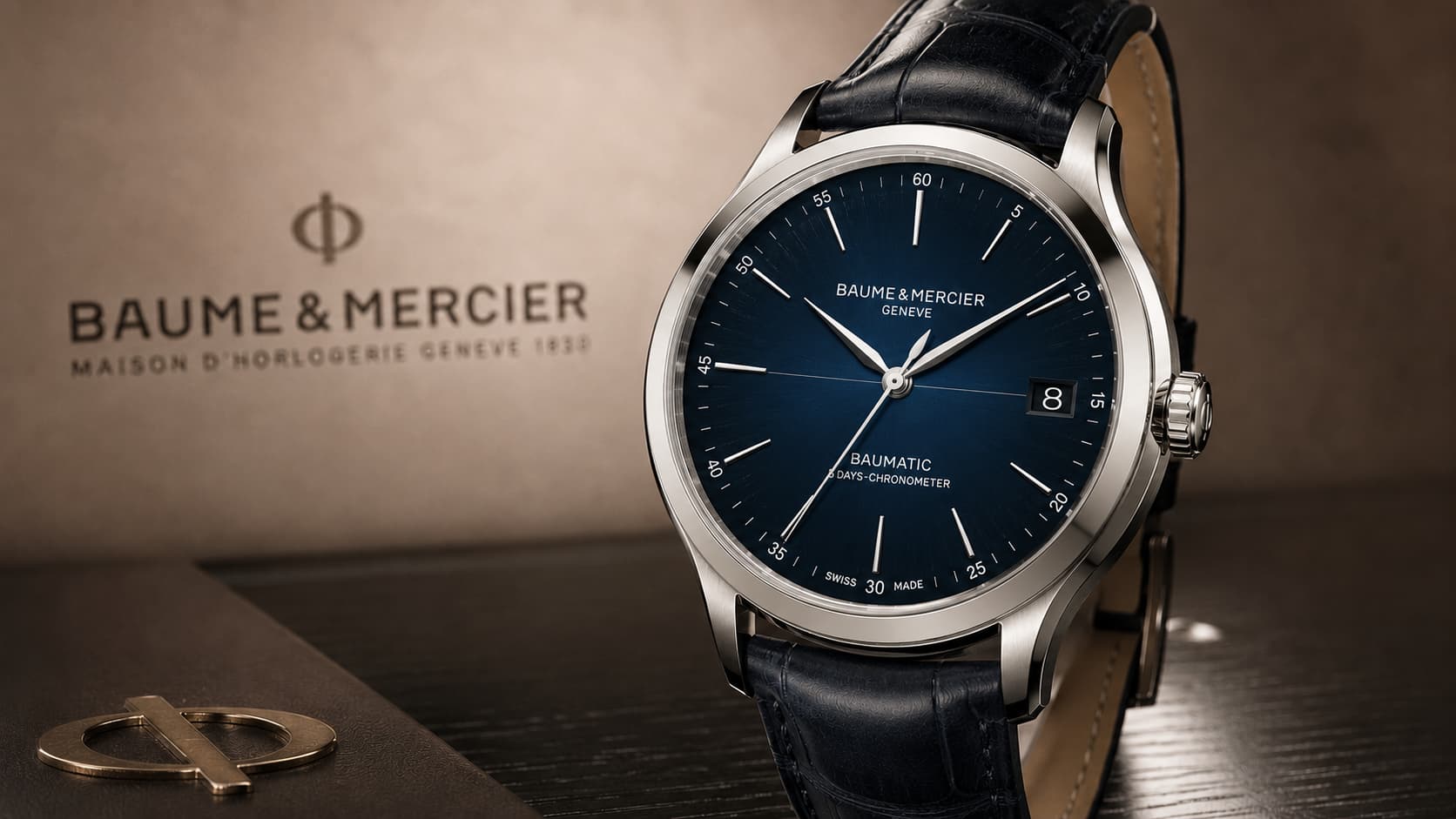
What sets Baume & Mercier apart from cheaper watch brands is its in-house engineering, and the clearest example of that is a movement called the Baumatic. A standard automatic watch (one that winds itself through the natural motion of being worn) usually needs a full service every three to five years and can lose accuracy if it gets too close to magnets, like the ones hiding inside laptops, phone cases, and speakers.
The Baumatic movement was engineered to push past both of those limits. It offers a power reserve of up to five days (120 hours) when fully wound, meaning it can sit unworn over a weekend and still be ticking when picked back up. It’s also built to resist magnetic fields far better than older movement designs, and Baume & Mercier extends the recommended service interval on Baumatic-equipped watches to five to seven years, compared with three to five years for its standard movements. This movement is found inside most of the Clifton and Riviera collections today, and it’s the single biggest reason the brand punches above its price point on the technical side.
That lower-maintenance design also means day-to-day care is simpler than with older mechanical watches. Wiping the case and bracelet with a soft, dry cloth after wear, keeping it away from strong magnets, and having it checked by an authorized watchmaker every five to seven years, rather than the three to five years typically recommended for standard automatic movements, is generally enough to keep a Baumatic-powered watch running well.
Baume & Mercier Watch Collections
Baume & Mercier organizes its watches into a handful of families, and each one has a distinct look and personality rather than just being a size or price variation of the others.
Classima
Classima is the brand’s simplest, most classic line, and it’s usually the most affordable entry point into the brand. Round cases, clean dials, minimal decoration. It’s built for people who want a dependable watch for the office or daily wear without any loud design choices, and it comes in both quartz (battery-powered) and automatic versions.
Clifton
Clifton is the round, dressier collection, and it’s where the Baumatic movement shows up most often. It leans into classic proportions and careful finishing, with cases available in stainless steel or 18-karat gold. It’s close to what most people picture when they imagine a classic Swiss watch.
Hampton
Hampton is the odd one out in the best way. It’s rectangular, not round, and takes its design cues straight from the Art Deco movement of the 1920s. It was first introduced in 1994 and has stayed rectangular ever since, which makes it instantly recognizable next to Baume & Mercier’s other, rounder collections.
Riviera
Riviera is the sporty pick of the lineup. It was born in 1973 and is easy to spot thanks to its twelve-sided bezel, a design detail meant to echo the twelve hours on a clock face. It usually comes with the Baumatic movement, straps that can be swapped out, and a more rugged, all-purpose feel compared to Clifton or Classima.
Collection Comparison
| Collection | Case Shape | Common Movement | Starting Price (approx.) | Best Suited For |
|---|---|---|---|---|
| Classima | Round | Quartz or automatic | From around $800 | Everyday and office wear, first Swiss watch |
| Clifton | Round | Baumatic (automatic) | From around $3,000 | Dress occasions, classic Swiss styling |
| Hampton | Rectangular | Quartz or automatic | From around $1,400 | Standing out with an Art Deco look |
| Riviera | Twelve-sided | Baumatic (automatic) | From around $1,600 | Casual, sporty, everyday versatility |
Prices climb well beyond these starting points for gold cases, complications like moon phases, or limited editions, with the most elaborate Clifton pieces reaching into the tens of thousands.
Buying Tips for Baume & Mercier Watches
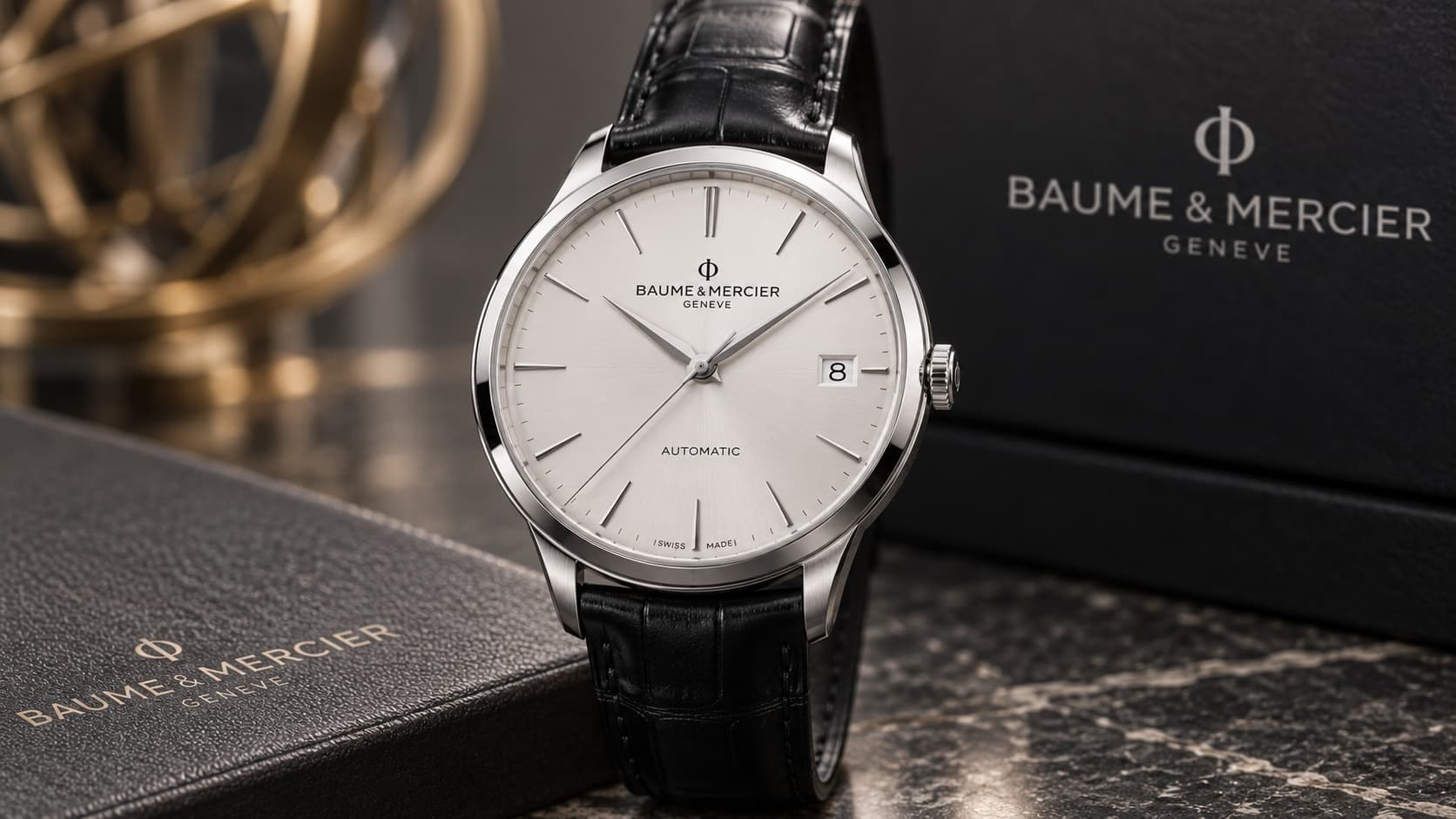
The right pick mostly comes down to three things: intended use, a preference between quartz and automatic movements, and how much upkeep feels reasonable.
- Purpose. A Classima or Clifton suits office and formal wear well, while a Riviera leans more casual and versatile, and a Hampton works as a statement piece for someone who wants a shape other than round.
- Movement type. Quartz watches are cheaper, need a battery swap every couple of years, and rarely need servicing. Automatic watches, especially Baumatic-powered ones, cost more upfront but never need a battery and generally hold their mechanical charm better over time.
- Case material. Stainless steel is the most common and the most practical for daily wear. Gold cases cost significantly more and are usually better suited to occasional or dress wear rather than everyday use.
- Sizing and comfort. Case sizes vary noticeably between collections, especially between the rounder Classima and Clifton lines and the more elongated Hampton, so trying a piece on, or at least checking exact case dimensions, matters more than going by collection name alone.
Do Baume & Mercier Watches Hold Their Value?
Baume & Mercier watches are not investment pieces, and it’s worth being upfront about that rather than pretending otherwise. Unlike brands such as Rolex, where certain models can sell secondhand for more than their original retail price, Baume & Mercier watches typically lose a meaningful chunk of their value once they leave the store, and that value doesn’t tend to climb back up over time.
On the secondhand market, most modern Baume & Mercier watches sell somewhere between a few hundred dollars and a few thousand, depending on the model, condition, and whether the original box and papers are included. Automatic models generally hold their value better than quartz ones. Vintage pieces from the 1950s and 1960s, particularly rare gold models or limited editions, are the exception, since collectors do pay a premium for well-preserved historical pieces with documented provenance.
A Baume & Mercier watch is best bought to be worn and enjoyed, not to appreciate in value. That holds true for the vast majority of watch brands in the world, and Baume & Mercier is no exception.
Frequently Asked Questions
Is Baume & Mercier considered a luxury brand?
Yes, but it sits in what the watch industry calls the “accessible luxury” tier. It’s genuinely Swiss-made with real in-house engineering, but it’s priced well below brands like Cartier, Rolex, or Patek Philippe, making it a common recommendation for someone’s first higher-end watch.
Who currently owns Baume & Mercier?
The Damiani Group, an Italian family-run luxury jewelry company, completed its acquisition of Baume & Mercier from Richemont on July 1, 2026.
What’s the difference between Classima and Clifton?
Classima is the brand’s simplest and usually most affordable line, with clean round dials and both quartz and automatic options. Clifton is the dressier, more refined round collection and is where the in-house Baumatic movement appears most often.
Does Baume & Mercier make its own watch movements?
Yes. Its main in-house movement is the Baumatic, known for its long power reserve of up to five days and its resistance to magnetic interference, features that go beyond what most traditional automatic movements offer.
Do Baume & Mercier watches hold their value well?
Generally, no. Most modern models lose a meaningful amount of value on the secondhand market compared to their original retail price, with the exception of certain rare vintage pieces. They’re best bought to wear and enjoy rather than as a financial investment.
Conclusion
Baume & Mercier has managed something a lot of old companies never pull off: staying relevant for nearly 200 years without losing what made it good in the first place. It started as two brothers chasing precision in a tiny Jura village, built a name for itself through genuine chronometry wins, and has passed through several owners without ever pausing production, landing most recently with Italy’s Damiani Group in 2026. From the rectangular boldness of the Hampton to the sporty twelve-sided Riviera and the understated, long-lasting Clifton, the brand’s real strength has always been the same: real Swiss engineering at a price that doesn’t require a second mortgage, best chosen for how a watch looks and feels rather than what it might be worth later.