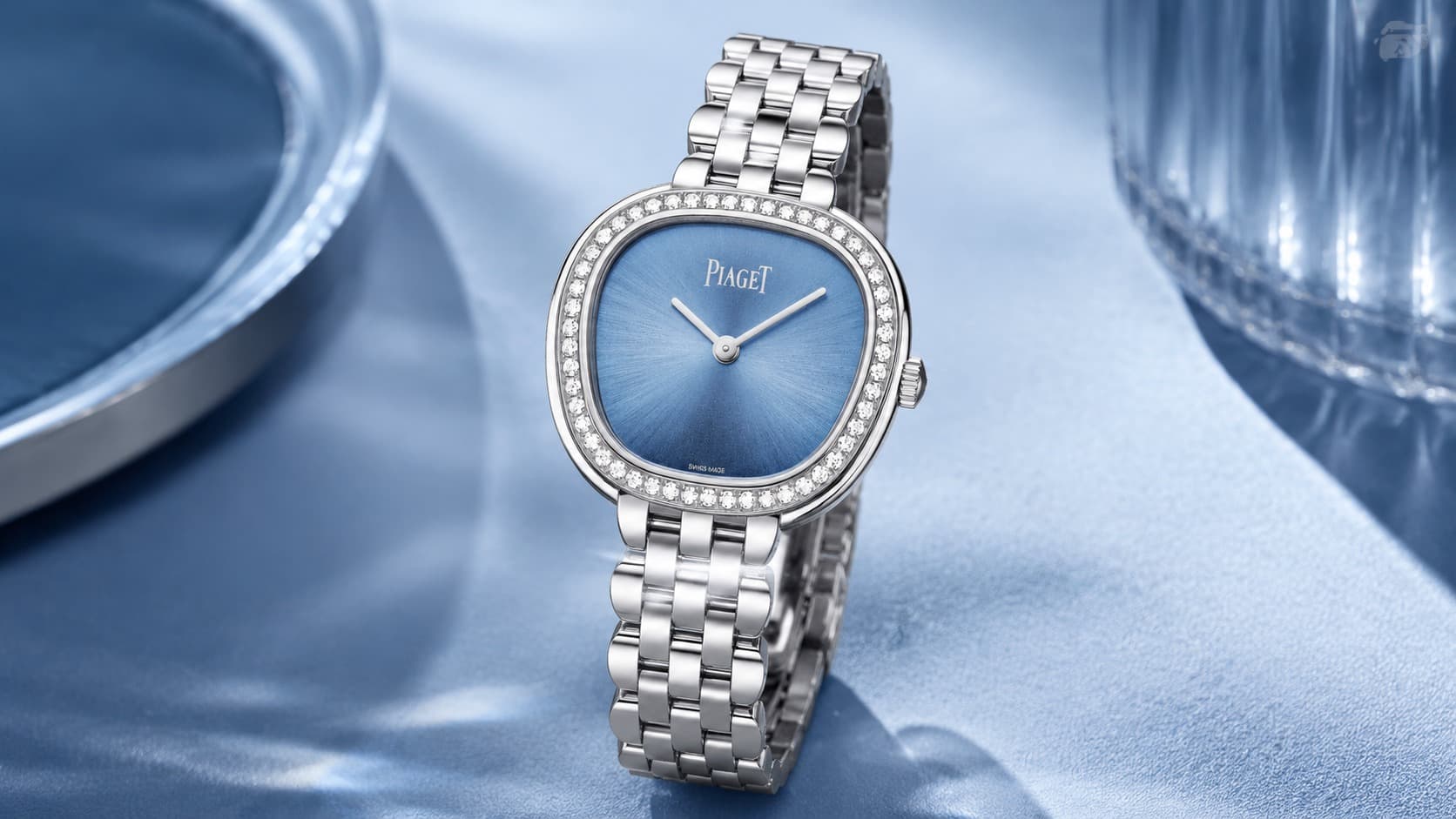
Piaget stands as one of the most technically accomplished yet surprisingly underrated names in luxury watchmaking. Founded in 1874 in the Swiss Jura mountains, this manufacture has spent 150 years perfecting ultra-thin movements, holding multiple world records including the thinnest mechanical watch ever created at just 2mm total thickness. Unlike pure watchmakers, Piaget uniquely combines exceptional horological engineering with high jewelry expertise, creating timepieces that are as much wearable art as precision instruments. With prices ranging from $4,200 entry-level pieces to $660,000+ flagship complications, Piaget offers remarkable craftsmanship for those who value technical innovation and refined aesthetics over brand hype.
The Evolution of Piaget Watchmaking
Piaget’s story begins in 1874 when 19-year-old Georges-Édouard Piaget established his first workshop on his family’s farm in La Côte-aux-Fées, a remote village in the Swiss Jura mountains situated at over 1,000 meters elevation. Like many Swiss craftsmen of that era, he worked as a “paysan horloger” (a farmer-watchmaker who crafted precision movement components and escapements during the long winter months while tending to agricultural duties during brief summers). For decades, the Piaget workshop operated as a respected supplier of high-quality movements to other prestigious watch brands, building a reputation for technical excellence that would later define the company’s own timepieces.
- Georges-Édouard Piaget started making watches in 1874 at just 19 years old, setting up a small workshop on his family’s farm in La Côte-aux-Fées, a village high in the Swiss Jura mountains. He focused on creating precision movements and escapements that other luxury brands would buy and put into their own watches. Cartier, Vacheron Constantin, Audemars Piguet, and even Rolex used Piaget-made components during this period, though few people knew the Piaget name since the company worked behind the scenes.
- For nearly 70 years, the Piaget family ran the business as a supplier rather than selling watches under their own brand. The workshop passed from Georges-Édouard to his son and then to his grandsons, with each generation improving their techniques and expanding what they could produce. This long apprenticeship building movements for the world’s finest watchmakers gave Piaget deep knowledge of what makes a truly excellent timepiece.
- In 1943, grandsons Gérald and Valentin Piaget took a major step by officially registering “Piaget” as a trademark. They began selling complete watches with the Piaget name on the dial instead of just supplying parts to others. This shift from invisible craftsman to independent brand would take time to gain momentum, but it set the stage for everything that followed.
- The company’s breakthrough came in 1957 with Caliber 9P, a hand-wound movement that measured only 2mm thick. At the time, this ranked among the world’s thinnest movements and showed that Piaget could innovate at the highest level. More importantly, it established ultra-thin watchmaking as what Piaget would become known for, giving the brand a clear identity in a crowded market.
- Piaget followed up in 1960 with Caliber 12P, the world’s thinnest automatic movement at just 2.3mm. The secret was a micro-rotor made from 24-karat gold that sat within the movement’s diameter instead of stacking on top like traditional automatic systems. This innovation proved that automatic watches didn’t need to be thick, and the caliber remained in production for decades because of its reliability.
- Starting in 1963, Piaget became the first watchmaker to use semi-precious stones like lapis lazuli, malachite, onyx, and tiger’s eye for watch dials. Creating these required cutting stone down to less than 1mm thickness without cracking it, which failed more than 90% of the time with certain materials. Every successful dial showed completely unique natural patterns, meaning no two watches looked identical. This merged jewelry techniques with watchmaking in ways competitors weren’t attempting.
- The brand developed hard stone dial techniques further throughout the 1960s, eventually working with over a dozen different materials. They created special tools and methods for slicing, polishing, and fitting these fragile dials into watch cases. Some materials like opal were so delicate that creating even one perfect dial could take weeks of careful work.
- Salvador Dalí approached Piaget in 1967 to collaborate on special timepieces that blended his surrealist vision with their craftsmanship. The partnership produced limited editions that attracted attention from art collectors who might never have considered buying a watch before. This opened Piaget to a creative, culturally engaged audience beyond traditional watch enthusiasts.
- Throughout the 1970s and 1980s, Piaget became closely associated with celebrities, artists, and wealthy socialites in what the company called the “Piaget Society.” Andy Warhol collected at least seven Piaget watches and wore them constantly, even featuring them in his photographs and artwork. Jackie Kennedy, Elizabeth Taylor, Sophia Loren, and numerous other famous figures chose Piaget, making the brand synonymous with glamorous, cultured luxury rather than just technical watchmaking.
- Piaget introduced the Polo collection in 1979 as their answer to luxury sports watches like the Audemars Piguet Royal Oak and Patek Philippe Nautilus. Unlike those steel watches, the original Polo came in solid 18-karat yellow gold with an integrated bracelet featuring a distinctive gadroon pattern (parallel raised ridges). The design was bold and immediately recognizable, helping Piaget compete in the growing sports-luxury category while staying true to their precious metal heritage.
- The Piaget family made the decision to sell their company to Cartier in 1988 after over a century of family ownership. Cartier later became part of Richemont, which today ranks as the world’s second-largest luxury goods group. The sale gave Piaget access to much larger financial resources for expansion and marketing while allowing the brand to maintain its Swiss production facilities and independence in design decisions.
- Richemont’s ownership enabled Piaget to build a massive new manufacture in Plan-les-Ouates near Geneva, which opened in 2001. This 90,000 square foot facility brought more than 40 different crafts together in one building, from watchmakers and engineers to gem-setters, goldsmiths, enamelers, engravers, and lapidaries who cut stones. Very few watch brands have jewelry expertise in-house like this, which became central to Piaget’s identity.
- The new manufacture allowed Piaget to expand production while maintaining complete control over quality. Every component gets made in-house rather than outsourced, from the smallest screw to complex movement parts. The facility includes workshops for developing new materials and techniques, plus extensive quality control systems that test each watch before it leaves the factory.
- In 2020, Piaget’s Altiplano Ultimate Concept won the Aiguille d’Or at the Grand Prix d’Horlogerie de Genève, the watch industry’s equivalent of the Oscars. The Aiguille d’Or is the top prize of the entire competition, awarded to the single best watch of the year across all categories. Winning this with a 2mm-thick watch that defied conventional engineering proved Piaget still leads in ultra-thin innovation.
- The brand marked its 150th anniversary throughout 2024 with several important releases. The Altiplano Ultimate Concept Tourbillon became the world’s thinnest tourbillon watch at 2mm total thickness, requiring five new patents to achieve. Piaget also reissued the Polo 79, a faithful recreation of the original 1979 design in 18-karat gold. The Polo 79 won the GPHG Iconic Watch Prize, showing that Piaget’s vintage designs still resonate with modern collectors.
- Piaget formalized a partnership with the Andy Warhol Foundation for the Visual Arts in 2024, acknowledging the artist’s longtime connection to the brand. This led to a special Andy Warhol collection featuring watches inspired by the pieces Warhol actually owned and wore, complete with his signature aesthetic choices like hard stone dials and cushion-shaped cases.
The company today operates from two main facilities while maintaining the spirit of its origins. The original La Côte-aux-Fées workshop where Georges-Édouard started still produces movements, now with modern equipment but the same attention to detail. The Plan-les-Ouates manufacture handles final assembly, jewelry work, and houses the design studios where new collections take shape. Piaget has grown from a one-man farmhouse operation into a global brand with boutiques in over 20 countries, yet it remains one of the rare manufactures that creates every component of its watches in-house. This complete control over production means Piaget can pursue innovations that would be impossible when relying on outside suppliers, particularly in ultra-thin movements where tolerances of 0.1mm determine success or failure.
The Special Features of Piaget Watches
Piaget occupies a rare position in luxury watchmaking by excelling in two completely different disciplines that most brands keep separate. The manufacture creates some of the world’s thinnest mechanical movements while simultaneously producing high jewelry pieces that rival the finest Parisian jewelry houses. This dual expertise means a Piaget watch can be both a technical marvel of engineering and a wearable work of art, often in the same piece. Beyond the obvious craftsmanship, Piaget has developed proprietary techniques and innovations over 150 years that give their watches characteristics you simply cannot find elsewhere, from movements that seem to defy physics to decorative methods that require skills passed down through generations of artisans.
- Piaget holds multiple world records for ultra-thin watchmaking, with the Altiplano Ultimate Concept measuring just 2.0mm total thickness including the case, crystal, and movement. To put this in perspective, a standard credit card is 0.76mm thick, meaning the entire watch is less than three credit cards stacked together. A 5 Swiss franc coin measures 2.35mm, making it thicker than this complete mechanical watch. This achievement required completely rethinking how watches are constructed.
- The brand developed a revolutionary construction method where the caseback actually serves as the movement’s baseplate rather than having a separate movement inside a case. This integration eliminates unnecessary layers and allows for extreme thinness. The case is made from a cobalt-chromium alloy called M64BC that’s 2.3 times harder than gold, preventing the ultra-thin case from flexing or warping when worn on the wrist.
- Individual components in ultra-thin Piaget movements are machined to tolerances of 0.12mm, which is thinner than a human hair (typically 0.18mm). The sapphire crystal on the Altiplano Ultimate Concept measures only 0.2mm thick, so fragile that it requires special handling during assembly. Every wheel, bridge, and spring has to be redesigned from conventional movements because standard parts simply won’t fit in such limited space.
- Piaget currently maintains over 25 different ultra-thin calibers in production, each designed for specific applications. The Caliber 1200P automatic movement at 2.35mm thickness has held the record as the world’s thinnest automatic since 2010. The Caliber 600P from 2002 remains the thinnest flying tourbillon movement at 3.5mm. These aren’t just showpieces but working movements that power watches people actually wear daily.
- The brand manufactures all its movements in-house at the original La Côte-aux-Fées facility, maintaining complete control over development and production. This means Piaget can pursue innovations that brands relying on outside movement suppliers simply cannot attempt. When you need to create a gear wheel 0.12mm thick, you need your own specialized equipment and craftspeople who’ve spent years learning these techniques.
- Every mechanical movement receives extensive hand-finishing even though much of it stays hidden under the dial. Bridges get decorated with Côtes de Genève (a striped pattern created by hand), edges are beveled and polished by hand, and screws are heat-blued to achieve their distinctive purple-blue color. The micro-rotors in automatic calibers are crafted from platinum or 22-karat gold and feature the Piaget coat of arms.
- Piaget’s jewelry expertise sets it apart from pure watchmakers. The Plan-les-Ouates manufacture employs master gem-setters, goldsmiths, enamelers, and lapidaries (stone cutters) who work alongside watchmakers. This integration allows the company to create jewelry watches where diamonds, gemstones, and decorative techniques are conceived together with the movement rather than added afterward as an afterthought.
- The brand pioneered several decorative techniques that became signatures. Palace Décor, developed in the 1960s, creates textured gold surfaces resembling tree bark, frost, or woven fabric through specialized engraving and finishing. These patterns are hand-applied and can take days to complete on a single case. No two Palace Décor pieces look identical because the craftsperson’s hand creates subtle variations.
- Hard stone dials remain a Piaget specialty that almost no other watchmaker attempts at this level. Materials like lapis lazuli, malachite, tiger’s eye, opal, onyx, and turquoise get sliced to under 1mm thickness and then hand-polished. The failure rate is extremely high because many stones crack during cutting or polishing. Those that survive show natural patterns formed over millions of years, making every dial genuinely unique.
- The lapidary workshop stocks hundreds of raw stone specimens, with artisans selecting pieces based on color intensity, pattern, and structural integrity. For materials like opal that contain water and can crack from temperature changes, special storage conditions preserve the stones before and after cutting. Some rare materials like meteorite require diamond-coated tools for cutting and weeks of gradual polishing to achieve the right finish.
- Piaget developed expertise in working with unconventional materials for cases and bracelets. The brand uses traditional precious metals like platinum and 18-karat gold in rose, white, and yellow variations, but also pioneered the use of titanium in luxury watches during the 1990s. More recently, the M64BC cobalt alloy in the Ultimate Concept showed Piaget’s willingness to adopt aerospace materials when technical requirements demand it.
- The integration of jewelry and watchmaking expertise means Piaget can create pieces like the Limelight Gala, where the asymmetrical case shape, curved lugs, and diamond-setting are all designed together with the movement placement. The diamonds aren’t just stuck onto an existing watch design but are fundamental to the piece’s architecture. Gem-setters work from technical drawings that show exactly where each stone will sit in relation to the movement inside.
- Piaget maintains its own polishing workshops where cases and bracelets receive finishing that takes significantly longer than industry standard. A single Polo bracelet with its gadroon pattern requires hours of hand-polishing to achieve the alternating brushed and polished surfaces. Corners and edges get particular attention because these areas show quality immediately when examined closely.
- The brand developed proprietary movement architectures like the peripheral rotor used in the Caliber 910P. Instead of a central rotor that sits on top of the movement (adding thickness), the peripheral rotor wraps around the movement’s circumference. This allows for a slimmer profile while maintaining the convenience of automatic winding. The rotor is made from 22-karat gold for proper weight and inertia.
- Piaget created the first ultra-thin shaped movements, not just round ones. The Caliber 838P powers the cushion-shaped Emperador cases at only 5.05mm thick including a flying tourbillon. Creating ultra-thin movements in non-round shapes presents exponentially greater challenges because you cannot simply scale down a round movement, everything must be redesigned from scratch to fit the case shape while maintaining proper gear ratios and power distribution.
- Quality control at Piaget involves multiple stages of testing beyond standard Swiss chronometer certification. Ultra-thin movements get tested for resistance to shock and magnetic fields because their delicate construction makes them theoretically more vulnerable. The brand has developed proprietary anti-shock systems and anti-magnetic components specifically for movements under 3mm thick.
- Each watch receives individual attention during assembly, with watchmakers responsible for building entire movements from components rather than assembly-line construction. This traditional approach means a watchmaker can identify and correct issues during the build process, and it also means every watch has a specific craftsperson responsible for its quality. Serial numbers trace back to who assembled the watch and when.
- Piaget invests heavily in research and development, filing dozens of patents each decade for innovations in materials, movement architecture, and manufacturing processes. The five new patents in the Altiplano Ultimate Concept Tourbillon alone covered everything from the case construction to the tourbillon cage design to the winding mechanism. This constant innovation keeps the brand at the forefront of ultra-thin watchmaking.
What truly distinguishes Piaget is this combination of technical innovation and artistic craftsmanship working together rather than competing. A brand can make thin movements, or it can make beautiful jewelry watches, but very few do both at the highest level within the same manufacture. This dual mastery means Piaget can create watches that satisfy serious watch collectors who care about movement finishing and complications, while also appealing to jewelry enthusiasts who value artistry and precious materials. The brand doesn’t have to choose between being a watchmaker or a jeweler because it genuinely excels at both, with 150 years of expertise in each discipline informing and elevating the other.
Top 10 Best Piaget Watches
Piaget’s current collection spans from accessible luxury pieces to some of the most technically ambitious watches in the world, each representing different facets of the brand’s expertise. The models below showcase what makes Piaget special, from record-breaking ultra-thin movements to jewelry watches that blur the line between timepiece and wearable art. Prices range dramatically based on materials, complications, and exclusivity, but every watch on this list demonstrates the in-house manufacturing and finishing quality that defines the brand. These ten models give you a comprehensive view of what Piaget offers across different price points and styles.
- Altiplano Ultimate Concept Tourbillon: The absolute pinnacle of Piaget’s ultra-thin expertise at just 2mm total thickness while incorporating a flying tourbillon complication. The case uses M64BC cobalt alloy with blue PVD coating for structural rigidity and distinctive appearance. Five new patents were required to achieve this, with 90% of components redesigned from the standard Ultimate Concept. The titanium tourbillon cage rotates once per minute through the skeletonized dial. Production is extremely limited with pieces made to order at approximately $660,000.
- Piaget Polo 79: A faithful reissue of the original 1979 luxury sports watch, featuring the distinctive gadroon pattern across the 38mm case and integrated bracelet. Available in 18-karat yellow or white gold with the ultra-thin Caliber 1200P1 automatic (2.35mm) giving the watch only 7.45mm total thickness. Won the GPHG Iconic Watch Prize in 2024. Price approximately $73,000 depending on metal and dial choice.
- Altiplano 38mm Manual Wind: The purest expression of Piaget’s dress watch philosophy with a 6mm-thick case in 18-karat gold. Houses the Caliber 430P hand-wound movement (2.1mm thick, 43-hour power reserve) descended from the legendary 1957 Caliber 9P. Available with white, grey, slate blue, or hard stone dials like aventurine. Clean design with hand-applied markers and dauphine hands. Price ranges from $14,500 to $16,200, making it an accessible entry to gold Piaget watches.
- Piaget Polo Date in Steel: The collection’s steel entry point offers 42mm sizing, 100-meter water resistance, and an integrated bracelet. Powers by the in-house Caliber 1110P automatic movement. Available in blue, grey, and black dial options with date display at 6 o’clock. Retail price ranges from $11,600 to $14,900, though secondary market prices typically run $7,500 to $11,400. Represents the most affordable way to own a new Piaget sports watch with proper in-house movement.
- Polo Skeleton: Showcases movement finishing through an openworked dial while maintaining the Polo’s sports watch profile at 42mm diameter and only 6.5mm thickness. The Caliber 1200S1 features a visible platinum micro-rotor and hand-finished bridges. Includes both integrated steel bracelet and alligator leather strap for versatility. Price ranges from $28,500 to $31,000 depending on dial color and configuration.
- Limelight Gala 32mm Automatic: Piaget’s flagship women’s watch features an asymmetrical case with dramatically curved lugs and diamond-set bezel (62 brilliant-cut diamonds totaling approximately 1.8 carats). The in-house Caliber 501P automatic movement powers the piece. Available in 18-karat rose or white gold with various dial, strap, and bracelet options. Price ranges from $37,000 to $47,000 based on configuration and diamond quality.
- Emperador Coussin Tourbillon Skeleton: A technical showcase in a 46.5mm cushion-shaped case housing the world’s thinnest shaped automatic tourbillon skeleton movement at 5.05mm. The flying tourbillon sits in a titanium cage with off-center time display creating dramatic asymmetry. Features extensive skeletonization showing the Caliber 1270S movement finishing. Available in 18-karat rose gold at approximately $222,000.
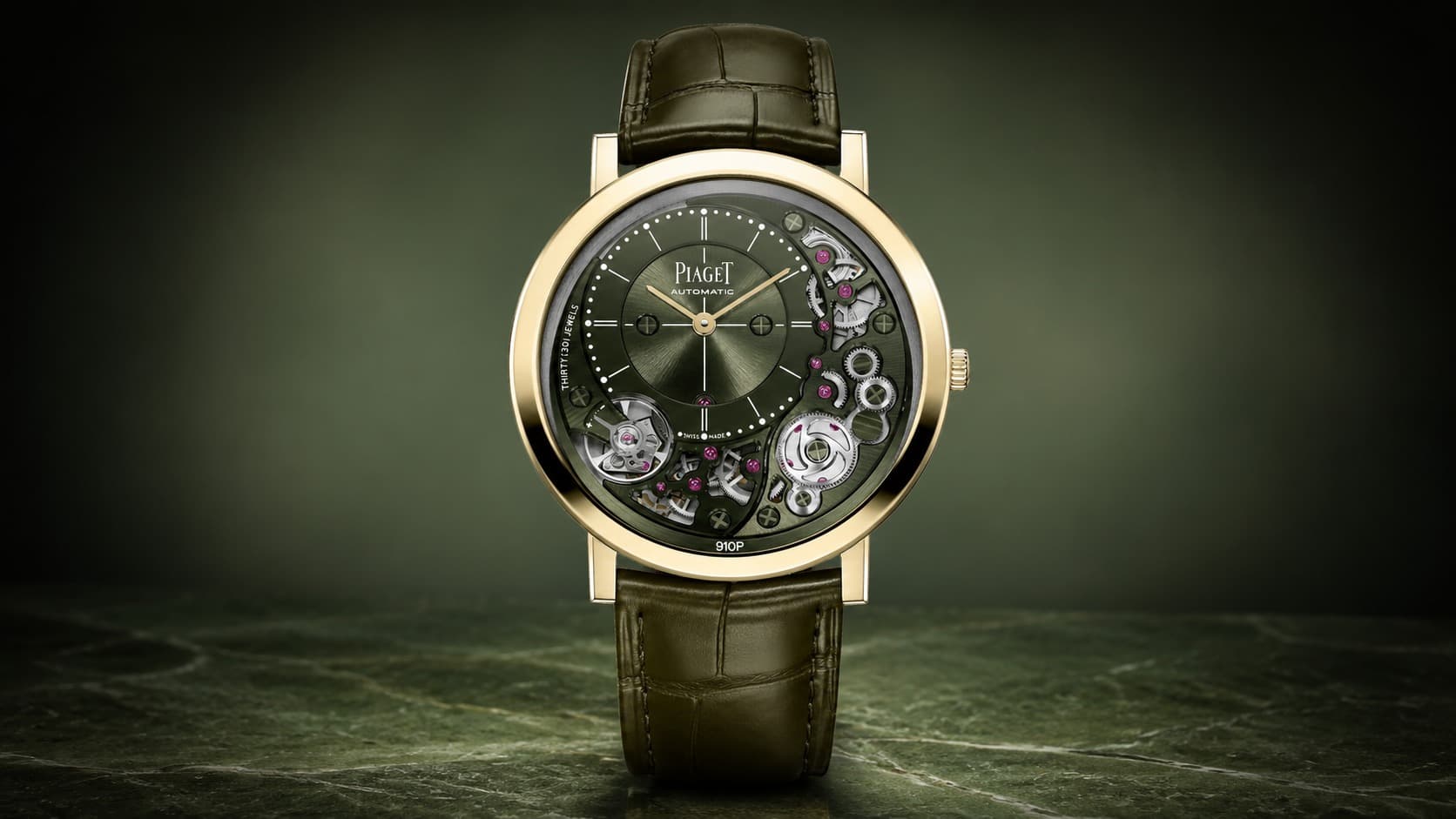
- Altiplano Ultimate Automatic 910P: The world’s thinnest gold automatic watch at 4.3mm total thickness uses case-movement fusion architecture where the caseback serves as the movement baseplate. A peripheral rotor (wrapping around the movement’s edge rather than sitting on top) enables the extreme thinness while providing 50-hour power reserve. Available in 18-karat rose or yellow gold at 41mm diameter. Price ranges from $24,500 to $39,000 depending on metal choice.
- Possession 34mm: Piaget’s most accessible collection features the signature rotating bezel as a playful interactive element. Ranges from stainless steel to 18-karat gold with optional diamond-set bezels. Uses quartz movements for slim cases and reliable timekeeping. Hard stone dial options include turquoise, malachite, and lapis lazuli. Interchangeable straps allow personalization. Price spans $4,200 to $33,000 depending on materials, making the steel versions the most affordable new Piaget watches available.
- Piaget Polo Date Black Automatic 42mm: Features an all-black aesthetic with sandblasted black DLC-coated case and black rubber strap while maintaining the iconic Polo design language. The 42mm case houses the Caliber 1110P automatic with date display. Water resistant to 100 meters with luminous hands and markers for legibility. Price approximately $18,500, positioned between the steel and gold Polo models.
These ten models represent Piaget’s range from technical complications and ultra-thin records to accessible luxury and high jewelry creations. The Altiplano line demonstrates pure watchmaking focused on minimal thickness and elegant proportions. The Polo collection offers sports-luxury versatility in both steel and precious metals. Limelight and Possession cater to jewelry watch enthusiasts who value gemstones and feminine design. The Emperador showcases shaped movements and complications in larger case sizes. Across all models, in-house movements and hand-finishing remain consistent regardless of price point, maintaining Piaget’s manufacturing standards even in entry-level pieces.
Important Factors When Buying Piaget Watches
Purchasing a Piaget watch involves different considerations than buying from sports-focused brands like Rolex or Omega because of Piaget’s unique position as both watchmaker and jeweler. The brand’s ultra-thin movements require more careful handling than robust tool watches, while the range from accessible quartz models to six-figure complications means buyers need clarity on what they actually want from the watch. Price transparency varies significantly between authorized dealers and the pre-owned market, and certain collections hold value better than others. Taking time to evaluate these factors before buying ensures you get the right Piaget for your needs and budget rather than being swayed by sales pressure or incomplete information.
- Budget determines which collections are realistic options. Entry-level Piaget starts around $4,200 for steel Possession quartz models, while in-house mechanical movements in steel begin at $11,600 with the Polo Date. Gold watches with hand-wound movements like the Altiplano 38mm start around $14,500. High complications and jewelry pieces range from $37,000 to over $600,000. Most buyers spend between $8,000 and $25,000 on their first Piaget, targeting either pre-owned gold models or new steel pieces with in-house movements.
- Movement type significantly affects both price and ownership experience. Quartz movements (found in some Possession and smaller Limelight models) offer accuracy and convenience with battery changes every 2-3 years. Hand-wound mechanical movements deliver maximum thinness and traditional watchmaking but require daily winding. Automatic movements provide mechanical authenticity with convenience, though Piaget’s ultra-thin automatics still need occasional manual winding if not worn regularly. All mechanical Piaget movements are made in-house, which justifies higher prices compared to brands using outsourced movements.
- Case material impacts durability, weight, and long-term value. Stainless steel offers best scratch resistance and lowest entry price but has limited resale value. 18-karat rose gold is currently Piaget’s most popular precious metal, offering warmth and skin-tone compatibility. White gold provides platinum-like appearance at lower cost. Yellow gold connects to Piaget’s heritage (the original Polo was yellow gold only). Platinum appears in limited high-complication pieces with corresponding price premiums. The cobalt alloy in Ultimate Concept models is harder than gold but only available in that specific collection.
- Size and wearability matter more with ultra-thin watches than conventional pieces. Piaget’s dress watches typically run 38mm to 40mm in diameter, which wears larger than expected due to minimal case height and thin bezels maximizing dial size. The Polo sports collection sits at 42mm for men. Women’s models range from 26mm to 36mm depending on collection. Ultra-thin cases at 6mm or less have no wrist presence in terms of height, which some buyers love and others find disconcerting if they’re used to thicker watches.
- Dial choice affects both aesthetics and value. Standard dials in white, blue, grey, or black offer broad appeal and easier resale. Hard stone dials (lapis lazuli, malachite, tiger’s eye, opal) create unique pieces since natural stone patterns vary, but they limit the secondary market audience. Skeleton dials showcase movement finishing but reduce legibility. Diamond-set dials add significant cost and appeal primarily to jewelry watch collectors. Consider whether you want a versatile watch for multiple occasions or a distinctive piece that makes a specific statement.
- Bracelet versus strap changes both cost and versatility. Integrated bracelets on the Polo collection are part of the watch’s design and cannot be swapped for straps without losing the aesthetic coherence. Strap-based models (Altiplano, Limelight, Emperador) allow easy changes between alligator leather, fabric, or rubber. Piaget’s interchangeable strap system on some models lets owners switch looks in seconds. Factory bracelets add $3,000 to $8,000 to purchase price compared to strap versions but increase versatility and can improve resale value.
- New versus pre-owned presents significant value differences. Pre-owned Piaget typically costs 30% to 50% less than retail because the brand doesn’t command investment-grade premiums. A $20,000 retail Piaget might sell for $12,000 to $14,000 pre-owned in excellent condition. This depreciation works against initial buyers but creates opportunities for informed second-hand purchasers. Complete sets with box, papers, and original purchase receipts command 10% to 20% premiums over watch-only sales in the pre-owned market.
- Authenticity verification is critical when buying outside authorized channels. Check for the Piaget coat of arms (featuring the letter P, two crosses, three fleur-de-lis, and a bird) engraved on the movement, case, and buckle. Serial numbers should match between case and papers. Movement finishing quality (Côtes de Genève, beveled edges, heat-blued screws) should be immediately visible through casebacks. Since March 2024, new Piaget watches come with blockchain-based Digital Passports accessible at care.piaget.com that verify authenticity and ownership history.
- Service history matters more for mechanical watches than quartz. Piaget recommends servicing mechanical movements every 8 years, which costs $700 to $1,500+ depending on complications. A pre-owned watch without recent service may need immediate servicing, adding to your total cost. Ask sellers for service records and when the last complete overhaul occurred. Watches with gaps of 10+ years without service may have wear that isn’t immediately visible but will affect longevity.
- Limited editions and special pieces require extra research. Piaget produces various limited editions, some truly limited (50-100 pieces) and others more widely available despite “limited” marketing. True scarcity increases collectibility, while broadly available limited editions just add decorative dial text. Anniversary pieces from the 2024 150th celebration may appreciate over time if production was genuinely restricted. Research actual production numbers before paying premiums for “limited edition” status.
- Warranty coverage varies between authorized and grey market sellers. Authorized Piaget dealers provide the full 2-year international warranty, extendable to 8 years through the Piaget Care program (free registration within the original warranty period). Grey market dealers selling genuine watches cannot provide manufacturer warranties, though some offer their own limited warranties. Pre-owned watches from individuals come without any warranty unless still within the original coverage period with transferable papers.
- Consider your actual usage before choosing ultra-thin models. The Altiplano and similar dress watches under 7mm thickness are designed for formal and business wear, not sports or rough activities. These watches can be damaged by impacts, vibration, or pressure that wouldn’t affect a Rolex Submariner. If you need one watch for all situations, the Polo collection offers better durability with 100-meter water resistance and more robust construction. Ultra-thin watches are second or third watches for collectors, not only watches for active lifestyles.
The most important consideration is buying the watch you actually want rather than what seems like the “smart investment.” Piaget watches don’t appreciate like Rolex or Patek Philippe, so buying solely for investment makes no sense. Instead, focus on which model you’ll enjoy wearing for years, whether that’s the elegance of an ultra-thin Altiplano, the versatility of a Polo, or the jewelry craftsmanship of a Limelight. Your budget, lifestyle, and aesthetic preferences should drive the decision more than resale value projections, because you’re buying a watch to wear and appreciate, not a financial instrument.
Where to Buy Authentic Piaget Watches
Finding the right place to purchase a Piaget watch significantly affects both the price you pay and the protection you receive as a buyer. Authorized channels offer full manufacturer warranties and guaranteed authenticity but come at retail prices with limited negotiation room. The pre-owned market provides substantial savings but requires more knowledge to navigate safely. Online purchases offer convenience while physical boutiques allow you to try watches on and experience the brand’s full presentation. Each buying channel has specific advantages and drawbacks that matter differently depending on whether you’re buying new or pre-owned, seeking current models or vintage pieces, and how much you value warranty coverage versus getting the best possible price.
- Piaget boutiques offer the complete brand experience with full collections and expert staff. The company operates over 100 boutiques worldwide, with major U.S. locations in New York, Beverly Hills, Costa Mesa, Las Vegas, and Miami. Boutique staff receive extensive training on movement technology, jewelry craftsmanship, and brand history. You can try on multiple models, compare sizes, and often see pieces that aren’t available through multi-brand dealers. Boutiques provide the full 2-year international warranty plus access to the Piaget Care extended warranty program. Prices are non-negotiable at boutiques, meaning you pay full retail.
- The official Piaget website sells the complete current collection with several advantages. Online purchases include free shipping, 30-day returns for unused watches, and the same manufacturer warranty as boutique purchases. The website offers financing options for qualified buyers, allowing payment plans on purchases. Product photography shows watches in detail, though nothing replaces seeing pieces in person before committing to five-figure purchases. The website stocks current production models but typically not limited editions or special pieces that may only go to boutiques.
- Authorized dealers carry Piaget alongside other luxury brands at jewelry stores and watch specialists. These independent retailers provide legitimate manufacturer warranties and authentic watches while sometimes offering modest discounts of 5% to 15% depending on the model, your relationship with the store, and payment method (cash or wire transfer typically gets better pricing than credit cards). Authorized dealers may have better inventory of certain models than boutiques, or they may carry only selected popular pieces. Build a relationship with a sales associate who can notify you when specific models arrive.
- Department store jewelry departments sell Piaget in select high-end locations. These offer convenience if you’re already shopping there and provide the authorized dealer benefits. However, sales staff may have less specialized Piaget knowledge compared to boutiques or dedicated watch dealers. Pricing is typically full retail with occasional promotional periods offering store credit or points programs rather than direct discounts.
- Certified pre-owned dealers specialize in authentic pre-owned luxury watches with guarantees and warranties. Reputable dealers offer warranties ranging from 12 to 24 months on their pieces and use detailed condition grading systems. Look for dealers with in-house service capabilities and strong industry reputations. These dealers thoroughly inspect and sometimes service watches before sale, eliminating questionable sellers from the equation. Expect to pay fair market value rather than bargain prices, but you get peace of mind and recourse if problems arise.
- Online watch marketplaces connect buyers with dealers and private sellers worldwide. Major platforms provide escrow services holding your payment until you receive and approve the watch, offering buyer protection. Thousands of Piaget watches are listed at any time, from vintage 1960s pieces to current models. Prices vary widely, so research is essential. Check seller ratings, number of transactions, and location before buying. Some platforms offer additional authentication programs for higher-value purchases. Be aware that private sellers cannot transfer manufacturer warranties even if time remains.
- Major online auction platforms now require professional authentication on luxury watches over certain price thresholds. After purchase, the platform sends the watch to their authentication partner who verifies it’s genuine before forwarding to you. This eliminates most counterfeit risk, though condition assessment is less thorough than dedicated watch dealers provide. These marketplaces mean you might find unusual vintage pieces or good deals, but you’re competing with other bidders and need to know fair market values to avoid overpaying.
- Auction houses excel for vintage and rare Piaget pieces from the 1960s through 1980s. The auction environment works well for jewelry watches, hard stone dial pieces, and unusual complications that rarely appear elsewhere. Major auctions include detailed condition reports and high-resolution photography. Buyer’s premiums typically add 25% to 28% to the hammer price, so budget accordingly. Auction houses authenticate pieces but condition varies widely, with most sales final and no returns. This channel suits collectors seeking specific vintage references more than buyers wanting current production models.
- Local independent watch dealers may stock pre-owned Piaget but vary dramatically in expertise and integrity. Established dealers with decades in business, in-house watchmakers, and strong local reputations provide good service. Random jewelry stores or pawn shops selling luxury watches are riskier unless you can verify authenticity yourself. Ask about return policies, warranties, and service history. A reputable dealer should allow inspection by an independent watchmaker before finalizing the purchase.
- Private sales through watch forums, social media groups, or personal connections offer the lowest prices but highest risk. You’re dealing directly with another individual, so authenticity verification is entirely your responsibility. Meet in person if possible, preferably at a watchmaker who can open the case and verify the movement. Use secure payment methods with buyer protection rather than wire transfers or cryptocurrency. Get everything in writing including condition description, included accessories, and return terms if the watch isn’t as described.
- Watch collecting forums have active sales sections where community members buy and sell. Members build reputations over time through successful transactions. Forum moderators often verify seller credentials and mediate disputes. Prices tend to be fair because knowledgeable collectors police obvious overpricing. Still, complete your own authentication and use payment platforms that offer recourse if problems arise. Forum sales work best for buyers with some watch knowledge who can spot red flags.
- International dealers, particularly those based in Japan and Europe, often stock pristine vintage Piaget pieces. Some watch collecting cultures emphasize condition more than others, so watches from certain markets frequently show minimal wear even at 30-40 years old. Language barriers can complicate communication, though many dealers have English-speaking staff or detailed online translation. Import duties and taxes may apply when shipping internationally. International sellers sometimes include complete sets with boxes and papers that disappeared from domestic markets decades ago.
The safest buying approach combines channels based on what you’re purchasing. For new current-production models, start with authorized dealers where you can negotiate modest discounts while keeping full warranty protection. For pre-owned pieces, certified dealers offer good protection with warranties and return policies. For vintage Piaget from the 1960s-1980s, auction houses and specialized vintage dealers provide authenticated pieces with proper documentation. Avoid deals that seem too good to be true because they usually are, and remember that saving a few hundred dollars isn’t worth the risk of buying a fake or modified watch that costs thousands to discover and fix.
How Well Do Piaget Watches Retain Value

Piaget watches occupy an unusual position in the luxury watch market when it comes to value retention and investment potential. The brand produces genuine manufacture-quality timepieces with in-house movements, exceptional finishing, and 150 years of horological heritage, yet prices in the secondary market typically sit 30% to 50% below retail. This creates a difficult reality for buyers purchasing new at full price but offers significant opportunities for informed buyers in the pre-owned market. Unlike Rolex, Patek Philippe, or Audemars Piguet where certain models appreciate over time, Piaget should be viewed as a purchase for enjoyment and wearing rather than financial investment. However, specific models, vintage pieces, and limited editions perform better than others, and proper care and documentation significantly affect resale values.
- Most contemporary Piaget watches depreciate 30% to 50% from retail prices in the first few years of ownership. A watch purchased new for $20,000 might realistically sell for $12,000 to $14,000 in excellent pre-owned condition within 2-3 years. This depreciation curve is similar to brands like Omega, Cartier, IWC, and Jaeger-LeCoultre rather than investment-grade manufacturers. The initial buyer absorbs this depreciation, which is why purchasing pre-owned makes financial sense if value retention matters to you.
- Steel sports models hold value better than gold dress watches as a general rule. The Piaget Polo in stainless steel depreciates less dramatically than equivalent gold models because the lower entry price attracts more buyers in the secondary market. Steel watches also appeal to younger collectors entering luxury watches who cannot yet afford precious metal pieces. However, Piaget’s steel production is limited compared to all-gold heritage, so availability in the pre-owned market remains relatively scarce.
- The Altiplano collection commands the greatest respect among serious watch collectors. These ultra-thin dress watches represent what Piaget does better than almost anyone else in the industry. Well-maintained Altiplano models with complete documentation hold 50% to 60% of retail value, performing better than other Piaget collections. The technical significance and pure watchmaking focus resonate with collectors who understand movement architecture and finishing quality.
- Limited production models and anniversary pieces may appreciate over time if genuinely scarce. The 2024 Polo 79 reissue won major awards and has limited production, potentially making it collectible long-term. The Altiplano Ultimate Concept pieces with 2mm thickness will likely hold value because of their record-breaking engineering and minimal production numbers. However, verify actual production quantities rather than assuming “limited edition” text on the dial means true scarcity.
- Vintage Piaget from the 1960s and 1970s represents arguably the best value in collectible watches today. Equivalent dress watches from Patek Philippe, Audemars Piguet, or Vacheron Constantin from this era sell for two to three times more than comparable Piaget pieces despite similar quality and craftsmanship. This price gap suggests Piaget vintage watches are undervalued relative to their horological merit. Collectors seeking alternatives to overheated markets are increasingly looking at vintage Piaget.
- Hard stone dial models command premiums in both vintage and contemporary markets. Watches with lapis lazuli, malachite, tiger’s eye, or opal dials are inherently unique because natural stone patterns vary. These pieces appeal to collectors who want something no one else has. Condition matters enormously with stone dials because cracks or chips cannot be repaired, and replacement dials are essentially impossible to source for vintage pieces.
- Jewelry watches and gem-set pieces have different value dynamics than pure watch collecting. Diamond-set Piaget watches hold value based on both the watch mechanics and the jewelry quality. Factory-set diamonds maintain value far better than aftermarket modifications. The Limelight and high-jewelry collections appeal primarily to buyers who value craftsmanship in both watchmaking and jewelry arts, a smaller but dedicated market segment.
- Complete sets with original box, papers, and purchase receipts sell for 10% to 20% more than watch-only sales. Documentation proves authenticity, establishes provenance, and provides service history. The original warranty card with matching serial numbers is particularly important. For vintage pieces, having the original box and papers can double the value because these items were often discarded decades ago.
- Service history and condition dramatically affect resale prices. A recently serviced watch with documentation commands premium pricing because the buyer knows it’s running properly and won’t need immediate maintenance. Watches with visible wear, scratches, or damage to cases and dials sell at steep discounts. Ultra-thin Piaget watches are particularly condition-sensitive because case refinishing can alter the slim proportions if done improperly.
- Market trends favor slim, elegant dress watches over chunky sports models currently. Younger collectors entering the luxury market show preference for thinner, design-led watches compared to the oversized tool watch trend of the 2000s-2010s. This generational shift potentially benefits Piaget’s core identity as an ultra-thin specialist. The brand’s aesthetic aligns with contemporary minimalist design preferences.
- Piaget lacks the brand recognition and marketing hype that drives investment-grade watch prices. Rolex, Patek Philippe, and Audemars Piguet benefit from decades of marketing, celebrity endorsements, and artificial scarcity that creates waiting lists and grey market premiums. Piaget produces excellent watches but hasn’t achieved the brand cachet that makes certain models appreciate. The watches are bought by people who understand watchmaking rather than those seeking status symbols.
- The secondary market for Piaget is less liquid than major sports watch brands. Finding a buyer for a pre-owned Piaget takes longer than selling a Rolex or Omega because fewer people are actively searching for them. This lower demand means you may need to price competitively to sell within a reasonable timeframe. Dealers buying Piaget for inventory offer lower percentages of market value compared to what they’d pay for high-demand brands.
- Certain complications hold value better than simple time-only pieces. Tourbillons, perpetual calendars, and other complex movements maintain higher percentages of their retail prices because they demonstrate technical achievement. The Emperador Tourbillon and Altiplano skeleton models perform better in resale than basic three-hand Altiplano watches, though initial prices are obviously much higher.
- Regional markets affect Piaget values differently than global brands. The brand has stronger recognition and demand in Europe and Asia compared to North America. Watches may sell for better prices in Hong Kong or European markets than in the United States. International sellers sometimes achieve higher values, though shipping, import duties, and currency exchange complicate cross-border transactions.
The fundamental truth about Piaget and investment is simple: buy these watches because you love them, not because you expect to make money. The exceptional craftsmanship, innovative movements, and refined aesthetics justify ownership for people who appreciate fine watchmaking. If you approach Piaget as a financial investment competing with stocks or real estate, you’ll be disappointed. If you view it as purchasing wearable art and precision engineering that brings daily enjoyment, the value proposition makes perfect sense. The 30-50% depreciation is the cost of ownership for experiencing manufacture-quality watchmaking, similar to how luxury cars depreciate despite being well-engineered. Smart buyers recognize this and purchase pre-owned Piaget to avoid the initial depreciation hit while getting identical craftsmanship and quality.
Keeping Your Piaget Watch in Perfect Condition
Piaget watches require more attentive care than robust tool watches because of their ultra-thin construction and precious materials. The brand’s signature movements measuring 2mm to 6mm in total thickness use components thinner than human hairs, making them more susceptible to shock and magnetic interference than conventional watches. Hard stone dials, hand-finished cases, and delicate leather straps all need specific maintenance approaches to preserve their condition over decades. Proper care extends far beyond occasional servicing to include daily wearing habits, storage methods, and knowing when professional intervention is necessary. A well-maintained Piaget can last generations and maintain better resale value, while neglected pieces may require expensive restoration that diminishes both functionality and worth.
- Piaget recommends complete movement servicing every 8 years for both mechanical and quartz calibers. This interval is longer than many competitors who suggest 5-year service cycles, reflecting confidence in movement longevity and lubrication stability. However, watches worn daily in demanding conditions may need servicing sooner, while safe-kept dress watches might extend the interval slightly. Pay attention to timekeeping accuracy, power reserve duration, and any unusual sounds as indicators that service is overdue.
- Complete service involves total disassembly of the movement’s 100+ components, ultrasonic cleaning, worn part replacement, reassembly with fresh lubrication, regulation, and water resistance testing. Authorized service centers use original Piaget parts and lubricants formulated specifically for ultra-thin movements. Expect costs ranging from $700 to $1,500 for simple movements, rising to $2,000+ for complications like tourbillons or perpetual calendars. Service takes 4 to 8 weeks depending on the caliber complexity and parts availability.
- All authorized Piaget service work carries a 24-month warranty covering the specific work performed. This warranty protects against service-related issues but doesn’t extend the original manufacturer warranty or cover new problems unrelated to the service. Keep all service documentation as it adds value during eventual resale and proves the watch received proper professional maintenance.
- Piaget boutiques offer complimentary services including battery replacement for quartz models, demagnetization, bracelet sizing, and biennial check-ups. These free services maintain your watch between major overhauls and catch developing problems early. Demagnetization is particularly important for ultra-thin movements because their delicate balance springs are extremely sensitive to magnetic fields from phones, laptops, magnetic clasps, and wireless charging pads.
- Manual-wind watches should be wound daily at approximately the same time until you feel gentle resistance. Never force winding past the resistance point as this can damage the mainspring or winding mechanism. Winding while the watch is off your wrist prevents lateral pressure on the stem and crown. For ultra-thin manual movements like the Caliber 430P, use smooth consistent motion rather than rapid aggressive winding.
- Automatic watches need occasional manual winding even with regular wear. Give automatic Piaget watches 20 to 30 crown rotations if they haven’t been worn for several days to ensure adequate power reserve. Piaget’s ultra-thin automatics with micro-rotors wind less efficiently from wrist motion than conventional automatic movements with full-size rotors, so manual supplementation helps maintain optimal performance.
- Never adjust the date or day functions between 10pm and 2am when calendar mechanisms are engaged. During this period, gears are already moving to advance the calendar at midnight. Forcing manual adjustment can strip gear teeth or bend delicate calendar parts. If your watch shows time in this danger zone, move the hands forward past 3am before adjusting the date, then set the correct time afterward.
- Avoid magnetic fields from electronic devices, wireless chargers, magnetic phone mounts, and bag clasps. Ultra-thin movements use smaller, lighter balance springs that magnetize more easily than robust movements. Magnetization causes watches to run fast (sometimes gaining hours per day) and requires professional demagnetization. Store watches away from electronics and remove them before using wireless charging pads or working near powerful speakers or motors.
- Ultra-thin dress watches are not suitable for sports, manual labor, or high-impact activities. The Altiplano and similar models under 7mm thickness are designed for formal and business wear where they slip easily under shirt cuffs. Impact, vibration, and sudden wrist movements can damage ultra-thin movements that have minimal shock protection due to space constraints. The Polo collection with 100-meter water resistance and more robust cases handles active wear better, though it’s still not a tool watch.
- Water resistance ratings indicate testing conditions, not usage recommendations. Even Polo models rated to 100 meters should not be worn while swimming or showering because soap, shampoo, and temperature changes degrade gasket seals. Pool chlorine and ocean salt corrode metal components over time. Leather straps should never contact water as moisture causes irreversible damage, discoloration, and odor. If you must wear your Piaget near water, choose models on metal bracelets or rubber straps and rinse with fresh water afterward.
- Have water resistance tested every 2 years if you wear the watch in any wet conditions. Gaskets dry out and lose elasticity over time even without water exposure. Annual testing costs $50-100 at authorized service centers and prevents expensive water damage. Avoid opening the case yourself or having non-authorized jewelers replace batteries because improper case closure compromises water resistance immediately.
- Clean metal cases and bracelets periodically with a soft brush, mild soap, and lukewarm water if water-resistant. Dry thoroughly with a lint-free cloth. For watches that shouldn’t contact water, use a slightly damp cloth on the case only, keeping moisture away from the crown and pushers. Avoid ultrasonic jewelry cleaners on complete watches as vibration can damage movements; only detached bracelets should go in ultrasonic cleaners.
- Leather straps require different care than metal bracelets. Avoid water, perfumes, lotions, and prolonged sun exposure that dry out leather and cause cracking. Rotate between multiple straps if possible, allowing each to fully dry between wears. Alligator leather straps can last 2-5 years with careful use but eventually need replacement. Piaget sells replacement straps ranging from $200 to over $1,000 depending on leather type and whether the strap includes the buckle.
- Store watches in dedicated watch boxes or cases away from humidity extremes and temperature fluctuations. Ideal storage maintains 40-60% humidity and stable room temperature. Excessive dryness cracks leather and dries out movement lubricants, while high humidity promotes condensation and corrosion. Avoid storing watches in bathrooms where humidity swings dramatically or near heating vents.
- Watch winders keep automatic watches running when not worn regularly but aren’t mandatory. Quality winders rotate watches intermittently to maintain power reserve and keep lubricants distributed through the movement. Use winders set to appropriate turns-per-day (Piaget typically needs 650-800 TPD) in the correct rotation direction (most Piaget automatics are bidirectional). Poor-quality winders can actually harm watches through excessive rotation or inconsistent motion.
- Avoid exposing watches to extreme temperatures below freezing or above 60°C (140°F). Temperature extremes affect lubricant viscosity, metal expansion rates, and movement accuracy. Don’t leave watches in cars during summer or winter, near fireplaces, or in direct sunlight for extended periods. Hard stone dials are particularly temperature-sensitive as some materials can crack from thermal shock.
- Have watches inspected after any significant impact or if you notice performance changes. Dropping a watch, hitting your wrist against a hard surface, or even aggressive sports can damage pivots, shock protection, or balance wheels in ultra-thin movements. Changes in accuracy (suddenly running fast or slow), stopping unexpectedly, or unusual sounds indicate something is wrong and requires professional diagnosis before the problem worsens.
- Insurance is advisable for Piaget watches valued over $5,000. Standard homeowners or renters insurance typically covers jewelry and watches up to $1,000-2,000 total, requiring separate scheduled coverage for expensive pieces. Specialized watch and jewelry insurance costs roughly 1-2% of the watch’s value annually and covers loss, theft, and damage. Keep all documentation, photographs, and appraisals updated for insurance purposes.
- Original boxes and papers should be stored safely but separately from the watch. Keeping everything together means losing it all if theft occurs. Store documentation in a safe deposit box or fireproof home safe with copies digitally backed up. These items significantly increase resale value and prove ownership if the watch is ever stolen and recovered.
The most important maintenance habit is simply being mindful of what you’re doing while wearing your Piaget. These watches represent refined luxury and technical achievement rather than rugged durability. Taking off your watch before vigorous activities, keeping it away from magnetic fields and water, and having it serviced regularly by authorized centers ensures it will run accurately and look beautiful for decades. The extra care required isn’t a weakness but rather acknowledgment that you’re wearing something genuinely special that deserves appropriate treatment.
Common Questions About Piaget Watches
Potential Piaget buyers and current owners frequently have similar questions about the brand’s position in the luxury watch market, value proposition, technical capabilities, and practical ownership considerations. Common concerns include how Piaget compares to better-known competitors, whether the watches justify their prices, and what to expect from long-term ownership. The following addresses what collectors, enthusiasts, and first-time luxury watch buyers actually want to know before committing to a Piaget purchase or while learning to care for one they already own.
- Are Piaget watches worth the money? Yes, if you value technical innovation, in-house manufacturing, and exceptional finishing. Piaget offers genuine manufacture quality with movements designed and built entirely in-house, hand-finishing that rivals brands costing significantly more, and 150 years of horological expertise. The brand holds multiple world records for ultra-thin watchmaking that demonstrate real engineering achievement. However, Piaget watches are not good financial investments compared to Rolex or Patek Philippe because they depreciate 30-50% from retail. Buy Piaget for the craftsmanship and wearing experience, not hoping to make money on resale.
- How does Piaget compare to Cartier? Both brands belong to Richemont and share expertise in combining watchmaking with jewelry, but they have different strengths. Cartier has significantly higher brand recognition globally and better resale value across most models. Piaget offers superior movement expertise, particularly in ultra-thin calibers, and actually supplies movements to Cartier for certain models. Piaget excels in technical innovation and pushing boundaries of thinness, while Cartier dominates in iconic design language and brand prestige. If movement quality and horological innovation matter most, choose Piaget. If brand recognition and resale value are priorities, choose Cartier.
- Can you negotiate Piaget prices? Yes at independent authorized dealers, typically 5% to 15% depending on the model, your relationship with the store, payment method, and how long the watch has been in inventory. Cash or wire transfer payments often get better pricing than credit cards because dealers avoid processing fees. At Piaget boutiques, prices are non-negotiable, though staff may offer complimentary straps or accessories to add value. The pre-owned market offers the best “negotiation” since watches already trade 30-50% below retail.
- How accurate are Piaget movements? Piaget’s in-house mechanical movements deliver excellent precision meeting high Swiss chronometer standards, typically running within +6 to -4 seconds per day when properly regulated. Ultra-thin movements can be slightly more sensitive to position changes and temperature variations than robust movements, but this doesn’t affect practical daily accuracy. Regular servicing every 8 years maintains accuracy over the watch’s lifetime. Quartz movements are far more accurate at +/- 15 seconds per month.
- What warranty does Piaget offer? New Piaget watches come with a standard 2-year international warranty covering manufacturing defects in materials and workmanship. Register your watch at care.piaget.com within the original warranty period to extend coverage to 8 years total through the Piaget Care program at no additional cost. This extended warranty is one of the longest in the luxury watch industry. The warranty doesn’t cover damage from accidents, improper use, unauthorized service, or normal wear like strap deterioration and crystal scratches.
- Do Piaget watches hold their value? No, not compared to investment-grade brands like Rolex, Patek Philippe, or Audemars Piguet. Most Piaget watches lose 30-50% of retail value in the first few years. However, certain models perform better including the Altiplano collection, limited editions with genuine scarcity, and vintage pieces from the 1960s-1970s which are increasingly collectible. Complete sets with box and papers hold value better than watch-only sales. Buying pre-owned eliminates the initial depreciation hit.
- Are Piaget watches handmade? Partially. Modern manufacture watchmaking combines precision machinery for creating components with extensive handwork for assembly and finishing. Piaget uses CNC machines to manufacture movement parts to extreme tolerances (0.12mm for ultra-thin calibers), but watchmakers hand-assemble every movement, apply hand-finishing like Côtes de Genève and beveling, hand-set gemstones, and hand-polish cases. Each watch receives individual attention from skilled craftspeople rather than pure assembly-line production.
- Can Piaget watches get wet? It depends on the model and water resistance rating. Polo sports watches with 100-meter ratings can handle rain, hand washing, and brief water contact but should not be worn swimming or showering. Altiplano dress watches with 30-meter ratings are only splash-resistant and should avoid all water contact beyond hand washing with the watch removed. No Piaget should be worn in hot showers, saunas, or hot tubs because temperature changes damage seals. Leather straps should never contact water regardless of case water resistance.
- How long do Piaget watches last? Indefinitely with proper care and regular servicing. Mechanical watches are machines that can run for centuries if maintained correctly. Service every 8 years replaces worn components, replenishes lubricants, and addresses developing problems before they cause damage. Many vintage Piaget watches from the 1960s still run perfectly today after 60+ years. Ultra-thin movements require more careful handling than robust tool watches, but longevity with appropriate care matches any luxury watch brand.
- Is Piaget a luxury brand? Absolutely. Piaget ranks among haute horlogerie manufacturers producing in-house movements with exceptional finishing and using precious materials like 18-karat gold and platinum. The brand operates at the same quality tier as Jaeger-LeCoultre, Vacheron Constantin, and Audemars Piguet in terms of watchmaking, though it has less mainstream brand recognition than Rolex. Piaget is considered “incredibly underrated” by serious collectors who recognize the craftsmanship relative to pricing.
- Why is Piaget less popular than Rolex? Brand recognition and marketing. Rolex has spent decades building brand awareness through sports sponsorships, celebrity endorsements, and strategic marketing that associates their watches with success and achievement. Rolex also creates artificial scarcity for popular models, generating hype and waiting lists. Piaget focuses on craftsmanship and technical innovation rather than mass marketing, appealing to connoisseurs who understand watchmaking rather than buyers seeking status symbols. Piaget’s strength in ultra-thin dress watches also serves a smaller market than Rolex’s sports watches.
- Can Piaget watches be repaired? Yes, authorized Piaget service centers can repair virtually any Piaget watch including vintage models dating back decades. The brand maintains archives of technical documentation and can manufacture replacement parts for discontinued calibers. However, repairs to ultra-thin movements require specialized expertise, so only authorized centers should work on these watches. Independent watchmakers may lack the tools, parts access, and knowledge for proper Piaget service, particularly on modern ultra-thin calibers.
- Should I buy Piaget new or pre-owned? Pre-owned makes more financial sense because you avoid the 30-50% initial depreciation while getting identical craftsmanship. A $20,000 retail watch might cost $12,000-14,000 pre-owned in excellent condition, essentially saving you the depreciation the first owner absorbed. However, buying new gets you the full warranty, latest designs, and the satisfaction of being the first owner. If budget is the primary concern, buy pre-owned. If you want the latest models and maximum warranty protection, buy new from authorized dealers.
- What makes Piaget special compared to other Swiss brands? Three things distinguish Piaget: ultra-thin movement expertise that literally holds world records, integration of high jewelry craftsmanship with watchmaking under one roof, and complete in-house manufacturing from movement design through case finishing. Very few brands can claim Piaget’s level of thinness (2mm complete watches), and even fewer combine watchmaking with jewelry arts at this level. The brand occupies a unique position between pure watchmakers and jewelry houses.
- How often should I wear my Piaget watch? Mechanical watches benefit from regular wear that keeps lubricants distributed and movements running. However, ultra-thin dress watches like the Altiplano aren’t suitable for daily active wear. Many collectors rotate between watches, wearing dress watches for formal occasions and business settings while using sports watches for weekends and casual activities. If you own only one Piaget, the Polo collection is durable enough for regular wear, while Altiplano models are better suited as special occasion pieces.
Piaget appeals to buyers who prioritize technical achievement and craftsmanship over brand status and investment potential. People considering Piaget typically understand watchmaking well enough to recognize what makes ultra-thin movements difficult to produce and appreciate hand-finishing quality. The brand serves collectors seeking alternatives to overhyped mainstream luxury watches, those who value underrated excellence, and anyone drawn to the intersection of horology and jewelry arts.
Conclusion
Piaget occupies a remarkable position in luxury watchmaking as a brand that genuinely excels at what it does while remaining surprisingly accessible compared to its technical achievements. The 150-year journey from a farmhouse workshop in the Swiss Jura mountains to holding multiple world records for ultra-thin watchmaking demonstrates sustained commitment to innovation rather than resting on heritage alone. The 2mm Altiplano Ultimate Concept Tourbillon isn’t just marketing spectacle but represents genuine engineering advancement that pushes the boundaries of what’s mechanically possible. When you combine this horological expertise with in-house jewelry craftsmanship spanning gem-setting, enameling, and hard stone work, you get watches that satisfy both serious collectors who examine movement finishing and jewelry enthusiasts who value artistry in precious materials. Very few manufactures can claim this dual mastery at Piaget’s level.
The value proposition becomes clear when you look past brand recognition to actual craftsmanship delivered. Piaget offers manufacture-quality movements designed and built entirely in-house, hand-finishing that rivals brands costing twice as much, and innovations like peripheral rotors and case-movement integration that demonstrate real technical problem-solving. The 30-50% depreciation from retail prices works against buyers purchasing new but creates genuine opportunities in the pre-owned market where you can acquire exceptional watchmaking at fractions of equivalent pieces from Patek Philippe or Vacheron Constantin. Vintage Piaget from the 1960s-1970s represents particularly strong value as collectors increasingly recognize that hard stone dials, ultra-thin movements, and jewelry watch craftsmanship from this era deserve the same appreciation given to better-known competitors. The brand doesn’t make good investment watches if you’re chasing appreciation, but it makes excellent watches if you value technical merit and refined aesthetics.
Whether Piaget is right for you depends on what you actually want from a luxury watch. If you need brand recognition that impresses people unfamiliar with horology, buy Rolex. If you want watches that appreciate as financial assets, look to Patek Philippe and Audemars Piguet. But if you appreciate engineering elegance, value craftsmanship over hype, and want something genuinely special that doesn’t scream for attention, Piaget delivers exactly that. The ultra-thin Altiplano slipping invisibly under a shirt cuff, the integrated bracelet elegance of the Polo, the jewelry artistry of the Limelight collection all represent refined luxury for people secure enough not to need external validation. Piaget has spent 150 years perfecting their craft, and the watches reflect that dedication in every hand-finished bridge, every precision-cut hard stone dial, and every impossibly thin movement that somehow keeps accurate time while defying physics.