Diesel built its name on denim, but its watches carry the same loud, don’t-blend-in energy that made the clothing brand famous. These are timepieces meant to be noticed, with oversized cases, thick straps, and dials packed with detail. That reputation has made Diesel one of the most recognizable fashion watch names on the market, particularly among people drawn to a watch that reads as a statement piece rather than a quiet accessory. The brand’s collections, materials, and pricing all trace back to that same design philosophy.
Why Diesel Watches Look So Bold
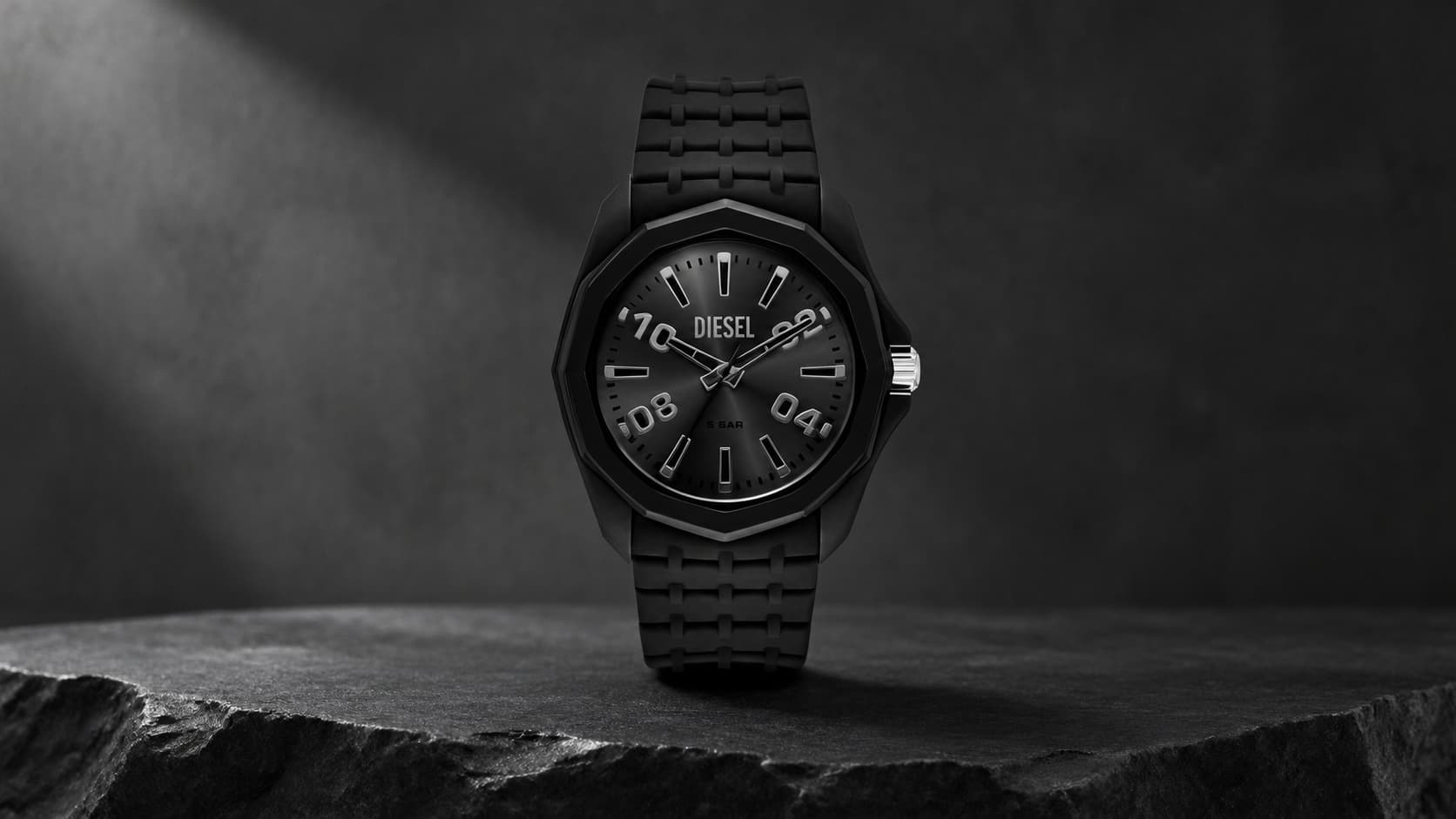
A Diesel watch is easy to spot because it’s usually bigger, bolder, and busier than most other fashion watches. Case sizes often start around 44mm and can go past 50mm, noticeably larger than the 38-42mm range common in mainstream watches. The dials tend to layer multiple sub-dials, exposed screws, and heavy typography, giving them an industrial, mechanical look even though most models run on simple quartz movements.
That look comes directly from the brand’s roots. Diesel was founded in Italy in 1978 by Renzo Rosso, and its whole identity has always leaned into rebellion, denim culture, and a design attitude built for attention rather than restraint. When the watch line launched, it carried that same personality over: big, tough-looking, unapologetic. A Diesel watch is generally recognizable at a glance, which is the design language working exactly as intended.
Straps play a big part in that identity too. Diesel mixes stainless steel bracelets, thick leather bands, and silicone straps across its lineup, often in colorways rarely seen on more traditional watch brands, such as camo prints, deep burgundy, or two-tone gold and gunmetal combinations. Beyond traditional analog pieces, the brand has also pushed into touchscreen territory with lines like Diesel On and the Full Guard smartwatch series, which add fitness tracking and heart rate monitoring while keeping the same oversized, industrial case shape. That range means the label “Diesel watch” covers very different products depending on which part of the catalog is in question.
The Company Behind Diesel Watches
Diesel doesn’t manufacture its own watches in-house. Since 1999, Diesel watches have been produced and distributed under a licensing agreement with Fossil Group, the same American company behind the Fossil brand and several other licensed watch lines. This is a normal setup in the fashion watch world — a lot of clothing and fashion brands don’t have the factories or watchmaking expertise to build timepieces themselves, so they partner with a company that does.
Fossil Group handles the sourcing of movements, the assembly, and the distribution logistics, while Diesel’s in-house design team, working through a division sometimes called Diesel Timeframes, controls how the watches actually look. This split explains why Diesel watches share some engineering similarities with other Fossil-licensed brands, even though the styling is completely different. It also means the movements inside are typically dependable, mass-produced quartz calibers rather than anything custom-built.
Diesel doesn’t build its own watch movements. The looks are pure Diesel; the engineering underneath comes from Fossil Group’s supply chain.
This licensing model isn’t unique to watches, either. Diesel itself was started in Molvena, Italy, in 1978 by Renzo Rosso together with denim designer Adriano Goldschmied, and Rosso later bought out Goldschmied’s share of the company in 1985 to become sole owner. Today Diesel sits under Rosso’s holding company, OTB Group, alongside fashion houses like Maison Margiela and Marni. Just as watches go through Fossil Group, Diesel’s eyewear is produced through an outside eyewear specialist and its fragrances through a major beauty manufacturer. Across the whole brand, Diesel focuses on design and image while established manufacturers handle the technical production, which is part of why the company can move fast across so many different product categories at once.
The Diesel Watch Collections
Diesel runs several distinct watch lines, and each one has its own personality. The names matter when comparing models, since two watches with wildly different looks might both simply be labeled “Diesel.”
Mega Chief
The Mega Chief is Diesel’s flagship oversized chronograph and the collection most associated with the brand’s overall image. Cases typically run 48mm to 51mm, built in stainless steel with layered, multi-textured dials, exposed sub-registers, and a distinctive crown guard. Most versions include a working chronograph, a stopwatch function with two or three small sub-dials, along with a date window, and water resistance usually sits around 100 meters, enough for swimming but not deep diving.
Mr. Daddy 2.0
If the Mega Chief is bold, the Mr. Daddy 2.0 is Diesel at its most extreme, and it’s the model most often cited as the brand’s single most iconic design. Cases run anywhere from 55mm to a genuinely massive 66mm, several sizes beyond even the Mega Chief, with multi-layered dials built around four separate time zones and heavy, tactical-looking hardware. It trades some practicality for spectacle: water resistance on most versions is only 30 meters (3 ATM), meaning splash protection rather than swimming, since the design priority is visual impact over everyday sport use.
Master Chief
The Master Chief sits a step down in size from the Mega Chief, usually landing around 46mm, with a slightly more classic feel. Dials are often sunray-finished with stick indexes rather than the heavily layered look of the Mega Chief, and the line comes in both three-hand and chronograph versions. It occupies a middle ground for buyers who want the Diesel look without the largest case sizes.
Vert
The Vert collection trades some of Diesel’s visual chaos for a cleaner, more streamlined case, generally sized around 44mm. It’s built around a three-hand design with a date window, giving it a more versatile, everyday feel while still keeping Diesel’s chunky stainless steel construction. It suits buyers who want a large watch without sub-dials and extra detail crowding the face.
Griffed
Griffed watches feature a distinctive fluted or “griffed” bezel texture, giving the case edge a mechanical, gear-like detail. Sizes commonly fall in the 44-48mm range, and the line comes in both chronograph and simpler three-hand versions, often paired with silicone or two-tone steel bands. It represents one of Diesel’s more affordable entry points into the brand’s signature bold styling.
Timeframe and Spiked
These two lines round out Diesel’s current lineup with slightly different personalities. Timeframe models keep a straightforward chronograph layout in a mid-size case, while Spiked watches add raised, textured bezel details for extra visual grit. Both sit in a similar price range to Griffed and target buyers seeking the Diesel look without stepping up to Mega Chief pricing.
Diesel On and Full Guard (Smartwatches)
Diesel also makes a smartwatch range that keeps the brand’s oversized case shape but swaps the mechanical dial for a digital touchscreen. Diesel On launched as the brand’s first touchscreen smartwatch, and later Full Guard models added fitness features like a heart rate monitor. These run on standard smartwatch software rather than a proprietary Diesel system, so functionality lines up with what’s typical of other fashion-brand smartwatches: notifications, activity tracking, and customizable watch faces, wrapped in Diesel’s signature bulky styling.
D-Era (Women’s Watches)
Diesel’s current women’s watch collection centers on the D-Era line, and it takes a noticeably different approach than the men’s collections above. Instead of oversized, multi-layered cases, D-Era sticks to clean two-hand designs, generally in the 19-38mm range, finished in polished steel, gold-tone, or leather straps with occasional pavé detailing. It moves away from the industrial density that defines Mega Chief or Mr. Daddy 2.0, favoring a minimal, easy-to-wear watch that still carries Diesel’s branding and finish quality.
How Much Diesel Watches Cost
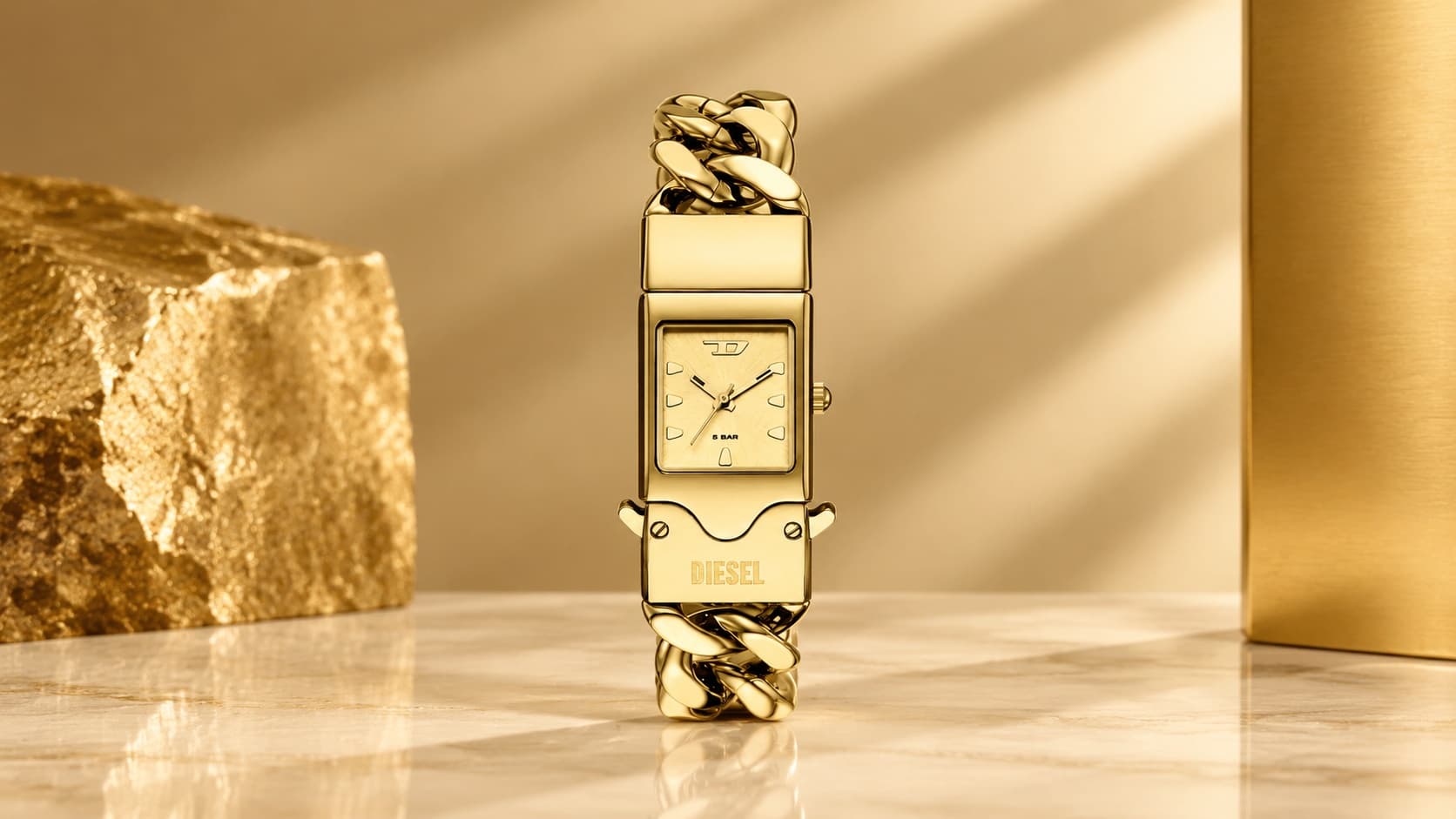
Most current Diesel watches retail between $200 and $400, based on official Diesel and authorized retailer listings. Entry-level three-hand models like the Closer or Rasp tend to sit near the bottom of that range, while chronograph-heavy pieces in the Mega Chief and Vert lines often land closer to $350-$400 at full retail price.
That pricing puts Diesel in the “accessible designer watch” category — above true budget fashion watches, but well below Swiss or Japanese mechanical watches from established watchmaking houses. Because Diesel watches are a licensed fashion product rather than a horological investment piece, prices are driven mainly by design, materials, and brand recognition rather than movement complexity.
Discounted and outlet pricing is common with Diesel, more so than with many other watch brands. It isn’t unusual to see the same Mega Chief or Griffed model marked down 30-40% off its original retail price at authorized outlet retailers or during sale periods, since fashion watch inventory moves through seasonal cycles the way clothing does. Older references that have been replaced by newer colorways are especially likely to carry a discount.
| Collection | Typical Case Size | Typical Retail Price |
|---|---|---|
| Mega Chief | 48-51mm | $260-$400 |
| Mr. Daddy 2.0 | 55-66mm | $250-$400 |
| Master Chief | 44-46mm | $200-$300 |
| Vert | 44mm | $290-$375 |
| Griffed | 44-48mm | $200-$290 |
| Timeframe / Spiked | 42-46mm | $200-$310 |
| D-Era (women’s) | 19-38mm | $170-$300 |
Are Diesel Watches Good Quality
For a fashion watch in this price range, Diesel watches generally deliver solid, dependable quality. Cases are stainless steel, sometimes with IP-plated finishes for gold or gunmetal colors, crystals are usually scratch-resistant mineral glass rather than more premium sapphire, and movements are quartz-based, meaning they run on a battery and don’t need winding or servicing the way mechanical watches do.
The value in a Diesel watch lies in design and brand presence rather than fine watchmaking. The movements are reliable and accurate, since quartz technology is inherently precise, but they’re not unique to Diesel — similar calibers show up across many Fossil-licensed brands, sometimes sourced from established movement makers like Miyota. The category suits a rugged-looking watch that keeps good time without much maintenance rather than hand-finished mechanical craftsmanship.
Most new Diesel watches come with a manufacturer’s warranty of around two years when purchased through an authorized retailer, covering manufacturing defects but not everyday wear, scratches, or battery replacement. That warranty length is fairly standard for fashion watches in this price bracket, and it’s one reason authorized retailers carry more weight than the lowest price from an unverified seller.
Who Should Wear a Diesel Watch
Diesel watches work best for wearers who want their wrist to make a statement. The oversized cases and industrial dial details are meant to draw attention, making them a natural fit for casual, streetwear-adjacent, or going-out looks rather than conservative office settings. A collector focused on subtlety and minimalism will likely find Diesel’s designs too loud, while someone already drawn to bold denim, sneakers, or statement accessories tends to be a natural fit.
The lineup also works as a practical first “real” watch purchase. The price point keeps the financial risk low, and the durable steel construction and reasonable water resistance mean the watch can handle daily wear without special care.
Taking Care of a Diesel Watch
Keeping a Diesel watch looking good mostly comes down to basic habits. Wiping the case and band down after exposure to sweat or humidity prevents moisture from dulling the finish or, in the case of leather straps, causing cracking over time. Submersion beyond the rated water resistance should be avoided, and a 100-meter rating is meant for swimming, not diving or high-pressure activities like jet skiing.
Battery replacement is straightforward since these are quartz movements, and most watch repair shops or jewelers can swap the battery in minutes. Because Diesel doesn’t manufacture the watches itself, official servicing and warranty support typically runs through Fossil Group’s service network, making the original paperwork worth keeping for any future repair or warranty claim.
Frequently Asked Questions
Are Diesel watches made by Diesel?
No. Diesel designs the look of its watches, but production, movement sourcing, and distribution have been handled under license by Fossil Group since 1999. This is common practice for fashion brands that don’t have their own watch manufacturing.
Do Diesel watches hold their value?
Diesel watches are fashion pieces, not investment pieces, so they don’t appreciate in value the way collectible Swiss watches sometimes do. Resale value drops fairly quickly after purchase, similar to most watches in the same price bracket.
What movement do Diesel watches use?
Most Diesel watches run on quartz movements, which are battery-powered and require no manual winding. Some models add a chronograph function, but the underlying movement technology stays quartz across nearly the entire current lineup.
Are Diesel watches waterproof?
Most Diesel watches are water resistant, not fully waterproof, typically rated to 50 or 100 meters. That rating covers swimming and everyday splashes but isn’t meant for diving or prolonged submersion.
Why are Diesel watches so big?
The oversized cases are an intentional design choice tied to the brand’s rebellious, attention-grabbing identity. Diesel built its reputation on bold, non-conformist style, and the watch line carries that same philosophy into case size and dial design.
Does Diesel make smartwatches?
Yes. Lines like Diesel On and Full Guard bring touchscreen displays, notifications, and fitness tracking into the same oversized case style used across the brand’s analog watches. They run on standard smartwatch software rather than analog quartz movements, making them a distinct category from the Mega Chief or Vert.
Does Diesel make women’s watches?
Yes, through the D-Era collection. Unlike the oversized men’s lines, D-Era sticks to smaller, clean two-hand designs in the 19-38mm range, making it a different style direction rather than a scaled-down version of the men’s watches.
The Bottom Line
Diesel watches aren’t trying to compete with fine watchmaking, and they don’t need to. What they offer is a specific look — big, industrial, unmistakably loud — built on dependable quartz movements and solid steel construction, at a price accessible enough to make the decision an easy one. The story behind that look involves a licensing deal with Fossil Group rather than an in-house workshop, but the design identity remains entirely Diesel’s own, from the Mega Chief and Mr. Daddy 2.0 at the bold end of the lineup to D-Era at the quieter one. The real distinction between models comes down to taste rather than quality: either that industrial, oversized look fits, or it doesn’t.