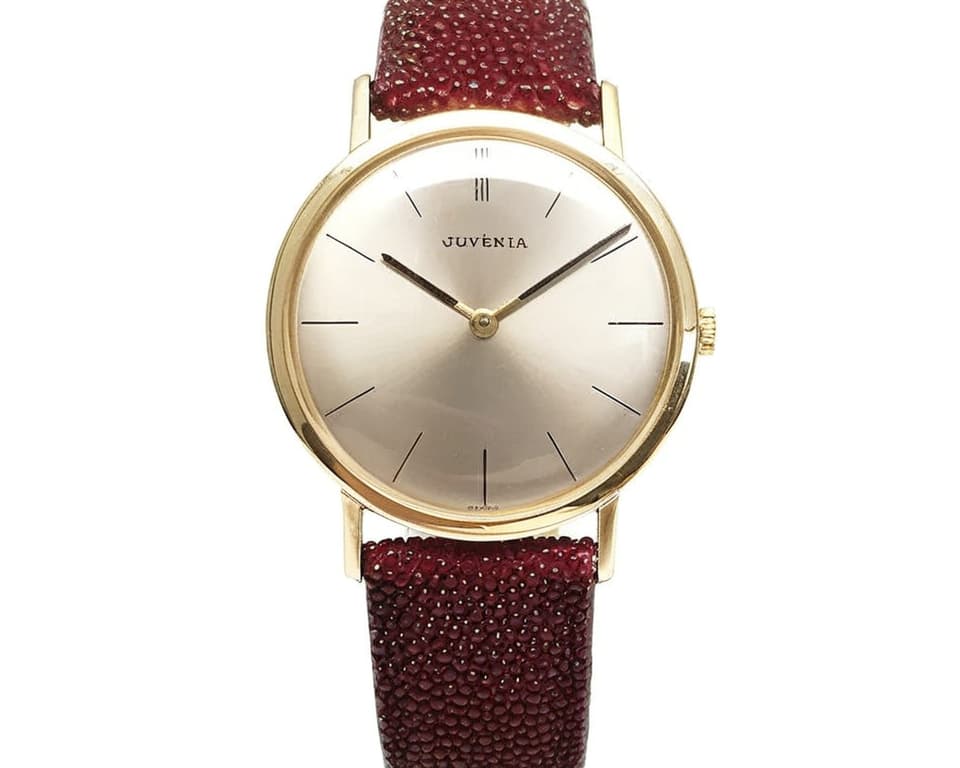
Juvenia is one of those Swiss watch names that most people have never heard of, yet it has been quietly making timepieces since 1860 without ever stopping production, even through two world wars. The brand built its reputation on strange and wonderful designs, watches with no visible hands, dials shaped like flowers, and cases that looked more like tiny sculptures than tools for telling time. If you’re curious about Juvenia, whether you spotted a vintage piece at a flea market or you’re looking at the brand’s modern collection, here is everything you need to know before you buy one.
Juvenia’s Watchmaking History
Juvenia was founded in 1860 in Saint-Imier, Switzerland, by a watchmaker named Jacques Didisheim-Goldschmidt, who soon moved the workshop to La Chaux-de-Fonds, a town that would become one of the most important watchmaking centers in the world. The company stayed in the Didisheim family for generations, passing from Jacques to his son Bernard and later to Bernard’s own descendants, who kept building watches under the family name for nearly a century.
The Juvenia name itself did not appear until 1906, when it was registered as a tribute to a family matriarch, and it slowly became the brand’s flagship label above several smaller lines the company also produced, such as Fiat, Polar, and Nautilus. Juvenia moved fast on new ideas. By 1880 the company was already producing wristwatches for women, at a time when pocket watches still dominated, and in 1908 it began building its own in-house movements rather than buying parts from outside suppliers. At the 1914 Swiss National Exhibition, Juvenia showed off the smallest single-plate watch movement made up to that point, proof that the brand had real technical ambition behind its playful designs.
The company’s most famous creation arrived in the 1940s. The Juvenia Mystère, first registered in 1945 and released in 1947, hid its movement so cleverly that the hands appeared to float with nothing connecting them, a trick borrowed from old “mystery clocks.” It became a signature model produced in various forms for decades. Around the same era, Juvenia also built the Arithmo, a 1945 pilot’s watch with a built-in slide rule for doing quick calculations in the air, and it was among the first brands to put display casebacks on its watches so owners could see the mechanism working.
Juvenia briefly joined a Swiss watchmaking group called Heuroplan in 1959, alongside brands like Movado and Cyma, but that partnership dissolved only a couple of years later and Juvenia went back to operating on its own. The brand changed hands again in 1988, when it was acquired by the Hong Kong-based Asia Commercial Holdings Ltd, which still owns Juvenia today. Since then, the company has leaned into the Asian market while keeping its watchmaking and headquarters in La Chaux-de-Fonds, still producing Swiss-made watches under the same name it registered over a century ago.
What Makes Juvenia Watches Different
Juvenia watches stand out because of their unusual, almost architectural designs rather than flashy branding or celebrity endorsements. The brand has spent over 160 years experimenting with how a dial can look and function, which gives its catalog a personality that few other Swiss houses share.
- Uninterrupted production since 1860. Very few Swiss watch companies can say they never stopped making watches, even during the two world wars, and Juvenia is one of them.
- A love of unconventional time displays. From the hand-free Mystère dial to the sextant-and-compass hour markers on the modern Sextant collection, Juvenia rarely settles for a plain round dial with standard hands.
- Early adoption of in-house movements. The brand started designing and producing its own calibers in 1908, long before that was common practice for a company of its size.
- A history of firsts. Juvenia produced some of the earliest women’s wristwatches, some of the first watches with visible display casebacks, and one of the first watches with a built-in slide rule for pilots.
- Small-scale, detail-focused production. Because Juvenia has never chased mass-market volume, many of its pieces use gold cases, mother-of-pearl dials, or hand-finished complications that larger competitors reserve for their most expensive lines.
None of these traits alone would be remarkable, but together they explain why a Juvenia watch tends to look and feel different from other Swiss pieces in the same price range.
Top 10 Best Juvenia Watches
This list mixes the historic pieces that built the Juvenia name with the models the brand currently produces, so you can see both where the company came from and what it makes today.
1. Juvenia Mystère
The Mystère is Juvenia’s most important watch and the one collectors search for first. Registered in 1945 and launched in 1947, it used a rotating outer disc to move the hands so that, from the front, they appeared to have nothing attached to them at all. It was produced in round, square, and rectangular cases over the following decades, including automatic and compact “Lilliput” versions, and it remains the model most associated with the Juvenia name.
| Detail | Information |
|---|---|
| Reference | Varies by decade and case shape; no single current reference |
| Case | Steel or gold, depending on era |
| Case size | Varies by version (round, square, and rectangular cases were all produced) |
| Movement | Mechanical, manual-wind and later automatic versions |
| Water resistance | Not rated; predates modern water-resistance standards |
| Price (approx.) | Not in current production; vintage examples trade privately and at auction, with prices depending heavily on condition, era, and case shape |
2. Juvenia Arithmo
Built in 1945 for pilots and engineers, the Arithmo packed a slide-rule calculator onto the watch face itself, letting the wearer do multiplication and division calculations right on their wrist before pocket calculators existed. It is now one of the most sought-after vintage Juvenia pieces at auction, prized as much for its engineering as for its rarity.
| Detail | Information |
|---|---|
| Reference | Varies by production run; oversized steel examples are the most documented |
| Case | Stainless steel, some steel-and-gold examples |
| Case size | Around 42mm, unusually large for its 1940s production date |
| Movement | 17-jewel manual-wind mechanical movement |
| Water resistance | Not rated; predates modern water-resistance standards |
| Price (approx.) | Not in current production; auction record of $26,911, set at Phillips’ Geneva watch auction in 2021 |
3. Juvenia Tourbillon
The modern Tourbillon (reference TBC1.6.646.21) is Juvenia’s current flagship complication piece, built entirely from 18-karat rose gold, including the case, dial, and hands. Its hand-wound J020 movement drives a tourbillon at six o’clock, a mechanism designed to counteract the effects of gravity on accuracy, inside a 38mm case that keeps the watch dressy rather than oversized.
| Detail | Information |
|---|---|
| Reference | TBC1.6.646.21 |
| Case | 18K rose gold |
| Case size | Ø 38mm, height 10.85mm |
| Movement | Hand-wound mechanical, caliber J020, 29 jewels |
| Functions | Hours, minutes, tourbillon |
| Water resistance | 3 ATM |
| Price (approx.) | €71,850 |
4. Juvenia Sextant III
The Sextant III (reference SXA1.6.096.21) turns a real nautical navigation tool into a watch dial, using a protractor, a ruler, and a compass needle as stand-ins for the hour, minute, and second hands. It comes in an 18-karat rose gold case measuring 40mm across, powered by a self-winding movement with 25 jewels, and it is one of the more distinctive pieces in Juvenia’s current lineup.
| Detail | Information |
|---|---|
| Reference | SXA1.6.096.21 |
| Case | 18K rose gold |
| Case size | Ø 40mm, height 9.35mm |
| Movement | Self-winding mechanical, caliber J015, 25 jewels |
| Functions | Hours, minutes, sweep seconds, date |
| Water resistance | 3 ATM |
| Price (approx.) | $12,400 |
5. Juvenia J Collection World Time
Part of Juvenia’s J Collection, the World Time model (reference WTA2.4.054.20) displays a 24-hour city ring so travelers can read the time in multiple zones at a glance. It runs on a self-winding movement in a 40mm stainless steel case with a black dial finished in a decorative flinqué pattern, and it sits alongside sibling models in the same collection built around moon phase, power reserve, and dual time complications instead.
| Detail | Information |
|---|---|
| Reference | WTA2.4.054.20 |
| Case | Stainless steel |
| Case size | Ø 40mm, height 10mm |
| Movement | Self-winding mechanical, caliber J07-A, 25 jewels |
| Functions | Hours, minutes, sweep seconds, date, world time with 24-hour markers |
| Water resistance | 3 ATM |
| Price (approx.) | $5,100 |
6. Juvenia J Collection Moon Phase
The Moon Phase variant of the J Collection swaps the world-time function for a classic astronomical complication, tracking the moon’s cycle across a small aperture on the dial. It shares the same understated design language as the rest of the J Collection, aimed at buyers who want a genuine mechanical complication without an oversized or flashy case.
| Detail | Information |
|---|---|
| Reference | MPA2.4.014.20 |
| Case | Stainless steel |
| Case size | Ø 40mm, height 10mm |
| Movement | Self-winding mechanical, caliber J019, 25 jewels |
| Functions | Hours, minutes, sweep seconds, day, month, date, moon phase |
| Water resistance | 3 ATM |
| Price (approx.) | Not published; sits close to other J Collection models, which range roughly $4,200–$5,700 |
7. Juvenia Planet
The Planet collection (reference PLA1.C.594.04) takes its design cue from the solar system, with metal cabochons or diamonds set around the bezel to represent planets orbiting a central star. The men’s version comes in a 40mm stainless steel case with an 18-karat rose gold-trimmed bracelet and a silver dial finished in a textured clous de Paris pattern, powered by a self-winding movement rated to 10 ATM of water resistance.
| Detail | Information |
|---|---|
| Reference | PLA1.C.594.04 |
| Case | Stainless steel with 18K rose gold cabochon bezel |
| Case size | Ø 40mm, height 12.45mm |
| Movement | Self-winding mechanical, caliber J026-G, 25 jewels |
| Functions | Hours, minutes, sweep seconds, date |
| Water resistance | 10 ATM |
| Price (approx.) | $3,900 |
8. Juvenia Classic 97
The Classic 97 represents Juvenia’s simplest, most restrained side, a dress watch built for people who want clean proportions and a quiet dial rather than a conversation piece. It belongs to the brand’s long-running Classic line, which has always prioritized proportion and legibility over the more experimental designs Juvenia is known for elsewhere in its catalog.
| Detail | Information |
|---|---|
| Reference | 9794.6.354.21 |
| Case | 18K rose gold |
| Case size | Ø 40mm, height 10.6mm |
| Movement | Self-winding mechanical, caliber J022, 25 jewels |
| Functions | Hours, minutes, sweep seconds, date |
| Water resistance | 3 ATM |
| Price (approx.) | Not published; steel versions of the Classic line have circulated on the secondary market in the low thousands |
9. Juvenia Biarritz
Named after the French seaside resort, the Biarritz (reference BIB3.4.970.04) is a ladies’ quartz watch with a small 29mm stainless steel case, a mother-of-pearl dial set with 12 diamonds, and a matching steel bracelet. It is one of the more accessible entry points into the brand, built for everyday wear rather than as a statement piece.
| Detail | Information |
|---|---|
| Reference | BIB3.4.970.04 |
| Case | Stainless steel |
| Case size | Ø 29mm, height 7.9mm |
| Movement | Analog quartz, caliber J025, 5 jewels |
| Functions | Hours and minutes |
| Water resistance | 3 ATM |
| Price (approx.) | $1,650 |
10. Juvenia Dragon
Part of Juvenia’s Collector’s Timepieces line, the Dragon model uses an ornate, sculptural case design that echoes the avant-garde shapes the brand became known for decades ago. It is aimed squarely at collectors who already know the brand’s history and want something that nods back to Juvenia’s more unusual mid-century pieces rather than a conventional round watch.
| Detail | Information |
|---|---|
| Reference | DRA1.6.R00.21 |
| Case | 18K rose gold |
| Case size | Ø 41mm, height 10.17mm |
| Movement | Hand-wound mechanical, caliber J016, 17 jewels |
| Functions | Hours and minutes |
| Water resistance | 3 ATM |
| Price (approx.) | Not published; priced as a Collector’s Timepieces release alongside the Tourbillon |
Buying Tips for Juvenia Watches
Before buying a Juvenia, think about whether you want a vintage piece or a current-production model, because the two are very different purchases with different risks. Vintage Juvenia watches, especially Mystère and Arithmo models, are decades old and were built before modern water-resistance and shock-protection standards existed, so they usually need a specialist’s inspection before they’re worn regularly.
- Movement condition matters more than looks on vintage pieces. A beautiful case can hide a movement that hasn’t been serviced in decades. Ask for service history or budget for a full service after purchase.
- Check water resistance ratings carefully. Even Juvenia’s current watches are generally rated around 3 ATM, which means light splashes only, not swimming or diving.
- Decide if you want gold or steel. Juvenia’s current lineup spans from steel quartz pieces under $2,000 to solid 18-karat gold mechanical watches well into the tens of thousands, so your budget will steer you toward a very different part of the catalog.
- Case size and gender lines still matter here. Juvenia still separates its collections into men’s and ladies’ sizing rather than offering one universal case size, so check the millimeter measurement against your wrist before buying, especially online.
- Authenticate before buying vintage. Because Juvenia used several sub-brand names over the decades, including Fiat, Polar, and Nautilus, it helps to know which era and reference you’re actually looking at before paying a premium for a “Juvenia” original.
Taking a few extra minutes on these points before you pay will save you from the two most common Juvenia buying mistakes: overpaying for an unserviced vintage piece, or picking a case size that doesn’t actually suit your wrist.
Where to Buy a Juvenia Watch
Juvenia sells its current collection directly through its own boutique and website, and the company also lists authorized stores and service centers through its official site for buyers who want to see a watch in person before committing. Because Juvenia has been owned by the Hong Kong-based Asia Commercial Holdings since 1988 and has focused heavily on the Asian market since opening a Hong Kong subsidiary in 2003, its authorized retail network is noticeably more concentrated in Asia than in Europe or North America, so buyers elsewhere may need to rely on the brand’s website or contact the boutique directly to arrange a purchase.
For vintage or discontinued pieces like the Mystère or Arithmo, the watches don’t move through Juvenia’s own retail channels at all since the brand no longer produces them. Instead, they typically surface through specialist vintage watch dealers, estate sales, and auction houses that focus on collectible timepieces. Some of the rarest examples, including the Arithmo, have appeared at major auction houses like Phillips as part of dedicated vintage watch sales, which is worth knowing if you’re trying to gauge whether a piece you’ve found is priced fairly against what similar examples have actually sold for.
Wherever you buy, ask for documentation on the watch’s service history, especially for anything mechanical and several decades old. A trustworthy seller should be able to tell you when the movement was last serviced and whether original parts were used for any repairs.
Resale Value of Juvenia Watches
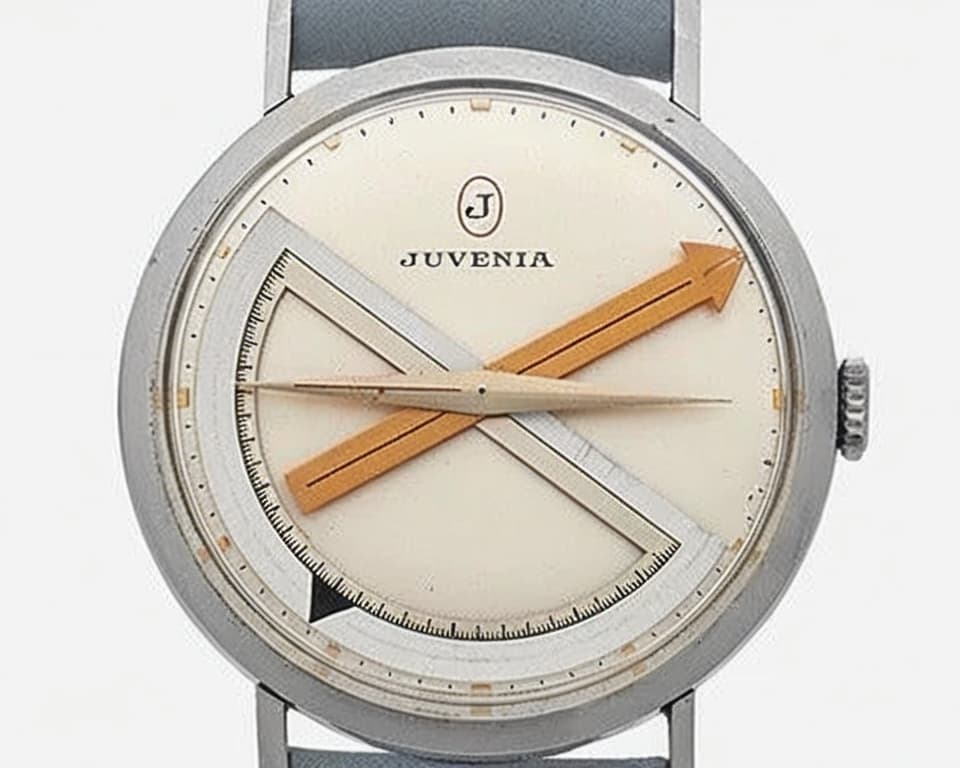
Juvenia is not a brand people typically buy purely to flip for profit, but certain vintage pieces have shown real value at auction. The Arithmo is the clearest example: its combination of rarity, oversized Art Deco styling, and genuinely useful slide-rule function has made it the brand’s standout at auction. One example sold for $26,911 at Phillips’ Geneva watch auction in 2021, and the model has appeared in Phillips sales more than once over the years, which suggests steady collector demand rather than a one-off result.
Outside the Arithmo, auction results for Juvenia are much more modest and inconsistent. Recorded sale prices across the brand’s catalog have ranged from around $310 for common vintage pieces up to that Arithmo high point, with most results landing well below $2,000. Mystère models, gold dress watches from the 1950s and 60s, and pieces from Juvenia’s various sub-brands like Fiat or Nautilus tend to sell in that lower range unless they’re in exceptional original condition with box and papers.
Current-production Juvenia watches behave more like most mid-tier Swiss watches: they lose value quickly compared to their retail price once purchased new, and they aren’t widely traded on the secondary market the way brands like Rolex or Omega are. If resale value matters most to you, a rare vintage Juvenia with documented history and original parts, particularly an Arithmo or an early Mystère, is a far safer bet than a brand-new piece bought at full retail price.
Maintenance Tips for Juvenia Watches
Mechanical Juvenia watches need servicing roughly every three to five years, similar to most Swiss mechanical movements, to keep the lubricants fresh and the gears running smoothly. Vintage pieces, especially anything from the Mystère or Arithmo era, often need more careful handling since parts for decades-old calibers can be harder to source.
- Avoid submerging any Juvenia watch in water, since most models are rated to only 3 ATM, which covers accidental splashes, not swimming or showering.
- Store gold-cased pieces separately from other jewelry to avoid surface scratches, since soft precious metals mark more easily than steel.
- Wind manual and automatic movements gently and avoid overwinding, which can damage the mainspring over time.
- Have a watchmaker check the gaskets and seals periodically, particularly on vintage pieces where the original rubber seals have likely dried out or perished.
- Keep the watch away from strong magnets, since magnetized components are one of the most common reasons a mechanical watch suddenly starts running fast or slow.
None of this requires special expertise, just the same basic care you’d give any mechanical watch: keep it dry, keep it wound sensibly, and get it looked at by a professional every few years rather than waiting until something goes wrong.
Frequently Asked Questions
A few quick questions come up again and again from people just discovering Juvenia, so here are straightforward answers before you go looking further.
Is Juvenia a luxury watch brand?
Yes, Juvenia is a genuine Swiss luxury watchmaker, though it is a smaller and less widely recognized name than brands like Rolex or Omega. It has produced Swiss-made watches continuously since 1860 and is currently owned by the Hong Kong-based Asia Commercial Holdings Ltd.
What is the most famous Juvenia watch?
The Juvenia Mystère is the brand’s most famous model, known for its hand-free “floating hands” dial design that first appeared in 1947 and was produced in many variations over the following decades.
Are vintage Juvenia watches valuable?
Some are. Rare models like the Juvenia Arithmo, with its built-in slide-rule function, have sold for tens of thousands of dollars at auction, while more common vintage pieces typically sell in the hundreds to low thousands depending on condition and rarity.
Where are Juvenia watches made?
Juvenia watches are made in La Chaux-de-Fonds, Switzerland, where the brand has been based since shortly after its founding in 1860.
How often should a Juvenia watch be serviced?
Most mechanical Juvenia watches should be serviced every three to five years to keep the movement running accurately, though vintage pieces may need more frequent attention depending on their age and condition.
Conclusion
Juvenia earns its place in watch history through inventiveness rather than volume, from the hand-free Mystère to the slide-rule Arithmo and the sextant-inspired dials it still builds today. If you’re drawn to the brand, a current piece like the Sextant III or J Collection World Time gives you Swiss mechanical watchmaking with a genuinely unusual design story behind it, while a documented vintage Mystère or Arithmo offers a real piece of horological history for collectors willing to do their homework on condition and provenance. Either way, Juvenia rewards buyers who care about the story behind a watch as much as the watch itself.