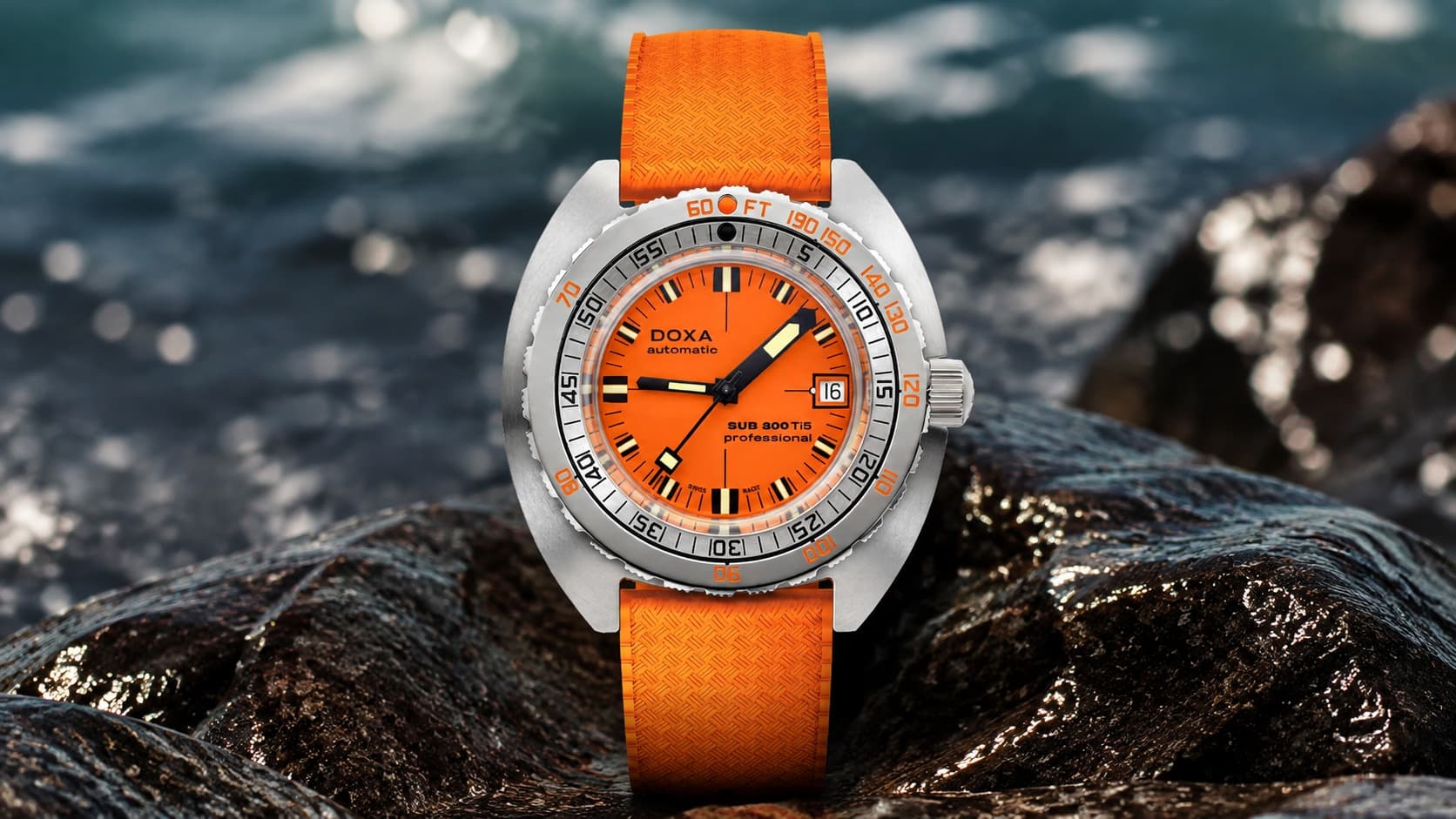
When collectors and professional divers discuss authentic dive watch heritage, Doxa inevitably enters the conversation alongside far more expensive Swiss brands. This Le Locle-based manufacturer earned its legendary status not through marketing campaigns but through genuine underwater innovation—creating the world’s first orange dive watch dial in 1967, pioneering the helium escape valve, and equipping Jacques Cousteau’s entire Calypso diving team. Unlike fashion brands that merely style their watches after diving equipment, Doxa built actual professional tools that solved real problems for people working hundreds of feet underwater. Today’s lineup delivers this same uncompromising functionality at surprisingly accessible price points, with Swiss-made models starting around $1,500—remarkable value when comparable pieces from larger brands often cost twice as much.
How Doxa Became a Legendary Dive Watch Brand
Doxa’s transformation from traditional Swiss workshop to diving watch legend spans 135 years of technical innovation, near extinction, and remarkable revival. The brand spent seven decades building precision instruments before discovering its true calling beneath the waves in the 1960s. That pivotal shift created the diving watch innovations we still see across the industry today—from scientifically-tested orange dials to automatic helium release valves—while earning professional endorsements that money simply cannot buy.
- Georges Ducommun opened his watchmaking workshop in Le Locle, Switzerland during 1889, choosing the Greek word for “glory” as his company name. The location placed him in the heart of Swiss watchmaking country, surrounded by suppliers and skilled craftsmen. His engineering training influenced every decision, prioritizing mechanical precision and reliability over decorative elements. Those early pocket watches and wristwatches built a reputation for accuracy that would carry the brand through multiple ownership changes across the next century.
- The 1907 Bugatti partnership marked Doxa’s first venture beyond traditional timekeeping into performance instruments. Bugatti automobiles came equipped with Doxa’s patented 8-day movement as standard dashboard clocks, exposing the mechanisms to constant vibration, temperature swings, and the rough conditions of early motorsport. This collaboration proved Doxa could build instruments that survived extreme environments while maintaining accuracy—experience that would prove invaluable sixty years later when the company turned toward underwater applications.
- Everything changed in 1964 when Urs Eschle, leading product development, began working with Claude Wesly, one of Switzerland’s most experienced professional divers. Wesly brought decades of real diving experience and a list of specific problems with existing dive watches. Together they conducted methodical testing in Lake Neuchâtel, submerging different colored dials at various depths in the murky water where actual diving happens, not the clear tropical conditions shown in advertisements. Their testing revealed that orange wavelengths penetrated turbid water better than any other color, remaining visible when blues, blacks, and even yellows disappeared into the gloom.
- The 1967 SUB 300 launch at Basel changed dive watch design forever. That distinctive orange dial wasn’t a style choice but the result of scientific testing for maximum underwater visibility. The unidirectional bezel featured actual U.S. Navy decompression tables engraved right into the insert, letting divers calculate safe ascent times without additional equipment. Most revolutionary was making a true professional tool available to recreational divers instead of restricting sales to military and commercial channels. The cushion-shaped case carved from solid steel blocks achieved 300-meter water resistance while creating a silhouette that remains unmistakable decades later.
- Jacques Cousteau’s involvement beginning in 1968 gave Doxa credibility that no advertising budget could purchase. As chairman of U.S. Divers, Cousteau secured exclusive North American distribution rights and put SUB 300 watches on every diver aboard the Calypso research vessel. This wasn’t celebrity endorsement for payment—Cousteau’s team provided three years of field testing feedback while using the watches during actual underwater filming and research expeditions. Those distinctive orange dials appeared regularly in Cousteau’s television documentaries, introducing millions of viewers to Doxa while the watches proved themselves in real working conditions beneath the sea.
- Swiss Armed Forces procurement officers selected the SUB 300T Professional in 1968 for elite combat diving units, placing orders for roughly 150 watches spread across seven years. Each watch received a serial number matching that diver’s equipment inventory, and the military variants featured matte black case coating years before Porsche Design made the technique famous in civilian watches. Swiss combat divers wore these watches through the 1970s during actual training and special operations, providing brutal real-world testing that validated every durability claim Doxa made. Surviving examples with proper military provenance now sell for $10,000-20,000 among serious collectors.
- Doxa’s helium escape valve development in 1968, done jointly with Rolex, solved a dangerous problem facing saturation divers. These professionals lived for weeks in pressurized underwater habitats during deep commercial diving operations. Microscopic helium molecules from their breathing gas penetrated watch cases over time, then exploded violently during decompression, destroying crystals and movements. Doxa’s automatic one-way valve released accumulated helium while maintaining full water resistance, enabling safe use at depths exceeding 1,000 feet—far beyond recreational limits but essential for the oil rig work and military operations that represented significant professional diving markets.
- The quartz revolution of the 1970s devastated traditional Swiss watchmaking as battery-powered watches from Asia offered superior accuracy at a fraction of mechanical watch prices. Swiss watch industry employment collapsed from 90,000 workers to just 47,000 as historic brands disappeared entirely. Doxa fought alongside other mechanical manufacturers but couldn’t compete with quartz economics. By 1980, production had ceased completely. The brand sat dormant for seventeen years while quartz watches dominated retail and mechanical watchmaking survived mainly through luxury brands like Rolex that successfully positioned themselves above commodity price competition.
- The Jenny family purchased Doxa’s dormant brand rights in 1997, beginning a careful revival just as mechanical watches started their unexpected renaissance among collectors. Instead of rushing inferior products to market for quick returns, they produced small batches for enthusiasts while rebuilding supplier relationships and distribution networks. This patient approach maintained brand integrity and let Doxa reconnect with its diving heritage authentically. The timing proved perfect as collectors increasingly valued traditional craftsmanship over disposable quartz watches, particularly pieces with genuine professional history rather than manufactured heritage.
- Rick Marei’s leadership from 2001 through 2019 expanded production and distribution significantly while walking a careful line between respecting heritage and meeting modern expectations. He updated movements and materials to contemporary standards without changing the distinctive design elements that made vintage Doxa watches special. New models and additional colorways broadened appeal beyond hardcore diving enthusiasts to general watch collectors. This era established Doxa’s current position as an accessible Swiss alternative offering real heritage and functionality at half the price of comparable luxury brands.
- Jan Edöcs took over as CEO in 2019, focusing on quality improvements, customer engagement, and responsive product development. His leadership has expanded the catalog to include everything from 39mm compacts to 45mm vintage-sized pieces, all maintaining serious diving capability regardless of price point. The company’s small size compared to major brands allows unusual flexibility—customer feedback gets implemented in months rather than years, and improvements address actual functional concerns rather than just creating artificial novelty to drive replacement sales. Direct communication and transparent operations have built genuine trust with the enthusiast community.
- The brand’s current ownership structure under the Jenny family and Edöcs’ leadership emphasizes long-term sustainability over quarterly profits. Production volumes remain modest compared to major brands, creating some scarcity that supports resale values while keeping the brand accessible to enthusiasts rather than pure investors. Manufacturing still happens in Switzerland using quality Swiss movements, maintaining the technical standards that built Doxa’s reputation. Distribution through select authorized dealers and direct sales keeps pricing reasonable by avoiding the markup layers that inflate luxury watch costs.
Doxa’s journey proves that authentic innovation creates value lasting far beyond marketing campaigns and corporate ownership. The brand survived near-extinction not through financial resources but through the strength of its original contributions and the loyalty of collectors who recognized substance over hype. Today’s success reflects a market shift where informed buyers increasingly value proven capability and genuine heritage over luxury positioning. The orange dial that Eschle and Wesly developed through actual scientific testing remains more relevant than countless marketing-driven “innovations” from brands with far larger budgets, demonstrating that solving real problems creates lasting significance that transcends passing trends.
What Makes Doxa Watches Special and Unique
Doxa earned its reputation by solving actual problems for people working underwater rather than simply styling watches to look like diving equipment. Every distinctive feature—from that scientifically-tested orange dial to the cushion-shaped case—exists because it improved functionality for professional divers in real conditions. This focus on genuine utility over marketing appeal created innovations that influenced the entire dive watch industry while building a devoted following among those who recognize the difference between authentic tools and fashionable accessories.
- The legendary orange dial originated from systematic underwater visibility testing conducted in Lake Neuchâtel’s murky conditions where actual diving happens. Claude Wesly and Urs Eschle submerged various colored dials at different depths, timing how long each remained readable as visibility deteriorated. Orange wavelengths consistently outlasted every other color, staying visible when blues, blacks, and whites had disappeared into the gloom. This wasn’t aesthetic preference or marketing differentiation—it was scientific methodology applied to a genuine safety concern. That testing methodology created what became Doxa’s most recognizable feature, now copied across the industry by brands that never conducted the original research.
- The patented no-decompression bezel incorporates actual U.S. Navy dive tables directly into the rotating bezel insert, eliminating the need for separate reference materials underwater. Divers align the bezel at dive start, then read remaining no-decompression time directly from the bezel as the dive progresses. This integration of essential safety information into the watch itself represented revolutionary thinking in 1967, treating the dive watch as a complete dive computer rather than just a timer. The unidirectional rotation prevents accidental adjustments that could indicate more remaining time than actually available, a critical safety feature that has become standard across all serious dive watches.
- The distinctive cushion case shape carved from solid steel blocks maximizes water resistance while creating unmistakable visual identity. Traditional round cases required additional material and complex sealing solutions to achieve equivalent water resistance ratings. Doxa’s engineers realized that the cushion profile distributed pressure more evenly across the case structure, allowing thinner walls and lighter weight while maintaining structural integrity. The design also positions crown guards as integral case elements rather than added components, further improving water resistance. This practical engineering solution created a silhouette so distinctive that even distant glimpses identify a Doxa immediately.
- Water resistance capabilities range from 200 meters in the SUB 200T to an extreme 1,500 meters in the SUB 1500T, far exceeding recreational diving requirements but reflecting the brand’s professional heritage. Most recreational diving happens above 40 meters, making even the entry-level 200-meter rating five times deeper than typical use. The higher specifications target professional saturation divers, military applications, and technical diving operations where equipment must survive pressures that would crush inadequate designs. These ratings come from actual pressure testing rather than mathematical calculations, ensuring real-world reliability under extreme conditions.
- Swiss mechanical movements power every Doxa timepiece, primarily using robust ETA 2824-2 and Sellita SW200-1 calibers chosen for reliability and global serviceability. These workhorse movements appear in watches costing five times more, delivering accuracy within COSC chronometer standards when properly regulated. The movement selection prioritizes practical long-term ownership over marketing prestige—any competent watchmaker worldwide can service these calibers using readily available parts and documentation. This approach ensures Doxa owners can maintain their watches decades from now regardless of the company’s status, a critical consideration for genuine tool watches meant for extended use rather than fashion-driven replacement cycles.
- The COSC chronometer certification in the SUB 300 guarantees accuracy within -4/+6 seconds daily, verified through 15 days of testing by the official Swiss chronometer institute. This certification requires submitting movements before casing for testing across five positions and three temperatures, ensuring consistent performance under varying conditions. While all Doxa movements maintain excellent timekeeping, the COSC certification provides documented proof of superior regulation. The certification adds roughly $200 to production costs, reflected in the SUB 300’s premium positioning within the lineup, though most users won’t notice practical differences during actual diving operations.
- The signature “beads of rice” bracelet design features five columns of articulated links creating exceptional comfort and flexibility. The distinctive construction distributes weight evenly across the wrist while the links conform to wrist shape better than solid links or mesh designs. The bracelet incorporates a spring-loaded extension system allowing adjustment over wetsuit sleeves without tools—critical functionality for divers who need to wear watches over thick neoprene. Modern versions use solid end links and screwed links for improved durability compared to vintage hollow construction, addressing the primary weakness of original bracelets while maintaining the iconic aesthetic.
- The helium escape valve appearing on several models releases accumulated gas during decompression without manual intervention or compromising water resistance. During saturation diving operations lasting weeks, divers live in pressurized habitats filled with helium-oxygen breathing mixtures. Helium’s tiny molecules gradually penetrate the watch case, building dangerous pressure. During ascent decompression, this trapped helium can explode violently, destroying the crystal and movement. The automatic one-way valve opens at specific pressure differentials, releasing helium safely while maintaining water resistance. This technology serves a tiny segment of professional divers but demonstrates Doxa’s continued focus on genuine professional applications rather than mass market appeal.
- The crystal construction uses domed sapphire with anti-reflective coating on models from the SUB 300 upward, providing scratch resistance and clarity essential for reading instruments underwater. The domed profile reduces glare from angled light while the anti-reflective coating improves legibility in varying visibility conditions. Lower-priced models use mineral crystal to keep costs accessible while maintaining adequate scratch resistance for normal use. The crystal height contributes significantly to overall case thickness, with Doxa prioritizing legibility and durability over slim profiles that compromise functionality.
- Lume application uses Super-LumiNova across all models, providing hours of visibility after light exposure. The broad hands and large hour markers maximize luminous surface area, creating strong visibility even in complete darkness or murky water. Modern formulations emit green light that human eyes perceive most easily in low-light conditions. The amount and quality of lume application exceeds what many brands provide at similar price points, reflecting Doxa’s tool watch priorities where actual nighttime and underwater legibility matters more than marketing specifications that look impressive but provide minimal real-world benefit.
- The color palette extends far beyond the famous orange dial, offering eight distinct colorways each tied to specific diving environments or historical models. Sharkhunter black provides stealth and professional versatility, Searambler silver offers vintage aesthetics, Caribbean blue evokes tropical waters, and Divingstar yellow maximizes visibility in specific conditions. Professional orange remains the most historically significant, but the variety accommodates different preferences while maintaining the core design language. Each color uses the same high-contrast printing and finishing, ensuring equivalent legibility regardless of aesthetic choice.
- Thestrap and bracelet options include matching FKM rubber with integrated extension systems, providing lightweight comfort and diving functionality at lower cost than steel bracelets. The rubber formulation resists saltwater, chemicals, and UV exposure better than cheaper silicone alternatives while maintaining flexibility across temperature ranges. Quick-release spring bars on modern models enable tool-free strap changes, letting owners switch between bracelet and rubber based on activity. This versatility serves both dedicated divers who need different configurations for different conditions and casual wearers who simply want variety.
- The case finishing combines brushed surfaces on sides with polished accents on bevels, creating visual interest while hiding the minor scratches inevitable with active use. This mixed finishing approach serves practical purposes—fully polished cases show every mark while completely brushed surfaces lack visual depth. The finishing quality meets Swiss standards without the obsessive hand-polishing that inflates luxury watch prices. Edges remain crisp and surfaces even, but Doxa accepts small imperfections that don’t affect function, keeping prices reasonable while maintaining professional appearance.
- The crown operation uses signed crowns with substantial grip regardless of model, essential for operation with wet or gloved hands. The screw-down design threads into the case tube, compressing gaskets that maintain water resistance. Crown guards protect against impacts that could damage the stem or compromise sealing. The crown position at 3 o’clock balances accessibility with comfort, avoiding the wrist interference common with 4 o’clock positions while maintaining traditional symmetry. Crown operation requires moderate force to ensure proper seating—the threading should feel smooth but firm, never loose or gritty, which indicates worn gaskets needing replacement.
- The case back construction varies by model, with some using display crystals showing movement decoration while others use solid steel for maximum water resistance. Display case backs serve primarily aesthetic purposes, letting owners view the movement’s finishing and operation. Solid case backs maintain slightly better water resistance through elimination of another potential failure point, though modern gasket technology makes this difference negligible for the depth ratings Doxa achieves. Both styles include engraved model information and serial numbers for authentication and warranty purposes.
These elements combine to create watches that function as genuine professional instruments while maintaining distinctive character that stands apart from commodity dive watches. Every feature exists for specific reasons tied to actual diving requirements rather than simply following industry conventions or pursuing fashionable aesthetics. This focus on substance over style has built loyalty among users who need reliable equipment and collectors who appreciate authentic purpose-driven design. The fact that many features originated with Doxa and were later adopted across the industry demonstrates the brand’s innovation rather than imitation, a crucial distinction in markets flooded with watches styled to look like tools but engineered primarily for fashion rather than function.
Top 10 Best Doxa Watches
Doxa’s current lineup balances heritage authenticity with practical variety, offering everything from compact 39mm daily wearers to massive 45mm vintage-sized pieces built for extreme depths. Each model maintains the core design language and diving functionality that defines the brand, but differs in sizing, water resistance, and specific features. Pricing spans from accessible entry points around $1,500 to specialized models exceeding $4,000, all delivering Swiss manufacturing quality at prices well below comparable luxury alternatives.
- SUB 200T represents the ideal entry point into genuine Doxa ownership at $1,590, combining authentic diving capability with modern 39mm proportions. The 200-meter water resistance handles all recreational diving while the compact 10.7mm thickness and 41.5mm lug-to-lug measurement accommodate wrists from 6.0 to 7.5 inches. The Swiss Sellita SW200-1 movement provides reliable timekeeping with global service availability. Available in all eight signature Doxa colors from Professional orange to Sea Emerald green, this model delivers complete brand experience without size or cost barriers. The beads of rice bracelet comes standard with quick-release spring bars, and the double-domed sapphire crystal ensures scratch resistance and legibility.
- SUB 300 serves collectors seeking COSC chronometer certification and the most refined execution in the current lineup at $2,450-2,490. The certified ETA 2824-2 movement guarantees accuracy within -4/+6 seconds daily through official Swiss testing. At 42.5mm diameter and 13.4mm thick, the case measures 0.25mm thinner than the SUB 300T, creating slightly more elegant wrist presence. The 300-meter water resistance exceeds all recreational requirements, and the exhibition case back displays the COSC-certified movement. This model represents the pinnacle of contemporary Doxa refinement, offering enhanced movement regulation for those who value documented precision.
- SUB 300T delivers extreme capability for professional and technical divers at $2,200-2,490, featuring 1,200-meter water resistance and automatic helium escape valve functionality. The 42.5mm case measures 13.65mm thick to accommodate the enhanced sealing and helium valve mechanism. The ETA 2824-2 movement provides reliable timekeeping identical to the SUB 300 but without COSC certification, reducing cost while maintaining excellent accuracy. The helium escape valve serves saturation divers who live in pressurized habitats, automatically releasing accumulated helium during decompression. This model replicates the original 1967 specifications most closely, making it the choice for purists seeking authentic heritage with capability far exceeding recreational requirements.
- SUB 300 Carbon Aqua Lung celebrates the historic Cousteau partnership through modern materials and limited production at $3,500-4,000. The forged carbon case construction reduces weight significantly compared to steel while providing exceptional scratch and corrosion resistance. The distinctive carbon weave pattern makes each watch unique since the material’s random fiber orientation creates unrepeatable patterns. The 42.5mm diameter and carbon construction create a watch that wears lighter than steel versions while maintaining 300-meter water resistance. This model attracts collectors seeking distinctive pieces with genuine historical connections rather than standard production variants.
- SUB 600T Pacific bridges capability between standard and extreme models at $2,800-3,200, offering 600-meter water resistance in the signature blue dial honoring the Pacific Ocean’s depths. The increased water resistance requires minimal case thickness increase over the SUB 300T while delivering capability well beyond recreational diving limits. The ETA 2824-2 movement and helium escape valve match the SUB 300T specification. The Pacific blue dial appears exclusively on this model rather than across the full lineup, creating relative scarcity that appeals to collectors seeking distinctive pieces while maintaining serious diving functionality.
- SUB 1500T Professional represents the absolute pinnacle of diving watch capability at $3,500-4,000, featuring unprecedented 1,500-meter water resistance exceeding any depth humans can survive. The 45mm case houses an ETA 2892-2 movement chosen for its slimmer profile, helping manage overall thickness despite extreme sealing requirements. The automatic helium escape valve enables use during saturation diving operations lasting weeks at crushing depths. This model targets technical divers, military special operations, and collectors who want the most extreme specification available. The substantial size and weight suit larger wrists above 7.5 inches.
- SUB 750T returns for 2024 after customer demand for the classic 45mm proportions at $2,800-3,200. At 11.95mm thick—nearly 2mm thinner than the original—this model offers improved daily wearability while maintaining authentic large-watch presence. The 750-meter water resistance targets serious recreational and professional divers, and the updated Sellita SW300 movement provides 56-hour power reserve. This model serves collectors who find 42.5mm too modern and want vintage-accurate sizing with contemporary reliability. Available in select colorways rather than the full range, the SUB 750T maintains some exclusivity while addressing the sizing gap in the lineup.
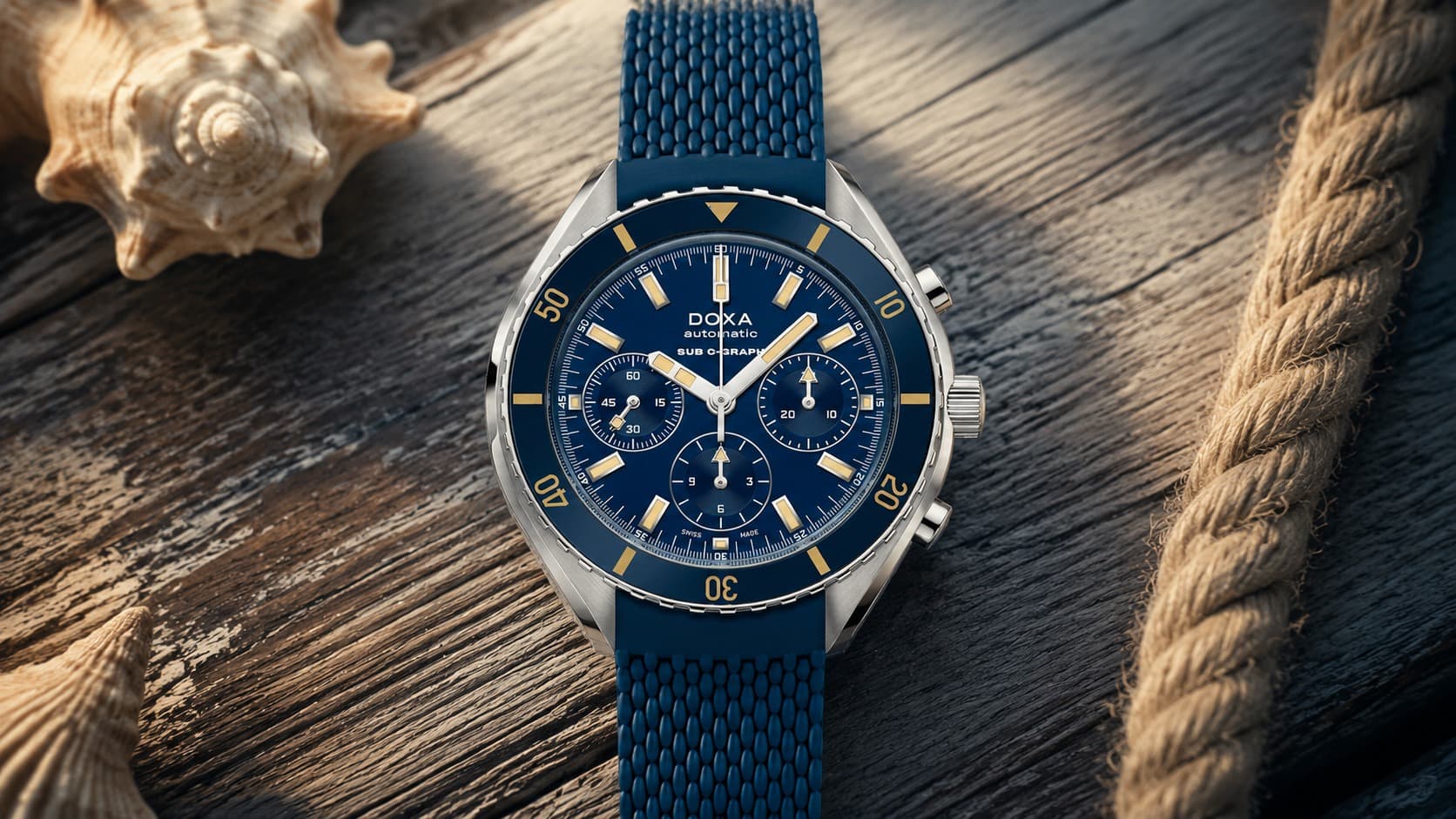
- SUB 200 C-Graph adds chronograph functionality to the accessible SUB 200 platform at $2,500-3,000, incorporating traditional pushers for timing functions while maintaining full diving capability. The 45mm case accommodates the more complex movement and pusher mechanisms, creating substantially larger presence than the time-only SUB 200T. The chronograph complication adds versatility for everyday wear, letting the watch function as multi-purpose tool rather than dedicated dive instrument. Water resistance typically reaches 200-300 meters depending on specific variant, adequate for recreational diving while the chronograph serves surface activities.
- SUB 250T GMT debuts as Doxa’s first travel watch for 2025 at $2,800-3,200, combining 250-meter water resistance with caller-style GMT function. The 40mm case balances diving capability with travel watch proportions, creating versatile sizing between the compact SUB 200T and standard SUB 300 dimensions. The Sellita SW330-2 movement enables independent hour hand adjustment, letting travelers change local time without stopping the watch. This configuration proves more practical for actual travel than traditional GMT designs. The dual functionality attracts buyers who want adventure watch versatility without compromising either diving or travel features.
- SUB 200T Diamonds collection targets luxury buyers at $9,400, featuring diamond-set bezels across seven colorways including the exclusive Ocean Dream pink dial. Each watch incorporates genuine diamonds in the bezel markers while maintaining full 200-meter water resistance. The Ocean Dream pink dial appears exclusively in this collection, offering feminine colorway unavailable elsewhere. This luxury direction expands Doxa’s appeal beyond traditional tool watch buyers toward fashion-conscious consumers who value both luxury aesthetics and authentic functionality. The diamond application maintains diving capability rather than creating dress watches styled after diving equipment.
This diverse lineup demonstrates Doxa’s commitment to serving various needs while maintaining core brand identity across all price points. From the accessible SUB 200T to the extreme SUB 1500T, every model delivers genuine diving capability and Swiss manufacturing quality. The consistent design language means even entry-level pieces communicate authentic Doxa heritage, while premium models justify their pricing through enhanced specifications and limited availability rather than artificial scarcity or marketing distinctions that don’t improve functionality.
Doxa Watch Selection: Making the Right Choice
Selecting the right Doxa requires evaluating several factors beyond simple aesthetic preference, as the lineup offers genuine specification differences that affect daily wearability and long-term satisfaction. Case sizing, movement choice, water resistance requirements, and color selection all impact how well a watch serves your specific needs. Smart buyers match these variables to their actual use patterns and physical characteristics rather than simply choosing based on specifications that sound impressive but provide no practical benefit.
- Case sizing creates more complexity than diameter measurements suggest due to Doxa’s distinctive cushion case geometry and curved lug design. The 42.5mm SUB 300 and SUB 300T wear noticeably smaller than typical 42.5mm round sports watches because the cushion shape reduces visual diameter while the short, downward-curved lugs prevent overhang on smaller wrists. Measure your wrist width with flexible measuring tape—if your wrist measures 60mm or wider, the 42.5mm models should fit comfortably. Narrower wrists below 60mm often look better with the 39mm SUB 200T, which offers complete functionality in more compact proportions. The lug-to-lug measurement matters more than diameter for actual fit—the SUB 300’s 44.5mm span accommodates wrists from 6.5 to 8+ inches, while the SUB 200T’s 41.5mm span works for 6.0 to 7.5 inch wrists. Try similar-sized watches in person if possible, as photos distort size perception and individual wrist shapes affect how specific dimensions wear.
- Thickness significantly impacts daily comfort for watches worn regularly outside diving contexts. The SUB 300 at 13.4mm and SUB 300T at 13.65mm both clear shirt cuffs easily but create noticeable wrist presence compared to typical dress watches around 10mm thick. The SUB 200T’s 10.7mm thickness provides much more discrete wearing experience for office environments or formal occasions while maintaining full diving capability. Consider how often you’ll wear the watch in various contexts—dedicated dive watches that see limited surface time can handle greater thickness, while daily office wear often benefits from slimmer profiles that slip under cuffs smoothly. The thickness difference between SUB 300 and SUB 300T seems minimal on paper at 0.25mm, but repeated daily wear makes even small differences noticeable over time.
- Movement selection reflects practical priorities over marketing appeal across most of Doxa’s lineup. The ETA 2824-2 and Sellita SW200-1 calibers deliver nearly identical performance with accuracy typically within +/-10 seconds daily after proper regulation. The COSC certification in the SUB 300 guarantees tighter tolerances of -4/+6 seconds daily but costs $600 extra compared to the SUB 300T. For actual diving use, this accuracy difference provides zero functional benefit—dive timing requires minute-level precision, not seconds. The chronometer certification matters primarily for collectors who value documented precision or buyers seeking the most refined version available. Some owners report superior finishing details in ETA variants compared to Sellita alternatives, though both manufacturers maintain excellent quality standards. All movements feature hacking seconds and hand-winding capability, practical features more important than accuracy specifications for daily use.
- Water resistance ratings vastly exceed practical diving requirements across the entire lineup, making depth specifications largely irrelevant for choosing between models. Recreational diving rarely exceeds 40 meters depth, making the SUB 200T’s 200-meter rating provide five times more capability than needed. The SUB 300’s 300-meter specification serves professional dive masters and instructors who regularly exceed recreational limits, while the SUB 300T’s 1,200-meter capability targets saturation divers living in pressurized habitats. The extreme 1,500-meter rating in the SUB 1500T serves essentially no practical purpose—no human survives those depths regardless of equipment. Choose water resistance based on actual diving activities rather than impressive specifications—the entry-level rating handles all typical use while higher ratings add thickness and weight without functional benefit for most buyers. The primary advantage of extreme ratings comes from safety margin rather than utilizing full capability.
- Helium escape valve functionality matters only for specialized professional diving involving saturation operations lasting days or weeks in pressurized habitats. Recreational divers and even most professional dive instructors never encounter conditions requiring helium valve operation. The valve adds modest thickness and introduces another potential maintenance point, though modern designs prove highly reliable. If your diving never involves commercial operations, military applications, or technical mixed-gas diving beyond 100 meters, the helium valve serves zero functional purpose. The feature’s presence on SUB 300T and higher models primarily provides historical authenticity and extreme capability rather than addressing common user requirements. Choose based on whether you value this professional specification for authenticity rather than actual need.
- Color selection extends beyond aesthetic preference to practical visibility and versatility considerations. The Professional orange dial provides scientifically-proven optimal underwater visibility in low-light and murky conditions where most diving actually occurs. However, the bold color limits versatility for professional office environments and formal occasions. Sharkhunter black offers maximum versatility across contexts while sacrificing some underwater visibility advantage. Searambler silver and Caribbean blue balance distinctiveness with broader wearability than orange while maintaining excellent legibility. Consider how often you’ll wear the watch in various environments—dedicated dive watches can prioritize underwater performance, while daily wearers often benefit from colors that work across multiple contexts. All colors use identical high-contrast printing and lume application, ensuring equivalent legibility despite aesthetic differences.
- Bracelet versus rubber strap selection dramatically impacts wearing experience in both comfort and authentic presentation. The signature beads of rice bracelet weighs approximately 90-100 grams compared to roughly 20-30 grams for rubber straps, creating substantially different wrist presence. The bracelet provides complete Doxa aesthetic experience and maintains value better for resale, but the additional weight causes fatigue during extended wear for some users. Rubber straps reduce total watch weight by 40% or more while providing superior comfort for sports activities and hot weather wear. Both options include wetsuit extension capability essential for diving over thick neoprene sleeves. Consider ordering both configurations if budget allows, as the quick-release spring bars on modern models enable tool-free switching between options based on activity and preference.
- Dial color availability varies by model rather than offering complete freedom across the lineup. The SUB 200T, SUB 300, and SUB 300T provide access to all eight signature colors, while specialized models like the SUB 600T Pacific come exclusively in specific colorways. Limited editions and partnership models feature unique colors unavailable in standard production, creating collectibility but limiting immediate availability. Check current offerings carefully when considering specific color and model combinations, as Doxa sometimes rotates colors in and out of production based on demand. The most popular Professional orange and Sharkhunter black remain continuously available, while less common colors like Sea Emerald green and Divingstar yellow see more limited production runs.
- Budget considerations should account for total ownership costs beyond initial purchase price. All Doxa watches require service every 3-5 years costing approximately $300-500 for movement cleaning, lubrication, and gasket replacement. Additional costs include occasional bracelet or strap replacement ($150-400 for official components), potential crystal replacement if damaged ($100-200), and annual pressure testing if actively diving ($20-50). Factor these recurring expenses into affordability calculations, particularly when comparing against cheaper alternatives with similar service requirements. The advantage of Doxa’s ETA and Sellita movements appears in global service availability—any competent watchmaker can maintain these calibers using readily available parts, unlike proprietary movements requiring factory service at premium pricing.
- New versus vintage purchasing involves distinct tradeoffs that significantly impact buying decisions. Modern Doxa watches offer current warranty coverage, readily available service, and manufacturing improvements like sapphire crystals and solid end links that address vintage weaknesses. Vintage pieces from the 1967-1980 era provide historical authenticity and investment appreciation potential but require careful authentication due to frankenwatches combining incorrect parts. Vintage SUB 300T models cost $5,000-15,000 depending on condition and originality, often exceeding new SUB 1500T prices while offering inferior water resistance and no warranty. Vintage collecting requires substantial knowledge to avoid fakes and overpaying for incorrect or refinished pieces. New buyers generally benefit from modern production unless specifically collecting vintage pieces for historical significance.
- Authentication becomes crucial when buying pre-owned through secondary markets like eBay, Chrono24, or watch forums. Modern Doxa counterfeits remain relatively rare due to limited market appeal compared to Rolex or Omega, but vintage frankenwatches abound—pieces assembled from mixed parts across different eras and models. Verify proper dial printing, correct movement stamps, and appropriate serial number formats through the seven-digit system used post-1940. Request clear photos of the movement through the case back, checking for correct caliber and rotor decoration. Be suspicious of prices significantly below market rates, as authentic Doxa watches maintain consistent values. Consider purchasing through established dealers offering authentication guarantees and return policies rather than private sales lacking recourse if problems emerge after purchase.
- Sizing cannot be properly evaluated from photos alone regardless of how many specifications you review online. Individual wrist shapes, bone structures, and personal preferences make sizing highly subjective beyond basic measurement ranges. Try to examine similar-sized watches in person at local retailers, even if they’re different brands, to gauge how various dimensions actually feel on your wrist. Many authorized Doxa dealers offer generous return policies specifically because sizing mismatches represent the most common purchase regrets. If ordering directly online, plan for possible return and exchange, accepting potential shipping costs as necessary expense for finding optimal fit. The popularity of specific models in the used market provides exit strategies if a purchase doesn’t meet expectations after real-world wear.
- Limited edition appeal requires honest assessment of whether you’re collecting for enjoyment or investment. Limited production creates artificial scarcity that supports resale values, but many limited editions trade near or below original retail prices years later. True appreciation typically requires extremely limited numbers combined with significant historical connections or unusual specifications. Buying limited editions hoping for investment returns often disappoints compared to simply purchasing models you genuinely prefer regardless of production numbers. The standard SUB 300T in Professional orange arguably maintains stronger long-term value than many limited variants through its status as the definitive modern Doxa specification, similar to how vintage standard production pieces outperform most special editions from the same era.
These considerations apply regardless of whether you’re buying your first Doxa or adding another piece to an established collection. The brand’s straightforward approach to product differentiation—genuine specification differences rather than artificial market segmentation—means choosing correctly primarily requires honest self-assessment of your actual needs and preferences. Resist the temptation to buy based on impressive specifications or collecting trends rather than how well a specific watch serves your actual use patterns and genuinely appeals to your personal taste. The best Doxa for you matches your wrist size, suits your typical activities, fits your aesthetic preferences, and costs an amount you can afford while accounting for long-term ownership expenses beyond the initial purchase price.
Where to Buy Authentic Doxa Watches

Finding authentic Doxa watches requires navigating an evolving retail landscape that includes authorized dealers, direct factory sales, and secondary markets each offering distinct advantages and potential pitfalls. The brand’s smaller production volumes and selective distribution create less availability than mass-market alternatives, but this scarcity helps maintain value while ensuring buyers deal with knowledgeable sellers rather than indifferent retail chains. Purchasing from proper channels provides warranty coverage, authentication guarantees, and access to the complete current lineup.
- The official Doxa website at doxawatches.com provides direct factory purchasing with complete model availability and immediate access to new releases and limited editions often unavailable through traditional retail channels. Direct ordering includes full manufacturer warranty coverage, official documentation, and guaranteed authenticity since products ship directly from Doxa’s Swiss operations. The website ships globally with transparent pricing, though international buyers should account for potential customs duties and import taxes. New model launches and limited edition releases typically appear on the official site first, sometimes with brief exclusive availability windows before wider retail distribution. The direct purchase option works well for buyers confident in their model selection and sizing requirements who value access to the complete catalog over in-person examination.
- Authorized dealer networks in various countries provide local purchasing options with warranty support and the ability to examine watches before buying. Authorized dealers receive official training, maintain proper servicing relationships, and offer genuine Doxa warranty cards essential for coverage. Dealer locators on the official Doxa website identify legitimate retailers in specific regions, crucial for verifying authorization before purchase. Pricing remains consistent with official retail, as Doxa maintains strict pricing policies preventing authorized dealer discounting. The primary advantage comes from local presence for warranty service and the ability to examine actual watches rather than relying on online photos. Physical locations enable in-person try-on appointments, crucial for buyers uncertain about sizing or color selection.
- Online watch marketplaces host both authorized dealers and private sellers, requiring careful verification of seller status before purchasing. Authorized dealers on these platforms provide factory warranty coverage identical to buying direct, while private sellers typically offer only personal guarantees. Marketplace pricing shows real-time market values across new and used pieces, helping buyers gauge fair pricing and identify availability. Look for platforms offering escrow services that hold payment until you receive and approve the watch, providing transaction security for high-value purchases. Buyer protection programs typically cover issues with authentication or condition misrepresentation, though this requires using official payment systems rather than direct seller contact. Search filters enable comparing prices across sellers and conditions, useful for finding specific models or colorways with limited availability.
- Certified pre-owned specialists offer professional authentication and reconditioning services that verify condition and authenticity before listing. These operations inspect every watch for authenticity, functional condition, and accurate condition grading. Purchases often include warranty coverage even on pre-owned pieces, plus return windows allowing examination before final commitment. Pricing typically reflects the professional authentication investment, running higher than private seller rates but providing substantially more security. Detailed condition reports include honest assessment of wear, servicing history when available, and comprehensive photography from multiple angles. This option works well for buyers seeking vintage or discontinued models with professional verification rather than navigating private sales independently.
- Secondary market private sales through forums and social media offer potential savings but require substantial knowledge to navigate safely. Watch enthusiast forums and dedicated social media groups connect buyers directly with sellers, with prices typically running 10-30% below retail for modern pieces in good condition. Private sales lack buyer protection beyond individual seller reputation, making research and verification crucial before payment. Request detailed photos including movement shots, checking for correct caliber markings and rotor decoration. Ask about service history, remaining warranty coverage, and reason for selling. Meet locally when possible for in-person examination, avoiding shipping risks and inability to verify condition before payment. For remote transactions, use payment methods offering buyer protection rather than irreversible bank transfers. Dedicated Doxa community groups provide knowledgeable members who can help authenticate pieces and provide pricing guidance.
- Auction houses occasionally offer vintage Doxa pieces with professional authentication and provenance documentation. These sources serve serious collectors seeking historically important examples rather than buyers wanting daily wearers. Prices at auction reflect collector market values often exceeding $10,000 for rare references or examples with exceptional provenance. Auction purchases typically involve buyer’s premiums adding 20-25% to hammer prices plus shipping. The professional authentication provides security for high-value purchases, though auction sales are typically final without return options. This route makes sense only for collectors seeking specific vintage references for historical significance.
- Avoid unauthorized dealers and gray market sellers offering suspiciously low pricing on new models, as these sources cannot provide official Doxa warranty coverage or authentication guarantees. Gray market watches may be authentic products diverted from authorized channels, but warranty cards provided won’t be honored by Doxa or authorized service centers. Savings of $200-400 disappear quickly when facing $500+ service costs without warranty coverage. Some sellers offer their own warranties, but these typically provide minimal coverage through unknown service networks rather than factory-authorized work. The modest savings make unauthorized purchasing poor value where warranty coverage represents significant percentage of total cost.
The expansion of Doxa’s authorized dealer network over recent years has improved availability substantially compared to the brand’s earlier revival period. Current buyers enjoy multiple legitimate purchasing options providing security and support that makes avoiding questionable sources straightforward. Authorized channel pricing remains consistent across retailers, so choosing between them depends primarily on factors like location, service preferences, and additional benefits like financing rather than hunting for discounts that don’t exist. This pricing stability protects brand value and ensures fair treatment across all buyers.
Understanding Doxa Watch Resale Values and Appreciation
Doxa watches occupy an unusual position in the collector market where genuine heritage and limited production support value retention better than many brands costing twice as much, yet the relatively small enthusiast community prevents the explosive appreciation seen in hyped mainstream alternatives. Modern pieces hold value respectably through quality construction and controlled availability, while vintage examples show consistent appreciation driven by growing recognition of the brand’s historical significance. Smart buyers approach Doxa as long-term value propositions rather than short-term flip opportunities, as the investment case builds over years rather than months.
- Vintage SUB 300T models from the 1967-1980 original production era demonstrate consistent appreciation averaging 15-25% gains over five-year holding periods when pieces include proper authentication and original components. Examples in excellent condition with correct dials, hands, bezels, and movements now command $5,000-15,000 depending on specific references and completeness. The Professional orange dial typically brings premium pricing due to being the most historically significant colorway, while rarer variants like Divingstar yellow or Whitepearl can exceed common colors when condition and originality match. Complete sets including original boxes, papers, and the distinctive beads of rice bracelet add $1,000-2,000 to values since many vintage pieces lost their bracelets decades ago.
- Aqua Lung branded variants command substantial premiums of 20-30% over standard Doxa-branded examples from the same era due to direct Jacques Cousteau association. These pieces were distributed through Cousteau’s U.S. Divers company and feature “Aqua Lung” text on the dial instead of or alongside Doxa branding. Examples with documented Cousteau team provenance—actual watches worn by Calypso crew members with supporting documentation—can reach $20,000-30,000 for pieces in exceptional condition. However, provenance requires substantial documentation beyond seller claims, as fraudulent Cousteau association stories appear regularly in vintage markets.
- Swiss military issued pieces represent the most collectible vintage Doxa watches when accompanied by proper military markings and documentation. The roughly 150 pieces issued between 1968-1975 featured serial numbers matching military equipment inventories and specialized matte black case coating. Authentic military examples with clear case back engravings and documentation proving military service regularly exceed $15,000 in collector markets. However, fake military markings appear frequently on standard vintage pieces, making authentication crucial through consistent engraving styles, correct serial number formats, and appropriate wear patterns from actual military use.
- Modern limited editions show mixed investment performance with some trading above original retail within years while others languish at or below initial prices. The 50th Anniversary releases from 2017 already trade 10-20% above original retail due to their historical significance marking the SUB 300’s debut. Partnership pieces like the Clive Cussler editions maintain strong values through the author’s dedicated fan base. However, many limited editions with arbitrary production limits but no compelling story fail to appreciate despite collectibility claims. True limited edition value requires genuine scarcity—production numbers below 100 pieces—combined with meaningful historical connections or unique specifications.
- Standard production modern pieces depreciate moderately during the first 2-3 years as typical for new watches, losing approximately 20-30% from retail prices in secondary markets. A $2,490 SUB 300T typically trades around $1,750-2,000 in excellent condition after this initial depreciation period. However, depreciation stabilizes after the initial ownership period, with 5-10 year old modern Doxa pieces often trading within 10-15% of comparable new models after accounting for inflation. This value retention exceeds many contemporary brands where five-year-old pieces lose 50% or more, reflecting controlled production volumes and genuine quality.
- Color selection significantly impacts resale values with Professional orange and Sharkhunter black maintaining strongest demand and most liquid markets. These core colors appeal to the broadest buyer pools and represent the most historically significant options, making them easiest to sell quickly at fair prices. Less common colors like Sea Emerald green or Divingstar yellow attract fewer buyers but can command premiums when the right buyer appears. However, unusual colors also sit longer in secondary markets. Conservative buyers prioritizing easy resale should stick with orange or black, while collectors willing to wait for optimal prices can explore the full color range.
- Complete sets with boxes, papers, warranty cards, and all original accessories maintain 15-20% higher values compared to watch-only sales. The original presentation box, warranty paperwork, hang tags, and instruction manual demonstrate care and provide authentication support that makes buyers more confident. Extra straps or bracelet links add measurable value, particularly the beads of rice bracelet which costs $400+ as a separate purchase. Modern Doxa pieces ship with fairly complete sets including wooden presentation boxes, warranty cards, and branded microfiber pouches, making it easy to maintain completeness.
- Service history documentation improves resale values and buyer confidence by demonstrating proper maintenance and revealing any repairs or parts replacements. Receipts from authorized service centers showing regular 3-5 year maintenance provide proof of care that justifies premium pricing. Service history also alerts potential buyers to any significant repairs like movement replacement or case refinishing that might affect originality. Watches sold without any service history face buyer skepticism and lower offers reflecting uncertainty about internal condition and potential immediate service needs.
- Market comparisons favor Doxa’s value proposition substantially when examining total cost of ownership and relative depreciation against premium competitors. Tudor Black Bay models cost $3,500-4,500 new and depreciate to $2,500-3,500, while Omega Seamaster 300M pricing starts around $5,000-6,000 and depreciates to $3,500-4,500. A buyer purchasing a $2,200 SUB 300T that depreciates to $1,600 has lost less absolute money than someone buying a $5,500 Seamaster that drops to $4,000, despite both experiencing similar 25-30% depreciation. The lower entry price means Doxa owners risk less capital while getting comparable Swiss quality.
- Investment risks remain manageable through established collector community and genuine utility value that supports demand beyond pure speculation. Unlike fashion watches that lose appeal when trends shift, Doxa’s diving functionality and heritage provide lasting relevance. However, the brand’s smaller production and community compared to major names means individual pieces can sit in secondary markets longer waiting for buyers. Doxa isn’t a watch you can flip quickly for guaranteed profit—it’s a brand you buy for personal enjoyment with confidence that resale will eventually recover most of your investment.
- Long-term appreciation potential exists but remains uncertain depending on broader market trends and Doxa’s continued operations and quality maintenance. The historical significance of innovations like the orange dial and helium valve, combined with the Cousteau connection, provides foundation for lasting collector interest. However, if quality declines or the brand faces operational challenges, even vintage pieces could suffer. The relatively affordable entry prices mean even modest appreciation generates reasonable returns—a $6,000 vintage SUB 300T appreciating 5% annually grows to $8,100 over five years, not wealth-building returns but respectable value preservation.
The investment case for Doxa watches ultimately depends on your definition of investment value—if measured purely by financial returns, they perform respectably but not spectacularly compared to alternative investments. However, if investment includes the enjoyment value of ownership, the practical utility of a quality timepiece, and the cultural significance of preserving horological heritage, Doxa delivers exceptional returns. You’re buying watches you can actually wear and enjoy rather than keeping pristine in safes, yet still maintaining reasonable value retention for eventual sale when circumstances change.
Doxa Watch Maintenance: Service and Care
Proper maintenance ensures Doxa watches deliver decades of reliable service while preserving both functionality and value for eventual resale or passing to future generations. The combination of robust Swiss movements and quality case construction creates timepieces that reward basic care with exceptional longevity. Regular servicing prevents minor issues from becoming expensive repairs, while simple daily habits protect against the most common damage sources.
- Movement servicing follows standard Swiss mechanical watch intervals requiring complete overhaul every 3-5 years depending on usage intensity. Active daily wear in harsh conditions warrants servicing toward the three-year mark, while occasional use can stretch intervals toward five years. Service involves complete disassembly, ultrasonic cleaning, replacement of degraded lubricants, and timing regulation. Cost typically ranges $300-500 through independent watchmakers with ETA expertise, while factory service runs $500-700. The ETA 2824-2 and Sellita SW200-1 movements benefit from global parts availability and widespread technical knowledge, meaning qualified watchmakers exist in most cities rather than requiring shipment to Switzerland.
- Water resistance testing should occur annually for watches used in actual diving applications, though less frequent testing suffices for casual wearers. Most watch shops offer pressure testing for $20-50 using dry pressure that won’t risk water damage if seals have failed. Annual testing catches gasket degradation before it causes water intrusion that destroys movements and dials. Divers relying on watches for safety-critical timing should test before every dive season, while casual wearers who occasionally swim can test every 2-3 years.
- Gasket replacement represents the most critical preventive maintenance since degraded seals cause catastrophic water damage costing thousands to repair. Crown gaskets, case back gaskets, and crystal gaskets all deteriorate from age and chemicals regardless of water exposure. Replacement during regular service costs $50-100, while water damage repair starts at $500 and easily reaches $2,000 for complete movement and dial replacement. Conservative approach replaces gaskets every service interval to eliminate this failure mode completely.
- Crown operation requires careful attention as the crown assembly represents the most common water intrusion point. Always ensure complete thread engagement when screwing down—the crown should sit flush with no gap. Never force operation, as cross-threading damages delicate threads requiring expensive repair. Apply gentle outward pulling pressure while unscrewing to prevent cross-threading. Never operate the crown underwater even if the watch is rated for extreme depths.
- Bezel maintenance focuses on engraved and painted numerals that chip or wear particularly around frequently-referenced positions. Chemical exposure from sunscreen and bug spray accelerates paint deterioration. Doxa provides touch-up paint for owner maintenance, applied carefully with toothpicks. Professional bezel repainting during service provides more durable results. The unidirectional mechanism should click firmly with no play—excessive looseness indicates worn spring requiring replacement during next service.
- Crystal care primarily involves avoiding impacts that can chip or crack even sapphire, which despite excellent scratch resistance remains vulnerable to concentrated impacts. Small scratches usually indicate damage to anti-reflective coating rather than crystal itself. Deep scratches or cracks require complete crystal replacement costing $100-200 including installation and pressure testing. The domed crystal profile provides some impact protection by deflecting glancing blows.
- Bracelet maintenance addresses wear points in the articulated beads of rice design. Modern solid link construction improves durability but still requires periodic inspection of screws securing links. Tighten any loose screws immediately using proper screwdrivers to prevent thread damage. The spring-loaded extension system requires occasional lubrication with light machine oil. Clean between links using soft brushes and mild soap solution to remove accumulated dirt and soap residue.
- Rubber strap longevity depends on chemical exposure and UV light that break down FKM compound over time. Quality straps typically last 2-5 years with regular wear. Rinse after saltwater or chlorine exposure and store away from direct sunlight. Replacement straps cost $80-150 from Doxa. Many owners rotate multiple straps to extend lifespan through reduced wear frequency.
- Case finishing develops character from normal wear—this patina authenticates the watch’s history as used tool. Light polishing during regular service removes significant scratches while preserving overall geometry. Overly aggressive polishing removes metal and degrades crisp lines. Accept normal wear as evidence of authentic use rather than pursuing pristine condition.
- Movement accuracy degradation signals service needs before complete failure. Gradually increasing rate deviations, sudden shifts, or erratic timekeeping indicate worn components requiring attention. Address these symptoms promptly rather than waiting for complete failure, as running worn movements causes accelerated damage requiring more expensive repairs.
- Magnetization affects accuracy causing dramatic time gains. Modern life surrounds us with magnetic fields from phones, laptops, and speakers. Demagnetization costs $10-20 at any watchmaker or can be done at home with a $15-30 device. Perform if the watch suddenly gains time dramatically, particularly after exposure to strong magnets.
- Storage conditions affect preservation for watches not worn regularly. Store in cool, dry locations away from sunlight and extreme temperatures. Watch winders aren’t necessary—allowing automatics to stop causes no damage. Avoid humid environments and keep watches in original boxes or watch rolls for protection.
- Chemical exposure requires immediate attention when sunscreen, bug spray, or cleaning products contact watches. These attack gaskets and degrade rubber straps. Rinse thoroughly with fresh water after any chemical exposure. Remove watches before applying sunscreen or bug spray. Pool chlorine and hot tub chemicals warrant particular caution despite water resistance ratings.
- Professional inspection during service reveals issues owners cannot detect externally. Watchmakers check crown tube wear, case thread condition, and movement jewel wear. Request detailed service reports documenting work performed and parts replaced. These records prove valuable for resale and help future watchmakers understand maintenance history.
- European service centers provide superior experiences compared to U.S. operations according to widespread reports. Shipping to Switzerland or Germany often produces faster turnaround despite international transit. Independent watchmakers with strong ETA experience often provide best combination of cost, quality, and turnaround for routine maintenance, reserving factory service for complex repairs.
Proper maintenance preserves both functionality and investment value while ensuring reliable service during the decades these watches were designed to provide. The robust construction means well-maintained Doxa watches easily outlast owners, serving multiple generations when treated with reasonable care. Relatively modest service costs—about $100 annually on a $2,500 watch—provide exceptional value for maintaining a quality Swiss mechanical instrument over decades of use.
Frequently Asked Questions About Doxa Watches
Doxa’s unique heritage and distinctive approach to dive watch design naturally raise questions from potential buyers navigating specifications, history, and practical ownership concerns. Direct answers to the most common inquiries help cut through marketing noise and provide the clarity needed for confident purchasing decisions.
- What does “SUB” stand for in Doxa watch names? SUB is short for “submarine” or “submersible.” The number indicates water resistance in meters—SUB 300 means 300 meters. The “T” suffix means table bezel, referring to decompression tables engraved into the bezel insert that help divers calculate safe ascent times.
- Are vintage Doxa watches still waterproof after 50+ years? No—gaskets deteriorate over time making water intrusion inevitable without service. Vintage pieces require complete gasket replacement and pressure testing before any water exposure. Even after service, vintage watches shouldn’t be used for actual diving due to potential unseen damage. Modern Doxa watches provide authentic heritage with reliable water resistance for actual use.
- Why are Doxa watches associated with Jacques Cousteau? Cousteau equipped his entire Calypso crew with SUB 300 watches starting in 1968 and negotiated U.S. distribution through his company U.S. Divers. His divers provided three years of field testing during actual underwater filming and research. The orange dials appeared regularly in his television documentaries, linking Doxa forever with history’s most famous ocean explorer.
- What’s the difference between the various SUB models? They differ mainly in size and water resistance. SUB 200T is 39mm with 200-meter rating. SUB 300 is 42.5mm with COSC certification and 300-meter rating. SUB 300T is 42.5mm with helium valve and 1,200-meter rating. SUB 750T is 45mm vintage sizing with 750-meter rating. SUB 1500T is 45mm with extreme 1,500-meter capability. All use quality Swiss movements—choose based on wrist size and features you need.
- How do I authenticate a vintage Doxa watch? Check dial printing consistency, verify movement matches case reference with correct caliber, confirm proper serial number format, and ensure all components show similar aging patterns. Frankenwatches mixing incorrect parts appear frequently in vintage markets. Consult Doxa forums where experienced collectors evaluate photos, or use professional authentication for expensive purchases.
- Are Doxa watches good for everyday wear beyond diving? Yes—the 200-300 meter water resistance handles all normal activities, sapphire crystals resist scratches, and reliable movements need no special treatment. The distinctive design stands out without luxury pretension. Orange dials excel at legibility but may be too bold for conservative offices—consider black or silver for versatility. The 39mm SUB 200T works best for daily wear through compact size.
- What makes the orange dial so special? Scientific testing in murky Lake Neuchâtel waters proved orange remained visible longest as visibility deteriorated. This matters because most diving happens in poor visibility, not crystal-clear tropical water. The orange provides genuine safety advantages and created Doxa’s most recognizable signature, now widely copied across the industry despite Doxa inventing it through actual research.
- How often should I service my Doxa watch? Every 3-5 years for complete overhaul. Daily wear in harsh conditions needs service closer to three years, occasional use can stretch toward five years. Service immediately if you notice accuracy problems or unusual sounds. Test water resistance annually if diving, every 2-3 years for casual wear. Expect $300-500 for independent service or $500-700 for factory service.
- Can I wear my Doxa while swimming if it’s rated for 300 meters? Yes—300 meters far exceeds swimming needs. Ensure the crown is screwed down properly before water exposure and never operate it while wet. Rinse with fresh water after pools or saltwater. Test water resistance annually if swimming frequently, as gaskets degrade over time regardless of initial rating.
- Why do some people complain about Doxa customer service? Small company size means limited support infrastructure. European customers report better experiences than U.S. buyers who face longer response times and international shipping. Many owners successfully use independent watchmakers for routine maintenance instead of factory service. Recent leadership emphasizes improving communication, though infrastructure changes take time.
- Is the COSC certification worth the extra cost in the SUB 300? The $600 premium buys guaranteed accuracy within -4/+6 seconds daily and slightly thinner case. For diving, this accuracy difference doesn’t matter since timing needs minute-level precision. It matters mainly to collectors wanting the most refined version and documented precision. The SUB 300T delivers similar real-world performance at lower cost.
- How does Doxa compare to similar brands like Tudor or Omega? Tudor costs $3,500-4,500 and Omega starts around $5,000-6,000, both offering superior finishing. Doxa provides authentic innovations like the orange dial and helium valve plus Cousteau heritage at half the price. The distinctive cushion case stands out versus mainstream designs. Choose Tudor or Omega for refined luxury, Doxa for authentic heritage and value.
Conclusion
Doxa occupies a unique position in the dive watch landscape where genuine innovation, authentic professional heritage, and accessible Swiss quality converge in ways that larger luxury brands cannot replicate despite their superior resources and marketing budgets. The brand’s scientific approach to the orange dial, pioneering helium escape valve development, and partnership with Jacques Cousteau represent real contributions to diving watch evolution rather than manufactured heritage stories created for marketing appeal. Today’s lineup delivers this authentic legacy across accessible price points from $1,590 to $4,000, offering Swiss manufacturing quality and serious diving capability at half the cost of comparable Tudor or Omega alternatives. The distinctive cushion case design and signature colorways create immediately recognizable character that stands apart from the sea of round sports watches copying Rolex Submariner conventions, appealing to those who value purposeful design over following trends.
The practical case for Doxa extends beyond heritage appreciation to genuine functionality and value retention that makes these watches smart long-term investments in quality timepieces. The robust ETA and Sellita movements provide reliable timekeeping with global service availability, eliminating dependence on factory service networks for routine maintenance. Water resistance specifications from 200 to 1,500 meters exceed any recreational requirements while proving the engineering capability behind professional-grade construction. The various case sizes from 39mm to 45mm accommodate diverse wrist dimensions and wearing preferences, while the eight signature colors offer personalization without compromising core design language. Resale values hold respectably through controlled production volumes and growing collector recognition, with vintage pieces showing consistent appreciation as the market increasingly acknowledges Doxa’s historical significance and technical contributions to dive watch development.
For buyers seeking authentic dive watches with proven heritage and distinctive character, Doxa delivers compelling value that transcends simple cost considerations. Whether you’re a serious diver needing reliable underwater equipment, a collector appreciating genuine horological innovation, or simply someone drawn to purposeful design with authentic stories behind every feature, the current Doxa lineup offers options matching your specific needs and preferences. The SUB 200T provides accessible entry into Swiss dive watch ownership at $1,590, while the SUB 300T and SUB 300 deliver the definitive Doxa experience in specifications most closely matching the legendary 1967 original. The brand’s current renaissance under thoughtful leadership suggests continued quality and innovation that will support both ownership satisfaction and long-term value preservation, making now an excellent time to discover why Jacques Cousteau, Swiss military forces, and generations of professional divers trusted these distinctive orange-dialed instruments with their lives beneath the waves.